Tag Archives: hbcu money

A Different World, Same Old Hierarchies: Colorism, Class, and the Untold Pairings of Hillman College

“Television doesn’t just reflect our world—it reinforces its unspoken rules. And sometimes, it’s in what’s left unsaid that the truth screams loudest.”

There is perhaps no show more foundational to African American Gen X and elder millennial identity than A Different World. Premiering in 1987 as a spinoff from The Cosby Show, the sitcom quickly found its own voice and purpose, blossoming into a cultural beacon that reflected the richness and complexity of Black college life at fictional Hillman College—an HBCU modeled after Spelman, Howard, and other elite institutions.

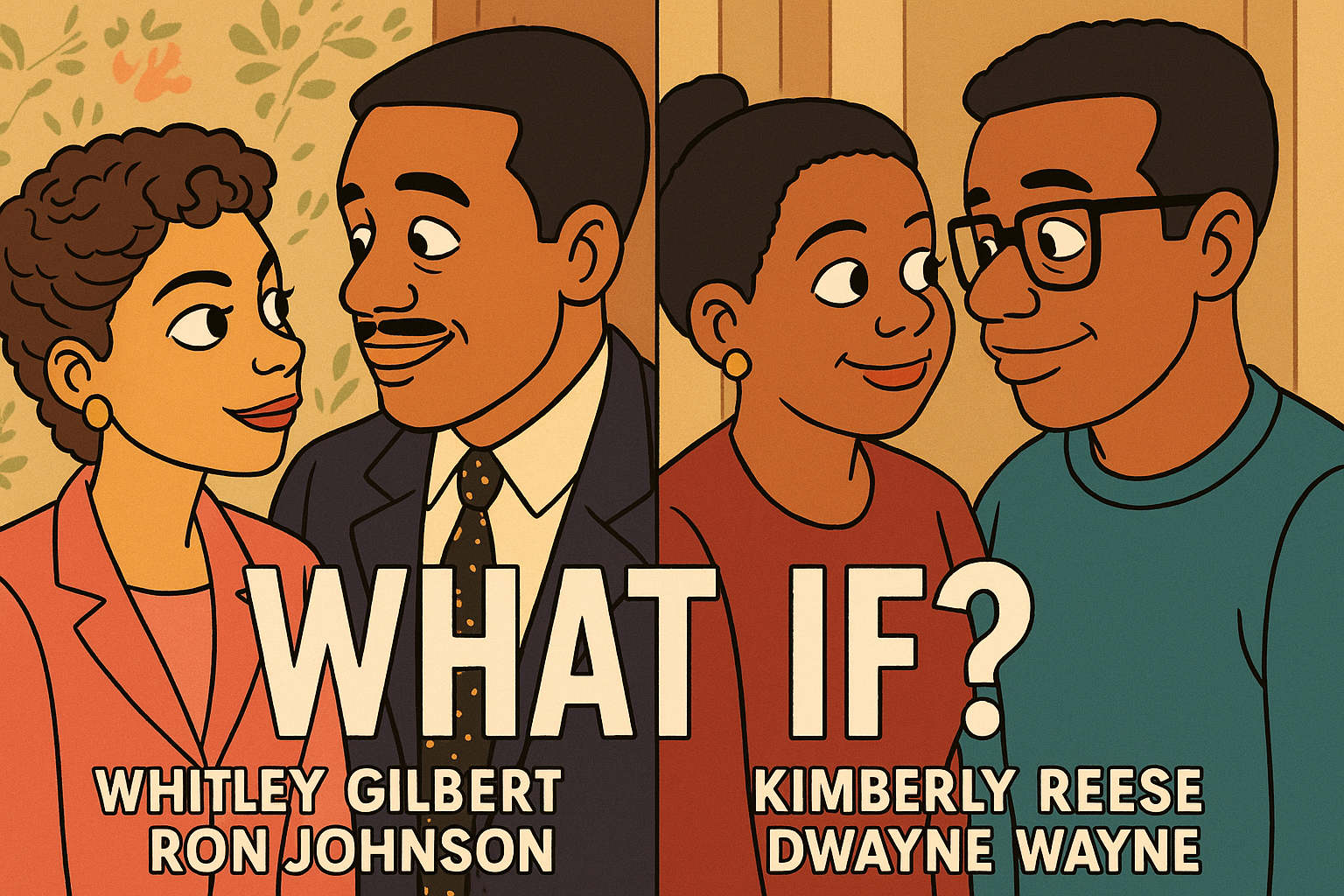
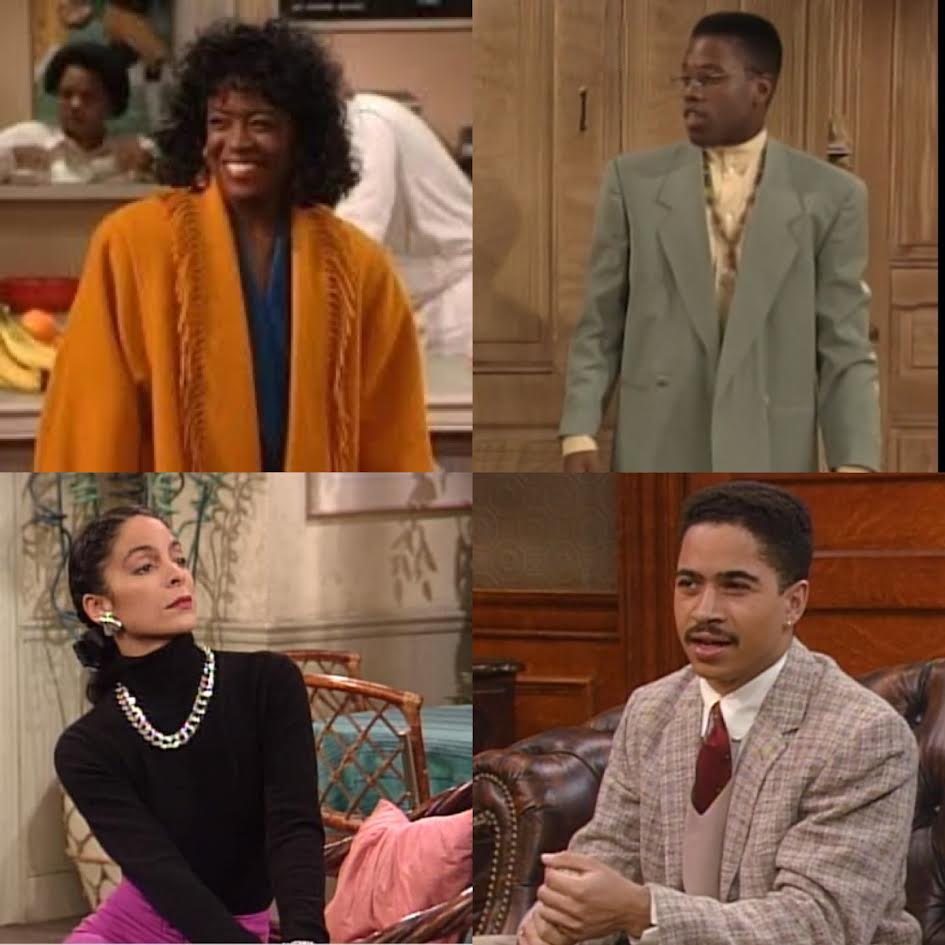
From apartheid and HIV awareness to campus politics and colorism, the show tackled subjects few mainstream programs dared to touch. But even within its groundbreaking storytelling, some narratives were never fully explored. Perhaps most glaring among these were the unexplored romantic pairings of Ron Johnson and Whitley Gilbert, and Kimberly Reese and Dwayne Wayne. Their absence is not simply a matter of creative choice, but rather a symptom of entrenched internalized hierarchies of colorism, class, and gendered desirability—even in Black-led creative spaces.

This isn’t merely nostalgia-fueled fan fiction. It’s a cultural audit.

Ron Johnson: Miscast by Archetype, Not Background

Ronald Johnson, Jr. was not some scrappy kid from the margins. He was a light-skinned, second-generation college student from Detroit, Michigan. His father owned a car dealership, and Ron worked summers there—signaling not just work ethic, but a proximity to Black wealth and business infrastructure. In fact, by Hillman’s standards, he and Whitley Gilbert were socioeconomically parallel: both came from upper-middle-class families, both had access to private social capital, and both had expectations of upward mobility baked into their upbringing.

And yet, Ron’s portrayal consistently tilted toward buffoonery. He was the punchline. The skirt-chaser. The guy you liked but didn’t take seriously. His aesthetic—flashy suits, jewelry, and New Jack Swing flair—was coded as nouveau riche and unserious, despite being emblematic of a generation of young Black men redefining business and culture.

Meanwhile, Whitley Gilbert, with her Southern debutante air, was elevated as aspirational. She was light-skinned, soft-spoken (when she wanted to be), and came from a family steeped in respectability politics. That she would end up with Dwayne Wayne—a Brooklyn-born, dark-skinned, ambitious math major with a heart of gold—was played as a triumph of emotional growth and opposites attracting. But the coupling obscured the more natural pairing: Whitley and Ron.

Why were two light-skinned, upper-middle-class, culturally fluent characters kept apart?

The answer lies in how class and colorism intersect with gender expectations in Black storytelling. Ron’s light skin and wealth didn’t earn him narrative maturity because he was not written as emotionally serious. Whitley’s light skin and wealth did, because Black women must still fit a limited spectrum of desirability to be seen as love-worthy.

The Subtle Rejection of Intra-Class, Intra-Color Love

Pairing Whitley and Ron could have offered a natural and compelling relationship arc, exploring how two Black elite youth—one from the industrial North, one from the genteel South—navigate love, identity, and social expectations. Ron was not without emotional depth. He showed loyalty, ambition (eventually co-owning a nightclub), and a genuine desire to be taken seriously.

But Whitley’s arc was preordained. She was meant to be elevated—refined through her relationship with Dwayne Wayne, whose dark skin, nerdy brilliance, and working-class roots made him both lovable and “in need of” polish. The show allowed Dwayne to evolve from a bumbling flirt into a serious partner, but that grace wasn’t extended to Ron. His business acumen was never valorized. His family wealth never framed as legacy-building. His light skin did not shield him from being typecast.

Why? Because Black masculinity on screen is often given limited templates: the hustler, the hero, or the helpmate. Ron didn’t fit any box neatly enough. He was light-skinned without gravitas, rich without respect, and flirtatious without the redemption arc. The result? He was denied the narrative dignity of love with someone in his actual social class.

Whitley Gilbert: The Chosen Debutante

Whitley’s character arc—from elitist to empathetic—was among the show’s most powerful. Her internal classism was challenged, her superficiality peeled away, and her vulnerability finally exposed. But she was also shielded by her presentation: light-skinned, poised, and conventionally attractive within Eurocentric standards.

This made her “worthy” of the show’s grandest romance—the epic, sometimes rocky, and ultimately redemptive love story with Dwayne Wayne. Their courtship wasn’t just about two young adults figuring it out; it was a narrative about respectability and romantic transformation, a staple of Black middle-class media.

But what if Whitley had fallen for Ron? It wouldn’t have been about transformation. It would have been about familiarity—two people from the same world finding common ground. That wasn’t the story the show wanted to tell. It wanted aspirational transformation, not intra-class reflection.

That choice reveals the quiet but powerful ways in which class and colorism combine to sculpt who gets to be complex, who gets to grow, and who gets chosen.

Kimberly Reese: The Invisible Anchor

If Whitley Gilbert was the show’s belle, Kimberly Reese was its backbone. Played by Charnele Brown, Kim was dark-skinned, hyper-focused, and working multiple jobs to stay afloat in pre-med. She represented a different kind of Black excellence: gritty, grounded, and God-fearing.

Yet, for all her virtues, Kim was largely ignored romantically. She had flings and moments, but never a grand love story. Her pairing with Ron was fleeting. Her moment with Matthew, a white medical student, felt more like a plot device than an earnest exploration of interracial love. She was never positioned as a leading lady in the way Whitley was.

But why not pair Kimberly with Dwayne?

Both were academically driven, socially awkward at times, and navigating the pressures of being exceptional. Both came from working-class families. A relationship between them could have explored what it means to build a future together—struggling to balance career goals, family expectations, and a desire to uplift each other.

Instead, the show doubled down on the colorist formula: dark-skinned man, light-skinned woman. Dwayne and Kimberly were emotionally compatible, but Kim was never allowed to be seen as “soft” or romantic enough to be chosen.

She was the strong Black woman. And in television, that often means being alone.

The Economics of On-Screen Desirability

At HBCUs, where the intersection of class and colorism is often most stark, these dynamics are not fiction. They are lived experience. Generational wealth, skin tone, regional culture—all shape who gets attention, who is seen as “wife material,” and who becomes invisible. A Different World was written by people who understood those dynamics intimately, which is why their omissions are so revealing.

The coupling of Dwayne and Whitley functioned not just as a love story, but as a marketing strategy. A light-skinned woman and dark-skinned man satisfied the public’s craving for aspirational integration—of class, color, and character. Ron and Kim, both of whom would’ve represented more internally coherent couplings with their respective counterparts, were left out not because they lacked chemistry, but because they challenged the marketable image of what Black love was supposed to look like on television.

The Reboot Hillman Needs

What if A Different World were rebooted with new eyes?

  • Ron and Whitley: two heirs to Black economic mobility navigating authenticity, ambition, and vulnerability.
  • Dwayne and Kim: two strivers, from humble beginnings, falling in love through academic rigor and emotional resilience.

Today’s Hillman could tell these stories. And it must. Because representation is not just about being on screen—it’s about how we are portrayed. Who is seen as lovable. Who gets growth. Who gets the happy ending.

If the goal is not just to show Black faces but to dismantle Black hierarchies, then these “what-ifs” are not trivial. They are necessary.

Love in the Shadow of Respectability

A Different World did for HBCUs what few shows have ever done for any institution. It made them aspirational. It brought them into the living rooms of millions. But it also brought with it the quiet assumptions of who gets to be desired, respected, and redeemed.

Ron Johnson was more than a clown. He was a young Black man with legacy wealth, light skin, and untapped emotional depth. Kimberly Reese was more than a study machine. She was the embodiment of strength and softness—if only the writers had allowed it.

The couples we never saw reveal as much about us as the ones we did. And in the silence of those omissions lies the challenge for future creators: will they continue to tell safe stories, or will they tell the stories that make us all feel seen?

Disclaimer: This article was assisted by ChatGPT.

Monetary Illiteracy In The Halls Of Power: When Grandstanding Replaces Governing

“It is the mark of an educated mind to be able to entertain a thought without accepting it.” — Aristotle

Each time Federal Reserve Chair Jerome Powell appears before Congress, particularly the House Financial Services Committee, a rare opportunity presents itself—one that could improve financial literacy at the highest levels of government and foster substantive dialogue on monetary policy’s profound impact on American households, businesses, and institutions. But that opportunity is almost always wasted.

Instead, the public is forced to endure yet another performance of political theater where elected officials, both Democrat and Republican, seem more concerned with going viral than going deep—more focused on five-minute gotchas than on fifty-year policy ramifications.

And for African America, whose economic institutions and family wealth face historic and systemic precarity, this continued dysfunction is not simply frustrating. It is dangerous.

The Purpose of Oversight or a Stage for Soundbites?

The Federal Reserve is arguably the most powerful economic institution in the world. Its chair, currently Jerome Powell, wields incredible influence over interest rates, inflation, labor markets, and the credit system. A hearing before Congress should be a time when policymakers probe deeply, ask sophisticated questions, and help inform the public through their own understanding.

Instead, what unfolds is often little more than ideological posturing. Members of Congress use their time to push personal or party agendas, cherry-pick statistics, or lob loaded questions with no intent of hearing the answer.

This isn’t oversight. It’s political performance art.

The House Financial Services Committee, charged with overseeing financial institutions, capital markets, and economic stability, must rise above this. Its role should be more than ceremonial. It should be educational—to itself and to the American people. But the overwhelming sense watching Powell’s recent testimonies is that most of the committee members lack even a basic understanding of how monetary policy functions, let alone how to interrogate it effectively.

Why It Matters for HBCUs and African American Economic Institutions

African America does not have the luxury of political and financial ignorance.

When inflation creeps higher, it isn’t just a line in a Bloomberg terminal. It is the difference between a Black student being able to afford books for the semester or choosing between groceries and tuition. It is a Black-owned small business having to lay off an employee because a loan’s interest rate jumped from 6% to 11%.

The lack of thoughtful interrogation of Powell’s monetary strategy reflects a more structural problem. There is a scarcity of African American economists in monetary policy circles. The Federal Reserve’s own ranks remain largely devoid of HBCU graduates, and few members of the House Financial Services Committee themselves come from economically marginalized backgrounds or have spent real time examining the consequences of macroeconomic policy on communities of color.

Yet these are the same communities most sensitive to interest rate swings, credit market freezes, or inflationary spikes.

And still, with this knowledge, Black America’s representatives—those on the committee and those adjacent—too often use their time during hearings for moral appeals or political slogans. But where is the policy meat? Where is the specificity? Where is the courage to press Powell on structural inequality in the Federal Reserve’s frameworks?

The Federal Reserve and the Myth of Neutrality

To be fair, the Federal Reserve, under Powell or any other chair, does not operate in a vacuum. But the institution often touts its political independence as a form of virtue. That independence, however, should not be mistaken for neutrality. The Fed’s policies have winners and losers.

From 2020 to 2022, the Fed’s monetary expansion saved financial markets—but also exploded asset prices, exacerbating wealth inequality. Homeowners gained equity. Renters fell behind. Banks consolidated more power while local lenders and community institutions—like Black banks—continued to struggle.

The committee could have questioned Powell on these outcomes. It could have demanded a racial wealth gap impact assessment of every major monetary policy decision. It could have interrogated how interest rate hikes disproportionately hurt historically marginalized borrowers. But those questions are never asked.

Instead, Powell is interrupted mid-sentence. Politicians talk over him. They make proclamations but ask no follow-ups. This behavior isn’t just disrespectful—it’s dangerous. And it’s a gross misuse of public time.

What HBCUs Can Teach Congress About Learning

At an HBCU, you learn that education is both a privilege and a weapon. It is something to be studied, sharpened, and used to build institutions. That approach—one rooted in discipline, humility, and preparation—is entirely missing from the House Financial Services Committee’s handling of monetary policy.

If a professor at Spelman or Howard or North Carolina A&T asked students to prepare a critique on central banking and one of those students responded with vague accusations or irrelevant political banter, they would be challenged to do better. Because rigor matters.

Imagine, instead, what would happen if HBCU economics departments had a seat at the table. Imagine if the committee regularly invited young scholars from Hampton, Morehouse, and FAMU to submit briefs or participate in Q&A sessions. Imagine a committee that used Powell’s visit as a chance to uplift new Black monetary scholars, who are often overlooked despite deep institutional knowledge.

There is no reason why an HBCU-trained economist should not be Chair of the Federal Reserve one day. But for that to happen, both access and expectation must change. We must expect more of Congress—and we must prepare ourselves to be in those seats.

The Price of Ignorance Is Paid in Communities Like Ours

Grandstanding doesn’t stabilize mortgage rates.

Political theater doesn’t ensure access to affordable credit.

Viral clips won’t help a Black farmer secure the funding needed to plant next season.

When the committee wastes its opportunity to genuinely understand and shape monetary policy, it abdicates responsibility for protecting those most vulnerable to economic volatility. Black communities cannot afford that negligence.

For instance, Powell was not questioned about how inflation-targeting might undervalue employment gains in Black communities. Nor was he asked whether the Fed’s models even consider racial employment disparities in real time. These are the kinds of questions that would surface if the committee viewed itself as learners—not performers.

A Call for Financial Statesmanship

What is needed in Congress is not just political courage but intellectual humility. An understanding that financial literacy is not just for constituents but must be a discipline practiced by lawmakers themselves.

The House Financial Services Committee could evolve into a place of high economic inquiry, a model of bipartisan dialogue around shared economic goals. But that will require members who read the footnotes of policy briefs, not just the headlines. Who consult experts across ideology. Who admit what they don’t know and ask better questions in return.

It also means creating a pipeline of informed staffers, many of whom should be HBCU-trained. Imagine a rotating fellowship where top students in finance and economics at Prairie View or Tuskegee serve one-year policy internships with members of Congress. Not only would this improve committee function, but it would democratize who gets to shape monetary discourse in the long run.

A Missed Opportunity That Cannot Keep Being Missed

Chair Powell is not infallible. His policies deserve scrutiny. But if the scrutiny is shallow, the Fed wins by default. Monetary policy deserves robust challenge—but that challenge must come with intellectual integrity, not political antics.

African American families, students, and business owners live with the real-world consequences of interest rate decisions every single day. They deserve elected officials who treat these hearings not as soundbite factories, but as classrooms—where hard questions are asked, where policies are dissected, and where the future is imagined more inclusively.

The Federal Reserve will always operate in the shadows unless Congress holds up a light. But to shine that light effectively, the House Financial Services Committee must first turn its cameras inward and ask whether it is performing or learning.

Because for communities like ours, the cost of their ignorance is far too high.

Circulating The HBCU Business Dollar: HBCU Money Partners With Proud Product For The HBCU Money Logo Tee

HBCU Money has partnered with Proud Product to sell its HBCU Money Logo Tee through the HBCU Grad online store, creating a powerful collaboration that promotes both HBCU pride and financial empowerment. This partnership is a strategic move that brings together two brands dedicated to uplifting Historically Black Colleges and Universities (HBCUs) and fostering economic growth within the Black community.

HBCU Money is known for its commitment to financial literacy, economic development, and wealth-building strategies specifically tailored for HBCU students, graduates, and supporters. By teaming up with Proud Product, a brand that celebrates HBCU culture and academic excellence through apparel, this collaboration expands the reach of HBCU Money’s mission.

HBCU Grad’s Shopify-based platform provides an accessible and well-established marketplace for HBCU-themed merchandise, making it easier for supporters to purchase the HBCU Money Logo Tee. This partnership allows HBCU Money to leverage HBCU Grad’s e-commerce expertise and existing customer base while reinforcing a shared vision of empowering HBCU communities.

The HBCU Money Logo Tee, available in heather gray, is more than just a t-shirt—it represents a movement focused on financial awareness and economic independence. By purchasing this shirt through Proud Product, buyers are not only expressing their school spirit but also supporting two HBCU-owned brands that prioritize education, financial stability, and generational wealth.

This collaboration is an example of how HBCU-focused businesses can work together to amplify their impact. By joining forces, HBCU Money and Proud Product are strengthening the culture, supporting Black entrepreneurship, and promoting a message of financial empowerment—one t-shirt at a time.

HBCU Money™ Turns 13 Years Old

By William A. Foster, IV

Life is a hard battle anyway. If we laugh and sing a little as we fight the good fight of freedom, it makes it all go easier. I will not allow my life’s light to be determined by the darkness around me. – Sojourner Truth

HBCU Money is officially a teenager. Usually the teenage years are a rough and tumultuous time and it is hard to see that being any differently for us. The current social and political climates that we are about to experience over the next four years will test our patience and fortitude. It is vital that HBCU Money stays a voice of focus, strategy, and guidance in the African American institutional space as it relates to economics, finance, and investment.

It is inherent that we continue to strengthen and build our African American institutional ecosystem. It is also vital that that ecosystem build bridges of connection with the African Diaspora institutional ecosystem. We must throw off the shackles of isolationism and island mentality that plagues us so deeply. Before we make decisions we must ask ourselves is there an African American institution that exist that serves that need or want. If it is not there, then we must discuss building it. Where is the HBCU that has an African American MBA that teaches us how to build and run businesses from our interest? Where is the HBCU that has a law school focused on African American agriculture and real estate? Where is the African American bank focused on export-import for African American businesses? Are we using our talents to enhance ourselves individually or are we using our talents to enhance our institutions that enhance the collective? These are just a few of the vital things we are missing in our financial infrastructure.

There is not much that needs to be said, but plenty that needs to be done.

HBCU Money™ Turns 12 Years Old

By William A. Foster, IV

“History shows that it does not matter who is in power or what revolutionary forces take over the government, those who have not learned to do for themselves and have to depend solely on others never obtain any more rights or privileges in the end than they had in the beginning.” – Carter G. Woodson, The Mis-education of the Negro

Last year, I said this was a marathon and not a sprint. However, at this moment a year later it does feel like we are picking up speed. Over the years there have been setbacks and bumps and ascending moments. Moments where I believed we were set to takeoff and moments where it felt like this was going to crash. It is truly amazing that 12 years in throughout everything, HBCU Money is still here and it is still strong.

There is nothing that I desire more than to see it expand, to see it be part of the fabric of representing the information of the HBCU nation and community. That we maybe empowered to shape our own narrative and that African America one days truly sees the value in our own institutions as others do. My goal is and continues to be that HBCU Money be part of the fabric of an ecosystem of HBCU Alumni Owned media that shows just how powerful we can truly be when we take ownership into our own hands.

As HBCU Money continues its path along with our sister blog HBCU Politics and more waiting in the weekends it will soon see the long transformation from caterpillar to butterfly – with a sting like a bee.

Keep your eyes on the horizon and know that the sunrise of our day is still upon us.