
Tag Archives: hbcu giving

Giving Back to Those Who Give: How HBCU Communities Can Support Their Alumni Teachers

The drums of Africa still beat in my heart. They will not let me rest while there is a single Negro boy or girl without a chance to prove his worth. – Mary McLeod Bethune
Every day, thousands of HBCU alumni stand in front of classrooms across America, shaping young minds and breaking cycles of poverty through education. These teachers carry forward the legacy of their alma maters, often working in the nation’s most underfunded schools with the fewest resources. Yet too often, they do so without the support of the very communities that benefited from similar dedication during their own educational journeys.

The numbers tell a powerful story. As of this writing, 1,690 HBCU alumni are actively seeking support on DonorsChoose, the popular crowdfunding platform for classroom projects. These aren’t outliers. They represent a significant cross-section of HBCU graduates who chose the noble, challenging profession of teaching. What’s more striking is where they teach and the conditions they face: 1,661 of them work in historically underfunded schools. That’s 98% of HBCU alumni teachers on the platform working in institutions starved of adequate resources.

The funding gap these teachers navigate is staggering. Of the 1,690 HBCU alumni teachers, 1,202 have projects with zero donations. They’ve submitted requests for books, supplies, technology, and basic classroom materials, and they’re waiting for someone to care enough to help. Additionally, 182 have never received funding for any project they’ve ever posted. These are educators who have repeatedly asked for support and been met with silence. Perhaps most telling: 1,555 teach in schools where more than half of students come from low-income households, the same communities many HBCUs were founded to serve.

HBCU alumni entering the teaching profession isn’t coincidental; it’s part of a rich tradition. Historically Black Colleges and Universities were established with a mission to educate those who had been systematically excluded from higher education. Many HBCUs began as teacher training institutions, recognizing that education would be the key to Black advancement and self-determination. Schools like Bennett College, Miles College, Tuskegee University, and Wiley University produced generations of teachers who returned to their communities to educate the next generation.

This tradition continues today. HBCU graduates are more likely than their peers from other institutions to teach in high-need schools, to work with predominantly African American student populations, and to stay in the profession despite its challenges. They bring cultural competence, high expectations, and a deep understanding of the systemic barriers their students face. They are, in many ways, continuing the work their institutions started: creating pathways to opportunity through education.

Yet the schools where they teach are chronically underfunded. Decades of inequitable school funding formulas, property tax-based education systems, and discriminatory resource allocation have created a two-tiered education system. HBCU alumni teachers often find themselves purchasing classroom supplies out of pocket, fundraising for basic necessities, and making impossible choices about which students get access to which resources.

There’s a moral imperative for HBCU alumni, families, organizations, and associations to support their fellow graduates who have chosen teaching. These educators are extending the mission of HBCUs into K-12 classrooms. When an HBCU alumna teaching third grade needs books for her classroom library, she’s doing the work of literacy development that HBCUs have championed for over a century. When an HBCU alumnus teaching high school chemistry needs lab equipment, he’s preparing the next generation of STEM professionals, many of whom will attend HBCUs themselves.

Supporting HBCU alumni teachers is also an investment in community wealth-building. Education remains one of the most reliable paths to economic mobility. The students these teachers serve are disproportionately Black and brown children from low-income families. Quality education, with adequate resources, can break cycles of poverty. When we fund a classroom project for an HBCU graduate teaching in Detroit, Atlanta, or rural Mississippi, we’re investing in future engineers, doctors, teachers, and leaders.

Moreover, there’s a pragmatic networking advantage. The HBCU community is uniquely positioned to support its own. Alumni associations already have infrastructure for giving. Fraternities and sororities have national reach and local chapters. HBCU families understand the value of these institutions and want to see their impact multiplied. By channeling even a fraction of philanthropic dollars toward HBCU alumni teachers, these networks can create measurable change in thousands of classrooms.

Supporting HBCU alumni teachers doesn’t require massive institutional change or million-dollar commitments, though those would certainly help. It starts with awareness and intentionality. There are concrete steps HBCU communities can take, starting with funding classroom projects on DonorsChoose. The platform makes it easy to search for HBCU alumni teachers. Alumni associations can create giving campaigns around Homecoming, Founders’ Day, or Giving Tuesday specifically to fund projects by graduates. A $50 donation can purchase books for a classroom library. A $200 donation can buy tablets for student learning. A $500 donation can transform a science lab. Individual alumni can adopt a teacher from their alma mater and commit to funding their projects annually.

Beyond direct funding, HBCU communities can create mentorship and professional development opportunities. Many HBCU alumni teachers work in isolation, without access to the kind of collegial support and professional growth opportunities their non-HBCU peers enjoy. Alumni associations can host virtual meetups, share teaching resources, or create affinity groups for teachers by subject area or grade level. Greek organizations can leverage their networks to connect teachers across cities and states. Experienced educators can mentor early-career teachers, helping them navigate challenges and avoid burnout.

Amplifying voices and celebrating work matters too. Social media campaigns highlighting HBCU alumni teachers, their innovative classroom practices, and their students’ achievements can build awareness and attract support. Alumni magazines can feature teacher profiles. Homecoming events can honor outstanding educators. This recognition matters not just for morale but for retention. Teaching is hard, underpaid work, and feeling seen and valued by one’s community makes a difference.

Perhaps most importantly, HBCU communities should support organizations that support teachers systemically. The Black Teacher Collaborative, an HBCU-founded and led organization, exemplifies this approach. Founded by educators from HBCUs, the Collaborative works to increase the number of Black teachers, improve their working conditions, and elevate their leadership in education policy. Supporting organizations like the Black Teacher Collaborative multiplies impact. They provide professional development, advocacy, research, and community-building that individual donations to classroom projects cannot. They work systemically to address the conditions that force teachers to crowdfund for basic supplies.

The Black Teacher Collaborative’s team brings deep expertise in teacher preparation, retention, and advocacy. They understand the unique challenges HBCU graduates face in the teaching profession and the unique assets they bring. Supporting such organizations isn’t charity; it’s strategic investment in educational equity and teacher empowerment.

While individual and organizational philanthropy is crucial, the root problem is systemic underfunding of public schools, particularly those serving low-income students and African American students. HBCU alumni, with their networks and influence, can advocate for equitable school funding formulas, increased teacher salaries, and policies that support rather than burden classroom teachers. Alumni associations and Greek organizations can engage in collective advocacy, using their political capital to push for the structural changes that would make teacher crowdfunding unnecessary.

Creating sustained support for HBCU alumni teachers requires more than one-off donations or awareness campaigns. It requires building a culture where supporting educators is seen as central to the HBCU mission, not peripheral to it. Alumni associations can integrate teacher support into their annual giving programs. Greek organizations can make teacher appreciation a national initiative. HBCU families can include teachers in their philanthropic planning.

This culture shift starts with storytelling. When alumni share why they support teachers, they inspire others. When teachers share how support has transformed their classrooms, they make the impact tangible. When students whose lives have been changed speak up, they close the loop. These stories, shared widely and often, create momentum. It also requires accountability. Alumni associations and organizations should set goals: How many teacher projects will we fund this year? How many teachers will we mentor? How much will we donate to organizations like the Black Teacher Collaborative? Tracking progress and reporting results keeps teacher support visible and valued.

Supporting HBCU alumni teachers is about more than helping individuals; it’s about sustaining a tradition and building a movement. HBCUs have always been about uplift, not just of individuals but of entire communities. When we support teachers, we honor that legacy. We ensure that the next generation has access to educators who see their brilliance, understand their context, and refuse to let resource scarcity limit their potential.

The 1,690 HBCU alumni on DonorsChoose represent thousands more working in schools across the country. They are the inheritors of a tradition that goes back to the founding of HBCUs themselves. They deserve our support, our celebration, and our partnership. The question is not whether we can afford to support them but whether we can afford not to.

The call to action is clear: HBCU alumni, log onto DonorsChoose and fund a project. HBCU families, talk to your children about the importance of supporting educators. HBCU organizations, make teacher support a strategic priority. Greek letter organizations, mobilize your networks for collective impact. And everyone, support HBCU-founded organizations like the Black Teacher Collaborative that are working for systemic change.

Our alumni teachers are out there every day, doing the work HBCUs prepared them to do. It’s time we showed up for them the way they show up for their students. It’s time we invested in those who are investing in our future. It’s time we gave back to those who give so much.

Disclaimer: This article was assisted by ClaudeAI.
Give Black App: A Digital Gatekeeper For African American Philanthropy & Institutional Capital

“We must invest in ourselves. Without our own institutions, we will always be at the mercy of others.” – Mary McLeod Bethune

In the long arc of African American economic life, a recurring pattern emerges: the institutions most critical to our survival are consistently starved of capital, while the broader society thrives off of our labor, culture, and creativity. From Reconstruction-era mutual aid societies to the undercapitalized HBCUs of today, the struggle has never been whether African Americans are generous, but whether that generosity is systematically directed into institutions that can build durable power.

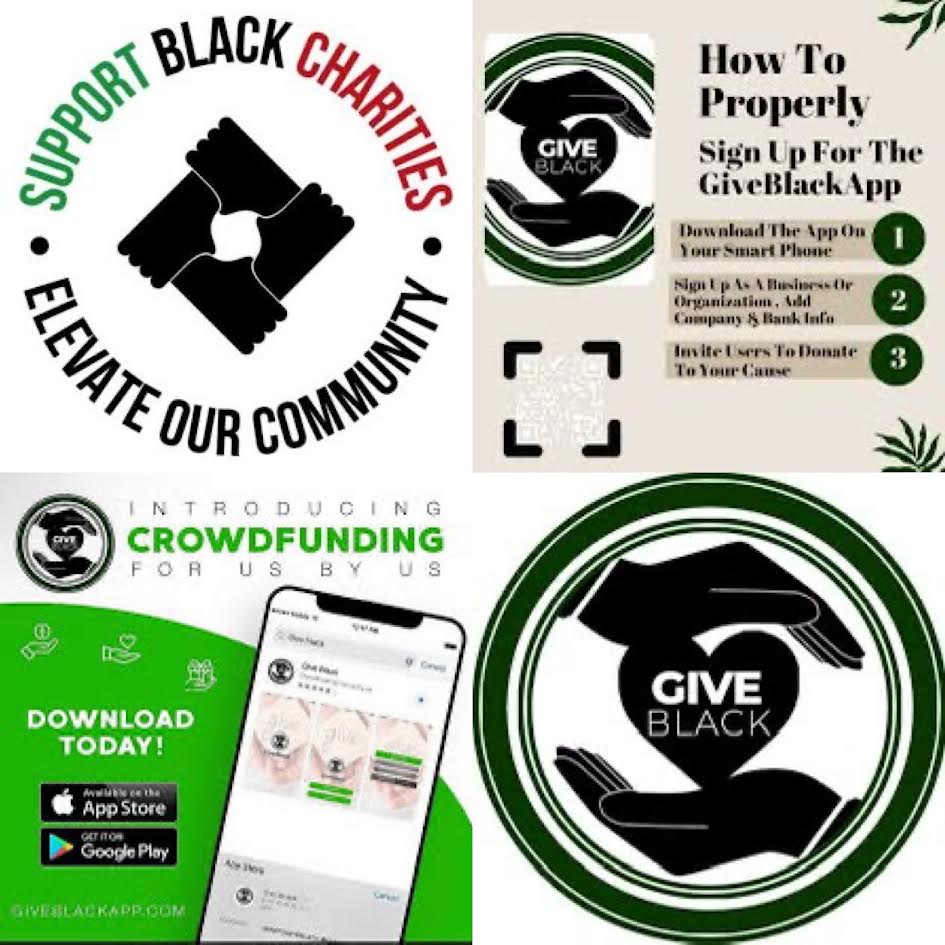
The Give Black App, founded by David C. Hughes, Alexus Hall, and Fran Harris, positions itself at this inflection point. It is not simply an app but a digital strategy—one attempting to reshape the flow of African American philanthropy and donations by curating, centralizing, and amplifying support for Black-led institutions.

The Context of Underfunding

African American nonprofits receive disproportionately less funding compared to their White counterparts. A 2020 Bridgespan study found that unrestricted net assets of White-led nonprofits were 76% larger than those of Black-led nonprofits, while revenues were 24% higher. These disparities compound over time. For HBCUs, the story is even starker: the endowments of all 100+ HBCUs combined is less than 1/10th of Harvard University’s alone.

Despite African America’s estimated $1.8 trillion in annual buying power, only a fraction is captured by its own institutions. Much of African American giving remains individual-to-individual or church-centered, providing immediate relief but not the kind of long-term institutional scaffolding needed to compete with White or global capital. Platforms like Give Black attempt to redirect that generosity into a framework where dollars reinforce permanence.

Building the Infrastructure of Giving

Give Black’s strength lies in infrastructure, a word often overlooked in philanthropy. The app operates as a digital gatekeeper, cataloguing Black-led nonprofits and enabling donors—whether individuals, alumni associations, or grassroots organizations—to find and fund them with ease.

This may seem simple, but its implications are profound. In an environment where discoverability is one of the greatest barriers for Black-led organizations, Give Black centralizes attention. For the countless nonprofits that lack robust marketing budgets, development officers, or national visibility, the app provides a seat at the table they would otherwise be denied.

The team itself reflects intentional design. Hughes, a Morehouse and Prairie View alumnus, carries the academic gravitas to engage institutions; Hall, with a background in cybersecurity and software sales, grounds the platform’s technical operations; Harris, a lifelong advocate of Black love and economic empowerment, provides the cultural grounding and marketing voice. Alongside them stand directors rooted in community engagement, finance, athletics, and science. Together, they represent a cross-section of African American life that mirrors the very community the app seeks to serve.

Philanthropy Meets Technology

Unlike GoFundMe or Benevity, which serve broad audiences, Give Black narrows its focus: African American-led institutions. This specificity is both its greatest strength and its potential vulnerability. By making African American philanthropy visible and trackable, the app attempts to normalize institutional giving within the community itself.

African American donors, long used to personal giving—funeral funds, tuition help, emergency assistance—are now asked to see their dollars not just as charity but as investment. An app that allows for transparency, accountability, and impact measurement may finally bridge the gap between intent and sustained institutional support.

Technology also democratizes giving. Younger generations, accustomed to digital wallets and mobile donations, are unlikely to write checks or mail contributions. By existing where they already transact, Give Black normalizes philanthropy as part of daily life. With proper marketing, it could serve as a digital equivalent of the collection plate—except one that sends dollars to Black think tanks, schools, health clinics, and endowment foundations rather than solely to Sunday offerings.

The Role of Fran Harris

Much of the initial confusion about Give Black’s leadership arises from Fran Harris’s name. She openly jokes about it—she is not the Fran Harris who was a WNBA champion or Shark Tank winner, though many assume otherwise. Instead, she distinguishes herself as someone whose “entire life has been about Black love and economic empowerment.”

That distinction matters. Whereas celebrity often drives visibility in African American philanthropy, Harris positions herself not as a star but as a steward of a broader vision. Her work focuses on the storytelling and cultural marketing needed to align African American giving with institutional capital. In a sense, her humor in addressing the name confusion underscores the seriousness of her actual role: grounding the app’s message in authenticity rather than celebrity.

The Gaps in the Strategy

Despite its promise, Give Black faces hurdles. First, fundraising expertise at the highest level appears limited within the core team. Major philanthropy is an industry of its own, requiring seasoned development officers capable of cultivating seven- and eight-figure gifts. Without this, Give Black risks becoming a platform for small-dollar giving—important, but insufficient for closing institutional capital gaps.

Second, technological depth must match ambition. While Hall’s cybersecurity background provides operational credibility, scaling a fintech-style platform requires CTO-level leadership. Issues of compliance, data integrity, and user trust are not optional—they are the foundation of sustainability.

Third, policy and compliance matter. Donations intersect with financial regulations, nonprofit law, and IRS oversight. To become the definitive gateway for Black giving, Give Black must not only build a sleek front end but also a back-end architecture that can withstand regulatory scrutiny and instill donor confidence.

Where the Opportunities Lie

The greatest opportunities for Give Black lie in institutional self-reliance.

One clear pathway is through alumni networks. HBCU alumni giving rates remain in the single digits, compared to 20–30% at elite PWIs. If Give Black positioned itself as the official conduit for alumni donations, it could help double or triple those rates over time. That alone would shift millions into endowments and operating budgets across the HBCU ecosystem.

Another opportunity lies in membership-based organizations—from professional networks to civic associations. Instead of dues going solely toward programming, portions could be funneled into long-term institutional giving through Give Black, creating a culture of collective philanthropy.

The Pan-African Diaspora represents yet another opening. African and Caribbean communities abroad are increasingly connected digitally. Give Black could expand to become a Pan-African philanthropic bridge, enabling solidarity between African Americans and global Black communities. Diaspora donors, often seeking trustworthy channels for giving, could find in Give Black a centralized, transparent platform.

Finally, the most transformative opportunity is to integrate endowment-building features directly into the app. Too much African American giving is trapped in the cycle of operating expenses. By redirecting portions of donations into permanent capital funds, Give Black could help institutions create reserves that outlast political climates and economic downturns.

Lessons from History

The urgency of Give Black’s mission must be seen against history. During the early 20th century, White-controlled philanthropy dictated the survival of many HBCUs. Institutions like Hampton and Tuskegee often relied on Northern industrialists whose donations came with ideological strings attached. The absence of African American-controlled philanthropic infrastructure meant dependency—and dependency always meant vulnerability.

Today, African American institutions still operate under the shadow of that dependency. Foundation funding remains racially skewed, and government support is often politically weaponized. Give Black, by offering a decentralized and community-driven alternative, challenges that cycle.

But history also warns: movements that lack discipline or scale are easily absorbed or ignored. Just as the Negro Leagues produced baseball talent but lacked the capital to maintain independence, so too can African American philanthropy generate excitement but fail to sustain institutional life if it is not channeled strategically.

The Verdict

Give Black App is not merely a digital donation tool. It is a test case: can African America leverage technology to redirect its wealth into its own institutions? The team’s composition, heavy in HBCU roots, marketing authenticity, and community engagement, suggests it understands both the stakes and the culture.

Still, the app must avoid the trap of becoming a feel-good project without measurable institutional outcomes. Its long-term success will be determined by whether it can:

  1. Secure partnerships with HBCUs, alumni associations, and membership-based organizations.
  2. Develop deep fundraising and compliance infrastructure.
  3. Normalize institutional giving across African American households.

If it does, Give Black could evolve into a cornerstone of African American institutional development—a kind of digital Freedman’s Bureau, redistributing not charity but power.

For African America, the stakes could not be higher. In an era where White nonprofits sit on multibillion-dollar endowments, while Black nonprofits scrape for survival, the question is not whether we are generous. It is whether our generosity is building the kind of institutions that ensure survival for centuries, not just survival for today.

Give Black, if scaled with vision and discipline, may finally provide the infrastructure to answer that question with a resounding yes.

The Million Dollar Gift Club: 2018’s Seven Figure Donations To HBCUs Led By Spelman College

An uptick overall, but more importantly a bounce back for HBCUs is how 2018 would be described in the land of the big philanthropy. The Center for Philanthropy reported 497 gifts of $1 million or more to all colleges and universities. After a sluggish few years, HBCUs have seen the most $1 million plus gifts since 2014. In terms of pure dollar amount, this year’s class has bested them all since HBCU Money began tracking the data six years ago with $43 million combined among the HBCUs obtaining gifts.

High-quality donors (who give consistently and over their lifetime will probably give six to seven figures of donations) continue to show up for HBCUs, but still not representative of HBCUs presence in America’s higher education landscape. While HBCUs represent three percent of the country’s colleges, this year only 1.4 percent of the 497 $1m plus donations found their way to an HBCU. Tranformative donors (who can change the paradigm of an entire institution with one donation) continue to elude HBCUs all together, while PWI/HWCUs landed 13 donations of $100 million plus in 2018.

The gap this year between top seven PWI/HWCU gifts totaled $2.94 billion while HBCUs as mentioned totaled $43 million or a $68 to $1 ratio.

1. Ronda E. Stryker & William D. Johnsont (pictured) – $30 million
Recipient: Spelman College
Source of Wealth: Health products

2. Seth & Beth Klarman  – $5 million                                                        Recipient: Spelman College
Source of Wealth: Finance

3. Roland Parrish – $3 million
Recipient: Fisk University
Source of Wealth: Food & beverage

4. Gene & Patsy Ponder – $2 million
Recipient: Wiley College
Source of Wealth: Manufacturing

5. Kenya & Rainbow Barris (tie) – $1 million                                                        Recipient: Clark Atlanta University
Source of Wealth: Entertainment

5. Irvin & Pamela Reid (tie) – $1 million
Recipient: Howard University
Source of Wealth: Education

5. Denzel Washington (tie) – $1 million
Recipient: Wiley College
Source of Wealth: Media & entertainment


Source: Chronicle of Philanthropy