Tag Archives: hbcu football

Leave The Bands At Home: HBCU Football Should Leave Their Bands Behind For Road Games

“Pragmatism is good prevention for problems.” – Amit Kalantri
The unspeakable may be the fiscally responsible

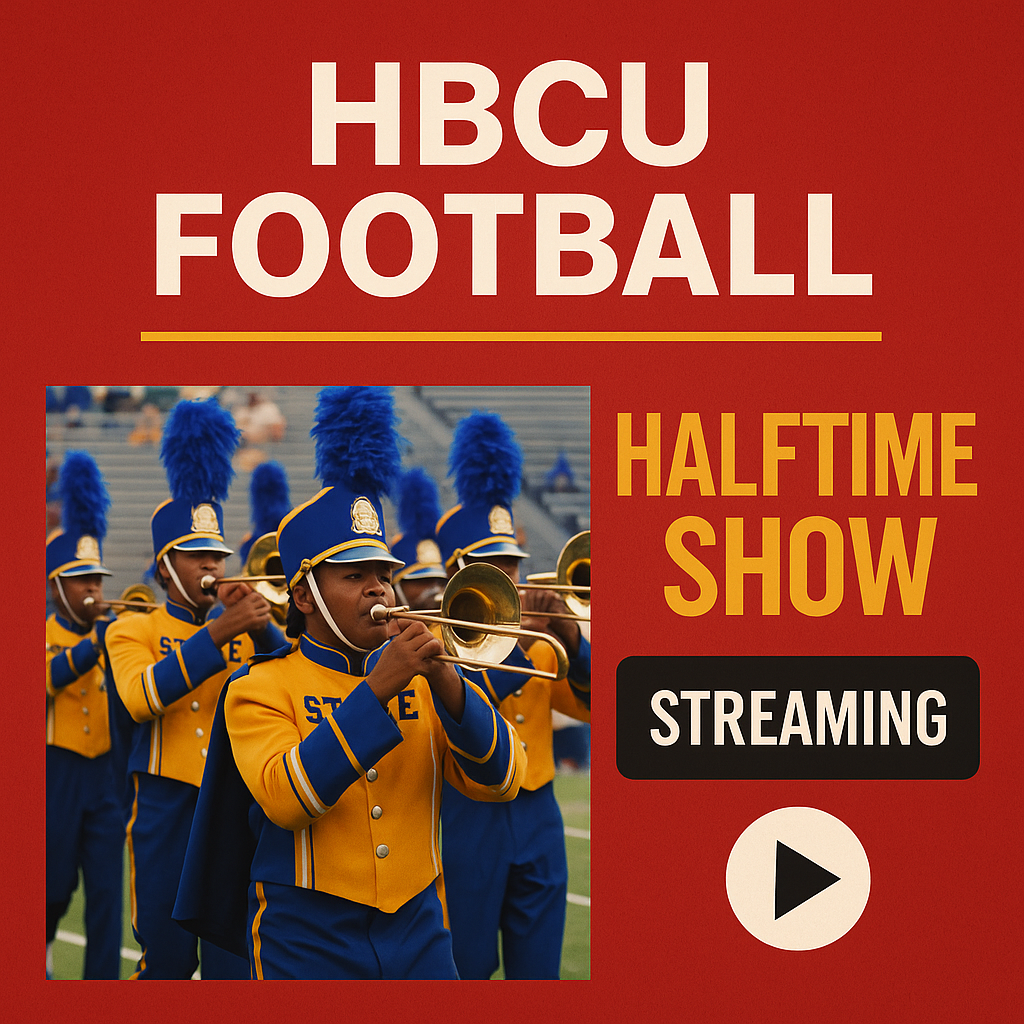
It seems almost unthinkable. An HBCU football game without BOTH bands at halftime. It has happened before, though only in exceptional cases: an emergency back home, a suspended band, or budgetary chaos. But to purposely and preemptively not take one’s band on the road? In HBCU culture, it feels akin to breaking the thirteenth commandment—Thou Shall Not Not Make ‘Em Dance—or committing some kind of cultural apostasy. Yet, for all its sacredness, perhaps it is time to break the spell.

At the core of this radical idea lies a rather mundane but pressing question: money. Football remains a major cost centre for most HBCUs. Marching bands, while sources of school pride and cultural magnetism, are not cheap to move. Between buses, meals, lodging, uniforms, and instrument logistics, taking a full band of 150+ members on the road can easily cost upwards of $50,000 per trip—especially if the destination is cross-country or involves air travel. Multiply that over several away games and a program could be looking at a mid-six-figure expenditure for the season. For many financially struggling HBCUs, this is no longer tenable.

The Holy Trifecta: Football, Bands, and Black Culture

At HBCUs, the band is often a co-headliner alongside the football team. In fact, at many institutions, the halftime show garners more social media views than the football game itself. The human formations, the drumline cadences, the high-stepping majorettes—it is part performance art, part cultural ritual. This makes the suggestion to leave bands behind feel almost blasphemous. It would strip the game of a vital sensory component, some argue, and deflate the inter-institutional competition that thrives on the duality of football and music.

Yet, it is precisely because of the power and prestige of the band that its role should be more strategically deployed. Bands are brand equity, not just background music. And that equity can be preserved—even enhanced—by rationing its presence and reallocating its costs.

Opportunity Cost and the Marching Million

Take the example of a mid-tier HBCU football program with four away games and a 160-member band. Transporting that band to all four games (via coach buses and lodging in modest hotels) might cost around $45,000 per game, or $180,000 total. Now imagine what else $180,000 could fund:

  • A student internship fund supporting 60 summer internships with $3,000 stipends;
  • A marketing campaign aimed at boosting out-of-state recruitment;
  • Repairs to the music department’s aging instruments and facilities;
  • A reserve fund for the band itself, to increase scholarships or buy newer uniforms.

The fact that this trade-off rarely enters the conversation reflects how entrenched the band has become as a required amenity for HBCU athletics. But institutions facing increasing competition for enrollment, state budget cuts, and inflationary pressure must start examining what truly maximizes impact—and what has become tradition for tradition’s sake.

Enter the Bandlight Policy

A “Bandlight” policy—where the band does not travel to away games unless deemed a high-profile or high-impact matchup (such as classics or homecoming of an opposing school)—could preserve institutional pride while enabling budget reprioritization. To soften the cultural blow, this policy could be paired with livestreamed pregame performances from home, aired during halftime of away games, or partnerships with local high schools or community colleges to fill the halftime slot. In effect, HBCUs would still “show up” culturally—just not logistically.

Moreover, rival institutions could enter into alternating-year agreements where only one band travels per year to the same matchup, thereby cutting costs in half while preserving some tradition. Or the entire conference could collectively implement policies to standardize expectations.

Revenue Substitutes: Making Absence Profitable

There is also the question of replacement: if the band is not traveling, what can be put in its place—socially and economically?

  1. High School Recruitment Fairs: Away games, especially those in recruiting hotbeds like Atlanta, Dallas, or Memphis, could feature pre-game recruitment fairs or pop-up university expos that target prospective students. Hosted in the parking lots or auxiliary spaces near stadiums, these expos would draw interest beyond the usual alumni tailgating crowds and create a broader community impact.
  2. Alumni Investment Summits: Rather than just tailgates and chants, HBCUs could host micro-investment forums or alumni networking mixers tied to away games. These could feature information on planned giving, institutional capital needs, and legacy endowments. Such events reinforce the university’s brand as an enduring institution—not just a weekend pastime.
  3. Cultural Diplomacy Exchange: At many PWIs (Predominantly White Institutions), the visiting HBCU band often provides the primary Black cultural presence on campus. By not sending the band, HBCUs could instead host curated cultural experiences: pop-up film screenings of Black directors, panel discussions on African American history, or mini art exhibitions. These events would still showcase the university’s heritage—just in a different form.
  4. Digital Monetization: Finally, there is room for digital alternatives. Bands could record exclusive halftime content back on campus for broadcast during away game livestreams. With the right sponsorship and media packaging, this could even generate revenue—especially if made accessible to the broader HBCU diaspora via streaming platforms or partnerships with outlets like HBCU Go or KweliTV.

Making Room for Exceptions: The Classics, Championships, and Cultural Diplomacy

No policy should be absolute, and the “Bandlight” approach must leave room for strategic exceptions. Certain games carry weight not just in terms of school pride, but institutional visibility, alumni engagement, and revenue generation. These events—such as the Bayou Classic, Magic City Classic, Florida Classic, or Celebration Bowl—should remain exempt from the policy due to their national reach and cultural cachet.

In these cases, the financial and branding benefits of both bands being present far outweigh the costs. These events are often broadcast on national television, command six- or seven-figure sponsorships, and serve as major alumni gathering points. Not showing up in full force—band and all—would send the wrong message about the value of HBCU pageantry.

Similarly, championship games or playoffs should remain occasions where bands accompany the team, reinforcing institutional pride at the highest level of competition.

Lastly, special exceptions could be granted for “Cultural Diplomacy Games,” where HBCUs play PWIs in regions with limited exposure to African American cultural institutions. These matchups offer an opportunity to expand HBCU brand identity and cultural influence—missions that justify a larger financial investment.

By clearly defining such exceptions, institutions can retain flexibility without undermining the integrity of a more fiscally responsible standard for regular-season games.

From Brass to Bank: Strengthening Endowments Through Smart Savings
Perhaps the most compelling reason to consider limiting band travel is the long-term impact it could have on strengthening HBCU endowments—a chronic weakness in the financial armor of most historically Black colleges and universities. Endowments are not merely rainy-day funds; they are the bedrock of institutional independence, providing reliable income streams for scholarships, faculty retention, infrastructure improvements, and strategic initiatives. Yet, the vast majority of HBCUs remain dangerously undercapitalized.

As of 2024, only one HBCU—Howard University—has an endowment exceeding $1 billion. By comparison, over 50 predominantly white institutions boast endowments larger than $1 billion, and the average Ivy League endowment surpasses $10 billion. The gap in financial flexibility means that most HBCUs remain reliant on tuition, federal grants, and unpredictable philanthropic cycles. Closing this endowment divide must be a generational project—and rethinking every cost center, including football and band logistics, is a prudent step.

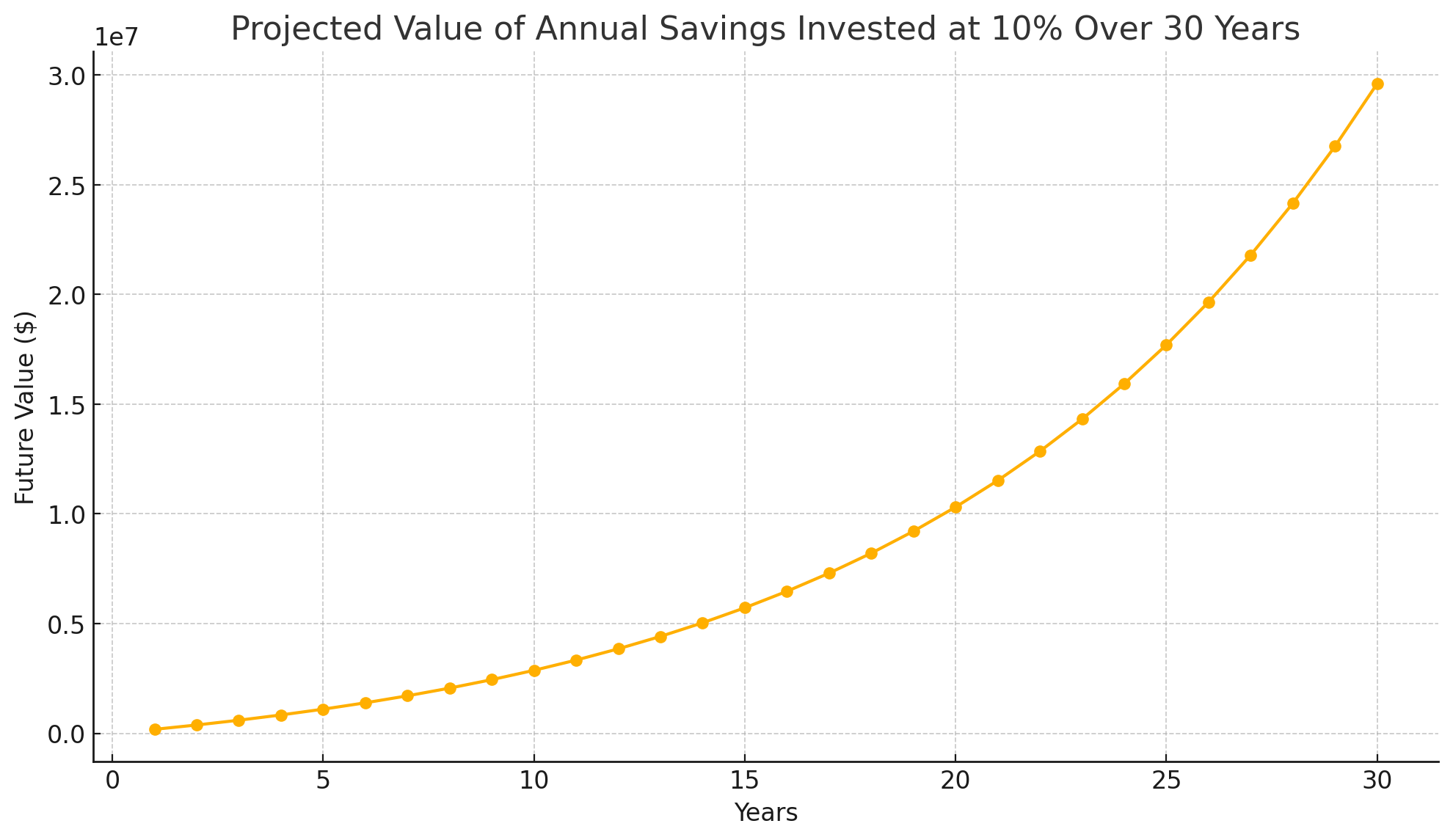
Let us revisit the travel cost scenario: an HBCU saves $180,000 annually by not sending its marching band to four away games. If that amount were instead directed into an endowment or investment fund yielding a 10% annual return, compounded over 30 years, the return on the first year’s investment alone would grow to approximately $3.1 million. But in practice, this contribution would not be a one-time deposit—it would be made every year for 30 years.

Each $180,000 annual deposit would compound over a different span of time—from 30 years down to 1 year for the final contribution. When we sum the compounded growth of all 30 annual contributions, the total value by year 30 is not merely $3.1 million, but a remarkable $32.6 million.

This is the true power of consistent, disciplined investing. What might seem like a relatively small annual sacrifice—foregoing band travel to four away games—can, when reinvested wisely, build a financial pillar for an HBCU that could support hundreds of scholarships, faculty lines, or capital improvements. Across multiple institutions, such strategy would not just close the endowment gap—it could transform it into a long-term competitive advantage. Using the future value formula:

FV = P × [(1 + r)^t – 1] / r
FV = $180,000 × [(1.10)^30 – 1] / 0.10
FV ≈ $3.1 million

Now imagine 40 HBCUs adopting this policy. If each institution redirected $180,000 annually into an endowment with a 10% annual return, the combined value of those contributions over 30 years would grow to an extraordinary $1.3 billion.

This isn’t speculative—it is mathematical certainty backed by compounding returns. What begins as a quiet cost-saving measure becomes a billion-dollar transformation of Black institutional capital. It is the kind of long-term vision HBCUs need to build financial independence and power. Leaving the bands at home, selectively and strategically, could finance a future where they never again play second fiddle to structural underfunding.

Such funds could be reserved for band scholarships, new instruments, music department endowments, or general institutional advancement. Equally important, this shift demonstrates fiscal maturity to large philanthropic donors who seek assurance of sustainability and capital stewardship. In this light, the silence of a band on one Saturday becomes a long crescendo toward institutional resilience.

Band Camp Economics and Reallocation Potential

Consider also the economic pressures on the bands themselves. Marching bands at HBCUs are often underfunded even as they serve as ambassadors and talent pipelines. Travel budgets could be redirected internally:

  • Higher stipends for band scholarships, which could attract more top talent;
  • Expanded outreach to middle and high school band programs to sustain the pipeline;
  • Better faculty-to-student ratios for music education;
  • New instrument purchases, particularly for percussion and brass sections, which endure high wear and tear.

An internal reallocation of $150,000–$250,000 annually per school could mean the difference between merely surviving and thriving for a band program.

The Cultural Blowback—and Counterarguments

Naturally, such a policy will meet resistance—not only from fans but from within. Band members may feel shortchanged on travel experiences. Alumni may bristle at what they see as a cultural dilution. Game promoters may worry about reduced ticket sales if the bands are not both present.

But it is precisely because bands matter so much that they should be protected from burnout and underinvestment. If leaving them home three or four times per year increases their overall budget, performance level, and recruitment reach, is that not a worthy trade?

Besides, culture evolves. Just as HBCUs have moved from AM radio to YouTube, from pamphlets to TikTok, so too can band culture adapt to a new hybrid reality—where physical presence is not the only measure of visibility or power.

A Conference-Wide Model: The SWAC and MEAC Could Lead

If this is to be implemented, it would ideally not be school by school, but as a conference-wide reform. Both the Southwestern Athletic Conference (SWAC) and the Mid-Eastern Athletic Conference (MEAC) could establish guidelines that limit band travel to key games while preserving equity among member institutions.

Such a policy might include:

  • A rotating system where each team brings its band to only half of its away games;
  • Revenue-sharing from livestreamed halftime performances;
  • Incentives for home teams to offer cultural hospitality to offset the absence of the visiting band.

It would also open new possibilities for sponsorship. Corporate partners who understand the influence of HBCU bands could be enlisted to underwrite digital halftime content or band scholarships—an easier pitch if funds are not being spent on transport and logistics.

March Differently, Spend Smarter

Culture is not weakened by strategy. In fact, when deployed wisely, it is made more resilient. Leaving the bands at home for select away games is not a betrayal of HBCU tradition—it is a restructuring of it to survive and thrive in a new era.

In a time when HBCUs are asked to do more with less, the question is not whether the bands should still matter. Of course they do. The question is whether they should have to march themselves into financial depletion to prove it.

Better to let them rest, regroup—and when they do appear, make it unforgettable.

Disclaimer: This article was assisted by ChatGPT.
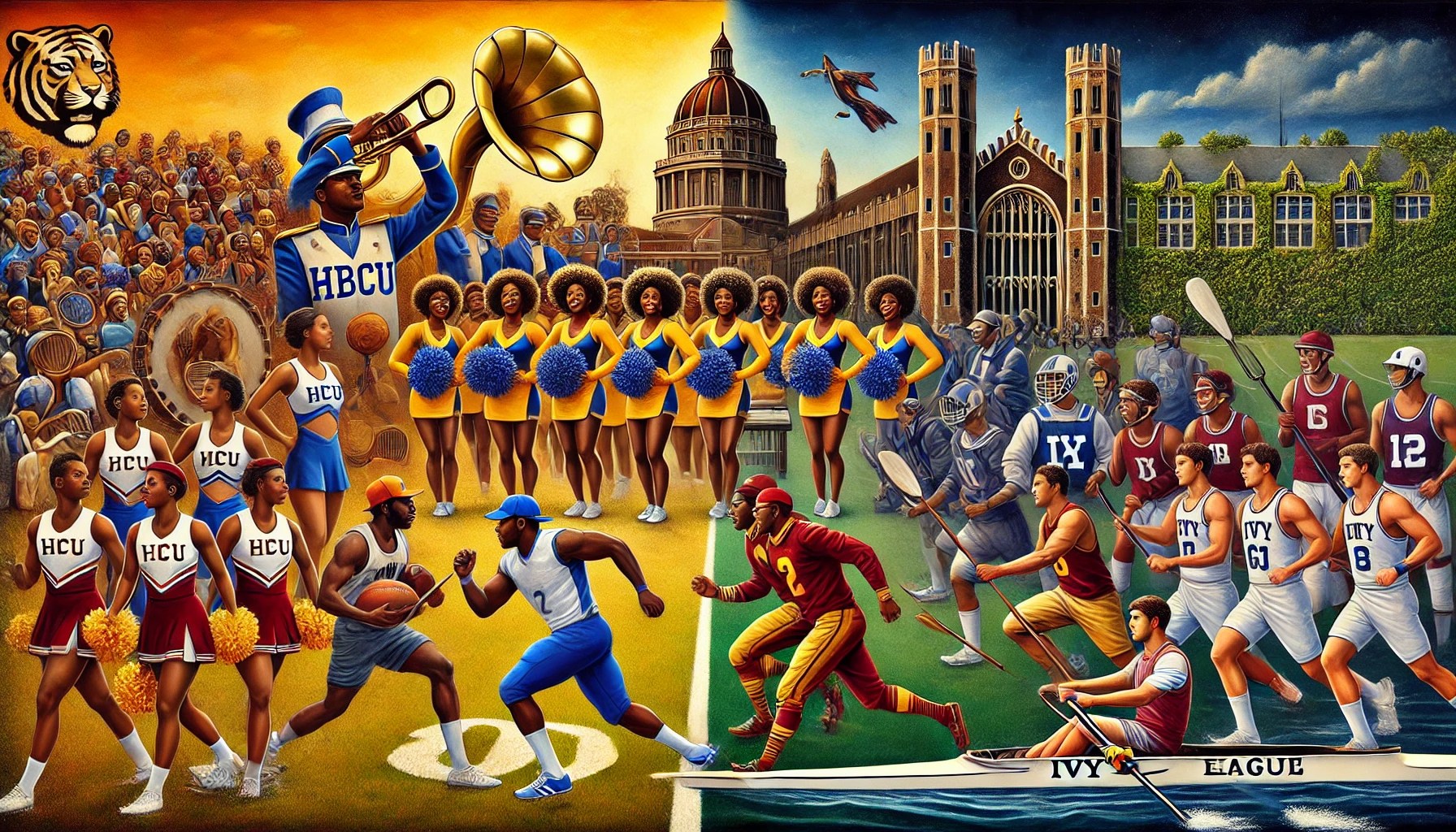
Would The Ivy League Athletic Model Work For HBCUs?

“Challenges make you discover things about yourself that you never really knew.” — Cicely Tyson

When you encounter most HBCU alumni regarding their athletic programs they all desire to be a football powerhouse. They believe that this will lead to a land of riches and honey. At the core of this delusion though is that the wealth gap between P5 athletics boosters and HBCU boosters larger than the wealth gap between is greater than the southern most tip of Florida to upstate New York. Phil Knight, University of Oregon booster and Nike owner, has a net worth of $35 billion. Oprah Winfrey is the wealthiest African American HBCU alumni with a net worth of $3 billion and the last we checked does not act as a booster to her alma mater. Meanwhile, Phil Knight in 2012 alone built the University of Oregon football team a facility to the tune of almost $70 million – and got the state legislature to amend a law to make the building legal since it ran afoul of code. But many HBCU alumni believe that if we get the “talent” to come “home” it will level the playing field. It will not. It is exhausting even explaining that the wealthy of many major athletic programs has more to do with the PWI developing and graduating entrepreneurs like Phil Knight who go on to create multibillion firms and therefore have millions to give back than whatever latest 18 year old recruit they have snagged. For greater context, Phil Knight’s building donation is almost 4X Prairie View A&M University’s athletic budget, the highest among all HBCUs.

In our last SWAC/MEAC Financial Review, the two conferences combined for a loss of over $160 million in 2019-2020 if you took away their subsidies (and even with subsidies the two conferences were in the red). These $150 million in subsidies largely coming in the form of student loan fees which for most HBCUs means students packing on student loans for the sake of athletics. Something infuriating when you consider over 90 percent of HBCU students finish with student loan debt versus less than half that amount at Top 50 endowed schools, many who play DIII football or have no football program at all. That is $150 million in subsidies that could be going to scholarships, research, investments, and so many more things that produce an actual return on investment is an understatement. The idea though that HBCUs could try an athletic model that does not aspire to be P5 (no major television contracts are coming either) seems to be lost on all HBCU athletic leadership and alumni. But what if instead of focusing on the P5 schools, we instead focused on the Ivy League’s athletic model.

The Ivy League athletic model is characterized by its emphasis on academic excellence, limited athletic scholarships, and a focus on holistic student development. As historically Black colleges and universities (HBCUs) contemplate their athletic strategies, the potential adaptation of the Ivy League model raises important questions, especially concerning financial resources, alumni support, and institutional missions. Here’s a closer look at several key factors:

Financial Context: Endowments and Alumni Giving

HBCU Endowments: HBCUs generally have lower endowments compared to their Ivy League counterparts. For example, the average endowment for an HBCU is around $100 million, while top Ivy League schools like Harvard have endowments exceeding $50 billion. This significant disparity in financial resources impacts the ability of HBCUs to fund athletic programs and support student-athlete scholarships.

Ivy League Endowments: The Ivy League’s strong financial standing allows for extensive investments in athletics, facilities, and academic resources. Schools like Yale and Princeton have endowments of over $25 billion, which provide them with a substantial financial cushion to support a holistic student-athlete experience.

Alumni Giving Rates: HBCUs face challenges with alumni giving. For instance, HBCUs have an average alumni giving rate of about 15-20%, whereas Ivy League schools boast rates often exceeding 50%. This higher giving rate in the Ivy League reflects a stronger tradition of alumni engagement and philanthropic support, which is critical for sustaining athletic and academic programs.

Research Budgets and Institutional Support

HBCU Research Budgets: Research funding at HBCUs is generally lower than that of Ivy League institutions. While some HBCUs, like Howard University, receive substantial federal research grants, many others struggle to secure consistent funding. For instance, HBCUs collectively received approximately $1.5 billion in research funding in 2019, a fraction of what Ivy League schools secure annually.

Ivy League Research Funding: In contrast, Ivy League institutions benefit from robust research budgets, with individual schools like Johns Hopkins receiving over $2 billion in annual research funding. This financial backing enhances their ability to integrate athletics with academic resources, providing student-athletes with more comprehensive support.

Holistic Development and Community Engagement

The Ivy League model emphasizes the development of well-rounded individuals. HBCUs share a similar mission of producing leaders who are socially conscious and community-oriented. Adopting the Ivy model’s focus on holistic development could resonate well with HBCUs’ core values. This approach can enhance student engagement and create a strong support system for athletes.

Influence of Ivy League Billionaires

The presence of wealthy alumni, often referred to as “Ivy League billionaires,” contributes significantly to the financial health of Ivy institutions. Notable alumni from Ivy League schools frequently engage in philanthropy, enhancing the schools’ resources for academics and athletics. HBCUs lack a comparable number of affluent alumni, which affects their fundraising potential and overall financial sustainability.

Potential Challenges and Considerations

Implementing the Ivy League model in HBCUs presents both opportunities and challenges:

  • Funding Limitations: The financial constraints of HBCUs compared to Ivy League schools necessitate a tailored approach. Without significant endowment and alumni support, fully adopting a no-athletic-scholarship model could limit HBCUs’ competitiveness in attracting top athletic talent.
  • Cultural Fit: The cultural and historical contexts of HBCUs differ significantly from those of Ivy League schools. Any model adopted must align with the unique missions and student populations of HBCUs.

While the Ivy League athletic model offers valuable insights into promoting academic achievement and holistic development, its application in HBCUs would require careful adaptation. Financial disparities in endowments, alumni giving, and research funding pose significant challenges. However, by focusing on the integration of academic and athletic excellence while fostering community engagement and support, HBCUs can create a unique model that reflects their values and enhances student success both on and off the field.

In the end, HBCUs have to accept the realities on the ground. We have tried chasing the golden ticket of athletics only to find out time and time again it is fool’s gold. It is not the thing that will alter the financial realities of our institutions. If anything it may be the thing that causes their failure as a looming admissions’ crisis is looming across all of American higher education and without a lot of dry powder on hand many institutions will easily go the way of the Dodo bird. It is time to think differently, think acutely, and chart a path that maybe uncomfortable or not what we originally imagined but will ensure the existence, sustainability, and success for future HBCU generations.

Disclosure: This was written with the assistance of ChatGPT.

If Football Is Killing Black Boys, Then Why Are HBCUs Participating?

“If you are an adult and — as a physician and a pathologist — I educate you on the dangers and risks of some activity, like smoking or playing football, and you make up your mind to play, I would be one of the first to stand by you to defend your right,” he says. “Even if you take a gun [and] place it on your head to shoot yourself, you have the right to do that. This is America. But as a modern society, I believe we are morally bound to protect the most vulnerable — our children —like we have done with smoking.” – Dr. Bennet Omalu

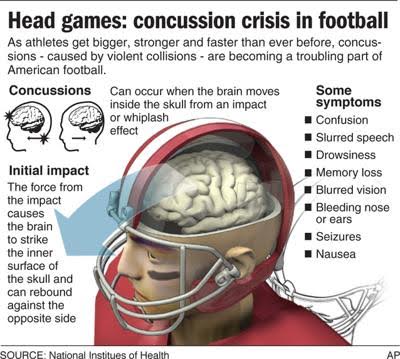
The NFL has arguably made more African American men millionaires than any other organization in America. Perhaps even more millionaires than even African America men have made themselves in all other non-entertainment industries, but that is a problem to discuss for another time. Football, may also be the leading cause of brain damage for African American boys and men. Let us say that again, football, where many African American boys start playing as early as parents believe they can, may also be the leading cause of brain damage for African American boys and playing a key role in their educational underachievement. America’s most popular sport grabs African American boys as early as five years old and begins the process of violently running them into each other and as they grow up the speed and viciousness of those collisions grows exponentially. This is of course well before the male brain becomes fully mature at the age of 25.

There is immense amounts of research that has been conducted on the post-playing career health issues that many former NFL players face. In an article by Mackie Shilstone for 4WWL he reports, “According to “Musculoskeletal Injury History Is Associated with Lower Physical and Mental Health in a Historic Cohort of Former National Football League players”, which appeared in the June 2021 issue of the Journal of Sports Rehabilitation, “as a collision sport, American football has a high risk of serious physical injury. Data from the National Football League (NFL) indicate that up to 68% of NFL players may be injured in a season.” The article cites a study by University of North Carolina, Chapel Hill, Duke Cancer Institute, Durham, NC, and Ohio University in Athens, Ohio, “among this historical cohort of former NFL players, over 90% reported sustaining at least one musculoskeletal injury during their professional careers. Respondents self-reported that many of these injuries required surgery, resulted in their professional playing careers prematurely ending, and still affected them. The additional findings highlight the large percentages of NFL players reporting surgery (60.7%), a premature end to their professional football career (40.3%), and still being affected by injury (74.8%), further augment the concern about the effects from musculoskeletal injuries on overall functioning across the lifespan,” commented the investigators.” The Washington Post in an internal survey of former NFL players in 2013 reported, “Nine in 10 said they’re happy they played the sport. But fewer than half would recommend children play it today. Nine in 10 former NFL players reported suffering concussions while playing, and nearly six in 10 reported three or more. Two in three who had concussions said they experience continuing symptoms from them.” The damage on these men’s health and brains playing football for most of them over 20 years of their life and during the formative years of their brains primary development is truly astounding. As it pertains to youth football’s damage specifically, “A CDC study published in Sports Health reports youth tackle football athletes ages 6 to 14 sustained 15 times more head impacts than flag football athletes during a practice or game and sustained 23 times more high-magnitude head impact (hard head impact). Youth tackle football athletes experienced a median of 378 head impacts per athlete during the season versus 8 in flag football.” That means an African American boy participating in youth football is experiencing 1.04 head impacts per day for an entire year if they were evenly spread out, but we know the season is not a year long which means the bulk of those impacts come in very short windows and in abundance. And yet, there is so much more we do not know.

We do not know what happens to brains that have played football from age five to twelve and how it impacted their long-term cognitive development. There have been millions of Black boys who never make it playing football beyond high school or college, but have just as likely suffered acute brain damage along the way for decades. African American boys have the lowest high school graduation rate and the highest participation rate in youth football K-12. Coincidence? Perhaps, but not likely and even the mere suggestion of it seems too upset many diehard African American football fans who see football as a path to American delusional meritocracy. Are there other factors at play impacting African American education? Certainly, but African American girls are experiencing much of those same systemic realities. One of the major differences though is football and arguably the brain damage that degrades African American boys minds collision after collision and concussion after concussion for as long as that boy plays, but the echoes and reverberation of the damage echoes for much longer. Potentially causing damage in the brain’s fragile state that may never be repaired. While we do know the health implications are grave and acute, we do not know to what extent. However, we do know that the social and economic costs have been and continue to be immense.

In every educational statistic, African American boys are either last or next to last (Latino/Hispanic boys being the only other option and that gap is starting to widen). Resources that could be and should be pouring into African American boys education from early childhood are instead poured into sports. Money being raised to participate in youth sports is money not being spent on education or education supplement. A few troubling statistics from a 2015 Education Week article showed, “Black boys are more likely than any other group to be placed in special education classes, with 80 percent of all special education students being Black or Hispanic males. A U.S. Department of Education report found that in schools with at least 50 percent Black students, only 48 percent were certified in the subject, compared with 65 percent in majority white schools. In English, the numbers were 59 and 68 percent, respectively and in science, they were 57 percent and 73 percent. In 2014, the Black Star Project published findings that just 10 percent of eighth-grade Black boys in the U.S. are considered “proficient” in reading. In urban areas like Chicago and Detroit, that number was even lower. By contrast, the 2013 National Assessment of Education Progress found that 46 percent of white students are adequate readers by eighth grade, and 17 percent of Black students as a whole are too. The achievement gap between the two races is startling, but the difference between the NAEP report on Black students as a whole and the Black Star findings of just Black boys is troubling too. It is not simply Black children in general who appear to be failing in the basics – like literacy; it is the boys. Black students make up just 18 percent of children in U.S. preschools, but make up half of those youngsters who are suspended. Black boys receive two-thirds of all school suspensions nationwide – all demographics and both genders considered. By 18 years of age, 30 percent of Black males have been arrested at least once, compared to just 22 percent of white males. Those numbers rise to 49 percent for Black men by the age of 23, and 38 percent of white males.” Between special education, illiteracy, and discipline, there are certainly arguments for systemic attacks on Black boys, but there is also internal community conversations about the allocation of resources we pour into our boys to counter those issues. Instead, we are pouring resources into a sport that is compounding the issues.

Then there is the damaging psychological impact on Black boys’ mental health. William Rhoden in his book $40 Million Dollar Slaves describes that impact in these terms, “Though integration was a major pivot in the history of the black athlete, it was not for the positive reasons we so often hear about. Integration fixed in place myriad problems: a destructive power dynamic between black talent and white ownership; a chronic psychological burden for black athletes, who constantly had to prove their worth; disconnection of the athlete from his or her community; and the emergence of the apolitical black athlete, who had to be careful what he or she said or stood for, so as not to offend white paymasters.” Black boys from as early as they show any modicum of athletic talent (and in a lot of cases even when they do not) are taught their bodies are all that matter. Football especially takes the approach that more instinct and less thinking is better. It encourages aggression, which of course are great on the football field, but not in classrooms, communities, and relationships. Unfortunately, Black boys are rarely given the chance to be well rounded with things that allow them to think and develop healthy expression so that they know when to turn on and off that aggression. Instead, they operate in life like a bull in a china shop and the African American community suffers the consequences. Unless of course they show exceptional talent that major college football and NFL teams can profit off of and then they are given a pass for their toxic behaviors further incentivizing African American boys to want to invest their time into the sport. And if everyone else is profiting off of it, then why should HBCUs be any different? If African America loved Black boys, then HBCUs would be different.

HBCUs in a lot of ways parrot what PWIs do. Our models at HBCUs are rarely African American centered. While the student body may be predominantly African American, the agenda and the mission objectives are rarely so focused on the empowerment of African America’s social, economic, and intellectual interests. Deion Sanders at Jackson State, to no fault of his own, has renewed a falsehood that many HBCU alumni believe – if the football talent that went to PWIs came “home” to HBCUs, then the financial windfall would be the answer to our prayers. HBCU alumni ignore all of the realities of things like boosters’ wealth, affluent and large alumni bases (Penn State University has approximately 700,000 living alumni) that attract multimillion dollar sponsorships, businesses owned by alumni who provide all types of indirect monies into these programs, and lastly the anti-Blackness that many PWI programs and their leadership operate with treating Black athletes as nothing more than a commodity to be used and thrown away like an orange for their Sunday morning breakfast. The SWAC/MEAC spent $213 million in expenses as of 2019-2020 on their athletic programs, while only generating $52 million in revenue (without counting student subsidies). It is safe to say that the bulk of that money goes to football – just like every other college and university. Perhaps we think that more players going to the NFL and getting drafted will result in more large donations to our institutions. Historically, athletes have never been the major donors to any college or university. The largest donors to colleges and universities have been, continue to be, and will be those who have founded, own, or have some sort of business wealth. Phil Knight, the owner of Nike, in 2021 was the second largest donor to a college and university (an anonymous donor was number one), donating $500 million to the University of Oregon. Knight and his wife have donated over $1 billion in total to the university over the years. An amount greater than any HBCU endowment. So instead of chasing a bridge to nowhere, what could HBCUs be doing with more of their athletic budgets?

HBCUs could be redeploying a consequential amount of that $200 million into programs that would significantly impact the K-12 pipeline for which many African American boys treacherously traverse as mentioned. It would even help to support the number of African American young men they have on their campus where there is also a major enrollment and graduation gender gap. Ensuring that increasing the graduation rate among existing HBCU men would be highly prudent. Many HBCUs have a significant case for starting and founding their own K-12 school system, which would increase the pipeline of African American students into their institutions and would especially allow for African American boys to be seen as something to be cultivated intellectually instead of just physically. The notion that we could do something more impactful for African America rather than give it more of something that we do not need and is ultimately detrimental to our community development seems to be a comfort zone that we are unwilling to breach or even have a rational conversation about. The brain damage to African American boys who then suffer from notable academic achievement has had acute consequences on family formation in our community because African American women are in mass unable to find intellectually and economically equitable partners in African American men who once the cold water of their pro athlete dream is doused wander in a proverbial desert. Along with a community that desperately needs more Black boys to become doctors, teachers, entrepreneurs, and ultimately men who are capable both physically and mentally available. All things it is arguably we are complicit in taking away from them. So if HBCUs are truly to be institutions for African America’s empowerment, then we must – absolutely must – do everything we can do to save African American boys, even from ourselves.

The 2019-2020 SWAC/MEAC Athletic Financial Review

In the fourth HBCU Money report on the SWAC/MEAC’s athletic finances, there has been one trend that is consistent – an acute amount of red on the balance sheet of each respective HBCU as it pertains to their athletic departments and it continues to grow redder and redder. Since HBCU Money first began reporting the SWAC/MEAC Athletic Financial Review, there have been losses of $128.6 million (2014-2015), $147.1 million (2016-2017), $150.7 million (2017-2018), and this year they continue their trend of the athletic black hole with losses over $161 million through athletics with no correction in sight. Not exactly the cash generating juggernauts that HBCU alumni have in mind when it comes to how deeply many believe that athletics can be the financial savior to HBCU financial prosperity. Instead, athletics seems to be potentially at the crux of many HBCU financial woes. Almost unfathomable is that many in the SWAC/MEAC have athletic budgets higher than their research budgets.

The harsh reality is that even with all the popularity buzz generated by Jackson State University’s head football coach, Deion Sanders, the factors working against HBCU athletics ever achieving real profitability remains a pipe dream at best. To land a major television contract, which is the only reason on mass that the SEC and Big 10 are the profitable athletic programs they are requires something that HBCU alumni bases severely lack. Large fan bases that have high incomes and an affluence. The harsh reality that HBCUs have small alumni bases, a reality that has been exacerbated post-desegregation where now HBCUs only get 9 percent of African Americans in college, combined with African America having both the lowest median income and wealth do not make for a recipe for advertisers to pay top dollar to television stations who would then healthily compensate HBCU institutions. HBCU athletics can be profitable, but it requires a completely different business model than our PWI counterparts. See, “The 5 Steps To HBCU Athletic Profitability”.

HBCU athletic revenues went down while expenses and subsidies went up in 2019-2020. That is usually a trend all would prefer be flipped. Students continue to bear the brunt of generating HBCU athletic revenues. This year’s review shows that approximately 73 percent of HBCU athletic revenues are generated through subsidies, up from 70 percent the year prior. Something to consider when 90 percent of HBCU students graduate with student loan debt.

REVENUES (in millions)

Total: $200.4 (down 1.2% from 2017-2018)

Median: $10.3 (down 4.6% from 2017-2018)

Average: $10.6  (up 5.0% from 2017-2018)

Highest revenue: Prairie View A&M University  $18.7 million

Lowest revenue: Coppin State University  $2.8 million

EXPENSES (in millions)

Total: $213.0 (up 0.5% from 2017-2018)

Median: $12.5 (up 15.7% from 2017-2018)

Average: $11.2 (up 5.7% from 2017-2018)

Highest expenses: Prairie View A&M University  $18.7 million

Lowest expenses: Mississippi Valley State University  $3.9 million

SUBSIDY

Total: $148.4 (up 4.9% from 2017-2018)

Median: $6.4 (down 18.4% from 2017-2018)

Average: $7.1 (unchanged from 2017-2018)

Highest subsidy: Prairie View A&M University $15.5 million

Lowest subsidy: Coppin State University $1.7 million

Highest % of revenues: Delaware State University: 92.0%

Lowest % of revenues: Florida A&M University: 37.0%

PROFIT/LOSS (W/ SUBSIDY)

Total: $-12.7 million (down 40.0% from 2017-2018)

Median: $0 (up 100.0% from 2017-2018)

Average: $-666,295 (down 46.3% from 2017-2018)

Highest profit/loss: North Carolina A&T State University  $615,094

Lowest profit/loss: North Carolina Central University  $-6,264,082

PROFIT/LOSS (W/O SUBSIDY)

Total: $-161.0 million (down 6.8% from 2017-2018)

Median: $-9.8 million (down 40.0% from 2017-2018)

Average: $-8.5 million (down 13.3% from 2017-2018)

Highest profit/loss: Mississippi Valley State University  $-2,177,123

Lowest profit/loss: Prairie View A&M University  $-15,417,471

CONCLUSION: At current, it would take an approximately $4.3 billion endowment dedicated to athletics to ween the SWAC/MEAC off of these subsidies onto a sustainable path. A sum greater than all HBCU endowments combined. Perhaps through merchandise sales, Jackson State could see its way to profitability without subsidies. Perhaps, but as former HBCU alumnus and NFL Hall of Famer Shannon Sharpe recently said, “There is only one Deion Sanders”. One thing is for certain, HBCUs have not done a proper cost-benefit analysis for the money they spend and subsidize to their athletic departments nor have they explored potential alternative models.

Editor’s Note: Howard and Bethune-Cookman are excluded in this report because they are private institutions and their athletic finances were not included in this report.

Source: USA Today

Jackson State University Alumnus & Former NFL Player Turns HBCUpreneur/Chefpreneur

“Cooking is not just about ingredients, recipes, and cooking. It’s about harnessing imagination, empowerment, and creativity.” – Guy Fieri

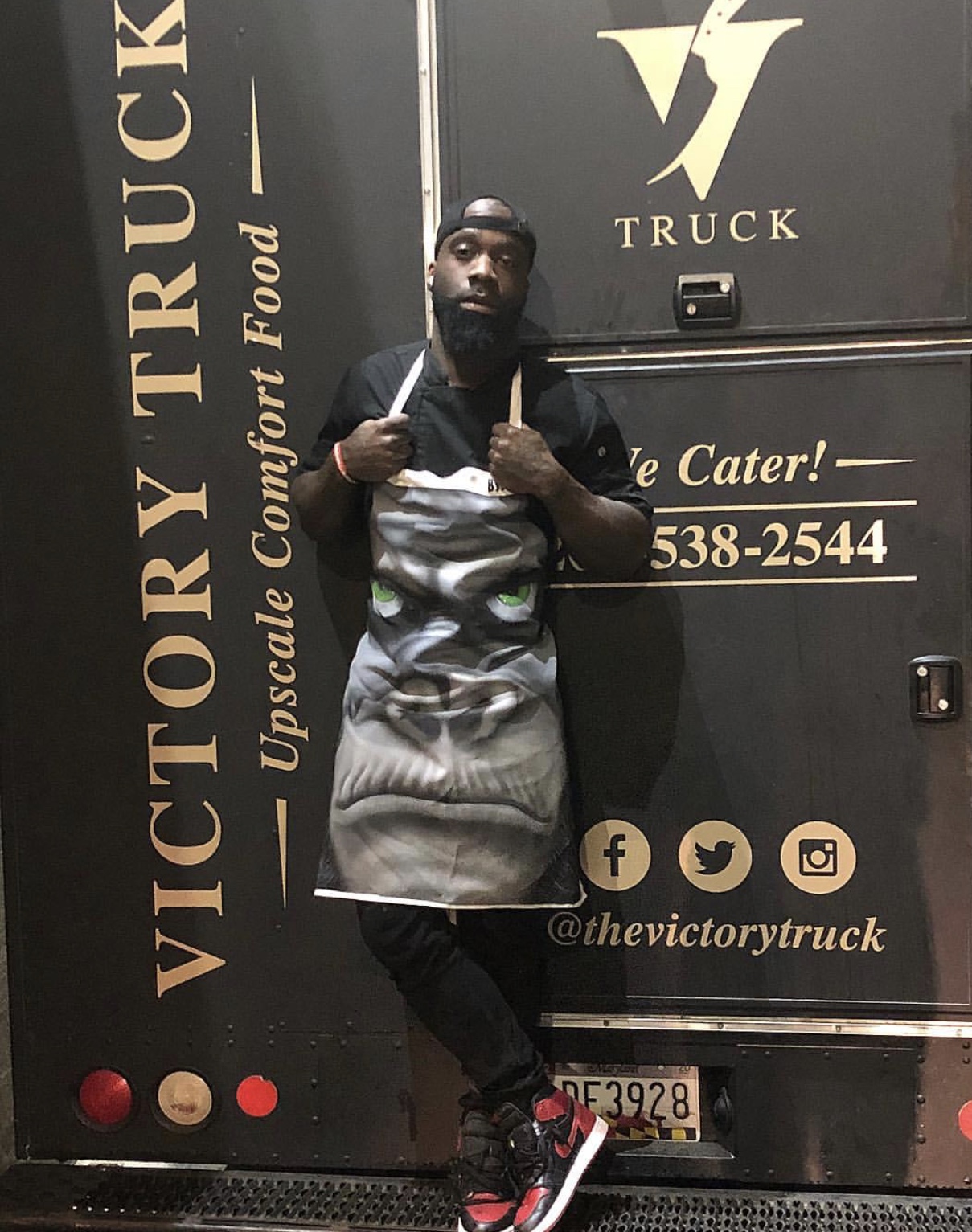
The road to success rarely takes the path we have drawn up for ourselves. Along the way as we are pursuing our success we start to learn more things about ourselves. We may realize what we thought was our passion really is not and something we have tinkered with actually is the thing that truly brings heat to our kitchen. Enter, Tobias Dorzon, a Jackson State University alumnus, who spent multiple years in both the NFL and CFL, but whose true calling had been more or less a mere hobby.

In a recent interview with CNBC, Tobias Dorzon reveals how he hung up the cleats, picked up the apron, and became a culinary superstar –  actually the latter following in the footsteps of his father. He tells CNBC, “Cooking was something I always loved. But it wasn’t until I ventured off and stopped playing (sports) that I realized I loved it more than football.”

Now, Dorzon is the owner of Victory Chefs, a catering company started in 2014, and Victory Truck, a food truck venture which launched January 2018 and tackles the streets and stomachs of Washington D.C. The food truck and catering company are a launching pad for Dorzon to one day open a full-service restaurant as word travels throughout the D.C./Maryland/Virginia area of he and his teams exquisite cuisine.

HBCU Money reached out to Mr. Dorzon and Victory Chefs, inquiring how his time at Jackson State helped prepare him, “Being the unofficial team chef while I played ball was my first segue into preparing meals for athletes. We were a family on and off the field, and me being able to feed my brothers the home cooking that they were used to from back home was a great feeling!”

This is a prime opportunity to connect the work that agricultural HBCUs also known as the 1890s do with African American farmers and farms and connect them with the end users like Chef Dorzon, all while creating research opportunities for the institutions themselves. It also bodes for an argument, that an HBCU culinary school should be formed to diversify, hone, and explore the interest of many African Americans who may want the HBCU experience, but have a non-academic interest. There is lot to bite off and chew in the possibilities of connecting our ecosystem, but with stories like Chef Dorzon’s, we expect it will be an amazing meal that we can all enjoy.

Visit The Victory Chef team at https://www.thevictorychefs.com/

You can also find them on Instagram: @kingcheftd & @thevictorytruck