Tag Archives: black women

Starting a Philanthropy Club: A Collective Approach to African American Giving

“I have found that among its other benefits, giving liberates the soul of the giver.” – Dr. Maya Angelou. 

If you’ve been considering joining or starting an philanthropy club with your family, friends, or fellow HBCU alumni but are unsure if it’s the right move, you’ve come to the right place. The answer is it is absolutely the right move.

A few facts regarding African American organizations and nonprofits:

Philanthropy clubs can be a powerful tool for leveraging African American philanthropy from like-minded individuals. They not only enhance your financial literacy and knowledge about African American and African Diaspora organizations but also empower you to make informed philanthropic decisions. By pooling your resources with your family, you can collectively grow your impact African American nonprofits finances and outreach, fostering a sense of confidence and control over institutional development and empowerment.

Keep reading as we discuss why you might want to start an investment club and the steps you’ll need to take.

Why You’ll Want to Start a Philanthropy Club?

One of the biggest reasons to start an philanthropy club is that they want to learn and share ideas with people who share their values. It makes sense to start a philanthropy club with family, friends, or HBCU alumni because, most of the time, your values are well-aligned. Yes, you may have different opinions, but your values are generally on the same page.

Philanthropy clubs can be a great way to learn about African American causes, organizations, and nonprofits. Because some members may be more seasoned donors, givers, or active in the nonprofit space, they can share their knowledge on certain topics.

Philanthropy clubs are a great way to magnify small donations by each member into a large donation by a focused collective. the increase the impact associated with investing. However, with the rise in so many commission-free brokers, the fees for making a high volume of trades aren’t as big of a deal.

How to Start an Investment Club

If you’re ready to get your philanthropy club with family, friends, or HBCU alumni off the ground, you’ll want to follow these steps to ensure success:

1. Find and Organize Members

Finding members for a philanthropy club is generally one of the most challenging steps. However, it’s a little easier if you’re looking to start one with your family, friends, or HBCU alumni. Either way, ensuring the fit is correct before jumping in is crucial.

A solid philanthropy club should have at least 5 people but no more than 15 or 20. You must have enough ideas, but too many can make things more difficult. Each person will be required to identify a cause, organization, or nonprofit. Then, each month, a different member will present their cause, organization, or nonprofit to the group.

Before extending an invitation to different anyone, ask yourself a few questions. These will help you see if it will be a good fit.

  • Do you trust the person you’re thinking of inviting to be consistent and involved?
  • Will they bring research and ideas to the meetings?
  • Are they organized?
  • Are they going to pay the monthly donation on time?

2. Determine Your Goals

Once you have your members set, you must agree on your goals. Most clubs’ goals will be making donations and learning from others. But how are you going to get to that point?

It’s important to take some time to understand each member’s philanthropic approach. Are they willing to take on more risk or prefer to be more conservative? Do you want to stick with only well known organizations, or are members interested in startup organizations as well? Do they only want to give to domestic organizations? Or are they willing to give to African Diaspora nonprofits working in Haiti, Jamaica, UK, or Africa?

Developing a plan of attack and ensuring that each member is on the same page will be vital to success.

3. Decide How You Want To Give

Deciding on if you want to setup a legal structure for your philanthropy club is important because potentially over time, your club can setup an endowment that invest donors money and that can grow into a significant and sustainable amount of money. Having the necessary legal protections is going to be important. If your philanthropy club decides to actually invest its donations into investments that will grow over time so that the club has larger and more sustainable sums to give is important to think about.

The other option is to simply give everyone the option to donate on their own once the cause, organization, or nonprofit is decided upon. This route relies on the honor system or some type of peer accountability towards giving.

Each philanthropy club must do what works best for them and also realize that the club is allowed to evolve over time.

The Bottom Line

Philanthropy clubs are a great way to pool your donor funds and learn from other members. Just be sure that you join a group where everyone is willing to listen to ideas and pull their own weight within the club.

African America’s November 2024 Jobs Report – 6.4%

OVERALL UNEMPLOYMENT: 4.2%

AFRICAN AMERICA: 6.4%

LATINO AMERICA: 5.3%

EUROPEAN AMERICA: 3.8%

ASIAN AMERICA: 3.8%

Analysis: European Americans unemployment rate has been at 3.8 percent for four of the past five months. Asian Americans decreased 10 basis points and Latino Americans increased 20 basis points from October, respectively. African Americans unemployment rate increased 70 basis points from October. This is the highest African American unemployment rate in the past five months.

AFRICAN AMERICAN UNEMPLOYMENT RATE BY GENDER & AGE

AFRICAN AMERICAN MEN: 6.0%

AFRICAN AMERICAN WOMEN: 6.0% 

AFRICAN AMERICAN TEENAGERS: 18.1%

AFRICAN AMERICAN PARTICIPATION BY GENDER & AGE

AFRICAN AMERICAN MEN: 68.7%

AFRICAN AMERICAN WOMEN: 62.3%

AFRICAN AMERICAN TEENAGERS: 27.8%

Analysis: African American Men saw an increase in their unemployment rate by 30 basis points and African American Women increased by 110 basis points. African American Men decreased their participation rate in November by 60 basis points. African American Women decreased in their participation rate in November by 30 basis points. African American Teenagers unemployment rate increased by 90 basis points. African American Teenagers saw their participation rate decrease by 120 basis points in November, they are now at their second lowest participation rate in the past five months.

African American Men-Women Job Gap: African American Women currently have 640,000 more jobs than African American Men in November. This is an decrease from 693,000 in October.

CONCLUSION: The overall economy added 220,000 jobs in November while African America lost 276,000 jobs. From Yahoo! Finance, “Hurricanes and a strike by Boeing (BA) workers weighed heavily on the October report, which was revised to show there were 36,000 jobs created last month. The unemployment rate stood at 4.1% in October. Job growth for September was also revised higher on Friday, with revisions now indicating the US economy added 56,000 more jobs than initially reported over those two months.”

African America’s July 2024 Jobs Report – 6.3%

OVERALL UNEMPLOYMENT: 4.3%

AFRICAN AMERICA: 6.3%

LATINO AMERICA: 5.3%

EUROPEAN AMERICA: 3.8%

ASIAN AMERICA: 3.7%

Analysis: European Americans unemployment rate rose 30 basis points in their unemployment rate. Asian Americans decreased 40 basis points and Latino Americans similarly increased 40 basis points from July, respectively. African Americans for a second straight month had no change in their unemployment rate.

AFRICAN AMERICAN UNEMPLOYMENT RATE BY GENDER & AGE

AFRICAN AMERICAN MEN: 6.6%

AFRICAN AMERICAN WOMEN: 5.5% 

AFRICAN AMERICAN TEENAGERS: 13.1%

AFRICAN AMERICAN PARTICIPATION BY GENDER & AGE

AFRICAN AMERICAN MEN: 69.7%

AFRICAN AMERICAN WOMEN: 63.0%

AFRICAN AMERICAN TEENAGERS: 27.6%

Analysis: African American Men saw an increase in their unemployment rate by 50 basis points and African American Women decreased by 20 basis points. African American Men increased their participation rate in July by 60 basis points. African American Women decreased in their participation rate in July by 70 basis points. African American Teenagers unemployment rate decreased by a volatile 380 basis points. African American Teenagers saw their participation rate decrease by 170 basis points in July, they are now at their lowest participation rate in the past five months for the second straight month.

African American Men-Women Job Gap: African American Women currently have 747,000 more jobs than African American Men in July. This is an increase from 646,000 in June.

CONCLUSION: The overall economy added 114,000 jobs in July while African America added 169,000 jobs. In a rarity, African America added more jobs than the overall economy meaning other groups took losses. From Barrons, “Government data on Friday showed a smaller-than-expected gain of 114,000 nonfarm payrolls last month, as the unemployment rate ticked up to 4.3%—a nearly three-year high. The figure likely puts more pressure on the Federal Reserve: The central bank has kept interest rates elevated to bring down inflation, but also must manage the other side of its dual mandate, which is to pursue maximum employment.”

2024’s Most Powerful Women in African American Owned Banks

Whatever glory belongs to the race for a development unprecedented in history for the given length of time, a full share belongs to the womanhood of the race. – Mary McLeod Bethune

African American Owned Banks (AAOBs) continue to decline, down to 16 since from 21 since we last highlighted African American Owned Banks’ Most Powerful Women in 2013. The decline of almost 25 percent of African American Owned Banks over the past decade has meant less and less opportunity across the board and for African American women that appears to be the case as well. As our institutions decrease, so then do our ability to create opportunities for our communities. African American women in AAOBs have seen an increase only in the board of directors with all other positions seeing a decline.

Even with that reality, the numbers in comparison to their counterparts is still much greater. The largest 50 banks which are all non-AAOBs have only 1 woman (2 percent) at the helm according to American Banker. African American women comprise almost 20 percent of African American Owned Banks CEO positions.

2024 Statistics (2013 Statistics)

3 CEOs/President (4 CEOs/Presidents)

1 CFO (2 CFOs)

10 Vice-Presidents (13 Vice-Presidents)

8 Board of Directors (7 Board of Directors)

We have done our best to find out just who are some of the amazing African American women serving as executives and directors at African American Owned Banks around the country. However, some banks do not have their management or board of directors listed so we are sure we missed a few talented women, but for now here is who we found and some of their stories.

*HBCU Alumnus

COMMONWEALTH NATIONAL BANK

Beverly Cooper, Board of Directors

Mrs. Cooper is co-founder of the voter education non-profit Stand Up Mobile: A Blueprint for US.  She retired after 15 years as President of The Christian Benevolent Funeral Home, Inc. a family- owned business for 96 years. 

CITIZENS TRUST BANK

Cynthia N. Day, President/Chief Executive Officer

In February 2012, she became the Chief Executive Officer, the first permanently named female CEO in the Company’s history. Under her leadership as Chief Executive Officer, the bank has reached many milestones including achieving its highest level of performance during its 100 year existence. Further, most recently, the Bank was ranked, by S&P Global, #28 out of the Top 200 Performing Banks in the Country in its asset band.

Iris D. Goodly, Senior Vice President/ Director of Client Services and Operations

LIBERTY BANK & TRUST COMPANY

Jaimmé Collins, General Counsel, EVP and SVP of Strategy

In addition to being General Counsel, Ms. Collins manages Liberty’s strategic initiatives, joint ventures, regulatory matters, and leads Liberty Community Development Corporation (Liberty’s real estate development affiliate) and Liberty Foundation, Inc. (Liberty’s nonprofit affiliate).

Ann Duplessis, SVP of Bank Administration

*Tammy Joseph, SVP of Internal Controls

*Rhonda McMillan, SVP & Chief Credit Officer (pictured bottom right)

ONEUNITED BANK

Teri Williams, President and Chief Operating Officer

Responsible for implementation of the Bank’s strategic initiatives, as well as the day-to-day operations of the bank. These operational areas include all retail branches, marketing, compliance, lending, information technology, customer support, legal, and human resources. Under her leadership, OneUnited Bank has consolidated the local names and product offerings of four (4) banks to create a powerful national brand supported by innovative products and services. She brings 30 years of financial services expertise from premier institutions such as Bank of America and American Express, where she was one of the youngest Vice Presidents.

Sherri Brewer, Senior Vice President, Chief Retail Officer

She has been in the banking industry for 30 years. She has held senior level positions in the areas of sales, operations and consumer lending. Her responsibilities include management of five retail branches as well as the online branch, the banks facilities, item processing operations and the call center. She also serves as the Security Officer for the Bank. She has successfully managed two system conversions and one item processing conversion during her tenure. Ms. Brewer has worked for Wells Fargo, Orange County Credit Union, Business Bank of California, and First City Federal Credit Union.

FIRST INDEPENDENCE BANK

Linda Forte, Board of Directors

MECHANICS & FARMERS BANK

Emma S. Allen, Board of Directors

Connie J. White, Board of Directors

ADELPHI BANK

Greta Russell, Board of Directors

Gabrielle Whittaker, SVP of Consumer Banking and Community Relations

UNITED BANK OF PHILADELPHIA

Marionette Y. Wilson, Secretary of the Board of Directors

Ms. Wilson joined the Board of Directors of United Bank of Philadelphia in 1992 as a founding director. She is now retired but was formerly the Co-Founder/Partner, John Frazier, Inc., Philadelphia, PA from 1981-2002.

*Evelyn F. Smalls, President and Chief Executive Officer (pictured bottom left)

Mrs. Smalls is President and Chief Executive Officer of United Bank of Philadelphia, a minority-owned and controlled, full service commercial bank. With over 30 years experience in banking and community development, Mrs. Smalls is responsible for the leadership and management of the Bank including setting the direction of the organization, communicating its vision and adapting the culture and operations to achieve success.

Prior to her appointment as President and Chief Executive Officer, Mrs. Smalls served as Senior Vice President for Regulatory Compliance and Community Reinvestment. Her leadership helped establish the Bank’s community reinvestment model that has achieved consecutive “Outstanding” ratings from the Federal Reserve and FDIC since the Bank’s inception.

Mrs. Smalls received her Bachelor’s degree in Business from North Carolina Central University. 

Brenda M. Hudson-Nelson, Executive Vice President & CFO

Mrs. Hudson-Nelson has served as United Bank of Philadelphia’s Executive Vice President and Chief Financial Officer for twenty-five years. Mrs. Hudson-Nelson has thirty-four years experience within the financial services industry. Mrs. Hudson-Nelson’s responsibilities include directing financial planning, implementing, and overseeing the Bank’s systems of internal controls, managing the Bank’s investment portfolio, and monitoring and managing the Bank’s sensitivity to interest rate risk. Ms. Hudson-Nelson ensures that the Bank’s Annual Report, SEC Reports and other Regulatory Reports are filed accurately and timely. 

She served as Treasurer on the Boards of Director for the South Street Dance Company, CHOICE, Big Brothers/Big Sisters of America, Big Brothers/Big Sisters of Mercer County, and for Prevention Point Philadelphia.

Dimitria Davenport, Vice President, Community Banking & Compliance

With over 20 years in the financial services industry, she has held key roles within Training, Consumer Banking, Retail Administration and Human Resources.  Dimitria has spent the last eighteen years of her career working diligently to carry out United Bank’s mission of financially empowering people and businesses in the greater Philadelphia region. 

Dimitria serves on several Boards: The Executive Committee of The African American Chamber of Commerce, The City Schools and The New Hope Community Development Corporation.

CITIZENS SAVINGS B&T COMPANY

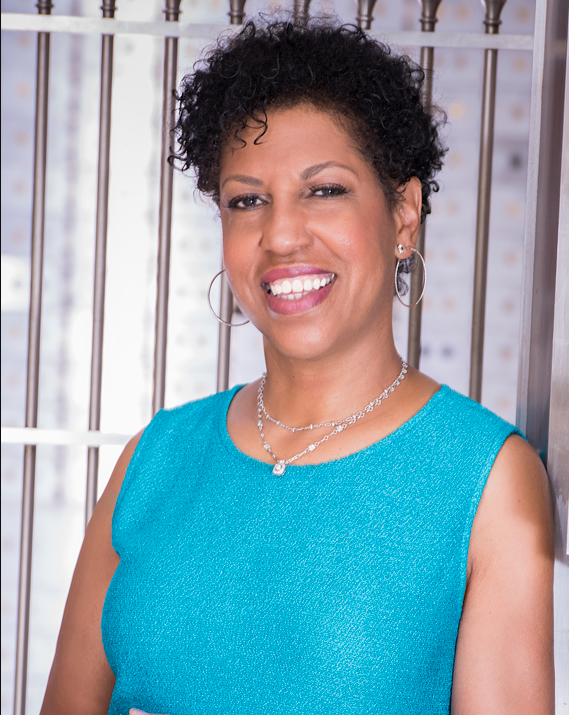
*Dr. LaDonna Boyd, Board of Directors (pictured top left)

As the fifth-generation president/CEO of the R.H. Boyd Family of Companies in Nashville, Tennessee, she’s a powerhouse of innovation and creativity, transforming the business landscape while championing social causes close to her heart.

She earned her bachelor’s in economics and with a minor in French from Spelman College, followed by an MBA with a finance concentration from Tennessee State University. She completed her with a Doctorate in Education with a focus on organizational leadership from Pepperdine University. She further honed her skills by earning two certificates in from Harvard University’s Extension School in Digital Marketing Strategy and Artificial Intelligence in Business: Creating Value With Machine Learning.

*Joan Fleming, SVP of Residential Lending and Community Development (pictured top right)

She is an industry leader- finding ways to produce results through her expertise, commitment and relationships. Joan has a passion for delivering value and benefit to her clients with an enthusiastic and friendly attitude. It is her commitment to serve the underserved by being an advocate for affordable housing and financial literacy. Her “thinking outside the box” mentality allows her to develop programs to ensure everyone can build wealth through homeownership. 

UNITY NATIONAL BANK OF HOUSTON

*Sharon E. Murphy, Board of Directors

African America’s June 2024 Jobs Report – 6.3%

OVERALL UNEMPLOYMENT: 4.1%

AFRICAN AMERICA: 6.3%

LATINO AMERICA: 4.9%

EUROPEAN AMERICA: 3.5%

ASIAN AMERICA: 4.1%

Analysis: European Americans unchanged for a third month in their unemployment rate. Asian Americans saw an increase of 100 basis points and Latino Americans saw a negligible decrease of 10 basis points from June, respectively. African Americans had an increase in their unemployment rate of 20 basis points for June, a third straight month of increases and second highest in the past five months.

AFRICAN AMERICAN UNEMPLOYMENT RATE BY GENDER & AGE

AFRICAN AMERICAN MEN: 6.1%

AFRICAN AMERICAN WOMEN: 5.7% 

AFRICAN AMERICAN TEENAGERS: 16.9%

AFRICAN AMERICAN PARTICIPATION BY GENDER & AGE

AFRICAN AMERICAN MEN: 69.1%

AFRICAN AMERICAN WOMEN: 62.3%

AFRICAN AMERICAN TEENAGERS: 29.3%

Analysis: African American Men saw a decrease in their unemployment rate by 30 basis points and African American Women increased by 50 basis points. African American Men increased their participation rate in June by 80 basis points. African American Women decreased in their participation rate in June by 60 basis points. African American Teenagers unemployment rate increased by a volatile 300 basis points. African American Teenagers saw their participation rate decrease by 290 basis points in June, they are now at their lowest participation rate in the past five months.

African American Men-Women Job Gap: African American Women currently have 646,000 more jobs than African American Men in June. This is an decrease from 924,000 in May.

CONCLUSION: The overall economy added 206,000 jobs in June while African America lost 73,000 jobs. This is Africa America’s lowest employment in five months with declines in four out of the past five months. From PBS, “Meanwhile, the U.S. economy added more jobs than expected last month, marking the 42nd consecutive month of job growth; 206,000 new jobs were added in June. Government hiring accounted for more than a third of those, followed by health care, social assistance and construction. Unemployment also inched up to 4.1 percent, making it the first time it’s risen above 4 percent in more than two years.”