All banks are listed by state. In order to be listed in our directory the bank must have at least 51 percent African American ownership. You can click on the bank name to go directly to their website.
KEY FINDINGS:
14 of the 18 African American Owned Banks saw increases in assets from 2023.
African American Owned Banks (AAOBs) are in 16 states and territories. Key states absent are Maryland, Missouri, New York, and Virginia.
Adelphi Bank (OH) is the most recent African American Owned Bank started in 2023. Prior to that no African American owned bank had been started in 23 years.
Alabama and Georgia each have two AAOBs.
African American Owned Banks have approximately $6.4 billion of America’s $23.6 trillion bank assets (see below) or 0.027 percent. The apex of African American owned bank assets was in 1926 when AAOBs held 0.2 percent of America’s bank assets or 10 times the percentage they hold today.
African American Owned Banks comprise 12 percent of Minority-Owned Banks (151), but only control 1.75 percent of FDIC designated Minority-Owned Bank Assets.
2024 Median AAOBs Assets: $191,590,000 ($168,701,000)
2024 Average AAOBs Assets: $355,448,000 ($326,097,000)
TOTAL AFRICAN AMERICAN OWNED BANK ASSETS 2024: $6,398,070,000 ($5,867,738,000)
“Everything that I’ve gone through informs me and my opinions in a way, I guess because I am a child of segregation. I lived through it. I lived in it. I was of it.” – Samuel L. Jackson
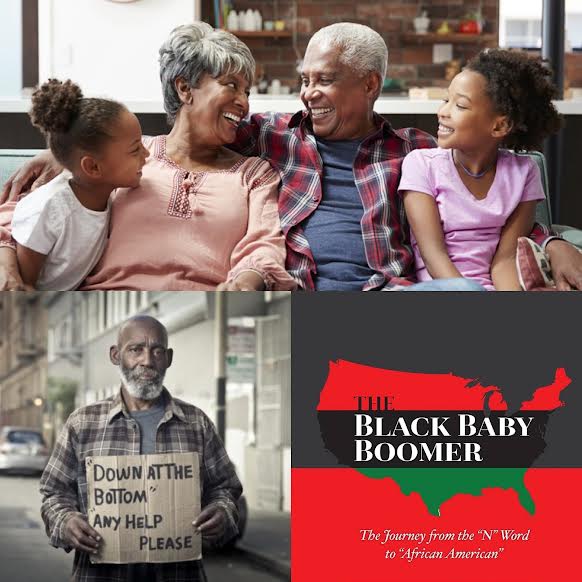
One thing most financially literate people realize is that it is not how much you make, but it is how much you keep. Those who are of a wealth building mindset realize it is not how much you keep, but how much of your capital is actually working to make you wealthier without your labor being attached to it. African American individuals, households, and institutions struggle in both cases, but mightily in the latter. Most African American wealth, as highlighted by the amount of time the African American dollar remains in our community (less than 6 hours), does little to no work for the wealth building of those three entities. A major reason for this is that African American individuals, households, and yes, even institutions put little to none of their money in African American institutions – ironically.
Economic Disparities
“According to a report by the Federal Reserve, the median net worth of African American households headed by someone aged 55-64 (who would generally be considered Baby Boomers) was around $39,000 in 2019. This is substantially lower than the median net worth of European American households in the same age group, which was around $184,000 in 2019. It’s important to note that there is significant variation within both groups, and wealth is influenced by a range of factors including income, education, and access to resources.”
Insider Intelligence gives a generational demographic breakdown reporting that, “Baby boomers were the largest living adult population until 2019. According to the US Census Bureau, US boomers have remained the second-largest population group in 2022, comprised of 69.6 million people ages 58 to 76.” And Statista reports that there are 43.26 million Boomer households meaning that approximately 4.8 million of those are African American. This then puts African American Baby Boomer wealth at approximately $187.2 billion – but what of it?
Each eldest generation will push wealth forward one way or another. Where it flows though can be largely up to the person. Some will push it to the next generation of family and friends, charities and organizations, and there are a host of other options of where money can find itself as one begins to consider their legacy both in the here and now or from the beyond. One things is crystal clear though from a Brookings Institute study, African Americans are falling behind with every passing generation, “30% of European American households received an inheritance in 2019 at an average level of $195,500 compared to 10% of African American households at an average level of $100,000.” African Americans both receive 50 percent less than their European American counterpart and European Americans are three times more likely to get an inheritance than their African American counterpart – but again what of it?
While the wealth of even African American Baby Boomers is not that of their counterparts, it should have the opportunity to make far more considerable impact than it probably actually will. As African American baby boomers age, a significant transfer of wealth is expected to occur. This presents an opportunity for younger generations to invest in education, home ownership, and entrepreneurial ventures. However, research indicates that many African American families face systemic barriers, such as lower access to financial resources and education, which could impact how this wealth is utilized and preserved.
Despite the considerable wealth held by baby boomers, economic disparities persist within the African American community and its institutions. Issues such as income inequality, lack of business ownership, access to African American owned financial institutions, limited access to financial literacy resources, and a disconnected institutional ecosystem can hinder the effective management and growth of inherited wealth. Addressing these disparities will be crucial in ensuring that future generations can leverage this wealth for long-term benefits.
Philanthropy and Community Investment
Many African American baby boomers are inclined to support causes that uplift their communities. This philanthropic inclination could lead to increased investment in African American nonprofits, education initiatives, and other community organizations. By directing funds towards institutional development, these donors can help address systemic issues and create lasting change.
Financial Planning and Literacy
The management of this wealth will largely depend on the financial literacy of both the current baby boomer generation and their heirs. Increasing access to financial education, resources, and African American owned financial institutions is essential to ensure that wealth is not only preserved but also strategically invested. Programs aimed at enhancing financial connectivity between African American households and African American financial institutions within the African American community can play a significant role in maximizing the impact of this wealth.
The fate of the $188 billion in wealth held by African American baby boomers is not just about the transfer of assets; it’s about how those assets can be utilized to build a stronger future for the community. By focusing on education, philanthropy, and addressing systemic barriers, there is potential for this wealth to make a profound impact on the lives of future generations. Ensuring that this wealth is effectively managed and directed towards meaningful causes will be crucial in shaping a more equitable and prosperous future for the African American community. In the end, the only real question is how much of the $188 billion will end up in African American institutions. Whether those organizations be African American social, economic, or political institutions is up to the household, but this is the most acute potential for institutional transformation that African America will have seen since 1865.
Disclosure: This article was assisted by NOVA AI and ChatGPT.
Unity National Bank, headquartered in Houston, Texas, with $209 million in assets, is the eighth largest African American owned bank by assets. It is located just a stone’s throw away from Texas Southern University. Recently the bank named Pedro Bryant, a Morris Brown College alum, its new CEO and President. Unity National Bank has an immense opportunity to move up the rankings for African American banks with the right strategy. According to an Apartment List report in February 2024, San Antonio, Houston, Dallas, and Austin rank as the third, fourth, sixth, and seventh best cities in the US for African American professionals. Lendio also reports that Texas is home to over 400,000 African American owned businesses and almost 13,000 are employer firms. These ingredients mean that with Unity National Bank being the only African American owned bank in the state the runway for growth is theirs to capture. This also means a strengthening of ties between HBCUs and the African America private sector are that much stronger. The lack of cohesion between the two institutions (100 HBCUs and 16 African American owned banks) has largely been one of the key ingredients holding back the African American economy as intellectual and economic capital rarely circulates between HBCUs and the African American owned employer firms.
Whatever glory belongs to the race for a development unprecedented in history for the given length of time, a full share belongs to the womanhood of the race. – Mary McLeod Bethune
African American Owned Banks (AAOBs) continue to decline, down to 16 since from 21 since we last highlighted African American Owned Banks’ Most Powerful Women in 2013. The decline of almost 25 percent of African American Owned Banks over the past decade has meant less and less opportunity across the board and for African American women that appears to be the case as well. As our institutions decrease, so then do our ability to create opportunities for our communities. African American women in AAOBs have seen an increase only in the board of directors with all other positions seeing a decline.
Even with that reality, the numbers in comparison to their counterparts is still much greater. The largest 50 banks which are all non-AAOBs have only 1 woman (2 percent) at the helm according to American Banker. African American women comprise almost 20 percent of African American Owned Banks CEO positions.
2024 Statistics (2013 Statistics)
3 CEOs/President (4 CEOs/Presidents)
1 CFO (2 CFOs)
10 Vice-Presidents (13 Vice-Presidents)
8 Board of Directors (7 Board of Directors)
We have done our best to find out just who are some of the amazing African American women serving as executives and directors at African American Owned Banks around the country. However, some banks do not have their management or board of directors listed so we are sure we missed a few talented women, but for now here is who we found and some of their stories.
Mrs. Cooper is co-founder of the voter education non-profit Stand Up Mobile: A Blueprint for US. She retired after 15 years as President of The Christian Benevolent Funeral Home, Inc. a family- owned business for 96 years.
In February 2012, she became the Chief Executive Officer, the first permanently named female CEO in the Company’s history. Under her leadership as Chief Executive Officer, the bank has reached many milestones including achieving its highest level of performance during its 100 year existence. Further, most recently, the Bank was ranked, by S&P Global, #28 out of the Top 200 Performing Banks in the Country in its asset band.
Iris D. Goodly, Senior Vice President/ Director of Client Services and Operations
Jaimmé Collins, General Counsel, EVP and SVP of Strategy
In addition to being General Counsel, Ms. Collins manages Liberty’s strategic initiatives, joint ventures, regulatory matters, and leads Liberty Community Development Corporation (Liberty’s real estate development affiliate) and Liberty Foundation, Inc. (Liberty’s nonprofit affiliate).
Teri Williams, President and Chief Operating Officer
Responsible for implementation of the Bank’s strategic initiatives, as well as the day-to-day operations of the bank. These operational areas include all retail branches, marketing, compliance, lending, information technology, customer support, legal, and human resources. Under her leadership, OneUnited Bank has consolidated the local names and product offerings of four (4) banks to create a powerful national brand supported by innovative products and services. She brings 30 years of financial services expertise from premier institutions such as Bank of America and American Express, where she was one of the youngest Vice Presidents.
She has been in the banking industry for 30 years. She has held senior level positions in the areas of sales, operations and consumer lending. Her responsibilities include management of five retail branches as well as the online branch, the banks facilities, item processing operations and the call center. She also serves as the Security Officer for the Bank. She has successfully managed two system conversions and one item processing conversion during her tenure. Ms. Brewer has worked for Wells Fargo, Orange County Credit Union, Business Bank of California, and First City Federal Credit Union.
Marionette Y. Wilson, Secretary of the Board of Directors
Ms. Wilson joined the Board of Directors of United Bank of Philadelphia in 1992 as a founding director. She is now retired but was formerly the Co-Founder/Partner, John Frazier, Inc., Philadelphia, PA from 1981-2002.
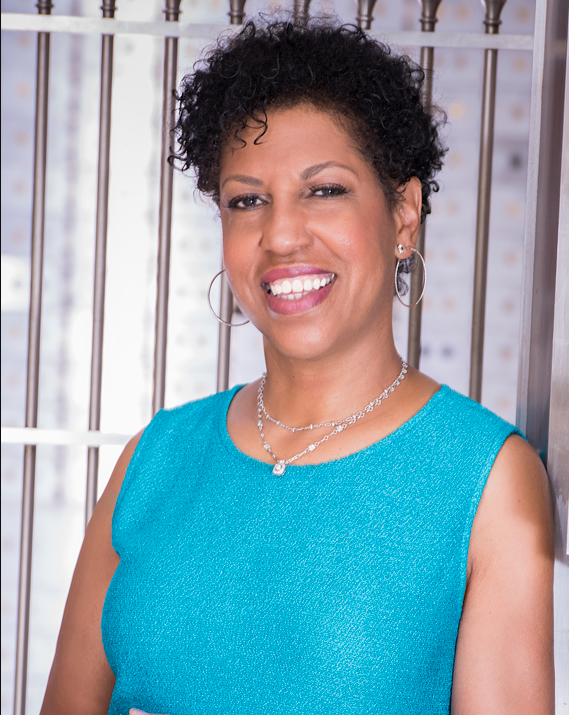
*Evelyn F. Smalls, President and Chief Executive Officer (pictured bottom left)
Mrs. Smalls is President and Chief Executive Officer of United Bank of Philadelphia, a minority-owned and controlled, full service commercial bank. With over 30 years experience in banking and community development, Mrs. Smalls is responsible for the leadership and management of the Bank including setting the direction of the organization, communicating its vision and adapting the culture and operations to achieve success.
Prior to her appointment as President and Chief Executive Officer, Mrs. Smalls served as Senior Vice President for Regulatory Compliance and Community Reinvestment. Her leadership helped establish the Bank’s community reinvestment model that has achieved consecutive “Outstanding” ratings from the Federal Reserve and FDIC since the Bank’s inception.
Mrs. Smalls received her Bachelor’s degree in Business from North Carolina Central University.
Brenda M. Hudson-Nelson, Executive Vice President & CFO
Mrs. Hudson-Nelson has served as United Bank of Philadelphia’s Executive Vice President and Chief Financial Officer for twenty-five years. Mrs. Hudson-Nelson has thirty-four years experience within the financial services industry. Mrs. Hudson-Nelson’s responsibilities include directing financial planning, implementing, and overseeing the Bank’s systems of internal controls, managing the Bank’s investment portfolio, and monitoring and managing the Bank’s sensitivity to interest rate risk. Ms. Hudson-Nelson ensures that the Bank’s Annual Report, SEC Reports and other Regulatory Reports are filed accurately and timely.
She served as Treasurer on the Boards of Director for the South Street Dance Company, CHOICE, Big Brothers/Big Sisters of America, Big Brothers/Big Sisters of Mercer County, and for Prevention Point Philadelphia.
Dimitria Davenport, Vice President, Community Banking & Compliance
With over 20 years in the financial services industry, she has held key roles within Training, Consumer Banking, Retail Administration and Human Resources. Dimitria has spent the last eighteen years of her career working diligently to carry out United Bank’s mission of financially empowering people and businesses in the greater Philadelphia region.
Dimitria serves on several Boards: The Executive Committee of The African American Chamber of Commerce, The City Schools and The New Hope Community Development Corporation.
*Dr. LaDonna Boyd, Board of Directors (pictured top left)
As the fifth-generation president/CEO of the R.H. Boyd Family of Companies in Nashville, Tennessee, she’s a powerhouse of innovation and creativity, transforming the business landscape while championing social causes close to her heart.
She earned her bachelor’s in economics and with a minor in French from Spelman College, followed by an MBA with a finance concentration from Tennessee State University. She completed her with a Doctorate in Education with a focus on organizational leadership from Pepperdine University. She further honed her skills by earning two certificates in from Harvard University’s Extension School in Digital Marketing Strategy and Artificial Intelligence in Business: Creating Value With Machine Learning.
*Joan Fleming, SVP of Residential Lending and Community Development (pictured top right)
She is an industry leader- finding ways to produce results through her expertise, commitment and relationships. Joan has a passion for delivering value and benefit to her clients with an enthusiastic and friendly attitude. It is her commitment to serve the underserved by being an advocate for affordable housing and financial literacy. Her “thinking outside the box” mentality allows her to develop programs to ensure everyone can build wealth through homeownership.
A report by Merchant Maverick, a comparison site that reviews small business software and services, highlighted the top ten states for African American entrepreneurs in 2022. The results showed that eight of those states were home to HBCUs and the other two were Nevada and New Mexico, respectively. It certainly is likely that HBCUpreneurs are driving the African American entrepreneurship in these states. Unfortunately, it maybe more indirectly than intentionally. It does suggest though that with more intentional infrastructure these states could see even more boom in entrepreneurship for HBCUpreneurs. What is that intentional infrastructure? Incubators, accelerators, mentorship, and financing programs located on the campuses of HBCUs or through their alumni associations in partnership with African American Financial Institutions (AAFIs).
Virginia: Thanks to a trio of top five metrics, Virginia ranks soundly in the No. 1 spot. Black-run businesses employ 2.18% of the Old Dominion’s workforce (2nd nationally), and there are 755 Black-owned employer businesses per 1 million people (3rd nationally). Black-owned businesses also average an annual payroll of $437K, which ranks 5th overall. The state previously fared well in some of our other data reports — Virginia finished as the 4th-best state for Black women-owned businesses, and it ranked 10th in our recent best states for women-led startup report. In an effort to grow local minority-run businesses and encourage contracts with those businesses, the Virginia state government operates a directory of all certified small businesses within the state.
Maryland: With Black residents comprising 31% of the population, Maryland has the highest percentage of Black residents of any state on the East Coast, and the 4th-highest in the nation. As such, it shouldn’t be much of a surprise that Maryland has many Black business owners. The Free State ranks 1st nationally for the most Black-owned businesses per 1 million people (1,213), and also ranks 1st in percent of the workforce employed by Black-owned businesses (3.49%). Black-owned Maryland businesses additionally average a very respectable annual payroll of $465K, which is the 4th-highest in the nation. The state government offers several tools for minority business owners, including funding, small business certifications, and assistance programs.
Texas: While no metric clearly stands out, Texas ranks highly thanks to consistency. Black entrepreneurs may find it profitable to start a business in the Lone Star State — Black business owners average an annual income of $64,240 (10th overall) and Black-run businesses in the state average an annual payroll of $337K (17th overall). All of this cash can go further in Texas because the state lacks income tax. Resources available to local Black businesses include the Texas Black Expo and the Dallas Black Chamber of Commerce, both of which are organizations that aim to assist underserved businesses.
For the full report, visit Merchant Maverick here.






 HBCU Money