Tag Archives: African American institutions

Give Black App: A Digital Gatekeeper For African American Philanthropy & Institutional Capital

“We must invest in ourselves. Without our own institutions, we will always be at the mercy of others.” – Mary McLeod Bethune
In the long arc of African American economic life, a recurring pattern emerges: the institutions most critical to our survival are consistently starved of capital, while the broader society thrives off of our labor, culture, and creativity. From Reconstruction-era mutual aid societies to the undercapitalized HBCUs of today, the struggle has never been whether African Americans are generous, but whether that generosity is systematically directed into institutions that can build durable power.

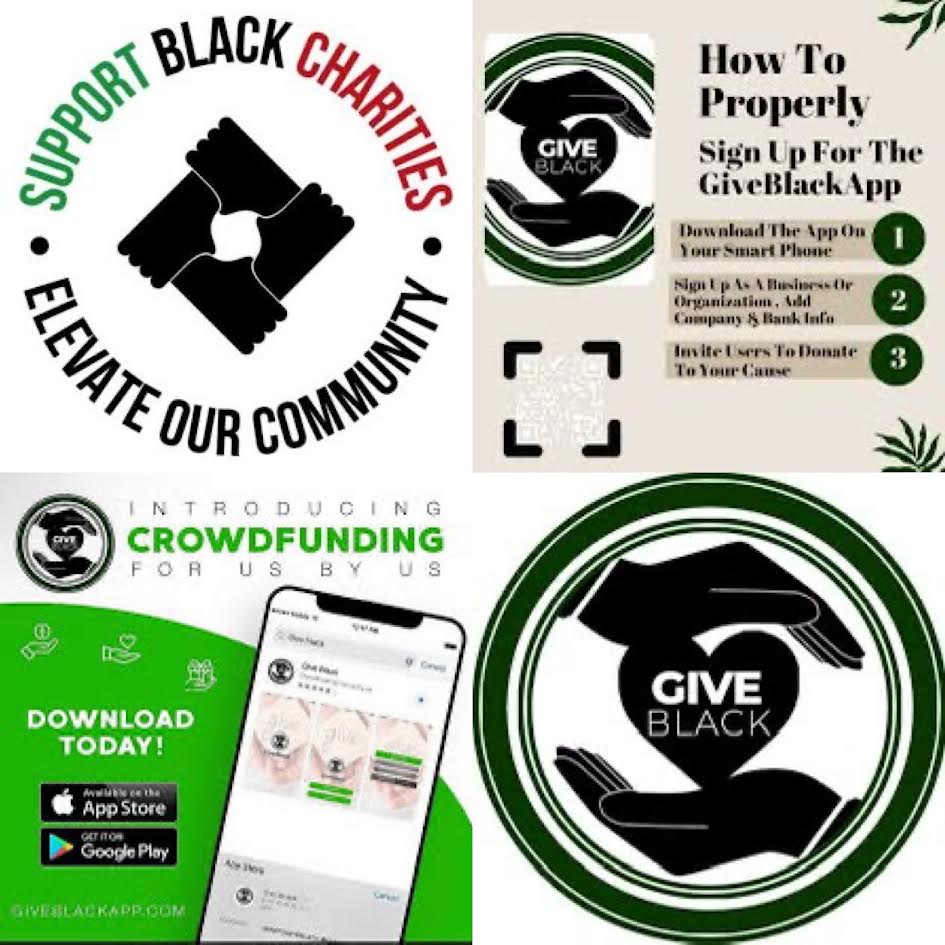
The Give Black App, founded by David C. Hughes, Alexus Hall, and Fran Harris, positions itself at this inflection point. It is not simply an app but a digital strategy—one attempting to reshape the flow of African American philanthropy and donations by curating, centralizing, and amplifying support for Black-led institutions.

The Context of Underfunding

African American nonprofits receive disproportionately less funding compared to their White counterparts. A 2020 Bridgespan study found that unrestricted net assets of White-led nonprofits were 76% larger than those of Black-led nonprofits, while revenues were 24% higher. These disparities compound over time. For HBCUs, the story is even starker: the endowments of all 100+ HBCUs combined is less than 1/10th of Harvard University’s alone.

Despite African America’s estimated $1.8 trillion in annual buying power, only a fraction is captured by its own institutions. Much of African American giving remains individual-to-individual or church-centered, providing immediate relief but not the kind of long-term institutional scaffolding needed to compete with White or global capital. Platforms like Give Black attempt to redirect that generosity into a framework where dollars reinforce permanence.

Building the Infrastructure of Giving

Give Black’s strength lies in infrastructure, a word often overlooked in philanthropy. The app operates as a digital gatekeeper, cataloguing Black-led nonprofits and enabling donors—whether individuals, alumni associations, or grassroots organizations—to find and fund them with ease.

This may seem simple, but its implications are profound. In an environment where discoverability is one of the greatest barriers for Black-led organizations, Give Black centralizes attention. For the countless nonprofits that lack robust marketing budgets, development officers, or national visibility, the app provides a seat at the table they would otherwise be denied.

The team itself reflects intentional design. Hughes, a Morehouse and Prairie View alumnus, carries the academic gravitas to engage institutions; Hall, with a background in cybersecurity and software sales, grounds the platform’s technical operations; Harris, a lifelong advocate of Black love and economic empowerment, provides the cultural grounding and marketing voice. Alongside them stand directors rooted in community engagement, finance, athletics, and science. Together, they represent a cross-section of African American life that mirrors the very community the app seeks to serve.

Philanthropy Meets Technology

Unlike GoFundMe or Benevity, which serve broad audiences, Give Black narrows its focus: African American-led institutions. This specificity is both its greatest strength and its potential vulnerability. By making African American philanthropy visible and trackable, the app attempts to normalize institutional giving within the community itself.

African American donors, long used to personal giving—funeral funds, tuition help, emergency assistance—are now asked to see their dollars not just as charity but as investment. An app that allows for transparency, accountability, and impact measurement may finally bridge the gap between intent and sustained institutional support.

Technology also democratizes giving. Younger generations, accustomed to digital wallets and mobile donations, are unlikely to write checks or mail contributions. By existing where they already transact, Give Black normalizes philanthropy as part of daily life. With proper marketing, it could serve as a digital equivalent of the collection plate—except one that sends dollars to Black think tanks, schools, health clinics, and endowment foundations rather than solely to Sunday offerings.

The Role of Fran Harris

Much of the initial confusion about Give Black’s leadership arises from Fran Harris’s name. She openly jokes about it—she is not the Fran Harris who was a WNBA champion or Shark Tank winner, though many assume otherwise. Instead, she distinguishes herself as someone whose “entire life has been about Black love and economic empowerment.”

That distinction matters. Whereas celebrity often drives visibility in African American philanthropy, Harris positions herself not as a star but as a steward of a broader vision. Her work focuses on the storytelling and cultural marketing needed to align African American giving with institutional capital. In a sense, her humor in addressing the name confusion underscores the seriousness of her actual role: grounding the app’s message in authenticity rather than celebrity.

The Gaps in the Strategy

Despite its promise, Give Black faces hurdles. First, fundraising expertise at the highest level appears limited within the core team. Major philanthropy is an industry of its own, requiring seasoned development officers capable of cultivating seven- and eight-figure gifts. Without this, Give Black risks becoming a platform for small-dollar giving—important, but insufficient for closing institutional capital gaps.

Second, technological depth must match ambition. While Hall’s cybersecurity background provides operational credibility, scaling a fintech-style platform requires CTO-level leadership. Issues of compliance, data integrity, and user trust are not optional—they are the foundation of sustainability.

Third, policy and compliance matter. Donations intersect with financial regulations, nonprofit law, and IRS oversight. To become the definitive gateway for Black giving, Give Black must not only build a sleek front end but also a back-end architecture that can withstand regulatory scrutiny and instill donor confidence.

Where the Opportunities Lie

The greatest opportunities for Give Black lie in institutional self-reliance.

One clear pathway is through alumni networks. HBCU alumni giving rates remain in the single digits, compared to 20–30% at elite PWIs. If Give Black positioned itself as the official conduit for alumni donations, it could help double or triple those rates over time. That alone would shift millions into endowments and operating budgets across the HBCU ecosystem.

Another opportunity lies in membership-based organizations—from professional networks to civic associations. Instead of dues going solely toward programming, portions could be funneled into long-term institutional giving through Give Black, creating a culture of collective philanthropy.

The Pan-African Diaspora represents yet another opening. African and Caribbean communities abroad are increasingly connected digitally. Give Black could expand to become a Pan-African philanthropic bridge, enabling solidarity between African Americans and global Black communities. Diaspora donors, often seeking trustworthy channels for giving, could find in Give Black a centralized, transparent platform.

Finally, the most transformative opportunity is to integrate endowment-building features directly into the app. Too much African American giving is trapped in the cycle of operating expenses. By redirecting portions of donations into permanent capital funds, Give Black could help institutions create reserves that outlast political climates and economic downturns.

Lessons from History

The urgency of Give Black’s mission must be seen against history. During the early 20th century, White-controlled philanthropy dictated the survival of many HBCUs. Institutions like Hampton and Tuskegee often relied on Northern industrialists whose donations came with ideological strings attached. The absence of African American-controlled philanthropic infrastructure meant dependency—and dependency always meant vulnerability.

Today, African American institutions still operate under the shadow of that dependency. Foundation funding remains racially skewed, and government support is often politically weaponized. Give Black, by offering a decentralized and community-driven alternative, challenges that cycle.

But history also warns: movements that lack discipline or scale are easily absorbed or ignored. Just as the Negro Leagues produced baseball talent but lacked the capital to maintain independence, so too can African American philanthropy generate excitement but fail to sustain institutional life if it is not channeled strategically.

The Verdict

Give Black App is not merely a digital donation tool. It is a test case: can African America leverage technology to redirect its wealth into its own institutions? The team’s composition, heavy in HBCU roots, marketing authenticity, and community engagement, suggests it understands both the stakes and the culture.

Still, the app must avoid the trap of becoming a feel-good project without measurable institutional outcomes. Its long-term success will be determined by whether it can:

  1. Secure partnerships with HBCUs, alumni associations, and membership-based organizations.
  2. Develop deep fundraising and compliance infrastructure.
  3. Normalize institutional giving across African American households.

If it does, Give Black could evolve into a cornerstone of African American institutional development—a kind of digital Freedman’s Bureau, redistributing not charity but power.

For African America, the stakes could not be higher. In an era where White nonprofits sit on multibillion-dollar endowments, while Black nonprofits scrape for survival, the question is not whether we are generous. It is whether our generosity is building the kind of institutions that ensure survival for centuries, not just survival for today.

Give Black, if scaled with vision and discipline, may finally provide the infrastructure to answer that question with a resounding yes.


The Firing of The BLS Commissioner Reaffirms: President Trump Only Believes In Fake Facts

“When power makes truth expendable, only the brave will keep records.” — HBCU Money Editorial Board

On August 1, 2025, the United States crossed a threshold most democracies fear but few anticipate with precision the moment a nation’s statistical agency becomes a political target not for corruption, but for accuracy.

Following a weaker-than-expected jobs report with just 73,000 jobs added in July and significant downward revisions to prior months, President Donald Trump abruptly ordered the firing of Dr. Erika McEntarfer, Commissioner of the Bureau of Labor Statistics (BLS). The justification? The data embarrassed him. The evidence? None. The implications? Profound.

For over a century, the BLS has served as the impartial scorekeeper of the American labor market. Its reports help inform everything from Federal Reserve monetary policy to wage negotiations, business expansion decisions, and university research. Most critically, the BLS is the foundation for public trust in employment data, a cornerstone of economic legitimacy.

Trump’s dismissal of Dr. McEntarfer, who was confirmed with bipartisan support and is regarded as a rigorous labor economist, did not challenge methodology, nor did it cite misconduct. Instead, it was an overt signal: when facts contradict the leader’s narrative, the facts must go.

This act is not merely executive overreach. It is an institutional decapitation. And it represents the clearest break yet from the post-WWII consensus that government data should be nonpartisan, methodologically sound, and politically untouchable. In a global economy, this is the equivalent of a currency devaluation not of the dollar, but of America’s data credibility.

When leadership no longer trusts or permits accurate data, policy becomes reactive, erratic, and performative. Investors, entrepreneurs, and institutions rely on the BLS to signal economic direction. Without it, credit markets misfire, fiscal policy lacks direction, and monetary policy becomes unmoored. For African American-owned banks, real estate firms, and HBCU endowment managers, this degrades their ability to assess employment trends in Black communities, apply for federal workforce grants, or time bond offerings based on unemployment benchmarks. Even philanthropic giving strategies may suffer if the poverty, wage, and employment data they are based on becomes manipulated or suppressed.

America’s strength lies in its institutions, not its individuals. By removing the head of a critical statistical agency on political grounds, the White House has signaled that no institution is beyond coercion. This undermines the rule of law and places civil servants especially those in technocratic roles on notice: loyalty matters more than evidence. African American civil servants, many of whom have worked tirelessly to diversify and reform these institutions from within, may see decades of credibility erased. It’s a chilling reminder that representation within agencies means little if those agencies are subject to autocratic whim.

International investors, trade partners, and credit agencies track U.S. labor data as a proxy for global economic health. If they begin to suspect that U.S. statistics are manipulated, they may hedge their investments, slow trade, or reevaluate the reliability of U.S. fiscal metrics. In the long-term, this can impact foreign direct investment in African American economic zones, HBCU research partnerships with global firms, and even diaspora remittance flows, if currency stability is affected by market anxiety.

Perhaps most dangerously, Trump’s decision follows a long trajectory of undermining truth-based systems elections, public health, the judiciary, and now economic data. This creates a vacuum in which conspiracy becomes conventional wisdom. In such an environment, fake facts become state currency. This has severe implications for African American institutions. Much of African American advocacy whether for reparations, investment, or educational equity rests on data. If national data sources are neutered or politicized, then the burden of proof shifts unfairly onto communities already under-resourced in research infrastructure.

HBCUs, Black think tanks, and African American foundations must view this firing not as a political blip, but a doctrine in action. When truth becomes negotiable, institutions that depend on it must move from passive reliance to active defense. HBCUs with strong economics, political science, or data science departments such as Howard, Spelman, and FAMU should develop Black-centered labor and socioeconomic data initiatives. These should complement, verify, or challenge federal data when necessary.

Institutions should also create safeguards digital, legal, and procedural to document how and when data manipulation may be occurring. This includes archiving historic BLS data, creating public dashboards, and writing explanatory briefs for the community. In addition, the next generation of data scientists, economists, and statisticians trained at HBCUs must be equipped not only with technical skill but a political consciousness of how truth is weaponized. Their work should be rooted not just in method, but in mission.

There is also an urgent need for civic engagement. African American policy organizations must pressure Congress to enact legal protections that insulate agencies like BLS, Census, and the Congressional Budget Office from political interference. Civil society must create watchdog coalitions that expose attempts to politicize data or intimidate public servants. Parallel to this, an emergency data defense fund backed by foundations and Black philanthropic leaders could help institutions respond rapidly to threats against data integrity.

Dr. McEntarfer’s firing is not merely about jobs data. It is about whether America will continue to govern itself by fact or by fiat. For African Americans, who have fought centuries of data invisibility, distortion, and misuse from redlining to police profiling the stakes are especially high.

The Bureau of Labor Statistics was once seen as above politics. That era is over.

African American institutions must now assume a new role not just consumers of data, but defenders of its integrity. If truth is to survive, it will not be because it was protected by tradition, but because it was guarded by those with the most to lose from its disappearance.

Disclaimer: This article was assisted by ChatGPT.

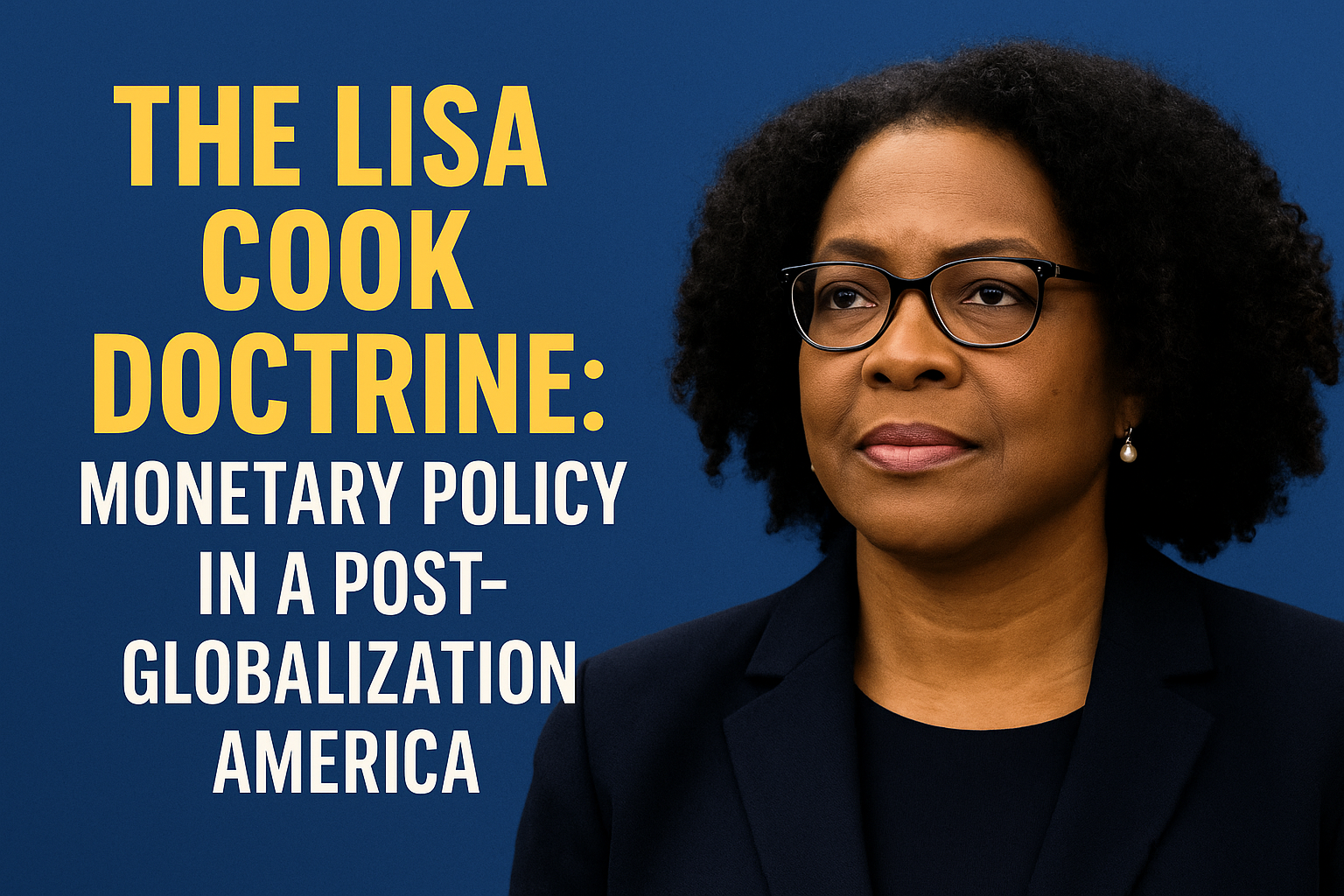
The Lisa Cook Doctrine: Monetary Policy In A Post-Globalization American

“Uncertainty is not an exception—it’s the economy’s new default. Our job isn’t to eliminate risk, but to build institutions resilient enough to thrive within it.” — Dr. Lisa D. Cook, Federal Reserve Governor & Spelman Alumna ’86

When Dr. Lisa D. Cook took the stage at the Council on Foreign Relations for the C. Peter McColough Series on International Economics, it was less a speech and more a declaration: the global economy is fragmenting, technology is compounding that fragmentation, and the Federal Reserve must remain nimble but principled in navigating this emerging disorder.

What makes Dr. Cook’s presence at the Federal Reserve so consequential is not simply her identity as the first African American woman to serve as a governor—though it is significant—but her lens. A lens forged not just through elite academic corridors, but one that dares to understand the edges of America’s economy—its marginalized labor markets, its precarious innovation system, and its uneven globalization. And if her remarks this week are any signal, Dr. Cook is actively shaping a monetary doctrine for this new epoch.

THE FEDERAL RESERVE AND ITS FRACTURED MANDATE

Dr. Cook reminded the audience that the Federal Reserve’s dual mandate—price stability and maximum employment—is being strained by new dynamics. Inflation, while down from pandemic-era peaks, remains stubbornly above target. Headline inflation is at 2.1 percent, core inflation at 2.5 percent—both still above the Fed’s 2 percent goal. On the employment side, job growth is steady, unemployment hovers at 4.2 percent, and labor force participation is not in freefall. But beneath these metrics lies disquiet.

That disquiet is coming from three fronts: trade protectionism, artificial intelligence, and long-term underinvestment in public innovation infrastructure.

In short, America’s economy is at a precipice—caught between inflation imported through tariffs and supply chain fragility, and deflationary pressures driven by automation and labor displacement.

Dr. Cook’s doctrine, it seems, is to hold the center.

TARIFFS: THE RETURN OF ECONOMIC NATIONALISM

Trade policy has re-entered the monetary discourse with a vengeance. For African American economists—and institutions like HBCUs that sit adjacent to both poor communities and international students from across the African diaspora—the discussion is no longer abstract. Dr. Cook underscored that tariffs, while politically popular, have a “nontrivial” inflationary effect.

Tariffs raise prices on imports, which businesses pass to consumers. But more importantly, they alter inflation expectations. And when inflation expectations become “unanchored,” monetary policy loses its credibility—and its traction.

This is not merely an economic concern, but a philosophical one. If the U.S. economy turns inward and abandons international trade cooperation, the financial consequences will not be equally shared. Institutions and people on the margins—like HBCUs, which rely on price-sensitive budgets and internationally sourced equipment—will be among the first to feel the tightening grip.

AI AND THE PRODUCTIVITY PARADOX

Artificial intelligence was one of the few bright spots in Dr. Cook’s analysis. While it introduces short-term labor displacement, it holds medium- to long-term potential for productivity gains, cost containment, and even inflation moderation.

Dr. Cook estimates productivity boosts from AI could range from 1 to 18 percent over the next decade. But this range, she admits, reflects the economic unknowns of the Fourth Industrial Revolution. For African American institutions, the message is twofold: AI will not wait for us to be ready, and without intentional investment in AI literacy and infrastructure, the economic benefits will bypass our communities entirely.

More than that, Dr. Cook emphasized the importance of how AI gets adopted. “It’s not job loss,” she clarified. “It’s task replacement.” The nuance matters. Black workers and businesses must advocate for job redesign, not job removal. This requires an active policy partnership between labor, government, and educational institutions.

HBCUs, with their historical ability to adapt curricula to new economic paradigms, have a window here. The time to build AI research centers, ethics think tanks, and public-private tech fellowships is not tomorrow—it is now.

UNCERTAINTY IS THE NEW NORMAL

Dr. Cook invoked former Fed Chair Ben Bernanke’s guidance: in times of heightened uncertainty, policymakers must plan for multiple scenarios. In Fed speak, this means optionality. In HBCU speak, this means resilience.

The Federal Reserve is not in a rate-cutting mood. Nor is it eager to hike. It is watching. And waiting. And watching some more. “The current stance is balanced,” Dr. Cook affirmed. “But that balance could shift in either direction.”

For HBCU leadership—especially those managing endowments, student financial aid disbursements, or capital investment strategies—this moment requires uncommon dexterity. Inflation could reaccelerate. Or the economy could cool into a stagflationary trap. The key is planning for a 2 percent interest world and a 6 percent one.

INNOVATION: TWENTY YEARS TO FRUITION

Perhaps the most poignant segment of Dr. Cook’s remarks came not from inflation or tariffs or AI—but from her reflections on innovation and time.

“It can take twenty years or more,” she noted, “from the time a student conceives an idea to the point it becomes a product on the market.”

That is a sobering timeline. And it is why public investment in basic research, early-stage science, and academic freedom matters so much. The ecosystem that birthed Silicon Valley started with small government grants, eccentric professors, and graduate students with uncertain job prospects.

For HBCUs, the lesson is urgent: waiting for federal investment in Black innovation ecosystems is no longer tenable. Institutions must pool their resources, coordinate R&D pipelines, and build their own version of the National Science Foundation if need be.

Tuskegee University had its agricultural labs. Howard had its medical research. North Carolina A&T and Prairie View have their engineering corridors. But the next phase of Black institutional development must consolidate these assets into a coordinated force, backed by investment funds, intellectual property banks, and patent commercialization arms.

THE GLOBAL BACKDROP: COORDINATION WITHOUT UNITY

On the global stage, Dr. Cook walked a careful line. She acknowledged that while central banks maintain regular dialogue—through G-7, G-20, OECD platforms—there is no grand consensus. Different countries have different mandates. The European Central Bank is laser-focused on inflation. The Bank of Japan must navigate currency volatility. The People’s Bank of China has geopolitical motives laced through its monetary calculus.

The Federal Reserve cannot outsource its decisions to global peers. But it can learn from them.

For African American policy circles and HBCU economics departments, this is a call to global literacy. We must teach our students to read the central bank minutes from Frankfurt, London, and Accra as readily as they read those from Washington.


INSTITUTIONAL IMPLICATIONS FOR HBCUs

What, then, should HBCU presidents, CFOs, and policy offices take from Dr. Cook’s remarks?

  1. Protect Purchasing Power
    Inflation—especially if prolonged—can erode real endowment spending. HBCUs must explore inflation-hedged assets, indexed tuition strategies, and energy-efficient infrastructure.
  2. Reimagine Labor Pipelines
    AI and global trade will redefine job descriptions. HBCUs must preemptively build training programs, certification pathways, and innovation hubs aligned with the labor market of 2030—not 2010.
  3. Internalize Innovation
    If innovation takes 20 years, then we must stop relying on outside institutions to fund our intellectual property journey. We must build our own innovation endowments, grant programs, and incubators.
  4. Globalize Strategically
    As America turns inward, HBCUs must look outward—toward African economies, Caribbean partnerships, and Latin American markets. Diversifying donor bases, research collaborations, and student recruitment internationally is no longer luxury. It is imperative.
  5. Endowment Defense Against Rate Risk
    Whether rates rise or fall, HBCU financial managers must adopt more active duration management strategies and review fixed income allocations accordingly.

FINAL THOUGHT: THE JUDGMENT ECONOMY

Dr. Cook’s final words were a reminder that even in an era of algorithms and quantitative models, human judgment remains central.

The economy cannot be automated. And neither can policy. The strength of institutions, including the Federal Reserve, still rests on the character and clarity of its leaders.

For HBCUs and African American institutions broadly, Dr. Cook’s rise—and her vision—should be both inspiration and instruction. It is not enough to be present in the room. One must bring a philosophy. A framework. A doctrine.

The Lisa Cook Doctrine, if there is one, is clear: do not panic, do not stagnate, and never underestimate the power of intentional innovation guided by principled policy.

In an uncertain world, that kind of leadership is the rarest form of capital.