
“When HBCU endowments and African American banks act together, they stop being small players. They become a financial force that nations must reckon with.” – HBCU Money Editorial Board
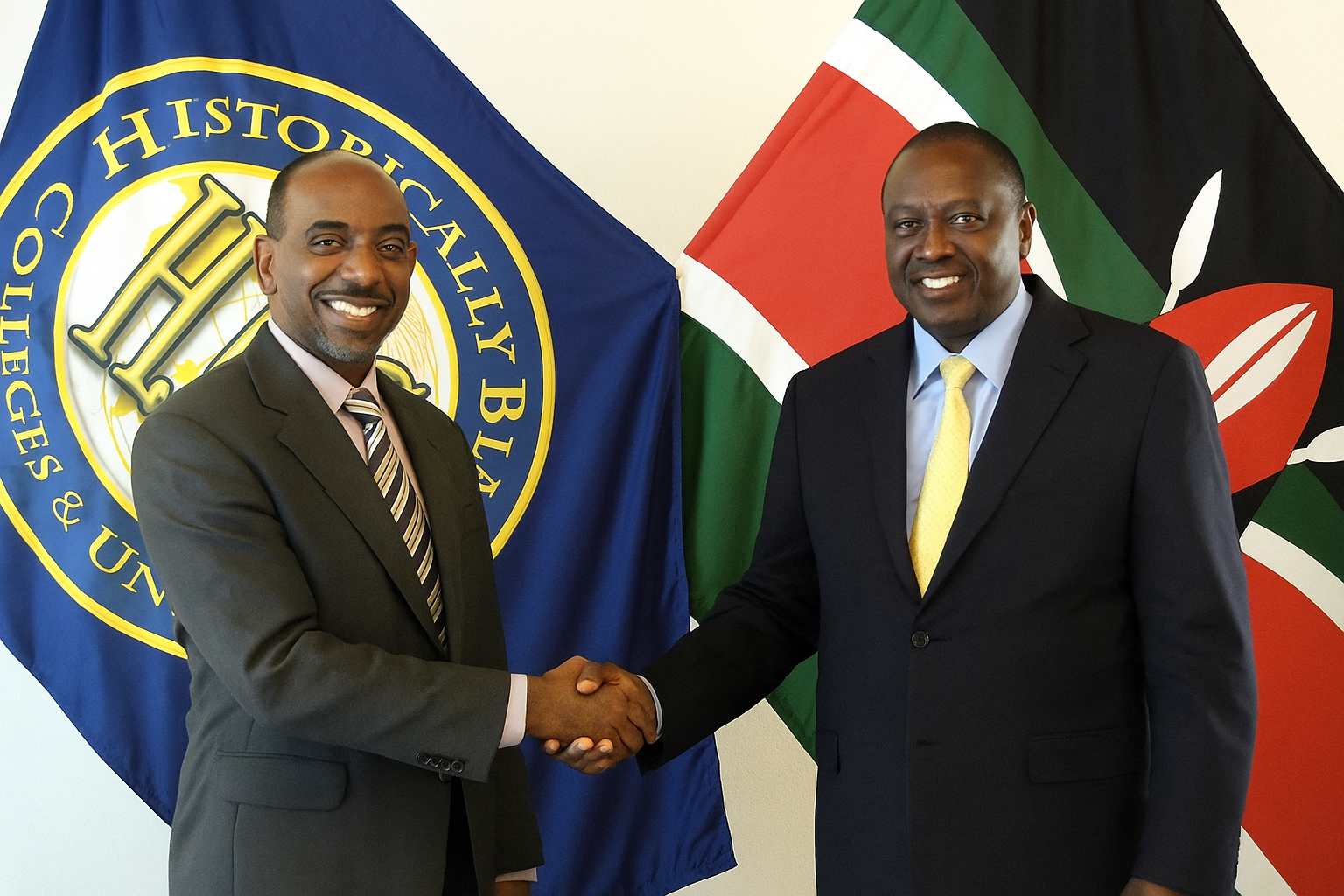
In the next several decades, the fault lines of global growth will not run through New York or London but through Nairobi, Lagos, and Accra. Kenya, sitting at the intersection of East Africa’s financial corridor and global trade routes, has become a laboratory for innovation in fintech, agriculture, and infrastructure. Yet despite centuries of cultural, spiritual, and blood connections, African America remains structurally absent from this new frontier of opportunity. Our financial institutions and HBCU endowments are under-leveraged in international markets, particularly in Africa, even as Asian, European, and Middle Eastern investors carve out dominant positions. For African American financial institutions and HBCU endowments, Kenya represents more than just an emerging market. It is a strategic stage for institutional wealth-building, geopolitical leverage, and reconnecting the African Diaspora through shared prosperity. The opportunity lies not simply in making isolated investments but in creating transatlantic joint ventures that bring together capital, expertise, and institutional strategy.
Kenya is more than safari brochures and tourist postcards. Its economy has quietly matured into one of Africa’s most diversified. With a GDP of over $110 billion and growth rates consistently outperforming many global peers, Kenya is often referred to as East Africa’s economic anchor. Nairobi has developed into the region’s financial hub, hosting multinational headquarters, stock exchange operations, and a robust startup ecosystem. Agriculture remains central, with Kenya exporting coffee, tea, and horticultural products while seeking to expand into value-addition agribusiness. Technology is another frontier, with Nairobi’s “Silicon Savannah” serving as a magnet for fintech, led by the global success of M-Pesa. Rapid urbanization fuels infrastructure and real estate demand, while Kenya’s leadership in geothermal and renewable energy has made it a global model. For African American institutions, the attraction lies not only in the growth metrics but in the alignment of needs: Kenya seeks patient capital, educational partnerships, and trusted diaspora allies, while African American institutions seek diversification, higher yields, and independence from U.S.-centric markets.
Despite African America’s aggregate $1.8 trillion in consumer spending, the community’s institutional capital remains modest. Only a handful of Black-owned banks, credit unions, and venture firms exist, and most hold under $1 billion in assets. HBCU endowments combined are less than $4 billion—an amount dwarfed by single Ivy League endowments. Yet within these constraints lies enormous potential. African American financial institutions already possess the regulatory infrastructure to pool and allocate capital, while HBCU endowments, though smaller in scale, carry moral weight and symbolic capital that can unlock global partnerships. Together, these institutions can create vehicles for international deployment of African American wealth, something that has been absent throughout our history. Imagine a pooled investment fund where Howard University, Spelman College, and Florida A&M commit $25 million collectively, matched by $25 million from Black-owned banks. That $50 million fund could be deployed into Kenyan agritech ventures, renewable energy projects, or commercial real estate. The collaboration would be historic: an African Diaspora financial ecosystem investing directly in Africa’s future.
The reasons to prioritize such engagement are strategic. Diversification is one. U.S. capital markets are increasingly low-yield for small institutional investors, while African markets offer higher growth potential and uncorrelated returns. Another is first-mover advantage. Unlike European or Asian investors, African American institutions do not carry the baggage of colonial relationships, which makes trust-based partnerships more viable. Transnational investment also provides institutional leverage. Just as Jewish, Irish, and Italian communities have leveraged diaspora ties for economic and political power, African Americans can build similar networks of influence. Beyond finance, there is the educational pipeline. HBCUs can link faculty, students, and alumni into research, study abroad, and entrepreneurial ventures tied to investments in Kenya. And finally, there is legacy. These investments address the absence of transgenerational institutional wealth that has long defined the African American economic condition.
The structures to achieve this vision can be diverse. A Diaspora investment fund pooling capital from HBCU endowments, Black-owned banks, and other African American institutions could professionally manage investments in Kenya. Public-private partnerships could align capital with Kenya’s infrastructure push in transport, energy, and housing. Venture capital and startup accelerators in Nairobi could connect HBCU students with Africa’s entrepreneurial scene while generating equity returns. Real estate investment trusts, driven by Nairobi’s urbanization, could provide stable income streams. Even education-linked ventures in e-learning and vocational training could generate both profit and intellectual reciprocity.
The barriers are real but not insurmountable. Kenya requires foreign investors to comply with incorporation, licensing, and work permit laws, which demand careful navigation. Currency risk from fluctuations in the Kenyan shilling must be hedged. Information gaps are wide, with many African American institutions unfamiliar with African business environments, highlighting the need for trusted partnerships and research. The relatively small scale of HBCU endowments makes collaboration indispensable. Above all, transparent governance and professional management are critical to avoid reputational risk. Yet none of these barriers are unique. European, Asian, and African investors face them daily and manage to thrive.
This is not only an economic project but a political one. The creation of a formal African American–Kenya Investment Council, for example, could coordinate through the Four Points Chamber of Commerce, HBCUs, and Kenyan universities to advocate for favorable treaties, tax incentives, and research collaborations. African American institutions investing abroad alter the narrative at home: no longer just a constituency asking for inclusion, but a global economic player with interests that stretch across the Atlantic. Such evolution creates leverage in Washington, Wall Street, and international forums.
Take agritech as a concrete example. Kenya’s agricultural sector employs over 60 percent of its labor force, yet productivity remains limited by technology and infrastructure. African American banks could co-finance ventures in irrigation, cold storage, and logistics platforms. HBCUs such as Tuskegee and Prairie View A&M could supply expertise in agricultural science and training. The returns could be strong, while the ventures also address food security and climate resilience—issues central to Africa’s stability. This is an example of investment tied not only to financial return but to global relevance.
The deeper point is that these ventures embed African American institutions into Africa’s growth story. They create a new narrative where HBCU students intern at Nairobi startups, Kenyan entrepreneurs raise capital from African American banks, and families on both sides of the Atlantic see tangible proof that the Diaspora is not fragmented but interwoven. In a world where capital dictates influence, these ties are transformative. They represent not just diversification but restoration, an opportunity to re-knit the fabric of a dispersed people through shared prosperity.
The cost of inaction is steep. China has entrenched itself in Kenya and across Africa through the Belt and Road Initiative. Gulf states are investing heavily in energy and real estate. European firms continue to capture opportunities in agriculture and infrastructure. If African American institutions remain passive, they will again watch as others define Africa’s economic trajectory, forfeiting both profits and influence. Worse, they will remain locked in a domestic cycle of undercapitalization and marginalization, failing to establish the transatlantic presence that could transform their institutional standing.
For too long, African America has celebrated individual success while neglecting institutional power. The result has been wealth without leverage and influence without permanence. Kenya and the wider African continent present a chance to reverse this trajectory. African American financial institutions and HBCU endowments can seize the opportunity by building joint investment vehicles that are ambitious, strategic, and collaborative. To invest in Kenya is to invest not only in profitable ventures but in the future of a Diaspora united by shared capital, shared strategy, and shared destiny. The transatlantic bridge is waiting to be built. The question is whether African America will summon the courage, coordination, and vision to cross it.
Step-by-step practical framework that African American financial institutions and HBCU endowments could follow to launch their first $50 million joint Kenya investment fund:
Imagine a handful of African American bank CEOs and HBCU endowment chiefs sitting together in a boardroom. The room is filled with cautious optimism. They know that together, they control billions in assets. What they don’t yet have is a proven model for working together to extend institutional power abroad. That meeting marks the first step: the coalition. A steering committee is formed, with voices from banking, academia, and outside advisors who know Kenya’s economic landscape. Their mandate is clear—launch a fund that delivers returns, but also anchors a new Pan-African economic relationship.
Step 1: Establish a Foundational Coalition
- Identify core partners: Secure commitments from 3–5 African American banks and 5–7 HBCUs with at least $50M in combined investable capital.
- Set up a steering committee: Include representatives from bank leadership, HBCU endowment managers, and external advisors with Africa market expertise.
- Define purpose: Clearly state the dual mission: generating strong financial returns while building a bridge for institutional Pan-African economic partnerships.
The first order of business is to commission a feasibility study. Consultants with expertise in Kenya’s political economy, regulatory framework, and sector opportunities are hired. They map out the terrain: Kenya’s fast-growing fintech sector, renewable energy projects feeding off abundant solar and wind, agribusiness tied to both domestic and export markets, and logistics hubs serving East Africa’s gateway economy. Risks are weighed—currency volatility, regulatory hurdles, political cycles—but so are opportunities. The committee sees promise.
Step 2: Commission a Feasibility Study
- Hire consultants with Kenya expertise: Legal, financial, and political economy experts based in both the U.S. and Kenya.
- Sector focus analysis: Prioritize sectors Kenya is inviting foreign direct investment into—agriculture, fintech, renewable energy, real estate, and logistics.
- Risk assessment: Evaluate currency volatility, repatriation policies, political stability, and regulatory compliance.
Next, the legal and financial scaffolding of the fund takes shape. They agree on a traditional GP/LP structure based in the U.S. for investor familiarity, with a Kenyan arm for local operations. Banks pledge their first tranches—perhaps $5M each. HBCUs, with smaller endowments but a deep sense of mission, contribute $2–3M apiece. Collectively, the first commitments reach $30M, enough to begin building credibility. The remaining capital will come from outside partners.
Step 3: Create the Legal & Financial Structure
- Fund structure: Decide whether the vehicle will be a private equity fund, venture fund, or blended finance model.
- Jurisdiction: Likely establish a U.S.-based LP/GP model for investor confidence, with a Kenyan subsidiary or partnership entity.
- Capital commitments: Each bank and HBCU pledges proportional investments. Example: 3 banks commit $5M each, 7 HBCUs commit $2–3M each, plus matching funds from development finance institutions.
Those partners are cultivated carefully. Calls are made to the African Development Bank, IFC, and the U.S. International Development Finance Corporation. Each sees value in a diaspora-led fund connecting capital from the African American community to African markets. Meanwhile, Kenyan pension funds and cooperatives are invited to co-invest. Diaspora high-net-worth individuals are offered side-car vehicles. With these anchor and matching partners, the fund’s $50M target is within reach.
Step 4: Secure Anchor & Matching Partners
- DFIs and multilaterals: Approach institutions like African Development Bank (AfDB), U.S. International Development Finance Corporation (DFC), and IFC for co-investments.
- Kenyan institutions: Partner with local pension funds, cooperatives (SACCOs), or universities to establish local credibility and co-ownership.
- Diaspora investors: Offer side-car investment vehicles for African American and African diaspora high-net-worth individuals.
Governance is another priority. The steering committee transforms into an investment committee, balanced between African American institutional leaders and Kenyan business experts. An advisory board is established with specialists in agriculture, energy, real estate, and fintech. Transparency is emphasized—annual impact reports will detail not only financial returns, but jobs created, student exchanges launched, and trade flows increased.
Step 5: Build Governance & Accountability Mechanisms
- Investment committee: Balance between African American institutional reps and Kenyan business leaders.
- Advisory board: Include sector specialists in agriculture, energy, fintech, etc.
- Transparency: Publish annual reports and impact metrics, not just financial returns, but job creation and trade flows between HBCUs and Kenya.
Deal flow comes next. Nairobi-based investment professionals are hired to scout opportunities, vet local entrepreneurs, and structure partnerships. At the same time, HBCUs begin linking their own academic programs—business schools, agricultural research centers, and engineering departments—into the fund’s sector priorities. Student projects and faculty research now have real-world investment applications in Kenya.
Step 6: Develop Pipeline & Deal Flow
- Partnership with Kenyan government: Leverage incentives offered to foreign investors, including tax breaks and special economic zones.
- Local deal scouts: Hire Nairobi-based professionals to source deals in priority sectors.
- HBCU connections: Link research and student projects to sectors targeted by the fund (e.g., agricultural science programs tied to Kenyan agribusiness investments).
With structure, governance, and deal flow in place, the fund launches its pilot tranche. $10M is deployed across two or three projects. A solar mini-grid company extending power to rural communities. A fintech platform simplifying mobile payments. A mid-sized agribusiness processing exports for global markets. These are not moonshots—they are solid, scalable enterprises that demonstrate both impact and return. The performance of this pilot will be watched closely. If successful, it will unlock the remainder of the $50M and set the stage for larger ambitions.
Step 7: Launch Pilot Investments ($10M tranche)
- Start small within the $50M: Deploy $10M across 2–3 companies/projects.
- Focus on scalable businesses: Renewable energy mini-grids, fintech payment platforms, or agri-processing facilities.
- Monitor performance closely: Use pilot results to refine risk models, build confidence among stakeholders, and attract more investors.
Within 18 months, the pilot investments begin to show results. Jobs are created. Returns begin to flow. Confidence builds. The remaining capital is deployed, spreading across a diversified portfolio. HBCUs launch student and faculty exchanges with Kenyan institutions tied to the fund’s sectors. African American banks begin opening lines of credit to U.S. businesses interested in exporting to East Africa. The fund is no longer just an experiment—it is an institution in itself.
Step 8: Expand and Institutionalize
- Scale to full $50M deployment: After 12–18 months of pilot success, release additional tranches.
- Knowledge transfer: Create HBCU student and faculty exchange programs tied to investments.
- Secondary fundraising: Use strong pilot performance to raise an additional $100M+ follow-on fund.
As momentum grows, the fund takes steps toward permanence. A Nairobi office is established, staffed by African American and Kenyan professionals alike. Training programs create a pipeline for HBCU students to intern in Kenya and Kenyan students to study at HBCUs. Over time, this exchange deepens the cultural and economic ties the fund was designed to spark.
Step 9: Create Long-Term Infrastructure
- Permanent office in Nairobi: Establish a joint African American–Kenyan fund management company.
- Training & pipeline development: Develop internship pipelines for HBCU students in Kenya, and Kenyan students at HBCUs.
- Institutional trust: Turn the fund into a long-term institutional asset class for African American banks and HBCUs.
After five years, success is measured in multiple ways. Financially, the fund delivers returns in line with its targets—perhaps 12–15% IRR. Institutionally, it has created a precedent: HBCUs and African American banks can collaborate on global investments. Socially, it has created jobs in Kenya, exported knowledge and partnerships, and brought students and faculty into real-world economic diplomacy. Most importantly, it has built trust. Trust between African American institutions and African markets. Trust that this model can be scaled.
Step 10: Measure Success & Reinvest
- Financial benchmarks: Target 12–15% IRR across diversified investments.
- Social impact: Jobs created in Kenya, number of HBCU students/faculty involved, new African American businesses entering African markets.
- Recycling capital: Reinvest returns into next-generation funds, building compounding institutional wealth.
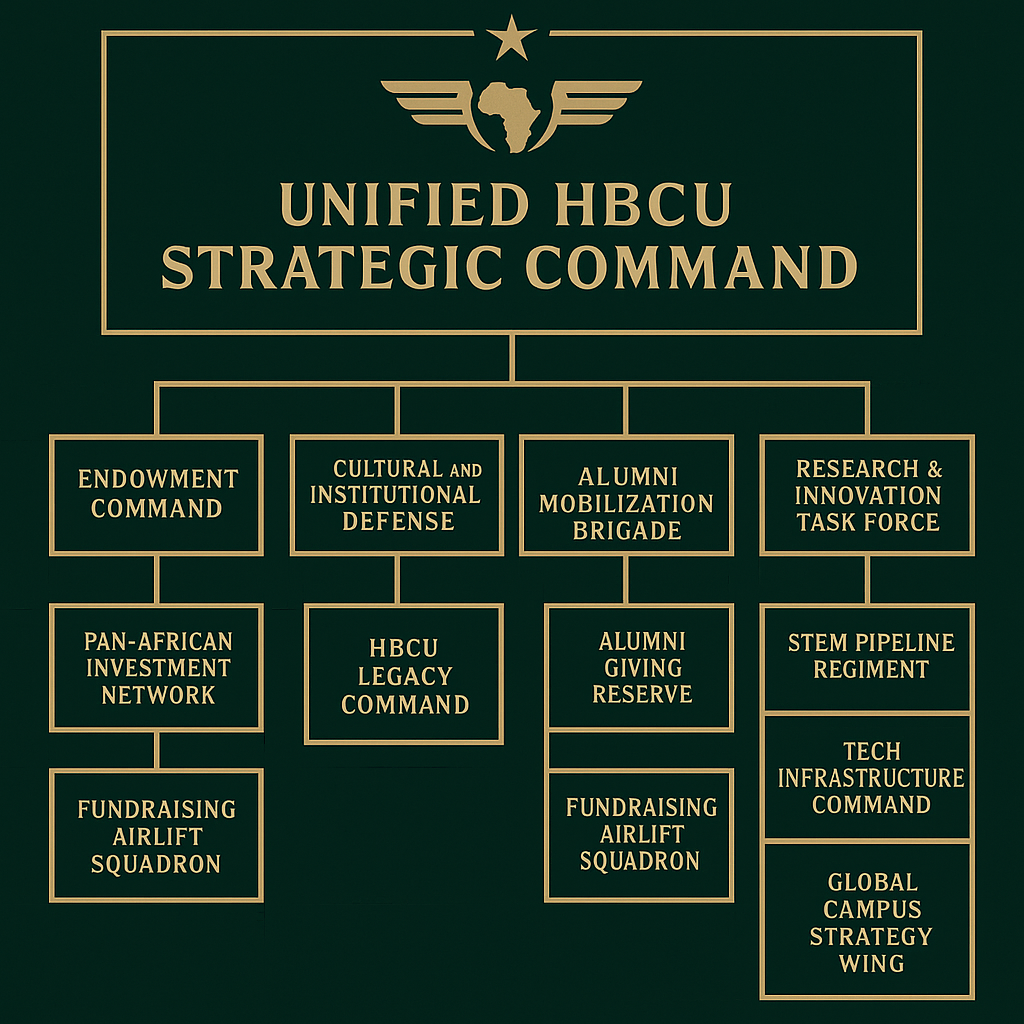
With trust comes ambition. A second fund is planned—this time $100M, then $500M. The coalition envisions a Pan-African investment platform, deploying billions across sectors and countries. HBCUs, once thought of only as educational institutions, now sit at the table of international finance. African American banks, once dismissed as niche, now act as global intermediaries for diaspora capital.
The $50M Kenya fund was never just about money. It was about proving the power of joint institutionalism. It was about showing that African American capital, when organized and directed abroad, can generate wealth, influence, and opportunity for generations. And it was about establishing a roadmap that others can follow—a playbook for diaspora-led investment that starts in Kenya but could extend across the African continent.
Disclaimer: This article was assisted by ChatGPT.



 HBCU Money