
-
Recent Posts
- The Missed Empire: How Hip-Hop’s Wealthiest Catalogs Could Have Become the Institutional Power African America Still Lacks
- Homeownership and Power: Why African American Men Should Be Inspired—Not Intimidated—By African American Women Who Buy Homes
- Capital Without Corridors: Why African America and Black Britain Need Shared Institutional Infrastructure
- Can African America Build a Black-Owned Laptop? Yes, But No… Well, Maybe?
- The Invisible Inequity: Inside the Institutional Wealth Gap of African American Nonprofits
Archives
- October 2026
- September 2026
- August 2026
- July 2026
- June 2026
- May 2026
- April 2026
- March 2026
- February 2026
- January 2026
- December 2025
- November 2025
- October 2025
- September 2025
- August 2025
- July 2025
- June 2025
- May 2025
- April 2025
- March 2025
- February 2025
- January 2025
- December 2024
- October 2024
- August 2024
- July 2024
- June 2024
- May 2024
- April 2024
- March 2024
- February 2024
- January 2024
- December 2023
- November 2023
- October 2023
- September 2023
- August 2023
- July 2023
- June 2023
- May 2023
- April 2023
- March 2023
- February 2023
- January 2023
- December 2022
- November 2022
- October 2022
- September 2022
- August 2022
- June 2022
- May 2022
- April 2022
- March 2022
- January 2022
- November 2021
- October 2021
- May 2021
- March 2021
- February 2021
- January 2021
- December 2020
- November 2020
- September 2020
- August 2020
- July 2020
- June 2020
- May 2020
- April 2020
- February 2020
- December 2019
- November 2019
- October 2019
- September 2019
- August 2019
- July 2019
- June 2019
- May 2019
- April 2019
- March 2019
- February 2019
- January 2019
- December 2018
- November 2018
- October 2018
- September 2018
- August 2018
- June 2018
- April 2018
- March 2018
- February 2018
- October 2017
- September 2017
- August 2017
- July 2017
- June 2017
- May 2017
- April 2017
- March 2017
- February 2017
- January 2017
- December 2016
- November 2016
- October 2016
- September 2016
- August 2016
- July 2016
- June 2016
- May 2016
- April 2016
- March 2016
- February 2016
- December 2015
- November 2015
- October 2015
- September 2015
- August 2015
- July 2015
- June 2015
- May 2015
- April 2015
- March 2015
- February 2015
- January 2015
- December 2014
- November 2014
- October 2014
- September 2014
- August 2014
- July 2014
- June 2014
- May 2014
- April 2014
- March 2014
- February 2014
- January 2014
- December 2013
- November 2013
- October 2013
- September 2013
- August 2013
- July 2013
- June 2013
- May 2013
- April 2013
- March 2013
- February 2013
- January 2013
- December 2012
- November 2012
- October 2012
- September 2012
- August 2012
- July 2012
- June 2012
- May 2012
- April 2012
- March 2012
- February 2012
- December 2011
- November 2011
Categories
Meta
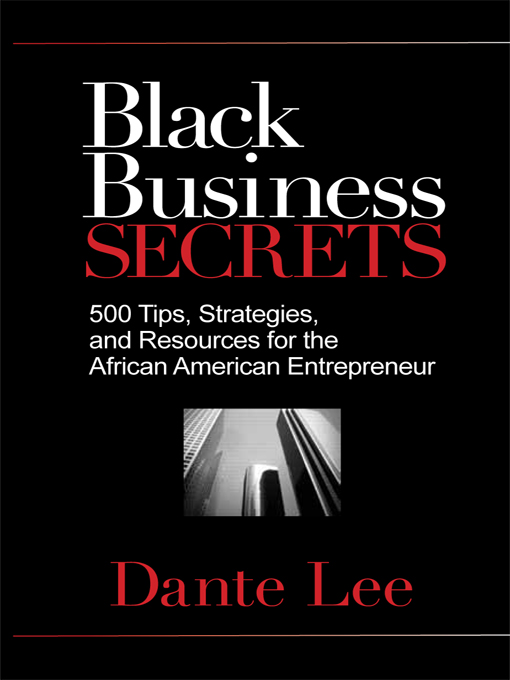
HBCU Money™ Business Book Feature – Black Business Secrets: Resources for the African American Entrepreneur
“Should I lower my price point? Give my new product away for free online? How do I compete when my goods, services, or business model might be duplicated?” In this candid, 21st-century-savvy guide, Dante Lee illustrates how passion can become profit by addressing the questions that every businessperson needs to ask. Black Business Secrets discusses the entrepreneurial skills that African-American business owners must master in order to compete in a world where most new companies fail within three years.
Whether you’re a weekend entrepreneur or a career-changing professional, Lee’s motto—“don’t be a worrier, be a warrior”—applies. From personal branding to best practices, this empowering blueprint offers surefire tips and strategies designed to ensure business survival and success.

HBCU Money™ Dozen Links 7/29 – 8/2
Did you miss HBCU Money™ Dozen via Twitter? No worry. We are now putting them on the site for you to visit at your leisure. We have made some changes here at HBCU Money™ Dozen. We are now solely focused on research and central bank articles from the previous week.
Research
2 species of small crustaceans disappearing from California beaches l CA Sea Grant http://bit.ly/14o8QwZ
“Coping with the #BigData Quagmire” l Livermore Lab http://t.co/ZGLiFkS3yU
Teachers! Do your students have questions about #climate change? l EPA Research http://go.usa.gov/jDhV
Radar gun to hunt the GPS jammers l New Scientist http://ow.ly/nAx8N
Bizarre new icebreaker ship moves like a crab l New Scientist http://ow.ly/nAxJ3
Astrochemistry – for those scientists who like their chemicals cosmic l SLAC Lab http://bit.ly/18UO3mk
Federal Reserve, Central Banks, & Financial Departments
Current inflation is low; on balance, inflation expectations have declined since March l St. Louis Fed http://bit.ly/1b19mjB
Treasury works to wind down TARP bank investments l Housing Wire http://hwi.re/3lM0b8
What implications does today’s employment report have for future policy moves? l Atlanta Fed http://goo.gl/2v4YWb
Economic Growth vs. Environmental Protection: Do We Have to Choose Between Them?” l Boston Fed http://t.co/juO6ktdna4
Is the foreclosure war over? l Housing Wire http://hwi.re/3lKSY1
What is impact of urban retail chains, housing turnover, other factors in low-income areas? l Atlanta Fed http://goo.gl/PR3Yqg
Thank you as always for joining us on Saturday for HBCU Money™ Dozen. The 12 most important research and finance articles of the week.
Johanessburg Stock Exchange Announces Virtual Stock Trader
Just over one month ago Johannesburg Stock Exchange (Ticker: JSE), the world’s 19th largest stock exchange by market capitalization, launched its virtual stock trader to try and broaden its customer base and ease many Africans into the use of their products.
Per their website the JSE says “The JSE virtual trading game aims to teach the South African public about investing on the JSE. The game helps those participating learn about the fundamentals of investment strategy and encourages them to research and strategise about trading shares listed on the JSE.”
Participants are given 1 000 000 South African rand or approximately $100 000 US dollars. It also represents an amazing opportunity for African Americans interested in investing in Africa to enter the largest economy on the continent and learn some of the nuances of the economy with no risk attached while gaining valuable knowledge. HBCU business schools could create an entire class on investing in Africa’s asset classes using this virtual tracker. The opportunities are immense in creating more circulation between African America and Africa as a result.
For more information on the virtual tracker visit JSE’s website at https://virtualtradinggame.jse.co.za/about.html
Posted in Investing
Tagged African American, emerging markets, investing, johannesburg stock exchange
The HBCU Money™ Weekly Market Watch
Our Money Matters /\ August 2, 2013
A weekly snapshot of African American owned public companies and HBCU Money™ tracked African stock exchanges.
NAME TICKER PRICE (GAIN/LOSS %)
African American Publicly Traded Companies
Citizens Bancshares Georgia (CZBS) $5.60 (0.00% UNCH)
Radio One (ROIA) $2.36 (0.42% DN)
African Stock Exchanges
Bourse Regionale des Valeurs Mobilieres (BRVM) N/A
Botswana Stock Exchange (BSE) 8 620.17 (0.06% DN)
Ghana Stock Exchange (GSE) 1 942.20 (61.89% UP)*
Nairobi Stock Exchange (NSE) 123.30 (N/A)
Johannesburg Stock Exchange (JSE) 41 700.19 (0.50% DN)
International Stock Exchanges
New York Stock Exchange (NYSE) 9 676.09 (0.03% UP)
London Stock Exchange (LSE) 3 531.17 (0.35% DN)
Tokyo Stock Exchange (TOPIX) 1 196.17 (2.82% UP)
Commodities
Gold 1 311.80 (0.06% UP)
Oil 106.91 (0.91% DN)
*Ghana Stock Exchange shows current year to date movement. All others daily.
All quotes reported as of 1:00 PM Eastern Time Zone
African American Teenage Unemployment: 3rd Highest In Developed World
By William A. Foster, IV
You can be young without money but you can’t be old without it. – Aristotle
There is an unemployment epidemic in African American teenage unemployment. Its ramifications will indict an entire generation of our youth if it is not confronted. Yet, it continues to get brushed under the rug assuming anyone acknowledges it at all. A recent report by the International Labor Organization addressing high youth unemployment in the European Union is quoted as saying “There is a price to be paid for entering the labor market during hard economic times. Much has been learned about “scarring” in terms of future earning power and labor market transition paths. Perhaps the most important scarring is in terms of the current youth generation’s distrust in the socio‐economic and political systems.” However, there seems to be little attention being given to the plight of African American teenagers. Below is a look at a graph of European youth unemployment followed by the US Department of Labor’s view of African American teenage unemployment.
Scarring is the term that economist use in describing long-term unemployment for youth. This is because the compounding impact of it for the individual, household, and community ends up being much like a wound that is almost impossible to heal. Individually, African American teenagers are missing out on the basics of developing work ethic, work skills, networking through employment, early professional success which builds long-term confidence, and a host of other qualitative factors that tend to impact an individuals career trajectory. Because there is high teenage unemployment in African American households and communities it goes without saying that idle time is the devil’s playground. The increased idle time increases the probability of counterproductive behavior especially when there is such an acute quantity of unemployed teenagers.
The economic implications are profound. If we assume a teenager starts working at sixteen and is making minimum wage while working 20 hours a week average, they would earn $6 786 annually after taxes. It does not seem like much on face value but let us dig a little deeper. Let us assume the teenager gives $2 400 a year to the household income, puts aside $1 500 a year for college or vocational training, and lastly puts the remaining $2 886 in a Roth IRA account. First, 38.2 percent of African Americans are in poverty (see chart below) according to the National Poverty Center so an extra $200 a month can often mean the difference between a refrigerator full of groceries and malnutrition for a family. Malnutrition which has been shown to have not only health implications but long-term correlations to academic consequences for children in a household as well. The savings for college would allow the teenager to start college at eighteen with $4 500 in savings. This small amount should not have severe implications on a students’ financial aid but it could be the difference between a student purchasing books at the beginning of the semester as opposed to waiting on their refund which puts students behind during a semester and impacts their chances of academic success and ultimately their ability to graduate in a timely manner. Anyone who has attended an HBCU can readily attest to this reality either for themselves or classmates in experience. Lastly, the $11 544 invested in a Roth IRA after four years with average returns would be approximately $15 000 towards retirement saved at the age of 20. However, they can not touch this retirement account until they are 65. If they did not add another dollar to it and just continued with average returns over the next 45 years that account would be worth $2.5 million by retirement.
The International Labor Organization calls for the following actions to address youth unemployment:
- Fostering pro-employment growth and decent job creation through macroeconomic policies, employability, labour market policies, youth entrepreneurship and rights to tackle the social consequences of the crisis, while ensuring financial and fiscal sustainability.
- Comprehensive measures targeting disadvantaged young people in advanced economies with high numbers of unemployed youth. These include education, training, work experience support and recruitment incentives for potential employers.
- Integrated employment and livelihoods strategies and programmes in developing countries, including training in literacy, occupational and entrepreneurial skills and business support.
These solutions could be applied here in the United States and certainly could be implemented on a more micro level by community organizations operating within African American communities and give a good base for starting to stem the tide. There are 1.9 million African American owned businesses, but 1.8 million of them have no employees. These young people offer an affordable labor option for African American small businesses that in exchange could provide them priceless experience and professional building. Unfortunately, most African American teenagers are ill-equipped for very basic work beyond physical labor so training programs are vital. A difficult task to meet as local city and state budgets are cutting job training programs not expanding them. Therefore, community centered solutions must be examined. Any belief that there will be government assistance or grants should be viewed as no more than a bonus if an organization can get it.
African American teenagers are a silent group suffering and their current condition do not bode well as the stated above reasons show for African America’s future economic condition. They have the least voice among any group it appears in America but given the percentage of African American single parent households are arguably the second most important wage earner in the family. If the children are our (economic) future as Whitney Houston once said, then the future economic condition is looking bleaker and bleaker for African Americans.
Posted in Economics
Tagged african american teenagers, african american youth, jobs, unemployment


