Category Archives: Banking & Credit Unions

2024’s Most Powerful Women in African American Owned Banks

Whatever glory belongs to the race for a development unprecedented in history for the given length of time, a full share belongs to the womanhood of the race. – Mary McLeod Bethune

African American Owned Banks (AAOBs) continue to decline, down to 16 since from 21 since we last highlighted African American Owned Banks’ Most Powerful Women in 2013. The decline of almost 25 percent of African American Owned Banks over the past decade has meant less and less opportunity across the board and for African American women that appears to be the case as well. As our institutions decrease, so then do our ability to create opportunities for our communities. African American women in AAOBs have seen an increase only in the board of directors with all other positions seeing a decline.

Even with that reality, the numbers in comparison to their counterparts is still much greater. The largest 50 banks which are all non-AAOBs have only 1 woman (2 percent) at the helm according to American Banker. African American women comprise almost 20 percent of African American Owned Banks CEO positions.

2024 Statistics (2013 Statistics)

3 CEOs/President (4 CEOs/Presidents)

1 CFO (2 CFOs)

10 Vice-Presidents (13 Vice-Presidents)

8 Board of Directors (7 Board of Directors)

We have done our best to find out just who are some of the amazing African American women serving as executives and directors at African American Owned Banks around the country. However, some banks do not have their management or board of directors listed so we are sure we missed a few talented women, but for now here is who we found and some of their stories.

*HBCU Alumnus

COMMONWEALTH NATIONAL BANK

Beverly Cooper, Board of Directors

Mrs. Cooper is co-founder of the voter education non-profit Stand Up Mobile: A Blueprint for US.  She retired after 15 years as President of The Christian Benevolent Funeral Home, Inc. a family- owned business for 96 years. 

CITIZENS TRUST BANK

Cynthia N. Day, President/Chief Executive Officer

In February 2012, she became the Chief Executive Officer, the first permanently named female CEO in the Company’s history. Under her leadership as Chief Executive Officer, the bank has reached many milestones including achieving its highest level of performance during its 100 year existence. Further, most recently, the Bank was ranked, by S&P Global, #28 out of the Top 200 Performing Banks in the Country in its asset band.

Iris D. Goodly, Senior Vice President/ Director of Client Services and Operations

LIBERTY BANK & TRUST COMPANY

Jaimmé Collins, General Counsel, EVP and SVP of Strategy

In addition to being General Counsel, Ms. Collins manages Liberty’s strategic initiatives, joint ventures, regulatory matters, and leads Liberty Community Development Corporation (Liberty’s real estate development affiliate) and Liberty Foundation, Inc. (Liberty’s nonprofit affiliate).

Ann Duplessis, SVP of Bank Administration

*Tammy Joseph, SVP of Internal Controls

*Rhonda McMillan, SVP & Chief Credit Officer (pictured bottom right)

ONEUNITED BANK

Teri Williams, President and Chief Operating Officer
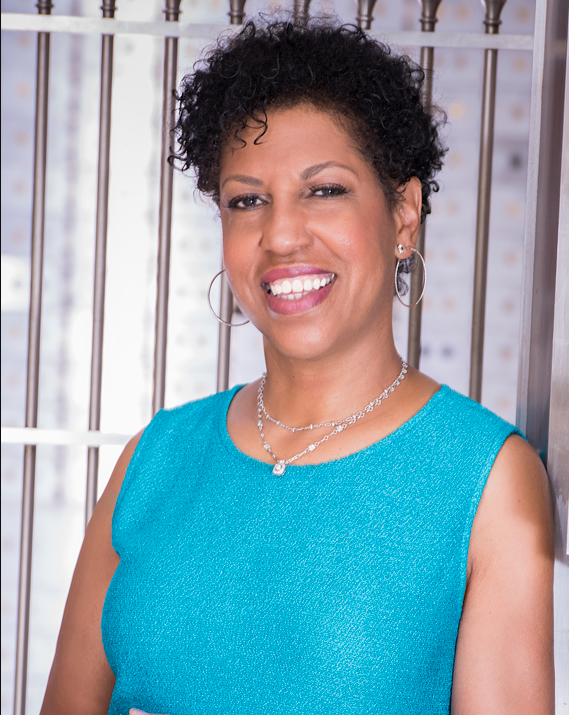
Responsible for implementation of the Bank’s strategic initiatives, as well as the day-to-day operations of the bank. These operational areas include all retail branches, marketing, compliance, lending, information technology, customer support, legal, and human resources. Under her leadership, OneUnited Bank has consolidated the local names and product offerings of four (4) banks to create a powerful national brand supported by innovative products and services. She brings 30 years of financial services expertise from premier institutions such as Bank of America and American Express, where she was one of the youngest Vice Presidents.

Sherri Brewer, Senior Vice President, Chief Retail Officer

She has been in the banking industry for 30 years. She has held senior level positions in the areas of sales, operations and consumer lending. Her responsibilities include management of five retail branches as well as the online branch, the banks facilities, item processing operations and the call center. She also serves as the Security Officer for the Bank. She has successfully managed two system conversions and one item processing conversion during her tenure. Ms. Brewer has worked for Wells Fargo, Orange County Credit Union, Business Bank of California, and First City Federal Credit Union.

FIRST INDEPENDENCE BANK

Linda Forte, Board of Directors

MECHANICS & FARMERS BANK

Emma S. Allen, Board of Directors

Connie J. White, Board of Directors

ADELPHI BANK

Greta Russell, Board of Directors

Gabrielle Whittaker, SVP of Consumer Banking and Community Relations

UNITED BANK OF PHILADELPHIA

Marionette Y. Wilson, Secretary of the Board of Directors

Ms. Wilson joined the Board of Directors of United Bank of Philadelphia in 1992 as a founding director. She is now retired but was formerly the Co-Founder/Partner, John Frazier, Inc., Philadelphia, PA from 1981-2002.

*Evelyn F. Smalls, President and Chief Executive Officer (pictured bottom left)

Mrs. Smalls is President and Chief Executive Officer of United Bank of Philadelphia, a minority-owned and controlled, full service commercial bank. With over 30 years experience in banking and community development, Mrs. Smalls is responsible for the leadership and management of the Bank including setting the direction of the organization, communicating its vision and adapting the culture and operations to achieve success.

Prior to her appointment as President and Chief Executive Officer, Mrs. Smalls served as Senior Vice President for Regulatory Compliance and Community Reinvestment. Her leadership helped establish the Bank’s community reinvestment model that has achieved consecutive “Outstanding” ratings from the Federal Reserve and FDIC since the Bank’s inception.

Mrs. Smalls received her Bachelor’s degree in Business from North Carolina Central University. 

Brenda M. Hudson-Nelson, Executive Vice President & CFO
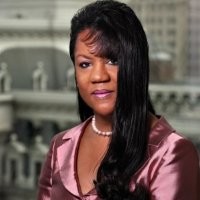
Mrs. Hudson-Nelson has served as United Bank of Philadelphia’s Executive Vice President and Chief Financial Officer for twenty-five years. Mrs. Hudson-Nelson has thirty-four years experience within the financial services industry. Mrs. Hudson-Nelson’s responsibilities include directing financial planning, implementing, and overseeing the Bank’s systems of internal controls, managing the Bank’s investment portfolio, and monitoring and managing the Bank’s sensitivity to interest rate risk. Ms. Hudson-Nelson ensures that the Bank’s Annual Report, SEC Reports and other Regulatory Reports are filed accurately and timely. 

She served as Treasurer on the Boards of Director for the South Street Dance Company, CHOICE, Big Brothers/Big Sisters of America, Big Brothers/Big Sisters of Mercer County, and for Prevention Point Philadelphia.

Dimitria Davenport, Vice President, Community Banking & Compliance

With over 20 years in the financial services industry, she has held key roles within Training, Consumer Banking, Retail Administration and Human Resources.  Dimitria has spent the last eighteen years of her career working diligently to carry out United Bank’s mission of financially empowering people and businesses in the greater Philadelphia region. 

Dimitria serves on several Boards: The Executive Committee of The African American Chamber of Commerce, The City Schools and The New Hope Community Development Corporation.

CITIZENS SAVINGS B&T COMPANY

*Dr. LaDonna Boyd, Board of Directors (pictured top left)

As the fifth-generation president/CEO of the R.H. Boyd Family of Companies in Nashville, Tennessee, she’s a powerhouse of innovation and creativity, transforming the business landscape while championing social causes close to her heart.

She earned her bachelor’s in economics and with a minor in French from Spelman College, followed by an MBA with a finance concentration from Tennessee State University. She completed her with a Doctorate in Education with a focus on organizational leadership from Pepperdine University. She further honed her skills by earning two certificates in from Harvard University’s Extension School in Digital Marketing Strategy and Artificial Intelligence in Business: Creating Value With Machine Learning.

*Joan Fleming, SVP of Residential Lending and Community Development (pictured top right)

She is an industry leader- finding ways to produce results through her expertise, commitment and relationships. Joan has a passion for delivering value and benefit to her clients with an enthusiastic and friendly attitude. It is her commitment to serve the underserved by being an advocate for affordable housing and financial literacy. Her “thinking outside the box” mentality allows her to develop programs to ensure everyone can build wealth through homeownership. 

UNITY NATIONAL BANK OF HOUSTON

*Sharon E. Murphy, Board of Directors

HBCU Money’s 2023 African American Owned Bank Directory

All banks are listed by state. In order to be listed in our directory the bank must have at least 51 percent African American ownership. You can click on the bank name to go directly to their website.

OTHER KEY FINDINGS:

  • 11 of the 17 African American Owned Banks saw increases in assets from 2022.
  • African American Owned Banks (AAOBs) are in 16 states and territories. Key states absent are Maryland, Missouri, New York, and Virginia.
  • Adelphi Bank (OH) is the first African American Owned Bank (AAOB) started in 23 years.
  • Alabama and Georgia each have two AAOBs.
  • African American Owned Banks have approximately $5.8 billion of America’s $23.2 trillion bank assets (see above) or 0.02 percent. The apex of African American owned bank assets was in 1926 when AAOBs held 0.2 percent of America’s bank assets or 10 times the percentage they hold today.
  • African American Owned Banks control 1.7 percent of FDIC designated Minority-Owned Bank Assets.
  • 2023 Median AAOBs Assets: $168,701,000 ($150,072,000)
  • 2023 Average AAOBs Assets: $326,097,000 ($325,391,000)
  • TOTAL AFRICAN AMERICAN OWNED BANK ASSETS 2023: $5,867,738,000 ($5,531,655,000)

ALABAMA

ALAMERICA BANK

Location: Birmingham, Alabama

Founded: January 28, 2000

FDIC Region: Atlanta

Assets: $17,282,000

Asset Change (2022): UP 9.5%

COMMONWEALTH NATIONAL BANK

Location: Mobile, Alabama

Founded: February 19, 1976

FDIC Region: Atlanta

Assets: $66,944,000

Asset Change (2022): UP 9.2%

DISTRICT OF COLUMBIA

INDUSTRIAL BANK

Location: Washington, DC

Founded: August 18, 1934

FDIC Region: New York

Assets: $739,181,000

Asset Change (2022): UP 2.2%

GEORGIA

CARVER STATE BANK

Location: Savannah, Georgia

Founded: January 1, 1927

FDIC Region: Atlanta

Assets: $81,906,000

Asset Change (2022): DOWN 2.5%

CITIZENS TRUST BANK

Location: Atlanta, Georgia

Founded: June 18, 1921

FDIC Region: Atlanta

Assets: $741,413,000

Asset Change (2022): DOWN 8.1%

ILLINOIS

GN BANK

Location: Chicago, Illinois

Founded: January 01, 1934

FDIC Region: Chicago

Assets: $63,898,000

Asset Change (2022): DOWN 11.1%

LOUISIANA

LIBERTY BANK & TRUST COMPANY

Location: New Orleans, Louisiana

Founded: November 16, 1972

FDIC Region: Dallas

Assets: $1,048,899,000

Asset Change (2022): DOWN 3.4%

MASSACHUSETTS

ONEUNITED BANK

Location: Boston, Massachusetts

Founded: August 02, 1982

FDIC Region: New York

Assets: $755,706,000

Asset Change (2022): UP 1.6%

MICHIGAN

FIRST INDEPENDENCE BANK

Location: Detroit, Michigan

Founded: May 14, 1970

FDIC Region: Chicago

Assets: $607,167,000

Asset Change (2022): UP 29.6%

MISSISSIPPI

GRAND BANK FOR SAVINGS, FSB

Location: Hattiesburg, Mississippi

Founded: January 1, 1968

FDIC Region: Dallas

Assets: $161,125,000

Asset Change (2022): UP 38.9%

NORTH CAROLINA

MECHANICS & FARMERS BANK

Location: Durham, North Carolina

Founded: March 01, 1908

FDIC Region: Atlanta

Assets: $429,605,000

Asset Change (2022): UNCHANGED 

OHIO

ADELPHI BANK

Location: Columbus, Ohio

Founded: January 18, 2023

FDIC Region: Chicago

Assets: $43,945,000

Asset Change (2022): N/A

OKLAHOMA

FIRST SECURITY BANK & TRUST

Location: Oklahoma City, Oklahoma

Founded: April 06, 1951

FDIC Region: Dallas

Assets: $119,349,000

Asset Change (2022): UP 50.9%

PENNSYLVANIA

UNITED BANK OF PHILADELPHIA

Location: Philadelphia, Pennsylvania

Founded: March 23, 1992

FDIC Region: New York

Assets: $55,719,000

Asset Change (2022): DOWN 6.2%

SOUTH CAROLINA

OPTUS BANK

Location: Columbia, South Carolina

Founded: March 26, 1999

FDIC Region: Atlanta

Assets: $524,934,000

Asset Change (2022): UP 29.5%

TENNESSEE

CITIZENS SAVINGS B&T COMPANY

Location: Nashville, Tennessee

Founded: January 4, 1904

FDIC Region: Dallas

Assets: $176,277,000

Asset Change (2022): UP 17.5%

TEXAS

UNITY NB OF HOUSTON

Location: Houston, Texas

Founded: August 01, 1985

FDIC Region: Dallas

Assets: $209,014,000

Asset Change (2022): UP 1.3%

WISCONSIN

COLUMBIA SAVINGS & LOAN ASSOCIATION 

Location: Milwaukee, Wisconsin

Founded: January 1, 1924

FDIC Region: Chicago

Assets: $27,374,000

Asset Change (2022): UP 11.6%

SOURCE: FDIC

2021’s FDIC National Survey of Unbanked and Underbanked Households – African America’s Highlights

  • Among households with income between $30,000 and $50,000, 8.0 percent of African American households were unbanked compared with 1.7 percent of European American households.
  • Despite being the lowest unbanked group at 1.7 percent, African Americans earning $75,000 or more are still almost 600 percent more unbanked than their European American counterparts at the same income level. The largest gap among all income levels reported.
  • Among households with income between $50,000 and $75,000, 64.8 percent of African American households had a credit card or bank personal loan, whereas 81.3 percent of European American households did so.
  • Unbanked among African Americans has dropped from 16.8 percent in 2017 down to 11.3 percent in 2021. A reduction of almost 33 percent. European Americans have the lowest unbanked rate at 2.1 percent followed by Asian Americans at 2.9 percent.
  • 21.4 percent of African American single-mother households were unbanked in 2021, compared with 8.0 percent of European American single-mother households.
  • Interest in having a bank account was also higher among African American unbanked households (32.0 percent were very or somewhat interested in having an account in 2021).
  • African American households comprised 12.8 percent of the overall household population, they made up 41.1 percent of the recently unbanked.
  • Use of Prepaid Cards by Bank Account Ownership and Selected Household Characteristics was highest among African Americans at 12.3 percent and lowest among Asian Americans at 4.6 percent.
  • Three in four African American banked households (76.5 percent) used bank accounts to save or keep money safe, a lower share than among households of other races and ethnicities. For example, 85.2 percent of European American banked households saved or kept money safe using bank accounts in 2021.
  • African American banked households saved or kept money safe using prepaid cards compared with 1.2 percent of European American banked households.
  • In 2021, 49.9 percent of African American households had a credit card or bank personal loan, compared with 78.8 percent of European American households.
  • 36 percent of African American households are underbanked/unbanked.
  • Rent-to-Own Service or Payday, Pawn Shop, Tax Refund Anticipation, or Auto Title Loan is used by 7.6 percent of African American households.

To read the full FDIC National Survey of Unbanked and Underbanked Households, click here.

Why Do HBCUs Not Bank With Black Banks?

It could all be so simple But you‘d rather make it hard, loving you is like a battle and we both end up with scars. – Lauryn Hill

Something that should be so simple, HBCUs and other African American organizations, businesses, and other African American institutions have made not just a battle but sometimes it feels like a war. That battle, getting African American institutions to bank with the African American banking system with banks and/or credit unions owned and controlled by – African Americans. It is economic development 101 for other groups, but for African America it is seemingly Calculus III. Based on HBCU Money’s internal research on the matter only two, a PBI and HBCU, are believed to bank with a Black-owned bank. That means that just like the over 90 percent of African Americans who go to college not choosing HBCUs, well over 90 percent of HBCUs do not bank with a Black-owned bank. And in both cases, neither (AAOBs or HBCUs) are able to fulfill their potential as they would with the patronage and investment of those they were built to serve.

We asked the AI app Nova for their take on why HBCUs do not bank with African American owned banks and here was its answer: “There are a few reasons why many HBCUs may not bank with Black-owned banks. One reason is that larger, more established banks often offer more resources and services that HBCUs may need, such as investment services or customized financial solutions. Additionally, some HBCUs may feel more comfortable with larger, more established banks that have a long history of working with educational institutions. However, there has been a growing movement encouraging HBCUs to support Black-owned banks and businesses as a way to promote economic empowerment within the Black community. Many Black-owned banks have a strong commitment to supporting HBCUs, and may offer specialized products and services tailored to their needs.”

Despite AI being quite learned in its contribution to this. There are as they say – levels to this. Not least among them is the plight of public HBCUs lacking autonomy. It would take a massive student and alumni uprising in order to get a public HBCUs moved to an African American owned bank. Ultimately, public HBCUs are controlled by a board or if they are in a system, then a system’s board. In either case, the state’s flagship PWIs carrying the most financial weight and tend to be determinate of how all public universities in the state will behave and most certainly likely where they will bank. And while it is complicated to wrangle the institutional banking of public HBCUs into African American owned banks, their proxy organizations like alumni associations and foundations that serve them should not have anywhere near the issue of banking Black. Then there are the private HBCUs who have far more autonomy with their banking decisions and yet it seems potentially only one private HBCU actually banks Black. It is almost befuddling in the case of the Alabama and Georgia HBCUs not to bank Black. They both have two African American Owned Banks in headquartered in their states. Morehouse specifically just a few years ago had one of their alumni bring back African American owned banking to Oklahoma when alumnus Kevin Perry purchased controlling interest in First Security Bank & Trust. In fact, 14 of the 15 states and territories where there are African American owned banks have HBCUs/PBIs in them with Wisconsin being the lone exception.

African America’s flagship HBCU, Howard University, two years ago entered into a partnership with PNC Bank to create the PNC National Center for Entrepreneurship housed at Howard University. PNC’s Foundation providing Howard University with a rather obtuse $3.4 million a year grant for five years. PNC Bank is based in Pittsburgh,PA, its executive team in 2022 commanded $81 million in compensation, and the bank has assets over $550 billion – an amount that is over 100 times the size of all 16 remaining African American Owned Banks’ assets combined. We think Marcus Garvey just rolled over in his grave. Meanwhile, right in Howard University’s backyard is Industrial Bank, an African American Owned Bank with $723 million in assets, meaning PNC Bank has over 760 times the amount of assets of Industrial. There is in fact only one African American Owned Bank that has over $1 billion in assets, Liberty Bank & Trust in Louisiana.

That HBCU presidents and AAOB CEOs do not have closer relationships simply speaks to the island mentality that African American institutions as a whole have. Although our community loves to parrot the harsh reality of an African American dollar that does not circulate in our community’s even 6 hours while “the average lifespan of the dollar is approximately 28 days in Asian communities, 19 days in Jewish communities, 17 days in white communities”, according to a piece by the FAMUAN (see how we are circulating HBCU media capital). This has done nothing to make HBCU administrators understand that the circulation of the African American institutional dollar is far more impactful than the African American consumer collar. Despite as recently as 2017, there were four African American Owned Banks with HBCU alumni as CEOs. It is also not just on HBCUs, but AAOBs should be doing a better job of heavily pursuing those HBCUs that do have the autonomy to decide where they bank and forging deep relationships with them at multiple levels.

By forging that relationship HBCUs and AAOBs can multiply the probability of opportunities and profitability. That way when an HBCU alum creates the next Google, SpaceX, FedEx, or other Fortune 500 company, then they will already know the importance of banking with an AAOB and hiring HBCU alumni. It will be understood because the intentionality of our ecosystem’s success will be modeled and molded and as a result our community is empowered with success a rule and not the outlier it operates in now as so many of us continue to try and build a nation as an island instead of forging together.

HBCU Money’s 2022 African American Owned Bank Directory

All banks are listed by state. In order to be listed in our directory the bank must have at least 51 percent African American ownership. You can click on the bank name to go directly to their website.

OTHER KEY FINDINGS:

  • 11 of the 16 African American Owned Banks saw increases in assets from 2021.
  • African American Owned Banks (AAOBs) are in 15 states and territories. Key states absent are Maryland, Missouri, New York, Ohio, and Virginia.
  • Liberty Bank and Trust Company is headquartered in Louisiana, but also operates in 7 other states including Mississippi; Kansas and Missouri; Michigan; Alabama; Illinois; and Texas. OneUnited is headquartered in Massachusetts, but also operates in California and Florida.
  • There has not been an African American Owned Bank (AAOB) started in 23 years.
  • Alabama and Georgia each have two AAOBs.
  • African American Owned Banks have approximately $5.5 billion of America’s $22.9 trillion bank assets or 0.02 percent.
  • African American Owned Banks control 1.7 percent of FDIC designated Minority-Owned Bank Assets.
  • 2022 Median AAOBs Assets: $150,072,000 ($194,181,000)
  • 2022 Average AAOBs Assets: $325,391,000 ($297,692,000)
  • TOTAL AFRICAN AMERICAN OWNED BANK ASSETS 2022: $5,531,655,000 ($4,763,079)

ALABAMA

ALAMERICA BANK

Location: Birmingham, Alabama

Founded: January 28, 2000

FDIC Region: Atlanta

Assets: $15,784,000

Asset Change (2021): DOWN 1.6%

COMMONWEALTH NATIONAL BANK

Location: Mobile, Alabama

Founded: February 19, 1976

FDIC Region: Atlanta

Assets: $61,329,000

Asset Change (2021): UP 7.8%

DISTRICT OF COLUMBIA

INDUSTRIAL BANK

Location: Washington, DC

Founded: August 18, 1934

FDIC Region: New York

Assets: $722,995,000

Asset Change (2021): UP 15.6%

GEORGIA

CARVER STATE BANK

Location: Savannah, Georgia

Founded: January 1, 1927

FDIC Region: Atlanta

Assets: $84,015,000

Asset Change (2021): UP 35.1%

CITIZENS TRUST BANK

Location: Atlanta, Georgia

Founded: June 18, 1921

FDIC Region: Atlanta

Assets: $806,801,000

Asset Change (2021): UP 20.6%

ILLINOIS

GN BANK

Location: Chicago, Illinois

Founded: January 01, 1934

FDIC Region: Chicago

Assets: $71,844,000

Asset Change (2021): DOWN 15.1%

LOUISIANA

LIBERTY BANK & TRUST COMPANY

Location: New Orleans, Louisiana

Founded: November 16, 1972

FDIC Region: Dallas

Assets: $1,086,331,000

Asset Change (2021): UP 11.8%

MASSACHUSETTS

ONEUNITED BANK

Location: Boston, Massachusetts

Founded: August 02, 1982

FDIC Region: New York

Assets: $743,590,000

Asset Change (2021): UP 15.6%

MICHIGAN

FIRST INDEPENDENCE BANK

Location: Detroit, Michigan

Founded: May 14, 1970

FDIC Region: Chicago

Assets: $468,425,000

Asset Change (2021): UP 13.6%

MISSISSIPPI

GRAND BANK FOR SAVINGS, FSB

Location: Hattiesburg, Mississippi

Founded: January 1, 1968

FDIC Region: Dallas

Assets: $116,006,000

Asset Change (2021): N/A

NORTH CAROLINA

MECHANICS & FARMERS BANK

Location: Durham, North Carolina

Founded: March 01, 1908

FDIC Region: Atlanta

Assets: $429,685,000

Asset Change (2021): UP 17.7%

OKLAHOMA

FIRST SECURITY BANK & TRUST

Location: Oklahoma City, Oklahoma

Founded: April 06, 1951

FDIC Region: Dallas

Assets: $79,084,000

Asset Change (2021): UP 29.1%

PENNSYLVANIA

UNITED BANK OF PHILADELPHIA

Location: Philadelphia, Pennsylvania

Founded: March 23, 1992

FDIC Region: New York

Assets: $59,416,000

Asset Change (2021): DOWN 7.7%

SOUTH CAROLINA

OPTUS BANK

Location: Columbia, South Carolina

Founded: March 26, 1999

FDIC Region: Atlanta

Assets: $405,324,000

Asset Change (2021): UP 28.5%

TENNESSEE

CITIZENS SAVINGS B&T COMPANY

Location: Nashville, Tennessee

Founded: January 4, 1904

FDIC Region: Dallas

Assets: $150,072,000

Asset Change (2021): UP 11.5%

TEXAS

UNITY NB OF HOUSTON

Location: Houston, Texas

Founded: August 01, 1985

FDIC Region: Dallas

Assets: $206,417,000

Asset Change (2021): DOWN 18.7%

WISCONSIN

COLUMBIA SAVINGS & LOAN ASSOCIATION 

Location: Milwaukee, Wisconsin

Founded: January 1, 1924

FDIC Region: Chicago

Assets: $24,537,000

Asset Change (2021): DOWN 8.9%

SOURCE: FDIC