Author Archives: hbcumoney

Locked Out: HBCUs Only Receive 3 Of The 460 Donations Of $1 Million Plus To Colleges In 2017

If charity is any economic indicator, then wealthy donors have retrenched their nervousness about the economy as a whole. Two years ago, $1 million dollar plus donations to colleges and universities were under 500 such charitable gifts for the first time since 2012. Last year, that was reversed to almost 600, but the reversal was not to be sustained in 2017 where once again less than 500 donations – only 460 to be exact were of the $1 million dollar plus variety to colleges and universities. The largest donation made its way to UC-San Francisco to the tune of $500 million by the Hellen Miller Foundation whose source of wealth stems from real estate. For perspective, this donation is an amount equal to twenty-five percent of all HBCU endowments combined.

For HBCUs, the trend has been a constant struggle to get back to 2014 when nine such donations were made to our institutions. Since that time, not more than five have occurred in a given year in the past three years and this year marks the lowest number with only three donations of $1 million plus. That HBCUs can not even garner three percent (the number that HBCUs represent as a total of all American colleges and universities) marks a continued challenge in the financial arms race that is happening among higher education institutions as the shifting landscape of the 21st century unfolds. Without the transformative donations, HBCUs remain reliant on tuition revenue and at risk in competing for talent both among faculty, students, research, and infrastructure. What is the solution to this philanthropic Rubik Cube? As with most problems, there is more than one solution, but there is no doubt those solutions need to come fast and soon.

If you need perspective on just how large the gap is between the largest donations to HWCU/PWIs and HBCUs is – the top three PWI donations totaled $969 million. In contrast, HBCUs top three donations totaled $3.7 million, an amount that is 262 times less.

1. Orlando L. Clark (pictured above) – $1.59 Million
Recipient: Tuskegee University
Source of Wealth: Health care

2. Antonio Clayton – $1.1 Million
Recipient: Southern U. System Foundation
Source of Wealth: Law

3. George & Jill Hamilton – $1 Million                                                        Recipient: North Carolina Central University
Source of Wealth: Chemicals

Source: The Center for Philanthropy


Alabama A&M University Students Standout At APA’s 2018 National Planning Conference In New Orleans

“Without leaps of imagination or dreaming, we lose the excitement of possibilities. Dreaming, after all is a form of planning.” – Gloria Steinem

This year’s American Planning Association in New Orleans was a success for both the organization and for the exposure that a set of Alabama A&M University students (pictured above) received who were in attendance.

American Planning Association’s history dates back to 1978 when the American Institute of Planners and the American Society of Planning Officials merged and decided to move forward under a united banner with the aim of, “organized exclusively for charitable, educational, literary and scientific purposes to advance the art and science of planning and the activity of planning — physical, economic, and social — at the local, regional, state and national levels.” Today, the website states that the organization’s current vision revolves around, “provides leadership in the development of vital communities by advocating excellence in planning, promoting education and citizen empowerment, and providing our members with the tools and support necessary to meet the challenges of growth and change.” Something that is a vital exploration of HBCU towns and surrounding communities who are often highly undeveloped.

Alabama A&M, located in Huntsville, Alabama, like many rural HBCUs is a flagship institution in the halo geography of its location. Huntsville is home to almost 200 000 residents along with a strong NASA presence. affordable housing, the future for Huntsville could be extremely bright – and therefore Alabama A&M impact on the area could also be . However, who will ultimately play a role in shaping Huntsville’s future? Hopefully, with a strong planning program like the one being developed at AAMU, it will be their alumni who will sit in public office and private firms and shaping the future and influence of the city. Ultimately, a benefit to the institutional capital of Alabama A&M University.

The APA annual conferences and workshops provide intellectual discourse on what is shaping communities is often attended by the who is who among public and private interests looking to get a glimpse into the future of how to provide the assets that will allow them to continue to grow and flourish. Given that HBCUs and the towns they reside in, especially in rural areas, maybe the last bastion of fighting gentrification and building sustainable African American communities, it is vitally important for HBCUs, their professors, and students especially continue to be present.

We were able to catch up with Tayla Solomon, a rising junior at Alabama A&M and Urban Planning major with a minor in Political Science,  who was one of the Bulldogs in attendance at the conference and got her to share her thoughts on attending:

What made you decide to major in Urban Planning? I decided to major in urban planning when I visited spring ‘16. My college counselor, Paula Dofat, made it possible for me and another classmate to drive to AAMU from Baltimore. I knew I wanted to major in something that not only caught my attention but would be if a great impact to the world in many ways.

Was this your first time attending the APA conference? Yes, this was my first planning conference. I’m excited to start fundraising for the next one.

Was Alabama A&M University the only HBCU present that you are aware of? If so, do you think it is important for more HBCUs to be present in the organization and conference? If so, why? AAMU was not the only HBCU at the conference. But there are a limited amount of HBCU’s that are accredited in urban planning. HBCU’s make up a small number in most conferences and most do not have the funds to participate.

What was the most important take away for you from this conference? The most important thing I took away from the conference was to network. There are thousands of people who share the same interest in you and they are also willing to help you and work with you. Once you step out of your comfort zone you will become unstoppable in whatever you put your mind to.

Did you have a favorite workshop that you attended and what was it on? I cannot remember my favorite one exactly but it talked about making vacation area sustainable for long term housing.

Lastly, what is your dream pursuit within the field of planning? My dream is to ensure better living conditions in impoverished cities. I hope to get a chance to work in every field of planning, mainly housing, environmental, and transportation.

If you want to donate to Tayla Solomon and the other Urban Planning students to attend more conferences, please contact: Ms. Heidi Weaver, Secretary, Tel: 256-372-5426, heidi.weaver@aamu.edu

Jackson State University Alumnus & Former NFL Player Turns HBCUpreneur/Chefpreneur

“Cooking is not just about ingredients, recipes, and cooking. It’s about harnessing imagination, empowerment, and creativity.” – Guy Fieri

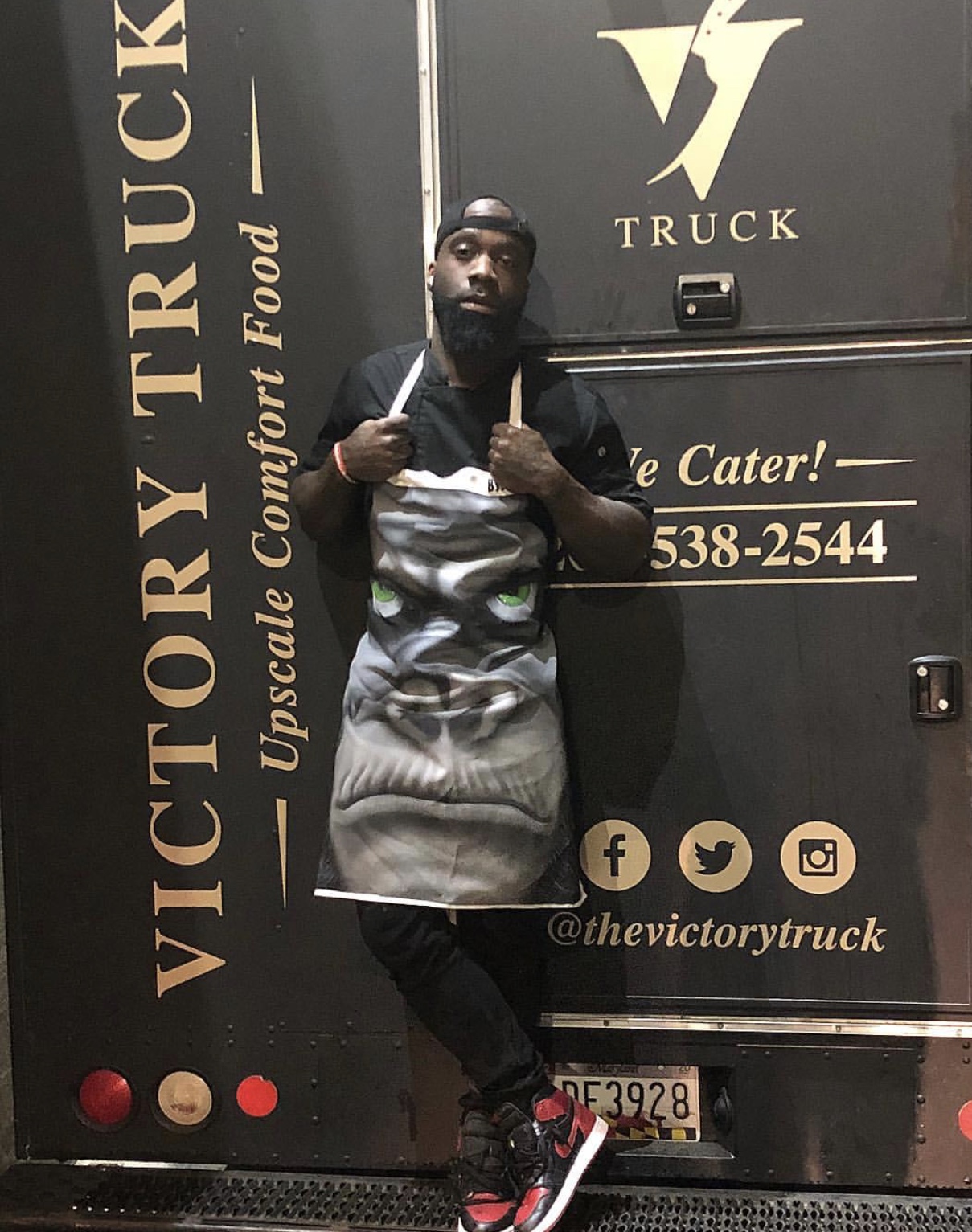
The road to success rarely takes the path we have drawn up for ourselves. Along the way as we are pursuing our success we start to learn more things about ourselves. We may realize what we thought was our passion really is not and something we have tinkered with actually is the thing that truly brings heat to our kitchen. Enter, Tobias Dorzon, a Jackson State University alumnus, who spent multiple years in both the NFL and CFL, but whose true calling had been more or less a mere hobby.

In a recent interview with CNBC, Tobias Dorzon reveals how he hung up the cleats, picked up the apron, and became a culinary superstar –  actually the latter following in the footsteps of his father. He tells CNBC, “Cooking was something I always loved. But it wasn’t until I ventured off and stopped playing (sports) that I realized I loved it more than football.”

Now, Dorzon is the owner of Victory Chefs, a catering company started in 2014, and Victory Truck, a food truck venture which launched January 2018 and tackles the streets and stomachs of Washington D.C. The food truck and catering company are a launching pad for Dorzon to one day open a full-service restaurant as word travels throughout the D.C./Maryland/Virginia area of he and his teams exquisite cuisine.

HBCU Money reached out to Mr. Dorzon and Victory Chefs, inquiring how his time at Jackson State helped prepare him, “Being the unofficial team chef while I played ball was my first segue into preparing meals for athletes. We were a family on and off the field, and me being able to feed my brothers the home cooking that they were used to from back home was a great feeling!”

This is a prime opportunity to connect the work that agricultural HBCUs also known as the 1890s do with African American farmers and farms and connect them with the end users like Chef Dorzon, all while creating research opportunities for the institutions themselves. It also bodes for an argument, that an HBCU culinary school should be formed to diversify, hone, and explore the interest of many African Americans who may want the HBCU experience, but have a non-academic interest. There is lot to bite off and chew in the possibilities of connecting our ecosystem, but with stories like Chef Dorzon’s, we expect it will be an amazing meal that we can all enjoy.

Visit The Victory Chef team at https://www.thevictorychefs.com/

You can also find them on Instagram: @kingcheftd & @thevictorytruck


HBCU Money’s 2018 African American Owned Bank Directory

For the most current African American Owned Bank Directory visit the 2022 link by clicking here.

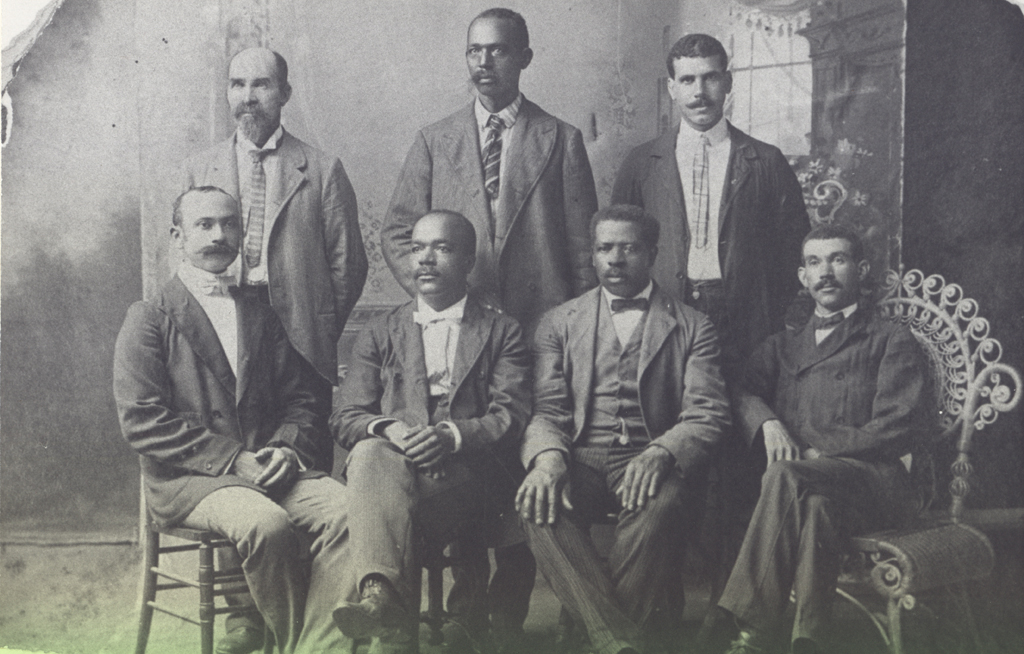
(Founders of Merchants & Farmers Bank in Durham, North Carolina)

All banks are listed by state. In order to be listed in our directory the bank must have at least 51 percent African American ownership. You can click on the bank name to go directly to their website.

OTHER KEY FINDINGS:

  • Key losses were the sale of First State Bank in Danville, Virginia.
  • AAOBs are in 16 states and territories. Key states absent are Florida, Mississippi, New York, Ohio, and Virginia.
  • Alabama, Georgia, and Tennessee, each have two AAOBs.
  • 2017 Median AAOBs Aseets: $133 096 000 ($109 858 000)*
  • 2017 Average AAOBs Assets: $222 831 000 ($218 346 000)*
  • Of the surviving African American bank assets saw a 2.1 percent increase or net gain of approximately $85.2 million in assets in 2017.
  • AAOBs control 0.03 percent of America’s $15.4 trillion Bank Owned Assets.
  • AAOBs control 1.9 percent of FDIC designated Minority-Owned Bank Assets, which is down from 2 percent in 2017.
  • There has not been an AAOB started in 17 years.
  • 11 of 2016’s 19 AAOBs saw increases in assets.
  • For comparison, Asian American Owned Banks have approximately $112.4 billion in assets spread over 76 institutions. An almost 300 percent increase over the past two years.

There are 19 African American owned banks (AAOBs) with assets totaling approximately $4.2 billion in assets or approximately 0.38 percent of African America’s $1.1 trillion in buying power. An unchanged percentage from 2017.

ALABAMA

ALAMERICA BANK

Location: Birmingham, Alabama

Founded: January 28, 2000

FDIC Region: Atlanta

Assets: $35 328 000

Asset Change (2017): Down 2.6%

COMMONWEALTH NATIONAL BANK

Location: Mobile, Alabama

Founded: February 19, 1976

FDIC Region: Atlanta

Assets: $49 485 000

Asset Change (2017): Down 11.4%

CALIFORNIA

BROADWAY FEDERAL BANK FSB

Location: Los Angeles, California

Founded: February 26, 1947

FDIC Region: San Francisco

Assets: $411 638 000

Asset Change (2017): Down 0.4%

DISTRICT OF COLUMBIA

INDUSTRIAL BANK

Location: Washington, DC

Founded: August 18, 1934

FDIC Region: New York

Assets: $423 202 000

Asset Change (2017): Up 8.9%

GEORGIA

CARVER STATE BANK

Location: Savannah, Georgia

Founded: January 1, 1927

FDIC Region: Atlanta

Assets: $42 077 000

Asset Change (2017): Up 5.9%

CITIZENS TRUST BANK

Location: Atlanta, Georgia

Founded: June 18, 1921

FDIC Region: Atlanta

Assets: $428 579 000

Asset Change (2017): Up 5.6%

ILLINOIS

ILLINOIS SERVICE FEDERAL SAVINGS & LOAN

Location: Chicago, Illinois

Founded: January 01, 1934

FDIC Region: Chicago

Assets: $133 096 000

Asset Change (2017): Up 26.3%

LOUISIANA

LIBERTY BANK & TRUST COMPANY

Location: New Orleans, Louisiana

Founded: November 16, 1972

FDIC Region: Dallas

Assets: $605 490 000

Asset Change (2017): Down 1.0%

MARYLAND

HARBOR BANK OF MARYLAND

Location: Baltimore, Maryland

Founded: September 13, 1982

FDIC Region: New York

Assets: $266 208 000

Asset Change (2017): Up 7.2%

MASSACHUSETTS

ONEUNITED BANK

Location: Boston, Massachusetts

Founded: August 02, 1982

FDIC Region: New York

Assets: $658 014 000

Asset Change (2017): Up 1.8%

MICHIGAN

FIRST INDEPENDENCE BANK

Location: Detroit, Michigan

Founded: May 14, 1970

FDIC Region: Chicago

Assets: $286 561 000

Asset Change (2017): Up 21.4%

NEW JERSEY

CITY NB OF NEW JERSEY

Location: Newark, New Jersey

Founded: June 11, 1973

FDIC Region: New York

Assets: $213 858 000

Asset Change (2017): Down 4.1%

NORTH CAROLINA

MECHANICS & FARMERS BANK

Location: Durham, North Carolina

Founded: March 01, 1908

FDIC Region: Atlanta

Assets: $254 776 000

Asset Change (2017): Down 17.6%

PENNSYLVANIA

UNITED BANK OF PHILADELPHIA

Location: Philadelphia, Pennsylvania

Founded: March 23, 1992

FDIC Region: New York

Assets: $59 009 000

Asset Change (2017): Up 5.4%

SOUTH CAROLINA

SOUTH CAROLINA COMMUNITY BANK

Location: Columbia, South Carolina

Founded: March 26, 1999

FDIC Region: Atlanta

Assets: $52 586 000

Asset Change (2017): Up 2.5%

TENNESSEE

CITIZENS SAVINGS B&T COMPANY

Location: Nashville, Tennessee

Founded: January 4, 1904

FDIC Region: Dallas

Assets: $107 165 000

Asset Change (2017): Down 2.5%

TRI-STATE BANK OF MEMPHIS

Location: Memphis, Tennessee

Founded: December 16, 1946

FDIC Region: Dallas

Assets: $86 651 000

Asset Change (2017): Down 15.4%

TEXAS

UNITY NB OF HOUSTON

Location: Houston, Texas

Founded: August 01, 1985

FDIC Region: Dallas

Assets: $96 010 000

Asset Change (2017): Up 14.0%

WISCONSIN

COLUMBIA SAVINGS & LOAN ASSOCIATION 

Location: Milwaukee, Wisconsin

Founded: January 1, 1924

FDIC Region: Chicago

Assets: $23 973 000

Asset Change (2017): Down 1.8%

Kolors By K Hops Into Rarefied Air By Landing Leaping Bunny Certification

In another milestone for startup cosmetic company Kolors By K, they recently became a recognized company by Cruelty Free International’s Leaping Bunny Program. The program per their website, “is the gold-standard in cruelty-free certification for personal care and household products companies and signifies no animal testing at any stage of product development.” Internationally, there are less than 1,000 companies with such designation. As consumers become more conscious about how the products they consume are made, being an early adopter of Leaping Bunny’s criteria is poised to position Kolors By K as an up and coming leader in the cosmetic industry.

The beauty industry itself seems to just keep going and going like another bunny, growing from $160 billion in sales in 2003 to almost half a trillion in sales today. It is an industry that seems to show no signs of slowing down either, especially with people living longer and the rising middle classes in developing nations, there will be demand on vanity and simply feeling good about oneself that the beauty industry provides. It also does not hurt that this industry is women-centrist as we appear to be entering a golden age of women empowerment. Women who want to conquer the world, look good doing it, and who just happen to be more and more in control of the household incomes the world over. The industry is brimming with opportunity and that is one reason Kolors By K looks poised to leverage this recognition.

We reached out to Kolors By K Founder and CEO Kalauna Carter for comment on her company’s achievement, “To see Kolors By K get the Leaping Bunny Certification really gave us the push to keep going. If you are an entrepreneur and you hand make your products, to have your products Leaping Bunny Certified makes them official, internationally. The certification helps with reaching other potential customers in other countries. To be Leaping Bunny Certified is truly an amazing feeling for my company.” It is clear that Ms. Carter sees this as a moment that could take her company to another level. This just reaffirms the values, strategy, and direction that Kolors By K is setting for its future, which at the moment is shining brighter than ever.