
Tag Archives: nonprofits

What Is To Become Of African American Baby Boomers’ $188 Billion In Wealth?

“Everything that I’ve gone through informs me and my opinions in a way, I guess because I am a child of segregation. I lived through it. I lived in it. I was of it.” – Samuel L. Jackson
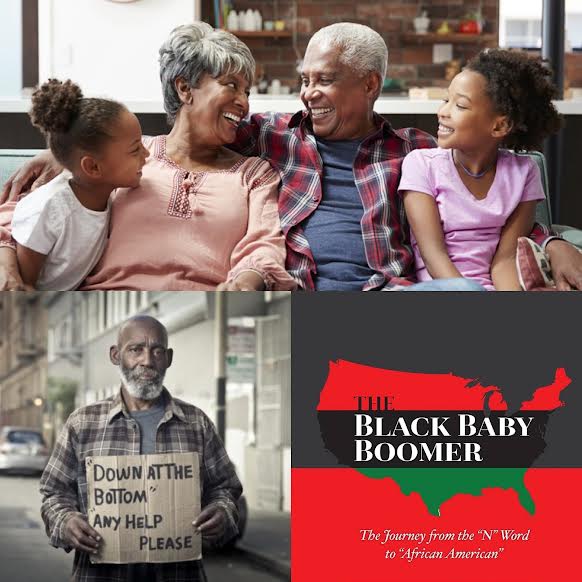
One thing most financially literate people realize is that it is not how much you make, but it is how much you keep. Those who are of a wealth building mindset realize it is not how much you keep, but how much of your capital is actually working to make you wealthier without your labor being attached to it. African American individuals, households, and institutions struggle in both cases, but mightily in the latter. Most African American wealth, as highlighted by the amount of time the African American dollar remains in our community (less than 6 hours), does little to no work for the wealth building of those three entities. A major reason for this is that African American individuals, households, and yes, even institutions put little to none of their money in African American institutions – ironically.

Economic Disparities

“According to a report by the Federal Reserve, the median net worth of African American households headed by someone aged 55-64 (who would generally be considered Baby Boomers) was around $39,000 in 2019. This is substantially lower than the median net worth of European American households in the same age group, which was around $184,000 in 2019. It’s important to note that there is significant variation within both groups, and wealth is influenced by a range of factors including income, education, and access to resources.”

Insider Intelligence gives a generational demographic breakdown reporting that, “Baby boomers were the largest living adult population until 2019. According to the US Census Bureau, US boomers have remained the second-largest population group in 2022, comprised of 69.6 million people ages 58 to 76.” And Statista reports that there are 43.26 million Boomer households meaning that approximately 4.8 million of those are African American. This then puts African American Baby Boomer wealth at approximately $187.2 billion – but what of it?

Each eldest generation will push wealth forward one way or another. Where it flows though can be largely up to the person. Some will push it to the next generation of family and friends, charities and organizations, and there are a host of other options of where money can find itself as one begins to consider their legacy both in the here and now or from the beyond. One things is crystal clear though from a Brookings Institute study, African Americans are falling behind with every passing generation, “30% of European American households received an inheritance in 2019 at an average level of $195,500 compared to 10% of African American households at an average level of $100,000.” African Americans both receive 50 percent less than their European American counterpart and European Americans are three times more likely to get an inheritance than their African American counterpart – but again what of it?

While the wealth of even African American Baby Boomers is not that of their counterparts, it should have the opportunity to make far more considerable impact than it probably actually will. As African American baby boomers age, a significant transfer of wealth is expected to occur. This presents an opportunity for younger generations to invest in education, home ownership, and entrepreneurial ventures. However, research indicates that many African American families face systemic barriers, such as lower access to financial resources and education, which could impact how this wealth is utilized and preserved.

Despite the considerable wealth held by baby boomers, economic disparities persist within the African American community and its institutions. Issues such as income inequality, lack of business ownership, access to African American owned financial institutions, limited access to financial literacy resources, and a disconnected institutional ecosystem can hinder the effective management and growth of inherited wealth. Addressing these disparities will be crucial in ensuring that future generations can leverage this wealth for long-term benefits.

Philanthropy and Community Investment

Many African American baby boomers are inclined to support causes that uplift their communities. This philanthropic inclination could lead to increased investment in African American nonprofits, education initiatives, and other community organizations. By directing funds towards institutional development, these donors can help address systemic issues and create lasting change.

Financial Planning and Literacy

The management of this wealth will largely depend on the financial literacy of both the current baby boomer generation and their heirs. Increasing access to financial education, resources, and African American owned financial institutions is essential to ensure that wealth is not only preserved but also strategically invested. Programs aimed at enhancing financial connectivity between African American households and African American financial institutions within the African American community can play a significant role in maximizing the impact of this wealth.

The fate of the $188 billion in wealth held by African American baby boomers is not just about the transfer of assets; it’s about how those assets can be utilized to build a stronger future for the community. By focusing on education, philanthropy, and addressing systemic barriers, there is potential for this wealth to make a profound impact on the lives of future generations. Ensuring that this wealth is effectively managed and directed towards meaningful causes will be crucial in shaping a more equitable and prosperous future for the African American community. In the end, the only real question is how much of the $188 billion will end up in African American institutions. Whether those organizations be African American social, economic, or political institutions is up to the household, but this is the most acute potential for institutional transformation that African America will have seen since 1865.

Disclosure: This article was assisted by NOVA AI and ChatGPT.

Starting a Philanthropy Club: A Collective Approach to African American Giving

“I have found that among its other benefits, giving liberates the soul of the giver.” – Dr. Maya Angelou. 

If you’ve been considering joining or starting an philanthropy club with your family, friends, or fellow HBCU alumni but are unsure if it’s the right move, you’ve come to the right place. The answer is it is absolutely the right move.

A few facts regarding African American organizations and nonprofits:

Philanthropy clubs can be a powerful tool for leveraging African American philanthropy from like-minded individuals. They not only enhance your financial literacy and knowledge about African American and African Diaspora organizations but also empower you to make informed philanthropic decisions. By pooling your resources with your family, you can collectively grow your impact African American nonprofits finances and outreach, fostering a sense of confidence and control over institutional development and empowerment.

Keep reading as we discuss why you might want to start an investment club and the steps you’ll need to take.

Why You’ll Want to Start a Philanthropy Club?

One of the biggest reasons to start an philanthropy club is that they want to learn and share ideas with people who share their values. It makes sense to start a philanthropy club with family, friends, or HBCU alumni because, most of the time, your values are well-aligned. Yes, you may have different opinions, but your values are generally on the same page.

Philanthropy clubs can be a great way to learn about African American causes, organizations, and nonprofits. Because some members may be more seasoned donors, givers, or active in the nonprofit space, they can share their knowledge on certain topics.

Philanthropy clubs are a great way to magnify small donations by each member into a large donation by a focused collective. the increase the impact associated with investing. However, with the rise in so many commission-free brokers, the fees for making a high volume of trades aren’t as big of a deal.

How to Start an Investment Club

If you’re ready to get your philanthropy club with family, friends, or HBCU alumni off the ground, you’ll want to follow these steps to ensure success:

1. Find and Organize Members

Finding members for a philanthropy club is generally one of the most challenging steps. However, it’s a little easier if you’re looking to start one with your family, friends, or HBCU alumni. Either way, ensuring the fit is correct before jumping in is crucial.

A solid philanthropy club should have at least 5 people but no more than 15 or 20. You must have enough ideas, but too many can make things more difficult. Each person will be required to identify a cause, organization, or nonprofit. Then, each month, a different member will present their cause, organization, or nonprofit to the group.

Before extending an invitation to different anyone, ask yourself a few questions. These will help you see if it will be a good fit.

  • Do you trust the person you’re thinking of inviting to be consistent and involved?
  • Will they bring research and ideas to the meetings?
  • Are they organized?
  • Are they going to pay the monthly donation on time?

2. Determine Your Goals

Once you have your members set, you must agree on your goals. Most clubs’ goals will be making donations and learning from others. But how are you going to get to that point?

It’s important to take some time to understand each member’s philanthropic approach. Are they willing to take on more risk or prefer to be more conservative? Do you want to stick with only well known organizations, or are members interested in startup organizations as well? Do they only want to give to domestic organizations? Or are they willing to give to African Diaspora nonprofits working in Haiti, Jamaica, UK, or Africa?

Developing a plan of attack and ensuring that each member is on the same page will be vital to success.

3. Decide How You Want To Give

Deciding on if you want to setup a legal structure for your philanthropy club is important because potentially over time, your club can setup an endowment that invest donors money and that can grow into a significant and sustainable amount of money. Having the necessary legal protections is going to be important. If your philanthropy club decides to actually invest its donations into investments that will grow over time so that the club has larger and more sustainable sums to give is important to think about.

The other option is to simply give everyone the option to donate on their own once the cause, organization, or nonprofit is decided upon. This route relies on the honor system or some type of peer accountability towards giving.

Each philanthropy club must do what works best for them and also realize that the club is allowed to evolve over time.

The Bottom Line

Philanthropy clubs are a great way to pool your donor funds and learn from other members. Just be sure that you join a group where everyone is willing to listen to ideas and pull their own weight within the club.

5 Ways Black Men Can Invest In Black Boys

“It is easier to build strong children than to repair broken men.” – Frederick Douglas

The statistics and data around Black boys/men is and has been alarming for decades. As African Americans in the post-Civil Rights era began to abandon our own institutions arguably nobody has suffered as a result more than Black boys. In almost every category of substance Black boys/men trail and trail significantly against the overall society and within our own community. The consequences of this is seen in the struggles of our communities, institutions, and families. Where are the Black men is a question that is asked so often in spaces that in many ways it has become redundant. Unfortunately, the answer is they were lost as Black boys never to be seen from again in many ways. To become substantive members of our community, families, and institutions requires education, training, mentorship, and so much more. The reality on the ground is that there is very little in the way of organizations or resources that provides enough of that. While Black women have taken upon themselves to create, support, and fund initiatives that support the development and growth of Black girls, Black men have not done the same for Black boys. Conversations between Black men about how they can help Black boys tends to seemingly 99 percent revolve around sports as an answer. Black boys and sports has become a catch all for all things that ail Black boys and yet the outcomes suggest that is a failed investment. The question now is what going forward can Black men do to holistically develop and improve the outcomes of Black boys. Take responsibility and accountability for them. The time for deflecting blame is a broken record in many instances and while there are external forces at work constantly against African American men and our boys, we would be remiss not to as men deal with the protection and providing for them within our control.

  1. Pre-K-5 Investment Is Imperative. African American boys get lost and they get lost early. The majority of any investment made into African American boys needs to be made in early childhood development. This is where boys develop cultural identity, mental health fundamentals, educational confidence, and more. Any conversations that we have about Black boys needs to be heavily weighted on reaching them as early as possible and as often as possible. The foundation of anything being built will always be the most important part of that structure.
  2. Donating To African American Organizations That Specifically Support Black Boys. The easiest thing any of us can do is make sure the organizations that are trying to help our boys have the resources they need to not only fulfill their mission, but to excel at their mission and to exceed their missions expectations. For African American organizations who receive less than 2 percent of all national funding into NPOs, this is a mountainous hurdle. African American men can simply make sure they are active donors if they can afford to be and anything is better than nothing as the old saying goes. African American men can do this individually, but the stronger pathway would be as a collective. Two friends or twenty friends of African American men giving together is powerful for accountability towards giving, conversations about giving, strategic pathways to giving, and of course more capital towards giving.
  3. Create More Organizations That Support Black Boys. Simply put, there just are not many African American organizations that are targeted towards developing Black boys. Arguably, that is because African American men have not created them. This is where inevitably Black boys get funneled into sports and nothing else. Largely because that is what is available. Organizations that solely focus on and encourage Black boys to develop themselves educationally, mentally, artistically, and more are largely absent and in need of existence on the nonprofit landscape. African American men have to take the responsibility of identifying, cultivating, and developing areas where Black boys need development and creating organizations around them. To be clear, we are not talking about organizations where it is boys of color or side initiatives, but actual organizations being created where Black boys are the focus, period.
  4. Subsidizing Black Boys Supplemental Education. Black boys throughout K-12 do not get nearly enough supplemental education. The basic nature of supplemental education is everything that happens outside of a child’s classroom that makes them stronger in the classroom at its essence. Providing Black boys and their families assistance with tutoring costs, trips to museums, art galleries, academic camps, therapy, etc.
  5. Give Your TIME and Be PRESENT. This is free. For whatever reason, African American men are plain and simply absent in activities for Black boys beyond sports. From Boy Scouts, tutors, mentors, and civic engagement in general, African American men are just missing for reasons that are frustratingly hard to understand.

What are we up against? Here are just a few reasons African American men need to be at the forefront of the needs of African American boys.

  • The 2019 National Assessment of Education Progress data also highlighted that only 6% of 12th-grade Black males were reading at the proficient level and only 1% were reading at the advanced level.
  • In 2021, 76% of Black boys finished high school compared to 93% of Asian boys.
  • According to the National Center for Education Statistics, only 36% of Black male students completed a bachelor’s degree within six years (52% of Latino male students completed theirs within the same time. White males graduated at a rate of 63% in six years.)
  • U.S. Census reports African American boys 17 and under comprise over 40% of the African American males in poverty.
  • Of the 12.3 million African American men over the age of 25, almost 50% have only a high school diploma or less according to the U.S. Census.

There is a war going on against African American boys and African American men are leaving them to fight for themselves. Our boys are more than their physicality. They are thinkers, they are astronauts, teachers, gardeners, and so much more, but like a flower they too must be nourished and care for by us. African American men can not leave African American boys to experience the gauntlet of life too many of us have already lived.