Tag Archives: hbcu money

The Debt That Could Bind Us: Why African American Banks Must Engage African Debt Markets to Strengthen Diaspora Sovereignty

“Control of credit is control of destiny. Until Our institutions decide where Our capital sleeps and wakes, Our freedom will remain on loan.” – William A. Foster, IV

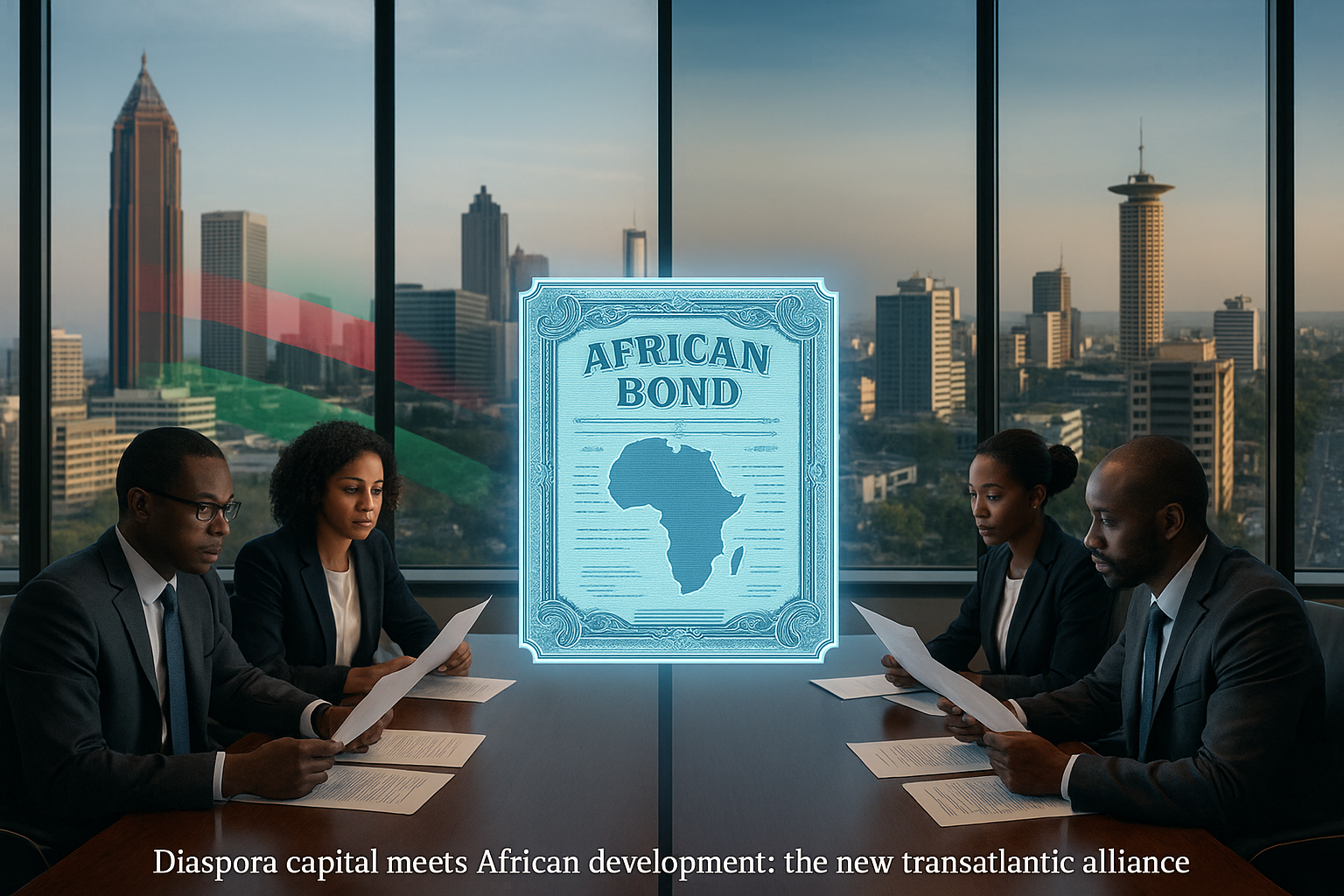
The African diaspora’s greatest unrealized financial potential may lie not in Wall Street, but in the vast and growing debt markets of Africa. Across the continent, nations are negotiating, restructuring, and reimagining how they fund development. At the same time, African American banks and financial institutions, small but strategically positioned in the global Black economic architecture, stand largely on the sidelines. This disconnection is more than a missed investment opportunity; it is a failure of transnational financial imagination. If the descendants of Africa in America wish to secure true sovereignty, interconnectivity, and global influence, engaging African debt markets is not optional it is imperative.

Africa’s debt profile is as complex as it is misunderstood. Many Western narratives frame African debt in crisis terms, yet that view ignores the sophistication of African capital markets and the diversity of creditors. The continent’s public debt stood around $1.8 trillion by 2025, but much of this borrowing has gone toward infrastructure and industrial expansion. The key shift in recent years has been away from traditional multilateral lenders toward bilateral and market-based finance particularly through Chinese, Gulf, and private bond markets. Countries like Kenya, Ghana, Nigeria, and Ethiopia have issued Eurobonds in recent years, often at higher interest rates due to perceptions of risk rather than fundamental insolvency. Others, such as Zambia, have undergone restructuring efforts designed to rebalance repayment with growth. In each case, Africa’s economic story remains one of ambition constrained by external debt conditions, a pattern reminiscent of the post-Reconstruction era Black South, when capital starvation and dependency on non-Black lenders limited autonomy and intergenerational power. That parallel matters deeply for African Americans. The same global financial order that restricts African nations’ fiscal independence also limits the growth of African American financial institutions. The tools that could change both realities already exist within the diaspora: capital pools, credit analysis expertise, and shared strategic interest in sovereignty.

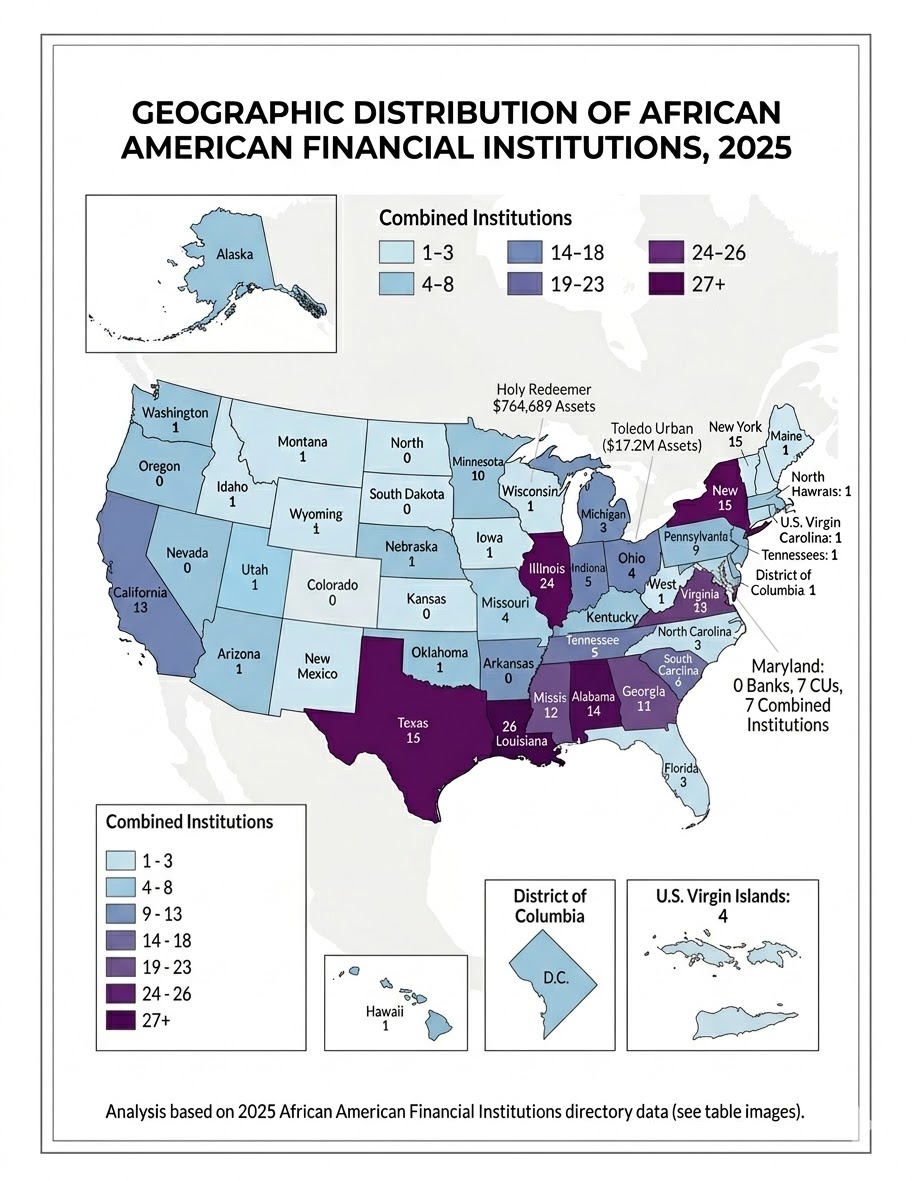
African American banks—roughly 18 federally insured institutions as of 2025—control an estimated $6.4 billion in combined assets. While that is a fraction of what one mid-sized regional white-owned bank manages, these institutions hold a symbolic and strategic power far greater than their balance sheets suggest. They remain the custodians of community trust, the anchors of small-business lending in historically neglected markets, and potential conduits for international financial collaboration. Historically, African American banks were created to fill a void left by exclusionary financial systems. But in the 21st century, their mission can evolve beyond domestic community lending toward global financial participation. The African debt market, currently dominated by Western institutions that extract value through high interest and credit rating manipulation, offers a natural arena for African American engagement. If Black banks can collectively participate through bond purchases, underwriting partnerships, or diaspora-focused sovereign funds they could help shift Africa’s dependence from Western and Asian creditors toward diaspora-based capital flows. This would not only stabilize African economies, but also create transnational linkages that reinforce both African and African American economic self-determination.

Consider the power of mutual indebtedness as a political tool. When nations or institutions lend to each other, they form durable relationships governed by trust, negotiation, and shared interest. For too long, the African diaspora’s relationship with Africa has been philanthropic or cultural rather than financial. That model, however well-intentioned, is structurally disempowering and it reinforces dependency rather than partnership. Debt, properly structured, reverses that dynamic. If African American financial institutions were to purchase or underwrite African sovereign and municipal debt, they would create financial obligations that tether African states to diaspora capital, not to exploit but to interdepend. This is the foundation of modern sovereignty: the ability to borrow and invest within your own cultural and political network rather than through intermediaries who extract value and dictate terms. Imagine, for instance, a syndicated loan or bond issuance where a consortium of African American banks, credit unions, and philanthropic financial arms partner with African development banks or ministries of finance. The terms could prioritize developmental outcomes like affordable housing, small business lending, renewable energy while generating steady returns. The instruments could even be marketed domestically as “Diaspora Sovereign Bonds,” accessible through digital platforms. The impact would be twofold: African American banks would diversify their portfolios and tap into emerging market yields, while African governments would gain access to capital free from neocolonial conditions.

Historically Black Colleges and Universities (HBCUs) stand at the crossroads of intellect, finance, and heritage. Their institutional capacity, academic talent, and alumni networks make them natural architects for a new financial relationship between the African diaspora and the African continent. Yet this potential comes with risk, particularly for public HBCUs, whose visibility and state dependency could make them targets of political and financial backlash. If a public HBCU were to openly participate in or advocate for engagement with African debt markets, it would likely face scrutiny from state legislatures, regulatory bodies, and entrenched financial interests. Such activity would be perceived by non–African American–owned banks and state-level policymakers as a challenge to existing capital hierarchies. The idea of Black public institutions developing transnational financial alliances outside traditional Western frameworks threatens not only market control but ideological narratives about where and how Black institutions should operate. To navigate this terrain, public HBCUs must be strategic, creative, and stealth in execution. Their participation in African financial engagement cannot be loud; it must be layered. They can do so through consortia, research collaborations, and investment partnerships that quietly build expertise and influence without triggering overt resistance. For example, an HBCU economics department could conduct African sovereign credit research under a global development initiative, while a business school could host “emerging market” investment programs that include African debt instruments without explicitly branding them as Pan-African.

Private HBCUs, freer from state oversight, can play a more overt role forming partnerships with African banks, hosting diaspora finance summits, and seeding funds dedicated to Africa-centered investments. But public institutions must operate with a subtler hand, leveraging think tanks, foundations, and alumni networks to pursue the same ends through indirect channels. Creativity will be their shield. Collaboration with African American–owned banks, credit unions, or diaspora investment funds can serve as intermediary structures allowing HBCUs to channel research, expertise, and even capital participation without placing the institutions themselves in direct political crossfire.

Both public and private HBCUs must also activate and empower their alumni associations as extensions of institutional sovereignty. Alumni associations exist in a different legal and political space and they are often registered as independent nonprofits, free from the direct control of state governments or university boards. This autonomy allows them to operate where the universities cannot. Through alumni associations, HBCUs can channel capital, intelligence, and partnerships in ways that stay outside the reach of regulators or political gatekeepers. Alumni bodies can create joint funds, invest in African debt instruments, or collaborate with African banks and diaspora enterprises. The understanding between HBCUs and their alumni networks must be clear and disciplined: the institution provides intellectual and structural guidance; the alumni associations execute the capital movement. This relationship becomes a discreet circulatory system of sovereignty with universities generating the vision and expertise, alumni executing the financial maneuvers that advance that vision.

HBCUs can further support this ecosystem by funneling institutional capital and intellectual property toward their alumni associations in strategic, deniable ways. Research centers can license data or consulting services to alumni-managed firms. Endowments can allocate small funds to “external collaborations” that, in practice, seed diaspora initiatives. Career and alumni offices can quietly match graduates in finance and development with African institutions seeking diaspora partners. These are small, legal, but potent acts of quiet nation-building. The success of this strategy depends on discipline, secrecy, and shared purpose. HBCUs, particularly the public ones, must move as institutions that understand the historical realities of Black advancement: every act of power must be both visionary and shielded. Alumni associations, meanwhile, must operate as the agile extensions of these universities, taking calculated risks on behalf of the larger mission. If executed carefully, this dual structure of HBCUs as the intellectual architects and alumni associations as the financial executors creates a protected channel for diaspora wealth creation. It allows public institutions to avoid political exposure while still advancing the collective objective: redirecting Black capital toward Africa and reestablishing a financial circuit of trust, obligation, and empowerment across the diaspora. In this model, the public HBCU becomes the hidden engineer, the private HBCU the visible vanguard, and the alumni network the financial hand. Together, they form an ecosystem of quiet innovation and a movement that builds transnational Black sovereignty not through protest or proclamation, but through precise and deliberate financial design.

Skeptics might argue that African American banks lack the scale or technical capacity to engage in sovereign lending. This concern, while not unfounded, can be addressed through collaboration. No single Black institution must go it alone. The path forward lies in consortium models of pooling resources, sharing risk, and leveraging collective bargaining power. Diaspora bond funds could be structured as partnerships between African American banks, HBCU endowments, and African development finance institutions such as the African Development Bank (AfDB) or Africa Export-Import Bank (Afreximbank). These organizations already have experience managing sovereign risk and would benefit from diaspora participation, which strengthens their political legitimacy. Furthermore, technology has lowered the cost of entry into complex financial markets. Digital banking, blockchain-based identity verification, and fintech partnerships can allow diaspora institutions to participate in cross-border finance with greater transparency and speed. The real obstacle, therefore, is not capacity it is vision. The diaspora’s capital remains trapped within Western financial systems that reward liquidity but punish sovereignty. Redirecting even a fraction of that capital toward Africa would shift the balance of global economic power in subtle but profound ways.

Sovereignty in the modern world is measured as much in capital access as in military or political power. Nations that cannot borrow on fair terms cannot build on fair terms. The same is true for communities. African Americans, long denied fair access to capital, should understand this truth intimately. The African debt question, then, is not a distant geopolitical matter it is a mirror. If African American banks and financial institutions continue to operate solely within the parameters of domestic credit markets, their growth will remain capped by a system designed to contain them. But if they extend their vision outward to the African continent, to Caribbean nations, to the global diaspora then they create new asset classes, new partnerships, and new pathways to power. Moreover, engagement with African debt markets enhances geopolitical influence. It positions African American institutions as interlocutors between Africa and global finance, enabling a collective voice on credit ratings, debt restructuring, and investment policy. That is the kind of influence that cannot be achieved through philanthropy or symbolism it is built through transactions, treaties, and trust.

Other diasporas have already proven this model works. Jewish, Indian, and Chinese global networks have long used financial interconnectivity as a tool of sovereignty. Israel’s government issues bonds directly to diaspora investors through the Development Corporation for Israel—a program that has raised over $46 billion since 1951. The Indian diaspora contributes billions annually in remittances and investments that underpin India’s foreign reserves. The African diaspora, by contrast, remains financially fragmented despite its vast size and income. With over 140 million people of African descent living outside Africa, the potential for coordinated capital deployment is immense. Even modest participation of say, $10 billion annually in diaspora-held African bonds would change the global conversation around African finance and diaspora economics. This scale of engagement requires trust, transparency, and accountability. African nations must commit to governance reforms and anti-corruption measures that assure diaspora investors of integrity. Likewise, African American institutions must build financial literacy and confidence around African markets, overcoming decades of Western media narratives portraying the continent as unstable or uninvestable.

The long-term vision is a self-sustaining ecosystem of diaspora credit: African American and Caribbean banks pool capital to buy or underwrite African debt; HBCUs model sovereign risk, publish credit analyses, and design diaspora finance curricula; African governments and regional banks issue diaspora-oriented financial instruments; fintech platforms connect diaspora investors directly to African projects; and cultural finance diplomacy transforms diaspora engagement into official national strategy. The ecosystem would allow wealth to circulate within the global African community rather than being siphoned outward through exploitative intermediaries. Over time, such networks could support not only debt financing but also equity investment, venture capital, and trade finance all under the umbrella of Black sovereignty economics.

At its core, this initiative is not merely about money. It is about the reconfiguration of power. The African diaspora cannot achieve full sovereignty while its economic lifeblood flows through institutions indifferent or hostile to its future. Engaging African debt markets transforms the diaspora from spectators of African development into its co-architects. It also transforms Africa from a borrower of last resort to a partner of first resort within its global family. For African American banks, this is the logical next chapter. The institutions that once shielded Black wealth from domestic exclusion now have the opportunity to project that wealth into international inclusion. It is a matter of strategic foresight aligning moral mission with financial opportunity. As the world edges toward a multipolar order where the U.S., China, and regional blocs vie for influence, the African diaspora must define its own sphere of power not through slogans but through balance sheets. A sovereign people must have sovereign finance.

Toward a Diaspora Credit Ecosystem

The long-term vision is a self-sustaining ecosystem of diaspora credit:

  1. Diaspora Banks & Funds: African American and Caribbean banks pool capital to buy or underwrite African debt.
  2. HBCU Research Hubs: HBCUs model sovereign risk, publish credit analyses, and design diaspora finance curricula.
  3. African Institutions: African governments and regional banks issue diaspora-oriented financial instruments.
  4. Fintech Platforms: Secure, regulated digital systems connect diaspora investors directly to African projects.
  5. Cultural Finance Diplomacy: Diaspora engagement becomes part of national policy—similar to how nations court foreign direct investment today.

The ecosystem would allow wealth to circulate within the global African community rather than being siphoned outward through exploitative intermediaries. Over time, such networks could support not only debt financing but also equity investment, venture capital, and trade finance all under the umbrella of Black sovereignty economics.

In 1900, at the First Pan-African Conference in London, W.E.B. Du Bois declared, “The problem of the twentieth century is the problem of the color line.” A century later, that color line has become a credit line. It is drawn not only across borders but across ledgers between who lends and who borrows, who owns and who owes. The African American bank and the African treasury are not distant cousins; they are parts of one economic body severed by history and waiting to be reconnected by will. Engaging African debt markets is not charity it is strategy. It is the financial expression of unity long preached but rarely practiced. The next stage of the African world’s freedom struggle will not be won merely in the streets or in the schools. It will be won in the boardrooms where capital chooses its direction. If African American finance chooses Africa, both sides of the Atlantic will rise together not as debtors and creditors, but as partners in sovereignty.

Disclaimer: This article was assisted by ChatGPT.

The Lost Generation: How Gen X Inherited the Collapse of Black Institutions

“We were sold the idea that the institutions that our great-grandparents built after enslavement, the institutitons that their blood, sweat, tears, and far too often their lives were sacrificed for no longer mattered. The institutions that protected our grandparents and parents no longer mattered. That we had no obligation, no duty to uphold them, strengthen them, defend them – and it may ultimately be our downfall.” – William A. Foster, IV

African America’s Generation X came of age in the shadow of promises made but never fulfilled. Born after the civil-rights movement and the legislative victories of the 1960s, they were told they were heirs to a new world of possibility. Yet for most, the landscape they entered was not one of expanding opportunity but of institutional decline. Gen X did not inherit the wealth of their White peers, nor did they inherit the institutional foundations that could have shielded them from the widening chasm of inequality. Instead, they became the “lost generation” of African America—not because they lacked talent or will, but because they were asked to build lives in the absence of functioning institutions.

The story is one of numbers as much as narratives. At mid-century, African Americans could point to over 134 banks, more than 500 hospitals, and a dense ecosystem of schools, businesses, and mutual-aid societies that created scaffolding for resilience. By the time Gen X came of age in the 1980s and 1990s, the majority of those institutions had collapsed. Today, fewer than 20 African American banks remain. The hospitals, once numbering in the hundreds, have shrunk to just one. The erasure of these structures left Gen X to navigate adulthood without the community-owned institutions that had once provided both opportunity and insulation.

This institutional decline coincided with the hardening of social and economic divides. African American median household wealth remains below $20,000, compared to more than $180,000 for White households. Home-ownership rates hover around 44 percent, far below the 73 percent enjoyed by Whites. Poverty, unemployment, and health disparities disproportionately fell on African American Gen X families, erasing many of the gains their parents’ generation had fought for. In health, the loss of African American hospitals meant fewer spaces for culturally competent care and fewer pathways for African American doctors, nurses, and administrators to train and serve their communities. In finance, the disappearance of banks meant fewer loans for businesses and homes, ensuring that the dollar cycled out of the community faster than it could ever build generational stability.

By the 1980s, when many Gen Xers were entering high school, even the educational system that had once cultivated excellence for African American children was being dismantled. A century earlier, African American boarding schools—descendants of Reconstruction-era self-help institutions—had trained teachers, scientists, craftsmen, and entrepreneurs. Schools such as Piney Woods, Laurinburg, and Pine Forge stood as examples of self-contained learning environments that instilled discipline and race pride. By 2014, only four remained. Their decline, chronicled in The Final Four: African American Boarding Schools on the Verge of Extinction, symbolized the erosion of intellectual infrastructure that once undergirded the Black middle class. These schools had produced generations of college-ready youth who often went on to HBCUs and then into the professions. When they withered, so did a crucial pipeline.

Their demise reflected not a lack of academic excellence but the disintegration of a supportive ecosystem. As integration policies shifted resources away from Black-controlled schools, and as affluent African American families pursued suburban acceptance, the boarding schools were left with dwindling endowments and shrinking enrollments. Their survival required a collective sense of purpose that the Gen X era—steeped in the illusion of individual advancement—could no longer muster. The extinction of these schools mirrored the broader trajectory of African American institutions: erasure through neglect, assimilation, and the seductive myth that success could be purely personal.

The same cultural dissonance emerged in the world of entertainment and higher education. On television, Gen X watched A Different World, a fictional HBCU experience that inspired a generation but also unintentionally reflected a pivot. The series’ most memorable duo, Dwayne Wayne and Ron Johnson, captured the promise and pitfalls of the Gen X mindset. As HBCU Money’s essay Dwayne Wayne & Ron Johnson Dropped the Ball: HBCUpreneurship observed, the show chronicled two brilliant young men who graduated not to build companies or institutions, but to take jobs inside someone else’s. Their story became emblematic of a generation encouraged to chase credentials rather than ownership.

Gen X was the first to be told that integration was complete, that they could “make it” anywhere. But what they were rarely told was that making it individually often meant abandoning the collective scaffolding their grandparents had built. The very concept of the HBCU as a launch pad for entrepreneurship faded into nostalgia. Dwayne and Ron’s missed opportunity was not fictional; it mirrored the real-world drift of African American college graduates into corporate dependency, even as those corporations benefited from their creativity without reinvesting in African American communities.

The consequences were measurable. While White entrepreneurial ecosystems flourished in the 1990s with the rise of venture capital and tech startups, African American business formation lagged far behind. Few HBCUs established business incubators, angel networks, or venture funds that could capture their graduates’ ingenuity. Gen X, trained to seek jobs rather than ownership, lacked both the financing structures and the cultural reinforcement to build enduring enterprises. The very generation that watched the digital revolution unfold found itself on the consumer end rather than the ownership end of that transformation.

In this sense, the decline of African American institutions was not merely physical but philosophical. The idea that collective power could yield freedom gave way to the belief that individual success was freedom itself. This ideological shift—fed by television, politics, and the allure of assimilation—eroded the cooperative ethos that once sustained Black Wall Streets and mutual-aid societies. Where earlier generations might have pooled resources to open a bank, Gen X was taught to seek a mortgage from Wells Fargo. Where their ancestors founded hospitals like Provident and Homer G. Phillips, Gen X looked to be admitted to the best White medical schools rather than to revive their own.

The paradox of Gen X is that they were told they had arrived at a moment of inclusion—seen in the growth of African American representation in politics, sports, entertainment, and corporate America—while the ground beneath them was collapsing. Symbolic milestones such as the first African American CEOs of Fortune 500 companies or the growing ranks of African American elected officials did not offset the fact that the ecosystem of African American hospitals, banks, and businesses was being erased. Gen X bore the brunt of this contradiction: celebrated for individual achievement while collectively stripped of institutional power.

The American economy of the 1980s and 1990s was primed for wealth building. Deregulation, real-estate booms, and the rise of the stock market created enormous opportunities for asset accumulation. Yet African American Gen Xers, lacking access to capital and institutional mentorship, were largely excluded. The few who broke through—whether in entertainment or professional fields—were exceptional precisely because the system offered so little support. They became proof of possibility for a generation starved of infrastructure, even as their fame obscured the underlying erosion.

By the early 2000s, as Gen X entered its peak earning years, the effects of institutional loss were unmistakable. The community’s wealth gap widened even as educational attainment rose. African American college-graduation rates climbed, but the payoff was smaller salaries, heavier debt, and less wealth accumulation. Without community-controlled banks or credit unions, they faced higher borrowing costs. Without business investment networks, they relied on personal savings to launch ventures, limiting scale and sustainability. Without hospitals and schools owned by the community, the circulation of dollars—once measured in weeks—shrank to hours.

The collapse of the boarding schools and the failure of HBCUpreneurship are not side stories; they are the connective tissue of this larger decline. Each represented a node of self-determination that could have anchored Gen X’s ascent. When those nodes vanished, Gen X’s trajectory became fragmented—brilliant individuals floating in isolation, disconnected from the institutional gravity that sustains a people. The lesson from the Final Four and from Dwayne Wayne and Ron Johnson is that without institutional continuity, culture becomes performance, not power.

The irony is that Gen X still carried the memory of what once was. Many were raised by grandparents who remembered owning land, operating local businesses, or attending all-Black schools where teachers lived in their neighborhoods. They inherited stories of collective pride, but not the structures that produced it. And because their own formative years coincided with mass media’s rise, those stories were often drowned out by consumer culture’s narrative of individual aspiration. Success became synonymous with escaping one’s community rather than empowering it.

That shift in imagination may be Gen X’s greatest tragedy. A people’s future is determined as much by what they believe is possible as by what they own. When the imagination of ownership fades, dependency becomes normalized. African America’s Gen X did not choose dependency; they adapted to a system that rewarded proximity to White institutions while punishing independent Black ones. Government contracts, corporate partnerships, and philanthropic grants replaced the cooperative economics of earlier eras. The result was a generation of professionals with unprecedented credentials but limited leverage.

Still, within this loss lies instruction. Gen X’s struggle clarifies that talent alone does not equal power. Communities achieve permanence only when they own the institutions that convert talent into infrastructure. The hospitals, banks, and boarding schools were not merely service providers—they were instruments of sovereignty. Their disappearance left African America reliant on external validation and vulnerable to the volatility of goodwill.

Oprah Winfrey, Michael Jordan, and Barack Obama stand as icons of Gen X achievement, but their presence cannot replace the 500 hospitals or 100 banks that once supported African American communities. Institutions are what allow success to scale beyond the individual. Without them, every victory is fleeting, every gain precarious. The Gen X dream of being “the first” often became a cycle of isolation: the first in the boardroom, the first on the cover, the first to arrive—but rarely the architect of a system that ensured there would be a second.

As Millennials and Gen Z inherit the debris of that collapse, they confront the same choice: to celebrate representation or to rebuild capacity. The wealth and power gaps remain staggering. African Americans are still nearly twice as likely to live in poverty and hold only about four percent of America’s small-business assets despite comprising thirteen percent of its population. The absence of institutions guarantees these outcomes; their reconstruction could begin to reverse them.

Rebuilding will require the mindset Gen X was never taught—to treat institutions as the truest form of freedom. That means HBCUs creating venture capital funds that invest in their graduates. It means restoring the legacy of African American boarding schools as incubators of discipline and intellect. It means reviving credit unions and community banks that finance local ownership. It means rediscovering that the measure of progress is not how many individuals cross the threshold of another people’s institutions, but how many institutions one’s own people can build and sustain.

Gen X stands, then, as both victim and warning: the generation that inherited the death of African American institutions and the collapse of mobility. Their story illustrates that the survival of a people rests not on individual ascent but on collective infrastructure. Without it, the next generation risks becoming lost as well. The lost generation’s greatest gift may be its clarity—the understanding that brilliance without ownership is bondage, and that no degree, celebrity, or salary can substitute for a hospital, a bank, a school, or a business owned in the name of one’s community.

Disclaimer: This article was assisted by ChatGPT.

Schools For Husbands and Wives: Preparing African American Couples for Partnership and Institutional Power

“The family is the nucleus of civilization.” — Will Durant

When news broke from Senegal that so-called “schools for husbands” were being used to lower maternal and newborn mortality rates, the headlines focused on the novelty of men being taught to wash dishes, attend prenatal visits, and support women’s healthcare. Yet beneath the surface, Senegal’s program is not just about chores or even just about health, it is about reshaping cultural norms so that households operate as functional units rather than fractured spaces of authority and neglect. In a country where patriarchal structures often keep women from making life-saving decisions without a man’s permission, Senegal’s government and community leaders recognized that sustainable change had to address the power imbalance between men and women.

This insight carries an important lesson for African America. The African American family is facing a structural crisis. Only 38 percent of African American children grow up in two-parent households compared to 78 percent of white children, and the numbers are even more stark when considering households of generational stability, wealth accumulation, and transmission of institutional knowledge. The decline of the two-parent household in African America has had profound consequences not just for children, but for adults who often enter adulthood without ever having witnessed sustained partnership between equals.

What if African America had its own version of Senegal’s schools expanded to include both husbands and wives, and designed for straight couples and LGBTQ couples alike? A “School for Husbands and Wives” could become a powerful cultural and institutional lever, equipping African Americans with the skills, expectations, and frameworks to build households that are not only emotionally healthy but also institutionally productive.

Why African America Needs Schools for Husbands and Wives

African Americans live in a paradox: on the one hand, they are among the most religiously active groups in the country, with churches historically serving as community hubs. On the other hand, African American households are disproportionately fragmented. The reasons are historical and structural—slavery destroyed family continuity, Jim Crow restricted marriage rights, mass incarceration and discriminatory welfare policies tore apart families, and modern labor and housing policies continue to erode family stability.

The consequence is that too many African Americans enter relationships without having observed healthy models of partnership. This absence manifests itself in multiple ways:

  • Gender distrust: Many African American men and women view each other as competitors rather than partners, shaped by economic inequality and media stereotypes.
  • Power imbalances: Without clarity on roles, relationships often collapse under stress: financial, emotional, or social.
  • Institutional gaps: Families are the basic units of institutions. When African American families are weak, African American institutions remain undercapitalized and undercoordinated.

This reality is not confined to heterosexual couples. LGBTQ African Americans, who face both external discrimination and internal cultural tension, often have even fewer family blueprints to draw upon. Whether in straight or queer relationships, the challenge remains: how do two people form a sustainable partnership when their models are fragmented, mistrust abounds, and institutional frameworks are weak?

A School for Husbands and Wives would take on this challenge directly, teaching the mechanics of partnership in the same way Senegal’s program teaches men the mechanics of maternal health support. But instead of focusing solely on chores or permissions, the African American model would expand to include economics, conflict resolution, institution building, and cultural grounding.

The Senegalese Model: A Starting Point

Senegal’s schools for husbands use respected community figures like imams, former soldiers, and elders to teach men about women’s rights, maternal health, and shared responsibilities. The success lies in reframing: chores are not humiliating, they are acts of love; women’s health decisions are not threats, they are family investments; shared authority is not weakness, it is strength.

For African Americans, a School for Husbands and Wives could use a similar approach: respected voices drawn from the community like professors, entrepreneurs, cultural leaders, and married couples who have sustained long-term partnerships would teach relationship and family skills as community investments. The aim would be to destigmatize conversations about partnership and create new models where none exist.

Curriculum for Partnership

What would a School for Husbands and Wives look like in African America?

  1. Economics of Partnership
    • Teaching couples how to pool resources effectively, manage debt, invest in assets, and prioritize institutional wealth over individual consumption.
    • Lessons on real estate, life insurance, trusts, and estate planning—so that households become wealth anchors, not debt traps.
  2. Conflict Resolution and Communication
    • Many couples replicate cycles of mistrust they observed growing up. Training in conflict resolution, active listening, and equitable compromise would be central.
    • Both straight and LGBTQ couples would benefit from structured conversations on navigating cultural stigma, managing extended family expectations, and sustaining emotional intimacy.
  3. Household Labor Distribution
    • Senegal emphasizes men helping with chores to reduce women’s burdens. In African America, the conversation must extend further: both partners share responsibility for cooking, cleaning, parenting, and professional ambitions.
    • The school would also address how unpaid labor at home directly connects to economic outcomes, productivity, and career success for both partners.
  4. Cultural and Historical Grounding
    • African American couples would be taught the history of the African American family as an institution under assault—from slavery to mass incarceration.
    • By understanding the intentionality of these assaults, couples would better grasp the importance of intentional partnership as resistance.
  5. Parenting as Institutional Strategy
    • Children should be raised not just with love, but with strategy: to become contributors to African American institutional wealth and culture.
    • Parents would learn to combine elements of “tiger” and “gentle” parenting—discipline and nurture balanced toward the goal of institutional power.

Straight and LGBTQ Couples Together

Too often, discussions of African American family structure exclude LGBTQ couples, reinforcing division where there should be solidarity. A School for Husbands and Wives would explicitly include both straight and LGBTQ couples, recognizing that the core challenges of partnership communication, trust, economic strategy, cultural grounding are universal.

In fact, LGBTQ couples often demonstrate resilience in building intentional families under hostile conditions, a skillset that all African Americans can learn from. By including diverse couple models, the school would normalize different family structures while emphasizing the shared goal: strong, functioning partnerships that build institutions.

Institutional Implications

African American institutions such as HBCUs, banks, businesses, nonprofits are only as strong as the families that sustain them. Wealth is built in households before it is transferred to institutions. If African American households remain fragmented, then institutions will remain weak.

A School for Husbands and Wives could therefore be sponsored or housed by HBCUs, serving both as a community program and as a research lab. Partnerships with African American financial institutions could integrate financial literacy into the curriculum. Faith institutions, cultural centers, and civic organizations could all play roles in teaching and sustaining graduates of the program.

The benefits would ripple:

  • Higher marriage stability rates among African Americans.
  • Greater pooling of household income, increasing wealth accumulation.
  • Stronger parenting, producing children with higher educational attainment and cultural grounding.
  • Increased institutional giving and investment, as families with stability contribute more to churches, HBCUs, and community organizations.

Policy and Public Health Dimensions

A School for Husbands and Wives should not be seen only as a cultural innovation, but also as a public health and policy strategy. The lack of stable households directly correlates with higher rates of poverty, incarceration, and health disparities. Policymakers could frame such schools as preventative investments, much like job training or nutrition programs.

Public funding, alongside philanthropic investment from African American institutions, could help establish pilot programs in cities with large African American populations. These schools could even be tied to existing healthcare infrastructure such as community health clinics so that relationship education is linked to wellness checkups, parenting support, and financial literacy programs.

If Senegal can link male training to maternal survival, African America can link couple training to family survival.

Lessons from Senegal’s Caution

Senegal’s experience shows that change is incremental and contested. Some men embrace new roles; others resist. Likewise, in African America, not everyone will accept the idea of formal schools for partnership. Some will argue that love is natural and cannot be taught. Others will resist LGBTQ inclusion. Some will see the program as unnecessary “therapy culture.”

But institutions are built through intentionality, not accident. Just as one studies law to become a lawyer or finance to become a banker, so too must African Americans study partnership if they are to build families that function as institutional engines.

A Vision Forward

Imagine a future where every African American couple, before or after marriage, participates in a School for Husbands and Wives. They leave not only with a deeper love for each other but with tools for building wealth, resolving conflict, and raising children with purpose. They learn to see themselves as not just individuals, but as co-founders of a household institution.

The Senegalese model shows us that cultural change is possible when men are trained to view equality as strength. African America can expand that vision: training both husbands and wives, straight and queer, to view partnership as the foundation of institutional survival.

Just as Senegal’s schools for husbands aim to save lives, African America’s schools for husbands and wives would aim to save legacies.ve legacies.

From Exclusion to Empowerment: How HOAs Can Protect Black Neighborhoods

“Revolution is based on land. Land is the basis of all independence. Land is the basis of freedom, justice, and equality.” – Malcolm X 

Few institutions have carried the weight of controversy in American housing like the homeowners’ association (HOA). For much of the 20th century, HOAs were weaponized as a tool of institutional racism restricting African Americans from buying into White neighborhoods through deed covenants, enforcing exclusionary zoning, and serving as gatekeepers of generational wealth accumulation. The very mechanism of neighborhood governance became one more way African America was told “you do not belong.” Yet history has a way of flipping its instruments. The very structural force once used to keep us out may be one of the few institutional levers available to keep us in. As gentrification and predatory development rapidly encroach upon historically African American communities from Houston’s Third Ward to Atlanta’s West End, from Washington D.C.’s Shaw to New Orleans’ Tremé, the need for institutional tools of land sovereignty grows urgent. Civic associations, while noble, often lack teeth. It may be time for African American neighborhoods to rethink the HOA, not as a relic of exclusion but as a shield of survival.

Most African American neighborhoods today rely on civic clubs or neighborhood associations. These bodies are typically voluntary, underfunded, and lack the legal authority to enforce community decisions. They can advocate to city councils, organize block cleanups, and serve as a cultural glue, but when it comes to confronting a developer with millions in capital and legal teams, they are simply outgunned. Civic associations cannot foreclose properties when owners ignore rules or dues, build substantial war chests because dues are voluntary and non-enforceable, or control property transfers when long-time residents sell. This means that even when a neighborhood is organized and has strong social cohesion, it remains structurally weak in the face of predatory real estate activity. Developers exploit this weakness buying distressed properties, lobbying city officials for zoning changes, and rapidly altering the fabric of communities without consent.

Unlike civic clubs, HOAs are legally binding entities. When properly designed and governed, they give communities leverage that is otherwise impossible. The ability to foreclose ensures compliance and funding. If dues are unpaid, the HOA has a mechanism to protect the community’s collective interests. Mandatory dues create a stable revenue stream. A community with 200 homes each contributing $500 annually generates $100,000. Over five years, that becomes half a million which is enough to hire lawyers, challenge city zoning, and even purchase properties outright. This institutional capital transforms neighborhoods from reactive to proactive. HOAs can also insert right-of-first-refusal clauses, allowing them to buy homes before they go to outside investors, preventing predatory acquisitions and allowing neighborhoods to decide who their neighbors will be and what developments fit the collective vision. Rules around property maintenance, density, and usage can prevent developers from converting single-family homes into high-turnover rentals or Airbnbs. These standards are not just about aesthetics they are about protecting neighborhood identity and safety.

To advocate HOAs for African American communities is not to ignore their history. For decades, HOAs were bastions of exclusion. They operated in tandem with banks, appraisers, and city planners to enforce segregation. Deed restrictions openly barred African Americans and other minorities from ownership. Even when those covenants became unenforceable after Shelley v. Kraemer (1948), HOAs found new ways to enforce segregation through indirect mechanisms. But history also shows how institutions can be repurposed. Universities once denied African Americans; now HBCUs are among our strongest institutions. Banks once denied us credit; now Black-owned banks serve as pillars of community capital. The HOA, when reimagined under African American sovereignty, can become not a wall keeping us out, but a fortress keeping us in.

Houston’s Third Ward is emblematic. A historically Black neighborhood anchored by Texas Southern University, it has been ground zero for gentrification. Developers like TPC Endeavors LLC have defied city red tags, continued illegal construction, and ignored deed restrictions designed to protect single-family character. Residents organized, called 311, attended City Council meetings but the civic tools they had were insufficient. Enforcement by the city was lax. Meanwhile, developers were renting red-tagged properties as Airbnbs. Imagine if Third Ward had a robust HOA structure. With mandatory dues, it could hire legal counsel to file injunctions. With right-of-first-refusal, it could have purchased properties neighbors wished to sell, keeping them out of speculative hands. With codified rules, it could have legally enforced single-family restrictions, protecting housing stock for families rather than transient rentals. Instead, the community is stuck fighting asymmetrical battles, people with civic will against people with institutional power. The outcome, absent intervention, is predictable: displacement.

At its core, the case for African American HOAs is about institutional economics, the accumulation of collective capital to withstand systemic pressures. The median net worth of White households is nearly eight times that of Black households. Real estate is the largest component of wealth for African American families. When neighborhoods gentrify, this wealth is not preserved; it is extracted. HOAs serve as protectors of that capital by stabilizing community land values under African American governance. They enable neighborhoods to pool financial and legal resources to resist external exploitation. They foster long-term family residence, giving children environments with consistent community standards, building social and cultural capital alongside financial wealth. HOAs also enable neighborhoods to act like firms: they can engage developers on their own terms, negotiate concessions, or even partner in development deals that align with community interests.

Of course, HOAs are not a panacea. Poorly run HOAs can become abusive or corrupt, mirroring the very forces they are meant to resist. Mandatory payments can strain low-income residents, though creative structures such as sliding scales, subsidies, or partnerships with HBCUs and community foundations can mitigate this. Forming an HOA requires legal expertise and state recognition, which many African American communities lack immediate access to, though partnerships with HBCU law schools could be a solution. Neighborhoods may resist HOAs due to historical mistrust or fear of bureaucracy. Education campaigns and transparent governance are crucial.

The HBCU ecosystem has a unique role to play. Many HBCUs are surrounded by historically Black neighborhoods now under siege from gentrification. These institutions could provide the technical, legal, and financial scaffolding for community HOAs. Law schools could draft HOA charters and litigate against predatory developers. Business schools could train HOA boards in financial management. Architecture and urban planning programs could design neighborhood development standards. University endowments could provide seed capital to help HOAs acquire distressed properties. If HBCUs become the backbone of HOA development, they transform from being passive neighbors to active protectors of Black land sovereignty.

Imagine a network of African American HOAs across the country, each tied to local HBCUs, each building collective war chests, each controlling neighborhood development. Together, they form a patchwork of institutional sovereignty one block at a time, one neighborhood at a time. This is not just about resisting gentrification. It is about reclaiming agency over land, the foundational asset of all wealth and power. Without land sovereignty, African American communities will forever be tenants in someone else’s design. With HOAs, we have the chance to rewrite that story.

While HOAs have been historically tainted by their role in exclusion, African America must confront a hard truth: institutional problems require institutional solutions. Civic will, without institutional teeth, cannot withstand predatory capital. HOAs, properly structured and governed, give our neighborhoods enforcement power, financial capacity, and development control. Land sovereignty is not optional; it is existential. Gentrification is not just about higher rents or new coffee shops, it is about the slow erasure of African American communities from the map. If we are to remain, to build intergenerational wealth, and to strengthen our institutional power, then we must be willing to use every tool available. The HOA may have once been a weapon against us. It can now be the fortress that protects us.

Model HOA Framework for African American Communities


1. Charter Outline

A. Name and Purpose

  • Name: [Neighborhood Name] Community Land Trust HOA
  • Mission: To preserve and protect African American homeownership, stabilize property values, and foster community-driven development.
  • Objectives:
    1. Protect neighborhood land from predatory acquisition and gentrification.
    2. Maintain architectural and cultural integrity of the neighborhood.
    3. Build collective financial resources for legal, development, and maintenance initiatives.
    4. Empower residents with decision-making authority over neighborhood development.

B. Membership

  • All property owners within the HOA boundary are automatically members.
  • Membership is determined by the community.
  • Voting rights are proportional to ownership, with one vote per property.

C. Governance Structure

  • Board of Directors: 5–9 elected members serving staggered three-year terms.
  • Committees:
    • Finance & Investment Committee
    • Architectural & Community Standards Committee
    • Legal & Advocacy Committee
    • Outreach & Education Committee
  • Decision-making: Major decisions (property acquisition, legal action, development approvals) require a 2/3 majority vote of the board and approval by 50%+1 of voting members.

D. Covenants and Bylaws

  • Rules governing property use, maintenance, and modifications.
  • Right-of-first-refusal on property sales to maintain African American ownership and prevent predatory acquisitions.
  • Restrictions on commercial rental operations (e.g., short-term rentals like Airbnb) unless approved by the board.
  • Enforcement of community standards through fines, liens, and, if necessary, foreclosure.

2. Funding Structure

A. Mandatory Dues

  • Base dues calculated per household (example: $500–$1,000/year depending on neighborhood size and needs).
  • Sliding scale or hardship exemptions for low-income homeowners, with supplemental funding from foundations or HBCUs.

B. Special Assessments

  • Imposed for extraordinary needs such as legal battles, property acquisition, or infrastructure repairs.
  • Must be approved by majority vote of HOA members.

C. Reserve Fund / War Chest

  • 25–30% of annual dues set aside into a reserve fund for long-term projects or emergency legal needs.
  • Goal: Maintain liquidity to purchase at-risk properties and fund legal actions without delay.

D. Partnerships & Grants

  • Collaborate with HBCUs, local Black-owned banks, and philanthropic foundations for technical and financial support.
  • Seek grants specifically for community land trusts, anti-gentrification initiatives, or neighborhood revitalization.

E. The HOA Investment Fund

  • Neighborhood Endowment: A portion of dues is invested to build a long-term community fund. This endowment can invest in local African American businesses, the stock market, or other vetted opportunities. Returns are used to subsidize senior citizens and low-income residents, provide relief during emergencies, and strengthen the HOA’s financial independence.
  • Emergency Fund: A dedicated reserve for disasters, legal challenges, or community emergencies.
  • Special Assessments: Levied for large projects (legal defense, infrastructure, property acquisition).

3. Enforcement Mechanisms

A. Fines and Liens

  • Fines for non-compliance with HOA rules (maintenance, property use, etc.).
  • Unpaid fines converted into liens that attach to the property.

B. Legal Authority

  • Covenants provide authority to take legal action against violators, including:
    • Enforcing property use restrictions
    • Preventing unauthorized sales or rentals
    • Challenging predatory development through court injunctions

C. Foreclosure

  • In extreme cases of non-payment or serious violations, the HOA has the right to foreclose on the property to protect collective community interests.
  • Requires board approval and due process, with transparency to all members.

D. Right-of-First-Refusal

  • The HOA can purchase homes before they are sold to external buyers.
  • Maintains neighborhood ownership continuity and allows control over development aligned with community goals.

4. Community Engagement and Education

  • Regular town halls and workshops on:
    • Financial literacy and collective wealth building
    • Understanding HOA powers and responsibilities
    • Recognizing predatory developers and speculative practices
  • Partnerships with local HBCUs to provide pro bono legal clinics, urban planning advice, and leadership development for HOA board members.
  • Volunteer committees for property upkeep, neighborhood beautification, and cultural preservation.

5. Oversight and Accountability

  • Annual audits of finances by independent accountants.
  • Mandatory annual reporting to members detailing:
    • Income and expenses
    • Property acquisitions
    • Enforcement actions taken
    • Development approvals or denials
  • Board elections conducted transparently with all members notified in advance.

6. Strategic Objectives for Anti-Gentrification

  1. Property Acquisition Strategy
    • Identify at-risk properties before they are sold to outside investors.
    • Use reserve funds or special assessments to purchase and hold properties for resale to qualified African American buyers.
  2. Legal Defense Fund
    • Maintain a portion of the war chest specifically for litigation against predatory developers and enforcement of zoning codes.
  3. Cultural and Architectural Preservation
    • Set clear standards for renovations and new construction that reflect neighborhood heritage.
    • Ensure that new development aligns with the neighborhood’s long-term vision and identity.
  4. Economic Empowerment
    • Encourage local entrepreneurship and small business ownership within the HOA’s commercial spaces.
    • Partner with HBCUs and Black-owned banks to provide financing, mentorship, and business support.

Disclaimer: This article was assisted by ChatGPT.

The “Real World” Myth: How Sending African American Children to PWIs Undermines African American Institutional Power

“When you control a man’s thinking you do not have to worry about his actions. He will find his ‘proper place’ and will stay in it. You do not need to send him to the back door. He will go without being told; in fact, if there is no back door, he will cut one for his special benefit.”
Carter G. Woodson, The Mis-Education of the Negro

For generations, African American families have been told a myth that has become so pervasive it often passes without challenge: the idea that sending their children to predominantly white institutions (PWIs) of higher education better prepares them for the “real world.” On its surface, the reasoning sounds practical. Parents believe that if their child learns how to navigate white spaces, acquires the habits and codes of those spaces, and builds networks with white peers, they will be more successful in corporate America and society at large. It is a calculation born of centuries of survival in a society structured against African Americans.

But this calculation, when examined deeply, does not hold up to scrutiny. Instead of preparing African American students for the “real world,” the widespread preference for PWIs undermines the institutional power of African Americans and deprives HBCUs of the very human and financial capital they need to thrive.

The “real world” itself is not a fixed entity. It is not a monolith that African Americans must prepare to join on white terms. The real world is what a group of people make it. White Americans have defined their world and fortified it through their institutions such as universities, banks, hospitals, corporations, and foundations. Asian Americans, Jewish Americans, and other groups have done similarly, leveraging their educational and economic institutions to shape their reality. Yet, African America, too often, has internalized the belief that its institutions are insufficient, opting instead to send its brightest students and most valuable tuition dollars into the coffers of PWIs.

This is not simply a matter of personal choice. It is a collective decision with collective consequences. The more African American families buy into the “real world” myth, the weaker HBCUs become, and the less capable African America is of shaping its own real world.

The PWI Path and Its Assumptions

African American parents who choose PWIs for their children often do so with good intentions. They want their children to access elite resources, prestigious networks, and the perceived stamp of approval that comes with a degree from a PWI. They assume that because the U.S. labor market is majority white, exposure to that environment early on is critical to future success.

But these assumptions reveal several contradictions. White students do not consider attending an HBCU to balance their cultural experiences. They do not think, “I’ve had too much whiteness; I need a more balanced education.” Instead, they progress from a PWI undergraduate degree to a PWI graduate school, then into PWI-dominated corporate and institutional spaces. Their cultural immersion is never questioned, because their institutions define normalcy.

Meanwhile, African Americans alone have been conditioned to believe that too much African American immersion is dangerous, insular, or unrepresentative of the “real world.” The irony is sharp: a student may attend an HBCU, which is itself a diverse universe of African American culture, class, geography, and ideology, and still be told they have not had enough “exposure.” Yet a white student who grows up in an all-white town, attends an all-white PWI, and joins all-white firms is never told they lack “diversity of experience.”

This asymmetry is not accidental. It is a reflection of who controls institutional narratives in America. African Americans who absorb the “real world” myth are effectively outsourcing their children’s futures to white institutions, all while their own institutions wither from neglect.

The Diversity Within HBCUs

Another overlooked dimension of this myth is the assumption that HBCUs are homogeneous, insular spaces. This could not be further from the truth. The African American experience itself is vast. It includes children of Caribbean immigrants, descendants of enslaved Africans, first-generation college students from rural Mississippi, affluent families from Washington, D.C., African students from Nigeria and Ghana, Afro-Latinx students from Puerto Rico and the Dominican Republic, and more.

To attend an HBCU is not to encounter “less” diversity; it is to engage with the broad spectrum of the African Diaspora in concentrated form. These institutions are living laboratories of cultural exchange, intellectual competition, and class interaction.

By contrast, a PWI often provides African American students with only a sliver of diversity: they are frequently tokenized, expected to represent their entire race, and shuffled into diversity programming that centers their marginalization. Their peers may never learn about African American life beyond stereotypes, because the institution itself was never designed to illuminate African American experiences.

Thus, the African American student at an HBCU receives not just an education, but an immersion in African American pluralism is a preparation for engaging the world on African American terms. The PWI student, meanwhile, often internalizes the idea that their presence is conditional, exceptional, or peripheral.

Institutional Power and the Capital Flight from HBCUs

Every African American student who chooses a PWI over an HBCU represents more than an individual choice. It is the redirection of tuition dollars, alumni loyalty, and future endowment contributions away from African American institutions.

Imagine if even half of the African American students currently enrolled at PWIs redirected themselves to HBCUs. The financial impact would be transformative. Endowments would grow, faculty recruitment would expand, research capacity would increase, and the prestige of HBCUs would rise proportionally. These gains would compound over decades, creating a feedback loop of institutional strength.

Instead, what we have is a leakage of capital and talent into institutions that do not prioritize African American empowerment. PWIs benefit from African American enrollment statistics, which they parade as evidence of diversity, while offering little in terms of institutional reciprocity. They gain the reputational boost, while HBCUs lose the enrollment and financial stability they desperately need.

The result is predictable: HBCUs remain underfunded, under-endowed, and under-appreciated, not because they lack quality, but because too many African American families believe the myth that their children will be better off elsewhere.

The Real World Is What We Make It

The central flaw in the “real world” argument is the assumption that African Americans must adapt to a world built by others rather than shape their own. The real world is not an objective standard but it is the result of group will, institutional building, and cultural reinforcement.

White Americans shaped their “real world” through the sustained investment in Harvard, Yale, Princeton, and thousands of other institutions that center their history, culture, and power. Jewish Americans created their “real world” through a network of universities, foundations, and cultural centers that prioritize their collective survival. Asian Americans are building their own “real world” through business networks, educational pipelines, and capital flows that stretch across the Pacific.

If African Americans accept the premise that their children must be trained in white institutions to succeed, they have already conceded that they cannot or will not shape their own real world. They have abandoned the project of institutional power in favor of individual adaptation. This is not preparation; it is surrender.

Psychological Implications: Internalizing Inferiority

Beyond the economic impact, the myth has deep psychological consequences. African American students raised on the belief that HBCUs are not “the real world” internalize a subtle but corrosive idea: that their own culture is insufficient. They may carry degrees from elite PWIs, but the cost is often an alienation from African American institutional life.

The psychological message is clear—white spaces are the pinnacle of preparation, while African American spaces are something to escape. This creates a generational feedback loop where each successive cohort of African American parents pushes harder for PWIs, believing they are giving their children an advantage, while in reality they are weakening the very institutions that could make African America self-sufficient.

It also distorts identity. An African American child who grows up believing they must leave their community to succeed will often view their success as individual rather than collective. They may become comfortable being the “only one in the room,” rather than building the rooms where African Americans are not tokens but owners.

The Comparative Case: No Other Group Thinks This Way

No other racial or ethnic group in America sends its children away from its own institutions to gain “real world” experience. White families do not think Harvard students lack preparation because they have spent too much time around other white students. Jewish families do not believe their children need to avoid Jewish institutions to be competitive. Chinese Americans do not view Chinese language schools or cultural institutions as a liability to their children’s preparation.

It is only African Americans who accept this self-defeating logic. This uniqueness underscores the lingering effects of centuries of racial conditioning. From slavery to Jim Crow to modern structural racism, African Americans have been taught that their own institutions are inferior. The “real world” myth is simply the modernized version of this lesson.

By contrast, when other groups send their children to institutions, they do so with the understanding that these institutions will strengthen their cultural identity while equipping them to engage broader society on their own terms. For African Americans, the task must be the same: build HBCUs into the kind of institutions that define, rather than defer to, the real world.

Rethinking the “Preparation” Narrative

If the goal of higher education is preparation, then the question is: preparation for what? For African Americans, preparation should not simply mean being employable in someone else’s institution. It should mean being capable of building, leading, and sustaining African American institutions.

An HBCU graduate is not less prepared for corporate America than a PWI graduate; in many cases, they are more resilient, more culturally grounded, and more aware of systemic barriers. The difference is that the HBCU graduate, if supported by their community, is positioned to reinvest in African American institutional life.

The narrative that PWIs uniquely prepare African Americans for the “real world” ignores the fact that many HBCU alumni have gone on to excel in every imaginable field from politics, science, business, culture while also strengthening the institutions of African America. The preparation HBCUs offer is not narrow; it is holistic, rooted in both academic rigor and cultural affirmation.

A Call to Reclaim Institutional Power

For African Americans to continue believing in the “real world” myth is to ensure that the next century looks much like the last: individual success stories amid collective institutional weakness. To break this cycle, African American families must reorient their thinking.

Sending a child to an HBCU is not a limitation; it is an investment in collective power. It is a statement that African Americans will not only participate in the real world but will define it. It is a recognition that every tuition dollar, every alumni donation, and every student enrollment strengthens the institutional backbone of African America.

The time has come to retire the myth once and for all. The real world is not something African Americans must be prepared for by others. It is something African Americans must build for themselves, through the strengthening of HBCUs and the rejection of narratives that undermine them.

Until that shift happens, African America will remain trapped in a paradox: sending its children to PWIs in search of preparation, only to find that the institutions that could truly empower them are being starved of the very resources they need.

The “real world” is not out there waiting. It is in our hands to create.

 Disclaimer: This article was assisted by ChatGPT.