
Tag Archives: entrepreneur

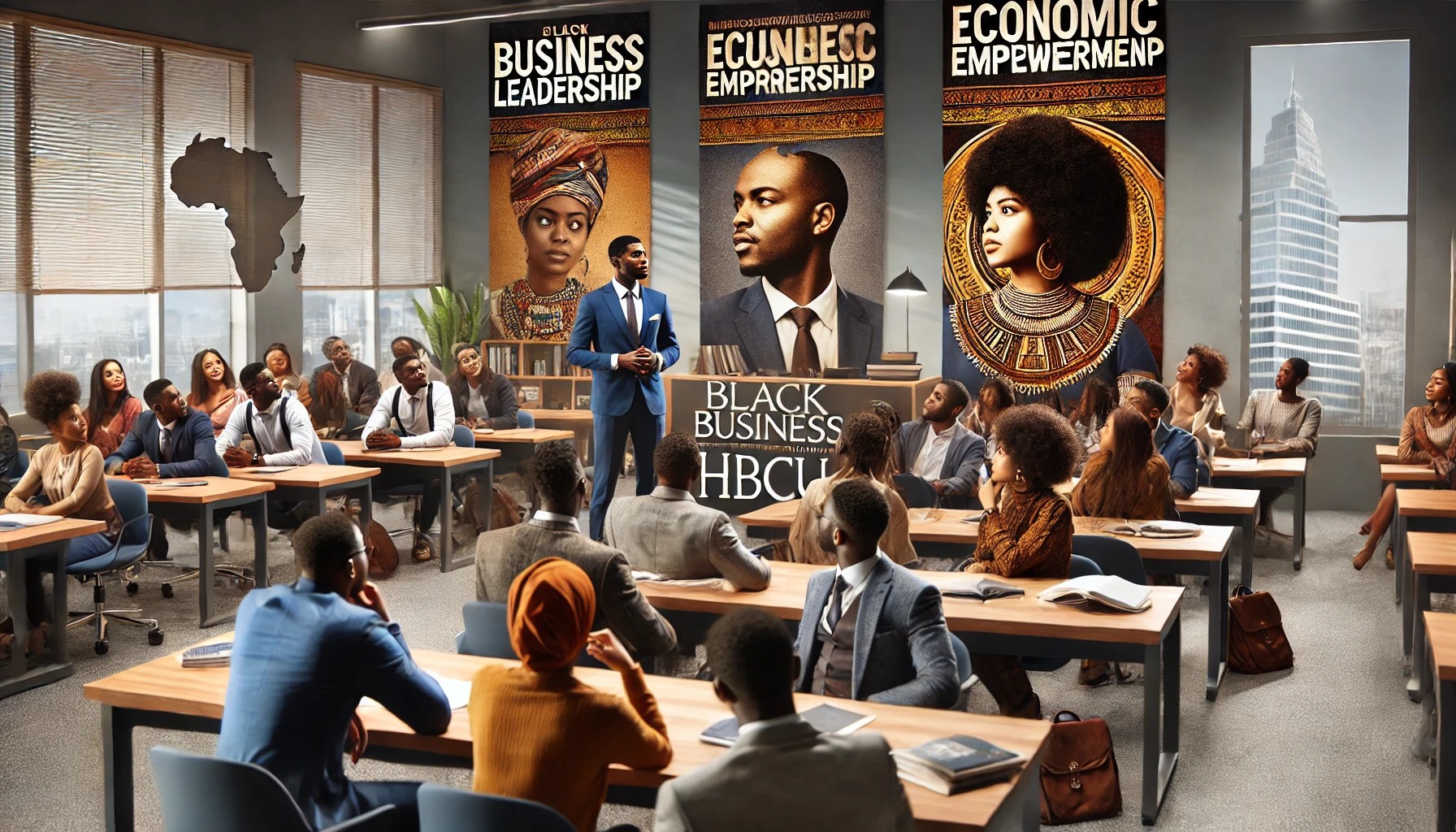
Where Is The African American MBA At HBCUs?

“I built a conglomerate and emerged the richest black man in the world in 2008 but it didn’t happen overnight. It took me 30 years to get to where I am today. Youths of today aspire to be like me but they want to achieve it overnight. It’s not going to work. To build a successful business, you must start small and dream big. In the journey of entrepreneurship, tenacity of purpose is supreme.” — Aliko Dangote
It could be argued that many HBCUs do not see themselves as African American institutions. They just happen to be a college where African American students are the predominant student population – for now. A place where you may happen to find more African American professors than you would elsewhere. But in terms of intentionally being a place looking to serve the social, economic, and political interests of African America and the African Diaspora as a whole not so much. Schools like Harvard and the Ivy League in general seek to serve WASP interests, BYU and Utah universities serve Mormon interests, there is a litany of Catholic universities led by the flagship the University of Notre Dame serving Catholic interests, and around 30-40 women’s colleges serving women’s interests. Arguably, none are more intentional though than Jewish universities who seek to serve Jewish Diasporic interests. They do so intentionally and unapologetically. It is highlighted in two prominent dual programs.

Brandeis University, “founded in the year of Israel’s independence, Brandeis is a secular, research-intensive university that is built on the foundation of Jewish history and experience and dedicated to Jewish values such as a respect for scholarship, critical thinking and making a positive difference in the world.”

Master of Arts in Jewish Professional Leadership and Social Impact MBA In partnership with the Heller School for Social Policy and Management: “If you want to become a Jewish community executive, this program will give you the skills and expertise you need: a strong foundation in both management and nonprofit practices, as well as a deep knowledge of Judaica and contemporary Jewish life. You’ll take courses taught by scholars across the university, including management courses focused on nonprofit organizations and courses specific to the Jewish community.”

Master of Arts in Jewish Professional Leadership and Master in Public Policy: “If you want to become a professional leader who can effect positive change for the Jewish community at the policy level, you’ll need policy analysis and development skills as well as knowledge of Judaic studies and contemporary Jewish life — all of which our MA-MPP track is designed to impart. This track will teach you how to both assess policy and practice and design and implement strategic solutions.”

In the United States, the racial wealth gap remains stubbornly wide. For every dollar of wealth held by the average white household, the average Black household holds just 14 cents, according to the Federal Reserve. While policy debates rage on, a quieter revolution could be ignited in the lecture halls and boardrooms of Historically Black Colleges and Universities (HBCUs). It is time for these institutions to take the lead in launching a new kind of MBA—one rooted in African American entrepreneurship.

This would not be a symbolic gesture of representation. Rather, it would be a radical recalibration of business education in service of economic sovereignty. The proposed African American MBA, anchored at HBCUs, would fuse conventional business acumen with a deep focus on building and scaling Black-owned enterprises—injecting capital, credibility, and cultural context into the fight for economic justice.

A Different Kind of MBA

Traditional MBA programs—whether in Boston, Palo Alto, or London—have long celebrated entrepreneurship, but they rarely address the distinct structural barriers faced by African American founders: racialized lending, limited intergenerational capital, and investor bias, among others. An African American MBA would tackle these head-on.

Students would learn to navigate venture capital ecosystems that have historically excluded them, build business models designed for resource-scarce environments, and craft growth strategies anchored in community reinvestment. The curriculum would include case studies of Black-owned business successes and failures, from the Johnson Publishing Company to the modern fintech startup Greenwood Bank.

Such a program would not just train entrepreneurs; it would cultivate what economist Jessica Gordon Nembhard refers to as “economic democracy”—an ownership-driven economy where Black communities produce and own the value they generate.

From Theory to Practice

For this model to work, HBCUs must go beyond coursework. They must build ecosystems.

At the core of the program would be university-based business incubators providing capital, mentorship, and workspace. Students could launch ventures with real funding—from alumni-backed angel networks or Black-owned community development financial institutions (CDFIs). Annual pitch competitions would create visibility and momentum, offering grants, equity investment, or convertible notes to top-performing student ventures.

A tight integration with Black-owned businesses, supply chains, and financial institutions would form the scaffolding. Students might spend time embedded in legacy enterprises like McKissack & McKissack, or cutting-edge startups in healthtech, agritech, and media.

These ecosystems would provide fertile ground for venture creation while catalyzing local job growth. In doing so, they would re-anchor HBCUs as engines of regional economic development, not just academic training grounds.

The HBCU Edge

HBCUs are uniquely positioned to own this space. They already produce 80% of the nation’s Black judges, half of its Black doctors, and a third of its Black STEM graduates. Yet despite this outsized impact, their business schools have yet to consolidate around a unifying purpose.

By championing entrepreneurship explicitly tailored to African American realities, HBCUs could claim a domain left underserved by Ivy League and flagship public institutions.

Moreover, HBCUs benefit from strong community credibility, a network of engaged alumni, and access to philanthropic capital increasingly earmarked for racial equity. With ESG mandates guiding corporate philanthropy and DEI budgets under scrutiny, there is untapped potential for long-term partnerships with companies seeking measurable social impact through supplier diversity, mentorship, or procurement commitments.

Risks and Realities

Skeptics will ask: Will such a degree be taken seriously in the broader market? Will it pigeonhole students into “Black businesses” instead of the Fortune 500? The answer lies in the performance of the ventures it produces. Success, not symbolism, will be the ultimate validator.

Indeed, many of the world’s most transformative businesses have emerged from institutions that bet on community-specific models. Consider how Stanford’s proximity to Silicon Valley allowed it to incubate global tech companies—or how Israel’s Technion helped power a startup nation.

An African American MBA need not limit its graduates to one demographic. Rather, it provides a launchpad from which Black entrepreneurs can build scalable, inclusive ventures rooted in lived experience. And in doing so, change the face of entrepreneurship itself.

The Road Ahead

If a handful of HBCUs lead the way—Howard, Spelman, North Carolina A&T, and Texas Southern come to mind—they could collectively establish a national center of excellence for African American entrepreneurship. Over time, this could grow into a consortium offering joint degrees, online programming, and cross-campus business accelerators.

The long-term vision? A Black entrepreneurial ecosystem rivaling that of Cambridge or Palo Alto, but infused with the resilience, cultural currency, and social mission uniquely forged by African American history.

This would not merely be an academic experiment. It would be a new chapter in a centuries-old story—one where the descendants of slaves become the architects of capital.

Focusing an African American MBA program offered by HBCUs on entrepreneurship could be transformative for fostering economic growth and self-sufficiency within the Black community. Here’s how such a program might look:

Program Vision and Goals

  • Empower Black Entrepreneurs: Equip students with the tools and networks to build successful businesses that create wealth and opportunities within African American communities.
  • Address Systemic Barriers: Focus on overcoming challenges like access to capital, discriminatory practices, and underrepresentation in high-growth industries.
  • Build Community Wealth: Promote entrepreneurship as a pathway to closing the racial wealth gap and revitalizing underserved areas.

Curriculum Highlights

Core MBA Foundations:

  • Finance for Entrepreneurs: Teach how to secure funding, manage cash flow, and create financial models tailored to African American small and medium enterprises (SMEs).
  • Marketing and Branding: Strategies for building culturally relevant brands that resonate with diverse audiences.
  • Operations and Scaling: Guidance on running efficient operations and scaling businesses sustainably.

Specialized Courses:

  • Tomorrow’s Entrepreneurship: Building ventures with dual goals of profit, community impact, and focus on industries of the future.
  • Navigating VC and Angel Investments: Training on pitching to investors, negotiating terms, and understanding equity structures.
  • Black-Owned Business Case Studies: Analyze successes and failures of prominent African American entrepreneurs. Much like the Harvard Business Review that sells case studies there would be an opportunity for HBCU business schools to create a joint venture for the HBCU Business Review and sell case studies relating to African American entrepreneurship.

Hands-On Experiences

Business Incubator:

  • A dedicated incubator at the HBCU to provide seed funding, mentorship, and workspace for students to develop their ventures.

Real-World Projects:

  • Partner students with local Black-owned businesses to solve real business challenges.

Annual Pitch Competitions:

  • A platform for students to showcase business ideas to potential investors, with prizes and funding opportunities.

Partnerships and Networks

Corporate and Community Collaborations:

  • Partnerships with companies that prioritize supplier diversity programs to provide procurement opportunities for graduates.
  • Collaborations with established Black entrepreneurs for mentorship and guest lectures.

Access to Capital:

  • Establish a dedicated fund or partnership with Black-owned financial institutions to provide startup capital.

Measurable Outcomes

  • Startups Launched: Track the number of new businesses started by graduates.
  • Jobs Created: Measure the economic impact of those businesses in local communities.
  • Community Investment: Monitor how much revenue is reinvested into underserved neighborhoods.

In contrast to institutions that intentionally serve specific cultural, religious, or ideological communities, many HBCUs appear to operate as predominantly African American in demographic composition rather than as institutions deeply invested and intentional in advancing the collective social, economic, and political interests of African Americans and the African Diaspora. While other universities—whether Ivy League institutions catering to elite WASP traditions, religious universities fostering faith-based leadership, or Jewish universities purposefully cultivating Jewish communal leadership—explicitly align their missions with the advancement of their respective communities, HBCUs often lack this same level of strategic intent. If HBCUs wish to remain vital and relevant in the future, they may need to more deliberately embrace their role as institutions committed to the upliftment of African American communities, not just as spaces where Black students and faculty are well-represented, but as powerful engines of social transformation.

Love & Entrepreneurship: Relationship Therapist Misha Granado On How Spouses & Relationships Impact Entrepreneurs

If you have ever been in a relationship with someone who is an entrepreneur, then you know it can have its fair share of ups and downs. Although most relationships do, there is something unique about those ups and downs when it comes to being with an entrepreneur. We were able to catch up with Misha Granado, an alumnae of Florida A&M University and Prairie View A&M University, who is herself and entrepreneur through her company Love Grows, a relationship consulting firm, to discuss what all comes with loving and living a life with an entrepreneur.

A relationship with an entrepreneur is not for everyone, what “warning” label would you put on entrepreneurs for those considering dating or getting into a relationship with one?

As an entrepreneur you are the only one who truly knows yours schedule, goals and needs for both your professional and personal life. It is imperative to be extremely clear on who you are and the characteristics and qualities that compliment and constrict both you and your goals. Reflect on your previous relationships (historical markers) to identify what does and does not work for you. Also, it is important to be honest with yourself about where you are on your journey.

If you are interested in a relationship, ask yourself, “What type of partner complements me?

  • A fellow entrepreneur? If so, what type of entrepreneur? Someone at the beginning stages (idea)? Growing? Established?
  • An entrepreneur who also has a corporate gig?
  • Someone with a demanding corporate career requiring significant time and dedication outside of the house?
  • Someone with a career with a traditional schedule (M-F) but has an active personal life who is self-sufficient?
  • Someone who is artsy and a free spirit who does not require much ‘hand-holding’ from you?
  • Someone with traditional relationship expectations?

Do you have the resources (time, energy, emotional and mental bandwidth) to co-create and co-nurture a relationship or is a social, casual dynamic more feasible? There is no universal right or wrong answer, only the only right for you. Once you are clear on who you are and your needs have honest, unapologetic conversations with potential partners.

All entrepreneurs are not the same, but what are some baseline ways you believe spouses and significant others can be supportive to their entrepreneur partner?

Significant others and spouses can be supportive to their entrepreneur partner by:

  • Holding the vision of the overall goal(s) – Being an entrepreneur is not easy and there will be many moments where the stress, loses, delays, frustration, fear, anger, despair, panic, etc obscure the vision of your entrepreneur spouse. Having the skill and ability to hold the vision for him/her at all times, but especially in these moments are key. Remind them of their why, the reason they embarked on this journey and all of the ways they will succeed.
  • Informative – Are you knowledgeable about their entrepreneurial endeavors? You do not need to be an expert in the field but showing real interest is very supportive. By having a bit of knowledge of the industry, goals, challenges coupled with knowing your spouse you become a wonderful asset because you can help with troubleshooting, be an empathetic ear, strategize and/or provide support. Of course this varies per entrepreneur. However, some entrepreneurs desire a ‘mental break’ from their work and prefer not to speak business with their spouse, which is okay as well. Knowing your s/o and what they need is another way to be informative.
  • Patient – The entrepreneur life does not follow the trajectory of other fields nor does it provide the ‘comfort and safety.’  On this journey income may vary significantly depending on project, climate, acquisition of clients, etc. Traditional hours do not exist. Sacrifices are the norm. Questioning self seems to be scheduled on the calendar daily. Therefore a s/o who is patient is a welcomed reprieve. Patience varies for each couple.

What are some common issues you see that arise between spouses and entrepreneurs in relationships? How do you believe couples can get ahead of them or best deal with them?

One of the most common issues between spouses and entrepreneurs is unspoken expectations. Each partner has expectations in their head for the other but has never articulated it to each other. As a result, needs go unmet and resentment silently builds meanwhile the partner is oblivious. It is similar to your employer setting goals for you without telling you only for you to discover you did not meet these benchmarks during your annual review. Unspoken expectations are a set up for failure. This is unfair.

The best tool for any relationship is transparency, vulnerability and honesty. For both partners to articulate to each other their expectations, needs and areas where they desire more support. If you do not feel emotionally safe to be vulnerable with your significant other, seek therapy to identify the barriers that serve as a hindrance and gain the tools and healing needed to overcome this barrier.

An entrepreneur sees the world in a very different way than most people. What are the ways spouses can impact how an entrepreneur sees the world?

The relationship one has with self, determines and influences all relationships in their life. In a partnership, especially a romantic relationship due to the intimacy of the space, both parties have the ability to impact each other in a negative or positive manner and this can influence the way partners view self and the world. This is such a delicate space because of the direct access to the heart and mind. A spouse who has unmet/unspoken expectations, resentment, frustrations, etc will knowingly or unknowingly begin to engage in behavior (i.e. passive aggressive, argumentative, petty) that constricts both their partner and the relationship. This behavior increases the entrepreneur’s stress level impacting business, creativity, productivity etc. Whereas, a spouse who is happy with self, articulates their needs and wants, feels fulfilled, supported, loved will demonstrate behaviors (i.e. encouragement, support, joy, happiness, consideration, patience, kindness, etc.) that complement the relationship and their partner. The latter has the ability to change perspectives. When we feel seen, heard and validated we feel inspired, energized and creative all of which are excellent for business.

Women entrepreneurs have an even tougher road ahead of them typically. So for the men/women/partners who love them, what advice would you give specifically to the support and love that will be needed?

Whether it is the entrepreneurial, corporate, artistic or the academic route, unfortunately women are not treated equitably. This adds another layer of stress to the already taxing entrepreneur life. As the partner behind the scenes supporting a woman entrepreneur, perhaps the best way you can support her is by knowing her, implementing and executing what she needs when you know she is stressed, excited, hopeful, disappointed, etc. If you do not know what she needs during these various spaces, ask her directly (when she is not in it). For example:

  • How can I support you when you are scared?
  • What can I do when you are stressed?
  • How do you like to celebrate your wins?
  • What would make your daily routine run smoothly?
  • How can I support your business?

When she needs/wants to vent about something before she begins ask: What do you need from me in this moment? A sympathetic ear? To help strategize a solution? To serve as your hype man? Knowing which role she needs from you is important, because she does not always need you to fix it. Sometimes she just needs to vent to effectively move that stagnant energy through her. Other times she just wants you to listen and validate her feelings.

A relationship is not all about the entrepreneur and in that respect reciprocation is important. How can entrepreneurs, who are often demanding a lot of their significant other/spouse, ensure that they themselves are being good partners?

Make your significant other a priority. The business will always be there. There is always something to do. You can always fill each minute with something for the business. Place weekly dates on the calendar and be fully present. Inquire about your significant other and their life and developments. This is a no business/dumping zone, instead it is a place to renew, restore and reciprocate all of the love and support your partner has and continues to give to you. Invest in your partner as well. Show up for your partner and be fully present. If you are attending an event as his/her/their date, be engaging, light, and attentive. Implement a cut off time where you disconnect from gadgets and connect with each other.  This is also applicable if children are involved. Time is one of your most precious commodities; invest it intentionally with your loved ones.

How can relationship counseling help a spouse and entrepreneur keep a happy and loving relationship?

Therapy always begins with the individual even if you are in a partnership. This is because individuals bring everything with them into the relationship (experiences, values, culture, perspective, emotional wounds, isms, insecurities, fears, family dynamics, beliefs, etc.) and all of these influences and determines the quality of the partnership. Now add the stress of an entrepreneurial journey to the equation and there is plenty of material here for therapy *wink*.

The benefit of therapy is having an objective person who provides a safe space for both parties to explore their emotions, identify expectations, stressors, goals and tools to address each. Therapy allows each person to speak, be heard, seen and validated. Also, therapy provides strategies; tools and techniques the couple can implement to help cultivate a relationship that is nurturing for both parties. Additionally, therapy provides different perspectives which are extremely beneficial in those times where a couple cannot agree. This alternative option may be the very catalyst to re-establishing or establishing a healthy relationship baseline.

You can follow and contact Ms. Granado:

www.mishaNgranado.com

Twitter & Instagram: @lovegrows_misha

HBCU Money™ Business Book Feature – Quench Your Own Thirst: Business Lessons Learned Over a Beer or Two

kochbeer

Founder of The Boston Beer Company, brewer of Samuel Adams Boston Lager, and a key catalyst of the American craft beer revolution, Jim Koch offers his unique perspective when it comes to business, beer, and turning your passion into a successful company or career.

In 1984, it looked like an unwinnable David and Goliath struggle: one guy against the mammoth American beer industry. When others scoffed at Jim Koch’s plan to leave his consulting job and start a brewery that would challenge American palates, he chose a nineteenth-century family recipe and launched Samuel Adams. Now one of America’s leading craft breweries, Samuel Adams has redefined the way Americans think about beer and helped spur a craft beer revolution.

In Quench Your Own Thirst, Koch offers unprecedented insights into the whirlwind ride from scrappy start-up to thriving public company. His innovative business model and refreshingly frank stories offer counterintuitive lessons that you can apply to business and to life.

Koch covers everything from finding your own Yoda to his theory on how a piece of string can teach you the most important lesson you’ll ever learn about business. He also has surprising advice on sales, marketing, hiring, and company culture. Koch’s anecdotes, quirky musings, and bits of wisdom go far beyond brewing. A fun, engaging guide for building a career or launching a successful business based on your passions, Quench Your Own Thirst is the key to the ultimate dream: being successful while doing what you love.

HBCU Money™ Business Book Feature – The 10% Entrepreneur: Live Your Startup Dream Without Quitting Your Day Job

512yyp-6fhl-_sx332_bo1204203200_

Choosing between the stability of a traditional career and the upside of entrepreneurship?
Why not have both?

Becoming a full-time entrepreneur can look glamorous from the outside. Who doesn’t want to chase their dreams, be their own boss, and do what they love? But the truth is that entrepreneurship is often a slog, with no regular hours, no job security, and very little pay.

What if there was a way to have the stability of a day job with the excitement of a startup? All of the benefits of entrepreneurship with none of the pitfalls? In The 10% Entrepreneur, Patrick McGinnis shows you how, by investing just 10% of your time and resources, you can become an entrepreneur without losing a steady paycheck.

McGinnis details a step-by-step plan that takes you from identifying your first entrepreneurial project to figuring out the smartest way to commit resources to it. He shows you how to select and engage in projects that will provide you with upside outside the office while making your better at your day job. He also profiles real-world 10% Entrepreneurs such as…
•Luke Holden, a cash-strapped recent college graduate, who started his own lobster-roll empire and oversaw much of its first year of operations, all while working full time in corporate America
•Dipali Patwa, a designer and mom whose side project designing and selling infant clothing is now a sensation.
•A group of friends who met at a 6am Bible study class and went on to start a brewery that now generates millions in sales .

A successful 10% Entrepreneur himself, McGinnis explains the multiple paths you can follow to invest your cash, time, and expertise in a start-up—including as a founder, angel, adviser, or aficionado. Most importantly, you don’t have to have millions in disposable income to become a 10% Entrepreneur. When you put McGinnis’s 10% principles into action, you’ll quickly start racking up small wins, then watch as they snowball into your new (and far more entrepreneurial) life.

The HBCUpreneur Corner – Howard University’s Michiel Perry & Black Southern Belle

Untitled-design-16

Name: Michiel Perry

Alma Mater: Howard University

Business Name & Description:  Black Southern Belle, Lifestyle Brand Focused on Showcasing Weddings, Fashion, Home Decor, Food and all things Southern!

What year did you found your company? 2015

What has been the most exciting and/or fearful moment during your HBCUpreneur career?  Deciding to do Black Southern Belle full time versus part time. I knew this was something that needed a full time role, but I also had a mortgage and a husband. It all worked out, but not without some serious scary days.

What made you want to start your own company? I was planning my wedding in Charleston, SC where I am from and decorating my home in Maryland and looking for lifestyle inspiration that was both African American and Southern. After looking with little success I realized this needed to exist and started Black Southern Belle.

Who was the most influential person/people for you during your time in college? I had a constitutional law professor who went above and beyond. He let me miss classes for internship interviews and even passed along my information to senior level executives. From him I learned the value of helping people who aren’t even asking.

How do you handle complex problems? As I am a hot head, I often handle complex problems by first relaxing and then reaching out to my mom or husband who are much more calm than I am and often view something very differently than I would.

What is something you wish you had known prior to starting your company? To reach out to my personal contacts more. I built a large network from my past careers but was afraid to reach out as to seem like an opportunist, but so many people I reach out to want to help even more than I ever thought they would. If you are genuine about your business and really want to make the relationship mutual most people want to help you row.

Some would say that today’s playing field is more leveled with media companies like yours not having to focus on print and being able to be exclusively digital. Do you think that is true and do you have any plans to do anything with print? I would agree. You can grow your brand digitally pretty quickly, you don’t even need a website at this stage, just a large Facebook or Instagram following can help you grow. Just build an audience and the business will come. I have a tech/digital background. The main print I deal with is stationery. If I did something print it would be a partnership, not just myself. I love paper but not enough to launch a magazine but I appreciate those who fulfill that goal as I have more subscriptions than I like to tell my husband.

Pinterest has had a significant impact on lifestyle sharing and your company is very active there. What do you think has allowed that platform to set itself apart from all others in that respect? I think it grabs your attention and is beautiful. It’s first focus was the beauty and then technology which is rare to see.  Often times tech comes first then aesthetics but Pinterest took a different approach.

BSB-Feb-2016-154

We often talk about the need for African Americans to manufacture more products. Being a lifestyle company affords you all to potentially engage a myriad of products with your own brand attached. Do you think this is something your company will pursue? Or are there other avenues of opportunity that you feel are unexplored by lifestyle companies? I love products and I love supporting small businesses. I currently have a signature product line of select items and would love to grow that business more with partners. I think there are so many opportunities and I am all about partnering to help not only myself but other brands grow.

What do you believe HBCUs can do to spur more innovation and entrepreneurship while their students are in school either as undergraduate or graduate students? I would say they can develop mentoring programs for students who want to be entrepreneurs. Like develop an alum system for entrepreneurs like myself to help current students. I also think adding it to the curriculum is an important thing. We already have the network, just need to utilize it more.

How do you deal with rejection? I have always had roles building partnerships and relationships. Most of the time you hear no. I am very used to it. Often times no is temporary and not because of you but because of other factors. I say no is just for now, not permanent so there is really no true rejection in my opinion just bad timing.

When you have down time how do you like to spend it? Antique shopping and watching historical documentaries. I am a serious history buff.

What was your most memorable HBCU memory? Having a Howard Alum find me on the first day of my internship on Capitol Hill. Howard Alum are crazy and will always find you. I do that now and I hope it makes the students feel as special as I did that day.

In leaving is there any advice you have for budding HBCUpreneurs? Take the risk and do full time if you can. If you can’t, don’t be afraid to outsource some work to keep your business growing. Just because you can’t do it full time doesn’t mean it can’t be done but you should find the resources to move forward.