
Tag Archives: African American

Higher Minimum Wage: An Attack On African American Small Business Growth

By William A. Foster, IV

Labor is the great producer of wealth; it moves all other causes. – Daniel Webster

business_closed

As often is the case, anytime the populous conversation about raising the minimum wage comes around you will see a huge rallying from the African American community. This is primarily because the majority of African America is labor and not heavily invested in ownership. African American firms with paid employees represent an appalling 1.8 percent of American firms with paid employees and only 7 percent of all American firms. Not even close to an equitable representation since we comprise 15 percent of the country’s population. We are a far cry from the days of Black Wall Street. These days we spend our time begging for employment and entrance into firms controlled by other communities. Then we appear baffled as to why our unemployment rate is constantly double that of the national average and three times that of Asian America or why all of the capital is leaving our communities.

Despite African America only comprising 1.8 percent of American firms with paid employees, these firms employ almost 6 percent of African America’s working population. In comparison, Asian America has 7 percent of all American firms with paid employees and employs almost 34 percent of Asian America’s employed population. The correlation is obvious that businesses started by a community tend to hire their community. This is true in terms of community defined by ancestry, gender, geography, education level, or socioeconomic status. As a result of this more citizens within that community are earning income, buying power increases, unemployment decreases, and social issues decrease. Psychology 101 tells us that people like to associate with people whom they believe have similar values and interest. The very first thing that every person with eyesight uses to make this judgement is a person’s appearance. The politically correct police will argue that is what we have to work against, but while we are waiting on Utopia the rest of us have to work in reality.

President Obama and his administration are bent on a one size fits all America approach to income inequality. However, it is no secret that high levels of asset ownership increases the level of income that a group can accumulate and it certainly benefits them in terms of lessening their tax liability allowing them to keep more of their money. An example is hedge fund owners who pay 20 percent while making hundreds of millions and LeBron James pays 40 percent for earning tens of millions. Also highlighting that even well paid labor is still just that – labor and does not enjoy the privileges that the tax code bequeaths to ownership. The increase in minimum wage will not make that easier for African Americans, but harder.  According to Keeley Mullis of the National Federation of Independent Business, “Big corporations do not have to absorb the cost of minimum wage increases because most minimum-wage jobs are offered by small businesses.” Given the education reality of African America, only 18 percent of African Americans 25 and older hold college degrees which is second lowest in the country and a 62 percent high school graduation rate which ranks lowest in the country, most of our labor force is low-skilled labor and more likely to work minimum wage jobs than almost any other group per capita.

There is also the acute compounding problem of wealth. African America’s median net worth, according to the Pew Research Center is $5,677 leaving us with 24 times less wealth than European Americans and 14 times less than Asian Americans. Is it no wonder then that in our own communities we tend to only see small businesses owned by outsiders. That is to say nothing of the ownership of medium-sized companies and we are virtually non-existent in large company ownership. To the best of my research thus far, there are no African American owned companies that make up the Forbes’ Largest Private American Companies list. A list that requires a minimum of $2 billion in annual revenues. For an African American family starting a small business, they are already facing the challenge of limited resources at their disposal. Both in terms of wealth to get started, access to support capital which is a result of poorly capitalized African American owned banks & credit unions, and even training which has its own cost to acquire both in terms of human capital and economic capital.

Real power and real wealth in capitalism is created through ownership. A father or mother can not pass a job along to their child, but they can pass a business to them increasing the probability of income stability for generations. Why make that harder for a group that has limited wealth to get started by increasing the already largest burden most small businesses encounter? As a consequence, impacting communities which continue to struggle with acute levels of unemployment and thereby the domino effect toward social issues. You can not just magically expect job creation to come to communities. It is communities who create their own job creation. As a result, it must be made obvious that while an increased minimum wage will not hurt other groups who are wealthier, this will have an adverse impact on African America’s wealth and employment growth prospects.

If Democrats and Republicans really want to do something about income equality, then the solution is to find a way to increase the access for entrepreneurship training through HBCU initiatives and create incentive programs to African American owned banks and credit unions to focus on small business lending. The latter should decrease the amount of predatory lending that African Americans historically have faced with banks like Wells Fargo, Bank of American, and others. It is true that the president is not just president of African America, but all of America. However, African America should be slow to support populous policies just for the sake of without realizing the potential of their cascading effect on our own community.
Should I Be A Housewife? A Social & Economic View

By Nadja Briscoe

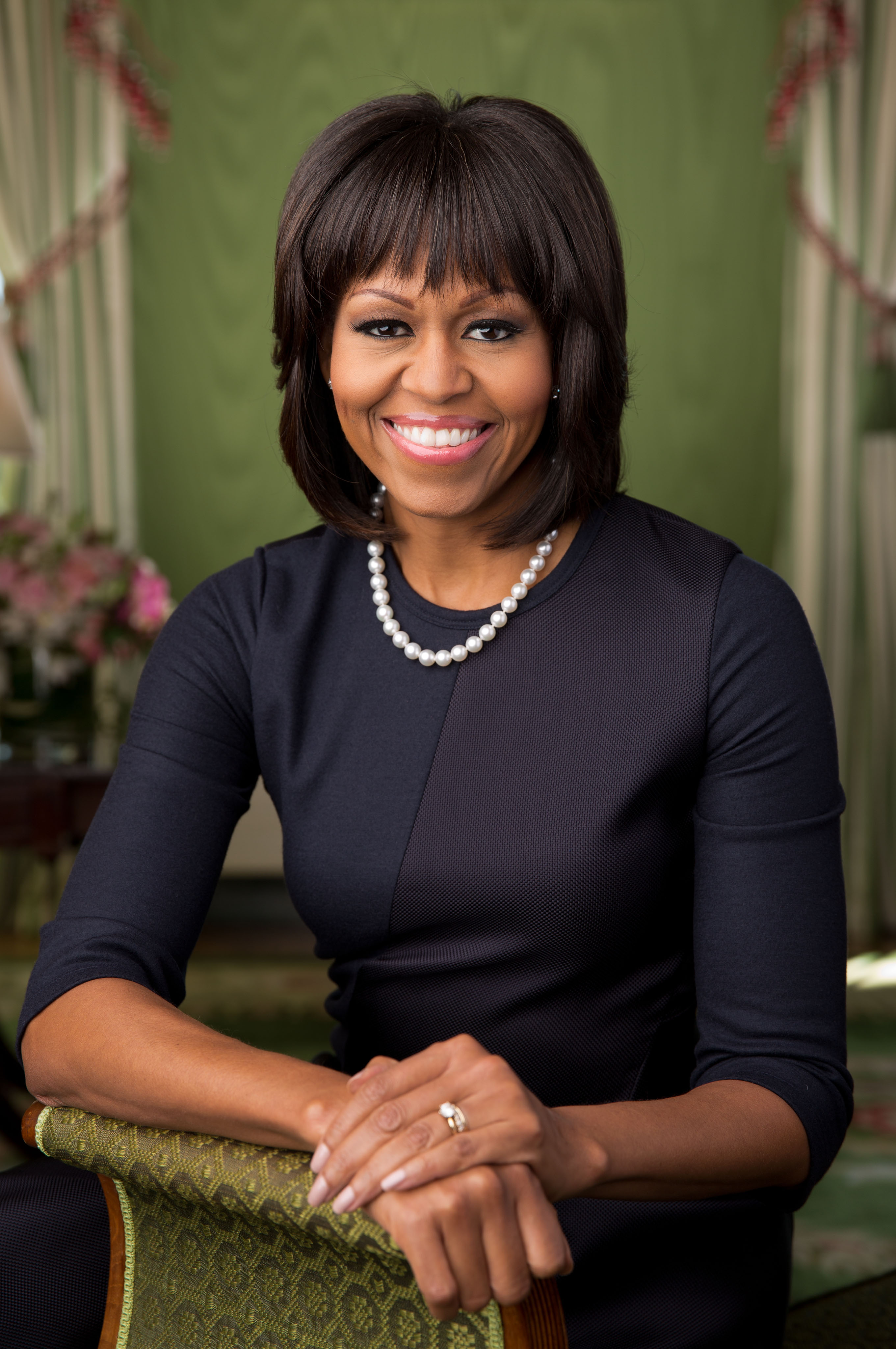
first_lady_portrait_hires

Is Michelle Obama, a former lawyer and now first housewife of America, helping reintroduce and redefine the modern housewife?

There is a typical argument, usually postured by what I like to call ‘amateur feminists’ (and I count myself as one,) which follows: “With a brain like yours, why would you waste your talents cooking dinners and cleaning house?”

If by choosing to be a housewife, I were to become fixated on keeping a perfect household – think 1950s television – the argument would be compelling. However, staying home supposedly no longer means becoming a sheltered woman.

My colleagues and I have had numerous conversations on the role of women, both in society and the family. Is she forgoing her comparative advantage as the home’s primary care giver, nurturer, bearer of children, and first agent of socialization and instilling of values to the children, in order to have that for which we have fought and died – the right to have a corporate job and the right to be the career women? The right to CHOOSE!

Feminists are horrified at the very idea of a woman with an MBA making the choice to be the domestic supporter of her family – washing dishes and doing laundry – but, they also discount the fact that they can also be socially active bloggers, readers, entrepreneurs and rearers of socially aware children.

Is it possible to have it all? As housewives, can we continually exercise our minds as well as our domestic muscles? Can we prevent ourselves from any backsliding that could occur from ‘perfect household syndrome’?

Linda Hirshman, in her 2006 book “Get to Work … and Get a Life Before It’s Too Late,” disagrees vehemently. Linda Hirshman claims “the family — with its repetitious, socially invisible, physical tasks — is a necessary part of life, but allows fewer opportunities for full human flourishing than public spheres like the market or the government.” This view point is easy to run away with, especially after watching my mom be the domestic supporter of a family of 8, do the same repetitive tasks for 20 years, as my father had a social life and was never home. As much as I adore and admire my mother, this is something I never wanted for my life; and, neither is it something that she wanted for me.

But, as we examine the economics of the two income family, the fact that women earn approximately 60-80 cents for every dollar a man earns, the inability to create wealth due to the financial cost of daycare, and the social cost of not having a constant supervisor at home when a child arrives from school, maybe we need to re-define what it means to be a housewife and the importance of that role.

The opportunities of today’s world offer an essential difference between the housewife of today and the housewife of our parents’ generation.  We now have easy access to contraception, which allows us to more effectively decide how many children we would like, and when to have them. We thaw most of our family’s meals, so there is no need to prepare the night before and spend hours cooking. Sewing is limited to replacing buttons. And, while we adore gossip in all forms, it is much less over picket fences, but rather over the Internet.

Neil Gilbert’s book, A Mother’s Work: How Feminism, The Market and Policy Shape Family Life, describes how women have responded to the contraceptive revolution, advances in civil rights, and the changing structure of the labor market since the 1960s. He notes that recently there has been a significant decline in childbearing, childrearing, and household production. The rate of childlessness has climbed to historic proportions for a period of relative peace and prosperity. Women are having fewer children; and, early childcare is being passed on to other women, as mothers shift their labor from the household to the marketplace. Feminists would say that women have finally been given the chance to do what they want, and rightly so. Others like myself would argue that it is out of economic necessity and desire to be independent of men, who have a history of using their financial power to oppress women, that drives women to the market place. However, Gilbert argues, and I am sure my colleague William would agree, that women are moving to the marketplace for three reasons: 1) the culture of capitalism undervalues the economic worth of childrearing activities and domestic production, 2) prevailing feminist expectations overestimate the social and emotional benefits of labor-force participation, and 3) that the family friendly policies of the welfare state create incentives that reinforce the norms and values of capitalism and feminism. So, as my dear friend William would say, despite societies needs and predilection, when women have to decide how much to invest in childrearing and paid employment, the majority of women chose to invest their time and energy in the latter despite the lack of economic and social sense to do so.

As a result, instead of critically evaluating important questions such as: Does having children make economic sense? Is sexual division of labor a rational choice? How has the time devoted to childcare by employed and non-employed mothers changed overtime? What are the educational and social outcomes of children in homes with non-employed mothers vs employed mothers? There is an emotional response to avoid these questions out of fear that the answers might result in retracting to traditional ways, which would deny the progress women have made over the past couple of decades.

The financial and social cost that society is paying, as women try to redefine their role in society, is typical of every stage of progress and evolution, which eventually runs into its own inherent limitations, creates a type of turmoil, even chaos, and causes the system either to break down (self-dissolution), or escape chaos by evolving to a higher degree of order (self-transcendence). This new and higher order escapes the limitations of its predecessor, but then introduces its own limitations and problems. As a result, old problems are solved or defused – in this case women are no longer as oppressed, and are given the right and the choice to engage in civic, political, and economic activities, but comes at the price of introducing new and more complex difficulties such as higher divorce rates, dysfunctional families, and a negative birth rate, just to name a few. Despite these complicated and difficult problems however, it is perverse to take the problems of the present, compare them with the accomplishments of the past, and thus claim everything has gone downhill. I feel this is what my friend William often does; although, maybe no worse a tactic than the opposite of comparing the problems of the past with the accomplishments of the present and saying everything is for the better, which I may be guilty of.

I agree wholeheartedly with retrogressive romantics like William, who argue passionately, and at times convincingly, that we need to honor and acknowledge the many great accomplishments of past, and attempt to retain and incorporate as much of their wisdom and accomplishment. But I also argue that no mater the problems we have now, the fact of the matter is that the train, for better or worse, is in motion. And, driving while looking in the rear view mirror is likely to cause an even worse accident.

The fact of the matter is that for most women, though not all, the labor of motherhood is undervalued; and, the personal benefits of paid work are overestimated. We all fantasize about work that uses our creativity, is self-directed, happens during the hours we choose, and occurs in an attractively lit setting with fascinating people — you know, jobs like women have on TV. Oprah’s job!

But, in this reality, it is probably more realistic to be a housewife with a supportive husband, who encourages you to start a business or work from home.

So, with all this said, as I move closer to 30 while childless, well educated, and on the verge of having the career that I have always wanted and worked so hard for, what will I decide? Will fear of the known – my mothers depiction of a housewife with repetitive menial tasks, and allowing a husband to be my provider who might use this financial power to oppress me – prevent me from having the image that my white educated women portray of the housewife: the NPR-listening, car-pooling, yoga expert, avid volunteer, foundation director? To be honest, I really don’t know. But, even more important to me is the question: if I do decide to be the career women that I am on the verge of becoming, am I doing a disservice to my community?

Ms. Briscoe is a graduate of the University of West Indies with studies in International Relations and Management Studies. She also holds a dual MBA from Brandeis University in Social Policy & Management and Marketing. Her work has seen her spend time as a consultant for major hospitals in New England and now serves as a business development analyst for a multinational healthcare company.

Johanessburg Stock Exchange Announces Virtual Stock Trader

JSE-Logo

Just over one month ago Johannesburg Stock Exchange (Ticker: JSE), the world’s 19th largest stock exchange by market capitalization, launched its virtual stock trader to try and broaden its customer base and ease many Africans into the use of their products.

Per their website the JSE says “The JSE virtual trading game aims to teach the South African public about investing on the JSE. The game helps those participating learn about the fundamentals of investment strategy and encourages them to research and strategise about trading shares listed on the JSE.”

Participants are given 1 000 000 South African rand or approximately $100 000 US dollars. It also represents an amazing opportunity for African Americans interested in investing in Africa to enter the largest economy on the continent and learn some of the nuances of the economy with no risk attached while gaining valuable knowledge. HBCU business schools could create an entire class on investing in Africa’s asset classes using this virtual tracker. The opportunities are immense in creating more circulation between African America and Africa as a result.

For more information on the virtual tracker visit JSE’s website at https://virtualtradinggame.jse.co.za/about.html

Top 10 Landowners in HBCU States

Gallatin_National_Forest

Editors’ Note: There are no African Americans among the top 100 landowners’ in America according to The Land Report 100. If Special Order 15 had been honored African America would have controlled 160 million acres post Civil War or 7 percent of America’s land. Today, African America controls a mere 0.0033 percent of America’s 2.3 billion acres or just under 8 million acres. Most of the top ten landowners have property in other states but our list includes those with large holdings in at least one designated HBCU state. The top ten landowners in HBCU states control 10.2 million acres or approximately 28 percent more land than all of African America. HBCU land-grant institutions could play a large role in the education of African America to the importance of land ownership.

1) Ted Turner (Georgia) – 2 000 000 Acres

2) Emmerson Family (California) – 1 840 000 Acres

3) Brad Kelley (Kentucky) – 1 500 000 Acres

4) King Ranch Heirs (Texas) – 911 215 Acres

5) Pingree Heirs (Massachusetts) – 830 000 Acres

6) Reed Family (California) – 770 000 Acres

7) Ford Family (California) – 625 000 Acres

8) Lykes Brothers Heirs (Texas & Florida) – 615 000 Acres

9) Briscoe Family (Texas) – 560 000 Acres

10) W.T. Waggoner Estate (Texas) – 535 000 Acres

Source: The Land Report

African America’s June Unemployment Report – 13.7%

jobs_pic

Overall Unemployment: 7.6% (7.6%)

African America Unemployment: 13.7% (13.5%)

Latino America Unemployment: 9.1% (9.1%)

European America Unemployment: 6.7% (6.7%)

Asian America Unemployment: 5.0% (4.3%)

Analysis: The unemployment rates overall remains unchanged. Two of the four diaspora groups remain unchanged while the other two saw upticks. Asian America saw a significant uptick but remains the group with the lowest unemployment. African America remains the only group with a double digit unemployment rate.

African American Male Unemployment: 13.0% (13.5%)

African American Female Unemployment: 12.0% (11.2%)

African American Teenage Unemployment: 43.6% (42.6%)

African American Male Participation: 67.1% (67.9%)

African American Female Participation: 62.3% (62.5%)

African American Teenage Participation: 28.1% (28.0%)

*Previous month in parentheses.

Analysis: African American women and teenagers saw significant upticks in their unemployment rate while the unemployment rate for men saw a moderate decrease. Participation rate for teenagers remain virtually unchanged while men and women both saw decreases. The men saw a substantial drop in their participation rate.

Conclusion: The overall economy added 195 000 jobs in the month of June. African America shows a loss of 112 000 jobs for the month of June. A significant loss after four straight months of positive job growth. The African American labor force shrunk by almost 100 000 and most disturbing is the participation rate as it dropped to its second lowest rate in the past five months. A sign that fatigue is setting in and the desire to find employment is waning. African American women’s participation rate has held steady over the past five months while the men have shown an alarming drop. The continued crisis of African American teenagers proves to be worsening as the group hit a new high again for its unemployment rate which still stands at the third highest in the developed world. It appears the sequester is setting in and unemployment fatigue is starting to take a turn for the negative in the African American community.

Source: Department of Labor