Tag Archives: African American

The Vernon Johns Story: Money Is Power Scene

In the Vernon Johns story, this powerful scene shows Reverend Johns trying to explain to his congregation the economic power they can wield in building a strong and vibrant community if they build and own their own institutions. A sentiment that would later be echoed by Martin Luther King, Jr. as he directed African American to move its money into African American owned banks. He also points out the disdain that many communities had (and continue) to have for African Americans, but have no disdain in taking our money. Can we become a self-sufficient people? Just how many things can we not purchase from an African American (Diaspora) company? The scene is powerful and the message still rings as true today as it did then.

HBCU Money™ Business Book Feature – Pushout: The Criminalization of Black Girls in Schools

pushout_final

Fifteen-year-old Diamond stopped going to school the day she was expelled for lashing out at peers who constantly harassed and teased her for something everyone on the staff had missed: she was being trafficked for sex. After months on the run, she was arrested and sent to a detention center for violating a court order to attend school.

Just 16 percent of female students, Black girls make up more than one-third of all girls with a school-related arrest. The first trade book to tell these untold stories, Pushout exposes a world of confined potential and supports the growing movement to address the policies, practices, and cultural illiteracy that push countless students out of school and into unhealthy, unstable, and often unsafe futures.

For four years Monique W. Morris, author of Black Stats, chronicled the experiences of black girls across the country whose intricate lives are misunderstood, highly judged—by teachers, administrators, and the justice system—and degraded by the very institutions charged with helping them flourish. Morris shows how, despite obstacles, stigmas, stereotypes, and despair, black girls still find ways to breathe remarkable dignity into their lives in classrooms, juvenile facilities, and beyond.

HBCU Money’s 2016 African American Owned Credit Union Directory

imgpsh_fullsize

All credit unions are listed by state and in alphabetical order. In order to be listed in our directory the credit union must have an African American designation. Click on the state to view the full list available. If the credit union has a website you can click on the name and go directly to their website.

There are 318 African American designated credit unions with assets totaling approximately $5.8 billion in assets or approximately 0.51 percent of African America’s $1.1 trillion in buying power. African American credit unions have a total of 863 670 members.

ADDITIONAL NOTES:

  • African American credit unions comprise 49.6 percent of Minority Serving credit unions and 5.2 percent of all US credit unions
  • The total assets for all US minority credit unions is $36.4 billion, with AACUs controlling 16.2 percent of those assets. Total combined assets for all US credit unions are $1.2 trillion, with AACUs controlling 0.48 percent of total American credit union assets.
  • AACUs average assets: $18.4 million ($17.9 million)
  • AACUs average number of members 2 725 (2 688)
  • AACUs median assets: $1.4 million ($1.4 million)
  • AACUs median members: 505 (491)
  • For comparison, Asian American credit unions have approximately 362 000 members and $4.6 billion in assets. Average and median assets of $83.1 million and $30.0 million, respectively.

African American Owned Credit Unions by State:

Alabama

Arkansas

California

Connecticut

District of Columbia

Delaware

Florida

Georgia

Illinois

Indiana

Kentucky

Louisiana

Maryland

Massachusetts

Michigan

Mississippi

New Jersey

New York

North Carolina

Ohio

Pennsylvania

South Carolina

Tennessee

Texas

Virginia

Virgin Islands

Washington

West Virginia

Wisconsin


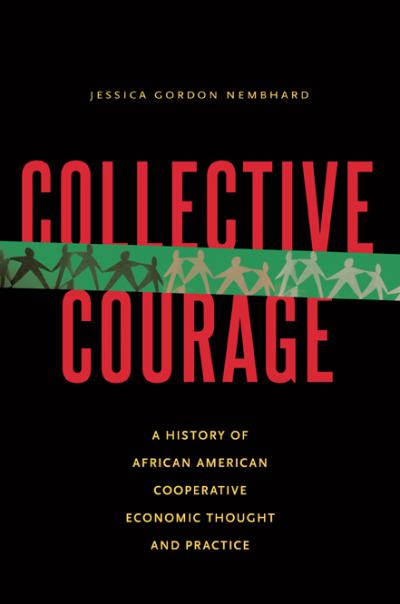
HBCU Money™ Business Book Feature – Collective Courage: A History of African American Cooperative Economic

collective_courage_hi-res_0

In Collective Courage, Jessica Gordon Nembhard chronicles African American cooperative business ownership and its place in the movements for Black civil rights and economic equality. Not since W. E. B. Du Bois’s 1907 Economic Co-operation Among Negro Americans has there been a full-length, nationwide study of African American cooperatives. Collective Courage extends that story into the twenty-first century. Many of the players are well known in the history of the African American experience: Du Bois, A. Philip Randolph and the Ladies’ Auxiliary to the Brotherhood of Sleeping Car Porters, Nannie Helen Burroughs, Fannie Lou Hamer, Ella Jo Baker, George Schuyler and the Young Negroes’ Co-operative League, the Nation of Islam, and the Black Panther Party. Adding the cooperative movement to Black history results in a retelling of the African American experience, with an increased understanding of African American collective economic agency and grassroots economic organizing.

To tell the story, Gordon Nembhard uses a variety of newspapers, period magazines, and journals; co-ops’ articles of incorporation, minutes from annual meetings, newsletters, budgets, and income statements; and scholarly books, memoirs, and biographies. These sources reveal the achievements and challenges of Black co-ops, collective economic action, and social entrepreneurship. Gordon Nembhard finds that African Americans, as well as other people of color and low-income people, have benefitted greatly from cooperative ownership and democratic economic participation throughout the nation’s history.

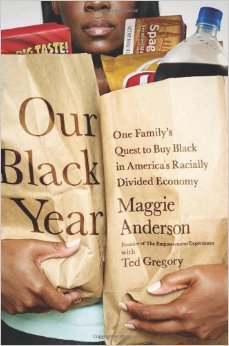
HBCU Money™ Business Book Feature – Our Black Year: One Family’s Quest to Buy Black in America’s Racially Divided Economy

514B-YWWBmL._SY344_BO1,204,203,200_

Maggie and John Anderson were successful African American professionals raising two daughters in a tony suburb of Chicago. But they felt uneasy over their good fortune. Most African Americans live in economically starved neighborhoods. Black wealth is about one tenth of white wealth, and black businesses lag behind businesses of all other racial groups in every measure of success. One problem is that black consumers–unlike consumers of other ethnicities– choose not to support black-owned businesses. At the same time, most of the businesses in their communities are owned by outsiders.

On January 1, 2009 the Andersons embarked on a year-long public pledge to “buy black.” They thought that by taking a stand, the black community would be mobilized to exert its economic might. They thought that by exposing the issues, Americans of all races would see that economically empowering black neighborhoods benefits society as a whole. Instead, blacks refused to support their own, and others condemned their experiment. Drawing on economic research and social history as well as her personal story, Maggie Anderson shows why the black economy continues to suffer and issues a call to action to all of us to do our part to reverse this trend.