Category Archives: Philanthropy

The Endowment Edge: A Conversation With The University Of Virgin Islands’ Dr. Haldane Davies

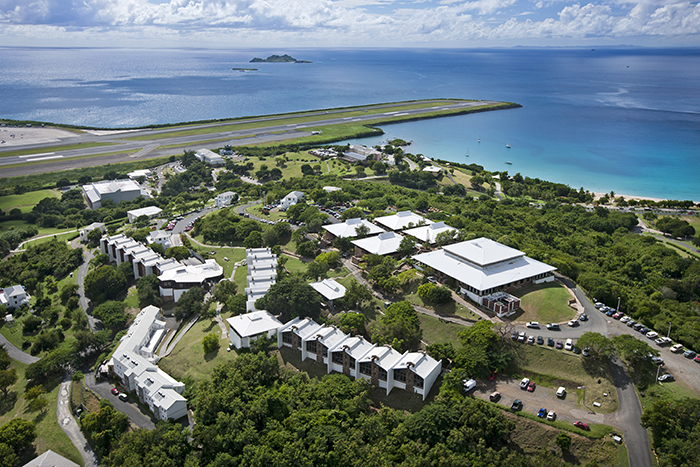
HBCU Money’s editor-in-chief, William A. Foster, IV, sits down with the Foundation of the University of Virgin Islands’ executive director Dr. Haldane Davies. They discuss the importance of HBCU endowments, UVI’s phenomenal leap into the HBCU Money’s 2014 top ten HBCU endowments list, and Dr. Davies take on the economy’s impact on college endowments.

Haldane_Davies

Dr. Davies, thank you for taking the time with us. Let us start with telling us a bit about yourself and how you came into your current position? Thank you, Bill. I am certainly honored to have the opportunity to speak with you today and to share with your audience what the Foundation for the University of the Virgin Islands and indeed the University of the Virgin Islands has been doing over the last fifty three years of its existence. My name is Haldane Davies and I am from the Virgin Islands. I hold a Doctor of Philosophy degree in Educational Administration with a focus on higher education from Andrews University and have been at the University of the Virgin Islands for the past eight years. In addition to my current position of Vice President for Business Development and Innovation, I also serve as the Executive Director of the Foundation for the University of the Virgin Islands – a 501 (c) 3 organization, a position that I have held for the past four years.

Many HBCUers do not understand the way an endowment operates. Tell our audience more about the process. When a donation to the University of Virgin Islands is given, how is it invested and how are those decisions made? Great question. As you know, Bill, the process of fundraising is one that occurs over time after periods of relationship building and donor cultivation. Donors contribute to a cause that matches the institution’s value proposition to the donor’s vision and purpose for which they intend the gift to be used. Therefore, when a gift is made to the University or to the Foundation on behalf of the University, that gift is invested in accordance with the donor’s gift agreement and the applicable clauses of the Foundation’s Investment Policy Statement under the guidance of the Finance and Investment Committee and the full Board. The funds are usually distributed across an approved asset allocation planning model with investments in equities, bonds, and other alternative asset classes, with provisions made for hedging by including a mix of other investment options along a continuum of conservative and aggressive distributions of the funds to be invested. The Finance and Investment Committee would be mindful to ensure that great care is taken to maintain an adequate spending ratio in support of the University while making every effort to maintain the goal of achieving intergenerational equity by not spending too much or too little in any given year thereby maintaining the real spending power of the endowment for future generations.

UVI_logo_300_rgb_2x

 The University of Virgin Islands this year cracked our HBCU Money™ top ten HBCU endowments, largely attributed to the university’s impressive 48.5 percent increase in investments. What do you attribute to the endowment’s success over the past twelve months? I must say that we are extremely honored to be among the top ten HBCU endowments in terms of investment asset I would be the first to indicate however, that while the difference between total investment assets from 2013 to 2014 jumped significantly by an impressive 48.5 percent, the actual investment return for the same period was 19.2 percent, which exceeded investment returns among all HBCUs that participated in the NACUBO Commonfund Study of Endowments. This is indeed a great accomplishment of which we are justly proud. We are appreciative of the outstanding work of our investment advisors/managers who exercised prudent judgement and responsible decision making by selecting outstanding investment managers and investment options that yielded the kind of returns that we benefited from last year. It was a good year for the U.S. equity market, in particular. I am also mindful to note the fiduciary oversight of the Finance and Investment Committee and the Board in working closely with our advisors/managers and exercising patience by maintaining a “we are in it for the long haul” attitude toward investing.

The endowment gap between PWI/HWCUs and HBCUs has grown from 46:1 in 1993 to 106:1 today. What do you think are some ways that gap can start to be closed, especially with HBCUs facing mounting financial pressure? Is there anything the University of Virgin Islands is doing in particular? As stated previously, the Foundation for the University of the Virgin Islands has taken a “long haul” approach to investing for optimal gain in support of the mission of the University. The University actively engages in fundraising and maintains a Memorandum of Understanding (MOU) with the Foundation for the management of its assets alongside those of the Foundation. There is strength in the collaborative pooling of assets with the true intent and purpose of strategically and meaningfully responding to the needs of the University and the constituencies which it serves. As HBCUs, we also need to actively engage in business development and innovation activities that result in public/private partnerships, contracting services, and leveraging the expertise of faculty, staff and students to create income generating opportunities in collaboration with the institution. At UVI we believe that when we are able to promote a value proposition that is in tandem with the needs of our communities, donors, and supporters we would be better positioned to reverse the trend and begin the process of closing the gap to which you referred. Although budgets are tight and government and other types of mainstream support for HBCUs and other institutions are dwindling, there are opportunities for growth if we would develop innovative ways of advancing our causes through collaborative strategic planning, linking the budget to the plan, identifying the best talent to execute programs and services, conducting rigorous and meaningful assessment, and using results to improve. These may be the “worst of times” but they may also be the “best of times.”

_07A8153

 In terms of investment strategy, does UVI primarily internally manage its endowment; use external managers, or a mixture of both? UVI through the Foundation primarily uses external managers who are guided by the organization’s Investment Policy Statement, and who have the flexibility within reasonable limits to make timely investment decisions in the overall interest of the Foundation and the University. We vet and monitor our managers well and require regular reports not only on the performance of the funds but also on their investment point of view and scenario projections based on current and historical market data.

The S&P 500 over the past year had returns of 13.4 percent. The benchmark by which we measure endowment return success. This past year only six out of the top ten HBCU endowments outperformed the market, while PWI/HWCU counterparts had nine out of the top ten outperform. What do you attribute this disparity too? That is a very good question and the answer may lie in a number of places. Generally, although size may not always be a determining factor in the level of endowment returns, it certainly plays a significant role especially in keeping with the asset allocation model that may be right for the institution at the time. PWIs generally are much more heavily endowed than HBCUs with higher percentages spread across a wider cross section of illiquid options, thus lessening risk and increasing yield over the long term. Secondly, some endowments are very conservative in their asset allocation models, which may be based on the risk averseness of the Investment Committee. Additionally, we need to do a better job in developing our asset allocation models and using the best managers with track records of stable yet outstanding returns for their clients. We need to study the markets well, increase our knowledge by engaging in professional development activities for our boards, and holding our directors and staff more accountable for the performance of our organizations. Endowments grow and perform well through strategic investment growth and contributions to the funds.

Capital circulation is a big principle we believe in here at HBCU Money. Does UVI have any relationships with African Diaspora owned investment firms or financial institutions in general? If so, was it a conscious decision and why? If not, is there any plan in the future to have a relationship? Although most of our investments are within the US market which includes a mix of investment firms, we certainly participate in private equity investments globally including those in emerging and frontier markets. While I am not at this time prepared to speak in detail on FUVI’s investments, I can say that every effort is made to invest in opportunities and places where our investments stand a very good chance of yielding good returns. We pay close attention to the global economic outlook and point of view and make decisions that would best serve the interest of our organizations – UVI and FUVI. We certainly support investments with African Diaspora investment firms as part of our overall investment strategy.

Many investors seem to believe the Federal Reserve will be raising interest rates this year. What impact will this have on college & university endowments? With every action, there is usually a corresponding reaction, however, our view is long term and we are not unduly alarmed with the current trend of market volatility. Whether the Feds raise interest rates in the summer or the fall, we expect the markets to respond but settle in a favorable place over time. After all, rising interest rates may be viewed as a sign of a strengthening economy. Market corrections are needed from time to time; however, we are not fazed by daily adjustments but rather encouraged by long term performance.

Private equity and hedge funds seems to have had a major role in college and university endowments over the past decade. These are very capital intensive and illiquid investment classes, which seem to make it tougher for HBCUs with smaller capitalized endowments to engage. Is UVI making investments in either of these assets classes? If so, what percentage of the school’s endowment portfolio is in them? If not, do you foresee investments in these classes in the future? We currently have a mix of hedge funds, distressed debt, and private equity investments in our portfolio amounting to about 10 percent of the Foundation’s assets. We are also in the process of adding some core real estate investments (about 5 percent) and making allocation adjustments to help create an optimal balance in liquidity and intergenerational equity. With some limitations, opportunities for smaller endowments to invest in illiquid and alternative strategies such as hedge funds, venture capital and private equity are readily available in the marketplace and offered by advisors/managers who have great expertise and track records in this important diversifying space.

For those interested in one day becoming the head of a university endowment what advice would you give them? Become familiar with endowments and foundations and how they work by attending endowment/investment conferences, workshops and institutes to the extent possible. Speak frequently with your investment managers engaging them in broader board and committee educational meetings focusing on the successful tenets of governance, oversight and endowment management. And examine their investment outlook in tandem with market trends and historical performance. Read, familiarize yourself with the market jargon, be courageous, and engage in strategic and informed decision making.

Thank you for your time; in parting do you have anything you would like to add? HBCUs and their universities and endowments have a very important role to play in providing and supporting educational opportunities for many who may otherwise not have the opportunity to pursue higher education. We are responding to a high calling – a calling that is beyond any of us to touch lives, fulfill dreams, ignite passion, create opportunities, improve the quality of life, advance knowledge, and increase wisdom. HBCU endowments and foundations have the capacity to be wellsprings of creative opportunity and beacons of hope for many in a shaded world. Let us commit to doing our best for humankind today and for generations yet unborn as we help to make this world a better place for all. Thank you so much, Bill for the opportunity to share with your audience. I look forward to talking with you again.

America’s 2014 Top 10 College Donations

rongeraldchan

In the world of philanthropy there are two types of donors that development offices love. High-quality donors who give consistently and over their lifetime will probably give six to seven figures of donations. Often these donors leave the bulk of their donation through their estate. The second are transformative donors who can change the paradigm of an entire institution with one donation. These donors are masters of their universe with the wealth and power they wield and often the barons of their particular industry. Donations from transformative donors range from eight to nine figures.

The 2014 top donors definitely saw a pull back from their 2013 giving. Combined donations came in $500 million lighter than last year. However, this year was led by two brothers, Ronald and Gerald Chan (pictured above), who donated $350 million to Harvard’s School of Public Health.  Their donation is equal to 10 percent of Harvard’s endowment, which still is the world’s largest college and university endowment.

ABOUT THE DONATIONS:

Total Giving Combined – $2.0 Billion

Median Donation – $60 Million

Average Donation -$79.4 Million

The combined donations are equal to all HBCU endowments combined.

ABOUT THE DONORS:

Total Net Worth Combined – $42.8 Billion reported

Median Net Worth – $2.2 Billion reported

Average Net Worth – $4.3 Billion reported

This year was extremely geographically diverse with 16 different states being represented. California, New York, and Illinois all tied for three apiece.

1. Morningside Foundation (Gerald & Ronald Chan) – $350 Million
Recipient: Harvard School of Public Health
Source of Wealth: Family wealth, Finance, Investments
Net Worth: $2.4 Billion

2. Kenneth C. Griffin – $150 Million
Recipient: Harvard University
Source of Wealth: Finance
Net Worth: $6.5 Billion

T3. Fred Eshelman – $100 Million
Recipient: University of North Carolina at Chapel Hill, Eshelman School of Pharmacy
Source of Wealth: Health products
Net Worth: N/A

T3. Anonymous – $100 Million
Recipient: Oregon Health & Science University Foundation
Source of Wealth: N/A
Net Worth: N/A

T3. Anonymous – $100 Million
Recipient: Dartmouth College
Source of Wealth: N/A
Net Worth: N/A

T4. David Rockefeller – $75 Million
Recipient: Rockefeller University
Source of Wealth: Family wealth, Finance
Net Worth: $3 Billion

T4. John W. Jordan II – $75 Million
Recipient: University of Notre Dame
Source of Wealth: Finance
Net Worth: N/A

T4. Alfred C. Warrington IV & Judy Warrington – $75 Million
Recipient: University of Florida, Warrington College of Business Administration
Source of Wealth: Industry
Net Worth: N/A

T4. Sandra & Edward Meyer Foundation – $75 Million
Recipient: Weill Medical College of Cornell University
Source of Wealth: Advertising
Net Worth: N/A

5. Jay H. Shidler – $69 Million
Recipient: University of Hawaii Foundation
Source of Wealth: Investments, Real Estate
Net Worth: $700 Million

T6. Charles T. Munger – $65 Million
Recipient: University of California – Santa Barbara
Source of Wealth: Investments
Net Worth: $1.3 Billion

T6. Albert P. Viragh (deceased) – $65 Million
Recipient: John Hopkins Medicine, Sidney Kimmel Comprehensive Cancer Center
Source of Wealth: Finance, Investments
Net Worth: N/A

T7. Vanier Family – $60 Million
Recipient: Kansas State University
Source of Wealth: Agriculture
Net Worth: N/A

T7. Mulva Family Foundation (James & Miriam Mulva) – $60 Million
Recipient: University of Texas at Austin
Source of Wealth: Energy, Oil
Net Worth: N/A

8. Madison and Lila Reetz Self – $58 Million
Recipient: University of Kansas
Source of Wealth: Chemicals, Finance
Net Worth: N/A

9. Kavitark & Vidjealatchoumy Shriram – $57 Million
Recipient: Stanford University
Source of Wealth: Technology
Net Worth: $1.9 Billion

T10. Ronald & Eileen Weiser – $50 Million
Recipient: University of Michigan at Ann Arbor
Source of Wealth: Real estate
Net Worth: N/A

T10. Steve & Connie Ballmer – $50 Million
Recipient: University of Oregon
Source of Wealth: Technology
Net Worth: $20.6 Billion

T10. David & Cheryl Strauss Einhorn – $50 Million
Recipient: Cornell University
Source of Wealth: Finance
Net Worth: $2 Billion

T10. Donald (deceased) & Marilyn Keough – $50 Million
Recipient: University of Notre Dame
Source of Wealth: Food and beverage
Net Worth: N/A

T10. Jimmy Haslam – $50 Million
Recipient: University of Tennessee at Knoxville
Source of Wealth: Family wealth, Retail
Net Worth: $2.8 Billion

T10. Agnes Nelms Haury – $50 Million
Recipient: University of Arizona Foundation
Source of Wealth: Family wealth
Net Worth: N/A

T10. Thomas Kline – $50 Million
Recipient: Drexel University, Thomas R. Kline School of Law
Source of Wealth: Law
Net Worth: N/A

T10. Norm Asbjornson – $50 Million
Recipient: Montana State University
Source of Wealth: Manufacturing
Net Worth: N/A

T10. Gary K. Michelson – $50 Million
Recipient: University of Southern California
Source of Wealth: Health care, Invention
Net Worth: $1.6 Billion

The 20 Year Review: 1994 & 2014 HBCU Endowments Then & Now

weekly-review

The 2014 HBCU Top 10 Endowments list is out. Going forward we will review where HBCUs are today and where they were 20 years ago. NACUBO’s list this year included 851 reporting institutions from the U.S. and Canada. So here are a few fast facts of then and now in regards to HBCUs place in the whole of the endowment conversation.

  • Of the 851 reporting institutions in 2014, only 1.7 percent were HBCUs. HBCUs comprise 3 percent of American colleges and universities. In 1993, Of the 446 reporting institutions in 1994, only 0.9 percent were HBCUs.
  • 20 years ago, the 4 HBCUs who were present on the list had a combined endowment value of $356 993 000 versus the top 4 HWCUs who had a combined endowment value of $17 726 252 000.
  • The endowment wealth gap between the top HWCUs/HBCUs in 2014 was 106:1. In 1994, it was 50:1.
  • In 1994, 17 HWCUs reported endowments over $1 billion and 2 HBCUs reported endowments over $100 million. In 2014, there were 92 HWCUs with reported endowments over $1 billion or an increase of 441 percent. HBCUs increased their ranks of $100 million endowments from 2 to 5 or an increase of 150 percent – unchanged from the 1993 to 2013 review.

The suspected widening in the HWCU/HBCU endowment gap was no surprise in this year’s endowment numbers. A combined factor of under market returns and major capital campaigns raising billions at HWCUs is only bolstering their endowment strongholds. While there is a great focus on the household wealth gap between African American households and other groups, very little attention remains paid to the institutional wealth gap that is often more reflective of a group’s health than any other. Meanwhile, just how many hundreds of millions or perhaps billions the Parent Plus Loan debacle by the US Department of Education ultimately will cost HBCU endowments long-term is immeasurable. This is especially true when 11 percent of HWCUs reporting in 2014 have over $1 billion plus in endowments. On the flip side, only 7 percent of HBCUs are over $100 million. The gap can be closed, but how? That has to be on the mind of every HBCU president, development office, and most importantly the alumni.

559 Donations To Colleges Over $1 Million in 2013 – Only 1 To An HBCU

Screen Shot 2014-08-06 at 2.25.58 PM

Pictured above: Jesse F. Brown, the sole HBCU donor to give a donation of $1M or above in 2013. Courtesy of Morgan Magazine.

By William A. Foster, IV

The highest use of capital is not to make more money, but to make money do more for the betterment of life.— Henry Ford 

Wealth is an arms race. The more you have the more you can control others. The less you have the more dependent you are on others. This adage is as true as anywhere in higher education institutions who can end up being beholden socially, economically, and political to major donors and their agendas if they do not have endowments that allow for autonomy. How much is enough? Well, if you use Godfather (the movie) logic, there is never enough and the moment you slow down others are catching up. Otherwise, how do you explain Harvard’s $6.5 billion capital campaign it launched last year. This from a university that already has the world’s – yes the world’s – largest higher education institutional endowment of over $30 billion. An amount fifteen times the size of all 100 HBCU endowments combined. More importantly, what does it say about HBCU development offices that they can not land high-quality and transformative donors? Instead, some HBCU development offices lean on students and faculty to pick up the slack. The very people who are suppose to benefit from strong development work.

HBCU capital campaigns are quite frankly bland, boring, and leave little in the way for young or old alumni to feel compelled to give assuming they are even asked. More times than not a mimic of their HWCU counterparts and not culturally designed to an African American philanthropy point of view. Most students and alumni of HBCUs I talk to rarely know what an endowment is let alone what their school’s is – assuming it has one. Six years ago pre-recession while doing some research on HBCU endowments there were 20 percent of HBCUs who I could not verify or account for having an endowment, period. Wait, Harvard is trying to raise $6.5 billion and we have schools with no endowment?  Maybe HBCU development offices need to take a page from John F. Kennedy’s speech where he gallantly said, “before this decade is out, of landing a man on the moon and returning him safely to the earth.” That is how HBCU development offices need to think. I would love for an HBCU to come out and say “WE WILL BE THE FIRST BILLION DOLLAR HBCU ENDOWMENT” and communicate to alumni their role of how and why it will happen. How bold would that be? People would start finding pennies in their seat cushion to give because HBCU alumni are competitive if they are nothing else. Something to consider is also HBCU conferences taking a more active role in development. HBCUs could consolidate their development resources under one banner and possibly could leverage more marketing and outreach to high-quality and transformative donors.

In light of the recent donation to Paul Quinn, an HBCU located in Dallas, donations of $1 million plus to HBCUs are as rare as lightning striking someone. When HBCUs do get donations that are $1 million plus they tend to be from an alum’s estate meaning the person might have waited an entire lifetime to make one grand donation. An indication of just how long it is taking for HBCU graduates to accumulate wealth, which can be attributed to a number of different issues, but at the forefront tend to be weak financial literacy and lack of entrepreneurship or asset ownership. Demographics are also constantly pushing against HBCUs. Despite a recent study by Boston Consulting Group that reports there are now 7.1 million American households that are millionaires  and almost 4 800 households worth more than $100 million, the development of wealth has not taken root in African America. Only 1 of the 400 richest Americans are African American or the equivalent of 0.25 percent. It is hard not to suspect the aforementioned numbers are vastly better. 

The Chronicle of Philanthropy tracks a database of annual giving to different causes that exceed $1 million. In 2013, 559 donations  went to colleges and universities with only 1 going to an HBCU or an equivalent of 0.18 percent. This despite HBCUs constituting 3 percent of all American colleges and universities. Fourteen of the donations exceeded $100 million or more with Phil Knight, owner of Nike, and his wife giving $500 million to the University of Oregon’s hospital topping the list. Not much of a problem for a man who has $5.4 billion of his wealth in cash alone. Yes, Phil Knight has almost twice as much in cash as Oprah Winfrey has in total wealth. The lone HBCU donation exceeding $1 million was to Morgan State University from alum Jesse F. Brown who bequested $1.2 million for their medical technology program.

So why are more HBCUs not receiving transformative and high-quality donations? There are after all a number of millionaires scattered throughout the African Diaspora. My belief is that as many HBCUs have moved away from being considered African American colleges to just wanting to be recognized as  American colleges creating a psychological disconnect that would prompt those of African descent here in America and elsewhere to have any reason to support them. Carl and Ruth Shapiro never attended Brandeis University, but have been noted on record for their giving to the school because they want it to be a good representation of the Jewish community and therefore gets their support. HBCU development offices have refused seemingly to blow that same horn to African American and Diaspora non-alumni potential donors. There is also the mixed relationship between actually asking and being image conscious about who is giving. Wilberforce and Central State University in Ohio should be at LeBron James front door trying to build a relationship with him. Morris Brown and the AUC schools should be at T.I.’s front door trying to build a relationship with him. I could go on and on, but the reality is USC was not afraid to develop a relationship with Dr. Dre because of his image in gangster rap. HBCUs also have to look abroad for donors, which is part of why recruiting donations as a conference may be more cost effective. Aliko Dangote, Mike Adenuga, Isabel dos Santos, and Patrice Motsepe have a combined net worth of $31.5 billion. They may be down for the cause, but if you do not want to be a part of the cause, then why should they choose you over schools more widely recognized globally. Connecting the African American and African Diaspora experience could go a long way into an exchange that helps all parties.

What does it say to African America that the only money we can raise is from everyone, but our own community? The most recent major donations to HBCUs have come from the Koch brothers to UNCF and from Trammel Crow to Paul Quinn. As usual, it will not be until others tell us that our institutions are worthy that we will think so ourselves. I dare say we still continue to be the only group who has to be convinced that having institutions that represent our social, economic, and political interest are important, but vital to community success. This is where courting the likes of the aforementioned young African American millionaires and African billionaires can have an impact. They can not only bring major donations, but the press they bring can create a domino effect from other African Americans and Diasporans to consider giving to our institutions. What do you have to lose? After all, when you shoot for the moon, even if you miss you will land amongst the stars.

HBCU Money’s 12 Month HBCU Alumni Giving Challenge

Endowment_Plant

To give away money is an easy matter, and in any man’s power. But to decide to whom to give it, and how large and when, and for what purpose and how, is neither in every man’s power-nor an easy matter. Hence it is that such excellence is rare, praiseworthy and noble. – Aristotle

The HBCU Money™ 12 Month Challenge is an effort to help HBCUs and HBCU support organization increase their charitable donations. We are offering this challenge sheet to HBCU alumni, alumni associations, and friends of HBCUs. You can challenge yourself, a fellow alum, or anyone who is interested in giving to the HBCU Diaspora. Share your progress on social media to inspire others. Keep a hard copy on your refrigerator. Whatever it takes to keep ourselves accountable to empowering our institutions for tomorrow.

HBCU or HBCU Organization:

Your Name:

Your Challenger:

Giving Purpose:

  • Month 1 – $1

  • Month 2 – $2

  • Month 3 – $4

  • Month 4 – $8

  • Month 5 – $16

  • Month 6 – $32

  • Month 7 – $64

  • Month 8 – $128

  • Month 9 – $256

  • Month 10 – $512

  • Month 11 – $1024

  • Month 12 – $2048