Category Archives: Philanthropy

The Endowment Edge: A Conversation With Virginia State University’s Mr. Kevin Davenport

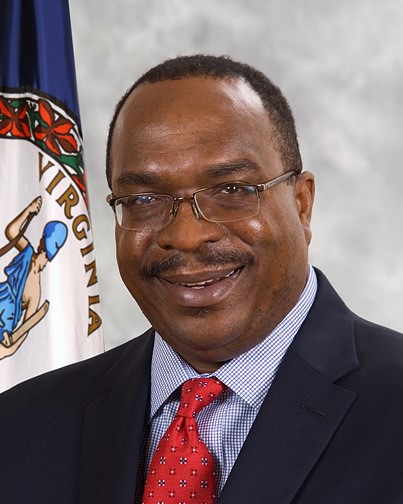
HBCU Money’s editor-in-chief, William A. Foster, IV, sits down with the VP of Finance at Virginia State University located in Petersburg, Virginia. Some of the highlights were how HBCUs can close the wealth gap between HBCU and PWI/HWCU endowments, HBCU financial transparency, and more as Mr. Davenport helps lead VSU’s financial health into the second half of the decade with a continued eye on the generations ahead.

headshot-for-kevin-davenport

Mr. Davenport, thank you for taking the time with us. Let us start with telling us a bit about yourself and how you came into your current position? I have worked in higher education finance for over 25 years. I’ve served in a leadership capacity at both public and private institutions and at institutions as large as 35,000 students and as small as 1,000 students. I have a broad finance background which includes hands-on experience with cash management, endowments, investments, budgets, financial statements, audits and financial analysis.

I have served both HBCUs and PWI/HWCUs. I have been Chief Fiscal Officer (CFO) at three HBCUs in Virginia—Virginia Union University, Virginia State University and Saint Paul’s College. I have also served as Treasurer at a PWI/HWCU in Virginia—Virginia Commonwealth University and several of its related foundations (VCU). At VCU, I managed a university working capital pool of about $350 million and oversaw the financing of over $600 million in capital projects. I also serve on the City of Richmond Retirement System Board and Advisory Committee, which oversees approximately $500 million in retirement funds.

I’m a graduate of an HBCU— Hampton University with a Bachelor of Science degree in Accounting. I am also a Certified Public Accountant and have earned an MBA from the College of William and Mary and an Ed.S from George Washington University.

Virginia State University and its foundation combined have one of the largest endowments among HBCUs. For those who are unclear about the dynamic of there being two separate endowments, can you give us a bit more detail of why they are separate? How does their separation impact each investment strategy? The university has a $46 million endowment. About $32 million (or about 70%) of the endowment is managed by the University and the remaining $14 million (or 30%) is managed by a related foundation. Like most public universities, VSU established a foundation to allow greater autonomy in managing assets like endowment funds. After the foundation was established, some donors wanted their contributions to continue to be deposited to the University. Since then, the University continues to give its donors and alumni the option of donating to the university or the foundation.

Each endowment is governed by its own investment policy, spending rate and asset allocation targets. The endowments are managed separately, but their investment philosophy and strategies are similar. Both endowments are well diversified portfolios and conservatively invested to protect against a downturn in the market.

There seems to be concern among HBCU alumni who do not think the endowments of HBCUs are transparent enough and therefore create hesitancy to give. What can be done by HBCUs to allow for their alumni base to feel like there is a clear understanding of how their donations are being invested, allocated, and reinvested? I think HBCUs must ensure the highest level of transparency and accountability to its alumni and donors who establish endowment funds. Alumni and donors should receive a report each year detailing the activity in their individual endowment funds. This report should include total dollars for contributions, earnings, distributions and fees made to and from the endowment.

Most universities charge an internal administrative fee to cover costs for administering the endowment. HBCUs need to ensure these administrative fees are fully disclosed to donors and alumni. Sufficient detail should be provided on how the fees are calculated, how the fees are collected, and what the fees are being used for. Governing bodies need to make sure they review and approve all fees periodically.

It is also a good best practice to have donors and alumni sign an endowment agreement at the time the endowment is established. This agreement should provide donors with a clear understanding of how donations are being invested, allocated and reinvested.

virginia_state_university-jpg

The endowment gap between PWI/HWCUs and HBCUs has grown from 46:1 in 1993 to 106:1 today. What do you think are some ways that gap can start to be closed, especially with HBCUs facing mounting financial pressure? Is there anything Virginia State University is doing in particular? HBCUs can provide greater emphasis on endowment growth. This is a challenge, especially as many HBCUs face more immediate and pressing needs. But administrators have to fight to make it a priority. VSU is aggressive in reaching out to our alumni and donors about the benefits of endowment giving. Our fundraisers include it in their fundraising literature and make it a priority in soliciting funds from alumni and donors.

HBCUs can also work with their governing boards to establish prudent investment and spending policies. A solid investment strategy can help HBCUs earn more on their endowments, thus grow their endowments to help close the gap.

 Over the summer, a ground swell occurred that has spurred many African Americans to move their banking relationships to African American owned banks and credit unions. Very few HBCUs have banking relationships with African American owned banks, while we know you can not speak for other HBCUs, can you explain Virginia State University’s current relationship with any African American owned banks if any? And what does it say that there is not more husbandry between HBCUs and African American owned banks? VSU does not have any formal relationships with African American owned banks or credit unions. There is a nearby credit union that bears the name “Virginia State University Credit Union”, but the entity has no legal association with the University.

In terms of investment strategy, does Virginia State University primarily internally manage its endowments; use external managers, or a mixture of both? The University engages professional investment advisors and managers to help it oversee its endowment funds. The investment advisors and managers have discretion to invest the funds according to a board-approved investment policy. The investment policy allows the endowment funds to be invested in a diversified investment pool which includes domestic and international equities, fixed income, hedge funds, real estate, and private equity.

The current macro environment in the United States of the zero interest rate policy by the Federal Reserve for the past decade has changed the way many individual and institutional investors set strategy. How do you think it has impacted smaller endowments like HBCUs versus the Big 30 college endowments? Because of the current low interest environment, institutional investors have had to go elsewhere to make money. Institutional investors at the Big 30 college endowments have increased their allocations to non-traditional and riskier asset classes such as private equities, international equities, hedge funds and real estate. Smaller endowments, like at HBCUs, have a harder time accessing these non-traditional asset classes. Further, the Big 30 endowments have been able to hire high-paid Chief Investment Officers (CIO) and specialized investment professionals to help them earn greater returns. Smaller endowments are not able to pay CIOs and their staffs. As such, the smaller endowments continue to lag the investment performance of the Big 30 endowments thus continuing to increase the performance gap.

In following up on that last point, given that 30 colleges & universities control 52% of America’s $500 billion college endowments and 100 times all HBCU endowments combined, what are your thoughts on a policy that would redistribute some of PWI/HWCUs endowments to HBCU coffers or incentivize large donors to give to smaller endowments? I like the idea of incentivizing donors to give more to smaller endowments. Perhaps, donors can receive a greater tax break when donating to smaller endowments like the ones at HBCUs.

large_08_campus

Student loan debt seems to have direct correlations to college endowments, regardless of the school’s cost. We noted in our last report that despite being cheaper, HBCU graduates are finishing with an average of $30,344 in student loan debt versus the top 50 college endowments who finish with $22,020. Coupled with African America’s wealth being sixteen times less than their counterparts this makes student loan debt a compounding issue for wealth building. Is there a more active role HBCUs can take in helping close the wealth gap in the coming decades for African American families? I think the major driver for greater student debt at HBCUs stems from family wealth. According to a recent study done by the State Council of Higher Education in Virginia, the average family income of a student at the public HBCUs in Virginia is about $30,000 per year as compared to an average of about $60,000 per year for the other public universities. In fact, the average family income for some of the largest Virginia universities was over $100,000 per year. Additionally, over 85% of VSU’s undergraduates receive need-based financial assistance which is much larger than PWI/HWCUs. HBCU students struggle to pay the costs so HBCUs must keep their cost of attendance low compared to other PWI/HWCUs. A larger endowment would certainly help HBCUs fill their student’s need and thus reduce their debt burden.

For those interested in one day becoming the head of a university endowment what advice would you give them? If you are interested in heading a university endowment, my advice is to understand that your responsibilities go much further than merely overseeing institutional investments. At a college or university, you would be required to regularly communicate to a broad range of constituents such as donors, alumni, students, faculty, governing boards and administrators.

Thank you for your time; in parting do you have anything you would like to add? No.

Abandoned By (Black) America: HBCU Endowments Less Than One Percent of American College Fortunes

A great nation cannot abandon its responsibilities. Responsibilities abandoned today return as more acute crises tomorrow. – Gerald Ford

fd52066c2d4faa21ca84c29f2cb62048

There are two houses and two families, we will call them the Smiths and Jacksons for the sake of this story, who are living next door to each other in a neighborhood. The Smith family in one household are preparing for a feast as it seems they do every night. Meanwhile, the Jackson family prepares their own feast, but just as they do every night at dinner they pack all their food up and walk next door to their neighbors home and knock on the door. The Smiths open the door as always with a smile and greet their neighbors and take the food they fixed and promptly slam the door in the Jacksons face. They add the food to their already illustrious feast without as much a second thought that they have more food than they need and that the Jacksons once again gave them all of their dinner. The Jackson family stands by an open window where they can smell the feast that they and the Smiths cooked as it sits on the Smiths’ table. Yet, they are offered nothing but the aroma.

Eventually, the Jacksons return to their home starving and as every night goes, one of the children ask the parents, “Why do we give them our food when we have a table here to eat our food on?” At which time the parents always reply, “Because our food taste better on their table,” to their children who eventually will feed their malnourished and lean bodies with the bread and water they always receive after this affair. The children confused by this statement from their parents further inquire how do they know it taste better on the Smiths table. Their parents tell them of a time when they were allowed to sit at the Smiths’ back door and have a taste of the food and it definitely tasted better. The Jackson parents insisted it had to be because of the Smiths’ beautiful table, even though the food came from their kitchen. Then the children as they always do plead with their parents to allow them to keep the dinner tomorrow so that they can grow to be big and strong and one day they will be able to build all the fine things their parents see in the Smiths’ window. However, the parents tell them that when the Smiths cut wood for their home they cut it better than they did, that when they build furniture they build it finer because they have better tools, and when they serve drinks their drinks taste better because of course, their ice is colder. So the Jacksons continue to resound to every night giving their dinner away in hopes of one day being allowed to eat their own food at another’s table. And so has been the relationship to African America and its own institutions.

Over the past 60 years, African America has, save for the black church, been on an expedited exodus from supporting, building, and controlling its own institutions for the colder ice of their neighbors in the hopes that they would one day be allowed to sit at their neighbors’ table. This despite during the post-antebellum period up until World War II when African America started, controlled, owned, and supported institutions of commerce, education, politics, health, and more all within their own municipalities. Five hundred hospitals at one point, one hundred boarding schools, thousands of businesses, and yes over one hundred what we know today as Historically Black Colleges and Universities. Now, that first seventy some years of blacksmithmanship that built these institutions after the Civil War has been replaced by a culture of abandonment over the past sixty years.

In a recent article, Forbes highlights the institutional wealth disparity that exist within United States higher education institutions. A national system that comprises approximately 3,000 colleges and universities across the country have a combined endowment value of $500 billion. Yet, at HBCUs who comprise approximately three percent of the nation’s college and universities have combined endowments of roughly $2.5 billion or 0.5 percent, while 30 colleges/universities with the largest endowments hold $260 billion of the pie or 52 percent. Yes, 30 colleges have more in endowments than 2,970 colleges and universities combined and over 100 times the amount one hundred HBCUs hold in their coffers. HBCU endowments are not even representative of their representation. Who is to blame for such an anemic number? Well, ironically if you ask many African Americans they will lay the blame at the feet of HBCUs and the alumni who attended them for not giving back as they should. The irony of course being that ninety percent of African Americans who attend college today choose to do so at non-HBCUs. At the University of Phoenix, a for-profit college, almost twenty percent of its 213,000 student body is African American. An amount equal to roughly ten percent of the entire HBCU student population. This despite the University of Phoenix’s degrees not being worth the paper they are printed on, but they are not a Black institution so therefore it must be a better education, right? Never mind the percent of African Americans who decide to attend elite PWIs and take their intellectual capital out of the African American ecosystem. We are quite literally using our intellectual capital to build others research and academic prowess and deepening the institutional gap between African America and the rest of America.

The economic cost of abandonment by African American to HBCUs is hard to put an accurate figure on because the $125 that the African American graduate in 1969 did not donate to an HBCU and a bunch of probability factors would require a doctoral thesis and years of research, but an abstract analysis is possible. To note, for every $125 in 1969 that had been invested in the stock market with traditional returns would be worth just under $23,000 today, which in a moment you will see the relevance. Currently, there are approximately 20 million Americans in college, African America comprises 3 million of that population, and 2.7 million of that 3 million attend non-HBCUs. The average annual cost of college in the United States is $22,000 annually, valuing African America’s tuition revenue at $66 billion annually, but $59.4 billion of it is in non-HBCUs. HBCUs as a whole receive only 1.5 percent of America’s total current tuition revenue pie. When it comes philanthropy, numbers are even starker. In 2015, HBCUs received only 4 of the 530 donations (0.7 percent) that were $1 million or more to colleges and universities. Those four donations totaled $7 million, while the the top four to non-HBCUs combined for $950 million. The latter being an amount equal to almost 40 percent of HBCU endowments combined. Yes, in one year, four donations to HWCU/PWIs equalled almost half of what has taken HBCUs over one hundred years to accumulate.

Philanthropy for colleges ultimately boils down to two things. Either have a very large alumni base or produce very wealth alumni who procure their money through high-paying professions or entrepreneurial pursuits. The first sometimes increases the odds of the second, but there are certainly other factors as well. However, the first is the easiest to ensure a larger endowment just based on statistics. Inside Higher Education reported, “The participation rate in 2014 was 8.3 percent, compared to 8.7 percent in 2013. At private liberal arts colleges, which as a group always have higher alumni giving rates, about 20 percent of alumni donate.” That means that overall, out of every 100 students who attend college, eight of them will be active donors. A number that swings widely depending on the engagement of the school’s development office, alumni associations, etc. Or in the current case of the estimated 300 000 students at HBCUs, only 24,000 of them are likely donors. Yet, obviously if instead of only ten percent of African American students attended HBCUs, ninety percent did, then you would have alumni donor pool of 216 000 or nine times greater.

HBCUs must go for numbers because over the past sixty years as we abandoned our institutions (except the church) our wealth also plummeted post World War II. As a result today, African American median wealth according to the Laura Chin via the U.S. Census, “In absolute terms, the median white household had $111,146 in wealth holdings in 2011, compared to $7,113 for the median black household and $8,348 for the median Latino household.” The melancholy of HBCUs primary donor pool suffers the compounding impact of being sixteen times poorer and attracting only 1 out of 10 of the population it was built to serve coupled with only eight percent of the 1 out of 10 giving back. That means in essence over the past thirty years, less than one percent of African Americans who attended college from all colleges will have donated to an HBCU. A somber reality no matter how you look at it. Especially when you are trying to maximize the dollar given to have the most impact on African America.

However, recent events have shown there might be a resurgence in the long-term outlook for HBCU endowments. African American owned banks and credit unions have seen a resurgence as millions in deposits have poured back into their coffers as African America looks to gain more control over their communities. In recent years, HBCUs like Morehouse, Claflin, and Langston University have seen record breaking numbers of freshmen classes. This will only bode well for the future of that eight percent donor pool and the probability of $1 million or more donors as African America is creating more businesses than any other group in America currently, a key to wealth creation. The past 60 years may have been the dark ages for HBCUs and their endowments, but a new golden age maybe on the horizon indeed. It maybe time to set that dinner table after all.

HBCU Medical Schools Lead Gifts Of $1 Million Or More To HBCUs in 2015

If you have something to give, give it now. – Mark Bezos

020214 hank aaron CC1

After only one donation of $1 million or more to HBCU in s 2013, in 2014 HBCUs landed an astounding nine, but the upward trend was not to continue. In 2015, HBCUs landed just four of the 530 donations that were of $1 million or more that found there way to American colleges and universities. That equates to 0.75 percent, while HBCUs constitute approximately three percent of the country’s higher education institutions. The nine donations in 2014 were a combined $20.5 million, while 2015’s foursome combined for $7 million.

Leading this year’s donors was Hammerin’ Hank Aaron with a donation of $3 million to the Morehouse School of Medicine. The baseball legend’s donation according to the press release by the school, “will be used to expand the Hugh Gloster Medical Education building and create the Billye Suber Aaron Student Pavilion.” However, the wealthiest donor among the group was billionaire Bill Gross, co-founder of the PIMCO investment firm with $1.5 trillion in assets under management, and his wife. Their donation was second among the group with a $2 million gift to Charles Drew University of Medicine & Science. HBCU medical schools are leaders within the HBCU research community constituting three of the top ten HBCU research institutions. These donations should only strengthen that resolve.

With African American owned banks seeing a huge engagement in 2016, it is possible that this may translate to institutional investments for HBCUs if the seeds of current sentiment are nurtured by leadership. This is an opportunity that HBCUs simply can not afford to miss, both financially and socially. Especially considering the higher education arms race for donors and the top four HWCU/PWI donations totaling $950 million in 2015. Building relationships with African American athletes and entertainers as donors as well as looking abroad in the African Diaspora would greatly increase the possibility of landing more of the eight and nine figure donations that are desperately needed.

The growth in the number of $1 million or more donations is a positive if it continues, but the amounts as well need to see dramatic increases as well for us to make sure our institutions are viable for generations to come.

1. Hank Aaron – $3 Million
Recipient: Morehouse School of Medicine
Source of Wealth: Transportation

2. William H. & Sue Gross – $2 Million
Recipient: Charles Drew University of Medicine & Science
Source of Wealth: Finance, Investments

3. Charles Barkley – $1 Million                                                                     Recipient: Morehouse College
Source of Wealth: Entertainment

4. Jimmie Edwards – $1 Million                                                                          Recipient: Dillard University
Source of Wealth: Chemicals

Source: The Center for Philanthropy

Nine Donations Of $1 Million Or More Find Their Way To HBCUs in 2014

Trammell_CrowPhoto

Never respect men merely for their riches, but rather for their philanthropy; we do not value the sun for its height, but for its use. – Gamaliel Bailey

There was thankfully almost no where to go but up after The Center for Philanthropy’s 2013 database reported HBCUs garnered only one $1 million or more donation out of the 559 to colleges and universities. However, with overall $1 million or more donations in 2014 to colleges and universities down 7.5 percent there was not much expectation that HBCUs would see a substantial increase from the previous year. Yet, a substantial increase there was as nine donations of $1 million or more found their way into HBCU hands out of the 517 to colleges and universities in 2014. This represents an increase from 0.2 percent to 1.7 percent of the overall donations year over year.

It is not all glitter and gold though. The gap between the top donations to HBCUs vs. HWCUs highlights both the institutional and household wealth gap that persist in this country. Combined, the nine donations totaled an impressive $20.5 million for HBCUs. Unfortunately if you take the top nine to HWCUs that number is $1.2 billion or 56 times greater. The gap between the largest donations is even bigger. Harvard University received a $350 million gift, while Paul Quinn College received a $4.4 million gift or an amount almost 80 times less. Transformative donors who can change the paradigm of an entire institution with one donation are much harder to come by for HBCUs. Transformative donations can be different amounts for different size institutions, but the definition lends itself to a minimum of $50 million and above for HBCUs. A figure that would double the bottom half of the top ten HBCU endowments and move the needle double digits on the upper half of the top ten HBCU endowments.

So what is holding back these transformative donations to HBCUs? A myriad of factors. Most transformative donors are titans of industry throughout America and the world. Their ownership in corporations and investments lends them the wealth to do such. African America’s disproportionate labor presence in the public sector where incomes are limited, lack of entrepreneurship, and lack of overall investment in our own institutions often aborts the ability for capital to circulate in African America. However, as more HBCUs are creating entrepreneurship centers on their campuses this could prove in the long-term a positive shift. In the short term, there has to be more emphasis on securing donations from the likes of African American celebrities willing to both give seven figure donations and lend their public capital to the institutions in the way of attracting more donors. That is if HBCUs can throw off their issues of being donor image conscious.

The growth in the number of $1 million or more donations is a positive if it continues, but the amounts as well need to see dramatic increases as well for us to make sure our institutions are viable for generations to come.

1. Trammell S. Crow – $4.4 Million
Recipient: Paul Quinn College
Source of Wealth: Family wealth, Real estate

2. Alfred C. Liggins – $4 Million
Recipient: Howard University
Source of Wealth: Media and entertainment

3. Ada Cecilia Collins Anderson – $3 Million                                                  Recipient: Huston-Tillotson University
Source of Wealth: Insurance, Real estate

4. Anonymous – $2.1 Million                                                                          Recipient: Virginia Union University
Source of Wealth: N/A

5. Anonymous – $2 Million                                                                             Recipient: Stillman College
Source of Wealth: N/A

6. Steve and Anne Pajcic – $2 Million                                                        Recipient: Edward Waters College University
Source of Wealth: Law

7. Nicholas Perkins – $1 Million                                                                    Recipient: Fayetteville State University
Source of Wealth: Food and beverage

8. Josh Smith – $1 Million                                                                                Recipient: Central State University
Source of Wealth: Consulting

9. William R. & Norma B. Harvey – $1 Million                                                  Recipient: Talladega College
Source of Wealth: Education, Manufacturing

Source: The Center for Philanthropy


Paving the Road to Sustainable Alumni Support for HBCUs

philanthropy-reframed

“Philanthropy without scale and sustainability is like any other bad business that will simply wither and die on the vine.” – Naveen Jain

Since 1837 historically Black colleges and universities (HBCUs) have played a vital role educating students. Prominent activists and scholars including Nikki Giovanni, Toni Morrison and Thurgood Marshall benefited from attending HBCUs with supportive environments. The emphasis on cultural pride, scholarship and political acumen transform the lives of students from underserved communities. In comparison to predominantly White institutions (PWIs), HBCUs enroll more underserved, first generation and minority students. Upon their arrival on campus students are surrounded by majestic trees, serene suburban landscapes or colorful urban enclaves. However, despite their idyllic settings HBCUs are at a crossroads. The closing of Saint Paul’s College in 2013, Morris Brown College’s bankruptcy filing in 2012, Lewis College of Business uncertain status, and nine other HBCU closings over the years highlight the fragility of HBCUs in through the years into the present. Ensuring our institutions remain viable is predicated on the financial support of alumni, administrators, faculty, stakeholders, students and trustees.

Dramatically increasing donations to HBCUs would alleviate the financial strain that has plagued prominent institutions including South Carolina State and Grambling State University. Unfortunately several factors have contributed to the financial crisis at HBCUs including: inequitable funding, shifting federal and state policies and limited alumni contributions. To the last point, HBCU Money found that only 1 out of the 559 $1 million or over donations to colleges in 2013 and 9 out of the 517 $1 million or over donations in 2014 to colleges went to HBCUs.  Although HBCU alumni are among the most dedicated graduates they are more likely to come from underserved communities and leave with more loan debt in comparison to students from larger PWIs. The stark difference between HBCUs and PWIs regarding alumni contributions and endowments is problematic. For example, Harvard University’s estimated $30 billion endowment far exceeds Howard University’s estimated $586 million endowment. Pundits would argue that comparing Harvard and Howard is unfair; however, the funding gap reflects the uphill battle HBCUs have encountered since their inception.

While HBCUs face challenges overcoming fiscal crisis, the Black community has always worked together collectively to avert financial disaster. For instance, the efforts of alumni and students at South Carolina State highlight the importance of exerting political pressure to ensure our institutions remain open – political capital that is a lot easier to build and exert if the community wielded more economic power. Despite the trials and tribulations HBCUs are allying with supporters to challenge the non-HBCU owned media’s deficit orientated focus. Increasingly administrators and alumni are taking steps to change the narrative regarding HBCUs focusing on their history fighting for Civil Rights. The renewed emphasis on social justice and growth of social media could become a rallying point for stakeholders. Recently, HBCU alumni have raised money to increase institutional aid for students from underserved communities.

The I Love Howard campaign is an example how HBCU graduates are using social media and grassroots efforts to galvanize graduates. Led by Howard University alumnae Michelle Jayne, Jessica Neal and Rochee Jeffrey the campaign is making strides engaging alumni and supporters to protect Howard’s legacy. Ensuring post-secondary institutions including Howard have networks that are fighting for increased funding could turn the tide for HBCUs. For instance, fundraisers, online telethons, social media campaigns, after work mixers and private/public partnerships are practical options for alumni.

Encouraging students to identify conventional or unconventional methods to increase donations should begin freshman year. Campaigns that urge students to give as little as $1 highlight the important role donations play in sustaining critical programs. Without support from alumni HBCUs are susceptible to cuts in federal and state funding that hamper efforts to recruit talented students. Schools including Claflin University recognize increasing donations is linked to the institutions future success.

Claflin, 2015’s HBCU of the Year, received funding from the Kresge Foundation and the United Negro College Fund to strengthen fundraising efforts. Claflin designed a campaign encouraging alumni, faculty, parents and students to donate. In 2013, the alumni giving rate increased nearly 10% from 43% to 52%. This year the university announced they raised nearly $90 million for phase one of the capital campaign. The success of Claflin underscores the commitment from supporters. HBCUs with a low alumni giving rate should use Claflin as a template to increase overall support. Strengthening HBCUs through campaigns can fund endowments, repair and renovate dilapidated facilities and recruit students.

Ensuring HBCUs continue their mission educating African American students is linked to financial support from alumni and students. Although HBCUs enroll more students from underserved communities in comparison to PWIs they are equipped to encourage alumni to provide critical funding. For example, Black greek letter organizations, concerts, football classics, homecoming and regional alumni events present opportunities to reach out to newly minted graduates. In addition, developing partnerships with African American (and African if they are really ambitious) corporations and philanthropic organizations are important for institutions dependent on external funding. The future for HBCUs is bright, but increased donations will ensure they develop a new cadre of entrepreneurs,  Nobel Laureates and Pulitzer Prize winners.