Category Archives: Lists

HBCU Money™ Business Book Feature – The Curse Of Cash

51bsc1wx1l

From the New York Times bestselling author of This Time Is Different, “a fascinating and important book” (Ben Bernanke) about phasing out most paper money to fight crime and tax evasion–and to battle financial crises by tapping the power of negative interest rates

The world is drowning in cash–and it’s making us poorer and less safe. In The Curse of Cash, Kenneth Rogoff, one of the world’s leading economists, makes a persuasive and fascinating case for an idea that until recently would have seemed outlandish: getting rid of most paper money.

Even as people in advanced economies are using less paper money, there is more cash in circulation–a record $1.4 trillion in U.S. dollars alone, or $4,200 for every American, mostly in $100 bills. And the United States is hardly exceptional. So what is all that cash being used for? The answer is simple: a large part is feeding tax evasion, corruption, terrorism, the drug trade, human trafficking, and the rest of a massive global underground economy.

As Rogoff shows, paper money can also cripple monetary policy. In the aftermath of the recent financial crisis, central banks have been unable to stimulate growth and inflation by cutting interest rates significantly below zero for fear that it would drive investors to abandon treasury bills and stockpile cash. This constraint has paralyzed monetary policy in virtually every advanced economy, and is likely to be a recurring problem in the future.

The Curse of Cash offers a plan for phasing out most paper money–while leaving small-denomination bills and coins in circulation indefinitely–and addresses the issues the transition will pose, ranging from fears about privacy and price stability to the need to provide subsidized debit cards for the poor.

While phasing out the bulk of paper money will hardly solve the world’s problems, it would be a significant step toward addressing a surprising number of very big ones. Provocative, engaging, and backed by compelling original arguments and evidence, The Curse of Cash is certain to spark widespread debate.

HBCU Money™ Business Book Feature – The Next Africa: An Emerging Continent Becomes a Global Powerhouse

9781250063717

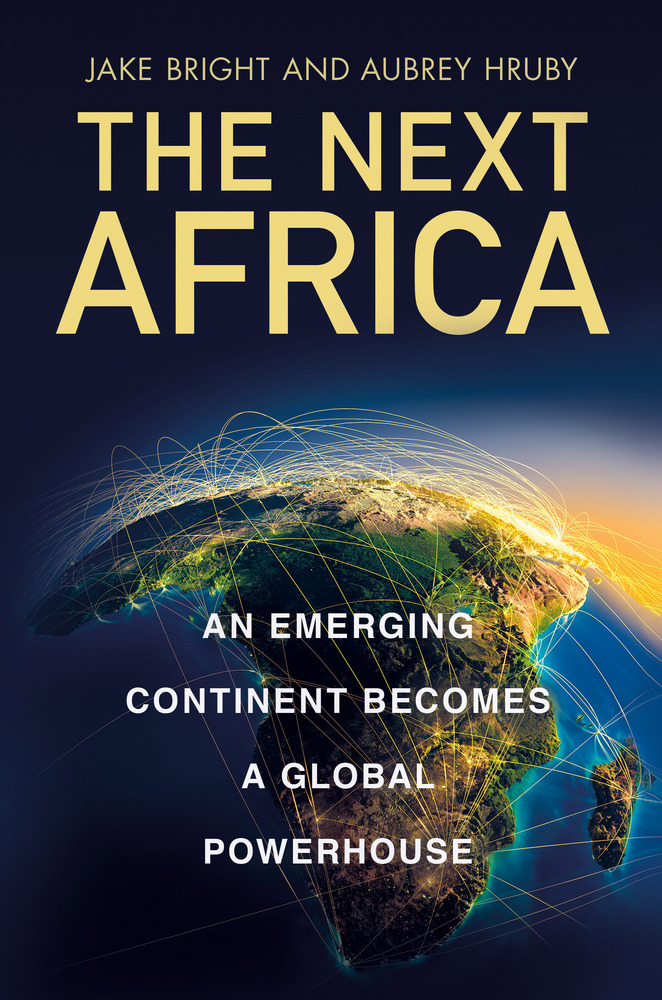
The Next Africa, an Axiom Best Business Book Award winner, will change the way people think about the continent. The old narrative of an Africa disconnected from the global economy, depicted by conflict or corruption, and heavily dependent on outside donors is fading. A wave of transformation driven by business, modernization, and a new cadre of remarkably talented Africans is thrusting the continent from the world’s margins to the global mainstream.

In the coming decades the magnitude of Africa’s markets and rising influence of its people will intersect with other key trends to shape a new era, one in which Africa’s progress finally overshadows its challenges, transforming an emerging continent into a global powerhouse. The Next Africa captures this story.

Authors Jake Bright and Aubrey Hruby pair their collective decades of Africa experience with several years of direct research and interviews. Packed with profiles; personal stories, research and analysis, The Next Africa is a paradigm-shifting guide to the events, trends, and people reshaping Africa’s relationship to the world.

Bright and Hruby detail the cross-cutting trends prompting Silicon Valley venture capital funds and firms like GE, IBM, and Proctor & Gamble to make major investments in African economies, while describing how Africans are stimulating Milan runways, Hollywood studios, and London pop charts.

The Next Africa introduces readers to the continent’s burgeoning technology movement, rising entrepreneurs, groundbreaking philanthropists, and cultural innovators making an impact in music, fashion, and film. Bright and Hruby also connect Africa’s transformation to its contemporary immigrant diaspora, illustrating how this increasingly affluent group will serve as the thread that pulls the continent’s success together.

Finally, The Next Africa suggests a fresh framework for global citizens, public policy-makers, and CEOs to approach Africa. It will no longer be “The Hopeless Continent”, nor will it become an overnight utopia. Bright and Hruby offer a more nuanced, net-sum, and data-rich approach to analyzing an increasingly complex continent, reconciling its continued challenges with rapid progress.

The Next Africa describes a future of a more globally-connected Africa where its leaders and citizens wield significant economic, cultural, and political power–a future in which Americans will be more likely to own African stocks, work for companies doing business in Africa, buy African hits from iTunes, see Nigerian actors win Oscars, and learn new African names connected to tech moguls and billionaires.

HBCU Money™ Presents: The George W. Carver 2014’s Top 20 HBCU Research Institutions

gwcarverlabjpg-3550550efe9ad5fa

In an ode to the greatest HBCU scientist, we have now named our top HBCU research institution list for George Washington Carver.

HBCUs appear to have taken another step back in the research field according to the latest National Science Foundation data. In 2013, research expenditures for the top 20 HBCUs combined for $451.4 million, while 2014 combines for $445.4 million. This represents a 1.34 percent drop year over year and 2.13 percent drop from two years ago.

  • The top ranked HBCU is Florida A&M University at 199 and the twentieth ranked Alcorn State University is listed at 314 in America’s college research landscape.
  • MEAC leads the way with eight schools versus the SWAC with four.
  • Division II/III schools also comprise two schools on the list.
  • Overall, the 1890 HBCUs are fifty percent of the list highlighting agriculture’s importance role in HBCU research.
  1. Florida A&M University – $41.37 million
  2. Morehouse School of Medicine – $41.86 million
  3. Howard University – $40.77 million
  4. North Carolina A&T State University – $35.05 million
  5. Alabama A&M University – $32.91 million
  6. Jackson State University – $$26.61 million
  7. Tuskegee University – $24.95 million
  8. Charles Drew University of Medicine – $20.69 million
  9. University of Virgin Islands – $20.37 million
  10. Tennessee State University – $20.07 million
  11. Meharry Medical College – $19.00 million
  12. Delaware State University – $17.68 million
  13. Morgan State University – $15.72 million
  14. Fayetteville State University – $14.73 million
  15. South Carolina State University – $13.15 million
  16. Prairie View A&M University – $12.29 million
  17. North Carolina Central University – $11.54 million
  18. Hampton University – $11.17 million
  19. Southern University and A&M College – $10.42 million
  20. Alcorn State University – $10.06 million

TOP 20 COMBINED TOTAL: $445.4 million ($451.4 million)

Additional Notes

The HWCU-HBCU gap for research among top 20 research institutions is 52:1, an increase from 2013’s 50:1.

Top 20 HWCUs Combined: $23.2 billion ($22.5 billion)

Top 20 Average HWCU – $1.1 billion vs. Top 20 Average HBCU – $22.3 million

Top 20 Median HWCUs – $948 million vs. Top 20 Median HBCU – $19.5 million

Source: National Science Foundation

HBCU Money™ Presents: 2016’s HBCU Alumni NFL Players’ & Salaries

hi-res-d3b54517b062b2a49cd8e84fbfbb896e_crop_north

In our 4th annual installment of tracking the highest paid HBCU alumni who are NFL players, Tennessee State University, Dominique Rodgers-Cromartie claims the top spot. This is the first year that the Indianapolis Colts have not had the highest paid HBCU player.

HBCU Money™ FACTS:

  • HBCU NFL players combine for $56.4 million, an almost 10 percent increase from 2015, when HBCU NFL players earned $51.44 million.
  • South Carolina State University leads the way with 5 NFL players.
  • 15 HBCUs are represented in the NFL. Up from 14 in 2015.
  • Average salary for HBCU NFL players is $2.08 million, an increase from $2 million in 2015.
  • Median salary for HBCU NFL players is $965 000, down 15 percent from 2015.

D. Rodgers-Cromartie – Tennessee State University

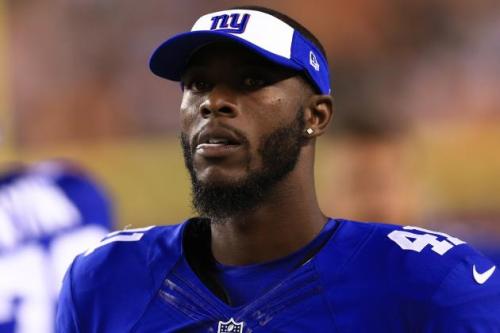
Cornerback / New York Giants / $8.0 million

William Hayes – Winston-Salem State University

Defensive End / St. Louis Rams / $7.0 million

Antoine Bethea – Howard University

Safety / San Francisco 49ers /$6.02 million

Marquette King – Fort Valley State University

Punter / Oakland Raiders / $5.05 million

Robert Mathis – Alabama A&M University

Outside Linebacker / Indianapolis Colts / $5.0 million

Chris Baker – Hampton University

Defensive End / Washington Redskins / $4.27 million

Kendall Langford – Hampton University

Defensive End / Indianapolis Colts / $4.25 million

Terron Armstead – University of Arkansas-Pine Bluff

Left Tackle / New Orleans Saints / $3.07 million

Larry Donnell – Grambling State University

Tight End / New York Giants / $1.67 million

Rafael Bush – South Carolina State University

Free Safety / Detroit Lions / $1.26 million

Anthony Levine – Tennessee State University

Free Safety / Baltimore Ravens / $1.2 million

Eric Weems – Bethune-Cookman University

Wide Receiver / Atlanta Falcons/ $1.1 million

Don Carey – Norfolk State University

Strong Safety / Detroit Lions / $1.0 million

Justin Durant – Hampton University

Inside Linebacker / Dallas Cowboys / $965,000

Greg Toler – Saint Paul’s College

Cornerback / Washington Redskins / $840,000

Ryan Davis – Bethune-Cookman University

Defensive End / Dallas Cowboys / $675,000

Rodney Gunter – Delaware State University

Defensive End / Arizona Cardinals / $652,479

Javon Hargrave – South Carolina State University

Defensive Tackle / Pittsburgh Steelers / $623,314

Demetrius Rhaney – Tennessee State University

Center / St. Louis Rams / $611,474

Isaiah Crowell – Alabama State University

Running Back / Cleveland Browns / $603,334

Ryan Smith – North Carolina Central University

Cornerback / Tampa Bay Buccaneers / $598,040

Joe Thomas – South Carolina State University

Outside Linebacker / Green Bay Packers / $525,000

Temarrick Hemingway – South Carolina State University

Tight End / St. Louis Rams / $489,896

Antonio Hamilton – South Carolina State University

Safety / Oakland Raiders / $450,000

Anthony Lanier – Alabama A&M University

Defensive End /Washington Redskins / $450,000

Chester Rogers – Grambling State University

Wide Receiver / Indianapolis Colts / $450,000

Zamir Charles – Stillman College

Defensive Tackle / San Diego Chargers / $333,000

The 2014-2015 SWAC/MEAC Athletic Financial Review

meac_swac-400x310

Two years later, students continue to bear a heavy burden for the pursuit of athletics. Our report is a follow up to the 2014 article where the SWAC and MEAC, without student subsidies were losing $130 million annually in athletics in 2013. It is unfortunate to report that the situation has not improved and has in fact gotten worse. HBCUs, especially the SWAC and MEAC, do not have the luxury of boosters like oil tycoon T. Boone Pickens, Nike’s owner Phil Knight, or even Under Armour’s owner Kevin Plank who give millions annually. In the case of Phil Knight, he and his wife have plowed over $300 million into the University of Oregon’s athletic program to bring it to national prominence. An amount that would cover the student fee contributions by SWAC and MEAC students – twice.

Each year the SWAC and MEAC meet for the SWAC/MEAC Challenge sponsored by Disney and this year will meet in the second annual Celebration Bowl, a post-season game to determine the HBCU “national” champion. Sports are an integral part of the college experience this can not be argued, but at what cost? HBCU students, despite HBCUs in general being cheaper than their PWI counterparts, graduate with higher student debt loads. This often delays and/or prevents all together them from becoming future donors back to their schools or boosters to athletics. The lack of African American wealth, both in households and institutions, no doubt plays a huge role. However, the question remains are we sacrificing too much today and forever burdening ourselves tomorrow?

REVENUES (in millions)

Total: $189.5 (up 7.1% from 2013)

Median: $10.2 (up 29.1% from 2013)

Average: $9.5  (up 18.8% from 2013)

Highest revenue: Norfolk State University  $16.1 million

Lowest revenue: Coppin State University  $3.4 million

EXPENSES (in millions)

Total: $194.1 (up 8.6% from 2013)

Median: $10.1 (up 27.8% from 2013)

Average: $9.7 (up 19.8% from 2013)

Highest expenses: Norfolk State University  $16.1 million

Lowest expenses: Coppin State University  $3.9 million

SUBSIDY

Total: $142.5 (up 12.3% from 2013)

Median: $7.9 (up 43.6% from 2013)

Average: $7.1 (up 22.4% from 2013)

Highest subsidy: Norfolk State University $13.5 million

Lowest subsidy: Mississippi Valley State University $2.3 million

PROFIT/LOSS (W/ SUBSIDY)

Total: $-4.6 million (down 142% from 2013)

Median: $-2 000 (in 2013 median was zero)

Average: $-230 071 (down 188% from 2013)

Highest profit/loss: Alabama A&M University  $215 207

Lowest profit/loss: Grambling State University  $-2 044 323

PROFIT/LOSS (W/O SUBSIDY)

Total: $-147.1 million (down 14.4% from 2013)

Median: $-7.8 million (down 34.5% from 2013)

Average: $-7.4 million (down 27.6% from 2013)

CONCLUSION: The SWAC and MEAC have a challenge, but its not on the fields or hardwoods. It is, however, on the income statements and balance sheets of their athletic departments. HBCU b-schools need to be desperately tasked with the assignment of scribing a new business model for HBCU athletics that takes into account alumni wealth (or lack thereof), minuscule payouts by corporations (Celebration Bowl provides roughly $87 000 to each school), and other factors unique to HBCU sports if they are going to lessen the burden on their students who are currently providing 75 percent of the revenues. At current student loan interest rates and traditional investment return rates, the debt burden for just these athletic fees is $1.1 billion over the next 30 years and an investment loss of $4.5 billion over the same period, respectively. These have long-term consequences to families, HBCU endowments, HBCU athletics, ultimately could become cancerous to the very survival of the institutions themselves.

Editor’s Note: Howard and Hampton are excluded in this report because they are private institutions and their athletic finances were not included in this report or the 2013 report. Chicago State, which was included in the 2013 report was excluded in this report.