Analysis: European Americans unemployment rate pushes lower to 3.6 percent, its lowest rate in the past five months. Asian Americans decreased 30 basis points (lowest among all groups) and Latino Americans decreased 20 basis points from November, respectively. African Americans unemployment rate decreased 30 basis points from November. Over the past five months this is African America’s median unemployment rate.
AFRICAN AMERICAN UNEMPLOYMENT RATE BY GENDER & AGE
AFRICAN AMERICAN MEN: 5.6%
AFRICAN AMERICAN WOMEN: 5.4%
AFRICAN AMERICAN TEENAGERS: 20.2%
AFRICAN AMERICAN PARTICIPATION BY GENDER & AGE
AFRICAN AMERICAN MEN: 68.2%
AFRICAN AMERICAN WOMEN: 62.4%
AFRICAN AMERICAN TEENAGERS: 29.5%
Analysis: African American Men saw a decrease in their unemployment rate by 40 basis points and African American Women decreased by 50 basis points. African American Men decreased their participation rate in December by 50 basis points, a fourth month decline. African American Women increased their participation rate in December by 10 basis points. African American Teenagers unemployment rate increased by 210 basis points. African American Teenagers saw their participation rate increase by 170 basis points in December, their highest participation rate in the past five months after their lowest in five months last month.
African American Men-Women Job Gap: African American Women currently have 757,000 more jobs than African American Men in December. This is an increase from 640,000 in November.
CONCLUSION: The overall economy added 256,000 jobs in December while African America added 84,000 jobs. From CNN, “The selloff comes as the economy added 256,000 jobs in December, far outpacing expectations of around 153,000 jobs. While strong job growth signals a healthy economy, it raises the question of how soon the central bank needs to cut interest rates again. Additionally, President-elect Donald Trump’s proposed tariff policies, including reports of declaring a national economic emergency to impose widespread tariffs, has spooked investors, sending bond yields surging.”
Play is often talked about as if it were a relief from serious learning. But for children play is serious learning. Play is really the work of childhood. – Fred Rogers
By William A. Foster, IV
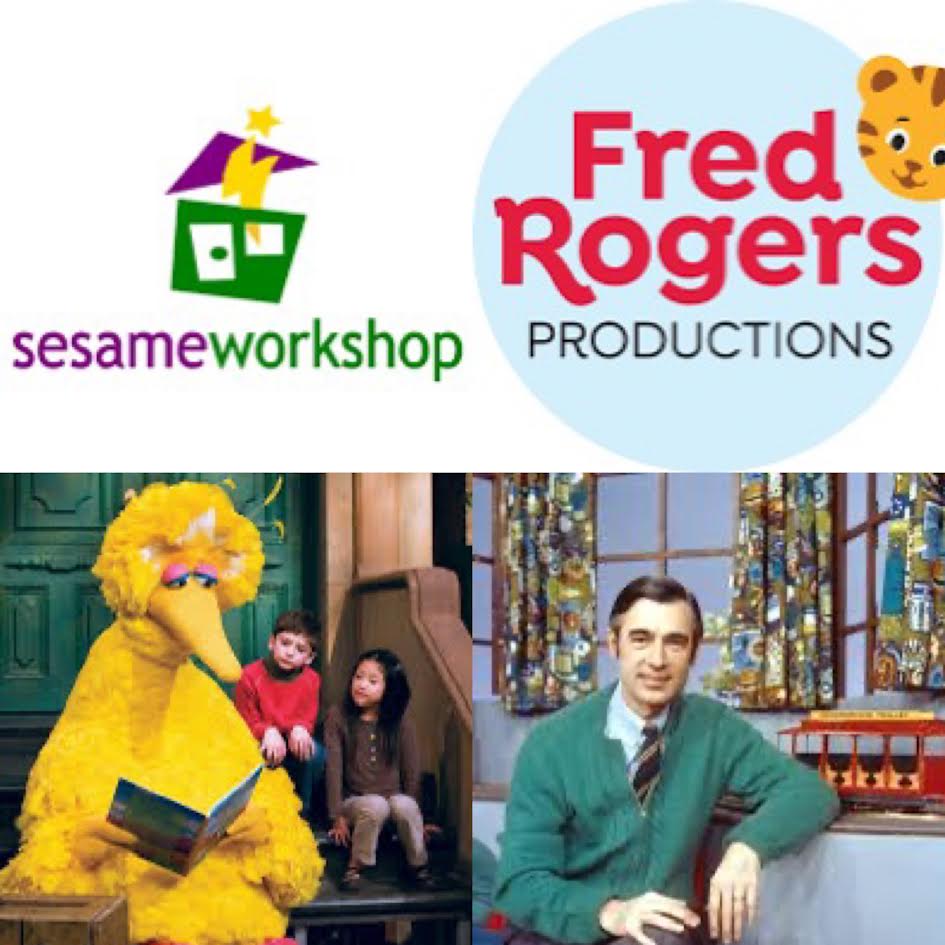
The future of children’s media is a complicated world thanks to adults. Two pillar institutions long known for making the world a better place could both use massive infusions of capital and an invigoration of dynamism. It is quite possible they could find it in each other. At least, that is what we think here at HBCU Money. We explored just what the merger of two titans of children’s media production could look like and produce. As a child who was deeply rooted in the lessons and teachings of both hope they consider the possibility, because a world without even one of them is a place that would lose an immense compass of values, direction, and foundation that so many children need today.
At the heart of this merger lies a shared philosophy: the belief that children learn best in a nurturing, inclusive environment. Fred Rogers Productions, famous for “Mister Rogers’ Neighborhood,” has long emphasized emotional development, kindness, and community. Sesame Workshop, the creator of the iconic “Sesame Street,” has pioneered educational content that addresses complex topics like diversity, empathy, and resilience.
Both organizations have demonstrated a commitment to providing quality programming that resonates with children and parents alike. By joining forces, they aim to amplify their impact, reaching a broader audience with even more diverse and enriching content.
Financial Insights
Analyzing their financials from Form 990 provides insight into the scale of both organizations:
Fred Rogers Productions reported total revenue of approximately $12 million in its latest fiscal year, with a significant portion dedicated to content production and educational outreach programs. Its expenses were primarily focused on programming costs, which accounted for around 70% of total expenditures.
Sesame Workshop, on the other hand, reported revenues of about $40 million. This organization has a diverse funding model, including grants, sponsorships, and merchandising. Their expenditures reflect a robust investment in research and development, educational initiatives, and global outreach, with roughly 60% of their budget allocated to program development and production.
The merger will likely consolidate their financial strengths, allowing for more efficient resource allocation and broader fundraising opportunities. The combined financial stability can enhance their ability to produce innovative content and expand outreach efforts.
Expanding Educational Horizons
The merger is expected to leverage the strengths of both entities. Fred Rogers Productions brings its expertise in creating heartfelt, character-driven narratives that engage young viewers. In contrast, Sesame Workshop contributes its extensive research in early childhood education and its vast library of characters and stories that tackle real-world issues.
Together, they plan to develop new series that combine the emotional depth of Fred Rogers’ storytelling with the innovative educational strategies of “Sesame Street.” This collaboration promises to explore new themes, such as mental health, inclusivity, and environmental stewardship, all while maintaining the engaging format that children love.
A New Era of Collaboration
One of the most exciting aspects of the merger is the potential for collaboration between beloved characters from both organizations. Imagine a special where Mister Rogers interacts with Elmo and Big Bird, exploring the importance of kindness and friendship. Such crossovers could create unique opportunities for storytelling, allowing children to learn from multiple perspectives. Initiatives would not only attract existing fans but also engage new audiences, providing rich, multi-faceted learning experiences.
Commitment to Accessibility
Both Fred Rogers Productions and Sesame Workshop have a history of making their content accessible to all children, regardless of background or ability. The merger is set to enhance these efforts, with plans to expand reach into underserved communities and integrate diverse voices in content creation. By prioritizing accessibility, the organizations aim to ensure that all children have the opportunity to engage with their programming.
Looking Ahead
The merger between Fred Rogers Productions and Sesame Workshop represents a pivotal moment in children’s media. With a combined revenue of over $52 million and a shared commitment to enriching the lives of young children, they are poised to set new standards in educational programming. As they embark on this new chapter, their collaboration promises to foster an inclusive environment where every child can learn, grow, and thrive.
This strategic alliance not only honors the legacies of Fred Rogers and the creators of “Sesame Street” but also ensures their continued relevance in an ever-evolving media landscape. As they move forward, the focus will remain on nurturing the next generation with compassion, creativity, and a sense of community.
In the meantime, give a donation to FRP and SW by clicking on the links below.
“Philanthropy is an exercise in power, by definition by the wealthy.” – Rob Reich
After an abysmal 2022, the HBCU Million Dollar Gifts list in 2023 bounced back? Well, sort of. In 2022 there were only three donations and now in 2023 there are five. Mathematically one would argue for that being a 66 percent increase, but then one realizes there were twice as many $100 million donations given or pledged to PWIs as there were $1 million donations given or pledged to HBCUs it throws water colder than the artic onto the conversation. Furthermore, one of those donations was pledged in 2023 by one Sean Combs who is now arguably in so much legal trouble that the pledge will likely never turn into a gift for its recipient, Jackson State University. To make the donation by Mr. Combs even more frustrating, it was the only one among the list by an African American further reinforcing that African American donors who can give million dollar donations are still not interested in supporting HBCUs with any fever.
The donations that did arrive went to the usual suspects of Howard (2), Spelman, and Tuskegee. Unless Spelman has a massive donation up its sleeve (and it is certainly possible), then Howard is going to coast to becoming the first HBCU to have a $1 billion endowment. To put in perspective how large the acute the donor crisis is between PWI and HBCU donors requires just taking a look at the largest 2023 donation by a donor. James Simons and Marilyn Simons gave a gift of $500 million to SUNY Stony Brook. A donation equal to over 50 percent of the Howard University’s endowment and over 90 percent of Spelman College’s endowment. Meanwhile, African America’s wealthy are virtually silent year after year.
There continues to be a massive disconnect of African America pouring resources into its own institutions. This is as true of the lack of African American donors to HBCUs as the embarrassment that virtually no HBCUs bank with an African American owned bank or even two premier HBCUs in Hampton University and North Carolina A&T University leaving an HBCU conference for a PWI one. The island mentality of everyone and every institution looking out for themselves while claiming they are for the community has reached a nauseating level year after year and should make anyone wonder if there is any reason to have hope. None of this fairs well for smaller HBCUs with the looming enrollment cliff crisis facing all American colleges and universities and for which HBCUs will certainly bear the brunt as with almost every crisis that America has.
Overall donations to all colleges and universities were down a second straight year in 2023 dropping from 275 to 259 Million Dollar Gifts.
$1 Million Plus Donations To All Colleges: 259
$100 Million Plus Donations To All Colleges: 10
$1 Million Plus Donations Value To All Colleges: $6.1 Billion
$1 Million Plus Median Donation To All Colleges: $10.0 Million
$1 Million Plus Average Donation To All Colleges: $23.6 Million
$1 Million Plus Donations To HBCUs: 5
$100 Million Plus Donations To HBCUs: 0
$1 Million Plus Donations Value To HBCUs: $45.6 Million
$1 Million Plus Median Donation To HBCUs: $10.0 Million
$1 Million Plus Average Donation To HBCUs: $9.3 Million
HBCU Percentage of Donations To All Colleges: 1.9%
HBCU Percentage of Donation Value To All Colleges: 0.8%
1. Carrie Walton Penner and Gregory Penner (pictured) – $20.0 million Recipient: Howard University Source of Wealth: Professional Sports, Family Wealth, Finance
2. MacKenzie Scott (pictured) – $12.0 million Recipient: Howard University Source of Wealth: Technology, Retail
3. John Brown and Rosemary Brown (pictured) – $10.0 million Recipient: Spelman College Source of Wealth: Health Products
4.Stephen Feinberg – $3.6 million Recipient: Tuskegee University Source of Wealth: Finance
5.Sean Combs – $1.0 million (Pledge) Recipient: Jackson State University Source of Wealth: Entertainment
“I have found that among its other benefits, giving liberates the soul of the giver.” – Dr. Maya Angelou.
If you’ve been considering joining or starting an philanthropy club with your family, friends, or fellow HBCU alumni but are unsure if it’s the right move, you’ve come to the right place. The answer is it is absolutely the right move.
A few facts regarding African American organizations and nonprofits:
43.5% of Black-led nonprofits operate without any paid, full-time employees, and 45.7% have no paid, part-time employees.
Philanthropy clubs can be a powerful tool for leveraging African American philanthropy from like-minded individuals. They not only enhance your financial literacy and knowledge about African American and African Diaspora organizations but also empower you to make informed philanthropic decisions. By pooling your resources with your family, you can collectively grow your impact African American nonprofits finances and outreach, fostering a sense of confidence and control over institutional development and empowerment.
Keep reading as we discuss why you might want to start an investment club and the steps you’ll need to take.
Why You’ll Want to Start a Philanthropy Club?
One of the biggest reasons to start an philanthropy club is that they want to learn and share ideas with people who share their values. It makes sense to start a philanthropy club with family, friends, or HBCU alumni because, most of the time, your values are well-aligned. Yes, you may have different opinions, but your values are generally on the same page.
Philanthropy clubs can be a great way to learn about African American causes, organizations, and nonprofits. Because some members may be more seasoned donors, givers, or active in the nonprofit space, they can share their knowledge on certain topics.
Philanthropy clubs are a great way to magnify small donations by each member into a large donation by a focused collective. the increase the impact associated with investing. However, with the rise in so many commission-free brokers, the fees for making a high volume of trades aren’t as big of a deal.
How to Start an Investment Club
If you’re ready to get your philanthropy club with family, friends, or HBCU alumni off the ground, you’ll want to follow these steps to ensure success:
1. Find and Organize Members
Finding members for a philanthropy club is generally one of the most challenging steps. However, it’s a little easier if you’re looking to start one with your family, friends, or HBCU alumni. Either way, ensuring the fit is correct before jumping in is crucial.
A solid philanthropy club should have at least 5 people but no more than 15 or 20. You must have enough ideas, but too many can make things more difficult. Each person will be required to identify a cause, organization, or nonprofit. Then, each month, a different member will present their cause, organization, or nonprofit to the group.
Before extending an invitation to different anyone, ask yourself a few questions. These will help you see if it will be a good fit.
Do you trust the person you’re thinking of inviting to be consistent and involved?
Will they bring research and ideas to the meetings?
Are they organized?
Are they going to pay the monthly donation on time?
2. Determine Your Goals
Once you have your members set, you must agree on your goals. Most clubs’ goals will be making donations and learning from others. But how are you going to get to that point?
It’s important to take some time to understand each member’s philanthropic approach. Are they willing to take on more risk or prefer to be more conservative? Do you want to stick with only well known organizations, or are members interested in startup organizations as well? Do they only want to give to domestic organizations? Or are they willing to give to African Diaspora nonprofits working in Haiti, Jamaica, UK, or Africa?
Developing a plan of attack and ensuring that each member is on the same page will be vital to success.
3. Decide How You Want To Give
Deciding on if you want to setup a legal structure for your philanthropy club is important because potentially over time, your club can setup an endowment that invest donors money and that can grow into a significant and sustainable amount of money. Having the necessary legal protections is going to be important. If your philanthropy club decides to actually invest its donations into investments that will grow over time so that the club has larger and more sustainable sums to give is important to think about.
The other option is to simply give everyone the option to donate on their own once the cause, organization, or nonprofit is decided upon. This route relies on the honor system or some type of peer accountability towards giving.
Each philanthropy club must do what works best for them and also realize that the club is allowed to evolve over time.
The Bottom Line
Philanthropy clubs are a great way to pool your donor funds and learn from other members. Just be sure that you join a group where everyone is willing to listen to ideas and pull their own weight within the club.
Analysis: European Americans unemployment rate has been at 3.8 percent for four of the past five months. Asian Americans decreased 10 basis points and Latino Americans increased 20 basis points from October, respectively. African Americans unemployment rate increased 70 basis points from October. This is the highest African American unemployment rate in the past five months.
AFRICAN AMERICAN UNEMPLOYMENT RATE BY GENDER & AGE
AFRICAN AMERICAN MEN: 6.0%
AFRICAN AMERICAN WOMEN: 6.0%
AFRICAN AMERICAN TEENAGERS: 18.1%
AFRICAN AMERICAN PARTICIPATION BY GENDER & AGE
AFRICAN AMERICAN MEN: 68.7%
AFRICAN AMERICAN WOMEN: 62.3%
AFRICAN AMERICAN TEENAGERS: 27.8%
Analysis: African American Men saw an increase in their unemployment rate by 30 basis points and African American Women increased by 110 basis points. African American Men decreased their participation rate in November by 60 basis points. African American Women decreased in their participation rate in November by 30 basis points. African American Teenagers unemployment rate increased by 90 basis points. African American Teenagers saw their participation rate decrease by 120 basis points in November, they are now at their second lowest participation rate in the past five months.
African American Men-Women Job Gap: African American Women currently have 640,000 more jobs than African American Men in November. This is an decrease from 693,000 in October.
CONCLUSION: The overall economy added 220,000 jobs in November while African America lost 276,000 jobs. From Yahoo! Finance, “Hurricanes and a strike by Boeing (BA) workers weighed heavily on the October report, which was revised to show there were 36,000 jobs created last month. The unemployment rate stood at 4.1% in October. Job growth for September was also revised higher on Friday, with revisions now indicating the US economy added 56,000 more jobs than initially reported over those two months.”




 HBCU Money