Life is a hard battle anyway. If we laugh and sing a little as we fight the good fight of freedom, it makes it all go easier. I will not allow my life’s light to be determined by the darkness around me. – Sojourner Truth
HBCU Money is officially a teenager. Usually the teenage years are a rough and tumultuous time and it is hard to see that being any differently for us. The current social and political climates that we are about to experience over the next four years will test our patience and fortitude. It is vital that HBCU Money stays a voice of focus, strategy, and guidance in the African American institutional space as it relates to economics, finance, and investment.
It is inherent that we continue to strengthen and build our African American institutional ecosystem. It is also vital that that ecosystem build bridges of connection with the African Diaspora institutional ecosystem. We must throw off the shackles of isolationism and island mentality that plagues us so deeply. Before we make decisions we must ask ourselves is there an African American institution that exist that serves that need or want. If it is not there, then we must discuss building it. Where is the HBCU that has an African American MBA that teaches us how to build and run businesses from our interest? Where is the HBCU that has a law school focused on African American agriculture and real estate? Where is the African American bank focused on export-import for African American businesses? Are we using our talents to enhance ourselves individually or are we using our talents to enhance our institutions that enhance the collective? These are just a few of the vital things we are missing in our financial infrastructure.
There is not much that needs to be said, but plenty that needs to be done.
“On March 23, 2020, the S&P 500 fell 2.9%. In all, the index dropped nearly 34% in about a month, wiping out three years’ worth of gains for the market. It all led to a 76.1% surge for the S&P 500 and a shocking return to record heights. This run looks to be one of the, if not the, best 365-day stretches for the S&P 500 since before World War II. Based on month-end figures, the last time the S&P 500 rose this much in a 12-month stretch was in 1936, according to Howard Silverblatt, senior index analyst at S&P Dow Jones Indices.” – CBS News
Ariel Capital released their 2020 Black Investor Survey and the results show that there is reason to be pessimistic today, but potentially optimistic for tomorrow. The survey focuses on middle class African American and European American households earning over $50K in 2019. Some key financial points outside of this survey that should be taken into context though are poverty for African American stands at 21.2 percent versus 9.0 percent for European Americans. This high rate of poverty for African Americans means that middle class African Americans, as noted in the survey, are more likely to have high levels of assistance to family and friends which provides a damper on higher investing capabilities. These high levels of poverty are highly reflective of the median wealth gap between African and European Americas, $24,100 versus $188,200, respectively. African America continues to suffer from weak institution building and therefore the ability for its economic and financial ecosystem to strengthen continues to be suffocated. Firms like Ariel Capital and other African American financial institutions need more investment and support from other African American institutions, like HBCUs, in order to scale and create more employment, wealth, and economic opportunities beyond the grassroots level.
KEY HIGHLIGHTS:
The deep-rooted gap in stock market participation between the groups persists, with 55% of Black Americans and 71% of white Americans reporting stock market investments.
63% of Black Americans under the age of 40 now participate in the stock market, equal to their white counterparts.
Ownership rates of 401(k) plans are now similar between Black and white Americans (53% vs. 55%).
White 401(k) plan participants put 26% more per month toward their retirement accounts than Black 401(k) plan participants ($291 vs. $231).
Black Americans are less likely than white Americans to own almost every kind of financial vehicle, with the exception of whole life insurance, which is favored in the Black community.
They are also less likely than white Americans to have written wills, financial plans, or retirement plans.
For Black Americans, disparities grow every month; while they save $393 per month, white Americans are saving 76% more ($693 per month).
Black Americans are also far less likely to have inherited (23% vs. 51%) or expect to inherit wealth (15% vs. 35%).
Black Americans are less likely to work with financial advisors (21% vs. 45% of whites).
Student loan delay or deferral was reported as being three times more common among Black Americans (16%) than whites (5%).
More than twice as many Black 401(k) participants (12% vs. 5%) borrowed money from their retirement accounts.
Almost twice as many Black Americans (18% vs. 10%) dipped into an emergency fund.
And 9% of Black Americans (vs. 4% of white Americans) say they asked their family or friends for financial support in 2020, while 18% of Black Americans and 13% of white Americans acknowledged giving financial support to family and friends last year.
Among Black Americans, 10% discussed the stock market with their families growing up, while 37% discuss the stock market with their families now (compared to 23% and 36%, respectively, for white Americans).
The chart above tracks the participation in the stock market through individual stocks, mutual funds, or ETFS. For African and European Americans, 2020 is an all-time low of participation since tracking began in January 1998. However, the gap of participation has closed from 24 percentage points in 1998 to 16 percentage points in 2020. Primarily due to the all-time low of European America’s participation falling by 10 percentage points and African America’s falling by only 2 percentage points. The closest the gap has been was in 2001 and 2002 when it was 10 percentage points and in 2002 saw African America break through 70 percentage points the only time in the survey’s history when we reached 74 percent.
HBCUs can play a significant role in closing the investment gap by introducing students to HBCU alumni who have gone on to become investors and financial advisors – thus circulating both intellectual and financial capital within the HBCU ecosystem. Even more so, they can assist in ensuring students set up investment accounts like a Roth IRA during their freshmen year and throughout matriculation. The earlier students are engaged in investing the more compounding can work for them over their lifetime which in turn makes for wealthier alumni, larger future donations, stronger African American communities, and more value proposition for HBCUs to promote within the African American community.
“I still believe that if your aim is to change the world, journalism is a more immediate short-term weapon.” – Tom Stoppard
It is hard to believe that it has been nine years since HBCU Money was founded. It began with a conversation with Jarrett Carter, Sr., founder of HBCU Digest, about the lack of economics, finance, and investment information from an African American and African Diaspora perspective. He simply said, why do you not start one then. Challenge accepted and a challenge it has been. HBCU Alumni Owned media across the spectrum continues to fight to be a real and present voice in the ever changing landscape of media. Both trying to push the old guard forward and try to keep up with the competition and outsiders that seeks to control and own our narrative. They often seeing the value of our content, but with wretched intentions. This has and continues to be one of our great fights.
To be a voice of a community is an immense responsibility. Holding decisions makers accountable, helping inform the community in an unbiased manner, and yes, at times shaping the conversation. Sometimes it has been the duty of HBCU Alumni Owned media to present thoughts and visions that are ambitious and bold into the conversation about what is possible. It is a gentle balance that must be minded.
Going forward I will continue to help build HBCU Money, HBCU Politics, and our other media assets to be a formidable force for empowerment for the HBCU community and Diaspora. This I believe to be part of my life’s work. I am thankful for those who continue to fight along side me and for us.
“I am not afraid of tomorrow, for I have seen yesterday and I love today. ” — William Allen Whit
To start a financial journalism company is no light-hearted task. Yet, one year ago today after much preparation that is exactly what was done by AK, Inc, the investment and operations firm that wholly-owns HBCU Money™. It has been an amazing year full of accomplishments, long nights, and revelations. HBCU Money’s biggest success over the past year I believe was expanding our coverage into the country of Ghana. We are and will continue to be focused on financial journalism from an African Diaspora point of view. It is the culture and purpose for which we were founded. Many say that there is a distrust from the African American and Diaspora community towards the world of economics, finance, and investment. I believe there is just lack of information from a point of view that says not only do we operate in the financial world but there is much to be done, to be built, and it is vital to our Diaspora’s infrastructure that we do so. There is much more to be done at HBCU Money™ and I expect year two will be an even bigger year than our first as we find our proper footing and place within the world of HBCU owned media. Again, I want to say thank you to all who have supported us because there are too many to name. Check out some of the highlights from our first 365 days in business.
If every person who reached the top of Mt. Everest viewed this site, it would have taken 13 years to get that many views.
There were visitors from 75 countries in all! Most visitors came from The United States. Canada & The United Kingdom were not far behind.
It has been a honor to serve as Editor-In-Chief of HBCU Money™ this past year and look forward continuing to do so. There is no time to rest. Enjoy the moment. Now let us get back to work because as our motto states “Our Money Matters”.
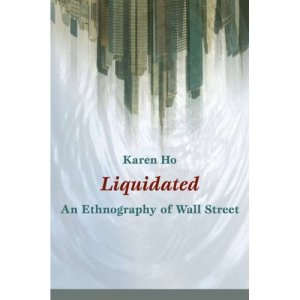
Financial collapses—whether of the junk bond market, the Internet bubble, or the highly leveraged housing market—are often explained as the inevitable result of market cycles: What goes up must come down. In Liquidated, Karen Ho punctures the aura of the abstract, all-powerful market to show how financial markets, and particularly booms and busts, are constructed. Through an in-depth investigation into the everyday experiences and ideologies of Wall Street investment bankers, Ho describes how a financially dominant but highly unstable market system is understood, justified, and produced through the restructuring of corporations and the larger economy.
Ho, who worked at an investment bank herself, argues that bankers’ approaches to financial markets and corporate America are inseparable from the structures and strategies of their workplaces. Her ethnographic analysis of those workplaces is filled with the voices of stressed first-year associates, overworked and alienated analysts, undergraduates eager to be hired, and seasoned managing directors. Recruited from elite universities as “the best and the brightest,” investment bankers are socialized into a world of high risk and high reward. They are paid handsomely, with the understanding that they may be let go at any time. Their workplace culture and networks of privilege create the perception that job insecurity builds character, and employee liquidity results in smart, efficient business. Based on this culture of liquidity and compensation practices tied to profligate deal-making, Wall Street investment bankers reshape corporate America in their own image. Their mission is the creation of shareholder value, but Ho demonstrates that their practices and assumptions often produce crises instead. By connecting the values and actions of investment bankers to the construction of markets and the restructuring of U.S. corporations, Liquidated reveals the particular culture of Wall Street often obscured by triumphalist readings of capitalist globalization.





 HBCU Money