It could all be so simple But you‘d rather make it hard, loving you is like a battle and we both end up with scars. – Lauryn Hill
Something that should be so simple, HBCUs and other African American organizations, businesses, and other African American institutions have made not just a battle but sometimes it feels like a war. That battle, getting African American institutions to bank with the African American banking system with banks and/or credit unions owned and controlled by – African Americans. It is economic development 101 for other groups, but for African America it is seemingly Calculus III. Based on HBCU Money’s internal research on the matter only two, a PBI and HBCU, are believed to bank with a Black-owned bank. That means that just like the over 90 percent of African Americans who go to college not choosing HBCUs, well over 90 percent of HBCUs do not bank with a Black-owned bank. And in both cases, neither (AAOBs or HBCUs) are able to fulfill their potential as they would with the patronage and investment of those they were built to serve.
We asked the AI app Nova for their take on why HBCUs do not bank with African American owned banks and here was its answer: “There are a few reasons why many HBCUs may not bank with Black-owned banks. One reason is that larger, more established banks often offer more resources and services that HBCUs may need, such as investment services or customized financial solutions. Additionally, some HBCUs may feel more comfortable with larger, more established banks that have a long history of working with educational institutions. However, there has been a growing movement encouraging HBCUs to support Black-owned banks and businesses as a way to promote economic empowerment within the Black community. Many Black-owned banks have a strong commitment to supporting HBCUs, and may offer specialized products and services tailored to their needs.”
Despite AI being quite learned in its contribution to this. There are as they say – levels to this. Not least among them is the plight of public HBCUs lacking autonomy. It would take a massive student and alumni uprising in order to get a public HBCUs moved to an African American owned bank. Ultimately, public HBCUs are controlled by a board or if they are in a system, then a system’s board. In either case, the state’s flagship PWIs carrying the most financial weight and tend to be determinate of how all public universities in the state will behave and most certainly likely where they will bank. And while it is complicated to wrangle the institutional banking of public HBCUs into African American owned banks, their proxy organizations like alumni associations and foundations that serve them should not have anywhere near the issue of banking Black. Then there are the private HBCUs who have far more autonomy with their banking decisions and yet it seems potentially only one private HBCU actually banks Black. It is almost befuddling in the case of the Alabama and Georgia HBCUs not to bank Black. They both have two African American Owned Banks in headquartered in their states. Morehouse specifically just a few years ago had one of their alumni bring back African American owned banking to Oklahoma when alumnus Kevin Perry purchased controlling interest in First Security Bank & Trust. In fact, 14 of the 15 states and territories where there are African American owned banks have HBCUs/PBIs in them with Wisconsin being the lone exception.
African America’s flagship HBCU, Howard University, two years ago entered into a partnership with PNC Bank to create the PNC National Center for Entrepreneurship housed at Howard University. PNC’s Foundation providing Howard University with a rather obtuse $3.4 million a year grant for five years. PNC Bank is based in Pittsburgh,PA, its executive team in 2022 commanded $81 million in compensation, and the bank has assets over $550 billion – an amount that is over 100 times the size of all 16 remaining African American Owned Banks’ assets combined. We think Marcus Garvey just rolled over in his grave. Meanwhile, right in Howard University’s backyard is Industrial Bank, an African American Owned Bank with $723 million in assets, meaning PNC Bank has over 760 times the amount of assets of Industrial. There is in fact only one African American Owned Bank that has over $1 billion in assets, Liberty Bank & Trust in Louisiana.
That HBCU presidents and AAOB CEOs do not have closer relationships simply speaks to the island mentality that African American institutions as a whole have. Although our community loves to parrot the harsh reality of an African American dollar that does not circulate in our community’s even 6 hours while “the average lifespan of the dollar is approximately 28 days in Asian communities, 19 days in Jewish communities, 17 days in white communities”, according to a piece by the FAMUAN (see how we are circulating HBCU media capital). This has done nothing to make HBCU administrators understand that the circulation of the African American institutional dollar is far more impactful than the African American consumer collar. Despite as recently as 2017, there were four African American Owned Banks with HBCU alumni as CEOs. It is also not just on HBCUs, but AAOBs should be doing a better job of heavily pursuing those HBCUs that do have the autonomy to decide where they bank and forging deep relationships with them at multiple levels.
By forging that relationship HBCUs and AAOBs can multiply the probability of opportunities and profitability. That way when an HBCU alum creates the next Google, SpaceX, FedEx, or other Fortune 500 company, then they will already know the importance of banking with an AAOB and hiring HBCU alumni. It will be understood because the intentionality of our ecosystem’s success will be modeled and molded and as a result our community is empowered with success a rule and not the outlier it operates in now as so many of us continue to try and build a nation as an island instead of forging together.
“Every year, our white intruders become more greedy, exacting, oppressive, and overbearing. Every year, contentions spring up between them and our people, and when blood is shed, we have to make atonement, whether right or wrong, at the cost of the lives of our greatest chiefs and the yielding up of large tracts of our lands.” – Tecumseh
There are two families in the same neighborhood. The Johnsons and the Smiths. They both have the intention of building magnificent homes for their families. Homes they intend to pass down generation after generation. The Smiths have the Johnsons work for them and build their home, hold them hostage in fact on their land while they do so, and after their home is finally finished and pristine allow them to leave and go off and build their own – at least that is what the Johnsons think. As the Johnsons work diligently to build their home, they often awake many mornings to see their work burned to the ground, members of their family kidnapped in the middle of the night never to be seen again, and yet they persist in building their home. They often end up having to buy low quality materials from the Smiths at arguably predatory prices and even after purchasing these materials may awaken to see those same materials stolen or damaged, and yet they persist in building their home. Sometimes they catch the Smiths in the act of harm, but more times than not it is as if they are ghosts in the night. To make matters even more complicated, sometimes the Smiths will invite the Johnsons over for days at a time and allow them to sleep in their attic. The Johnsons often naively believing that the Smiths are wanting to commune with them often failing to see that every moment they spend entertaining and staying at the Smiths is a lost day they could be building their home. And while the Smiths enjoy being entertained by the Johnsons and having them sleep in their attic they are well aware only one of them has a home for their family. A place that is theirs. This reality has given the Smiths control of the neighborhood at every social, economic, and political turn. The Johnsons know that without their home being finished they will never be able to have a place to call home, but fewer and fewer of the family wants to continue building the home. Instead, they find themselves more and more settling for sleeping in the Smiths attic, cooking their food, and entertaining them and while they seem “free” to go and come as they wish, somehow they are right back where they started and their entire ability to exist is dependent on the Smiths.
The greatest magicians in history know that the key to any successful magic trick is the sleight of hand. To have one’s audience focused on what they believe is happening while actually something out of their focus is instead happening. Harvard University is the nation’s largest non-system endowment at approximately $50 billion. It is an amount that is well over 15 times the size of ALL HBCU endowments combined. To put in perspective just how insulting the $100 million endowment Harvard created for itself is, if it were an HBCU endowment, then it would rank number eight among the 2022 HBCU Money Top 10 HBCU Endowment list. It could easily double the size of all HBCU endowments with roughly 5 percent of its endowment. To add to the harshness of that reality, the gap between the top ten PWI endowments and top ten HBCU endowments has skyrocketed over the past the past decade from $103 to $1 in 2013 to a staggering $128 to $1 in 2022, there is absolutely no movement to atone for what slavery, Jim Crow, and segregation did to HBCUs and African American institutions. Simply put, write the check – but we know they will not.
For all of the frustration African America has with European American conservatives across the South, their European American liberal counterparts offer little more than lip service to right history’s wrongs, especially on the institutional level. And even when they “attempt” to do so they always do it in a way that leaves that them just as institutionally empowered and us just as institutionally dependent. A recent example of this is European American owned banks like J.P. Morgan and others “investing” in African American owned banks in the wake of the George Floyd protests. These banks did not simply write a repertory check to African American owned banks and step back so the African American owned banks had the autonomy to build with it as they saw fit. No, they “invested” and ensured that they receive the public relations bump for doing so while also ensuring that they are able to profit from anything they put into African American owned banks. Never is it, we know we owe you for the damages done and that we have disproportionate wealth and resources because of the history of slavery and Jim Crow. It is instead, a flashpoint like George Floyd’s death that European American institutions maneuver to look more inclusive by letting a few of us in their house to sleep in the attic, cook their food, wash their clothes, entertain them, all the while knowing that we still will have no home.
Harvard could have easily paid five to ten HBCUs between $10-20 million each to conduct the same research. Both accomplishing its goal of studying its ties and actually helping the financial coffers of HBCUs. This would have given a precedent for other PWIs who could then do the same with the same result. Assuming there are other PWIs that want to broach that subject of their own history. Harvard could have also picked up the mantle and took the vanguard on an effort to have itself and the rest of the top 25 largest endowments in the country redistribute $6 billion into HBCUs with those PWIs paying proportional to the size of their endowment. America’s largest twenty five endowments combine for $454.6 billion which works out to $151 to $1 for all HBCU endowments combined. A $6 billion infusion from those twenty five endowments would equate only 1.3 percent of their total. A percentage that is still less than the representation of HBCUs (3 percent) of the U.S. higher education institutions.
Instead, Harvard pats itself on the back with an accounting trick and says to the world and primarily to African America that it is serious about what who knows. This initiative got an immense social bump within African America when the now former president of Prairie View A&M University, Dr. Ruth Simmons, in one of her last events on the campus hosted the outgoing president of Harvard University and creator of the slavery initative, Dr. Lawrence Bacow. The Pan-African historian Dr. John Henrik Clarke would say we (African American institutions and leadership) are doing ceremony without substance. Harvard acknowledging or not acknowledging their ties to slavery does nothing for the social, economic, or political capital of HBCUs and African American institutions. Yet, we give them space in our spaces and credit for something that we already knew – that PWIs have exorbitant resources pools in large part because African America was choked for centuries from being able to build themselves into competitive institutions – and that is as true today in 2023 as it was in 1823 and 1923.
The whole of African America’s education problem does not solely lie with HBCUs, but starts from early childhood through graduate school. An African American child can not go from birth through graduate school in the African American educational pipeline. Other communities most certainly can and do. We have yet to see the profound problem with our educational dependency and as such have done nothing to formulate a strategy let alone act on one. We see Harvard and its peers lure us into a false sense of individual inclusion while continuing to starve our institutions. It is one of the greatest long games to ensure that a group of people have no institutional representation of their own nor control of that which is fed into their minds. Harvard University should pay if they truly believe in righting history’s wrongs and we would owe them no thank you or gratitude for doing so. Ultimately and without waver we must not be distracted by their shiny illusion of inclusion, but remember that is our duty and responsibility to continue to empower and build upon that which our foreparents started and ensure that our people have a home.
I believe your reality is what you make it, what you choose to see, and what you choose to allow yourself to do. There are possibilities all around you – magic all around you – no matter what situation you’re in. – Keke Palmer
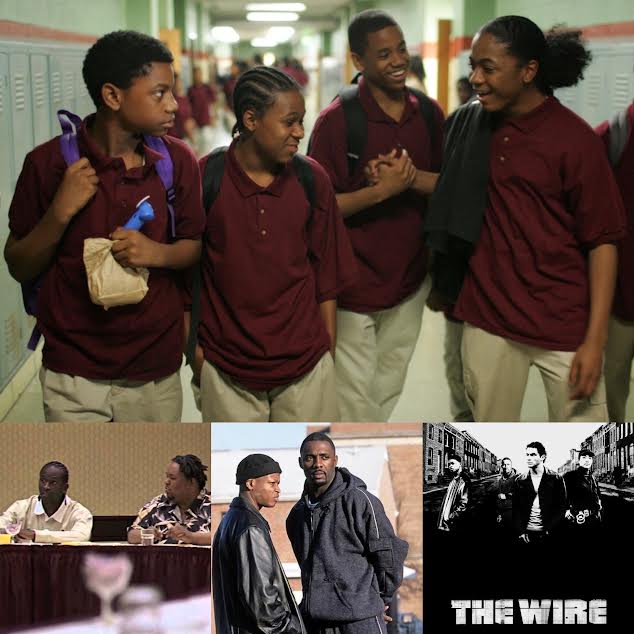
HBCU leadership. Who is protecting African America’s corners and towers? The corners representing the social, economic, and political capital that leads to the empowerment of a people while the towers represent the physical communities African America exist within. In the HBCU world of leadership there are many presidents and administrations that reflect in the behavior of The Wire. From those who want to form the New Day Co-Op so that HBCUs are stronger together with less friction and creating more opportunities to those who want nothing more than to wear the proverbial crown and are willing to destroy the community to do so. There is also the underlying reality that The Wire portrays brilliant minds, strategic thinkers, and ambition in African America that often gets wasted in a game that never creates institutional empowerment for African Americans. But what if those talents were redirected? If they were used to do just that, build the institutional empowerment of HBCUs and thereby strong African American institutional power. Based on their talents and characters what role would each of them play and why.
President: Slim Charles
In The Game: The Pawn who became a King/Queen. Slim Charles was the consummate soldier first serving the Barksdale Organization, then the lieutenant for Proposition Joe. He is the only one who truly sees Marlo as the threat that he is showing a keen sense of foresight. A sense of loyalty and code matched only by Omar Little, best exhibited when he kills Cheese to avenge the death of Proposition Joe.
HBCU Translation: Slim Charles is chosen to be an HBCU president because of his keen strategy abilities, intelligence, foresight, adaptability, and willingness to make tough decisions. His sincere desire to ensure what is best for the organization is at the foundation of his decision making versus his own desires makes him beloved and respected by all who serve under his leadership.
Provost: Omar Little
In The Game: The Robinhood of The Wire whose main occupation is robbing the drug kingpins. There are two moments when Omar’s acute intellect is highlighted. He is set to testify against Bird and there is an officer who is trying to complete a crossword puzzle about the God of War. Omar ultimately solves the puzzle for him recalling his early school days. He also best Levy, the white lawyer who serves seemingly as the lawyer for every drug kingpin in The Wire, who is representing the character Bird on a murder charge. In the exchange, Omar states simply that, “I got the gun, you got the briefcase. It’s all in the game though, right?” Omar squashes Levy’s notion that he (Levy) is absolved of his profiting off of the drug trade in Baltimore just because he is not in the streets. That they are both are profiting off the drug trade, as it just happens that Levy’s white privilege allowed him to attend good schools, live in a safe community, and eventually become a lawyer while Omar having the same mental capacity (if not more) was brought up in a toxic environment that often laid brilliance to waste.
HBCU Translation: As provost, Omar Little would help shape the learning environment and academics of an HBCU in ensuring that those who matriculated through the institution would leave no stone unturned to reach their full potential. He would oversee research, teaching, and service with vigorous passion. Provost Little would also use the institution’s strength to increase the strength of the African American PreK-12 pipeline that feeds into the HBCU.
Associate Provost: Brianna Barksdale
In The Game: She is the sister of Avon Barksdale and mother of D’Angelo Barksdale. While not seemingly playing a direct role in the Barksdale organization, it is always clear that she has the ear of Avon Barksdale and often is seen providing him with valuable advisement. After her son is murdered in jail and made to look like a suicide she continues to probe his death as the circumstances surrounding his death do not seem to quite add up.
HBCU Translation: While Omar is keen on the rigors of academic development for the students, Brianna sees to the nourishment and growth of their personal development. Ensuring that students develop the soft skills and maturation necessary to excel about matriculation.
Chief Financial Officer: Stringer Bell
In The Game: Was there anyone more focused on building the wealth of Barksdale and Bell than Stringer? While everyone was just relying on the economics of the corner, Stringer was taking economics classes at the local community college and engaging in entrepreneurship and real estate development. He ultimately believed that what was in the best financial interest of B&B was to move from retail to wholesale in Baltimore’s drug game. Stringer also understood that they were in a unique situation to be the “bank” of all the heroin that came into the city which would allow them to become impervious to law enforcement and therefore eliminating the risk to their lives or imprisonment. His desire to engage Clay Davis, albeit naively, showed that he understood that there was bigger money to be made. One could argue that had Stringer had his way, Baltimore ultimately would have been redeveloped by his desire for more.
HBCU Translation: With Stringer Bell as the CFO and head of the endowment, an HBCU would be ensured of a healthy financial future both today and for generations to come. Investment decisions would not be stuck in the past, but would constantly be forward looking. It can be argued that one of the major issues for HBCUs is their inability to be financially creative and benefit from new investments or even be financially aggressive with their endowments. If Stringer Bell is at the helm of the purse, rest assured his eyes would be on his HBCU competing with the Harvard endowment and nothing short of that would be acceptable.
General Counsel: Chris Partlow & Snoop
In The Game: The GOATS of drug land assassinations. Marlo Stanfield’s rise to the top simply does not happen without these two protecting his organization and its interest. Chris serving as the number two in the organization was even quite good at calming (as best one could be) Marlo’s hot temper. They were professionals, not just killers. The prophetic, “Get there early” was the mantra by which they operated their craft. You simply did not get the drop on these two and once they set their sites on you the next time anyone would see you would be on a t-shirt.
HBCU Translation: It may seem strange at first that two enforcers would be serving as your legal counsel, but a good legal counsel protects and enforces an organization’s interest. These two will see that there will be no frivalous lawsuits against the school, nor bad contracts entered into by Stringer, and may often go on the legal offensive as Slim Charles sees fit in the best interest of the institution. They will provide the hard power to Government Relations soft power diplomacy.
Government Relations: Clay Davis and Maurice Levy
In The Game: Clay Davis arguably was the government and Levy understood the inner political workings of the governmental offices as well as anyone. It was Clay Davis who bamboozled Stringer Bell out of six figures of money and it was Levy who told him how Davis did it. Levy was also exceptional at getting intelligence and his clients often were always a few steps ahead of the government’s war on drugs efforts. Both were “veterans” of the machine and understood all too well that the true power was not in the streets, but in offices where decisions were being made by those who knew the language of diplomacy, lobby, and influence.
HBCU Translation: When it comes to local, state, and federal funding and policies impacting their institution nobody knows more than these two. They not only know what is happening before it is happening, but are also part of shaping what is going to happen. Part of their strategy involves the shaping of former alumni into future politicians who will be beholden to the school and its interest above all.
Vice-President of Research: LesterFreamon
In The Game: The unsung genius of The Wire. Lester was thought to be wise and intelligent police officer, but his work on helping crack Marlo’s organization code ultimately shows his true brilliance.
HBCU Translation: Building your HBCUs research structure needs the mind of someone who will spend countless hours doing so and that person is Lester Freamon. He integrates research throughout the entire institution from the groundskeepers to science labs. Ultimately, he and Stringer Bell work closely in helping the HBCU commercialize and profit from much of their groundbreaking research bringing in billions of dollars to the HBCU’s coffers for the creation of state-of-the-art labs and research facilities.
Professor of Aquaculture: Wee-Bey Brice
In The Game: Arguably one of the coldest killers in The Wire, Wee-Bey has a soft spot for fish. When he has to go “away” for a bit of time, he entrust D’Angelo Barksdale to look after them. Albeit, D’Angelo thought he was actually about to kill him.
HBCU Translation: On the school’s farm, Professor Brice leads extensive research on aquaculture, which is the breeding, raising, and harvesting fish, shellfish, and aquatic plants. A few of his students go onto form aquaculture startups, which find early investors from the school’s endowment, while others make their way into the USDA’s most prominent positions of leadership over the years.
Professor of War Gaming and Game Theory: Marlo Stanfield
In The Game: Marlo is the head of the Stanfield organization and ultimately the kingpin of Baltimore’s drug trade. He is ruthless and in many ways lacking almost any emotion along the way. He understands the moves necessary to wear the crown as it is called among Baltimore’s drug dealing community. The shrewdness and calculated moves to eventually get a line on Prop Joe’s connect and then eliminate him insuring he controlled the city’s supply would have found respect by even those at the Pentagon.
HBCU Translation: War gaming and game theory are not typically found at HBCUs, but this is a fictional HBCU and we believe that far more African Americans needs to learn the art of corporate and military strategy, both of which these fields cover. Understanding your own position, your opponents’ position, and the moves that will ultimately make you the victor are vital both individually and institutionally as our students graduate and go on to run African American institutions of their own. There is nobody better suited to teach them than Prof. Stanfield.
Dean of the Law School: Bunk Moreland
In The Game: Detective Moreland is a cigar smoking cop who grew up in the very neighborhood he now tries to solves murders in. His relationship, especially to Omar whom he was a few years ahead of seems to offer him a unique place in The Wire’s two worlds.
HBCU Translation: Dean Moreland may seem like an odd choice at first given that he not a lawyer, but as mentioned – he was from the community and that carries a special kind of weight to it. He still believes in the community and the people in it. At one point even chiding Omar on a park bench about how when they were younger the hardheads would not let him hang around so he would avoid trouble and stay focused on school and now the likes of Omar and other gangsters no longer uphold that level of honor. While he may not be your traditional law school dean, he is exactly what an HBCU law school needs. To realize that those African American lawyers are going to be more than just lawyers, they are going to be soldiers for their community on the legal battlefield.
Chair of the History Department: Proposition Joe
In The Game: Prop Joe was the wise elder statesmen gangster. He prided himself on always finding what we believed were win-win situations. But his true joy was knowing the history of the community.
HBCU Translation: Not only does he lead the history department, but he ensures that no student regardless of major leaves the institutions without a reverence for those that came before them. He teachers students, but also staff and faculty as well about the importance of ensuring students know the history of anything they are learning. You may see him leading a conversation on the African American history of math or nursing on any afternoon. He believes the cultural assets of the HBCU are vital to its success.
Director of Development: Malik “Poot” Carr
In The Game: There are few characters in The Wire who lived to see the END. Surviving in this context meaning both being alive and not in jail. Poot starts as a low-level drug dealer working in the Pit. Eventually rising to Bodie’s lieutenant as they formed their own crew. He has seen it all, been part of it all, and seemingly knows everyone.
HBCU Translation: The head of development’s job is to bring in the money from alumni and corporate sponsors and that is done through the building of relationships. Poot’s existence as both an alumni of the streets and then moving into corporate life at Foot Locker give him the relationships and skills to interact with both alumni and corporate to fill those coffers. He can tell the stories that alumni love to hear about the good old days and why their donations will help with the future.
Director of Academic Counseling: Howard “Bunny” Colvin
In The Game: Colvin is a cop for most of the series but eventually goes onto work with youth hoping to help turn their personal and academic careers around. His signature moment is visiting Wee-Bey in jail and asking him to “let go” of his son Namond and give him a chance to be successful at something else other than a gangster. That he has real promise in another world and no chance in his current one.
HBCU Translation: There is no doubt that with the proper resources he would assure that students were getting the academic and personal development necessary to thrive both while matriculating and thereafter.
Director of Alumni Relations: Preston “Bodie” Broadus
In The Game: Bodie is what one would call an independent contractor selling the dope of whomever has the most power. He prefers the Barksdale organization, but eventually falls under the thumb indirectly of Stanfield who begins to control the supply. Arguably one of the show’s favorite characters, everyone sees his potential beyond the street life and fighter attitude – arguably everyone except him. Easily could be so much more, but is committed to the life of the streets.
HBCU Translation: The HBCU alumnus who credits his HBCU for everything in his life that has been good. He was a diamond in the rough that was given the space to grow, mature, and find himself. Forever grateful to the institution, he decides to come back after working for a shipping and logistics company owned by a fellow HBCU graduate to head up the institution’s alumni relations. His ability to generate alumni fever is unmatched because of his deep desire and love for the institution.
Chief of Police: Brother Mouzone
In The Game: A legendary hitman was Brother Mouzone. A hired gun eventually for the Barksdale organization with deep connections to New York. He is able to stem the tide of market share loss for the Barksdale organization as the Stanfield organization and others encroach on their territory. His ability to dissect situations intellectually and keep a level head at all times makes him revered in the streets.
HBCU Translation: What is an HBCU Chief of Police’s job? Is it just to be another police force? No, HBCU police chiefs carry a special role of protecting a Black space and ensuring its safety in a world that constantly has them under attack. Chief Mouzone would most likely have intelligence units operating at all times gathering intel on any potential threat to students or the institution. If necessary, he will even take offensive action with the permission of leadership should it call for it. The institution and the area around it would become a sanctum of safety.
Athletic Director: Avon Barksdale
In The Game: The head of the Barksdale organization. Avon is well respected in the streets (and in jail). It is clear that Avon’s youth was spent in sports and athletics. Cutty eludes to a time when Avon was a golden gloves champion, but Avon explains his career was cut short due to a physical limitation. Avon invests $15,000 into Cutty’s boxing vision and directs him to take care of the little ones.
HBCU Translation: Avon truly understands the power of sports in the community. He possesses a certain charisma that people are drawn to which will make his ability to build corporate relationships and bring in quality coaches. Never losing the bigger picture, he realizes that the athletic department is just a small piece of a wholistic institution. As quick as anyone to not allow the fanaticism to rule. He keeps a heavy hand on graduation rates, discipline, and ensuring that the department serves as true ambassadors for the institution’s image.
Men’s Head Coach: Dennis “Cutty” Wise
In The Game: Once a legendary enforcer, Cutty gets out of prison and for a period of time goes back to the streets only to realize his heart is no longer in it. He wants to work with youth sports and help mold and shape young boys and men before they see death or prison.
HBCU Translation: Coach Wise does not just care about wins and losses, in fact they are acutely secondary. His most proud accomplishment is his athletes graduation rates. He prides himself on his athletes strong discipline, high character, and achievement in the classroom.
Women’s Head Coach: Shakima “Kim” Greggs
In The Game: A detective who is one of the strong voices and characters in the show as the police force tries to bring down the city’s drug and violence problem. Able to hold her own in any situation. While being a secondary character in many respects, in a show with few women leads, Detective Greggs always shines and is a force to be reckoned with when shown.
HBCU Translation: Coach Greggs is a no nonsense coach who demands her players push themselves beyond their limits. They are required to sit in the front of class, volunteer in the community, and be disciplined. She coaches to win and dominate.
Head of Facilities & Groundskeeping: Reginald “Bubbles” Cousins
In The Game: Bubbles is often described as intelligent and caring person within the community and ultimately one of its many victims of the heroin trade. A heroin addict himself, Bubbles has a knack for being on the “scene” at opportune times. This allowed him to be one of the police more reliable sources of information throughout the series.
HBCU Translation: As head of facilities and groundskeeping, he is one of many redemption stories among HBCU staff and one of its unsung heroes. He is the type to make sure a hungry kid gets fed or lets a promising student into a building to work on a project after hours. These stories and many like it are what makeup the foundational fabric of HBCUs, their students, faculty, and staff having an important role in the success of the institution. Bubbles prides himself on taking care of the buildings and the grounds as part of giving and creating the type of environment that students and faculty can find peace and thrive in.
SGA President: Namond Brice
In The Game: A charismatic kid who was never really built for the street life, but is bullied into it by his mother. Eventually saved by Bunny Colvin who sees his potential to be more and allowed to leave the street life by his father’s Wee Bey’s blessing who overrides his mother’s sentiment who believes the only life for her family is the street life.
HBCU Translation: Namond has an oratory gift and is extremely well-liked and respected student at his HBCU. He becomes SGA president during his matriculation and is a student-leader and ambassador for the institution.
Valedictorian / President of the Philosophy Club: MichaelLee
In The Game: The next generation of brilliance in The Wire. There is no one who questioned the game and its rules more than Michael. He is often chastised by his handlers for not just doing what he was told. Michael has serious problems with the way life and death is decided in the community, but is always intelligent enough to be one step ahead of those who would suck him and throw him away just as easily. He is often seen as a reluctant leader until the end where many argue he takes over as the new “Omar” in the community.
HBCU Translation: Michael leads mostly by example and takes his studies seriously. He is seen engaged in late night debates in the dorms with his fellow classmates. A PhD is definitely in his future, but not before he takes a few years after graduation traveling the world and learning the philosophies of Africa’s great scholars.
Ultimately, the purpose of this reimagining is to show and highlight just how much talent there is in the African American community and how much of it goes to waste due to poor institutions. That so many brilliant minds never get the opportunity to be part of building our community and our institutions into something greater. Poor institutions produce poor individuals and create a vicious cycle, but make no mistake about it – the talent and ability is there. Unfortunately, the resources and opportunity usually are not. However, this should not be taken as a message to then “get out” of our communities and into other’s spaces where we have no ownership and just end up being the talent that builds for other’s benefit. Instead it should be a call that we have to do things different and imagine different. Can we imagine a world where we are empowered? Where are most brilliant minds build up our institutions for our community’s benefit. That we can compete on the fields of power the world over. Imagining the New Day Co-Op as an investment firm of pooled resources by the business leaders of the community who then invest in startups, real estate development of the Baltimore harbor, build new African American schools, hospitals, research facilities that would make John Hopkins blush, and other institutions that are ours. After all, as the vice-president of research Lester Freeman once said, “We’re Building Something, Here, Detective, We’re Building It From Scratch. All The Pieces Matter.”
“The way a team plays as a whole determines its success. You may have the greatest bunch of individual stars in the world, but if they don’t play together, the club won’t be worth a dime.” – Babe Ruth
Many years ago, HBCU Money called for the creation of HBCU super conferences. It is time we revisit that conversation. This time we hope to give more scenarios and a clearer picture of what we now believe is the right course of strategic action. We will simply focus on the schools currently within the conferences as opposed to previously making an argument for expanding beyond the current five HBCU conferences, the Gulf Coast Athletic Conference is the only HBCU athletic conference in the NAIA. This conversation will focus again solely on the SWAC, MEAC, CIAA, and SIAC, all are whom a part of the NCAA. Whether that should continue to be the case will be a conversation for another time – one we hope HBCU athletic alumni and administrations are less afraid to have, but that is likely not the case as far too many still desire to chase the dreams of competing against their PWI counterparts for “their” championship.
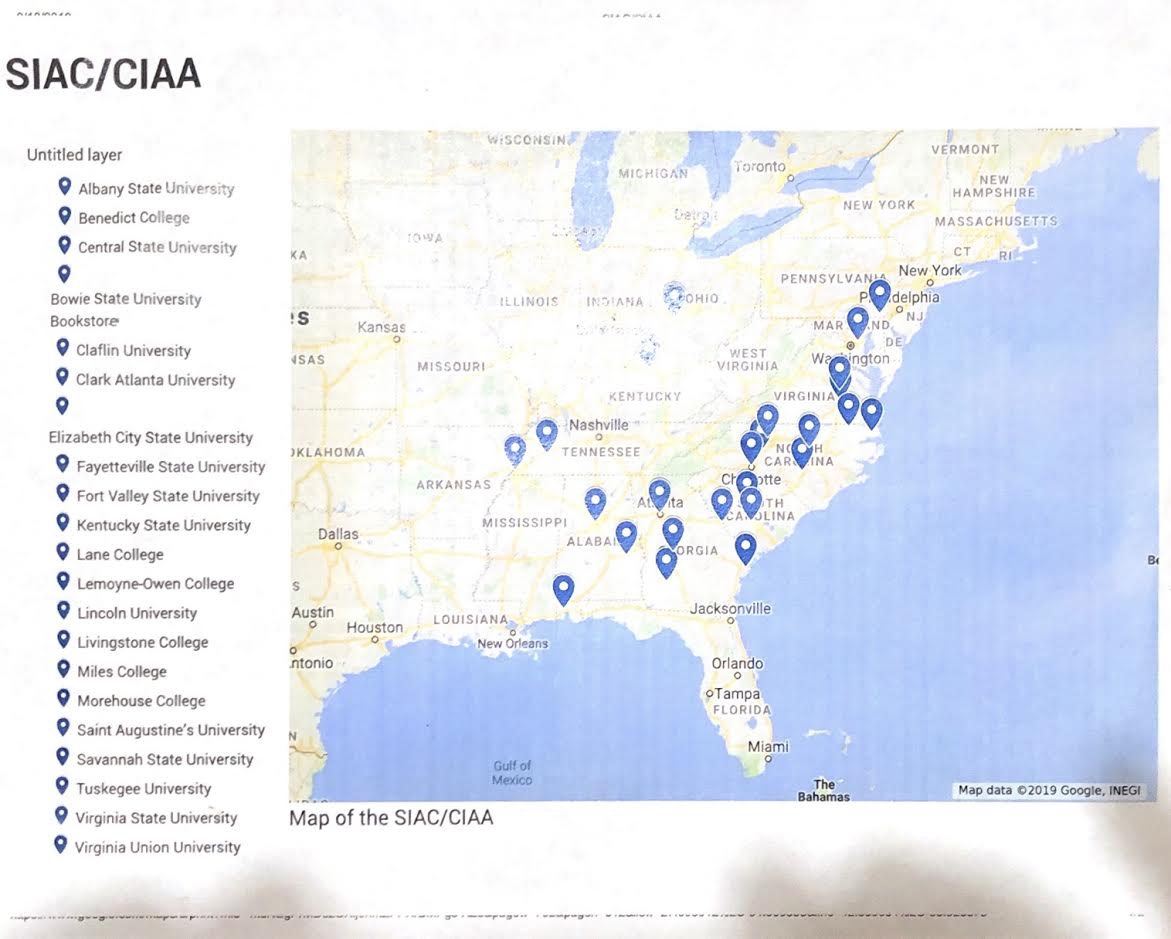
Between the four HBCU conferences in the NCAA, there are 46 HBCUs and 2 PWIs that make up the four conferences. The CIAA and SIAC both having non-HBCU members who have joined their ranks. More pointedly, the SWAC/MEAC have 21 member schools in their conference, while the CIAA/SIAC have 27 member schools. Most know that the SWAC/MEAC and CIAA/SIAC play in the same divisions with the former being FCS and latter being Division II programs. Geographically though, the SWAC/SIAC and MEAC/CIAA share more accommodating footprints.
Why are both of these things something too heavily consider? First, the divisions that the schools play in is vital to understanding the cost difference associated with different divisions. FCS schools spend more, are expected to spend more, and do spend more than Division II and Division III schools. The fact that HBCUs largely lack the booster power to maintain their FCS infrastructure, largely leaning on the backs of their students to drive revenues through student fees has always been a matter of concern and why some advocates have called for them to drop down to Division II where sports are significantly more affordable. However, in fairness to the SWAC/MEAC, the numbers for the CIAA/SIAC in their own right as it relates to revenues, expenses, and student fee subsidies has not been compiled and scrutinized as it has with the FCS HBCUs. On a percentage basis things could look eerily the same. The NCAA reported in 2011-2012 that Division II member schools with football incurred a net loss of $4.5 million per year, while schools without football incurred a net loss of $3.6 million. While $900,000 does not seem like a huge difference, in the world of HBCUs where every dollar is dire it is worth noting in the conversation. This means if the CIAA/SIAC held the median, then the two conferences combined for an annual loss of $112.5 million as it pertains to the HBCUs in the two conferences. The SWAC/MEAC in 2017-2018 were losing a combined $150 million annually (without student subsidies). Also, a key factor to take note of is the cost between FCS and Division II conferences by the NCAA, “Division II institutions contemplating a move to the Division I Football Championship Subdivision (FCS) will likely be spending significantly more money as the median net expense was over $10 million in Division I FCS versus $4.5 million for Division II programs with football.” A factor of 2.2 between the two divisions.
Second in the conversation is the geography. A major factor in expenses for institutions. Travel costs alone can tear into a school’s athletic budget and the greater the distance the more the cost, obviously. Instead of buses, now it is planes. Instead of a one night in the hotel, now you need two. The cost can escalate quickly, which is why many colleges try to maintain their non-conference schedules close to home. This by its very nature means that a natural merger between the SIAC/SWAC and the CIAA/MEAC would make the most geographic sense. It would provide ample opponents in proximity and in-state greatly reducing costs across athletic departments. The linchpin is of course what division would the member schools play in. Do the Division II schools take on more cost to go up a level and hope they can increased revenues can support this? Winston-Salem State University tried it and quickly realized, not likely. What exactly FCS HBCUs are holding onto of not dropping down to Division II seems to be anyone’s guess at this point other than the belief that eventually they will rise to the FBS, join a Power 5 conference, make millions upon millions, and compete for a national championship against Alabama. A perfectly sensible (delusional) strategy somewhere. The path of least resistance says though that the divisions trump geography.
Lastly, the mergers would give something that small schools like HBCUs need – scale and cooperative ventures. Power 5 conferences are profitable because of three simple factors and the athletes on the field (albeit a nice piece) have little to nothing to do with it: 1) being able to put 100,000 people in the stands, 2) television contracts because of the alumni base size, and 3) boosters who shell out annually more money than most HBCU athletic budgets have. For HBCU conferences, the scale that doubling in size would bring along with the cost savings would be immeasurable regardless of the pairing structure from four to two. This could be magnified even greater if the five HBCU conferences would agree to form the HBCU Athletic Association, but for now, baby steps.
There is no denying that what HBCU athletics need most – like the schools themselves – is ways to drive revenue that do not rely on the backs of their students. HBCUs themselves rely heavily on tuition revenue to keep the doors open and HBCU athletics rely heavily on the students fees that most students and parents do not even know are in the small print being used to fund said athletic programs.
HBCU athletics is still an oversized concern for HBCU alumni who should be focused more on things like research, endowments, graduation rates, student loan debts, and the like. The notion that sports will bring in financial sustainability to HBCUs is wishful thinking on the best days. However, how a school manages its athletics and athletic budgets can make or break institutions if done so poorly. If we are insistent on sports, then it should be done so in a way that allows for the institutions to run those departments in a fiscally responsible way. and is far less reliant on students having to assume student fees that are being paid for with student loans. Scale in business is a prime way to cut expenses, increase revenues, and ultimately (hopefully) find a potential path to profitability or at the very least not have to rely on student fees being 75 percent of athletic revenues. To achieve scale, institutions or organizations often either merge or acquire and HBCU conferences should undoubtedly consider the same.
”Investing should be more like watching paint dry or watching grass grow. If you want excitement, take $800 and go to Las Vegas.” – Paul Samuelson
The Walton Family, most notably known as the “owners” or dominant shareholders of Wal-Mart. As of March 31, 2022 they are worth an estimated $234.2 billion or 20 percent of African America’s $1.1 trillion buying power.
In an interview with Brandon Hightower, who is better known as B High and a journalist in Atlanta, on his YouTube channel BHighTV, Bernard Freeman, better known as hip-hop legend Bun B, lays down an immense amount of financial wisdom that he has accumulated over the years. Primarily speaking to up and coming hip-hop artists, the conversation could apply to any room in African America. According to an economic study done by McKinsey, African America continues to be the poorest racial group in America with a median net worth of only $24,000 and yet its financial behavior according to Mr. Freeman reflects anything but that.
Mr. Freeman immediately addresses the issue of ownership versus labor that many may have overlooked in the conversation. Asked about how to navigate the issues of artist feeling like they are being robbed by their labels Freeman says, “Don’t sign to a label. I mean that’s just it. Don’t sign to a label and take the slow road.” When pressed by Hightower of people not wanting to take the slow road, Freeman counters with, “Take the fast and get robbed then. Do you want to be famous or do you want to be rich? Because there is a likeliness that you might not be able to be both in this game. At a certain point you have to decide, do you want to be seen and known and look like you got bread and have everybody assume you got bread? Or do you really want to have bread and have people just assume you broke and not really getting it?” The slow road being an independent label that you own and own the masters and all rights to your music or going with a major label who owns the rights to everything you produce in exchange for a small royalty. Do you want to be the owner or do you want to be the labor? This is a question that is consistently overlooked in our community and institutions. HBCUs love to discuss how many of their students have gotten jobs, but when is the last time you saw an HBCU produce an entrepreneurship report detailing how many of their students started companies, hired other HBCU graduates, brought jobs to their community, wealth creation, and overall economic impact in the community? You do not because we do not have a focus there. Our community too often prides itself on finding a “good” job. Despite this push, our unemployment rate always remains twice the national average. Why? Because there is not nearly enough ownership within the community and therefore the ability to dictate employment, wages, and wealth in our community are always at the hands of others.
After a brief exchange on how the African American community seems to not believe that you can be famous and not be rich and be rich and not be famous, Mr. Freeman ask Mr. Hightower if he knows what the Walton Family (pictured above) looks like to which the latter replies no idea. The irony that members of the Walton family could walk into many Wal-Marts around the country and not be recognized, while controlling one of the world’s largest corporations and being one of the wealthiest families on Earth is not to be lost in this age of social media influencer and the like that more and more see as a path to riches. Again, associating being known with being financially successful. And while a few people listed on the Bloomberg Billionaires’ Index maybe well known, such as Bill Gates, Elon Musk, Mark Zuckerberg, 99 percent of that list could walk into many households and be absolutely unknown. However, one thing they all have in common? 100 percent of them are owners.
Mr. Freeman then says in response to Mr. Hightower asking how do we get kids to see beyond the drug dealers, ballplayers, and rap stars, “You have to give them a broader worldview so they can see what real money look like. Because I tell young people all the time everybody that you looking on TV and on the internet that’s rich, with the exception of a hand full of people, maybe ten people, somebody pay them.” He even goes on to discuss Shaquille O’Neal, who he believes either is close to or already a billionaire, but also states that a large portion of O’Neal’s wealth comes from people paying him, but who they themselves were already billionaires and O’Neal had no idea what they looked like before getting paid by them. We often hear of athlete’s salaries, but rarely if ever think about what the owner’s of these teams make. The NFL for instance, which is one of the worst paying professional sports leagues for players based on salaries and career expectancy, is also the most profitable sports league for owners. It is no coincidence that those two things go hand in hand. As of this article, Deshaun Watson, quarterback for the Cleveland Browns, recently signed to become the highest paid player in NFL history at 5 years, $230 million or $46 million per year. Compare that with Jerry Jones, owner of the Dallas Cowboys, who last year took home $280.4 million or six times what Deshaun Watson’s contract is. Even more so, Jerry Jones does not have to take one hit owning the team, can own it longer than any player can play, and then can pass it onto his children (as of this article the Dallas Cowboys are valued at $6.5 billion according to Forbes). Deshaun Watson can claim none of those things. Again, labor versus ownership.
This is not to say that Mr. Freeman is against having fun and enjoying your money as he points out discussing the trend of people who count money on the internet as a form of showing off. But he also follows it with, “Jay-Z is getting richer and richer and he is wearing less and less s**t that looks rich. And you keep going into these rooms with these people trying to look like money. No, you have to sound like money, think like money.” He points out that you will do little to impress Jeff Bezos or Warren Buffett walking into a meeting with them wearing a $4-5 million watch, number 2 and 5 on Bloomberg’s Billionaire Index and worth a combined $400 billion or 36 percent of African America’s buying power. One could argue that you may even turn them off by spending so lavishly. Spending $5 million on a watch versus leveraging that $5 million into $25 million worth of real estate and $2.5 million in annual income from that real estate looks like someone who is not really interested in building generational wealth. Especially for African America when every single dollar is going to count for families, communities, and institutions. In 2019, African Americans accounted for 13.2 percent of the population, but a heartbreaking 23.8 percent of poverty according to the U.S. Census.
“Wealthy does not have to prove to anybody that they are wealthy”, says Mr. Freeman in closing out the show’s segment. And to that point, the lack of wealth in our community and institutions continues to induce behavior that screams of lack. Unfortunately, wealth is not going to be generated by a job or even by starting a business per se. Wealth and power is generated by the building of an institutional ecosystem that is connected and circulates intellectual, social, economic, and political capital within it. African American banks having enough deposits to lend to an HBCU who wants to build a new research facility. An African American venture capital fund setting up and office at an HBCU to fund the next great idea in renewable energy. An HBCU alumni association putting money into an African American community to help ensure the K-12 system is providing the best education with the latest technology. Then all of those moments working together in unison. That is when we will see wealth and then power become not a scarcity in our community but a norm.