Tag Archives: HBCU

African American Poverty By HBCU/PBI States (2020)

“With segregation, with the isolation of the injured and the robbed, comes the concentration of disadvantage. An unsegregated America might see poverty, and all its effects, spread across the country with no particular bias toward skin color. Instead, the concentration of poverty has been paired with a concentration of melanin.” – Ta-Nehisi Coates

HBCUs and PBIs are arguably African American institutions that are built to solve and protect African American interests. There is no greater crisis that currently faces African American economically than its poverty. Its impact across all statistics like health outcomes, civic participation, business creation, student loan debt, and the list goes on and on. What exactly HBCUs and PBIs are doing about African American poverty in their cities and states is complicated to address. Many would say that simply graduating the number of African Americans with degrees is more than enough. That is until you realize the depth and impact our counterparts are using their higher educational institutions to do. MIT has an incubator that allows students to create companies while matriculating. Schools like Stanford have helped create Google, Harvard is the birthplace of Facebook, University of Texas and Texas A&M formed UTIMCO to create the nation’s largest endowment, and much more. PWIs banking with banks like J.P. Morgan, Wells Fargo, and others ensuring that European American owned banks have a deposit base that allows them to conduct the business of financially protecting their community and lending for European American homeownership and small business creation. HBCUs, not so much. It is also not just the HBCUs, but HBCU foundations, HBCU alumni associations, and other organizations that are supposed to be part of the vanguard/ecosystem of African American institutional development that pulls African American individuals, families, and communities away from poverty in conjunction with other African American institutions.

Poverty is already a complex and layered system and African American poverty is that on steroids. Each state and the HBCU/PBIs institutional system in it are part of the counterattack against African American poverty. Or at least we want them to be. For the alumni and administrations who see their institutional system as part of the empowerment and pulling of African America out of the throws of poverty it requires to know the actual depths of the situation.

Among the U.S. states with the highest poverty rates for 2022, HBCU/PBI states constituted 8 out of the top 10 for overall poverty.

ALABAMA

Overall Poverty (2020): 15.5%

Overall Poverty (2015): 19.3%

African American Poverty (2020): 23.5%

African American Poverty (2015): 31.1%

Change In African American Poverty 2015-2020: Decreased 24.4%

ARKANSAS

Overall Poverty (2020): 16.2%

Overall Poverty (2015): 18.9%

African American Poverty (2020): 27.1%*

African American Poverty (2015): 33.2%*

Change In African American Poverty 2015-2020: Decreased 18.4%

CALIFORNIA

Overall Poverty (2020): 11.8%

Overall Poverty (2015): 16.5%

African American Poverty (2020): 19.0%*

African American Poverty (2015): 25.4%*

Change In African American Poverty 2015-2020: Decreased 25.2%

DELAWARE

Overall Poverty (2020): 11.3%

Overall Poverty (2015): 12.5%

African American Poverty (2020): 17.3%

African American Poverty (2015): 19.9%

Change In African American Poverty 2015-2020: Decreased 13.1%

DISTRICT OF COLUMBIA

Overall Poverty (2020): 13.5%

Overall Poverty (2015): 17.7%

African American Poverty (2020): 21.6%*

African American Poverty (2015): 25.9%*

Change In African American Poverty 2015-2020: Decreased 16.6%

FLORIDA

Overall Poverty (2020): 12.7%

Overall Poverty (2015): 16.5%

African American Poverty (2020): 19.8%*

African American Poverty (2015): 26.9%*

Change In African American Poverty 2015-2020: Decreased 26.4%

GEORGIA

Overall Poverty (2020): 13.3%

Overall Poverty (2015): 18.3%

African American Poverty (2020): 18.8%

African American Poverty (2015): 27.0%

Change In African American Poverty 2015-2020: Decreased 30.1%

ILLINOIS

Overall Poverty (2020): 11.5%

Overall Poverty (2015): 14.4%

African American Poverty (2020): 24.2%*

African American Poverty (2015): 30.6%*

Change In African American Poverty 2015-2020: Decreased 20.9%

KENTUCKY

Overall Poverty (2020): 16.3%

Overall Poverty (2015): 19.1%

African American Poverty (2020): 24.4%*

African American Poverty (2015): 32.4%

Change In African American Poverty 2015-2020: Decreased 24.7%

LOUISIANA

Overall Poverty (2020): 19.0%

Overall Poverty (2015): 19.8%

African American Poverty (2020): 29.4%*

African American Poverty (2015): 33.7%*

Change In African American Poverty 2015-2020: Decreased 12.8%

MARYLAND

Overall Poverty (2020): 9.0%

Overall Poverty (2015): 10.1%

African American Poverty (2020): 12.9%

African American Poverty (2015): 14.6%*

Change In African American Poverty 2015-2020: Decreased 11.6%

MASSACHUSETTS

Overall Poverty (2020): 9.4%

Overall Poverty (2015): 11.6%

African American Poverty (2020): 17.6%

African American Poverty (2015): 21.8%

Change In African American Poverty 2015-2020: Decreased 19.3%

MICHIGAN

Overall Poverty (2020): 13.0%

Overall Poverty (2015): 16.2%

African American Poverty (2020): 25.9%*

African American Poverty (2015): 33.0%*

Change In African American Poverty 2015-2020: Decreased 21.5%

MISSISSIPPI

Overall Poverty (2020): 19.6%

Overall Poverty (2015): 21.5%

African American Poverty (2020): 30.7%

African American Poverty (2015): 34.3%*

Change In African American Poverty 2015-2020: Decreased 10.5%

MISSOURI

Overall Poverty (2020): 12.9%

Overall Poverty (2015): 15.5%

African American Poverty (2020): 21.2%

African American Poverty (2015): 28.1%*

Change In African American Poverty 2015-2020: Decreased 24.6%

NEW YORK

Overall Poverty (2020): 13.0%

Overall Poverty (2015): 15.9%

African American Poverty (2020): 20.0%

African American Poverty (2015): 23.2%

Change In African American Poverty 2015-2020: Decreased 13.8%

NORTH CAROLINA

Overall Poverty (2020): 13.6%

Overall Poverty (2015): 17.2%

African American Poverty (2020): 21.5%

African American Poverty (2015): 26.5%

Change In African American Poverty 2015-2020: Decreased 18.9%

OHIO

Overall Poverty (2020): 13.1%

Overall Poverty (2015): 15.8%

African American Poverty (2020): 27.3%*

African American Poverty (2015): 34.7%*

Change In African American Poverty 2015-2020: Decreased 21.3%

OKLAHOMA

Overall Poverty (2020): 15.2%

Overall Poverty (2015): 16.6%

African American Poverty (2020): 28.2%*

African American Poverty (2015): 29.9%*

Change In African American Poverty 2015-2020: Decreased 5.7%

PENNSYLVANIA

Overall Poverty (2020): 12.0%

Overall Poverty (2015): 13.6%

African American Poverty (2020): 24.9%

African American Poverty (2015): 29.5%

Change In African American Poverty 2015-2020: Decreased 15.6%

SOUTH CAROLINA

Overall Poverty (2020): 13.8%

Overall Poverty (2015): 16.8%

African American Poverty (2020): 23.1%*

African American Poverty (2015): 26.0%

Change In African American Poverty 2015-2020: Decreased 11.2%

TENNESSEE

Overall Poverty (2020): 13.9%

Overall Poverty (2015): 18.3%

African American Poverty (2020): 21.5%

African American Poverty (2015): 30.9%

Change In African American Poverty 2015-2020: Decreased 30.4%

TEXAS

Overall Poverty (2020): 13.6%

Overall Poverty (2015): 17.2%

African American Poverty (2020): 18.6%

African American Poverty (2015): 23.2%

Change In African American Poverty 2015-2020: Decreased 19.8%

VIRGINIA

Overall Poverty (2020): 9.9%

Overall Poverty (2015): 11.8%

African American Poverty (2020): 16.4%*

African American Poverty (2015): 21.2%*

Change In African American Poverty 2015-2020: Decreased 22.6%

*Denotes that African Americans had the highest poverty rate among all groups during that period.

SOURCE: TalkPoverty.org; KFF.org
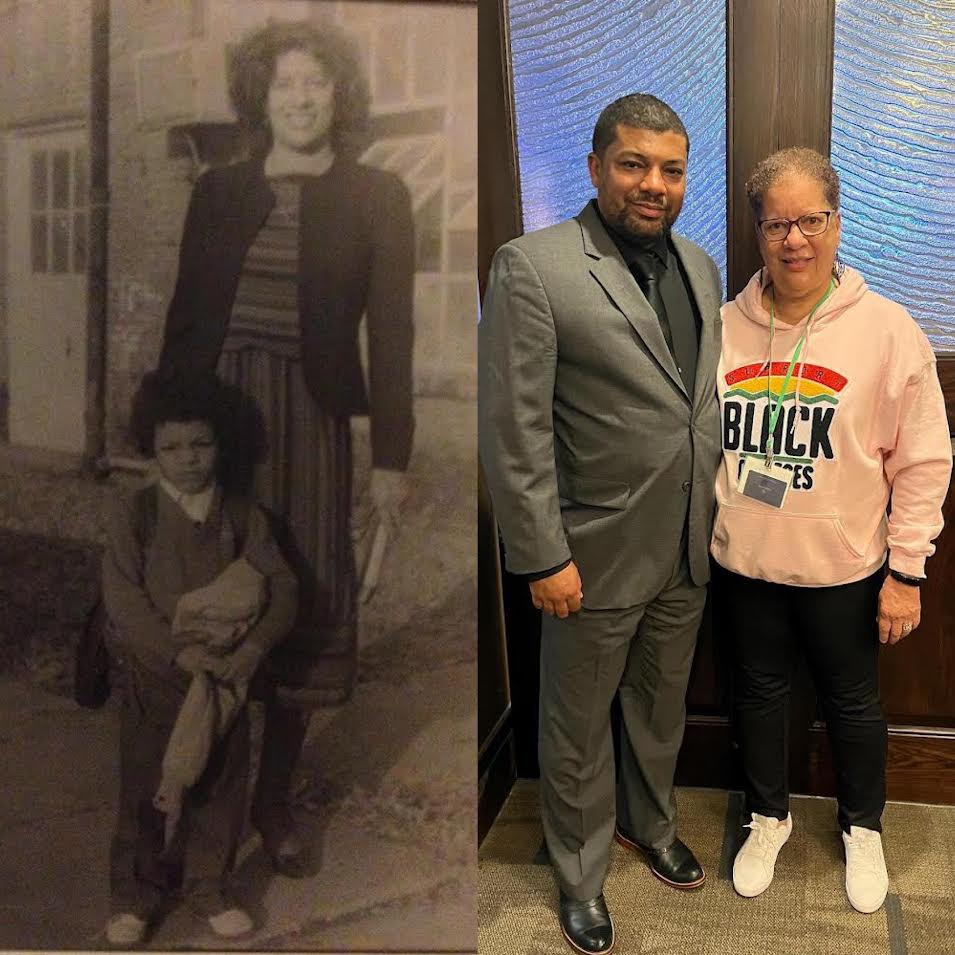
A Family Affair: HBCU Mother And Son Come Together To Lay The Building Blocks For The First Ever Endowment Serving HBCU Faculty

My mother was the making of me. She was so true, so sure of me; and I felt I had something to live for, someone I must not disappoint. – Thomas Edison

By William A. Foster, IV

If you asked my mother, Dr. Laurette Foster, to be honest, she is tired of hearing me talk about economics, finance, African American institutions, and HBCU endowments. For well over twenty plus years, I would probably say most of my family is tired of me talking about these subjects. My baby sister, Dr. Aysha (Foster) Williams, often says I can take a conversation about the weather and turn it into a conversation around money. I will admit there is a joy that I get from combing through economic and financial data and building excel spreadsheets that leave many scratching their head.

It is also my studies in institutional development on the graduate level at Prairie View A&M under the guidance of Dr. Rick Baldwin and Dr. Akel Kahera that helped shape the economics and finance training I had many years ago at Virginia State University. But the foundational HBCU professor I had was my mother Dr. Foster, whom I have often referred to as the real life version of Claire Huxtable, who even while I was in elementary school had me working on college algebra problems while we waited in the lobby of my sister’s ballet class to finish. Any time my sister and I were not in school we were on the campus of Prairie View A&M University from elementary through high school. On visits to my grandmother in Petersburg, Virginia during the summer or holidays we would spend copious amounts of time on the campus of Virginia State University. To say we were nourished by professors and staff at every turn culturally and academically during our childhood would be an understatement. Many professors simply became extended aunts and uncles as it were. The profound impact has carried with me my entire life and always will. It is shaping that I yearn for so many other African American children to experience.

Despite this hidden treasure trove of intellect and cultural nourishment, HBCU professors are for many African Americans a place that often despite being underpaid, under resourced, and overworked the hope for so many African American students who matriculate through HBCU grounds in hopes of a better future for themselves, their families, and their communities. No pressure at all. It is these professors that for many will be the first time they will have encountered an African American with an advanced degree. Again, no pressure. However, the pressure does not faze many who simply wish they had the resources to do more. A scarcity that is unfortunately indicative of African America institutionally as a whole. Doing more with less is a mantra that has been pervasive in our community for the past seventy years.

The St. Louis Federal Reserve reports that total financial assets held by U.S. 501(c)(3) organizations is an estimated $5.6 trillion. Despite this reality African American nonprofits have another reality, be they academic or otherwise, they very often fail to garner the financial assets necessary to sustain multiple generations leaving community infrastructure constantly vulnerable and often not being able to pass down and institutionalize the rich intellectual capital that has been accumulated. Over half of all African American nonprofits would close their doors with the loss of just a few key donors meaning most have not created sustainable financial models. Rasheeda Childress of The Chronicle of Philanthropy says, “Most (African American nonprofits) operate on razor-thin margins and need more philanthropic support for training in fundraising, leadership, and financial management, a new survey has found.”

Over thirty years ago, while I was still trying to get out of elementary school, an organization was formed called the HBCU Faculty Development Network. Armed with the mission to help empower and enrich the pedagogy legacy of far too many giants of HBCU academia to name here. For the past 10 years my mother has led the organization as its executive director. My mother surrounded by a tenacious board of directors who want to see HBCU professors excel, they have put in countless hours and annual conferences for their HBCU colleagues and helping shape the HBCU future. But like most African American organizations they too were constantly financially vulnerable and the need to evolve and expand their reach and programming was acutely limited by their resources.  

A year ago, my mother asked me to come and consult the organization on helping ensure its financial future. I assume she grew tired of being the only one who had to hear me rant constantly about the need for African American institutions to take their finances seriously so they could be sustainable and empowered institutions for our community and decided to subject her fellow colleagues as well. Using the blueprint that was published by HBCU Money a few years earlier titled, ’12 Things Your HBCU Alumni Association/Chapter Needs To Do To Be Financially Successful’, we discussed the endless avenues of revenue available to them that would help them grow. Not least among them, would be the establishment of an endowment which according to the Summer Institute of Finance only 11.2 percent of organizations have – meaning that for African American organizations that percentage is probably a minute number in comparison to the overall although no specific data exist. The board diligent and committed over the course of a few days and sessions we were able to lay the groundwork for what came to be. 

At the HBCU Faculty Development Network’s 2023 Annual Conference in Houston, Texas they were finally ready to unveil the hard work. The formation of the endowment was announced to their membership and those in attendance to the conference. My life as an economist and financier that has been built and shaped to support African American institutions is culminated in moments like this. That my mother and all those HBCU professors who cultivated me over the years so that I could bring my experience and expertise to them and ensure that their legacies will live on is truly one of the proudest moments of my life and to be able to share it with my mother makes it truly priceless.

To donate to the HBCU Faculty Development Network’s endowment, click here.

A special thank you as well to the board for trusting the process and embracing this new day.

Dr. Donald Collins, Prairie View A&M University

Dr. Karen Stewart, Texas Southern University

Dr. Ruby Broadway, Dillard University

Dr. China Jenkins, formerly of Texas Southern University

African Americans Own $570.3 Billion Of America’s Stock Market Value – It Should Be $6 Trillion

“Investing should be more like watching paint dry or watching grass grow. If you want excitement, take $800 and go to Las Vegas.” – Paul Samuelson

A big number means absolutely nothing without context. Saying someone has a lot or a little of something does not tell you much of anything without a control variable to compare it to. This is absolutely one of the most troublesome things in conversation with many in African America where a number is presented like African America’s $1.5 trillion in buying power without asking – is that what is should be? How does it compare on a per person basis with other groups? What percentage of the overall buying power is it? It is in fact only 8 percent of America’s buying power while African America constitutes 12 percent of the U.S. population. Arguably then, African America’s buying power should be closer to $2.1 trillion or 40 percent greater than it is. When it comes to financial numbers we tend to personalize them thinking about if we (an individual) personally had that amount of money as opposed that amount of money spread across 40 million people or the budget necessary to run an entire institution versus a household. Again, context is not only important but imperative to understand what a number means and what it is actually telling you.

In 2020, the total equity market value of the U.S. stock market was $40.7 trillion according to Siblis Research. We asked Nova AI how much of the stock market is actually owned by African Americans, “A 2020 report by The Center for Economic and Policy Research, Black Americans held approximately 1.4% of the total value of U.S. listed public companies.” That amount equals out to the aforementioned $570.3 billion and at first glance it sounds like a tremendous amount, but further analysis says otherwise. First, it is a value that is equal to only 1.4 percent of the total equity market value. Secondly, if African America owned a representative amount of the total equity market value in correlation to our population (12 percent) it would be worth $6.1 trillion or almost 11 times the current ownership value. Lastly, how much would that workout per African American? The $570.3 billion equals out to $12,160 per African American while the $6.1 trillion would work $129,990 per African American. That is every African American man, woman, and child. For a household of four, it is the difference between a family having stock ownership value of less than $50,000 per household versus almost $600,000 per household.

The impact of such a difference is almost hard to truly imagine and/or quantify. Homeownership would skyrocket through 50 percent for the first time in African America’s history without question. African American student loan debt would plummet. HBCU endowments would skyrocket. African American banks, businesses, and nonprofits would flourish in ways not seen since the early 1900s. Access to mental and physical health would be a norm instead of a dogfight. Life expectancy would increase substantially. African American poverty would see significant drops. Marriage for African American would likely see a boom. The list goes on and on. A family with $600,000 in equity market value conservatively would produce $24,000 annually (4 percent yield) in dividend income for the household which is taxed at a lower rate than earned income (your job) and therefore would have African American households keeping more of their money. It would also establish a multigenerational emergency fund for an African American household. Something that seems almost unheard for the vast majority of us.

Headwinds for African American families to invest continue to be mountainous. African American median income is lowest among all groups and those African Americans who do find themselves with middle and high incomes tend to find themselves providing for immediate and extended families at a much higher rate than our European American counterparts. In 401(K)’s this shows up as European Americans contribute almost $300 a month while African Americans are just over $200. It may not sound like a huge difference, but when coupled over decades and compounding returns it can have a substantial impact on wealth building. There is also the severe lag in taxable investment accounts for African Americans. The majority of African American investors participate in the stock market strictly through their 401(K) and perhaps a IRA – both of which have annual contribution limits on them. Taxable investment accounts have unlimited contributions, easier to borrow against, more investment options, and easier to access in case of emergency, but according to a FINRA Foundation report, “Among African American respondents, 22 percent reported having a taxable investment account in 2012. The number rose to 26 percent in 2018 (see above).” In comparison, European and Asian American taxable accounts were at 35 and 41 percent, respectively. The latter two groups with higher median incomes, higher investment contributions, and as one sees significantly more taxable investment accounts make it a no wonder why their equity market value is significant head and shoulders above ours.

The answer while not a perfect one lies in group (small scale) and institutional (large scale) investing (ex. Investment Club: Definition, Advantages, How To Start One). Some downsides to group investing is finding likeminded people, consistent participation, employment volatility, less liquidity in case of an emergency. Upsides are more capital to scale investments with and generate greater returns, access to investments quicker allowing for compounding to take place longer, less individual risk, For instance, there is Black-owned real estate investment firm that offers mortgage notes at 20 percent annually, but the minimum is $5,000 to purchase a note. Saving $5,000 in a year is hard for a lot of households and if they can save that much they certainly do not want to lock it up in a note. With group investing perhaps with five people, then each is only responsible for $1,000 or just over $80 a month. Now your $1,000 is earning 20 percent when otherwise it would not be because of the minimum.

Institutional investing is arguably where the answer truly lies. African American institutions like our banks and credit unions, businesses, nonprofits, HBCU alumni associations and chapters, D9 organizations, HBCU endowments, and more do very little institutional investing. Instead, like many African American households most African American institutions hold the majority of their capital in cash and non-interest bearing accounts. The idea of our institutions being institutional investors even if they owned nothing more than vanilla ETFs (exchange-traded funds) like the SPY ETF (S&P 500) which is one of the safest entrees into the stock market investing seems like inventing fire for many African American institutions. Had any African American institution invested just $10,000 in the market in 2008 and held through 2021 that value would have increased over 400% to almost $43,000. Instead, most institutions like our households sat in cash and saw their $10,000 decline in value due to inflation and almost zero interest rates in savings accounts. The Divine 9 for instance has approximately 4 million members, if they could get 15 percent of that membership to give an extra $10 a year that would be $6 million per year able to invest in the stock market allowing the Divine 9 to be a substantive institutional investor and obviously on a scale that probably none of them could wield on their own without stress. That so many African American institutions have limited exposure to the stock market or none at all is arguably by far the greatest constraint on how much of the stock market’s value African America owns.

African America too often is looking to solve institutional problems with individual solutions. Workarounds, imagination, and institutional solutions are what is required if we are going to address much of the systemic mountains before us.

Why Do HBCUs Not Bank With Black Banks?

It could all be so simple But you‘d rather make it hard, loving you is like a battle and we both end up with scars. – Lauryn Hill

Something that should be so simple, HBCUs and other African American organizations, businesses, and other African American institutions have made not just a battle but sometimes it feels like a war. That battle, getting African American institutions to bank with the African American banking system with banks and/or credit unions owned and controlled by – African Americans. It is economic development 101 for other groups, but for African America it is seemingly Calculus III. Based on HBCU Money’s internal research on the matter only two, a PBI and HBCU, are believed to bank with a Black-owned bank. That means that just like the over 90 percent of African Americans who go to college not choosing HBCUs, well over 90 percent of HBCUs do not bank with a Black-owned bank. And in both cases, neither (AAOBs or HBCUs) are able to fulfill their potential as they would with the patronage and investment of those they were built to serve.

We asked the AI app Nova for their take on why HBCUs do not bank with African American owned banks and here was its answer: “There are a few reasons why many HBCUs may not bank with Black-owned banks. One reason is that larger, more established banks often offer more resources and services that HBCUs may need, such as investment services or customized financial solutions. Additionally, some HBCUs may feel more comfortable with larger, more established banks that have a long history of working with educational institutions. However, there has been a growing movement encouraging HBCUs to support Black-owned banks and businesses as a way to promote economic empowerment within the Black community. Many Black-owned banks have a strong commitment to supporting HBCUs, and may offer specialized products and services tailored to their needs.”

Despite AI being quite learned in its contribution to this. There are as they say – levels to this. Not least among them is the plight of public HBCUs lacking autonomy. It would take a massive student and alumni uprising in order to get a public HBCUs moved to an African American owned bank. Ultimately, public HBCUs are controlled by a board or if they are in a system, then a system’s board. In either case, the state’s flagship PWIs carrying the most financial weight and tend to be determinate of how all public universities in the state will behave and most certainly likely where they will bank. And while it is complicated to wrangle the institutional banking of public HBCUs into African American owned banks, their proxy organizations like alumni associations and foundations that serve them should not have anywhere near the issue of banking Black. Then there are the private HBCUs who have far more autonomy with their banking decisions and yet it seems potentially only one private HBCU actually banks Black. It is almost befuddling in the case of the Alabama and Georgia HBCUs not to bank Black. They both have two African American Owned Banks in headquartered in their states. Morehouse specifically just a few years ago had one of their alumni bring back African American owned banking to Oklahoma when alumnus Kevin Perry purchased controlling interest in First Security Bank & Trust. In fact, 14 of the 15 states and territories where there are African American owned banks have HBCUs/PBIs in them with Wisconsin being the lone exception.

African America’s flagship HBCU, Howard University, two years ago entered into a partnership with PNC Bank to create the PNC National Center for Entrepreneurship housed at Howard University. PNC’s Foundation providing Howard University with a rather obtuse $3.4 million a year grant for five years. PNC Bank is based in Pittsburgh,PA, its executive team in 2022 commanded $81 million in compensation, and the bank has assets over $550 billion – an amount that is over 100 times the size of all 16 remaining African American Owned Banks’ assets combined. We think Marcus Garvey just rolled over in his grave. Meanwhile, right in Howard University’s backyard is Industrial Bank, an African American Owned Bank with $723 million in assets, meaning PNC Bank has over 760 times the amount of assets of Industrial. There is in fact only one African American Owned Bank that has over $1 billion in assets, Liberty Bank & Trust in Louisiana.

That HBCU presidents and AAOB CEOs do not have closer relationships simply speaks to the island mentality that African American institutions as a whole have. Although our community loves to parrot the harsh reality of an African American dollar that does not circulate in our community’s even 6 hours while “the average lifespan of the dollar is approximately 28 days in Asian communities, 19 days in Jewish communities, 17 days in white communities”, according to a piece by the FAMUAN (see how we are circulating HBCU media capital). This has done nothing to make HBCU administrators understand that the circulation of the African American institutional dollar is far more impactful than the African American consumer collar. Despite as recently as 2017, there were four African American Owned Banks with HBCU alumni as CEOs. It is also not just on HBCUs, but AAOBs should be doing a better job of heavily pursuing those HBCUs that do have the autonomy to decide where they bank and forging deep relationships with them at multiple levels.

By forging that relationship HBCUs and AAOBs can multiply the probability of opportunities and profitability. That way when an HBCU alum creates the next Google, SpaceX, FedEx, or other Fortune 500 company, then they will already know the importance of banking with an AAOB and hiring HBCU alumni. It will be understood because the intentionality of our ecosystem’s success will be modeled and molded and as a result our community is empowered with success a rule and not the outlier it operates in now as so many of us continue to try and build a nation as an island instead of forging together.

Tone Deaf: Harvard Launches A $100 Million Endowment To Itself To Study Its Ties To Slavery – An Amount Greater Than 99 Percent Of HBCU Endowments

“Every year, our white intruders become more greedy, exacting, oppressive, and overbearing. Every year, contentions spring up between them and our people, and when blood is shed, we have to make atonement, whether right or wrong, at the cost of the lives of our greatest chiefs and the yielding up of large tracts of our lands.” – Tecumseh

There are two families in the same neighborhood. The Johnsons and the Smiths. They both have the intention of building magnificent homes for their families. Homes they intend to pass down generation after generation. The Smiths have the Johnsons work for them and build their home, hold them hostage in fact on their land while they do so, and after their home is finally finished and pristine allow them to leave and go off and build their own – at least that is what the Johnsons think. As the Johnsons work diligently to build their home, they often awake many mornings to see their work burned to the ground, members of their family kidnapped in the middle of the night never to be seen again, and yet they persist in building their home. They often end up having to buy low quality materials from the Smiths at arguably predatory prices and even after purchasing these materials may awaken to see those same materials stolen or damaged, and yet they persist in building their home. Sometimes they catch the Smiths in the act of harm, but more times than not it is as if they are ghosts in the night. To make matters even more complicated, sometimes the Smiths will invite the Johnsons over for days at a time and allow them to sleep in their attic. The Johnsons often naively believing that the Smiths are wanting to commune with them often failing to see that every moment they spend entertaining and staying at the Smiths is a lost day they could be building their home. And while the Smiths enjoy being entertained by the Johnsons and having them sleep in their attic they are well aware only one of them has a home for their family. A place that is theirs. This reality has given the Smiths control of the neighborhood at every social, economic, and political turn. The Johnsons know that without their home being finished they will never be able to have a place to call home, but fewer and fewer of the family wants to continue building the home. Instead, they find themselves more and more settling for sleeping in the Smiths attic, cooking their food, and entertaining them and while they seem “free” to go and come as they wish, somehow they are right back where they started and their entire ability to exist is dependent on the Smiths. 

The greatest magicians in history know that the key to any successful magic trick is the sleight of hand. To have one’s audience focused on what they believe is happening while actually something out of their focus is instead happening. Harvard University is the nation’s largest non-system endowment at approximately $50 billion. It is an amount that is well over 15 times the size of ALL HBCU endowments combined. To put in perspective just how insulting the $100 million endowment Harvard created for itself is, if it were an HBCU endowment, then it would rank number eight among the 2022 HBCU Money Top 10 HBCU Endowment list. It could easily double the size of all HBCU endowments with roughly 5 percent of its endowment. To add to the harshness of that reality, the gap between the top ten PWI endowments and top ten HBCU endowments has skyrocketed over the past the past decade from $103 to $1 in 2013 to a staggering $128 to $1 in 2022, there is absolutely no movement to atone for what slavery, Jim Crow, and segregation did to HBCUs and African American institutions. Simply put, write the check – but we know they will not. 

For all of the frustration African America has with European American conservatives across the South, their European American liberal counterparts offer little more than lip service to right history’s wrongs, especially on the institutional level. And even when they “attempt” to do so they always do it in a way that leaves that them just as institutionally empowered and us just as institutionally dependent. A recent example of this is European American owned banks like J.P. Morgan and others “investing” in African American owned banks in the wake of the George Floyd protests. These banks did not simply write a repertory check to African American owned banks and step back so the African American owned banks had the autonomy to build with it as they saw fit. No, they “invested” and ensured that they receive the public relations bump for doing so while also ensuring that they are able to profit from anything they put into African American owned banks. Never is it, we know we owe you for the damages done and that we have disproportionate wealth and resources because of the history of slavery and Jim Crow. It is instead, a flashpoint like George Floyd’s death that European American institutions maneuver to look more inclusive by letting a few of us in their house to sleep in the attic, cook their food, wash their clothes, entertain them, all the while knowing that we still will have no home. 

Harvard could have easily paid five to ten HBCUs between $10-20 million each to conduct the same research. Both accomplishing its goal of studying its ties and actually helping the financial coffers of HBCUs. This would have given a precedent for other PWIs who could then do the same with the same result. Assuming there are other PWIs that want to broach that subject of their own history. Harvard could have also picked up the mantle and took the vanguard on an effort to have itself and the rest of the top 25 largest endowments in the country redistribute $6 billion into HBCUs with those PWIs paying proportional to the size of their endowment. America’s largest twenty five endowments combine for $454.6 billion which works out to $151 to $1 for all HBCU endowments combined. A $6 billion infusion from those twenty five endowments would equate only 1.3 percent of their total. A percentage that is still less than the representation of HBCUs (3 percent) of the U.S. higher education institutions. 

Instead, Harvard pats itself on the back with an accounting trick and says to the world and primarily to African America that it is serious about what who knows. This initiative got an immense social bump within African America when the now former president of Prairie View A&M University, Dr. Ruth Simmons, in one of her last events on the campus hosted the outgoing president of Harvard University and creator of the slavery initative, Dr. Lawrence Bacow. The Pan-African historian Dr. John Henrik Clarke would say we (African American institutions and leadership) are doing ceremony without substance. Harvard acknowledging or not acknowledging their ties to slavery does nothing for the social, economic, or political capital of HBCUs and African American institutions. Yet, we give them space in our spaces and credit for something that we already knew – that PWIs have exorbitant resources pools in large part because African America was choked for centuries from being able to build themselves into competitive institutions – and that is as true today in 2023 as it was in 1823 and 1923.

The whole of African America’s education problem does not solely lie with HBCUs, but starts from early childhood through graduate school. An African American child can not go from birth through graduate school in the African American educational pipeline. Other communities most certainly can and do. We have yet to see the profound problem with our educational dependency and as such have done nothing to formulate a strategy let alone act on one. We see Harvard and its peers lure us into a false sense of individual inclusion while continuing to starve our institutions. It is one of the greatest long games to ensure that a group of people have no institutional representation of their own nor control of that which is fed into their minds. Harvard University should pay if they truly believe in righting history’s wrongs and we would owe them no thank you or gratitude for doing so. Ultimately and without waver we must not be distracted by their shiny illusion of inclusion, but remember that is our duty and responsibility to continue to empower and build upon that which our foreparents started and ensure that our people have a home.