Tag Archives: culture

2023’s HBCU Million Dollar Gifts: No African American Million Dollar Gifts To HBCUs

“Philanthropy is an exercise in power, by definition by the wealthy.” – Rob Reich

After an abysmal 2022, the HBCU Million Dollar Gifts list in 2023 bounced back? Well, sort of. In 2022 there were only three donations and now in 2023 there are five. Mathematically one would argue for that being a 66 percent increase, but then one realizes there were twice as many $100 million donations given or pledged to PWIs as there were $1 million donations given or pledged to HBCUs it throws water colder than the artic onto the conversation. Furthermore, one of those donations was pledged in 2023 by one Sean Combs who is now arguably in so much legal trouble that the pledge will likely never turn into a gift for its recipient, Jackson State University. To make the donation by Mr. Combs even more frustrating, it was the only one among the list by an African American further reinforcing that African American donors who can give million dollar donations are still not interested in supporting HBCUs with any fever.

The donations that did arrive went to the usual suspects of Howard (2), Spelman, and Tuskegee. Unless Spelman has a massive donation up its sleeve (and it is certainly possible), then Howard is going to coast to becoming the first HBCU to have a $1 billion endowment. To put in perspective how large the acute the donor crisis is between PWI and HBCU donors requires just taking a look at the largest 2023 donation by a donor. James Simons and Marilyn Simons gave a gift of $500 million to SUNY Stony Brook. A donation equal to over 50 percent of the Howard University’s endowment and over 90 percent of Spelman College’s endowment. Meanwhile, African America’s wealthy are virtually silent year after year.

There continues to be a massive disconnect of African America pouring resources into its own institutions. This is as true of the lack of African American donors to HBCUs as the embarrassment that virtually no HBCUs bank with an African American owned bank or even two premier HBCUs in Hampton University and North Carolina A&T University leaving an HBCU conference for a PWI one. The island mentality of everyone and every institution looking out for themselves while claiming they are for the community has reached a nauseating level year after year and should make anyone wonder if there is any reason to have hope. None of this fairs well for smaller HBCUs with the looming enrollment cliff crisis facing all American colleges and universities and for which HBCUs will certainly bear the brunt as with almost every crisis that America has.

Overall donations to all colleges and universities were down a second straight year in 2023 dropping from 275 to 259 Million Dollar Gifts.

$1 Million Plus Donations To All Colleges: 259

$100 Million Plus Donations To All Colleges: 10

$1 Million Plus Donations Value To All Colleges: $6.1 Billion

$1 Million Plus Median Donation To All Colleges: $10.0 Million

$1 Million Plus Average Donation To All Colleges: $23.6 Million

$1 Million Plus Donations To HBCUs: 5

$100 Million Plus Donations To HBCUs: 0

$1 Million Plus Donations Value To HBCUs: $45.6 Million

$1 Million Plus Median Donation To HBCUs: $10.0 Million

$1 Million Plus Average Donation To HBCUs: $9.3 Million

HBCU Percentage of Donations To All Colleges: 1.9%

HBCU Percentage of Donation Value To All Colleges: 0.8%

1. Carrie Walton Penner and Gregory Penner (pictured) – $20.0 million
Recipient: Howard University
Source of Wealth: Professional Sports, Family Wealth, Finance

2. MacKenzie Scott (pictured) – $12.0 million
Recipient: Howard University
Source of Wealth: Technology, Retail

3. John Brown and Rosemary Brown (pictured) – $10.0 million
Recipient: Spelman College
Source of Wealth: Health Products

4.Stephen Feinberg – $3.6 million
Recipient: Tuskegee University
Source of Wealth: Finance

5.Sean Combs – $1.0 million (Pledge)
Recipient: Jackson State University
Source of Wealth: Entertainment

Source: Chronicle of Philanthropy
Island Mentality: Alabama State University’s $125 Million Decision Highlights HBCUs’ Continued Failure To Connect With The African American Financial Sector

Negro banks, as a rule, have failed because the people, taught that their own pioneers in business cannot function in this sphere, withdrew their deposits. – Dr. Carter G. Woodson

What is an ecosystem? How do you develop an ecosystem? Can we develop an African American ecosystem? It seems to be a question that a room full of African American institutional leadership have little understanding of based on the institutional decisions that are continuously made. In their academic paper entitled Economic Ecosystems, Philip E. Auerswald and Lokesh M. Dani, “An ecosystem is defined as a dynamically stable network of interconnected firms and institutions within bounded geographical space. It is proposed that representing regional economic networks as ‘ecosystems’ provides analytical structure and depth to theories of the sources of regional advantage, the role of entrepreneurs in regional development, and the determinants of resilience in regional economic systems.” The most vital part of that definition being interconnected firms and institutions. African American institutions in general at every turn fail to understand this concept and HBCUs are no exception. This is especially true of HBCUs choice of banks and now Alabama State University’s recent decision to forego a plethora of African American Owned Investment and Asset Management firms and hand $125 million to another European American owned investment firm. African American capital once again reinforcing European America’s financial ecosystem – not ours.

It is almost a redundant story at this point. African American institutions all operating on their own island and failing to interconnect and intertwine with each other. African America from individual to institutions all do what is best for themselves individually and not what is best for the collective and certainly not what connects and strengthens the collective. See Hampton University and North Carolina A&T State University decisions to leave an HBCU conference for a PWI one. To that vein is why over 90 percent of African America’s $100 billion in annual tuition revenue goes into PWIs and not HBCUs/PBIs. HBCUs provide very little means of an example for the community to follow. Instead, HBCUs are a glaring headlight of just how poorly African American institutions perform in strategically integrating themselves within the African American ecosystem, especially economically. There are no reports on HBCUs engagement with the African American private sector because HBCUs do not seemingly see that as important. How many of HBCU graduates work for African American owned companies? How much HBCU athletic sponsorship dollars come from African American owned companies/partnerships? How much of the HBCU endowment is invested in African American firms? These are basic questions that any leadership of an HBCU should be able to answer. Unfortunately as Jarrett Carter, Sr., founder of HBCU Digest, once eloquently put it, “Many HBCUs are just trying to be PWI-adjacent.”

Is $125 million a lot of money? Context matters. To any individual, most would agree $125 million is significant. To institutions, it varies on size, scope, and goals. For African American Financial Institutions, almost down to even the largest of our firms having an $125 million account would see their bottom line acutely move. Providing perspective on the landscape, Pension and Investments reports, “The global asset management industry showed some signs of recovery in 2023, with total assets under management (AUM) rising 12% year-over-year to nearly $120 trillion, according to research by Boston Consulting Group.” For African American Asset Managers, “The largest Black-owned asset managers are responsible for more than $253 billion in assets, according to FIN Searches data. Vista Equity Partners is the largest Black-owned firm in the industry, with the private equity manager handling $103.8 billion in assets.” African American Owned Asset Managers only account for 0.2 percent of the global AUM. By contrast, the Top 10 non-Black asset managers have $22 trillion assets under management which accounts for almost 20 percent of global AUM.

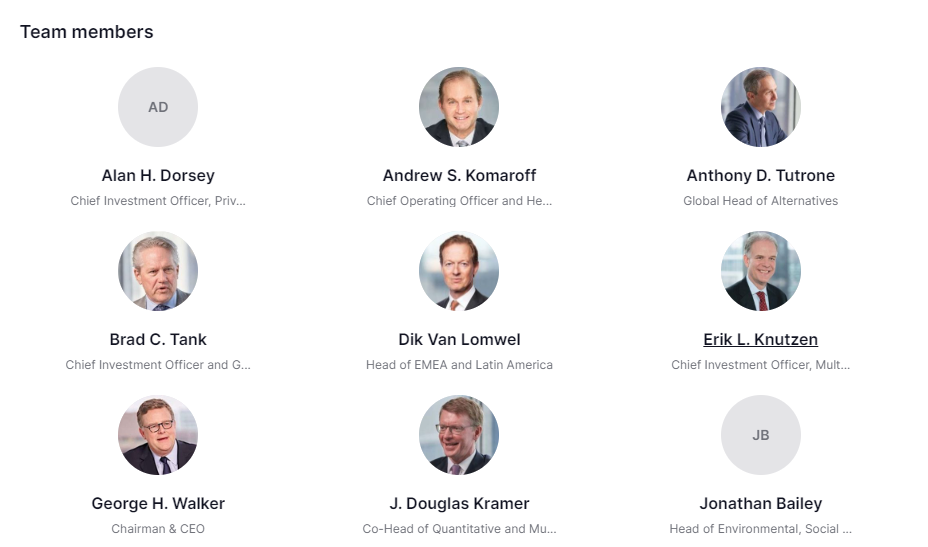
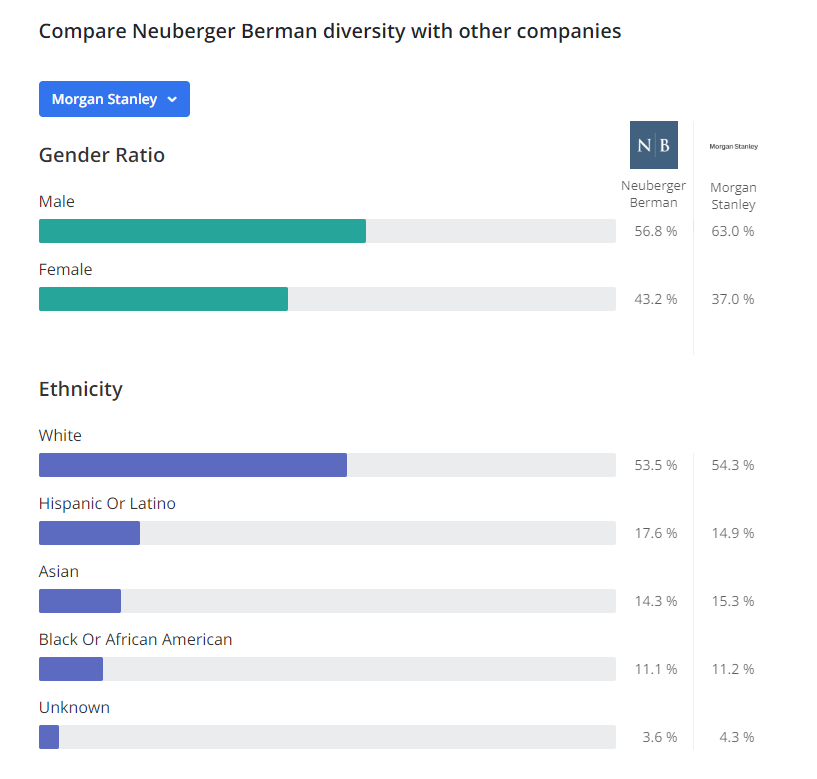
The asset management firm that Alabama State University chose according to World Benchmarking Alliance, “Neuberger Berman is a private employee-owned investment management firm (leadership pictured above) headquartered in New York, USA. It was founded in 1939 and has offices in 39 cities across 26 countries. The firm manages equities, fixed income, private equity and hedge fund portfolios for global institutional investors, advisors and high-net-worth individuals. It managed USD 460 billion of assets (under management) in 2021 and employed 2,647 staff in 2022.” This means that Alabama State University’s $125 million is equal to 0.02 percent of assets under management for Neuberger Berman. A drop in the bucket. The entirety of assets at African American Owned Asset Management firms is only 55 percent of Neuberger Berman assets under management. Alabama State University’s $125 million would have lifted the ENTIRE African American Owned Asset Management’s AUM by 0.05 percent. A move that would have strengthened the African American economic and financial ecosystem.

African America as a community talks about the circulation of the dollar or our lack thereof constantly, but what is virtually never talked about is the circulation of the African American institutional dollar being the largest part of that conversation. It is a fairly accepted statistic that the African American dollar does not stay in the African American community for a day, while other communities see their dollar stay in their communities for weeks and in the case of the Asian American community for almost a month. We often think of the circulation of our dollar like everything else, on an island or as an individual. An individual going and buying food from even an expensive African American owned restaurant is $100-200, but an HBCU building a new building means the opportunity for a new loan worth tens of millions for an African American owned bank, it means tens of millions for an African American owned construction company, so on and so forth. Instead, Bethune-Cookman University borrows from a notorious predatory lender to the African American community in Wells Fargo and almost finds itself losing those buildings due to foreclosure.

HBCU alumni know little about the state of finances or the movement of the money at their alma maters. HBCU administrators either willfully withholding the information or inept themselves of the importance of the information and providing it. Both are problematic. The notion that HBCUs cannot find African American investment firms is a painful thought knowing that a Google search would bring up the HBCU Money African American Owned Bank Directory at the very least. The likelihood is more in line with what Mr. Carter said in that a good deal of HBCU leadership simply wants to be like their PWI counterparts is far more likely. This would explain the debacle “donation” accepted by Florida A&M University’s president recently where a simple Google search would have avoided such embarrassment. Instead, Alabama State University’s Neuberger Berman relationship and a plethora of others instances (a decade ago when we reported “Spelman College & Regions Bank – A Failure To Disclose”) is that likely they are simply mimicking PWI actions and unwittingly reinforcing the PWI/European American ecosystem to say the least. Unfortunately, that mimicking reinforces another community’s economic and financial ecosystems not ours and why you may never see OneUnited Field at any HBCU’s athletic facility. Because we are holding out for J.P. Morgan, Bank of America, or Wells Fargo to show us the same love they show PWIs. Not acknowledging those are not our community’s banks.

If HBCUs are simply going to behave as PWI-adjacent institutions, then it is hard to argue with why over 90 percent of African Americans who go to college are not choosing HBCUs. For many it becomes a question of why get a knockoff when they can get the real thing. After all their ice is colder. HBCUs, HBCU alumni associations, and HBCU support organizations as a whole are not making decisions related to African American institutions ecosystem’s interests and interconnectivity and that is most glaring in the poor institutional decisions we are making in regards to our institutional finances and endowments.

The Cultural Danger Of Covid-19: A Devolution Of Intellectual Progress

By William A. Foster, IV

“A man only learns in two ways, one by reading, and the other by association with smarter people.” – Will Rogers

I am rarely one who likes to write qualitative pieces over quantitative ones, but for the moment I am going to make an exception. I can give you numbers about how the economy is suffering and is going to continue to suffer for the foreseeable future. I could give you the number of cases, deaths, lack of PPE numbers, and percentage of overworked medical and essential workers. I could go on and on and on with numbers, I am economist after all, but here is the reality of all those numbers – they are bad, real bad, and will be bad for sometime to come. Instead, what I would like to discuss is an acute qualitative cultural loss we may potentially experience and perhaps give us an opportunity to think about what this very new world could look like that we are about to embark upon if we are not proactive in maintaining a core essence of our humanity.

The world we are entering will be far more online and far more physically distanced from each other both on a micro level and global macro one. Everything from work, school, and socializing. Many would argue that online college is the way of the future. This maybe true, but people forget one of the most critical components of college in person is the social aspect, the relationship building that simply can not currently be replicated online. A few decades ago, I was a freshmen at Livingstone College in Salisbury, NC and there I would meet my three best friends that I am sure will be that for the rest of my life. Our meeting was happenstance. None of us had the same major, personality, or interest. We called ourselves the Variety Pack because nothing about us was alike, but alas, we found each other, bonded, and formed a brotherhood that has stood the test of time. For all the differences of course, two of us did share the same Algebra/Trigonometry class. The class was an 8AM class and the pain of getting up for it when you are not a morning person can not be overstated in my case. However, myself and Rashad, the one of the said Variety Pack with whom I had the ungodly morning class with, loved to sit up and debate theology many nights. Rashad was/is a devout Christian. I on the other hand am something of a spiritual nomad you might say, but am fascinated by the intellectual aspect of religion. One particular night in our dorm hallway we got into one of our intense discussions and the hours clearly raced by because before we knew it the sun was rising. Sleep? Forget about it. We both agreed we would get ready and meet for breakfast and try our best to stay up through class. Moments like these and many more are what built our bond and there is simply no way to replace it online. People from different backgrounds meeting, sharing an experience, bonding, learning from each other, evolving, and developing their understanding of the world.

Simply put, COVID-19 has the potential of sending us back to the dark ages in terms of cultural evolution and development. Thousands of students who study abroad every year will no longer get to do so. Student exchanges, especially from China and Asia in general, will be looked at with heavy skepticism if considered at all. Americans, who are already known to be culturally hubris and inept, often failing to travel much and experience culture even within the United States will be even more isolated. Tourism and vacations that allow us to experience distant lands and bring back with us new ideas will be vastly reduced. Academic tourism for professors who may themselves spend time as visiting professors at different universities will be greatly hampered. Cultural developments like fusion cuisines from different parts of the world will retrench and much more will simply begin to deteriorate. The rise of intellectual incest, a term I use when someone or an institution is only receiving ideas from the same petri dish of thought. If a student receives all of their degrees for instance from the same institution, this would be an example of intellectual incest. Because the world is now going to shrink itself in an effort to protect itself, there is a unknown danger that may start to form. We have seen the world where people are exposed to different cultures, ideas, and ways of life and we have seen a world where people are isolated and xenophobia forms out of it.

The danger that we become a less tolerant, less compassionate, less understanding, and less intellectually evolved is a real possibility that could have far reaching societal implications for future generations. In a world where terroristic nationalism has been on the rise in far too many countries, COVID-19 may give many the “pass” they have been looking for to justify retrenching from a world that was evolving and developing towards efficiency of its intellect. Sharing best practices the world over is something we need more of and not less. This is by no means to say we were in Utopia. I do not believe in Utopia and not sure I would I enjoy living in it. Conflict has its place within measure in a society. Disagreement has its place within measure in a society. My Global Economic Environment professor, Dr. Catherine Mann, taught me years ago in business school that if you do not truly understand your opposition’s position, then you can not truly understand your own. To this day she is one of the most brilliant and wisest people I have ever met and there is an acute truth in what she said. How does one know their position is best if they have nothing to compare it with? Plan A maybe good, but an objective view of Plan B may allow it to have tweaks made to it that can make it great or perhaps it is Plan AB that is great. Without that engagement, we will be taking steps back in the interactions that create evolution and development of thought.

I am not sure when we will come out of this state we are in and I am not sure how we will be when we do. What I do know is that fear can drives even the fiercest animals into hiding and that fear for humans could undo hundreds of years of intellectual progress. Great ideas will become fewer and farther apart if that is true. The grand ideas of humanity like cleaning up pollution, reaching Mars and beyond, eliminating poverty, and so many more will take hundreds of years longer to accomplish than they otherwise would have. Yes, the world has forever changed and we will have to interact with each other differently, but make no mistake about it, we must continue to interact. Can you imagine a world where peanut butter never met jelly? Neither can I and I do not want too.

HBCU Money™ Business Book Feature – Language: The Cultural Tool

13129592

A bold and provocative study that presents language not as an innate component of the brain—as most linguists do—but as an essential tool unique to each culture worldwide.

For years, the prevailing opinion among academics has been that language is embedded in our genes, existing as an innate and instinctual part of us. But linguist Daniel Everett argues that, like other tools, language was invented by humans and can be reinvented or lost. He shows how the evolution of different language forms—that is, different grammar—reflects how language is influenced by human societies and experiences, and how it expresses their great variety.

For example, the Amazonian Pirahã put words together in ways that violate our long-held under-standing of how language works, and Pirahã grammar expresses complex ideas very differently than English grammar does. Drawing on the Wari’ language of Brazil, Everett explains that speakers of all languages, in constructing their stories, omit things that all members of the culture understand. In addition, Everett discusses how some cultures can get by without words for numbers or counting, without verbs for “to say” or “to give,” illustrating how the very nature of what’s important in a language is culturally determined.

Combining anthropology, primatology, computer science, philosophy, linguistics, psychology, and his own pioneering—and adventurous—research with the Amazonian Pirahã, and using insights from many different languages and cultures, Everett gives us an unprecedented elucidation of this society-defined nature of language. In doing so, he also gives us a new understanding of how we think and who we are.