“Many think that the principal mission of universities is to transmit knowledge; they miss the key point that teaching and research are inseparable. American universities must continue to discover new kinds of knowledge and new ways of thinking.” – Dr. Eric Kandel
In 1896, Booker T. Washington invited George Washington Carver to head Tuskegee Institute’s Agriculture Department. For almost five decades Carver would set himself in stone as the greatest scientist and research ever to grace the halls of an HBCU. To this day he and his accomplishments are the measuring stick by which all HBCU research and scientists are measured. Yet, the fever by which Tuskegee invested in Carver and his research seems like a distant memory in HBCU lore and strategy.
HBCUs have always been known for promoting their values of community service and teaching, but oft left out of the conversation is the research portion of our institutions. The importance of research can not be overstated. As mentioned in the article The University of Power & Wealth that research and an environment of campus entrepreneurship to commercialize that research has produced companies like FedEx, Microsoft, Google, Facebook, Time Warner, and Dell just to name a few of the more well known companies. Not just companies, but products like Gatorade, which was invented at the University of Florida in 1965 and from which the university still receives royalties north of $10 million annually from Pepsi. There have also been inventions that simply serve the societal good like oral contraceptives and the seat belt that were created by college research and ingenuity.
HBCUs comprise approximately 2.3 percent of all colleges and universities in America. However, they make up only 0.7 percent of the research and development spending by American universities. Just to get to its representative amount of 2.3 percent would require R&D spending to increase from its current $500 million to $1.5 billion. Unfortunately, almost every conversation had with HBCU leadership and alumni would lead many to believe the answer to fixing our financial problems is through sports. A recent report by the NCAA showed that only 14 of the 120 Football Bowl Subdivision schools made money from campus athletics. That profit is primarily thanks to television deals through their conferences that HBCUs have little hope of obtaining at scale. That is not to say they can not be profitable, they can, but not following the playing book of their counterparts. For a more intimate perspective let us look at the University of Texas, the school with the one of the most valuable football programs in the country. It produces $109 million in revenue according to Forbes. Sounds great, right? Sounds like the answer to all of our prayers. Because when you are dehydrated even a bit of spit your way will appear to be a glass of water. Meanwhile, the University of Pittsburgh, America’s top grossing university hospital, produced revenue of $11.87 billion or 109 times the revenue that the University of Texas football program produces annually. In fact, even the University of Texas’s most valuable asset is its hospital, which generates almost $5 billion in revenue annually and has unbridled power in the city of Houston’s Texas Medical Center, the largest of its kind in the world.
Currently, HBCUs as aforementioned produce approximately $500 million collectively in research expenditures annually. There are 40 HWCU/PWI schools that individually do $500 million or greater annually and 8 of those 40 conduct $1 billion or greater annually according to the National Science Foundation. The gap between the top twenty HWCU/PWI and HBCUs when it relates to research continues to grow with the most recent data showing for every $1 that HBCUs spend on research, their counterparts are spending $52.
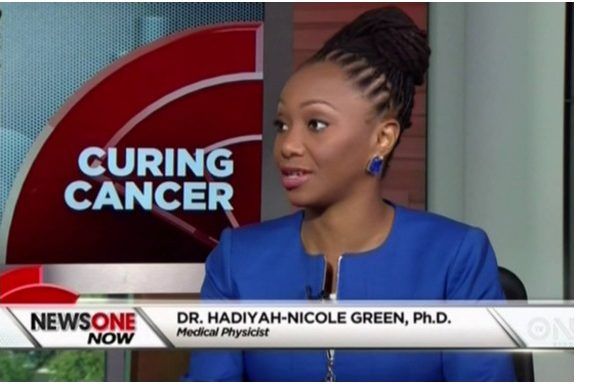
This is not to say that HBCUs are not doing prominent research, they most certainly are. Dr. Hadiyah-Nicole Green, a physicist, alum of Alabama A&M University, and who was a professor at Tuskegee University and now serves at Morehouse School of Medicine, received a $1.1 million grant for a pioneering technology that can kill cancer cells with lasers. That is just one of many prominent discoveries happening within HBCU research, but there are more fields and much more that needs to be taking place from history, economics, STEM fields, and many more. HBCU research should be touching every facet of African American and African Diaspora life. Yet, the commitment and infrastructure to do so is significantly lacking to close the gap.
We have examples of brand new stadiums that cost an HBCU $60 million, but two-thirds of that cost was paid for by increasing student fees. Where is the same commitment to research? What would it take to build the first HBCU into a billion dollar research institution?
- VISION – This is as abstract as it is tangible. Either alumni or a president needs to commit to research as an integral part of the institution and what their plan would be to grow a strategic plan of making it a larger part of the HBCU’s DNA. One way to go about this is to bring in a president with a research background who truly understands and values both STEM and Humanities research and the possibilities it can open for an institution willing to invest in it. We explored a list of a potential HBCU presidents with at least six of the choices having solid research backgrounds in everything from technology to archaeology. These are the type of people who know what it takes to build the infrastructure and develop a strategy as it relates to building a research juggernaut.
- RESEARCH PHILANTHROPY – Also known as targeted giving. We see this when alumni are asked to become boosters. Athletics on most college campuses, HBCUs included, has had more targeted giving than other departments. It works primarily because alumni feel the giving is tangible. Give to athletics and your teams win is the tagline. HBCUs must lay out a similar vision and tagline for research. Alumni need to know why they need to give to research and what exactly it is building – see number one. Virginia State University Economics alumni have taken matters in their own hands created an endowment for their department of which a percentage is directly to be used for economics research. It is vital that alumni know what their donation is going to be used for and how much it will take to accomplish the objective.
- ALL HANDS ON DECK – By this we mean that research must be present throughout the entire campus. Who on an HBCU campus should be conducting research? Everyone. Quite literally. Freshmen upon entering should know that in order to graduate they will need to have completed some type of supervised research. More students are taking longer than four years to complete undergraduate these days so they may as well add this component while they are matriculating. It may go a long way to keeping them focused as well. According to Science Magazine it also has become a vital piece of obtaining employment or improving graduate schools, “undergraduates participate in research all the time; in chemistry, 72% of graduates had some research experience, according to a recent study sponsored by the National Science Foundation (NSF). In environmental science, the study found, 74% of undergraduates had research experience.” However, it can not stop with the undergraduates or even the graduates, faculty and staff must be involved. Remember the Gatorade? The groundskeeper department may create the next amazing product that can go from college grounds to residential homes across the country. Make everyone invested in it.
- STOP ACADEMIC INCEST – This is strictly for HBCUs with graduate schools. Far too many HBCU undergraduates who graduate from HBCUs with graduate schools who do not have a job lined up or still not sure what they want to do just park themselves in the school’s graduate school as a placeholder. For those HBCUs, they do not mind because the student keeps supplying them with tuition revenue for a few more years. This is short sighted and apathetic. If the majority of your graduate school is made up of your own undergraduates you are doing something wrong. Students do not benefit from it because they never get new perspectives. Remember, HBCUs are not a monolith of intellect. Students themselves benefit from a change of scenery and institutional DNA. The same goes for the institutions. An infusion of new intellectual capital, more sharpened, and the cream of other HBCUs alumni raises the research prowess.
- THE PIPELINE – Last, but not least – the pipeline. This means that HBCUs must be connected. HBCU must make it a point to push their HBCU undergraduates into HBCU graduate schools (just not their own). If the HBCU is an undergraduate institution, then it must ensure its alumni are choosing HBCU graduate schools if they are considering furthering their education. For instance, Texas Southern and Prairie View A&M, two public HBCUs in Texas, have within their own state six private HBCUs that are undergraduate only. Alumni from both institutions are coming together to create scholarships through the HBCU Endowment Foundation that would provide scholarships from the six private HBCUs to those two HBCU’s graduate schools. A vital means to keeping the cream of the intellectual capital from the pipeline within it. A key example of the pipeline is the aforementioned Dr. Hadiyah Nicole-Green (pictured below) who attended Alabama A&M University for undergraduate and has become a faculty at Tuskegee University and is now at Morehouse School of Medicine.

These are just a tip of the iceberg that HBCUs must do to improve the research prowess of our institutions from undergraduate to graduate and throughout the campus. Colleges and universities importance in creating and impacting societal, economic, and political research can not be understated of the acute importance it prevails. HBCUs can find long-term financial security in more research and increasing their value to African America and to the world in general. We do not need to produce another George Washington Carver, but an army of Carvers. If we are to be present in the institutional landscape for another century, then we must ensure that research is an important part of our foundational pillars we build upon.