The first point of wisdom is to discern that which is false; the second to know that which is true. – Lactantius

Recent events at Barney’s (and many others like it) and the outrage that followed by African Americans reminded me of a truth. We are not a self-dependent community. Asian and European America have created such ecosystems that when they choose to do business or engage outside of their ecosystem it is a choice, not a necessity. Yet, we continue to be baffled by the actions of other groups toward us. Maybe we do not comprehend that just like African American-owned businesses there are Asian and European-American owned businesses built to cater to their own community. Despite being baffled, we continue to allow ourselves to be reliant on their social, economic, and political institutions. Does it spur us to become more self-dependent? No, it spurs us to force others to allow us to be more dependent. The logic is baffling at best, but on a whole it is just sad.
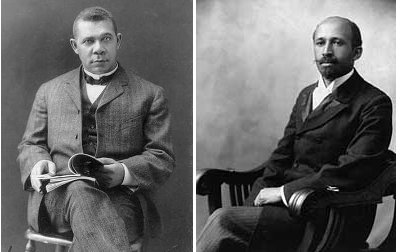
Often I ponder what African America would look like if over the past sixty years we had focused on the building of our social, economic, and political institutions instead of forcing our way into others. What if we had continued the institutional building of our forebears in the early twentieth century that eventually would be led by those classically trained at our institutions. The ideological differences between Booker T. Washington and W.E.B. DuBois were as different as night and day goes without saying. Booker T. Washington’s approach was that we do not agitate but focus on building our own institutions independent of other groups. To ensure that we were self-reliant prior to engaging. If one takes a more geostrategic view, Washington’s approach has been what China as a country has done the past forty plus years. Coming from the bottom of development to now the world’s number two economy. Prior to allowing any foreign companies into their country, they worked on building their own. This allowed them to export and generate revenues to continue to build up their own industries that could compete on a global scale. It also allowed them the ability to dictate terms when foreigners entered their country because they would not need or be dependent upon them. African America chose to follow the W.E.B. DuBois approach that promoted our talented tenth agitate and force our way into other communities’ institutions. This logic has led us to mis-celebrating often the achievement of the first African American to enter any institution that are not our own and thinking of it as progress.
Was DuBois wrong all together? Absolutely not. He was right. We needed classically trained citizens. The problem and we see it manifest today, is that other groups are only going to allow a certain number (quota) of other groups to breach their institutions. A number that allows them to feign inclusion all the while maintaining social, economic, and political control. But what of the rest? For every ten we train and produce there will be only one let in, but what of the other nine? This is the conundrum that we are faced with today. If we are looking for explanations of why the unemployment rate continues to be in double digits for African Americans – look no further than our overly trained population and under built institutional development.
“What Negroes are now being taught does not bring their minds into harmony with life as they must face it”, said Carter G. Woodson in The Mis-education of the Negro. He goes on to give an example of just where we are failing between vocational knowledge and classical education – and it applies to us as much today as it did when he wrote the book. “The Negro girl who goes to college hardly wants to return to her mother if she is a washerwoman, but this girl should come back with sufficient knowledge of physics and chemistry and business administration to use her mother’s work as a nucleus for a modern steam laundry.” Truer words have never been more spoken and as I said still as relevant today. Our students do not know how to own their fields. Many HBCUs spend more time promoting the access of their students into companies, graduate schools, and other organizations not controlled by us as validation of their fine work. Are they training their finance students to go off and improve the state of African American owned banks? No, a problem that continues to rear its ugly head in the amount of redlining and predatory lending that happens in our community. At this point our horse is so underweight it does not even have the strength to pull our cart.
It is time we reset our priorities. Focus on building institutions that are in our interest. We are not a self-dependent people and the things we do have are too few to support a nation of forty million. This was largely the point Washington was trying to stress. I do not believe he was against what DuBois wanted. He just had insight to know we needed to build institutions first so that those classically trained had some place to go upon completion. Instead, many of us continue to operate under the illusion of simply getting a degree or going to an HWCU will somehow grant me entrance and inclusion. Even a recent back and forth I had with Vivek Wadhwa on Twitter highlighted the problem of wanting to force entrance instead of building your own. He complained about the lack of “minorities” and women in Silicon Valley. My issue with this is the majority of African Americans are in the southeastern United States. Why would we not build our own Silicon Valley there? Again, we will get one in and call that progress, while the other nine are left in the cold. The energy to get that one in could be spent building an institution where all ten get in – one that we control and own not just there for “diversity”.
If we would have a honest moment with ourselves, we would note that we have become more educated and more dependent upon other groups. Asians and other immigrants who come to this country come to own businesses and assets and make it a point to do so whether they have education or not. Jewish Americans use to make it a point to start businesses to ensure their community had a place to work because they were discriminated against. Most likely taking their cue from African Americans coming out of slavery who built communities, hospitals, colleges, and other institutions to ensure there was a place for them. All of the things we have abandoned over the past sixty years to our own detriment. We keep crying foul, but it has been partly our own strategic behavior acting against our own interest the past sixty years and begging to have entrance into others institutions that have caused much self-inflicted harm. In the end, Washington and DuBois were both right, but just how their philosophies should have been applied was never considered to maximize benefit. We would do well to still consider the proper order and implementation of it even today.