Category Archives: Lists

2013’s Top 20 HBCU Rankings By Total R&D Expenditures

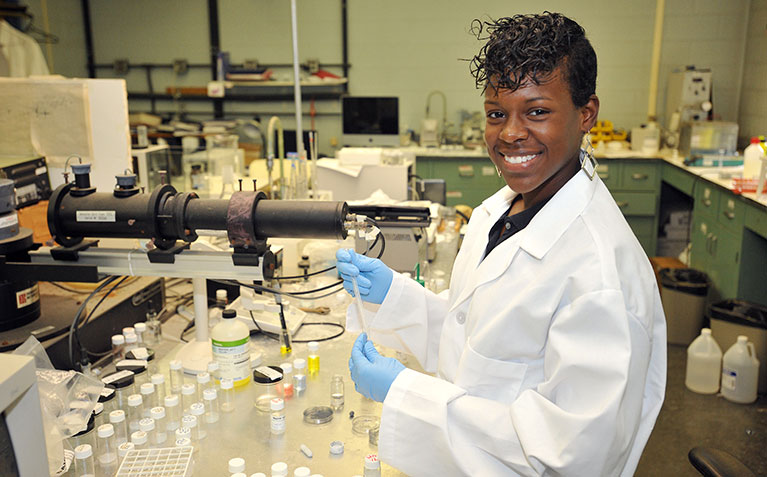
undergrad_research

HBCUs appear to have taken a step back in the research field according to the latest National Science Foundation data. In 2012, research expenditures for the top 20 HBCUs combined for $455.1 million, while 2013 combines for $450.7 million. This represents a one percent drop year over year. The top 20 HWCU research institutions saw an almost twenty three percent increase over the same period.

  • The top ranked HBCU is Florida A&M University at 197 and the twentieth ranked Virginia State University is listed at 327 in America’s college research landscape.
  • MEAC leads the way with six schools versus the SWAC with four.
  • Division II/III schools also comprise four schools on the list.
  • Overall, the 1890 HBCUs are fifty percent of the list highlighting agriculture’s importance role in HBCU research.
  1. Florida A&M University – $51,149,000
  2. Howard University – $42,789,000
  3. Morehouse School of Medicine – $36,638,000
  4. Jackson State University – $36,264,000
  5. North Carolina A&T State University – $33,994,000
  6. Alabama A&M University – $32,937,000
  7. Meharry Medical College – $22,532,000
  8. Tuskegee University – $21,150,000
  9. University of Virgin Islands – $20,041,000
  10. Charles Drew University – $18,547,000
  11. Delaware State University – $17,295,000
  12. Fisk University – $16,423,000
  13. Tennessee State University – $16,177,000
  14. Morgan State University – $15,475,000
  15. Prairie View A&M University – $13,198,000
  16. South Carolina State University – $13,159,000
  17. Hampton University – $12,461,000
  18. Alcorn State University – $11,315,000
  19. Morehouse College – $9,581,000
  20. Virginia State University – $9,535,000

TOP 20 COMBINED TOTAL: $450.7 million ($455.1 million)

Additional Notes

The HWCU-HBCU gap for research among top 20 research institutions is 50:1

Top 20 HWCUs Combined: $22.5 billion ($18.3 billion)

Top 20 Average HWCU – $1.1 billion ($910 million) vs. Top 20 Average HBCU – $22.5 million ($23 million)

Top 20 Median HWCUs – $969.8 million vs. Top 20 Median HBCU – $17.9 million

Source: National Science Foundation

HBCU Money™ Business Book Feature – The Compound Effect

51p2b2bk8pL

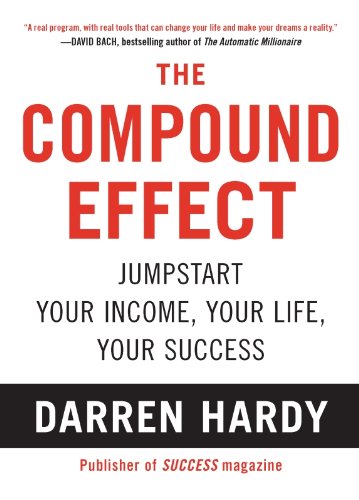
No gimmicks. No Hyperbole. No Magic Bullet. The Compound Effect is based on the principle that decisions shape your destiny. Little, everyday decisions will either take you to the life you desire or to disaster by default. Darren Hardy, publisher of Success Magazine, presents The Compound Effect, a distillation of the fundamental principles that have guided the most phenomenal achievements in business, relationships, and beyond. This easy-to-use, step-by-step operating system allows you to multiply your success, chart your progress, and achieve any desire. If you’re serious about living an extraordinary life, use the power of The Compound Effect to create the success you want.

HBCU Money™ Business Book Feature – Sisters in Science

9781557534453-1

Author Diann Jordan took a journey to find out what inspired and daunted black women in their desire to become scientists in America. Letting 18 prominent black women scientists talk for themselves, Sisters in Science becomes an oral history stretching across decades and disciplines and desires. From Yvonne Clark, the first black woman to be awarded a B.S. in mechanical engineering to Georgia Dunston, a microbiologist who is researching the genetic code for her race, to Shirley Jackson, whose aspiration led to the presidency of Rensselaer Polytechnic Institute, Jordan has created a significant record of women who persevered to become firsts in many of their fields. It all began for Jordan when she was asked to give a presentation on black women scientists. She found little information and little help. After almost nine years of work, the stories of black women scientists can finally be told.

HBCU Money™ B-School: How Is A Federal Reserve Bank President Selected?

The Minneapolis Fed explains how the twelve Federal Reserve presidents in each district are selected and the process behind it. Eleven of the country’s twelve Federal Reserve districts have an HBCU or PBI located in them. Their influence over local economies monetary policy is something all HBCU citizens should be cognizant of.

HBCU Money™ Business Book Feature – We Will Shoot Back: Armed Resistance in the Mississippi Freedom Movement

we-will-shoot-back-akinyele-umoja
Winner of the 2014 Anna Julia Cooper-CLR James Book Award presented by the National Council of Black Studies
Winner of the 2014 PEN Oakland-Josephine Miles Award for Excellence in Literature

In We Will Shoot Back: Armed Resistance in the Mississippi Freedom Movement, Akinyele Omowale Umoja argues that armed resistance was critical to the Southern freedom struggle and the dismantling of segregation and Black disenfranchisement. Intimidation and fear were central to the system of oppression in most of the Deep South. To overcome the system of segregation, Black people had to overcome fear to present a significant challenge to White domination. As the civil rights movement developed, armed self-defense and resistance became a significant means by which the descendants of enslaved Africans overturned fear and intimidation and developed different political and social relationships between Black and White Mississippians.

This riveting historical narrative reconstructs the armed resistance of Black activists, their challenge of racist terrorism, and their fight for human rights.