Category Archives: Business

The (Black) Power Couple & Family Business That Could Have Been: Entrepreneur Ron Johnson & Dr. Kimberly Reese, M.D.

By William A. Foster, IV

“Black love encompasses romantic partnerships, familial bonds, friendships, and a collective commitment to uplifting and empowering each other.” – Taylor Moorer & Alexander Dorsey

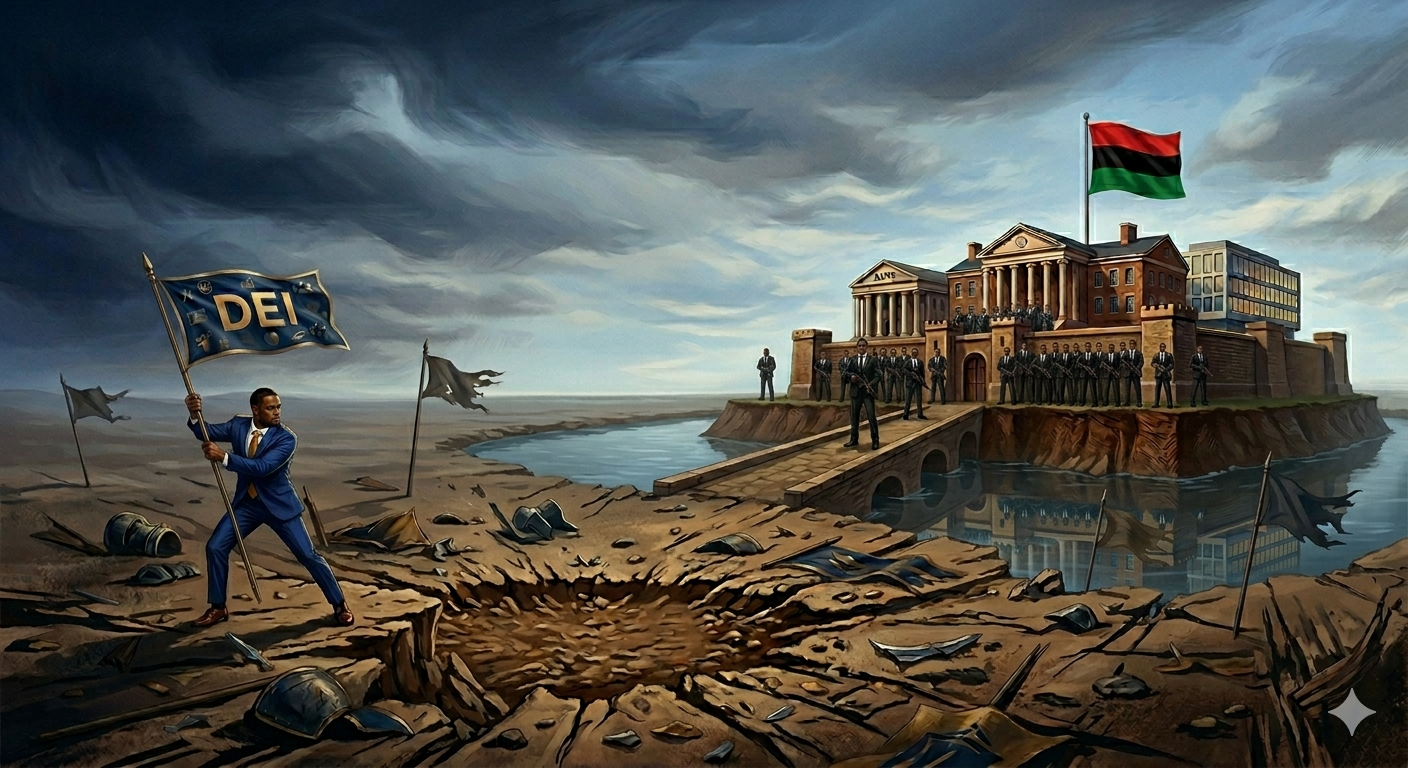
Generated image

Let me begin with this. There was no character on A Different World that held my attention the way Kimberly Reese did. Graceful. Brilliant. Driven. A woman on her way to becoming a doctor and never once apologizing for her intellect. I was mesmerized. And I still am. So forgive me if this article has a bit more heart than business metrics—though trust me, we’ll get to those too.

Kimberly Reese, played by Charnele Brown, was more than just the token “smart Black woman” character. She was a symbol. She was the dream our mamas prayed for us to meet and our daddies hoped we’d bring home. She was what happens when Black excellence meets Southern charm meets pre-med grit. And then there was Ron Johnson. Ronald Marlon Johnson. A whole enigma. Part clown. Part visionary. If Dwayne Wayne was Silicon Valley, Ron Johnson was Bed-Stuy with a business plan. He wasn’t just comic relief, he was a prototype. The first glimpse we got of the HBCUpreneur: the student hustler learning lessons in the real world as much as in the classroom. Ron Johnson was what every HBCU business school ought to teach: how to build from where you are with what you have.

But instead of marrying into mogulhood with Kimberly Reese and forming a real HBCU power couple like the Obamas of Black medicine and enterprise the writers took another route. A safe one. A disappointing one. This is the story that should have been written. This is the power couple and family business that could have been.

According to a 2023 report from the National Black Chamber of Commerce, over 70% of Black-owned businesses are sole proprietorships meaning they begin and end with one person. Fewer than 10% survive into the second generation. That’s not a flaw in ambition. It’s a failure in structure. We don’t often think in dynasties. In systems. In scaling. Now imagine a Ron Johnson who took that Hillman business degree and didn’t just open a club or restaurant, but built RJ Health Enterprises; an integrated chain of community health clinics, urgent cares, and medical real estate investments focused on underserved Black communities across the South. Imagine Kimberly Reese as co-founder and Chief Medical Officer. A respected OB/GYN on the board of Meharry, Howard Med, and Morehouse School of Medicine. Their flagship clinic, “Reese & Johnson Family Health,” could’ve become a cornerstone of African American healthcare.

We’re talking about a $500 million business in 15 years. Not hypothetical. Real math. According to IBISWorld, the U.S. urgent care market was valued at $38 billion in 2023. Black communities represent a disproportionate share of preventable hospitalizations due in part to lack of affordable, trusted, and culturally competent providers. The Reese-Johnson health business could have been both remedy and revolution.

There is something revolutionary about a Black man and woman building together not just emotionally, but economically. As of 2024, only 8% of all U.S. employer businesses are owned by Black Americans, and of that sliver, a mere 2% are co-owned by Black spouses or partners. Family businesses, when managed strategically, are intergenerational launchpads. Take the Hoffmann-Oeri family of Switzerland, owners of pharmaceutical giant Roche. Their company, founded in 1896, now generates over $70 billion annually. But more importantly, it has built economic moats and family wealth for six generations.

The Reese-Johnson duo had the potential blueprint: a physician’s vision for preventative and culturally attuned care, an entrepreneur’s eye for monetizing access, experience, and brand, and a shared identity rooted in the HBCU ethos of service and innovation. They weren’t just fictional characters. They were avatars for what could be real.

The fact that no HBCU business school has a “Ron Johnson Center for Entrepreneurship” or that no HBCU medical school offers a joint MD-MBA program named after fictional pioneers like Reese and Johnson is a shame. Not because we need to deify characters but because those characters gave us a canvas to imagine bigger for ourselves. HBCUs too often shape students to be labor. To integrate. To get the job. But not to create the job. And certainly not to imagine owning an empire with the person you love, built from the same institution that educated you both. If we are serious about economic empowerment, we must institutionalize HAO (HBCU Alumni Owned) companies as a KPI for alumni success. A different world wasn’t just the name of the show. It should have been the result.

By 2005, Reese and Johnson, both Hillman alums, launch RJ Med Group with three components: RJ Clinics, a chain of urgent care centers in HBCU cities: Jackson, Baton Rouge, Baltimore, Atlanta, Tallahassee, and Salisbury. Clinics cater to walk-ins and are integrated with digital records and telehealth by 2010. RJ Research Institute, a Black-led nonprofit focused on studying racial disparities in maternal health, hypertension, and mental health. Sponsored research partnerships with Xavier, Howard Med, and NIH. RJ Ventures, a holding company investing in HBCU med tech startups, pharmacy delivery services, and neighborhood health food stores. The group employs over 5,000 across the South and sponsors 200+ internships annually for HBCU students in medicine, public health, business, and tech. And of course, they endow the $10 million Hillman Health Equity Fellowship.

We’ve seen versions of this in real life: John and Nettie Singleton, co-founders of a Harlem-based pharmaceutical distribution company that grossed $22 million before being acquired. Dr. Patrice and Raymond Harris, founders of a network of Black-owned mental health clinics in Georgia. Michelle and Barack Obama—yes, yes, we know. But their synergy reminds us how intellect, ambition, and partnership can turn policy into legacy. Ron and Kimberly could’ve been the HBCU version of this—part CVS, part Kaiser Permanente, part Wakandan vision.

Because representation is not just about visibility. It’s about possibility. When the writers broke them up, it wasn’t just a romantic loss it was a missed opportunity to show Black America what family business could look like when rooted in love, purpose, and institution. Television shapes narratives. And narratives shape expectations. And expectations? They shape outcomes. If there were more shows modeling Black couples building businesses, maybe more Black MBAs and MDs would consider entrepreneurship as a couple’s journey. Maybe more HBCUs would invest in interdisciplinary labs between medicine and business schools. Maybe that “different world” we dreamed of would feel more like a blueprint than a slogan.

As HBCU alumni and stakeholders, we must write our stories forward. We must see every Kimberly Reese as not just a doctor, but a dynasty builder. Every Ron Johnson as more than a hustler, but an heir. And we must stop waiting for television to imagine our greatness. Let HBCUs teach love in their curriculum not just as poetry, but as partnership. Teach ownership as legacy. Teach entrepreneurship as service. Let our future Hillman couples dream bigger than GPAs and Greek life. Let them dream empires.

Kimberly Reese and Ron Johnson didn’t get the ending we hoped. But that doesn’t mean their story was pointless. It means we were given the tools. Now it’s on us to build.

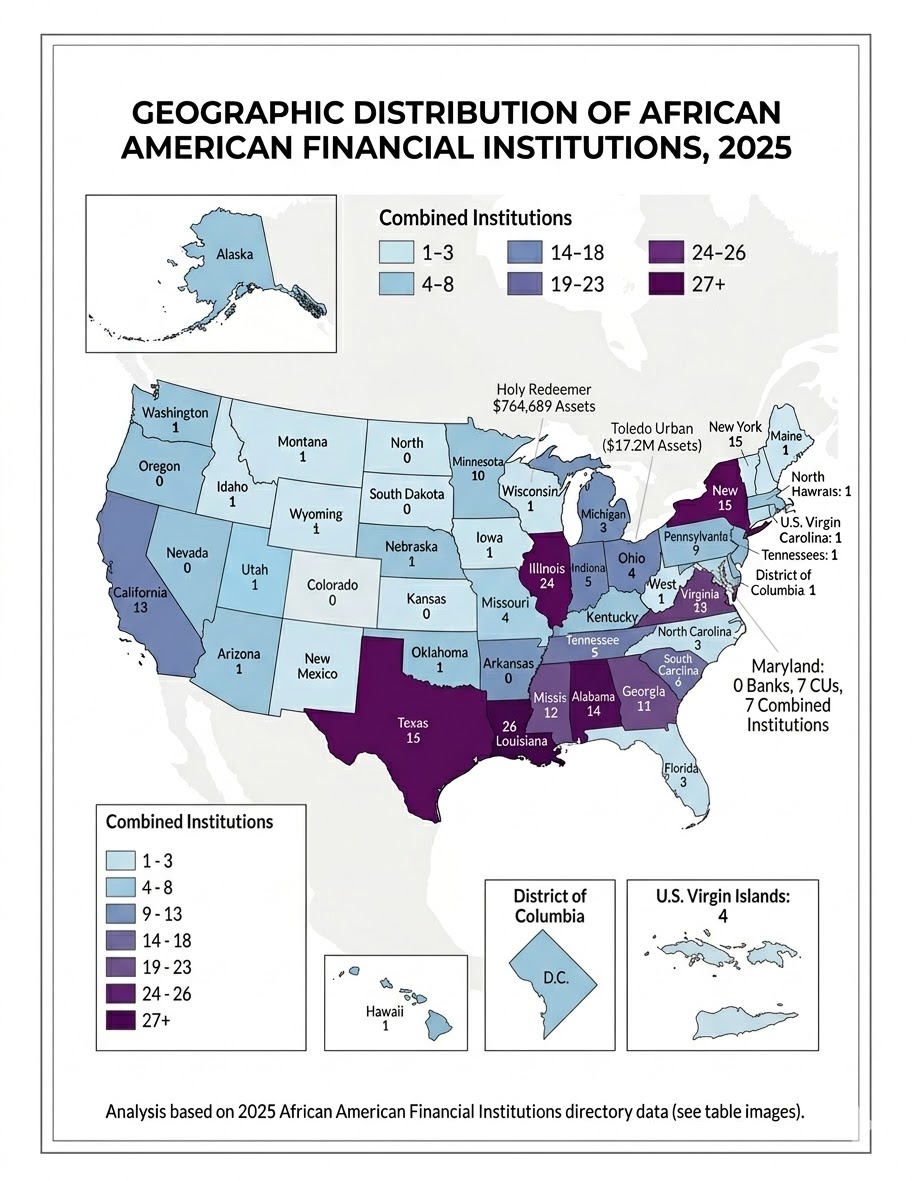
More Than A Decade Later: New York’s Carver Bank Has Not Returned To African American Ownership

At close of market May 16th, 2025 Carver Federal Savings Bank (Ticker: CARV) stock price was $1.37 and had a market capitalization of $7 million.

In the heart of Harlem, a modest stone building bears a powerful legacy. Carver Federal Savings Bank, founded in 1948 to serve African Americans shut out of the financial system, once stood as a proud monument of Black economic independence. But more than a decade after a series of financial interventions shifted its ownership structure, Carver remains out of African American hands—raising questions about the future of Black-owned banking in America’s largest city.

For much of the 20th century, Carver Federal Savings Bank wasn’t just a bank—it was a symbol. Born in the crucible of racial segregation, the bank was named after George Washington Carver, a gesture toward economic empowerment and self-reliance in an era when African Americans couldn’t freely access mortgages, capital, or commercial loans. Carver stood apart as one of the few banks chartered to serve underserved Black communities with full-service financial products, not just basic deposit services. By the 2000s, Carver had grown into the largest Black-operated bank in the United States, holding nearly $800 million in assets and a footprint that extended across New York City. But the financial crisis of 2008 brought a devastating blow to community banks nationwide. Carver was no exception.

In 2011, to prevent collapse, Carver accepted a $55 million recapitalization led by Goldman Sachs, Morgan Stanley, Citigroup, and Prudential Financial. The deal saved the institution from immediate failure but came with a price: Black ownership was diluted, and eventually disappeared altogether. “It was like watching a cultural landmark sold off piece by piece,” says Alfred Edmond Jr., senior vice president at Black Enterprise. The investors involved in the bailout argued that their capital preserved an essential community institution. Without it, Carver may have followed the path of other Black banks that shuttered in the wake of the crisis. Yet critics argue that Wall Street’s “rescue” functioned more as a quiet takeover.

As of 2024, Carver is publicly traded under the ticker symbol CARV on the NASDAQ. But its board of directors and major shareholders no longer reflect the community it was founded to serve. African American representation remains, but it is symbolic at best—not controlling. This is not merely symbolic loss. According to a 2023 Federal Reserve report, only 16 Black-owned banks remain in the United States—down from more than 50 in the 1990s. Black-owned banks hold less than 0.01% of America’s banking assets, despite African Americans comprising over 13% of the population. These institutions face outsized scrutiny, undercapitalization, and, more recently, cultural erasure. “Carver’s transformation reflects a broader systemic problem,” says Mehrsa Baradaran, professor of law and author of The Color of Money: Black Banks and the Racial Wealth Gap. “These banks are often asked to solve problems created by centuries of exclusion without the capital or autonomy to do so.”

In the wake of the George Floyd protests in 2020, corporate America made a wave of public commitments to racial equity. JPMorgan Chase pledged $30 billion. Bank of America committed $1 billion. A smaller yet symbolically important gesture came in the form of investments into Black-owned banks, often through special deposit programs or equity infusions. Carver, still labeled as a Minority Depository Institution (MDI), became the recipient of some of this renewed attention. Goldman Sachs’s One Million Black Women initiative included community bank support. JPMorgan made technical assistance available. But none of these efforts changed the fact that the bank was no longer under Black control. “The irony is that companies are promoting racial equity while owning and profiting from a once-Black institution,” says Nicole C. Elam, president and CEO of the National Bankers Association. “There’s no accountability mechanism to ensure community control is returned.” Despite all the attention, Carver’s stock remains volatile, trading below $4 per share for much of 2024. Its market capitalization hovers under $20 million—hardly a prize for large investors. And yet, efforts to return control to Black investors or the community have stalled.

At first glance, the logic is simple. If Black community leaders or financial institutions want Carver back, why not just buy it? The answer, as usual, lies in a thicket of regulatory burdens, capital constraints, and systemic inequities. First, buying back a publicly traded bank is not cheap. Not only must investors pay for the shares, they must also meet stringent capital adequacy standards, undergo intense scrutiny from the Office of the Comptroller of the Currency (OCC) and the FDIC, and develop a viable turnaround plan. That requires not only money, but financial expertise and a willing group of institutional backers. Second, Black institutional capital remains relatively shallow. The combined assets of all Black banks in America are less than those of a mid-sized regional bank. Few HBCU endowments top $1 billion. Black venture capital and private equity firms are growing but still under-resourced. “If you don’t control the capital, you don’t control the bank,” says John Rogers Jr., founder of Ariel Investments. “And Black America still doesn’t have control of the capital.”

Some believe that the pandemic-era racial reckoning presented a missed opportunity. Corporate America was writing big checks. Foundations were searching for credible ways to support Black wealth-building. Influential Black philanthropists like Robert F. Smith and Mellody Hobson were encouraging long-term investments. With the right coordination, a capital stack combining philanthropy, mission-oriented investment, and community contributions could have reestablished Black control of Carver. But that coordination never materialized. “Institution building takes vision and orchestration. We had the moment. What we didn’t have was the mechanism,” says William Michael Cunningham, an economist and banking analyst. “Everyone wanted to help, but no one wanted to lead.”

New York’s political leadership has been largely silent on the issue. Harlem’s representation in the city council and state legislature rarely mentions Carver publicly. Even as the Adams administration touts equity initiatives and minority small business support, it has not made a coordinated effort to support community banking or institutional ownership transfer. Compare this to other minority community examples. In Chicago, the city has created a $100 million Community Wealth Fund to help finance minority entrepreneurs and institutions. In Atlanta, the Russell Center for Innovation and Entrepreneurship works closely with regional banks and city government to support Black business ecosystems. “New York talks a good game,” says Inez Barron, a former city councilmember. “But when it comes to economic infrastructure, the silence is deafening.”

The erosion of Black control of Carver has not gone unnoticed by its depositors. Harlem residents and small business owners say they still bank with Carver out of loyalty—but many no longer see it as their bank. “The staff are still great. The service is personal. But it doesn’t feel like we own it anymore,” says Celeste Washington, who owns a beauty salon two blocks from the 125th Street branch. “It feels like a museum of what Black finance used to be.” Others are more cynical. “It’s the same bank name, same building, but a different master,” says a former Carver employee who requested anonymity. “The soul’s been sold.”

Despite the challenges, some financial architects are working to engineer a return to community control. One idea gaining traction is a cooperative buyback. Using a vehicle similar to a special purpose acquisition company (SPAC), a collective of Black investors, philanthropists, and mission-driven capitalists could pool resources to buy out majority shareholders. A parallel idea involves transferring shares to a nonprofit trust governed by Harlem residents and business leaders. Others are pushing for a broader transformation of Black institutional capital. “We need to stop thinking of banks as only banks,” says economist Darrick Hamilton. “Think of them as economic platforms—distribution points for housing finance, entrepreneurship, education loans, and job creation. That’s what Carver could be again.” A Black-owned financial institution, particularly in a city as rich and diverse as New York, could be pivotal in building a community-centered economic ecosystem—from affordable housing cooperatives to small business lending networks to cultural real estate ownership.

Observers say that Black colleges and universities, especially those in the northeast like Howard University, Lincoln University (PA), and Morgan State, could play a strategic role. These institutions, along with Black philanthropic funds and pension boards, could pool endowment dollars to create an acquisition consortium. Even a modest $50 million fund could provide enough leverage to reclaim majority control and reorient Carver toward mission-driven service. “Imagine if Carver became the lead underwriter of mortgages for Black college alumni in major cities,” says Anthony Jackson, a Black banking consultant. “Or the back-end servicer of student loan refinancing for HBCU graduates. That kind of synergy could multiply.” The projected ROI on such a move isn’t trivial. Assuming a 10% annual return over 30 years, a $50 million investment grows to more than $872 million—more than the combined assets of most Black-owned banks today. It’s a long-term play—but one that offers strategic cultural, economic, and financial returns.

Carver’s story is still being written. It could continue as a bank preserved in name only, a hollowed-out shell of its former self. Or, with vision, coordination, and capital, it could return to its original purpose: not merely to serve Black communities, but to be owned by them. What’s at stake is more than a bank. It’s about ownership, power, and whether the symbols of Black advancement can be reclaimed—or will remain curated artifacts of a more ambitious past.

Disclaimer: This article was assisted by ChatGPT.

Bringing New Faces to the Global Shipping Industry: A Nod to Garvey & Black Star Line

“A ship in harbor is safe, but that is not what ships are for.” – Grace Hopper

 The global shipping industry is the backbone of world trade, moving 90% of goods across the seas, yet it remains a sector with limited diversity. Despite the industry’s significance in shaping the global economy, the workforce is largely homogeneous, primarily composed of men from developed nations, particularly those in Europe and East Asia. However, in a rapidly changing global landscape, diversity has become an asset. A more inclusive workforce is vital for fostering innovation and addressing the industry’s evolving challenges, from sustainability to technological disruptions. Historically Black Colleges and Universities (HBCUs) are uniquely positioned to play a transformative role in reshaping the future of the global shipping industry. This article will explore how HBCUs can contribute to diversifying the global shipping workforce through entrepreneurship, engineering programs, and the development of new financial models, while also looking at opportunities for HBCUs to collaborate with Sub-Saharan African nations to strengthen their shipping economies.

The global shipping industry is vast, encompassing everything from container ships that carry goods across oceans to ports that manage cargo and logistics operations. According to the United Nations Conference on Trade and Development (UNCTAD), the shipping industry moves over 11 billion tons of goods every year, with more than 50,000 merchant ships currently in operation. The economic significance of the shipping sector cannot be overstated, as it is integral to the functioning of international trade.

However, while the industry generates trillions of dollars in revenue annually, it is also a sector that faces numerous challenges. These include overcapacity, rising fuel prices, environmental concerns, labor shortages, and increasing automation. As these challenges mount, the need for innovative solutions becomes more urgent. This is where a more diverse workforce can make a meaningful impact. Diverse perspectives in leadership, engineering, and operations can fuel the creative thinking necessary to solve the industry’s complex problems.

HBCUs, institutions of higher learning that were founded with the mission of educating African Americans, have long been at the forefront of producing professionals who excel in a variety of fields, including engineering, law, business, and the sciences. Engineering programs at HBCUs are known for their robust curriculum, which emphasizes both theoretical foundations and practical applications. For example, institutions such as Howard University, Tuskegee University, and Morgan State University have long had strong engineering programs that prepare students for careers in industries such as aerospace, civil engineering, and electrical engineering.

In the context of global shipping, engineering graduates from HBCUs could bring fresh perspectives to the industry. The need for highly skilled engineers in the shipping sector is crucial, particularly in the fields of automation, sustainable shipping technologies, and shipbuilding. Many shipping companies are already embracing automation, with some vessels being operated with minimal human intervention. However, as technology advances, the need for engineers who can design, implement, and maintain these technologies will only grow.

The shortage of engineers in the shipping industry is a pressing issue. According to a 2020 study by the International Transport Workers Federation (ITF), there is a growing need for skilled workers, particularly as the sector embraces digitalization and automation. This presents a major opportunity for HBCUs to expand their engineering programs and tailor them to the specific needs of the shipping industry. HBCUs can offer specialized courses in maritime engineering, shipbuilding, logistics systems, and sustainable shipping practices.

Entrepreneurship is another area where HBCUs can make a significant impact in the global shipping industry. While much of the shipping industry has been dominated by large multinational corporations, there is room for smaller, innovative companies that can introduce new business models and technologies. Entrepreneurship in shipping could involve the creation of new logistics companies, port management systems, or innovative shipping technologies.

HBCUs have a long history of nurturing entrepreneurs who have gone on to make significant contributions to various industries. The entrepreneurship programs at HBCUs often focus on fostering leadership, problem-solving skills, and creativity, all of which are essential for succeeding in the competitive world of shipping. HBCU alumni have made notable contributions to industries as diverse as technology, entertainment, and healthcare. With the global shipping industry ripe for disruption, there is an opportunity to create a new generation of Black entrepreneurs who can innovate in this space.

One possible avenue for entrepreneurship in the shipping industry is the development of sustainable shipping solutions. The International Maritime Organization (IMO) has set ambitious targets for reducing greenhouse gas emissions from the shipping industry, with a goal of cutting emissions by 50% by 2050. HBCUs, with their strong engineering programs, could become key players in developing technologies that reduce the environmental impact of shipping. From energy-efficient vessels to the use of alternative fuels, there is ample room for innovation.

Another area of opportunity lies in the logistics and supply chain sector, which has become more important than ever in the wake of the COVID-19 pandemic. The shipping industry has seen unprecedented disruptions in supply chains, which has led to a renewed focus on resilience and flexibility. HBCUs can help foster the next generation of leaders in supply chain management, creating businesses that help move goods more efficiently and cost-effectively.

In addition to engineering and entrepreneurship, financial institutions and models are another critical area where HBCUs can help reshape the global shipping industry. The role of Black-owned banks and investment firms is particularly important, as they can provide the necessary capital for new ventures and innovations in shipping.

Black banks, such as OneUnited Bank and the Carver Federal Savings Bank, play a critical role in financing businesses in underserved communities. However, they also have the potential to play a key role in financing global industries like shipping. As the shipping sector increasingly looks for ways to incorporate sustainability into its operations, there is a growing demand for green financing, which focuses on funding projects that have a positive environmental impact.

HBCUs can play a critical role in helping Black banks navigate this growing demand. HBCU alumni with backgrounds in finance, business, and engineering can help shape financial products that support sustainable shipping projects. For example, a specialized green shipping fund could be created to finance the development of more sustainable vessels, port facilities, or supply chain innovations. Such initiatives could also foster closer ties between Black-owned banks and the global shipping industry, creating opportunities for greater access to capital for emerging shipping companies.

In addition, Black-owned investment firms could become key players in the growing trend of impact investing. By focusing on companies that prioritize environmental, social, and governance (ESG) factors, Black investors can help drive change in the shipping sector by funding companies that prioritize sustainability, diversity, and innovation.

While engineering and entrepreneurship are critical to diversifying the shipping industry, it is also important to recognize the variety of other career paths within the shipping ecosystem. These roles, which range from logistics and supply chain management to port operations and maritime law, also present opportunities for HBCU graduates.

Logistics and supply chain management, in particular, is an area where HBCUs can have a significant impact. The increasing complexity of global trade requires professionals who understand not only how to move goods across borders but also how to manage and optimize the flow of goods at every step of the journey. HBCUs can help train the next generation of logistics professionals who can work in every facet of the supply chain, from procurement to distribution.

Port operations and management is another key area of opportunity. Ports are the critical juncture in the global shipping process, and they require skilled professionals who can oversee operations, manage labor forces, and ensure that goods are moved efficiently and safely. HBCUs can help fill this gap by offering specialized training in port management and logistics operations.

Furthermore, the global shipping industry requires legal professionals who understand maritime law and international trade regulations. Maritime law is a complex field that requires expertise in areas such as insurance, shipping contracts, and international treaties. HBCUs, with their robust law programs, can help train future lawyers who will specialize in these areas, creating opportunities for Black professionals to shape the legal framework of the global shipping industry.

Sub-Saharan Africa, with its vast coastline and strategic positioning along key maritime routes, has significant untapped potential in the global shipping industry. African nations have long faced challenges in building sustainable shipping economies due to inadequate infrastructure, limited human capital, and heavy reliance on foreign shipping companies. However, the region is increasingly prioritizing infrastructure development, trade facilitation, and regional economic integration, creating opportunities for collaboration with HBCUs.

Educational Partnerships and Training Programs

One of the most immediate opportunities for HBCUs lies in the development of educational partnerships that address the skills gap in Sub-Saharan Africa’s shipping and logistics sectors. HBCUs can collaborate with African universities to offer joint programs in maritime engineering, logistics management, and maritime law, developing a local workforce capable of managing and optimizing African ports and shipping fleets.

Entrepreneurship and Innovation in Shipping

HBCUs can help African nations build sustainable infrastructure solutions by training entrepreneurs to develop local shipping companies, port management systems, and innovative logistics technologies. The emphasis on green shipping innovations, such as energy-efficient vessels and alternative fuels, could help Sub-Saharan Africa become a leader in sustainable maritime solutions.

Collaborative Research and Development

R&D partnerships between HBCUs and Sub-Saharan African countries can drive technological innovation in shipping, from automation and digitalization to sustainable shipping practices. HBCUs can collaborate with African governments to improve port efficiency, reduce congestion, and optimize the flow of goods across borders.

Financial Partnerships and Investment Opportunities

HBCUs can also partner with Black-owned investment firms and African development banks to fund shipping infrastructure projects in Sub-Saharan Africa. Through collaboration, these institutions can help finance the modernization of ports and shipbuilding projects, fostering local businesses and reducing the region’s dependency on foreign shipping companies.

The global shipping industry faces significant challenges as it adapts to a rapidly changing world, from the rise of automation to the imperative of sustainability. To meet these challenges, the industry needs a diverse and innovative workforce that can think outside the box and create new solutions. Historically Black Colleges and Universities (HBCUs), with their strong engineering programs, entrepreneurial spirit, and commitment to producing talented professionals, are uniquely positioned to help diversify the global shipping industry. By expanding their curricula, fostering entrepreneurship, and strengthening ties with Black banks and investment firms, HBCUs can help shape the future of the global shipping industry, bringing new faces, ideas, and opportunities to this critical sector of the global economy. Moreover, through partnerships with Sub-Saharan African countries, HBCUs can play a transformative role in building sustainable shipping economies in the region, fostering regional integration, and reducing dependence on foreign shipping companies. These efforts not only contribute to the development of Sub-Saharan Africa but also strengthen the global shipping industry by introducing new voices, technologies, and business models that promote greater sustainability and innovation.

From Exclusion to Empowerment: How HOAs Can Protect Black Neighborhoods

“Revolution is based on land. Land is the basis of all independence. Land is the basis of freedom, justice, and equality.” – Malcolm X 

Few institutions have carried the weight of controversy in American housing like the homeowners’ association (HOA). For much of the 20th century, HOAs were weaponized as a tool of institutional racism restricting African Americans from buying into White neighborhoods through deed covenants, enforcing exclusionary zoning, and serving as gatekeepers of generational wealth accumulation. The very mechanism of neighborhood governance became one more way African America was told “you do not belong.” Yet history has a way of flipping its instruments. The very structural force once used to keep us out may be one of the few institutional levers available to keep us in. As gentrification and predatory development rapidly encroach upon historically African American communities from Houston’s Third Ward to Atlanta’s West End, from Washington D.C.’s Shaw to New Orleans’ Tremé, the need for institutional tools of land sovereignty grows urgent. Civic associations, while noble, often lack teeth. It may be time for African American neighborhoods to rethink the HOA, not as a relic of exclusion but as a shield of survival.

Most African American neighborhoods today rely on civic clubs or neighborhood associations. These bodies are typically voluntary, underfunded, and lack the legal authority to enforce community decisions. They can advocate to city councils, organize block cleanups, and serve as a cultural glue, but when it comes to confronting a developer with millions in capital and legal teams, they are simply outgunned. Civic associations cannot foreclose properties when owners ignore rules or dues, build substantial war chests because dues are voluntary and non-enforceable, or control property transfers when long-time residents sell. This means that even when a neighborhood is organized and has strong social cohesion, it remains structurally weak in the face of predatory real estate activity. Developers exploit this weakness buying distressed properties, lobbying city officials for zoning changes, and rapidly altering the fabric of communities without consent.

Unlike civic clubs, HOAs are legally binding entities. When properly designed and governed, they give communities leverage that is otherwise impossible. The ability to foreclose ensures compliance and funding. If dues are unpaid, the HOA has a mechanism to protect the community’s collective interests. Mandatory dues create a stable revenue stream. A community with 200 homes each contributing $500 annually generates $100,000. Over five years, that becomes half a million which is enough to hire lawyers, challenge city zoning, and even purchase properties outright. This institutional capital transforms neighborhoods from reactive to proactive. HOAs can also insert right-of-first-refusal clauses, allowing them to buy homes before they go to outside investors, preventing predatory acquisitions and allowing neighborhoods to decide who their neighbors will be and what developments fit the collective vision. Rules around property maintenance, density, and usage can prevent developers from converting single-family homes into high-turnover rentals or Airbnbs. These standards are not just about aesthetics they are about protecting neighborhood identity and safety.

To advocate HOAs for African American communities is not to ignore their history. For decades, HOAs were bastions of exclusion. They operated in tandem with banks, appraisers, and city planners to enforce segregation. Deed restrictions openly barred African Americans and other minorities from ownership. Even when those covenants became unenforceable after Shelley v. Kraemer (1948), HOAs found new ways to enforce segregation through indirect mechanisms. But history also shows how institutions can be repurposed. Universities once denied African Americans; now HBCUs are among our strongest institutions. Banks once denied us credit; now Black-owned banks serve as pillars of community capital. The HOA, when reimagined under African American sovereignty, can become not a wall keeping us out, but a fortress keeping us in.

Houston’s Third Ward is emblematic. A historically Black neighborhood anchored by Texas Southern University, it has been ground zero for gentrification. Developers like TPC Endeavors LLC have defied city red tags, continued illegal construction, and ignored deed restrictions designed to protect single-family character. Residents organized, called 311, attended City Council meetings but the civic tools they had were insufficient. Enforcement by the city was lax. Meanwhile, developers were renting red-tagged properties as Airbnbs. Imagine if Third Ward had a robust HOA structure. With mandatory dues, it could hire legal counsel to file injunctions. With right-of-first-refusal, it could have purchased properties neighbors wished to sell, keeping them out of speculative hands. With codified rules, it could have legally enforced single-family restrictions, protecting housing stock for families rather than transient rentals. Instead, the community is stuck fighting asymmetrical battles, people with civic will against people with institutional power. The outcome, absent intervention, is predictable: displacement.

At its core, the case for African American HOAs is about institutional economics, the accumulation of collective capital to withstand systemic pressures. The median net worth of White households is nearly eight times that of Black households. Real estate is the largest component of wealth for African American families. When neighborhoods gentrify, this wealth is not preserved; it is extracted. HOAs serve as protectors of that capital by stabilizing community land values under African American governance. They enable neighborhoods to pool financial and legal resources to resist external exploitation. They foster long-term family residence, giving children environments with consistent community standards, building social and cultural capital alongside financial wealth. HOAs also enable neighborhoods to act like firms: they can engage developers on their own terms, negotiate concessions, or even partner in development deals that align with community interests.

Of course, HOAs are not a panacea. Poorly run HOAs can become abusive or corrupt, mirroring the very forces they are meant to resist. Mandatory payments can strain low-income residents, though creative structures such as sliding scales, subsidies, or partnerships with HBCUs and community foundations can mitigate this. Forming an HOA requires legal expertise and state recognition, which many African American communities lack immediate access to, though partnerships with HBCU law schools could be a solution. Neighborhoods may resist HOAs due to historical mistrust or fear of bureaucracy. Education campaigns and transparent governance are crucial.

The HBCU ecosystem has a unique role to play. Many HBCUs are surrounded by historically Black neighborhoods now under siege from gentrification. These institutions could provide the technical, legal, and financial scaffolding for community HOAs. Law schools could draft HOA charters and litigate against predatory developers. Business schools could train HOA boards in financial management. Architecture and urban planning programs could design neighborhood development standards. University endowments could provide seed capital to help HOAs acquire distressed properties. If HBCUs become the backbone of HOA development, they transform from being passive neighbors to active protectors of Black land sovereignty.

Imagine a network of African American HOAs across the country, each tied to local HBCUs, each building collective war chests, each controlling neighborhood development. Together, they form a patchwork of institutional sovereignty one block at a time, one neighborhood at a time. This is not just about resisting gentrification. It is about reclaiming agency over land, the foundational asset of all wealth and power. Without land sovereignty, African American communities will forever be tenants in someone else’s design. With HOAs, we have the chance to rewrite that story.

While HOAs have been historically tainted by their role in exclusion, African America must confront a hard truth: institutional problems require institutional solutions. Civic will, without institutional teeth, cannot withstand predatory capital. HOAs, properly structured and governed, give our neighborhoods enforcement power, financial capacity, and development control. Land sovereignty is not optional; it is existential. Gentrification is not just about higher rents or new coffee shops, it is about the slow erasure of African American communities from the map. If we are to remain, to build intergenerational wealth, and to strengthen our institutional power, then we must be willing to use every tool available. The HOA may have once been a weapon against us. It can now be the fortress that protects us.

Model HOA Framework for African American Communities


1. Charter Outline

A. Name and Purpose

  • Name: [Neighborhood Name] Community Land Trust HOA
  • Mission: To preserve and protect African American homeownership, stabilize property values, and foster community-driven development.
  • Objectives:
    1. Protect neighborhood land from predatory acquisition and gentrification.
    2. Maintain architectural and cultural integrity of the neighborhood.
    3. Build collective financial resources for legal, development, and maintenance initiatives.
    4. Empower residents with decision-making authority over neighborhood development.

B. Membership

  • All property owners within the HOA boundary are automatically members.
  • Membership is determined by the community.
  • Voting rights are proportional to ownership, with one vote per property.

C. Governance Structure

  • Board of Directors: 5–9 elected members serving staggered three-year terms.
  • Committees:
    • Finance & Investment Committee
    • Architectural & Community Standards Committee
    • Legal & Advocacy Committee
    • Outreach & Education Committee
  • Decision-making: Major decisions (property acquisition, legal action, development approvals) require a 2/3 majority vote of the board and approval by 50%+1 of voting members.

D. Covenants and Bylaws

  • Rules governing property use, maintenance, and modifications.
  • Right-of-first-refusal on property sales to maintain African American ownership and prevent predatory acquisitions.
  • Restrictions on commercial rental operations (e.g., short-term rentals like Airbnb) unless approved by the board.
  • Enforcement of community standards through fines, liens, and, if necessary, foreclosure.

2. Funding Structure

A. Mandatory Dues

  • Base dues calculated per household (example: $500–$1,000/year depending on neighborhood size and needs).
  • Sliding scale or hardship exemptions for low-income homeowners, with supplemental funding from foundations or HBCUs.

B. Special Assessments

  • Imposed for extraordinary needs such as legal battles, property acquisition, or infrastructure repairs.
  • Must be approved by majority vote of HOA members.

C. Reserve Fund / War Chest

  • 25–30% of annual dues set aside into a reserve fund for long-term projects or emergency legal needs.
  • Goal: Maintain liquidity to purchase at-risk properties and fund legal actions without delay.

D. Partnerships & Grants

  • Collaborate with HBCUs, local Black-owned banks, and philanthropic foundations for technical and financial support.
  • Seek grants specifically for community land trusts, anti-gentrification initiatives, or neighborhood revitalization.

E. The HOA Investment Fund

  • Neighborhood Endowment: A portion of dues is invested to build a long-term community fund. This endowment can invest in local African American businesses, the stock market, or other vetted opportunities. Returns are used to subsidize senior citizens and low-income residents, provide relief during emergencies, and strengthen the HOA’s financial independence.
  • Emergency Fund: A dedicated reserve for disasters, legal challenges, or community emergencies.
  • Special Assessments: Levied for large projects (legal defense, infrastructure, property acquisition).

3. Enforcement Mechanisms

A. Fines and Liens

  • Fines for non-compliance with HOA rules (maintenance, property use, etc.).
  • Unpaid fines converted into liens that attach to the property.

B. Legal Authority

  • Covenants provide authority to take legal action against violators, including:
    • Enforcing property use restrictions
    • Preventing unauthorized sales or rentals
    • Challenging predatory development through court injunctions

C. Foreclosure

  • In extreme cases of non-payment or serious violations, the HOA has the right to foreclose on the property to protect collective community interests.
  • Requires board approval and due process, with transparency to all members.

D. Right-of-First-Refusal

  • The HOA can purchase homes before they are sold to external buyers.
  • Maintains neighborhood ownership continuity and allows control over development aligned with community goals.

4. Community Engagement and Education

  • Regular town halls and workshops on:
    • Financial literacy and collective wealth building
    • Understanding HOA powers and responsibilities
    • Recognizing predatory developers and speculative practices
  • Partnerships with local HBCUs to provide pro bono legal clinics, urban planning advice, and leadership development for HOA board members.
  • Volunteer committees for property upkeep, neighborhood beautification, and cultural preservation.

5. Oversight and Accountability

  • Annual audits of finances by independent accountants.
  • Mandatory annual reporting to members detailing:
    • Income and expenses
    • Property acquisitions
    • Enforcement actions taken
    • Development approvals or denials
  • Board elections conducted transparently with all members notified in advance.

6. Strategic Objectives for Anti-Gentrification

  1. Property Acquisition Strategy
    • Identify at-risk properties before they are sold to outside investors.
    • Use reserve funds or special assessments to purchase and hold properties for resale to qualified African American buyers.
  2. Legal Defense Fund
    • Maintain a portion of the war chest specifically for litigation against predatory developers and enforcement of zoning codes.
  3. Cultural and Architectural Preservation
    • Set clear standards for renovations and new construction that reflect neighborhood heritage.
    • Ensure that new development aligns with the neighborhood’s long-term vision and identity.
  4. Economic Empowerment
    • Encourage local entrepreneurship and small business ownership within the HOA’s commercial spaces.
    • Partner with HBCUs and Black-owned banks to provide financing, mentorship, and business support.

Disclaimer: This article was assisted by ChatGPT.

Revisiting Red Summer: Bloodshed, Black Land, and the Battle for America’s Soil

“I had crossed the line. I was free; but there was no one to welcome me to the land of freedom. I was a stranger in a strange land.” – Harriet Tubman

Race riots or rural reckoning? The answer lies beneath the surface—and often beneath the soil itself.

Was Red Summer Of 1919 Really About African America’s Land Ownership? In the blistering summer of 1919, the United States erupted in racial violence. From Washington, D.C. to Chicago, from Norfolk to Omaha, more than three dozen cities and rural towns across America were sites of bloodshed as white mobs attacked African Americans. Historians dubbed it the Red Summer, invoking both the color of blood and the communist fears of the era. To many, it was the culmination of racial tensions stoked by the Great Migration, post-war competition for jobs, and white anxiety over African American assertiveness. But a century later, a question lingers uncomfortably beneath the textbook explanations: was Red Summer not merely about urban unrest or racial animus but about land?

That question has returned with renewed urgency amid a growing reexamination of Black land ownership and its deliberate erosion over the past century. As calls for reparations echo louder, so too does the need to reassess the forces that helped decimate Black wealth and autonomy. In doing so, Red Summer becomes not merely a narrative of racist rage, but potentially the most violent chapter in a longer, quieter war – a war over land.

A Nation Within a Nation

Virginia-born coachman Thomas A. Dillon and his wife, Margaret, a domestic servant and native of Newton, Massachusetts, pose in the parlor of their home at 4 Dewey Street with children Thomas, Margaret, and Mary in 1904.

The idea that African Americans were only victims of economic exclusion in early 20th-century America is misleading. By 1910, African Americans owned more than 15 million acres of land, largely in the South. Black farmers, most of them formerly enslaved or their descendants, had managed to accumulate land under crushing odds frequently purchasing it collectively, through cooperatives, or from white landowners seeking to offload marginal plots. These holdings were not just symbolic. They were strategic.

Land ownership among Black Americans was more than a pathway to wealth; it was a bulwark against white supremacy. Land meant food security, political leverage, and a modicum of independence in a nation otherwise defined by dependency and domination. In some areas, land ownership translated into Black-majority townships or counties, Black-controlled economies, and the possibility however remote of a parallel sovereignty.

In other words, African Americans were not simply asking for equality; in some places, they were building it. And that may have been the greatest threat of all.

Elaine and the Sharecropper’s Revolt

Few episodes more clearly illustrate the link between land and lethal violence than the massacre in Elaine, Arkansas, one of the deadliest incidents of Red Summer. On September 30, 1919, African American sharecroppers organized a meeting in a church to form a union that would advocate for fair prices for their cotton crops. They were met with gunfire and a reign of terror. White mobs, backed by federal troops, killed an estimated 100 to 200 Black men, women, and children though official counts suggested only a few dozen.

The cause, according to white newspapers, was a Black uprising. But in reality, it was about economic control. The sharecroppers wanted transparency in accounting, freedom from rigged ledgers, and the ability to sell their cotton independently. The plantation economy, tightly controlled by white landowners, depended on the opposite. The fear was not Black rebellion it was Black negotiation.

The Elaine massacre exposed a hidden economic architecture. If Black farmers could collectively organize and access fair markets, they might become landowners themselves. And in the Delta, as elsewhere in the South, land was power.

Urban Unrest, Rural Intent

Though most Red Summer clashes are framed through an urban lens of riots in Washington, Chicago, and Knoxville, but the violence cannot be disentangled from broader efforts to confine Black advancement. Indeed, many urban migrants were themselves displaced farmers or sharecroppers whose land ownership efforts had been stymied, swindled, or burned out.

Take Chicago, where in July 1919, violence erupted after a Black teenager, Eugene Williams, accidentally drifted into a whites-only beach on Lake Michigan. What followed was a week of brutal violence that left 38 dead and hundreds injured. On the surface, the riot was sparked by a beach dispute. But deeper currents were at play. African Americans had begun moving into white neighborhoods, asserting their rights to live and invest in the North.

Property rights were again at the center. Black homeowners were increasingly seen as invaders. Redlining had not yet been formalized, but informal violence was already its precursor. The right of African Americans to own homes, build wealth, and control property even outside the South was met with hostility. In both city and countryside, Red Summer was a coordinated rejection of Black sovereignty, however modestly asserted.

White Fear of Black Autonomy

While land ownership by African Americans peaked around 1910, it was already declining by 1919. The reasons were manifold: discriminatory lending, racial violence, predatory legal schemes, and state-sanctioned dispossession. But Red Summer represents a psychological inflection point, the moment when white America responded not just to Black presence, but to Black self-determination.

The threat, as seen by many whites, was not just that Black people wanted civil rights. It was that they were seizing the mechanisms of wealth: land, capital, and cooperative enterprise. African Americans were not waiting for inclusion; they were building economic foundations outside the reach of white control.

This was especially threatening in the South, where many white families were still reeling from the Civil War, the collapse of slavery, and the erosion of the planter class. Black economic success particularly land ownership stood as both a rebuke and a warning. In this sense, Red Summer was not simply a racial backlash; it was a political counterinsurgency.

The Legal Infrastructure of Dispossession

What followed Red Summer was not a mere return to Jim Crow norms, but an intensification of efforts to eliminate Black landholding. A key tool was legal dispossession. Heirs’ property laws, in which land passed down without a will became jointly owned by all descendants, made Black land vulnerable to partition sales. White developers and speculators exploited these loopholes, often buying one family member’s share and forcing a sale of the entire property.

According to the U.S. Department of Agriculture, African Americans lost 90% of their farmland between 1910 and 1997. Much of that was not merely through economic decline, but through coercive legal and extra-legal mechanisms: arson, lynching, and fraud.

Red Summer thus marked a gateway to systemic dispossession. In the decades that followed, the same violence that exploded in 1919 became bureaucratized: through zoning, lending discrimination, eminent domain, and legal chicanery.

Reparations and the Return to the Land

The lingering effects are visible in the data. Today, Black Americans own less than 1% of rural land in the United States. That figure stands in stark contrast to the 14% of the U.S. population that is Black. The wealth gap between Black and white families remains yawning, much of it attributable to the intergenerational transfer of property, land and home equity.

Reparations proposals have increasingly focused on this disparity. But to properly assess the scale of restitution, history must be rewritten to acknowledge not just the loss of life, but the loss of land. If Red Summer is reframed as a land war not only a race war, then it demands a different response.

Programs such as the Black Farmers Fund, the Federation of Southern Cooperatives, and the work of legal nonprofits like the Land Loss Prevention Project have begun to claw back some ground. Yet without a federal reckoning one that links racial violence to economic theft the narrative remains incomplete.

A Matter of Sovereignty

Land, as Malcolm X once noted, is the basis of all independence. Red Summer was not simply a spasm of postwar bigotry, but a calculated assertion of dominance over a people on the cusp of transformation. African Americans were not merely aspiring to equality; they were building sovereignty through land, labor, and law. The backlash was predictably violent. But violence, in this case, masked a deeper agenda: the eradication of a Black landowning class that threatened the racial and economic hierarchy. In the end, Red Summer may be remembered not only for its flames but for the fertile ground those flames sought to burn. It was not only a summer of blood. It was a war over soil.

📅 Visual Timeline: The Red Summer of 1919

April 13, 1919 – Jenkins County, Georgia

A violent confrontation erupts in Millen, Georgia, resulting in the deaths of six individuals and the destruction of African American churches and lodges.

May 10, 1919 – Charleston, South Carolina

White sailors initiate a riot, leading to the deaths of three African Americans and injuries to numerous others. Martial law is declared in response.

July 19–24, 1919 – Washington, D.C.

Racial violence breaks out as white mobs attack Black neighborhoods. African American residents organize self-defense efforts.

July 27–August 3, 1919 – Chicago, Illinois

The Chicago Race Riot begins after a Black teenager is killed for swimming in a “whites-only” area. The violence results in 38 deaths and over 500 injuries.

September 30–October 1, 1919 – Elaine, Arkansas

African American sharecroppers meeting to discuss fair compensation are attacked, leading to a massacre where estimates of Black fatalities range from 100 to 800.

October 4, 1919 – Gary, Indiana

Racial tensions escalate amid a steel strike, resulting in clashes between Black and white workers.

November 2, 1919 – Macon, Georgia

A Black man is lynched, highlighting the ongoing racial terror during this period.

Disclaimer: This article was assisted by ChatGPT.