Author Archives: hbcumoney

The Finance & Tech Week In Review – 12/17/16

zu3yfgjbqpaifw5vkjxp

Every Saturday the HBCU Money staff picks ten articles they were intrigued by and think you will enjoy for some weekend reading impacting finance and tech.

US investors took a 10-question investor literacy quiz answered only 4.4 questions right.FINRAFoundation bit.ly/2h5fujI

The top origin nations and destinations for immigrants coming to the U.S. l stlouisfed bit.ly/2hxwVN2

What is behavioural science, and how is it going to change your life? l wef wef.ch/2hoBhCG
Where will our energy come from in 2030, and how green will it be? l wef wef.ch/2geP7qp
Educators, join us Jan. 12 for Federal Reserve Chair Janet Yellen’s first town hall for teachersstlouisfed bit.ly/2gOZ9SA
The element hadn’t been found on Mars yet, and it could mean a lot for its habitability l ScienceNews goo.gl/BMMBcr
3D printed models help mend broken heartsnwtls newatl.as/2gQTgUU
4 historic security events of 2016 and what they teach us [Infographic] l CIOonline ow.ly/y3pg307b40S
Scientists won’t stop discovering stuff, no matter what l newscientist bit.ly/2hq4ArM

The HBCU Money™ Weekly Market Watch

Our Money Matters /\ December 16, 2016

A weekly snapshot of African American owned public companies and HBCU Money™ tracked African stock exchanges.

NAME TICKER PRICE (GAIN/LOSS %)

African American Publicly Traded Companies

Citizens Bancshares Georgia (CZBS) $8.96 (3.58% UP)

M&F Bancorp (MFBP) $4.00 (1.23% DN)

Broadway Financial Corporation (BYFC) $1.54 (3.75% DN)

Radio One (ROIA) $2.77 (2.66% DN)

African ETFs

Global X MSCI Nigeria (NGE) $4.40 (0.45% DN)

Market Vectors Africa (AFK) $19.46 (0.69% DN)

African Stock Exchanges

Bourse Regionale des Valeurs Mobilieres (BRVM)  278.60 (0.77% DN)

Botswana Stock Exchange (BSE)  9 432.57 (0.14% DN)

Ghana Stock Exchange (GSE)  1 579.12 (20.84% DN)*

Nairobi Stock Exchange (NSE)  130.81 (N/A)

Johannesburg Stock Exchange (JSE) 49 691.31 (2.02% DN)

International Stock Exchanges

New York Stock Exchange (NYSE) 11 125.46 (0.06% DN)

London Stock Exchange (LSE)  3 803.70 (0.16% UP)

Tokyo Stock Exchange (TOPIX)  1 550.67 (0.52% UP)

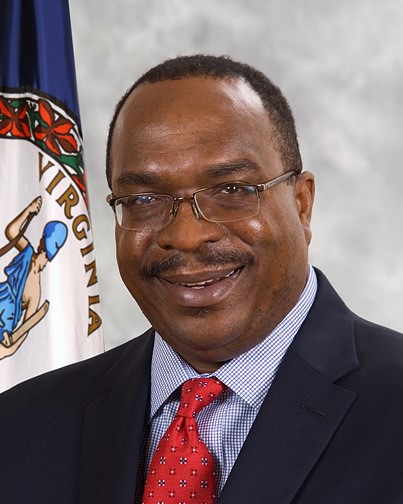
The Endowment Edge: A Conversation With Virginia State University’s Mr. Kevin Davenport

HBCU Money’s editor-in-chief, William A. Foster, IV, sits down with the VP of Finance at Virginia State University located in Petersburg, Virginia. Some of the highlights were how HBCUs can close the wealth gap between HBCU and PWI/HWCU endowments, HBCU financial transparency, and more as Mr. Davenport helps lead VSU’s financial health into the second half of the decade with a continued eye on the generations ahead.

headshot-for-kevin-davenport

Mr. Davenport, thank you for taking the time with us. Let us start with telling us a bit about yourself and how you came into your current position? I have worked in higher education finance for over 25 years. I’ve served in a leadership capacity at both public and private institutions and at institutions as large as 35,000 students and as small as 1,000 students. I have a broad finance background which includes hands-on experience with cash management, endowments, investments, budgets, financial statements, audits and financial analysis.

I have served both HBCUs and PWI/HWCUs. I have been Chief Fiscal Officer (CFO) at three HBCUs in Virginia—Virginia Union University, Virginia State University and Saint Paul’s College. I have also served as Treasurer at a PWI/HWCU in Virginia—Virginia Commonwealth University and several of its related foundations (VCU). At VCU, I managed a university working capital pool of about $350 million and oversaw the financing of over $600 million in capital projects. I also serve on the City of Richmond Retirement System Board and Advisory Committee, which oversees approximately $500 million in retirement funds.

I’m a graduate of an HBCU— Hampton University with a Bachelor of Science degree in Accounting. I am also a Certified Public Accountant and have earned an MBA from the College of William and Mary and an Ed.S from George Washington University.

Virginia State University and its foundation combined have one of the largest endowments among HBCUs. For those who are unclear about the dynamic of there being two separate endowments, can you give us a bit more detail of why they are separate? How does their separation impact each investment strategy? The university has a $46 million endowment. About $32 million (or about 70%) of the endowment is managed by the University and the remaining $14 million (or 30%) is managed by a related foundation. Like most public universities, VSU established a foundation to allow greater autonomy in managing assets like endowment funds. After the foundation was established, some donors wanted their contributions to continue to be deposited to the University. Since then, the University continues to give its donors and alumni the option of donating to the university or the foundation.

Each endowment is governed by its own investment policy, spending rate and asset allocation targets. The endowments are managed separately, but their investment philosophy and strategies are similar. Both endowments are well diversified portfolios and conservatively invested to protect against a downturn in the market.

There seems to be concern among HBCU alumni who do not think the endowments of HBCUs are transparent enough and therefore create hesitancy to give. What can be done by HBCUs to allow for their alumni base to feel like there is a clear understanding of how their donations are being invested, allocated, and reinvested? I think HBCUs must ensure the highest level of transparency and accountability to its alumni and donors who establish endowment funds. Alumni and donors should receive a report each year detailing the activity in their individual endowment funds. This report should include total dollars for contributions, earnings, distributions and fees made to and from the endowment.

Most universities charge an internal administrative fee to cover costs for administering the endowment. HBCUs need to ensure these administrative fees are fully disclosed to donors and alumni. Sufficient detail should be provided on how the fees are calculated, how the fees are collected, and what the fees are being used for. Governing bodies need to make sure they review and approve all fees periodically.

It is also a good best practice to have donors and alumni sign an endowment agreement at the time the endowment is established. This agreement should provide donors with a clear understanding of how donations are being invested, allocated and reinvested.

virginia_state_university-jpg

The endowment gap between PWI/HWCUs and HBCUs has grown from 46:1 in 1993 to 106:1 today. What do you think are some ways that gap can start to be closed, especially with HBCUs facing mounting financial pressure? Is there anything Virginia State University is doing in particular? HBCUs can provide greater emphasis on endowment growth. This is a challenge, especially as many HBCUs face more immediate and pressing needs. But administrators have to fight to make it a priority. VSU is aggressive in reaching out to our alumni and donors about the benefits of endowment giving. Our fundraisers include it in their fundraising literature and make it a priority in soliciting funds from alumni and donors.

HBCUs can also work with their governing boards to establish prudent investment and spending policies. A solid investment strategy can help HBCUs earn more on their endowments, thus grow their endowments to help close the gap.

 Over the summer, a ground swell occurred that has spurred many African Americans to move their banking relationships to African American owned banks and credit unions. Very few HBCUs have banking relationships with African American owned banks, while we know you can not speak for other HBCUs, can you explain Virginia State University’s current relationship with any African American owned banks if any? And what does it say that there is not more husbandry between HBCUs and African American owned banks? VSU does not have any formal relationships with African American owned banks or credit unions. There is a nearby credit union that bears the name “Virginia State University Credit Union”, but the entity has no legal association with the University.

In terms of investment strategy, does Virginia State University primarily internally manage its endowments; use external managers, or a mixture of both? The University engages professional investment advisors and managers to help it oversee its endowment funds. The investment advisors and managers have discretion to invest the funds according to a board-approved investment policy. The investment policy allows the endowment funds to be invested in a diversified investment pool which includes domestic and international equities, fixed income, hedge funds, real estate, and private equity.

The current macro environment in the United States of the zero interest rate policy by the Federal Reserve for the past decade has changed the way many individual and institutional investors set strategy. How do you think it has impacted smaller endowments like HBCUs versus the Big 30 college endowments? Because of the current low interest environment, institutional investors have had to go elsewhere to make money. Institutional investors at the Big 30 college endowments have increased their allocations to non-traditional and riskier asset classes such as private equities, international equities, hedge funds and real estate. Smaller endowments, like at HBCUs, have a harder time accessing these non-traditional asset classes. Further, the Big 30 endowments have been able to hire high-paid Chief Investment Officers (CIO) and specialized investment professionals to help them earn greater returns. Smaller endowments are not able to pay CIOs and their staffs. As such, the smaller endowments continue to lag the investment performance of the Big 30 endowments thus continuing to increase the performance gap.

In following up on that last point, given that 30 colleges & universities control 52% of America’s $500 billion college endowments and 100 times all HBCU endowments combined, what are your thoughts on a policy that would redistribute some of PWI/HWCUs endowments to HBCU coffers or incentivize large donors to give to smaller endowments? I like the idea of incentivizing donors to give more to smaller endowments. Perhaps, donors can receive a greater tax break when donating to smaller endowments like the ones at HBCUs.

large_08_campus

Student loan debt seems to have direct correlations to college endowments, regardless of the school’s cost. We noted in our last report that despite being cheaper, HBCU graduates are finishing with an average of $30,344 in student loan debt versus the top 50 college endowments who finish with $22,020. Coupled with African America’s wealth being sixteen times less than their counterparts this makes student loan debt a compounding issue for wealth building. Is there a more active role HBCUs can take in helping close the wealth gap in the coming decades for African American families? I think the major driver for greater student debt at HBCUs stems from family wealth. According to a recent study done by the State Council of Higher Education in Virginia, the average family income of a student at the public HBCUs in Virginia is about $30,000 per year as compared to an average of about $60,000 per year for the other public universities. In fact, the average family income for some of the largest Virginia universities was over $100,000 per year. Additionally, over 85% of VSU’s undergraduates receive need-based financial assistance which is much larger than PWI/HWCUs. HBCU students struggle to pay the costs so HBCUs must keep their cost of attendance low compared to other PWI/HWCUs. A larger endowment would certainly help HBCUs fill their student’s need and thus reduce their debt burden.

For those interested in one day becoming the head of a university endowment what advice would you give them? If you are interested in heading a university endowment, my advice is to understand that your responsibilities go much further than merely overseeing institutional investments. At a college or university, you would be required to regularly communicate to a broad range of constituents such as donors, alumni, students, faculty, governing boards and administrators.

Thank you for your time; in parting do you have anything you would like to add? No.

The HBCUpreneur Corner – Howard University’s Najla T. & Good As Green

unnamed

Name: Najla T.

Alma Mater: Howard University

Business Name & Description: Good As Green, LLC is a creative vegan food company that provides beneficial superfoods and fresh produce transformed into exotic, gourmet meals. We have provided food for nonprofit organizations and shipped some of our menu items directly to loyal customers, and we host fun brunch and dinner pop-up events.

What year did you found your company? Good As Green, LLC was officially established this year (2016), but I have been providing meals for my clients as a personal trainer since 2014. That’s actually how my company began.

What has been the most exciting and/or fearful moment during your HBCUpreneur career? I have had a company in the past, that I provided media services such as video editing and marketing presentations. That was when I graduated college, as I graduated from the John H. Johnson School of Communications (Old Howard) with a degree in Communication. When I was experiencing an arduous time finding opportunities, I just created my own and freelanced for a while. It was very exciting when I first began and I was doing what I really enjoyed, but it was DIFFICULT and REALLY ROUGH! I had to move back home, save money, work multiple gigs, and work was inconsistent. Although, this time around, I’m much more fulfilled. I’m happy for the inconsistencies and still involved with media, but now as a health and fitness consultant. I was SO afraid to launch Good As Green, especially because of what happened with my first company, but I have such a wonderful support system and so many people encouraged me to take the leap. I was afraid since I didn’t attend culinary school, but people OTHER than my family enjoyed my food and I’ve helped so many people adopt plant-based lifestyles, so the fear subsided. When I launched a pop-up in DC back in September, everything that could go wrong tried to, but it ended up being a successful first event. I was nervous before, during, and after the event! I knew I made the right decision when so many people attended the pop-up, including one of my non-vegan friends all the way from New Jersey, and genuinely enjoyed the food (we are brutally honest up North LOL). People who don’t even like beets enjoyed my Smoky Beets burgers, so I received many requests to deliver and ship them.

One of the most rewarding moments was when I provided breakfast for Run Hope Work, a non-profit organization that provides mentorship and trade certification for Washington, D.C. youth. They were highly apprehensive and skeptical at first, but they really enjoyed the food I provided! I made Sweet Potato French Toast, Smoky Beet Sausage, Good As Home Fries (we use green bananas instead of potatoes), Apple Pie Oatmeal, Loaded Breakfast Burritos, Smoky Arugula Avocado Toast, Alkaline water, and Homemade Hemp Protein Shakes (that they described as vanilla milkshakes). That week that I provided breakfast was confirmation for me because these guys were eating McDonald’s and carryout. Many said they hadn’t eaten “green stuff” before and they really didn’t know if vegan food would taste good. It made me feel good and is my mission. I provide creative whole foods, not just tofu or seitan. I also list the benefits of most of the ingredients I use.

What made you want to start your own company? I really enjoy helping people! The first time, I was forced into creating my own opportunity, but this time around, it’s much more rewarding. As a personal trainer, the most important component that I found my clients struggling with the most was food. Some clients told me straight up, “I’m too lazy to cook.” I didn’t want to waste my time or my clients’ money by allowing them to sabotage themselves, so I did their meal prep for them and all they had to do was add their own meat if interested. So many of my clients never added the meat and were completely satisfied. I then began providing meals for people simply curious about vegan food. I wanted to replicate the feeling I had when people told me that I assisted them in living healthier and so Good As Green began!

Who was the most influential person/people for you during your time in college? It’s really interesting when you attend an HBCU. Most of the time, you really just have to figure things out on your own or make due with what you have. It really prepped me for where I am today. I’ve always been a go-getter, but I’m a lot more resourceful because college helped me learn that.

How do you handle complex problems? I believe meditation is important. It keeps you calm, centered, and assured that there is a solution that you must work to find. I’ve always been good at figuring things out. My mother and grandmother taught me how to research what I didn’t know and try, even if I don’t know exactly how it pan out. Being tuned into the universe helps you KNOW it will all work out.

What is something you wish you had known prior to starting your company? I wish I had known a LOT of things, but I don’t want to focus on those things because I have since figured out ways to correct them and I don’t feel like getting the side eye from fellow business owners, LOL.

Data from Innova Market Insights has shown a 60 percent rise in the number of global food and beverage launches using a vegetarian claim between 2011 and 2015 and vegan google searched have climbed over 30 percent from 2014 to 2015. The vegan lifestyle though has always been around for a long time even if it did not have a name, but what do you believe has caused its recent surge among the American population in the past decade into more mainstream? The funny thing is back in 2011, I predicted this would happen. With the rise in disease diagnoses, people are looking for alternative methods to conventional medicine. People want to live longer and better. Many people do not see the direct link between food and disease. I believe that people became more health conscious when the GMO bill was passed. The United States of America is the most meat-centric country. I believe people were beginning to notice the effects of that. People now see the spike in obesity, heart disease, and cancer and they want to change that. In 2013, when I began a project focused on vegetarianism, people couldn’t see my vision because it wasn’t yet normalized the way it is now. I am happy to see the acceptance of the lifestyle and now we have more and better options (instead of suggesting a simple salad).

gag-outside

Your business model is certainly unique where you are essentially combining a restaurant, event planning, and clubesque all in one. What was the inspiration and euphoric moment that made you decide on this business model? I know what I like when I go out. I hate that I have to eat first before an event because there probably aren’t going to be any vegan option. I hate that I have to eat AFTER an event, if anything is even open, because there aren’t many options. Most of the restaurants that offer vegan cuisine are fast-food. People assume that vegans are just one way: we all wear clothes from Whole Foods and preach about veganism all day. That’s definitely not me or the vegan friends in my circle!  I enjoy experiences. I enjoy vibing with others and meeting new people.  I decided to offer fun events with healthy, delicious food and beneficial beverages. As Howard Alum, everything is an event! I wanted to creative a dope atmosphere with dope people, good music, and food that just happened to be vegan. Since that was done successfully in September and now that I’m getting inquiries for other cities, I know this is a demand.

gag-inside-beet-burger

Products are always a way to leverage and grow a company’s visibility and revenue. Do you see Good As Green eventually moving in that direction or will you keep the focus on the core business at hand? At this time, I’m not particularly sure about that, but I am receiving a lot of orders for my Smoky Beet Burgers. This area is still new to me and there are lots of challenges, but it seems to keep Good As Green profitable in-between pop-up events. I’m still perfecting this, but people really seem to love it. My main focus, though, is on my pop-up and other events.

HBCU agriculture or HBCU 1890 schools that operate farms seem like a natural fit for your company. In what ways do you think you could find collaborative ground with them? I hadn’t thought of it until this question. I love bartering and collaborative efforts, especially with HBCUs. I will definitely look into it and gladly accept advice about it!

What do you believe HBCUs can do to spur more innovation and entrepreneurship while their students are in school either as undergraduate or graduate students? I am not particularly sure about other HBCUs, and I’m sure they do also, but Howard highly encourages entrepreneurship. Most of our courses required independent projects. As a Broadcast Journalism major, I had to learn ALL the aspects of broadcast production, not just on-air work. I learned about radio production, video production and editing, script writing, and the running of a newsroom. This especially came in handy when I ran my own projects. I would be out on assignment, lugging a camera, microphone, and other equipment, while students from other schools had a crew/team. It definitely came in handy after school! Honestly though, I wish the institution was more supportive of the alumni.

How do you deal with rejection? I reject rejection. I don’t believe in the word “No” when it comes to something I’m passionate about. It’s just not a good fit for you in this particular situation at this particular time. That’s all it means to me.

When you have down time how do you like to spend it? When I have down time, I love going on food adventures because I’m greedy and I don’t consider it “down time,” because I schedule it into my day, but I really enjoy working out. I wish I could travel more. I’m working hard at spending more time with family and friends. That seems very rare when you are running your own business!

What was your most memorable HBCU memory? I really wish that I lived more in my moments at Howard! I had such great times with great people! I loved hanging out in the Caf’, Bisonette practice, and hanging out on the yard. Of course I loved when Homecoming came around. I believe the most memorable moment at Howard was meeting Debbie Allen and standing next to her. She was actually my inspiration for choosing Howard! At the time, I was in many dance and performing arts programs, so I believed I was going to walk in her shadow. I also admired her direction for A Different World, so when she was standing next to me, I secretly lost it! She was sweeter than I imagined and I was grateful to receive some of her wisdom.

In leaving is there any advice you have for budding HBCUpreneurs? I would definitely encourage budding HBCUpreneurs to never give up. It will be challenging and you will always have to decide on a new direction or reinvention, but stay true to YOUR vision. Once you take that leap, it’s a continual learning process that you won’t understand until you actually do it. All the research in the world won’t be comparable to the actual experience. It is important to engage your supporters. IT IS OKAY TO RECEIVE HELP! That’s one of the biggest lessons I learned. We have a great network within the HBCU community, so let’s support and patronize each other’s businesses! Also, It’s OK to promote yourself. You MUST because if you’re not excited about it, who else will?

To follow Najla and Good As Green, check out the company’s social media and contact information below:

http://www.GoodAsGreen.net

Instagram: @GoodAsGreenEats

Twitter: @GoodAsGreenEats

Facebook: @GoodAsGreenEats

Phone: 347-871-1220

Personal Finance Tips From Warren Buffett

f41ac52d9482eed7d93f50d7bcc7f6aa

The HBCU Money™ staff also adds some commentary to the subjects of Mr. Buffett’s quotes to provide more depth and better understand the points.

  • EARNINGS: There are three different types of income. Earned, passive, and investment income. Guess which is taxed the highest? The one you go to work for. Passive income (e.g. rental property, limited partnerships, intellectual property) if properly managed can be taxed at near zero income. Investment income (e.g. dividends from stock ownership) falls under 0, 15, or 20 percent based on taxable income. More importantly, these incomes are not based on you leaving the house or your boss liking you.
  • SPENDING: It is not how much you make, but what you do with what you make. There is nothing wrong with having nice things, however, in an era where people do things to project a social media lifestyle, keeping up with the Joneses, Smiths, and everyone else has become even more problematic. Use personal finance tools like Mint.com or others to help you track your spending and give yourself a grade on a month by month basis.
  • SAVINGS: Why is it so hard? Wages have been flat for a long time that is for sure, but we must play the hand we are dealt. The question is does pride get in the way of many people saving.  Most people’s biggest expense is housing, yet how many are willing to take on a roommate or two for a year or two to save? Saving must become a habit that can start small and snowball with time with discipline. Find a friend and compete with them if that helps, but find the thing that pushes your button to do it.
  • RISKS: Are you 50/50 about a coming raise and decide to buy that car you always wanted or put that foreign vacation on the credit card? Then you just failed at risk management. Risk is always about understanding the pros and cons of any financial decision and finding ways to mitigate that risk. You bought the car? Okay, so you Uber and add extra income until you get the raise. If you do not, then keep Ubering. Again, risk management is vital to one’s long-term financial planning.
  • INVESTMENT: When do you need a financial advisor? When you are rich you say? Think again. The moment you have a job you need a financial advisor and probably not just one. Checks and balances (risk management). Is your only investment account your retirement account? There are multiple financial investments to consider from owning stocks, owning a stake in a small business, to even owning land. All of these make up the ingredients that is your financial pie. How one distributes them is up to your own risk tolerance, but you have never eaten an apple pie using only apples. No one thing is going to make you wealthy or preserve it.
  • EXPECTATION: This is something that we must reflect on within ourselves and from those around us. We expect to be wealthy, but is our behavior matching it? Are we surrounding ourselves with likeminded people in our pursuits? We can not expect to be financially sound and surrounded by those who want to go to the mall every weekend. Are we patient with our investments? Or do we chase “get rich quickly” schemes because we have not educated ourselves properly to have the proper expectation of savings, budgeting, investing, and the TIME it takes to accomplish those goals.

Need in depth help on all of the above?

Watch this staff recommended Youtube video by Dan Griffin, CPA entitled “Saving & Investing Basics: A Guide for Young Adults” here.

Be sure to also read HBCU Money’s “Recommending Reading for African American Financial Starters” here.