Author Archives: hbcumoney

African America’s October 2020 Jobs Report – 10.8%

OVERALL UNEMPLOYMENT: 6.9% (7.9%)

AFRICAN AMERICAN: 10.8% (12.1%)

LATINO AMERICAN: 8.8% (10.3%)

EUROPEAN AMERICAN: 6.0% (7.0%)

ASIAN AMERICAN: 7.6% (8.9%)

Previous month in parentheses.

Analysis: All groups saw drops in their unemployment rates, led by Latino America’s 150 basis point decrease. African Americans had second smallest decrease, with unemployment dropping 160 basis points.

AFRICAN AMERICAN UNEMPLOYMENT RATE BY GENDER & AGE

AFRICAN AMERICAN MEN: 11.5% (12.6%)

AFRICAN AMERICAN WOMEN: 9.2% (11.1%)

AFRICAN AMERICAN TEENAGE: 23.6% (20.7%)

AFRICAN AMERICAN PARTICIPATION BY GENDER & AGE

AFRICAN AMERICAN MEN: 65.4% (64.7%)

AFRICAN AMERICAN WOMEN: 60.1% (59.8%)

AFRICAN AMERICAN TEENAGE: 30.3% (30.0%)

Analysis: African American Men and Women saw declines in their unemployment rate, rates while African American Teenagers saw an substantive uptick in their unemployment rate by 290 basis points. Participation rates for Men and Women improved marginally. African American Teenagers saw a modest improvement of 30 basis points in October.

African American Men-Women Job Gap: African American women currently have 1,075,000 more jobs than African American men in October. This is a increase from 1,030,000 in September.

CONCLUSION: The overall economy added 638,000 million jobs in October. African America added 433,000 jobs in October or 67.9 percent of the overall jobs. From Yahoo Finance, “U.S. employers have brought back fewer jobs on net in every month since June, when payrolls rose by a record 4.78 million as stay-in-place orders and lockdowns lifted and allowed many businesses to restart operations. That trend continued in October, as the economy only slowly brought back payrolls that had been lost at the start of the pandemic. The October jobs report also continued to reflect a worrying trend seen in the past several months’ worth of data: Many individuals’ temporary furloughs or layoffs have become permanent.”

12 Things Your HBCU Alumni Association/Chapter Needs To Do To Be Financially Successful

“Planning is bringing the future into the present so that you can do something about it now.” – Alan Lakein

Far too many HBCU Alumni Associations and Chapters have been asleep at the wheel for far too long financially. They have conducted themselves like a child who says they want to start a lemonade stand, but refuses to take the time to make a plan of acquiring lemons, sugar, water, and certainly not building a lemonade stand. There is more time spent playing with their friends and then seemingly complaining that their friends do not support their lemonade stand – that does not exist. It is enough to drive one mad. We have laid out twelve steps that HBCU alumni associations and chapters need to do to make themselves financially integral and sustainable for the future to meet the financial needs of both African America and the HBCUs they serve.

  1. Move banking accounts to African American owned banks and/or credit unions. It is utterly baffling that HBCUs and HBCU Alumni Associations/Chapters at this point still have not done this very elementary point of economic development given the acute presence of the #BankBlack movement over the past few years. Public HBCUs have more red tape by being state institutions and there are significant political dynamics at play there, but private HBCUs and HBCU alumni associations/chapters at private or public HBCUs at this point simply have no excuse.
  2. Invest in technology, especially financial technology. If HBCU Alumni Associations/Chapters want younger alumni involvement as they claim then they have to come into the 21st century – do you realize we are two decades into the 21st century and some HBCU foundations, alumni associations/chapters do not have a functioning web presence. This is where typically you would insert a mind blown emoji or gif. It is unfathomable and inexcusable at this point. HBCU Alumni Associations/Chapters need a web and social media presence independent of the mother institution for a myriad of reasons that should be readily apparent without great explanation. Alumni associations/chapters can work out an agreement with their schools to create work study that involves social media work and web development for those students who are interested and have the necessary skillset. Otherwise, spend the money and pay for a real web designer and social media manager – it is worth it. Financial technology – accepting payment by Venmo, CashApp, etc. should not be groundbreaking it should be standard. There are a plethora of financial technology available for nonprofit organizations. This should be the job of the treasurer at both the national and chapter levels to find technology that can improve the financial efficiency.
  3. Collect information on your members. Know your association/chapters strengths and weaknesses. If you plan on doing education outreach with your alumni association/chapter, it may help knowing who in the organization that has a background and connections in education. Need to put on an event? It may help to know the alumnus who worked in event planning or knows someone who does. Other information should be household income, level of education, home ownership, etc. The more information the better (we will explain the value of this in another point). But not knowing what assets you have is a dearth of proper planning and strategy.
  4. Write a business plan. If you do not know where you are going, any road will get you there. This opaque behavior is stressfully true with HBCU Alumni Associations/Chapters. We have an alumni association/chapter, now what? Having a written plan of what you want to accomplish, why, and how is paramount to any organization. HBCU Alumni Associations/Chapters are no different. The business plan should be reviewed and updated every 3-4 years to ensure that goals are on track . A review committee made up of internal and external members would be advised.
  5. Create a revenue and investment committee. These can be one committee or two committees, but it needs to exist. Beyond dues, how does the association/chapter plan to make money? Thinking of ways that revenue can be generated and those ideas presented to the association and chapter would be vital. Seriously, because have we not killed the annual golf tournament? Someone on this committee needs to have an investment background and if there is no one in the chapter with it, then invite a local financial adviser to sit on the committee in a volunteer role to help.
  6. Raise dues. There was just a collective gasp from everyone just now. However, creativity. Right now, most associations/chapters charge annual dues of $25-35 annually. Going to a monthly model of $5-10 can skyrocket annual dues revenue to $60-120 which is an increase of over 100 percent in dues revenue and it is an amount that few will miss. Implementing financial technology can allow this to be automated around alumni pay periods.
  7. Produce a newsletter and sale local advertising. Remember the roster of your membership and the data we talked about collecting. This is extremely valuable in putting together a media kit that you can use to sell local advertising in. Most alumni associations/chapters send out newsletters anyway. The ability to monetize that in the most optimal way requires being able to tell potential advertisers who they are reaching. Imagine being able to simply sell ten advertisements a year with twelve month commitments that each pay $50 per month. This is $6,000 in new annual revenue for the chapter from local businesses and relationship building.
  8. Hire a financial adviser. It can be the aforementioned one or a different one, but this also needs to be done. Associations/Chapters should be generating far more income than they do with the collective financial ability at their disposal. As an entity, your association/chapter can have a brokerage account that invest in stocks and bonds – not just sitting in a checking and savings account losing purchasing power. Ensure that the financial adviser is credible. There are even African American brokerage firms that can provide accounts and advising all under one roof. Again, we are not going to fundraise our way to institutional wealth. Our organizations’ money needs to be making money while it “sleeps” because money never sleeps.
  9. Purchase real estate. Now that you have a financial adviser, your chapter should also retain a real estate adviser to help build a rental property portfolio. Remember, we just created $6,000 in new annual revenue via the newsletter. You also raised dues from $25 to $60 and with the $35 surplus on a chapter of just twenty alumni that provides and extra $700 annually. In line with your investment income from your brokerage is also rental income. The association/chapter can focus on purchasing everything from single-family to commercial properties. If chapters purchased near their HBCU, it could help stem off any potential gentrification as many HBCUs are seeing, but in little position to do anything about. They could also purchase real estate locally where their chapter is located. This would provide the association/chapter another stream of revenue and diversified real estate holdings.
  10. Invest in African American small businesses. This could be done in conjunction with African American owned banks/credit unions. If a small business could not qualify for a SBA loan, then the chapter could work out a deal with the bank that would allow them to review the investment on the bank’s recommendation. The chapter would then either invest in the business with equity or provide a loan and act as a shadow lender. We know this is something desperately needed for many African American small businesses who are trying to grow and for some reason or another lack access to traditional financial products. Imagine a local African American kid comes to the bank with the next great social media company, but he needs $38,000 to get it going and does not qualify, but the bank says they have a program that may work to help him. The chapter invest the $38,000 for a 50 percent stake and acts as a passive investor while the kid builds his dream. Why $38,000? This is the amount Mark Zuckerberg and classmate Eduardo Saverin invested to get Facebook off the ground in 2004. A company now worth $840 billion and a 50 percent stake would be worth $420 billion – from a $38,000 investment. Not to mention the potential to secure jobs and internships for your HBCU’s students and alumni as the company grew.
  11. Endow internships at local organizations. HBCU alumni constantly complain about our students not having access to opportunity. Well, now with your new found financial wealth you can buy them access just like everyone else does for their community. The Museum of Natural Science in New York, Miami, Houston, etc. sure do appreciate that $100,000 donation your association/chapter gave them to hire a paid summer internship. The condition? That intern needs to come from your HBCU. Now, a student from your HBCU gets a paid summer internship, work experience in a field of their interest, and most importantly builds their professional network.
  12. Be transparent. Associations and chapters need to ensure that members feel like they know and understand what is going on. Part of this is improving the membership’s financial aptitude through financial literacy so that they understand the decisions being made on some level. Have a quarterly review of the financial portfolio and an annual audit. Trust is vital and for African American organizations that trust is built through transparency.

HBCU Alumni Associations & Chapters should be the symbol of group economics for African America. Instead, the actions have been more hat in hand with the rest of African American organizations who could, but do not leverage their capability. The infrastructure is there for HBCU Alumni Associations & Chapters to be financial forces if the proper financial strategy and plan is implemented. It is time to stop playing and start planning, there is a lemonade stand to build.

2020 HBCU-Based Credit Unions Directory & Map

HBCU-based credit unions have been largely stagnant in the past four years since our last report in 2016. Assets have increased marginally by $1.7 million or a 1.9 percent. Only the top three HBCU-based credit unions saw increases in their assets of the eleven with all others declining. The asset decline was coupled as well with an acute decline in overall members with an almost 10 percent drop from 2016. With millions of dollars and thousands of potential accounts at their doorstep, it is extremely baffling how these institutions continue to struggle to grow. Especially in an environment of heightened social and economic desire to #BankBlack. The most glaring issue for these credit unions is a lack of FinTech investment. This includes everything from lack of a quality website, debit cards, bill pay, an app, and more. Things that would be considered basics at most financial institutions are still notoriously lacking at HBCU-based credit unions.

In 2012, we published a proposal for a merger among the 11 HBCU-based credit unions (or at the very least an alliance) that would immediately create one of the largest African American credit unions by assets and membership. You can read that here.

  1. Southern Teachers & Parents (LA) – $30.3 million
  2. Florida A&M University (FL) – $22.9 million
  3. Virginia State University (VA) – $10.2 million
  4. Howard University Employees (DC) – $10.1 million
  5. Prairie View (TX) – $3.7 million
  6. Councill (AL) – $2.9 million
  7. Savastate Teachers (GA) – $2.7 million
  8. Arkansas A&M College (AR) – $2.3 million
  9. Xavier University (LA) – $1.7 million
  10. Tennessee State University (TN) – $1.5 million
  11. Shaw University (NC) – $0.4 million

TOTAL ASSETS: $88.7 MILLION

MEDIAN ASSETS: $3.3 MILLION

AVERAGE ASSETS: $8.1 MILLION

TOTAL MEMBERSHIP: 14,953

MEDIAN MEMBERSHIP: 754

AVERAGE MEMBERSHIP: 1,359

Source: National Credit Union Administration

African America’s August 2020 Jobs Report – 13.0%

African American Unemployment Rate %

OVERALL UNEMPLOYMENT: 8.4% (10.2%)

AFRICAN AMERICAN: 13.0% (14.6%)

LATINO AMERICAN: 10.5% (12.9%)

EUROPEAN AMERICAN: 7.3% (9.2%)

ASIAN AMERICAN: 10.7% (12.0%)

Previous month in parentheses.

Analysis: All groups saw drops in their unemployment rates, led by Latino America’s 240 basis point decrease. African Americans had second smallest decrease, with unemployment dropping 160 basis points.

AFRICAN AMERICAN UNEMPLOYMENT RATE BY GENDER & AGE

AFRICAN AMERICAN MEN: 13.2% (15.2%)

AFRICAN AMERICAN WOMEN: 12.0% (13.5%)

AFRICAN AMERICAN TEENAGE: 24.6% (22.5%)


AFRICAN AMERICAN PARTICIPATION BY GENDER & AGE

AFRICAN AMERICAN MEN: 65.9% (65.6%)

AFRICAN AMERICAN WOMEN: 60.2% (60.2%)

AFRICAN AMERICAN TEENAGE: 29.0% (29.4%)

Analysis: African American Men and Women saw declines in their unemployment rate, rates while African American Teenagers saw an uptick in their unemployment rate by 210 basis points. Participation rates for Men improved marginally, Women saw no improvement, and African American Teenagers saw a second straight month of decline with a 40 basis points decline in August.

African American Men-Women Job Gap: African American women currently have 898,000 more jobs than African American men in August. This is a decrease from 958,000 in July.

CONCLUSION: The overall economy added 1.371 million jobs in August. African America added 367,000 jobs in July or 26.8 percent of the overall jobs. From Yahoo Finance, “The US economy added back a greater than expected number of payrolls in August and the unemployment rate improved by a larger than anticipated margin, as employers continued to bring back workers as virus-related business disruptions abated. Still, the pace of payroll gains slowed relative to recent months. A rise in temporary hiring for the 2020 Census helped boost non-farm payrolls in August, with government jobs jumping by 344,000 month-on-month, including a gain of 238,000 directly due to Census hiring. But in the private sector, nearly ever major industry group in both services and manufacturing added payrolls on net as well.”

Morehouse, Morehouse, Morehouse: 2019’s Million Dollar Donations To HBCUs Dominated By The Tigers Of The AUC

“As I grow older, I pay less attention to what men say. I just watch what they do.”

–Andrew Carnegie

2019 proved to be a stellar year for HBCUs and million dollar donations. Since HBCU Money began tracking these donors, 2019 has the most million dollar plus donations with eleven, ten to HBCUs directly and one to an HBCU supporting organization. Also in terms of total value of donations 2019 sets the record with $66.1 million. The one hiccup is that the number of donations is still not representative of the percentage of HBCUs to overall colleges and universities. HBCUs accounted for only 2.2 percent of the million dollar plus donations in 2019 (despite accounting for 3 percent of the nation’s colleges). That being said, the sun shined as bright as it ever has in 2019. There will be plenty of complaints that Morehouse College dominates the list with virtually half of the donations, but that also speaks to alumni not investing enough in their HBCU’s development infrastructure which at most HBCUs is an underfunded and understaffed. Endowing positions in the development office is a great place for alumni to see a strong return on investment of their alumni dollars.

High-quality donors (who give consistently and over their lifetime will probably give six to seven figures of donations) continue to show up for HBCUs, but still not representative of HBCUs presence in America’s higher education landscape. While HBCUs represent three percent of the country’s colleges, HBCUs accounted for only 2.2 percent of the million dollar plus donations in 2019. Tranformative donors (who can change the paradigm of an entire institution with one donation) continue to elude HBCUs all together, while PWI/HWCUs landed 10 donations of $100 million plus in 2019. CalTech, a private research focused university in Pasadena, CA, landed an awe inspiring $750 million donation from Stewart & Lynda Resnick.

The gap this year between top eleven PWI/HWCU gifts totaled $2.1 billion while HBCUs as mentioned totaled $66.1 million or a $32 to $1 ratio.

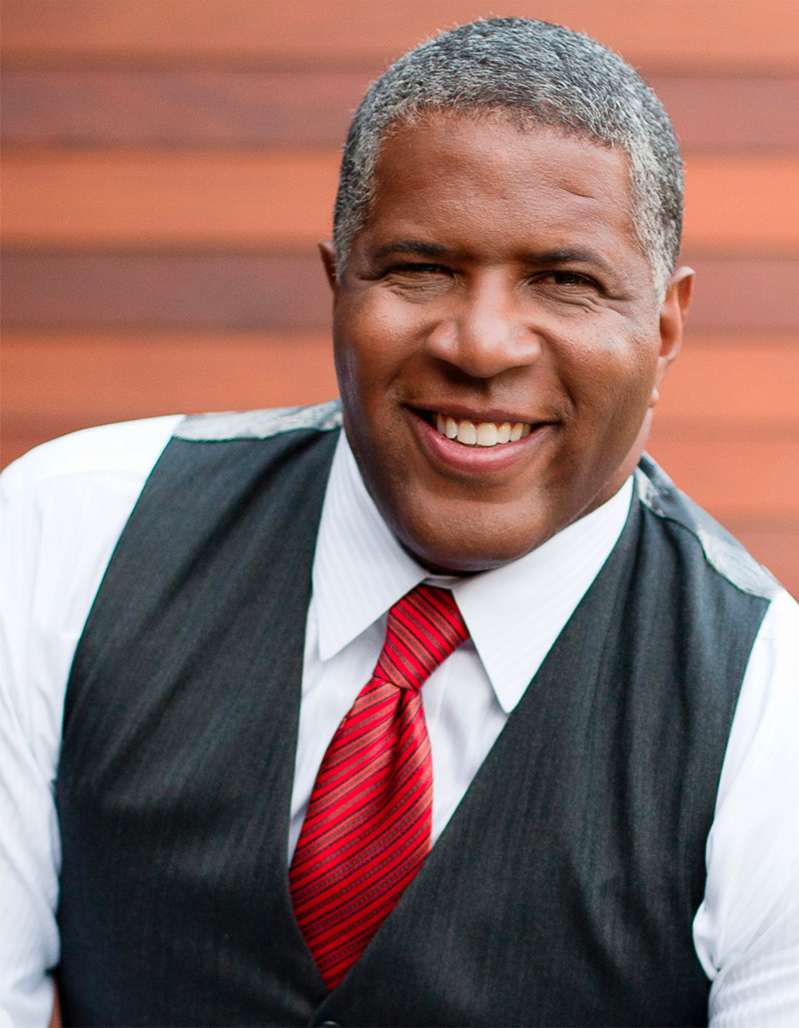
1. Robert F. Smith (pictured) – $34 million
Recipient: Morhouse College
Source of Wealth: Finance

2. Oprah Winfrey – $13 million
Recipient: Morehouse College
Source of Wealth: Media & Entertainment

3. Eugene McGowan, Jr.  – $4.6 million
Recipient: Morehouse College
Source of Wealth: Education

4. Jeffrey Dean & Heidi Hopper – $4 million
Recipient: Howard University
Source of Wealth: Technology

5. Virginia Howerton – $2.5 million
Recipient: Virginia Union College
Source of Wealth: Consulting

6. Shari Griswold – $2 million
Recipient: Prairie View A&M University
Source of Wealth: Oil

7. William Pickard & Judson Pickard, Jr. – $2 million
Recipient: Morehouse College
Source of Wealth: Food & Beverage, Hotels & Casinos

8. Jon Stryker – $2 million
Recipient: Spelman College
Source of Wealth: Family Wealth

9. Robert F. Smith – $1.5 million
Recipient: Morehouse College
Source of Wealth: Finance

10. Oprah Winfrey – $1.5 million
Recipient: UNCF
Source of Wealth: Media & Entertainment

11. Jose Feliciano & Kwanza Jones – $1 million
Recipient: Bennett College
Source of Wealth: Marketing, Finance

Source: Chronicle of Philanthropy