Monthly Archives: February 2015

The HBCU Money™ Weekly Market Watch

Our Money Matters /\ February 6, 2015

A weekly snapshot of African American owned public companies and HBCU Money™ tracked African stock exchanges.

NAME TICKER PRICE (GAIN/LOSS %)

African American Publicly Traded Companies

Citizens Bancshares Georgia (CZBS) $8.60 (0.00% UNCH)

M&F Bancorp (MFBP) $4.50 (0.00% UNCH)

Radio One (ROIA) $2.09 (5.02% UP)

African Stock Exchanges

Bourse Regionale des Valeurs Mobilieres (BRVM)  254.33 (0.37% UP)

Botswana Stock Exchange (BSE)  9 457.70 (0.03% DN)

Ghana Stock Exchange (GSE)  2 149.80 (4.92% DN)*

Nairobi Stock Exchange (NSE)  168.19 (N/A)

Johannesburg Stock Exchange (JSE) 51 998.32 (0.60% UP)

International Stock Exchanges

New York Stock Exchange (NYSE) 10 847.51 (0.45% DN)

London Stock Exchange (LSE)  3 681.48 (0.15% DN)

Tokyo Stock Exchange (TOPIX)  1 417.19 (0.50% UP)

Commodities

Screen Shot 2015-02-06 at 5.19.54 PM


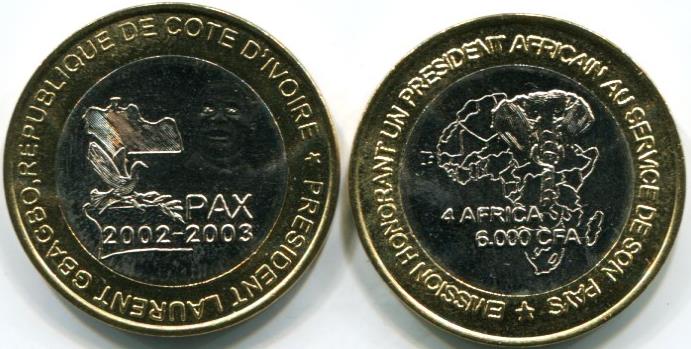
Currencies Of The African Diaspora – Cote d’Ivoire

iv-map

Cote d’Ivoire is heavily dependent on agriculture and related activities, which engage roughly two-thirds of the population. Cote d’Ivoire is the world’s largest producer and exporter of cocoa beans and a significant producer and exporter of coffee and palm oil. Consequently, the economy is highly sensitive to fluctuations in international prices for these products and in climatic conditions. Cocoa, oil, and coffee are the country’s top export revenue earners, but the country is also producing gold. The country also produces oil and boasted two offshore oil finds in 2012. Since the end of the civil war in 2003, political turmoil has continued to damage the economy, resulting in the loss of foreign investment and slow economic growth. In June 2012, the IMF and the World Bank announced $4.4 billion in debt relief for Cote d’Ivoire under the Highly Indebted Poor Countries Initiative. Cote d’Ivoire’s long-term challenges include political instability and degrading infrastructure.

ci1

ci2

ci3

ci4

Source: Economy provided by CIA World Factbook Africa

The 20 Year Review: 1994 & 2014 HBCU Endowments Then & Now

weekly-review

The 2014 HBCU Top 10 Endowments list is out. Going forward we will review where HBCUs are today and where they were 20 years ago. NACUBO’s list this year included 851 reporting institutions from the U.S. and Canada. So here are a few fast facts of then and now in regards to HBCUs place in the whole of the endowment conversation.

  • Of the 851 reporting institutions in 2014, only 1.7 percent were HBCUs. HBCUs comprise 3 percent of American colleges and universities. In 1993, Of the 446 reporting institutions in 1994, only 0.9 percent were HBCUs.
  • 20 years ago, the 4 HBCUs who were present on the list had a combined endowment value of $356 993 000 versus the top 4 HWCUs who had a combined endowment value of $17 726 252 000.
  • The endowment wealth gap between the top HWCUs/HBCUs in 2014 was 106:1. In 1994, it was 50:1.
  • In 1994, 17 HWCUs reported endowments over $1 billion and 2 HBCUs reported endowments over $100 million. In 2014, there were 92 HWCUs with reported endowments over $1 billion or an increase of 441 percent. HBCUs increased their ranks of $100 million endowments from 2 to 5 or an increase of 150 percent – unchanged from the 1993 to 2013 review.

The suspected widening in the HWCU/HBCU endowment gap was no surprise in this year’s endowment numbers. A combined factor of under market returns and major capital campaigns raising billions at HWCUs is only bolstering their endowment strongholds. While there is a great focus on the household wealth gap between African American households and other groups, very little attention remains paid to the institutional wealth gap that is often more reflective of a group’s health than any other. Meanwhile, just how many hundreds of millions or perhaps billions the Parent Plus Loan debacle by the US Department of Education ultimately will cost HBCU endowments long-term is immeasurable. This is especially true when 11 percent of HWCUs reporting in 2014 have over $1 billion plus in endowments. On the flip side, only 7 percent of HBCUs are over $100 million. The gap can be closed, but how? That has to be on the mind of every HBCU president, development office, and most importantly the alumni.

HBCU Money’s 2014 Top 10 HBCU Endowments

piggy-bank-with-glasses-m

The keyword for  2014’s HBCU endowments – disappointing. In the past twelve months, HBCU’s top ten endowments added $200 million to its coffers. So why is this disappointing? The S&P 500 over the past year had returns of 13.4 percent. The benchmark by which we measure endowment return success. Given many of the tax and capital advantages that college and university endowments have it takes quite a bit of effort to underperform the market. This year only six out of ten HBCU endowments outperformed the market, while HWCU counterparts clocked in at nine out of ten. This has allowed the institutional wealth gap between top 10 HWCU/HBCU endowments to balloon from 103:1 to 106:1 the past twelve months. 

This year was fairly standard with no real changes except one among the top ten, but what a change it was. The University of the Virgin Islands unseats Winston-Salem State University in the ten spot from last year after an unprecedented change in market value of 48.5 percent. A performance that not only led all HBCUs, but was fifth among the 851 American and Canadian endowments reporting. However, there is still real concern about the lack of HBCUs with at least $100 million endowments. Notable absences are Morehouse and Tuskegee who do not report. Even including these two, it would mean only approximately 7 percent of HBCUs are above this mark. This is concerning because even schools with only a $100 million endowment that achieved a market return of 13 percent leaves the school roughly $6.5 million to potentially to work with. Showing that HBCUs are still highly dependent and vulnerable to tuition revenue. A matter we saw continuously pop up after the Parent Plus Loan debacle that sent many HBCUers home. HBCU endowments should have been there to lessen the blow, but again given 93 percent of HBCUs are at $50 million or less it shows the vulnerability most are facing. The MEAC continues its dominance of the top ten HBCU endowments with four institutions present.

As always if you do not see your HBCU in the top 10 – DONATE!

Endowment in millions $000 (Change in Market Value*)

1. Howard University – $586 104 (14.0%)

2. Spelman College – $367 037 (12.2%)

3. Hampton University – $288 370 (13.5%)

4. Meharry Medical College – $136 975 (9.6%)

5. Florida A&M University – $127 186 (10.3%)

6. Tennessee State University – $50 492 (17.5%)

7. Texas Southern University – $46 577 (10.4%)

8. Virginia State University – $45 145 (18.6%)

9. North Carolina A&T State University – $43 785 (17.3%)

10. University of the Virgin Islands – $38 184 (48.5%)

Take a look at how an endowment works. Not only scholarships to reduce the student debt burden but research, recruiting talented faculty & students, faculty salaries, and a host of other things can be paid for through a strong endowment. It ultimately is the lifeblood of a college or university to ensure its success generation after generation.

endowment

*Note: The change in market value does NOT represent the rate of return for the institution’s investments. Rather, the change in the market value of an endowment from FY2013 to FY2014 reflects the net impact of: 1) withdrawals to fund institutional operations and capital expenses; 2) the payment of endowment management and investment fees; 3) additions from donor gifts and other contributions; and 4) investment gains or losses.

Additional Notes:
NACUBO Average Endowment – $616 188 (15.0%)
NACUBO Median Endowment – $112 967 (16.3%)
Top 10 HWCU Endowments combined – $180.3 billion
Top 10 HBCU Endowments combined – $1.7 billion
Source: National Association of College & University Business Officers


HBCU Money™ Turns 3 Years Old

By William A. Foster, IV

The biggest adventure you can take is to live the life of your dreams. – Oprah Winfrey

989cfe0a4786be491b2be177be2764b1

What can we say? We are still here and growing stronger every year. Our reach is growing further and deeper every year. In our third year, you cemented that the information HBCU Money™ delivers to you on a daily basis is what you want and need. HBCU Money™ continues to fill a void for substantive economic, finance, and investment journalism from a point of view that is absent in the media landscape. Our spectacular growth has been highlighted by continuing to bring our audience information they have been seeking but unable to find, and information they did not know they needed but are ecstatic to have placed in their mental clutch. Far and away, the publication series I am most proud of that we have developed is The HBCUpreneur Corner that highlights entrepreneurship in the HBCU community. It gives recognition to the fascinating businesses being blossomed and grown within our community and the thought processes behind the founders running these companies.  The long-term vision of HBCU Money™ continues to be our desire to enter the multimedia space on all levels and we know you will be along for the ride as we expand our footprint. I want to thank everyone for their support, feedback, and suggestions in ways that we can improve the product and service that HBCU Money™ brings to the world. Check out some of the amazing highlights from our thunderous third year in business. 

  • The Louvre Museum has 8.5 million visitors per year. If HBCU Money™ were an exhibit at the Louvre Museum, it would take about 4 days for that many people to see it.
  • The busiest day of the year was November 29th. For the second year in a row our most popular article was HBCU Money’s 2013 African American Owned Bank Directory. We hope everyone will be sure to check out the 2014 edition and the coming 2015 edition in March.
  • In our second year, there were visitors from 122 countries to visit HBCU Money™, which reached 63 percent of the world. In our third year, we reached visitors from 159 countries, which means we reached approximately 83 percent of the world!

It is a continued honor to serve as Editor-In-Chief of HBCU Money™ and look forward continuing to do so. There is no time to rest. Enjoy the moment. Now, let us get back to work because as our motto states “Our Money Matters”.