Tag Archives: slavery

Dr. King’s Dream is Dead: African America Must Focus On Its Own Institutional Sovereignty and Survival

“I fear I may have integrated my people into a burning house.” – Dr. Martin Luther King, Jr.

By William A. Foster, IV

For my parents and grandparents not many years ago, it was the White Citizens Council, Ku Klux Klan, Bull Connor, George Wallace, and more. Today, it is MAGA, ICE, Donald Trump, Charlie Kirk, and more. African America long held out hope that we would be in someway accepted into America’s fabric. We contributed centries of free labor capital, centuries of cultural capital, and did it all under an umbrella of racial terrorism. This hope was held without so much as an apology or reparation. The Civil Rights Movement of which much of my family was a part of from my mother’s letter to Dr. King himself that now sits in the archives of Boston College to part of our family that was forced to relocate to Jamaica by the US government, likely Hoover’s FBI. They fought for equal protections and equal opportunities, but it was and has always been a fool’s errand. A group in power will never voluntarily relinquish that power and European Americans are no exception to that rule. The problem is and has always been that only African America was fighting for reconciliation. It has been a dance between two dance partners where one is constantly stomping on the feet of the other, stealing money out of our pockets as they swirl us around, and smiling at us while putting a knife nine inches in our back and pulling it out six inches while calling it progress.

As a child, my sister and I had the privilege of attending Wee Care, an African American primary school in Prairie View, Texas in the town where our family’s illustrious HBCU, Prairie View A&M University is located and where my mother has taught students, developed faculty, and served in leadership for almost five decades. Unfortunately for us, the school only went up to the first grade at which time my mother was forced to choose her “best” option. My mother’s best option was an overwhelmingly European American Catholic school in the heart of Tomball, Texas, at the time a fairly known small Texas town – with all of the small town Texas dynamics when it came to race. Only my second and fifth grade teachers were nice to me. One was really young and the other a hippy. In sixth and seventh grade at another predominantly European American Catholic school I would experience the first time being called the N word by a fellow classmate. Even in the resulting aftermath of the fight I was blamed by the principal for being violent. Imagine that. The African American private schools were limited and given the distance from where we lived almost impossible for my mother to change us to an African American school where we would be culturally safe. That though was not the whole story. You see my classmates through elementary in particular were thought to be lifetime friends, but in my later years I would learn a valuable lesson from a graduate program I would attend in Boston at a Jewish institution. Do not confuse friendship and loyalty. I am thankful to this day for the lessons from that institution because it opened my eyes to so much in the world of navigating power dynamics. It was in those lessons that I realized that many of my so called friends from elementary were also loyal to causes that would see me and my family back on a plantation if the winds blew in the right direction and they saw no moral or ideological conflict.

From that point on, I realized that what I must lean into is the institutional development of my own people. From African America to the African Diaspora and that the connectivity of our institutions would be our strength and saving grace. But alas, many of us still yearned for acceptance into PWIs, European American corporations even though we do not think of them as such that is exactly who they are owned by when you examine their ownership, and predominantly European American neighborhoods. To access whiteness is seen as progress and success. In every place we lived, I largely remember us always being the only African American family in the neighborhood. Something I know that none of my childhood “friends” ever thought about or crossed their mind. Their families would never move into an African American community and be the only one. They saw our spaces as hostile even though we have always been overly welcoming even to our detriment, but as I said being the only African American family in a predominantly European American community was often seen as “progress” for many in our community. It was a mistake, a violent psychological mistake that still harms many of us to this day. The same way Ruby Bridges, a six-year old child, had to be escorted by Federal agents into a school because we assumed the fight for desegregation was making America true to its values. We were wrong then and we have been wrong about what Ameria’s values actually are.

Dr. King said in his famous speech, “I have a dream that one day this nation will rise up and live out the true meaning of its creed. We hold these truths to be self-evident that all men are created equal. I have a dream that one day out in the red hills of Georgia the sons of former slaves and the sons of former slaveowners will be able to sit down together at the table of brotherhood. I have a dream that one day even the state of Mississippi, a state sweltering with the heat of oppression, will be transformed into an oasis of freedom and justice. I have a dream that my four little children will one day live in a nation where they will not be judged by the color of their skin but by their character. I have a dream today. I have a dream that one day down in Alabama, with its vicious racists, with its governor having his lips dripping with the words of interposition and nullification; that one day right down in Alabama little black boys and black girls will be able to join hands with little white boys and white girls as sisters and brothers. I have a dream today.”

The dream is dead. It was a dream that required two parties to reconcile their past with only one willing to do so while suffering the brutality that has persisted since 1619. Dr. King’s speech was given on August 28, 1963 and two weeks later on September 15, 1963, the KKK bombed 16th Street Baptist Church and killed four African American girls: Addie Mae Collins (age 14, born April 18, 1949), Carol Denise McNair (age 11, born November 17, 1951), Carole Rosamond Robertson (age 14, born April 24, 1949), and Cynthia Dionne Wesley (age 14, born April 30, 1949). My mother was born in 1949. It could have easily been her. There are countless African American deaths at the hands of racial terrorism that we will never know about. The Red Summer of 1919 when the most African Americans (on record) were lynched. An entire Civil War just decades prior was waged over whether or not the United States should or should continue to be a country rooted in the slave economy. The complexity by which the North and South were guilty of profiting from – looking at you Harvard and others and have never rectified. The bloodshed, terror, and violence has been endless and it has not receded.

“I wouldn’t give it no more thought than wringing a cat’s neck! And there ain’t a court in Mississippi that’d convict me for it.” Frank Bailey’s, a character in Mississippi Burning, quote in regards to killing African Americans. This is and has been America’s attitude towards African America in its entirety. Not just individuals, but our institutions and communities as well. The underfunding of HBCUs or the burning of countless towns from Rosewood to Tulsa, our death and demise is sport and entertainment. African America has constantly believed that we could appeal to the morality of fellow Americans and “Christians”. We could work hard enough and show them our humanity. Imagine us thinking we need to prove to them we were hard working, civil, or human. It is both comical and insulting. But like many centuries ago, we have since the end of the Civil Rights Movement returns to working hard for everyone but ourselves and our institutions. That time needs to be over and we need to return to the principles and efforts that built towns like Rosewood, Greenwood, 100 HBCUs, 100 African American boarding schools, and over 500 African American owned hospitals. It is time to abandon any hope that peace can be achieved. Our sovereignty and survival is all that matters going forward. There are no more olive branches to be had. Not even from those that call themselves moderates or liberals because far too often we have seen them fall silent or pushed us to assimilate into spaces that did not empower us, did not provide institutional ownership to us, and often were spaces that were paternalistic and just as hostile to us as their conservative cousins. No, there are no more olive branches to be had because our survival depends on it.

Dr. John Henrik Clarke, a noted Pan-African historian, and someone who I consider an unofficial mentor said that any African American who is looking to devise a plan must look at our communities as nation-states and therefore must consider these fundamental pillars:

How will my people be housed?

How will my people be educated?

How will my people be fed?

How will my people be defended?

The answers to these questions can no longer be grassroots, they have to be institutional and they have to be thought about in a way that recognizes that our sovereign nation-state is adjacent to an adversary who has and will invade us. It is not a question of if they will, but when will they because they have so many times before. Unfortuantely, we cannot ask Dr. King what his thoughts about his “Dream” for America would be today because at the age of 39 he was assassinated. He was assassinated three years after his contemporary Malcolm X was assasinated and five years after Medgar Evers was assassinated in his driveway. Medgar Evers just two months before the “I Have A Dream” speech would take place. He was not blind to what America was for African America and he was certainly not blind to how our adversaries saw us or the lengths they were willing to go to in order to silence us. For the last 50 plus years since Dr. King’s passing African America has tried to make a peace that we should now see is not possible. It is time for the Dream Redefined and that dream should start and stop with actions that provide for the institutional sovereignty and survial of African America period.

Tone Deaf: Harvard Launches A $100 Million Endowment To Itself To Study Its Ties To Slavery – An Amount Greater Than 99 Percent Of HBCU Endowments

“Every year, our white intruders become more greedy, exacting, oppressive, and overbearing. Every year, contentions spring up between them and our people, and when blood is shed, we have to make atonement, whether right or wrong, at the cost of the lives of our greatest chiefs and the yielding up of large tracts of our lands.” – Tecumseh

There are two families in the same neighborhood. The Johnsons and the Smiths. They both have the intention of building magnificent homes for their families. Homes they intend to pass down generation after generation. The Smiths have the Johnsons work for them and build their home, hold them hostage in fact on their land while they do so, and after their home is finally finished and pristine allow them to leave and go off and build their own – at least that is what the Johnsons think. As the Johnsons work diligently to build their home, they often awake many mornings to see their work burned to the ground, members of their family kidnapped in the middle of the night never to be seen again, and yet they persist in building their home. They often end up having to buy low quality materials from the Smiths at arguably predatory prices and even after purchasing these materials may awaken to see those same materials stolen or damaged, and yet they persist in building their home. Sometimes they catch the Smiths in the act of harm, but more times than not it is as if they are ghosts in the night. To make matters even more complicated, sometimes the Smiths will invite the Johnsons over for days at a time and allow them to sleep in their attic. The Johnsons often naively believing that the Smiths are wanting to commune with them often failing to see that every moment they spend entertaining and staying at the Smiths is a lost day they could be building their home. And while the Smiths enjoy being entertained by the Johnsons and having them sleep in their attic they are well aware only one of them has a home for their family. A place that is theirs. This reality has given the Smiths control of the neighborhood at every social, economic, and political turn. The Johnsons know that without their home being finished they will never be able to have a place to call home, but fewer and fewer of the family wants to continue building the home. Instead, they find themselves more and more settling for sleeping in the Smiths attic, cooking their food, and entertaining them and while they seem “free” to go and come as they wish, somehow they are right back where they started and their entire ability to exist is dependent on the Smiths. 

The greatest magicians in history know that the key to any successful magic trick is the sleight of hand. To have one’s audience focused on what they believe is happening while actually something out of their focus is instead happening. Harvard University is the nation’s largest non-system endowment at approximately $50 billion. It is an amount that is well over 15 times the size of ALL HBCU endowments combined. To put in perspective just how insulting the $100 million endowment Harvard created for itself is, if it were an HBCU endowment, then it would rank number eight among the 2022 HBCU Money Top 10 HBCU Endowment list. It could easily double the size of all HBCU endowments with roughly 5 percent of its endowment. To add to the harshness of that reality, the gap between the top ten PWI endowments and top ten HBCU endowments has skyrocketed over the past the past decade from $103 to $1 in 2013 to a staggering $128 to $1 in 2022, there is absolutely no movement to atone for what slavery, Jim Crow, and segregation did to HBCUs and African American institutions. Simply put, write the check – but we know they will not. 

For all of the frustration African America has with European American conservatives across the South, their European American liberal counterparts offer little more than lip service to right history’s wrongs, especially on the institutional level. And even when they “attempt” to do so they always do it in a way that leaves that them just as institutionally empowered and us just as institutionally dependent. A recent example of this is European American owned banks like J.P. Morgan and others “investing” in African American owned banks in the wake of the George Floyd protests. These banks did not simply write a repertory check to African American owned banks and step back so the African American owned banks had the autonomy to build with it as they saw fit. No, they “invested” and ensured that they receive the public relations bump for doing so while also ensuring that they are able to profit from anything they put into African American owned banks. Never is it, we know we owe you for the damages done and that we have disproportionate wealth and resources because of the history of slavery and Jim Crow. It is instead, a flashpoint like George Floyd’s death that European American institutions maneuver to look more inclusive by letting a few of us in their house to sleep in the attic, cook their food, wash their clothes, entertain them, all the while knowing that we still will have no home. 

Harvard could have easily paid five to ten HBCUs between $10-20 million each to conduct the same research. Both accomplishing its goal of studying its ties and actually helping the financial coffers of HBCUs. This would have given a precedent for other PWIs who could then do the same with the same result. Assuming there are other PWIs that want to broach that subject of their own history. Harvard could have also picked up the mantle and took the vanguard on an effort to have itself and the rest of the top 25 largest endowments in the country redistribute $6 billion into HBCUs with those PWIs paying proportional to the size of their endowment. America’s largest twenty five endowments combine for $454.6 billion which works out to $151 to $1 for all HBCU endowments combined. A $6 billion infusion from those twenty five endowments would equate only 1.3 percent of their total. A percentage that is still less than the representation of HBCUs (3 percent) of the U.S. higher education institutions. 

Instead, Harvard pats itself on the back with an accounting trick and says to the world and primarily to African America that it is serious about what who knows. This initiative got an immense social bump within African America when the now former president of Prairie View A&M University, Dr. Ruth Simmons, in one of her last events on the campus hosted the outgoing president of Harvard University and creator of the slavery initative, Dr. Lawrence Bacow. The Pan-African historian Dr. John Henrik Clarke would say we (African American institutions and leadership) are doing ceremony without substance. Harvard acknowledging or not acknowledging their ties to slavery does nothing for the social, economic, or political capital of HBCUs and African American institutions. Yet, we give them space in our spaces and credit for something that we already knew – that PWIs have exorbitant resources pools in large part because African America was choked for centuries from being able to build themselves into competitive institutions – and that is as true today in 2023 as it was in 1823 and 1923.

The whole of African America’s education problem does not solely lie with HBCUs, but starts from early childhood through graduate school. An African American child can not go from birth through graduate school in the African American educational pipeline. Other communities most certainly can and do. We have yet to see the profound problem with our educational dependency and as such have done nothing to formulate a strategy let alone act on one. We see Harvard and its peers lure us into a false sense of individual inclusion while continuing to starve our institutions. It is one of the greatest long games to ensure that a group of people have no institutional representation of their own nor control of that which is fed into their minds. Harvard University should pay if they truly believe in righting history’s wrongs and we would owe them no thank you or gratitude for doing so. Ultimately and without waver we must not be distracted by their shiny illusion of inclusion, but remember that is our duty and responsibility to continue to empower and build upon that which our foreparents started and ensure that our people have a home.

HBCU Money™ Business Book Feature – Ebony & Ivy: Race, Slavery, & the Troubled History of America’s Universities

512ekThWQUL

A 2006 report commissioned by Brown University revealed that institution’s complex and contested involvement in slavery—setting off a controversy that leapt from the ivory tower to make headlines across the country. But Brown’s troubling past was far from unique. In Ebony and Ivy, Craig Steven Wilder, a rising star in the profession of history, lays bare uncomfortable truths about race, slavery, and the American academy.

Many of America’s revered colleges and universities—from Harvard, Yale, and Princeton to Rutgers, Williams College, and UNC—were soaked in the sweat, the tears, and sometimes the blood of people of color. The earliest academies proclaimed their mission to Christianize the savages of North America, and played a key role in white conquest. Later, the slave economy and higher education grew up together, each nurturing the other. Slavery funded colleges, built campuses, and paid the wages of professors. Enslaved Americans waited on faculty and students; academic leaders aggressively courted the support of slave owners and slave traders. Significantly, as Wilder shows, our leading universities, dependent on human bondage, became breeding grounds for the racist ideas that sustained them.

Ebony and Ivy is a powerful and propulsive study and the first of its kind, revealing a history of oppression behind the institutions usually considered the cradle of liberal politics.

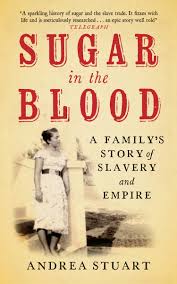
HBCU Money™ Business Book Feature – Sugar In The Blood: A Family’s Story of Slavery and Empire

images

In the late 1630s, lured by the promise of the New World, Andrea Stuart’s earliest known maternal ancestor, George Ashby, set sail from England to settle in Barbados. He fell into the life of a sugar plantation owner by mere chance, but by the time he harvested his first crop, a revolution was fully under way: the farming of sugar cane, and the swiftly increasing demands for sugar worldwide, would not only lift George Ashby from abject poverty and shape the lives of his descendants, but it would also bind together ambitious white entrepreneurs and enslaved black workers in a strangling embrace. Stuart uses her own family story—from the seventeenth century through the present—as the pivot for this epic tale of migration, settlement, survival, slavery and the making of the Americas.

As it grew, the sugar trade enriched Europe as never before, financing the Industrial Revolution and fuelling the Enlightenment. And, as well, it became the basis of many economies in South America, played an important part in the evolution of the United States as a world power and transformed the Caribbean into an archipelago of riches. But this sweet and hugely profitable trade—“white gold,” as it was known—had profoundly less palatable consequences in its precipitation of the enslavement of Africans to work the fields on the islands and, ultimately, throughout the American continents. Interspersing the tectonic shifts of colonial history with her family’s experience, Stuart explores the interconnected themes of settlement, sugar and slavery with extraordinary subtlety and sensitivity. In examining how these forces shaped her own family—its genealogy, intimate relationships, circumstances of birth, varying hues of skin—she illuminates how her family, among millions of others like it, in turn transformed the society in which they lived, and how that interchange continues to this day. Shifting between personal and global history, Stuart gives us a deepened understanding of the connections between continents, between black and white, between men and women, between the free and the enslaved. It is a story brought to life with riveting and unparalleled immediacy, a story of fundamental importance to the making of our world.

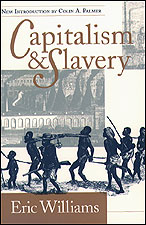
HBCU Money™ Business Book Feature – Capitalism and Slavery

Slavery helped finance the Industrial Revolution in England. Plantation owners, shipbuilders, and merchants connected with the slave trade accumulated vast fortunes that established banks and heavy industry in Europe and expanded the reach of capitalism worldwide.

Eric Williams advanced these powerful ideas in Capitalism and Slavery, published in 1944. Years ahead of its time, his profound critique became the foundation for studies of imperialism and economic development. Binding an economic view of history with strong moral argument, Williams’s study of the role of slavery in financing the Industrial Revolution refuted traditional ideas of economic and moral progress and firmly established the centrality of the African slave trade in European economic development. He also showed that mature industrial capitalism in turn helped destroy the slave system. Establishing the exploitation of commercial capitalism and its link to racial attitudes, Williams employed a historicist vision that set the tone for future studies. In a new introduction, Colin Palmer assesses the lasting impact of Williams’s groundbreaking work and analyzes the heated scholarly debates it generated when it first appeared.