Tag Archives: HBCUs

2012’s Top 20 HBCU Research Institutions

HBCUs continue to make significant strides in research. The top 20 HBCU research institutions all fall in the top 330 research institutions in America. Unfortunately, none of the top HBCU research institutions make their way into the top 100 so there is still significant work to be done. The 1890 agriculture schools comprise 6 of the top 20 and HBCU medical schools make up 3 of the top 10. A sign that one of the 1890 schools could make significant strides with the addition of a medical school is a strategic issue that must be addressed among HBCUs.

Florida A&M University performs nothing less than a miracle making the leap from the 6 spot to number 1 by more than doubling its research expenditure budget. At the same time Meharry slides from 3 to 8 showing that in any given year a new king can be crowned with the right vision by leadership. Research is still a very under appreciated facet of HBCU life despite the fact that most of the major wealth in America has come as a result of research on college and university campuses. An investment in the mental curiosity of African America could go a long way to much needed innovation and job creation.

If you want to see your HBCU move up this listing you can donate directly to the research budget at your HBCU!

HBCU                                                                    Research Expenditures

1. Florida A&M University                                    $53.5 million

2. Jackson State University                                  $44.9 million

3. Howard University                                            $40.1 million

4. North Carolina A&T State University            $35.3 million

5. University of the Virgin Islands                      $32.4 million

6. Alabama A&M University                                $30.5 million

7. Morehouse School of Medicine                       $30.4 million

8. Meharry College of Medicine                          $27.0 million

9. Charles Drew University of Medicine           $22.2 million

10. Alabama State University                              $16.3 million

11. Tuskegee University                                        $15.6 million

12. Delaware State University                             $15.2 million

13. Hampton University                                       $14.5 million

14. Morgan State University                                $12.8 million

15. Prairie View A&M University                        $12.6 million

16. Tennessee State University                           $12.4 million

17. Fayetteville State University                         $11.9 million

18. Alcorn State University                                  $10.3 million

19. University of Maryland-Eastern Shore      $8.7 million

20. Clark Atlanta University                               $8.5 million

TOP 20 COMBINED TOTAL: $455.1 million

Additional Notes:

Total HBCU Research Expenditures Combined: $605.7 million

Top 20 HWCUs Combined: $18.3 billion

Top 20 Average HWCU – $910 million vs. Top 20 Average HBCU – $23 million

Top 20 HBCUs increase in research expenditure from 2011 is 30.1%

Top 20 HWCUs increase in research expenditure from 2011 is 11.6%

Source: National Science Foundation

Percentage of Population With Graduate Degree Per HBCU State

for-profit-colleges-found-to-have-favorable-graduation-and-retention-rates-10012802

While these numbers are reflective of each state’s population as a whole and not just African Americans (which are traditionally lower), it does offer a glimpse into opportunities where HBCUs can have major impact to become the educational leader of that state and thereby creating influence throughout their state and region for African Americans. It also speaks largely to the education and economic environment within a state. Arguably, Virginia is the only southern HBCU state to be above the national average. This is more than likely due to its northern Virginia region. In large part is shows that the primary concentration of HBCU states have much to do in order to the intellectual capital of the nation. An opportunity that HBCUs themselves will have to battle to influence given the social and political climate toward our institutions and the economic strain that continues to face the nation as a whole.

gradhbcustate

STATE – % OF POPULATION WITH GRADUATE DEGREE

Washington D.C. – 29.2%

Massachusetts – 16.8%

Maryland – 16.5%

Virginia – 14.6%

New York – 14.2%

Delaware – 11.7%

Illinois – 11.7%

California – 11.1%

Pennsylvania -10.4%

Michigan – 9.9%

Georgia – 9.8%

Missouri – 9.7%

Florida – 9.3%

North Carolina – 9.2%

Ohio – 9.2%

Kentucky – 8.8%

Texas – 8.7%

Alabama – 8.4%

South Carolina – 8.4%

Tennessee – 8.3%

Oklahoma – 7.8%

Mississippi – 7.3%

Arkansas – 7.2%

Louisiana – 7.1%

Source: Bloomberg Visual Data

2012’s Top 10 HBCU Endowments

2012’s Top HBCU Endowments

This past year was a tough year for HBCU endowments. The top ten HBCU endowments saw a combined decline of $100 million dollars this past year while their top ten HWCU competitors saw an increase of $100 million. The $100 million comprises 0.07 percent of top ten HWCU endowments but comprises a staggering 7.0 percent of top ten HBCU endowments.

There were some shakeups in the top ten HBCU endowments with Meharry Medical College leaping over Florida A&M University for the number four spot in the top ten. Virginia State University becomes the new kid on the block entering the top ten at the number ten spot knocking Winston-Salem State University out of the position from last year. Virginia State University takes the leap into the top ten thanks to having the strongest return on investment of all top ten HBCU endowments with a solid 10.3 percent return on investment in an extremely rough economic climate for America’s college and university endowments in general. The Trojans were the only HBCU in the top ten to return double digits on its endowment last year. Texas College, although not making the top ten had the best return on investment of HBCUs reporting with 12.8 percent. Overall, only three out of the ten top HBCU endowments saw a positive return on investments. The MEAC holds four of the top ten spots and North Carolina A&T State University sits just outside of the top ten at number eleven. Howard University saw the most significant decline losing 12.0 percent and raising some real questions about whether it will come far enough back into the pack to allow Spelman College and Hampton University to make a run at becoming the first HBCU to the coveted one billion dollar mark.

As always if you do not see your HBCU in the top 10 – DONATE!

Endowment in millions (Investment Return)

1. Howard University

$460 712  (-12.0%)

2. Spelman College

$309 139 (-5.4%)

3. Hampton University 

$232 551 (-3.1%)

4. Meharry Medical College

$112 455 (4.6%)

5. Florida A&M University

$107 743 (-3.4%)

6. Morehouse School of Medicine

$66 925 (-8.2%)

7. Bethune Cookman University

$41 818 (-1.6%)

8. Texas Southern University

$37 962 (4.9%)

9. Tennessee State University

$37 987 (-0.6%)

10. Virginia State University

$33 290 (10.3%)

Take a look at how an endowment works. Not only scholarships to reduce the student debt burden but research, recruiting talented faculty & students, faculty salaries, and a host of other things can be paid for through a strong endowment. It ultimately is the lifeblood of a college or university to ensure its success generation after generation.

endowment

Additional Notes:
NACUBO Average Endowment – $491, 637 (-0.7%)
NACUBO Median Endowment – $90,051 (-1.8%)
Top 10 HWCU Endowments combined – $142.2 billion
Top 10 HBCU Endowments combined – $1.4 billion
Source: National Association of College & University Business Officers

HBCU Money™ Turns One Year Old

By William A. Foster, IV

“I am not afraid of tomorrow, for I have seen yesterday and I love today. ” — William Allen Whit

To start a financial journalism company is no light-hearted task. Yet, one year ago today after much preparation that is exactly what was done by AK, Inc, the investment and operations firm that wholly-owns HBCU Money™. It has been an amazing year full of accomplishments, long nights, and revelations. HBCU Money’s biggest success over the past year I believe was expanding our coverage into the country of Ghana. We are and will continue to be focused on financial journalism from an African Diaspora point of view. It is the culture and purpose for which we were founded. Many say that there is a distrust from the African American and Diaspora community towards the world of economics, finance, and investment. I believe there is just lack of information from a point of view that says not only do we operate in the financial world but there is much to be done, to be built, and it is vital to our Diaspora’s infrastructure that we do so. There is much more to be done at HBCU Money™ and I expect year two will be an even bigger year than our first as we find our proper footing and place within the world of HBCU owned media. Again, I want to say thank you to all who have supported us because there are too many to name. Check out some of the highlights from our first 365 days in business.

  • If every person who reached the top of Mt. Everest viewed this site, it would have taken 13 years to get that many views.
  • The busiest day of the year was November 28th. The most popular article that day was 2011’s Top 10 HBCU Endowments.
  • There were visitors from 75 countries in all! Most visitors came from The United States. Canada & The United Kingdom were not far behind.

It has been a honor to serve as Editor-In-Chief of HBCU Money™ this past year and look forward continuing to do so. There is no time to rest. Enjoy the moment. Now let us get back to work because as our motto states “Our Money Matters”.

Mortgage Delinquency Rate Per HBCU State

From 2007 to 2009 there were 2 011 completed foreclosures per 10 000 loans. Of those 2 011 completed foreclosure, 40 percent were African Americans according to the Center for Responsible Lending. African America was second only to Latino America in terms of imminent risk of foreclosure with 21.4 percent and 21.6 percent, respectively, facing imminent foreclosure. Meanwhile, European and Asian America had 14.8 and 15.7 percent, respectively, facing imminent risk of foreclosure. Imminent risk is defined as borrowers who are two or more payments behind on their mortgage.

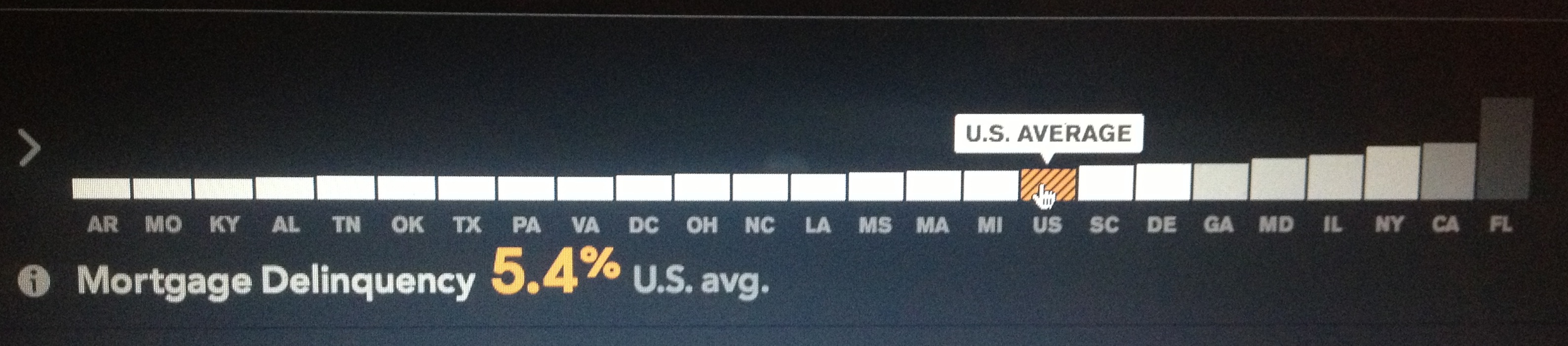
The Center for Responsible Lending also reports that the cost to the African American community between 2009-2012 due to foreclosures could be an estimated $194 billion. This is equivalent to an estimated 17.6 percent in value of African America’s current buying power for perspective. Below are the overall mortgage delinquency rates for each state that an HBCU is located in and not the mortgage delinquency rates for African Americans in that state.

The overall mortgage delinquency rate has risen 54.3 percent from 2008 to 2012 (pictured below). 2008 showed only 10 of the 24 HBCU states and territory being below the national mortgage delinquency rate. 2012 shows 16 of the 24 HBCU states and territory below the national mortgage delinquency rate. South Carolina and Delaware saw rises of 85 percent and 83 percent in their mortgage delinquency rate, respectively, to lead the way in increases. No states saw declines.

morthbcu2008

December 2008

morthbcu

December 2012

STATE – MORTGAGE DELINQUENCY RATE December 2012 (2008)

Arkansas – 3.4% (2.5%)

Missouri – 3.4% (2.5%)

Kentucky – 3.4% (2.6%)

Alabama – 3.7% (2.7%)

Tennessee – 3.9% (2.6%)

Oklahoma – 3.9% (2.7%)

Texas – 4.0% (3.0%)

Pennsylvania – 4.0% (2.5%)

Virginia – 4.0% (3.5%)

Washington D.C. – 4.1% (2.6%)

Ohio – 4.5% (3.5%)

North Carolina – 4.6% (2.6%)

Louisiana – 4.7% (3.0%)

Mississippi – 4.8% (3.3%)

Massachusetts – 5.1% (3.8%)

Michigan – 5.3% (4.0%)

South Carolina – 6.1% (3.3%)

Delaware – 6.4% (3.5%)

Georgia – 6.6% (4.2%)

Maryland – 7.3% (4.9%)

Illinois – 7.9% (4.5%)

New York – 9.5% (5.3%)

California – 10.2% (7.7%)

Florida – 18.9% (12.4%)

Source: Bloomberg Visual Data; Center for Responsible Lending; HBCU Endowment Foundation