Tag Archives: HBCUs

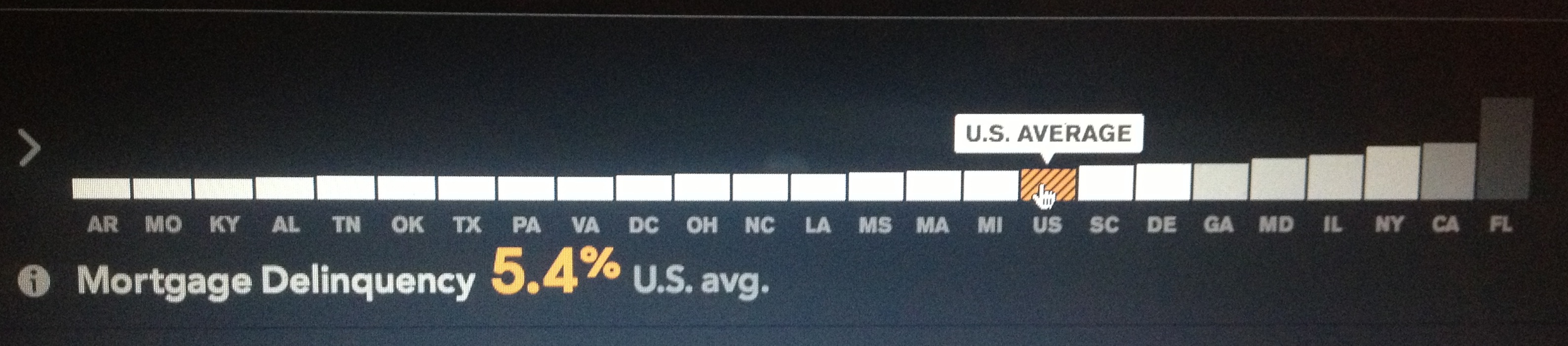
Mortgage Delinquency Rate Per HBCU State

From 2007 to 2009 there were 2 011 completed foreclosures per 10 000 loans. Of those 2 011 completed foreclosure, 40 percent were African Americans according to the Center for Responsible Lending. African America was second only to Latino America in terms of imminent risk of foreclosure with 21.4 percent and 21.6 percent, respectively, facing imminent foreclosure. Meanwhile, European and Asian America had 14.8 and 15.7 percent, respectively, facing imminent risk of foreclosure. Imminent risk is defined as borrowers who are two or more payments behind on their mortgage.

The Center for Responsible Lending also reports that the cost to the African American community between 2009-2012 due to foreclosures could be an estimated $194 billion. This is equivalent to an estimated 17.6 percent in value of African America’s current buying power for perspective. Below are the overall mortgage delinquency rates for each state that an HBCU is located in and not the mortgage delinquency rates for African Americans in that state.

The overall mortgage delinquency rate has risen 54.3 percent from 2008 to 2012 (pictured below). 2008 showed only 10 of the 24 HBCU states and territory being below the national mortgage delinquency rate. 2012 shows 16 of the 24 HBCU states and territory below the national mortgage delinquency rate. South Carolina and Delaware saw rises of 85 percent and 83 percent in their mortgage delinquency rate, respectively, to lead the way in increases. No states saw declines.

morthbcu2008

December 2008

morthbcu

December 2012

STATE – MORTGAGE DELINQUENCY RATE December 2012 (2008)

Arkansas – 3.4% (2.5%)

Missouri – 3.4% (2.5%)

Kentucky – 3.4% (2.6%)

Alabama – 3.7% (2.7%)

Tennessee – 3.9% (2.6%)

Oklahoma – 3.9% (2.7%)

Texas – 4.0% (3.0%)

Pennsylvania – 4.0% (2.5%)

Virginia – 4.0% (3.5%)

Washington D.C. – 4.1% (2.6%)

Ohio – 4.5% (3.5%)

North Carolina – 4.6% (2.6%)

Louisiana – 4.7% (3.0%)

Mississippi – 4.8% (3.3%)

Massachusetts – 5.1% (3.8%)

Michigan – 5.3% (4.0%)

South Carolina – 6.1% (3.3%)

Delaware – 6.4% (3.5%)

Georgia – 6.6% (4.2%)

Maryland – 7.3% (4.9%)

Illinois – 7.9% (4.5%)

New York – 9.5% (5.3%)

California – 10.2% (7.7%)

Florida – 18.9% (12.4%)

Source: Bloomberg Visual Data; Center for Responsible Lending; HBCU Endowment Foundation

Student Debt Profile By Conference (School By School) – The SWAC

Theswac

Alabama A&M University

Average debt of graduates, 2011 – $33 038

Proportion of graduates with debt, 2011 – 95%

Nonfederal debt, % of total debt of graduates, 2011 – 16%

2010-11 Pell Grant recipients – 66%

Alabama State University

Average debt of graduates, 2011 – $29 975

Proportion of graduates with debt, 2011 – 79%

Nonfederal debt, % of total debt of graduates, 2011 – 0%

2010-11 Pell Grant recipients – 71%

Alcorn State University

Average debt of graduates, 2011 – $28 786

Proportion of graduates with debt, 2011 – 90%

Nonfederal debt, % of total debt of graduates, 2011 – 2%

2010-11 Pell Grant recipients – 80%

University of Arkansas at Pine-Bluff

Average debt of graduates, 2011 – N/A

Proportion of graduates with debt, 2011 – N/A

Nonfederal debt, % of total debt of graduates, 2011 – N/A

2010-11 Pell Grant recipients – 70%

Grambling State University

Average debt of graduates, 2011 – N/A

Proportion of graduates with debt, 2011 – N/A

Nonfederal debt, % of total debt of graduates, 2011 – N/A

2010-11 Pell Grant recipients – 69%

Jackson State University

Average debt of graduates, 2011 – N/A

Proportion of graduates with debt, 2011 – N/A

Nonfederal debt, % of total debt of graduates, 2011 – N/A

2010-11 Pell Grant recipients – 75%

Mississippi Valley State University

Average debt of graduates, 2011 – N/A

Proportion of graduates with debt, 2011 – N/A

Nonfederal debt, % of total debt of graduates, 2011 – N/A

2010-11 Pell Grant recipients – 81%

Prairie View A&M University

Average debt of graduates, 2011 – N/A

Proportion of graduates with debt, 2011 – 69%

Nonfederal debt, % of total debt of graduates, 2011 – N/A

2010-11 Pell Grant recipients – 64%

Southern University-Baton Rouge

Average debt of graduates, 2011 – N/A

Proportion of graduates with debt, 2011 – N/A

Nonfederal debt, % of total debt of graduates, 2011 – N/A

2010-11 Pell Grant recipients – N/A

Texas Southern University

Average debt of graduates, 2011 – $36 296

Proportion of graduates with debt, 2011 – 84%

Nonfederal debt, % of total debt of graduates, 2011 – 2%

2010-11 Pell Grant recipients – 71%

Source: The Project on Student Debt

The Uninsured Rates By HBCU State

They always say when America catches cold, African America catches pneumonia. So while the uninsured rate nationally for all Americans is 15.6 percent, the percentage of African America uninsured is approximately 20 percent. An almost 30 percent premium over the national average. The rates below are the overall state’s uninsured and not specifically for African Americans. However, in parentheses we have put the rate for a 30 percent increase to potentially show what the African American uninsured rate could be. It should be noted that this number is not definitive as it is just based on using the national numbers as an estimating base.

hbcustates

State      Uninsured Rate   (Estimated African American Uninsured Rate)

Massachusetts – 3.3% (4.3%)

Washington D.C. – 8.4% (11%)

Delaware – 9.9% (13%)

Pennsylvania – 10.8% (14%)

New York – 12.1% (15.7%)

Michigan – 12.2% (15.9%)

Alabama – 12.9% (16.8%)

Tennessee – 13.1% (17%)

Virginia – 13.2% (17.2%)

Ohio – 13.4% (17.4%)

Maryland – 13.8% (18%)

Kentucky – 14.2% (18.5%)

Illinois – 14.6% (19%)

Missouri – 14.6% (19%)

Mississippi – 16% (20.8%)

North Carolina – 16.1% (21%)

Oklahoma – 16.8% (21.9%)

Arkansas – 17.3% (22.5%)

South Carolina – 18.7% (24.3%)

Georgia – 19% (24.7%)

Florida – 19.8% (25.8%)

Louisiana – 20.5% (26.7%)

Texas – 23.7% (30.8%)

Notes:

Overall 14 out of 24  mainland states and territory where HBCUs are located fall below the national uninsured rate.

Only 4 out of 24 mainland states and territory where HBCUs are located have the estimated African American uninsured rate below the national average.

The average overall uninsured rate for the 24 mainland states and territory where HBCUs are located is 14.8 percent while the median is 14.4 percent.

The average estimated African American uninsured rate for the 24 mainland states and territory where HBCUs are located is 19.2 percent while the median is 18.8 percent.

Source: Bloomberg Visual Data (December 2012); States used as designated by HBCUs recognized by HBCU Endowment Foundation

The HBCU Endowment Feature – Miles College

newmiles1898sealpms2603lr

School Name: Miles College

Median Cost of Attendance: $21 010

Undergraduate Population: 1 668

Endowment Needed: $700 893 600

Analysis: Miles College needs approximately $700 million to allow all of its students to attend debt free annually. Miles College is located in the heart of the capital of “Civil Rights”, Alabama or Birmingham, AL for some. This historic attachment can be leveraged for fundraising if properly used among elder African Americans. With an outstanding honors college the school is producing high quality graduates who will produce a higher median income than most of African America. This should translate with the proper cultivation from administration into consistent donations going forward. They also have the unique relationship of having an HBCU community college located within Birmingham as well. Lessening their need to develop college ready students and focus funds toward higher achievement in student development which again only adds to the quality of student they will graduate. Being located in Birmingham as with anything has its pros and cons. Birmingham is an up and coming city in the United States and should provide plenty of wealth growth through its medical and banking industries. This could produce an overall stronger city but that does not always find its way into the African American community. With the University of Alabama-Birmingham’s presence it will make the competition for city resources extremely competitive. Miles College should continue to shine and stay true to its HBCU mission and it could strongly benefit from some of its peers moving away from that mission as many in African America still looking for a true sense of community focused on themselves in higher education.

As always it should be noted that endowments provide a myriad of subsidies to the university for everything from scholarship, faculty & administration salaries, research, and much more.

20 Years Later: Bill and Camille Cosby’s Great HBCU Gift – But Is Hope Lost?

By William A. Foster, IV

“We must claim and therefore support those institutions at the heart of our peoplehood.” – Dr. Johnetta B. Cole; Former President of Spelman

"Fat Albert" Block Party

If one takes a walk on the campus of Brandeis University, a secular European Jewish institution, in Waltham, MA right outside of Boston they will notice a name that appears numerous times on buildings throughout the campus. That name is Carl & Ruth Shapiro. It is almost comical to ask someone to tell you where the Carl & Ruth Shapiro building is without getting a response of “which one?”. A student was once noted as asking Mr. Shapiro why he gave so much to Brandeis, a school he nor his wife ever attended, and it is said he simply replied that he was Jewish, the school is Jewish, and he wanted it to be the best representation of himself and the Jewish community. When I first was told about this exchange it sent a tingle down my spine. Primarily, I wished African Americans as a whole had the same love and tenacity of supporting our own institutions regardless of whether they had attended an HBCU or not because whether they like it or not what they produce reflects and is a reflection of us all.

It would be twenty years ago last month that Bill and Camille Cosby would be the example of just what that love and tenacity could look like. Their donation to Spelman College would catapult it into the pantheon of HBCU endowments and put it on path to become what is now the second largest HBCU endowment behind Howard University. Their $20 million donation in 1988, equivalent to roughly $40 million adjusted for inflation in today’s dollars, still stands as the largest donation by African Americans to a college or university. An amazing feat for Spelman College who at the time only had a $42 million endowment and is now in a viable position to become the first African American college to reach the billion dollar endowment mark. That neither Bill nor Camille Cosby had attended an HBCU, although her father attended Southern and Fisk while her mother attended Howard, speaks much to their understanding of building African America’s institutional power not just individuals. At the time the Cosbys’ made it clear that they were not only supporting Spelman College but that they were throwing down the gauntlet to other African Americans in a challenge to truly support African American colleges and universities and give them the resources they had been long deprived of by state and federal governments as well as the abandonment by the African American private community since the late 1960s. The African American community’s support waned as desegregation took root and the Civil Rights Movement leaders convinced African America that equality meant not access to equal funding to build up our institutions but abandoning our institutions to build up European American institutions. A failed strategy still prevalent in almost every sector of African American life even to this day.

Sadly, it is twenty years later and while Spelman College is in the hunt to become the first African American college or university with a billion dollar endowment the challenge presented by the Cosbys’ to African America was largely never answered. The numbers suggest that there should be multiple HBCUs with billion dollar endowments amongst the ranks now, but as it stands just being in the $100 million endowment club is the air of HBCU endowment glory of which we only have 5 while an estimated twenty percent have no endowment at all according to AK Research. Of the 100 plus HBCUs that are left in existence, they share an estimated $2 billion in combined endowment value with the top ten HBCU endowments holding a disproportional $1.5 billion of that value. It also appears that of the HBCUs in contention to become the first to reach the billion dollar mark, none are less than a decade from achieving the mark. Truly a problematic notion with the rising cost of higher education and a far cry from something that could have been achieved over a decade ago had the challenge been answered.

The wealth disparity between African Americans and other groups is so pronounced (and widening) it limits our ability to give in larger amounts. African America lost eighty three percent of its wealth in the Great Recession making a complicated situation even more so. That five percent of gifts account for eighty percent of endowment giving, large donors play an enormously important role in building a college’s endowment. However, there is only one African American who has the known net worth to match Gordon and Betty Moore’s $600 million donation to California Institute of Technology in 2001, which is the largest donation ever given to an American institution of higher learning. That person being Ms. Oprah Winfrey, who has been an avid supporter of HBCUs and especially of African American male achievement being a primary donor to Morehouse College. As a percentage of America’s wealth elite, African Americans comprise one-fourth of one percent of the Forbes 400 wealthiest Americans. In fact in order for every HBCU to receive just a $10 million infusion would be well over $1 billion. The 20 richest African Americans have a combined net worth of approximately $9 billion while the 5 richest European Americans have approximately $235 billion. Yes, the disparity is that great.

Bill and Camille Cosby’s gift twenty years ago brought a hope and optimism that a donation by arguably the most popular African American in America at the time would have spurred six, seven, and eight figure investments in our institutions of higher education by more of our well to do African Americans seems all but lost today. Simply put we have arguably reached a point that without the buy in of African Americans (and African Diaspora) who never attended HBCUs as donors we just simply do not have the number of alumni or individual wealth to usher in a new age of HBCU growth without losing control of the institutions themselves to others.

Where and who are today’s Bill and Camille Cosby? It is honestly hard to say. Their education obviously ensured that their value toward formalized education would always be a central value in their lives and philanthropy. Is it Shawn and Beyonce Carter? They have the economic means and social standing in African America that a donation from them would be impactful way beyond the financial impact but hard to say it would generate any more of a ripple than the Cosby donation a generation ago. In fact in this post-racial era, high profile African Americans stand a grave career risk attaching themselves to anything perceived as “too” Pan-African or empowering of the African Diaspora. However, when easily over ninety-five percent of African Americans at HBCUs are dependent on financial aid and HBCUs are still the predominant producer of degrees for African America sitting idle is not an option for those that can.

Since the Cosby donation there has been only 1 eight figure donation to HBCUs. It would come from Reverend Solomon Jackson, Jr. who gave $10 million to Morris College after winning the Powerball lottery. Unfortunately, if we plan on waiting for lottery winners we are truly in a lot of trouble. While it is true that we need alums to pick up the giving pace we can not be unrealistic that African Americans have wealth 50 times less than our counterparts. Like President Obama calling for tax increases on the rich, we too must call on those African Americans who can afford to shoulder a little more load to ensure future generational wealth is more evenly spread amongst us to sacrifice and do so. It is still truly amazing that the Cosby gift transformed the lives of so many African American women, families, and communities and given at a time when the Cosby family themselves had not reached anywhere near the zenith of their wealth. They realized it was an imperative that could not wait. Their gift was a fire from a match now flickering and almost out but with still enough flame left – what we need now is a wildfire.