Tag Archives: Economics

HBCU Money™ Dozen Links 9/9 – 9/13

12

Did you miss HBCU Money™ Dozen via Twitter? No worry. We are now putting them on the site for you to visit at your leisure. We have made some changes here at HBCU Money™ Dozen. We are now solely focused on research and central bank articles from the previous week.

Research

14 Things You Need to Know About Data Storage Management l ComputerWorld

Voyager has left the system. “NASA Says Voyager 1 Is Now Officially in Interstellar Space” l Wired Science

Geothermal Power Used In British Columbia Residential Development l Clean Technica

Aquaculture a growing industry in the Midwest l IL-IN Sea Grant

FBI issues advisory to financial institutions, but customers should take notice too l ComputerWorld

Frack away, UK, it’s carbon neutral. Sort of l New Scientist

Federal Reserve, Central Banks, & Financial Departments

See the latest data on tax collections by your state l St. Louis Fed

Economics: the most under-taught subject in America? l CEE

GOP to push bill restoring work requirement for food stamps l Floor Action

Housing inventory grew in August l Housing Wire

The vulnerabilty of American families: 40% cannot come up with $2,000 in 30 days l FINRA

All 12 presidents submit joint letter to SEC encouraging money market mutual fund reform l Boston Fed

Thank you as always for joining us on Saturday for HBCU Money™ Dozen. The 12 most important research and finance articles of the week.

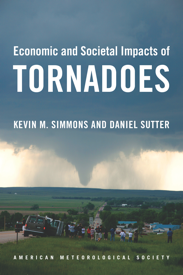
HBCU Money™ Business Book Feature – Economic and Societal Impacts of Tornadoes

AMS_Tornadoes

For almost a decade, economists Kevin M. Simmons and Daniel Sutter have been studying the economic impacts and social consequences of the approximately 1,200 tornadoes that touch down across the United States annually. During this time, Simmons and Sutter have been compiling information from sources such as the National Oceanic and Atmospheric Administration and the U.S. Census in order to examine the casualties caused by tornadoes and to evaluate the National Weather Service’s efforts to reduce these casualties. In Economic and Societal Impacts of Tornadoes, Simmons and Sutter present their findings. This analysis will be extremely useful to anyone studying meteorology and imperative for anyone working in emergency disaster management.

HBCU Money™ Turns One Year Old

By William A. Foster, IV

“I am not afraid of tomorrow, for I have seen yesterday and I love today. ” — William Allen Whit

To start a financial journalism company is no light-hearted task. Yet, one year ago today after much preparation that is exactly what was done by AK, Inc, the investment and operations firm that wholly-owns HBCU Money™. It has been an amazing year full of accomplishments, long nights, and revelations. HBCU Money’s biggest success over the past year I believe was expanding our coverage into the country of Ghana. We are and will continue to be focused on financial journalism from an African Diaspora point of view. It is the culture and purpose for which we were founded. Many say that there is a distrust from the African American and Diaspora community towards the world of economics, finance, and investment. I believe there is just lack of information from a point of view that says not only do we operate in the financial world but there is much to be done, to be built, and it is vital to our Diaspora’s infrastructure that we do so. There is much more to be done at HBCU Money™ and I expect year two will be an even bigger year than our first as we find our proper footing and place within the world of HBCU owned media. Again, I want to say thank you to all who have supported us because there are too many to name. Check out some of the highlights from our first 365 days in business.

  • If every person who reached the top of Mt. Everest viewed this site, it would have taken 13 years to get that many views.
  • The busiest day of the year was November 28th. The most popular article that day was 2011’s Top 10 HBCU Endowments.
  • There were visitors from 75 countries in all! Most visitors came from The United States. Canada & The United Kingdom were not far behind.

It has been a honor to serve as Editor-In-Chief of HBCU Money™ this past year and look forward continuing to do so. There is no time to rest. Enjoy the moment. Now let us get back to work because as our motto states “Our Money Matters”.

Virginia State University Moves To Become Leading Producer Of African American Economist

A science of economics must be developed before a science of politics can be logically formulated. Essentially, economics is the science of determining whether the interests of human beings are harmonious or antagonistic. This must be known before a science of politics can be formulated to determine the proper functions of government. — Claude-Frédéric Bastiat

vsu

It seems every day for the past few weeks there are new emails to review for Virginia State University’s Barton Blanks who is a Stewardship Administration Manager for the university from a set of thirty-somethings economics alum. It all started when a donation that the university received was designated for the Department of Economics. However, there was no endowment or fund that was designated for the department. Mr. Blanks contacted the alum who made the donation and a trail of email conversations sprang up with several suggestions brought forward by Mr. Blanks. The alum then contacted other alums to get their feedback on the feasibility and commitment for an endowment based with the university’s foundation specifically for the Department of Economics. As it turned out there was much interest and so they began the outline of what would begin to establish the endowment and its purpose.

Virginia State University is one of the few HBCUs that offers pure economics as a major and just one of five that offers it on the graduate level. Like most HBCUs that offer economics they have a very small department, a very small budget, and usually never graduate more than ten undergraduate students a year. Economics is no major for the faint of heart but its possibilities and needs are endless in terms of developing the economic infrastructure of African America not to mention the power it produces. There has never been an HBCU Federal Reserve Governor and only two African American Federal Reserve Governors. A position that is nominated by the President and confirmed by the Senate. It appears this group of alumni is out to change that.

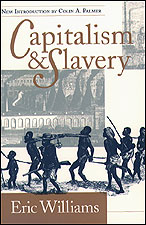
The endowment currently being set-up will go by the name The Sadie T. Mossell-Alexander & Eric E. Williams Economics Endowment. A clear ode to two African Diaspora economic pioneers. Dr. Sadie Alexander was the first African American woman to receive a PhD (economics) in the United States and while not an HBCU graduate herself her sister was the Dean of Women at Virginia State College, the forerunner to Virginia State becoming a university. Dr. Eric Williams was a prominent Economics professor at Howard University and wrote the book Capitalism and Slavery during his tenure there which is considered as important of a book about capitalism as Wealth of Nations by Adam Smith.

The endowment seeks to focus on a number of objectives. It will provide operations funds to the department, undergraduate and graduate scholarships, faculty awards, and the establishment of an institute. The unique thing about the undergraduate scholarships is that it gives funding to any and all economics majors who have at least a 2.0 GPA which the group hopes will eventually graduate undergraduates debt free. A move that should both increase enrollment in the program and create long-term wealth for the students, their families, and community. The groundbreaking institute being proposed will be the Marcus Garvey Institute of Diaspora Economics focused on the economic movements of different Diasporas and sub-Diasporas. This could be the first of many institutes that the group hopes to launch through the department.  Lastly, there is a provision in the endowment that would allow the university should it ever face a financial crisis the ability to access the endowment both principal and earnings as a short term loan. The economics alums behind the push are said to have a 25 year horizon to fulfill all of its initial goals which they plan to evaluate every 5-10 years and add on to the 25 year plan.

With only 2 of the top 10 ranked economic programs coming from public universities and no HBCUs in the top 100 this group faces an immense uphill battle. Especially given most top economic programs have budgets in excess of $60 million dollars and at least 50 faculty – Virginia State currently has approximately a $135 million total university budget and 6 faculty in the economics department for perspective. Ultimately, this group of alum has taken ownership of their department’s future with the establishment of this endowment. The success of it will eventually produce the largest number of African American graduates in the economics field annually as well as possibly create a new sub-field of economics research in Diaspora economics. There is no doubt that eventually not only will there be a Federal Reserve Governor coming from this group but eventually a Federal Reserve Chairman. Alums taking ownership of the future of their departments as de facto “shareholders” and strategist from the front lines is what we need to promote more of. Hopefully the traditional way of doing things where alums have been excluded from the strategy sessions often times will give way as alums not only seek to have their voices heard but are doing so by putting their money where their mouth is.

The University of Power & Wealth

“Our success educationally, industrially and politically is based upon the protection of a nation founded by ourselves.” – Marcus Garvey

Many in the African American community believe that colleges and universities are simply there to educate a student so that they can go on to get a job. However, colleges and universities more than any part of our society are institutions of power and wealth creation more so than any other institution.  I’d touched on some of the economics of universities previously in the article “Can African American Muscle save African America?” This is mainly because they, more than any other institutions,  can touch all three parts of the SEP (social, economic, political) development model. Through their teaching they can influence the social aspects of a community by providing strong cultural identity. Through research they can create economic opportunities, and their research can also influence policy in local, state, and national governments.

The social development of students to serve their community can be seen in a university like Brandeis, a Jewish institution, which has a MBA program in Jewish studies. This program identifies potential Jewish leadership and hones their skills to run Jewish institutions in the community handling the social, economic, and political aspects of these institutions. Per their website it states “This innovative program prepares future Jewish community executives with the full complement of MBA/non-profit skills and specialized knowledge of Judaic studies and contemporary Jewish life.” They also offer a program called the MPP-MA in Jewish Professional Leadership which states “By preparing professional leaders with a full array of policy analysis and development skills, as well as specialized knowledge of Judaic studies and contemporary Jewish life, it trains students to design and implement innovative solutions to the Jewish community’s most critical problems, and to analyze and reform existing practices.” As you can see the university is catering to the core demographic that it was founded to serve. It is ensuring that their institutions that serve their community are well equipped with leadership that understand the historical & cultural (social), economic, and political aspects that the Jewish community face and will allow it to prosper and protect itself.

Next, let’s look at the economics that colleges and universities can produce for a community. What do Google, Time Warner, FedEx, Microsoft, Facebook, and Dell have in common? They were all founded on college campuses. Google founded at Stanford, Time Warner & FedEx at Yale, Microsoft and Facebook at Harvard, and Dell at the University of Texas. The six companies whose wealth value as measured by their market capitalization (except Facebook who has a private valuation are measured by a stock’s share price times number of company shares outstanding) is worth an estimated $530 billion. To put it in perspective these six companies wealth alone is 63% of African America’s buying power which is valued at an estimated at $850 billion.

Economically-speaking, colleges & universities primary driver of funding is research. Research in many instances is turned into businesses. These businesses tend to hire and have its initial investors come from the very university and nearby communities they are launched from. The wealth these businesses generate comes back to the university and community in the form of larger endowments, more research dollars, and more scholarships. These scholarships allow its students to graduate with less debt, which allows for early accumulations of wealth instead of paying down student loan debt. These businesses by hiring primarily from the institutions they sprung from help the employment of the demographic they serve. In the case of University of Michigan their research that will be transformed into business ventures will attempt to transform Michigan’s economy to one less dependent on the auto industry and its appears more into bio-tech businesses which should drastically improve Michigan’s unemployment rate (presently at 12.9% vs. National of 9.2%) in the years to come. The state of Utah’s UStar program (using taxpayer dollars) through its two state universities Utah and Utah State is focusing on the spillover industry from Silicon Valley. UStar’s mission stated on their website is stated as “UStar created a number of research teams at the University of Utah and Utah State University. Spearheading these teams are world-class innovators hungry to collaborate with industry to develop and commercialize new technologies.” BP in 2007 gave $500 million to the University of California-Berkeley to “develop new sources of energy and reduce the impact of energy consumption on the environment.” This $500 million is more than ALL HBCUS research budgets combined ($440 million) according to the National Science Foundation tracking of college and university research budgets.

Individually speaking we can see how this wealth has culminated into the hands of people at the universities who were fortunate to be a part of these founding companies. Facebook’s 1st investor Eduardo Saverin was a fellow student of Mark Zuckerberg at Harvard. His $15,000 investment, had he actually held onto it, today would be worth $7 billion. Google’s initial investors were professors from Stanford where Page & Brin founded the search engine. Same goes for Microsoft where Bill Gates initial investor and partner was classmate Paul Allen whose current net worth is $13.5 billion primarily in part to his Microsoft holdings. Dell Computers founded by Michael Dell in his University of Texas dorm room also has his primary investors from UT.

We have also seen the philanthropic power of this wealth to impact communities at work as well. Mark Zuckerberg recently donated $100 million donation to Newark, NJ school system. T. Boone Pickens four years in 2006 ago set a record with a $165 million donation to Oklahoma State University which, as has been reported, “surpasses the $100 million Las Vegas casino owner Ralph Engelstad gave the University of North Dakota in 1998.” The two donations by Pickens and Engelstad together are equal to over 25% of all HBCU endowments combined and over 50% of HBCU research budgets. T. Boone Pickens donation alone could put 412 African American students a year through undergraduate DEBT FREE or 110 African American doctors through medical school DEBT FREE at HBCU medical schools Charles Drew Medical School in California or Meharry Medical School in Tennessee. Graduating debt free could allow these doctors to be more likely to choose working in hospitals in African American communities as opposed to chasing a high paying job they need to pay down the massive student loan debt they occur. How would that be for improved medical care to our community?

The power to influence political policy is evident at Rice University’s Baker Institute for Public Policy. Their current areas of focus are Arab media & politics, conflict resolution, drug policy, energy, health economics, homeland security, international economics, religion & culture, science & technology policy, space policy, tax & expenditure policy, the Americas Project (Latin America policy), the Transnational China Project (Chinese culture & policy), urban studies (African American policy), and the U.S.-Mexico Project (border policy). They have also recently sponsored an organization for the Iraq Study Group. Even our beloved Barack Obama’s cabinet is infected with Ivy Leaguers as noted in the article “Barack Obama taps into the Ivy League revolution with his cabinet” which notes that 22 of the 36 cabinet members are from Ivy League universities. Universities that still hold less than a 10% African American population. While Obama has a diverse cabinet the probability of this happening if he himself were not African American is highly unlikely (see previous 43 cabinets). It goes on to say “Even in Obama’s Washington, money and surnames matter.” The reality is people in power tap into those whom they know and who are qualified (or not) more than they tap those who they don’t know and are qualified. The old adage “Its who you know not what you know” speaks to a large part of the social networking importance of colleges and universities.

The question is then how do we improve our HBCUs to become the vehicles that can serve our SEP interest? First realize that these institutions are more than just a place to get a degree. As you can see their depth is possibly the greatest vehicle of development our community has at its disposal and that their existence is for the very thing we seek and that is to help uplift our community today and for generations. Secondly realize every mind and body has a value. This IS capitalism people. EVERYTHING has a value. For American college and universities each warm body generates an average of $33,000 in tuition revenue per year. HBCUs only get $6 billion of the $54 billion in African America’s annual tuition revenue pie meaning $48 billion is leaving our community to predominantly European American colleges & universities in tuition revenue alone. This forces our 95 HBCUs to operate on an average of $63 million per HBCU to have very little in the way of improving facilities, recruiting talented faculty, and expanding their research budgets, which could influence the SEP of our communities. To put that $63 million in perspective Ohio State University’s ATHLETIC department operates on $107 million per year (primarily funded by African American muscle). The fact that only a roughly 10-12% of African American students who can attend college choose to go to HBCUs limits these institutions from improving themselves as they are always strapped for operation revenue meanwhile being asked to compete from the perspective of: Howard v. Harvard, Charles Drew Medical v. UCLA Medical, or even Prairie View A&M vs. Texas A&M in the areas of SEP development and leaves us at the mercy of someone else’s institution solving our problems who has no real interest in doing so.

We must redirect our charity giving. A blog on African American giving I read recently said of our $11 billion we give annually to charities, $7 billion goes into churches. By making a concerted effort to redirect $2 billion of this would vastly improve the state of our HBCUs and should not dampen our religious institutions. Because while I’m all for saving our souls it is high time we invest in improving the fate of the bodies which house our souls and the institutions that were created to serve them and our communities. Too many of us faithfully pay our tithes and give little thought to our secular institutions like HBCUs. Their fate I dare say will be our own and without our own institutional power to combat institutional power of other communities we will be forever at the mercy of others awaiting them to bless us with their leftovers. It is time to once again do for self as all others do and as we use to do. Operate like a nation or become a destroyed people.