Tag Archives: black owned banks

Island Mentality: Alabama State University’s $125 Million Decision Highlights HBCUs’ Continued Failure To Connect With The African American Financial Sector

Negro banks, as a rule, have failed because the people, taught that their own pioneers in business cannot function in this sphere, withdrew their deposits. – Dr. Carter G. Woodson
What is an ecosystem? How do you develop an ecosystem? Can we develop an African American ecosystem? It seems to be a question that a room full of African American institutional leadership have little understanding of based on the institutional decisions that are continuously made. In their academic paper entitled Economic Ecosystems, Philip E. Auerswald and Lokesh M. Dani, “An ecosystem is defined as a dynamically stable network of interconnected firms and institutions within bounded geographical space. It is proposed that representing regional economic networks as ‘ecosystems’ provides analytical structure and depth to theories of the sources of regional advantage, the role of entrepreneurs in regional development, and the determinants of resilience in regional economic systems.” The most vital part of that definition being interconnected firms and institutions. African American institutions in general at every turn fail to understand this concept and HBCUs are no exception. This is especially true of HBCUs choice of banks and now Alabama State University’s recent decision to forego a plethora of African American Owned Investment and Asset Management firms and hand $125 million to another European American owned investment firm. African American capital once again reinforcing European America’s financial ecosystem – not ours.

It is almost a redundant story at this point. African American institutions all operating on their own island and failing to interconnect and intertwine with each other. African America from individual to institutions all do what is best for themselves individually and not what is best for the collective and certainly not what connects and strengthens the collective. See Hampton University and North Carolina A&T State University decisions to leave an HBCU conference for a PWI one. To that vein is why over 90 percent of African America’s $100 billion in annual tuition revenue goes into PWIs and not HBCUs/PBIs. HBCUs provide very little means of an example for the community to follow. Instead, HBCUs are a glaring headlight of just how poorly African American institutions perform in strategically integrating themselves within the African American ecosystem, especially economically. There are no reports on HBCUs engagement with the African American private sector because HBCUs do not seemingly see that as important. How many of HBCU graduates work for African American owned companies? How much HBCU athletic sponsorship dollars come from African American owned companies/partnerships? How much of the HBCU endowment is invested in African American firms? These are basic questions that any leadership of an HBCU should be able to answer. Unfortunately as Jarrett Carter, Sr., founder of HBCU Digest, once eloquently put it, “Many HBCUs are just trying to be PWI-adjacent.”

Is $125 million a lot of money? Context matters. To any individual, most would agree $125 million is significant. To institutions, it varies on size, scope, and goals. For African American Financial Institutions, almost down to even the largest of our firms having an $125 million account would see their bottom line acutely move. Providing perspective on the landscape, Pension and Investments reports, “The global asset management industry showed some signs of recovery in 2023, with total assets under management (AUM) rising 12% year-over-year to nearly $120 trillion, according to research by Boston Consulting Group.” For African American Asset Managers, “The largest Black-owned asset managers are responsible for more than $253 billion in assets, according to FIN Searches data. Vista Equity Partners is the largest Black-owned firm in the industry, with the private equity manager handling $103.8 billion in assets.” African American Owned Asset Managers only account for 0.2 percent of the global AUM. By contrast, the Top 10 non-Black asset managers have $22 trillion assets under management which accounts for almost 20 percent of global AUM.

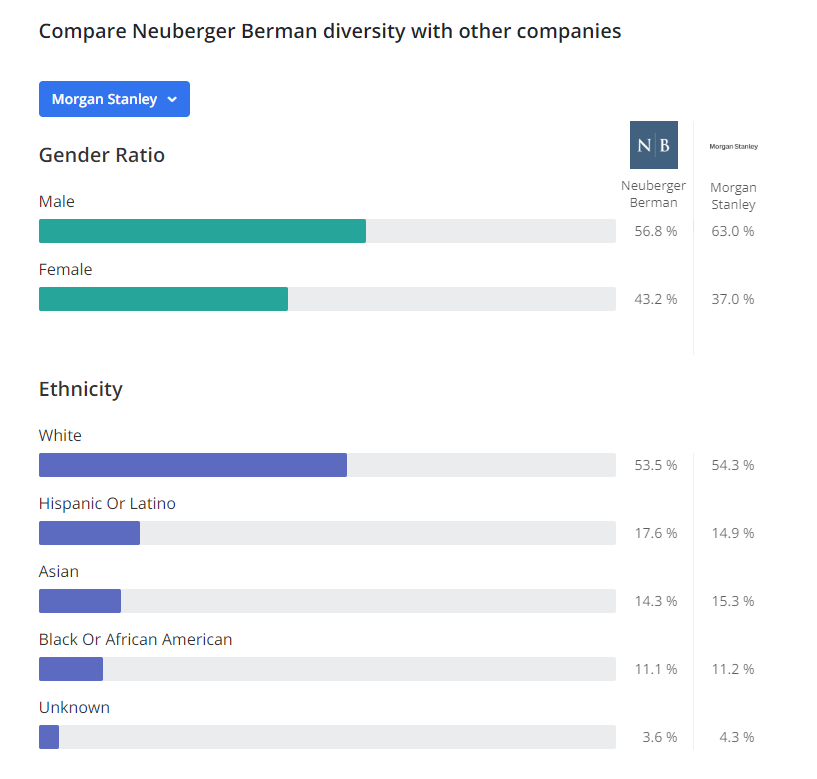
The asset management firm that Alabama State University chose according to World Benchmarking Alliance, “Neuberger Berman is a private employee-owned investment management firm (leadership pictured above) headquartered in New York, USA. It was founded in 1939 and has offices in 39 cities across 26 countries. The firm manages equities, fixed income, private equity and hedge fund portfolios for global institutional investors, advisors and high-net-worth individuals. It managed USD 460 billion of assets (under management) in 2021 and employed 2,647 staff in 2022.” This means that Alabama State University’s $125 million is equal to 0.02 percent of assets under management for Neuberger Berman. A drop in the bucket. The entirety of assets at African American Owned Asset Management firms is only 55 percent of Neuberger Berman assets under management. Alabama State University’s $125 million would have lifted the ENTIRE African American Owned Asset Management’s AUM by 0.05 percent. A move that would have strengthened the African American economic and financial ecosystem.
African America as a community talks about the circulation of the dollar or our lack thereof constantly, but what is virtually never talked about is the circulation of the African American institutional dollar being the largest part of that conversation. It is a fairly accepted statistic that the African American dollar does not stay in the African American community for a day, while other communities see their dollar stay in their communities for weeks and in the case of the Asian American community for almost a month. We often think of the circulation of our dollar like everything else, on an island or as an individual. An individual going and buying food from even an expensive African American owned restaurant is $100-200, but an HBCU building a new building means the opportunity for a new loan worth tens of millions for an African American owned bank, it means tens of millions for an African American owned construction company, so on and so forth. Instead, Bethune-Cookman University borrows from a notorious predatory lender to the African American community in Wells Fargo and almost finds itself losing those buildings due to foreclosure.

HBCU alumni know little about the state of finances or the movement of the money at their alma maters. HBCU administrators either willfully withholding the information or inept themselves of the importance of the information and providing it. Both are problematic. The notion that HBCUs cannot find African American investment firms is a painful thought knowing that a Google search would bring up the HBCU Money African American Owned Bank Directory at the very least. The likelihood is more in line with what Mr. Carter said in that a good deal of HBCU leadership simply wants to be like their PWI counterparts is far more likely. This would explain the debacle “donation” accepted by Florida A&M University’s president recently where a simple Google search would have avoided such embarrassment. Instead, Alabama State University’s Neuberger Berman relationship and a plethora of others instances (a decade ago when we reported “Spelman College & Regions Bank – A Failure To Disclose”) is that likely they are simply mimicking PWI actions and unwittingly reinforcing the PWI/European American ecosystem to say the least. Unfortunately, that mimicking reinforces another community’s economic and financial ecosystems not ours and why you may never see OneUnited Field at any HBCU’s athletic facility. Because we are holding out for J.P. Morgan, Bank of America, or Wells Fargo to show us the same love they show PWIs. Not acknowledging those are not our community’s banks.

If HBCUs are simply going to behave as PWI-adjacent institutions, then it is hard to argue with why over 90 percent of African Americans who go to college are not choosing HBCUs. For many it becomes a question of why get a knockoff when they can get the real thing. After all their ice is colder. HBCUs, HBCU alumni associations, and HBCU support organizations as a whole are not making decisions related to African American institutions ecosystem’s interests and interconnectivity and that is most glaring in the poor institutional decisions we are making in regards to our institutional finances and endowments.

Why Do HBCUs Not Bank With Black Banks?

It could all be so simple But you‘d rather make it hard, loving you is like a battle and we both end up with scars. – Lauryn Hill

Something that should be so simple, HBCUs and other African American organizations, businesses, and other African American institutions have made not just a battle but sometimes it feels like a war. That battle, getting African American institutions to bank with the African American banking system with banks and/or credit unions owned and controlled by – African Americans. It is economic development 101 for other groups, but for African America it is seemingly Calculus III. Based on HBCU Money’s internal research on the matter only two, a PBI and HBCU, are believed to bank with a Black-owned bank. That means that just like the over 90 percent of African Americans who go to college not choosing HBCUs, well over 90 percent of HBCUs do not bank with a Black-owned bank. And in both cases, neither (AAOBs or HBCUs) are able to fulfill their potential as they would with the patronage and investment of those they were built to serve.

We asked the AI app Nova for their take on why HBCUs do not bank with African American owned banks and here was its answer: “There are a few reasons why many HBCUs may not bank with Black-owned banks. One reason is that larger, more established banks often offer more resources and services that HBCUs may need, such as investment services or customized financial solutions. Additionally, some HBCUs may feel more comfortable with larger, more established banks that have a long history of working with educational institutions. However, there has been a growing movement encouraging HBCUs to support Black-owned banks and businesses as a way to promote economic empowerment within the Black community. Many Black-owned banks have a strong commitment to supporting HBCUs, and may offer specialized products and services tailored to their needs.”

Despite AI being quite learned in its contribution to this. There are as they say – levels to this. Not least among them is the plight of public HBCUs lacking autonomy. It would take a massive student and alumni uprising in order to get a public HBCUs moved to an African American owned bank. Ultimately, public HBCUs are controlled by a board or if they are in a system, then a system’s board. In either case, the state’s flagship PWIs carrying the most financial weight and tend to be determinate of how all public universities in the state will behave and most certainly likely where they will bank. And while it is complicated to wrangle the institutional banking of public HBCUs into African American owned banks, their proxy organizations like alumni associations and foundations that serve them should not have anywhere near the issue of banking Black. Then there are the private HBCUs who have far more autonomy with their banking decisions and yet it seems potentially only one private HBCU actually banks Black. It is almost befuddling in the case of the Alabama and Georgia HBCUs not to bank Black. They both have two African American Owned Banks in headquartered in their states. Morehouse specifically just a few years ago had one of their alumni bring back African American owned banking to Oklahoma when alumnus Kevin Perry purchased controlling interest in First Security Bank & Trust. In fact, 14 of the 15 states and territories where there are African American owned banks have HBCUs/PBIs in them with Wisconsin being the lone exception.

African America’s flagship HBCU, Howard University, two years ago entered into a partnership with PNC Bank to create the PNC National Center for Entrepreneurship housed at Howard University. PNC’s Foundation providing Howard University with a rather obtuse $3.4 million a year grant for five years. PNC Bank is based in Pittsburgh,PA, its executive team in 2022 commanded $81 million in compensation, and the bank has assets over $550 billion – an amount that is over 100 times the size of all 16 remaining African American Owned Banks’ assets combined. We think Marcus Garvey just rolled over in his grave. Meanwhile, right in Howard University’s backyard is Industrial Bank, an African American Owned Bank with $723 million in assets, meaning PNC Bank has over 760 times the amount of assets of Industrial. There is in fact only one African American Owned Bank that has over $1 billion in assets, Liberty Bank & Trust in Louisiana.

That HBCU presidents and AAOB CEOs do not have closer relationships simply speaks to the island mentality that African American institutions as a whole have. Although our community loves to parrot the harsh reality of an African American dollar that does not circulate in our community’s even 6 hours while “the average lifespan of the dollar is approximately 28 days in Asian communities, 19 days in Jewish communities, 17 days in white communities”, according to a piece by the FAMUAN (see how we are circulating HBCU media capital). This has done nothing to make HBCU administrators understand that the circulation of the African American institutional dollar is far more impactful than the African American consumer collar. Despite as recently as 2017, there were four African American Owned Banks with HBCU alumni as CEOs. It is also not just on HBCUs, but AAOBs should be doing a better job of heavily pursuing those HBCUs that do have the autonomy to decide where they bank and forging deep relationships with them at multiple levels.

By forging that relationship HBCUs and AAOBs can multiply the probability of opportunities and profitability. That way when an HBCU alum creates the next Google, SpaceX, FedEx, or other Fortune 500 company, then they will already know the importance of banking with an AAOB and hiring HBCU alumni. It will be understood because the intentionality of our ecosystem’s success will be modeled and molded and as a result our community is empowered with success a rule and not the outlier it operates in now as so many of us continue to try and build a nation as an island instead of forging together.

HBCU Money’s 2021 African American Owned Bank Directory

All banks are listed by state. In order to be listed in our directory the bank must have at least 51 percent African American ownership. You can click on the bank name to go directly to their website.

OTHER KEY FINDINGS:

  • African American Owned Banks (AAOBs) are in 14 states and territories. Key states absent are Maryland, Mississippi, New York, Ohio, and Virginia.
  • There has not been an African American Owned Bank (AAOB) started in 22 years.
  • Alabama and Georgia each have two AAOBs.
  • 14 of the 16 African American Owned Banks saw increases in assets from the previous directory.
  • African American Owned Banks have approximately $4.8 billion of America’s $22.8 trillion bank assets or 0.02 percent.
  • African American Owned Banks control 1.5 percent of FDIC designated Minority-Owned Bank Assets, which is down from 1.7 percent in 2020. A fourth straight year of declines.
  • 2021 Median AAOBs Assets: $192,932,000 ($106,140,000)
  • 2021 Average AAOBs Assets: $302,218,000 ($225,519,000)
  • For comparison, Asian American Owned Banks have approximately $66.7 billion in assets spread over 61 institutions. Asian American Owned Banks saw a decrease of $62.6 billion increase (48.4 percent) since 2020.
  • TOTAL AFRICAN AMERICAN OWNED BANK ASSETS: $4,835,494,000

ALABAMA

ALAMERICA BANK

Location: Birmingham, Alabama

Founded: January 28, 2000

FDIC Region: Atlanta

Assets: $15,330,000

Asset Change (2020): DOWN 21.7%

COMMONWEALTH NATIONAL BANK

Location: Mobile, Alabama

Founded: February 19, 1976

FDIC Region: Atlanta

Assets: $57,066,000

Asset Change (2020): UP 14.6%

DISTRICT OF COLUMBIA

INDUSTRIAL BANK

Location: Washington, DC

Founded: August 18, 1934

FDIC Region: New York

Assets: $621,400,000

Asset Change (2020): UP 17.1%

GEORGIA

CARVER STATE BANK

Location: Savannah, Georgia

Founded: January 1, 1927

FDIC Region: Atlanta

Assets: $63,974,000

Asset Change (2020): UP 51.1%

CITIZENS TRUST BANK

Location: Atlanta, Georgia

Founded: June 18, 1921

FDIC Region: Atlanta

Assets: $680,998,000

Asset Change (2020): UP 62.9%

ILLINOIS

GN BANK

Location: Chicago, Illinois

Founded: January 01, 1934

FDIC Region: Chicago

Assets: $79,793,000

Asset Change (2020): DOWN 42.0%

LOUISIANA

LIBERTY BANK & TRUST COMPANY

Location: New Orleans, Louisiana

Founded: November 16, 1972

FDIC Region: Dallas

Assets: $1,014,251,000

Asset Change (2020): UP 61.5%

MASSACHUSETTS

ONEUNITED BANK

Location: Boston, Massachusetts

Founded: August 02, 1982

FDIC Region: New York

Assets: $657,516,000

Asset Change (2020): UP 0.5%

MICHIGAN

FIRST INDEPENDENCE BANK

Location: Detroit, Michigan

Founded: May 14, 1970

FDIC Region: Chicago

Assets: $396,316,000

Asset Change (2020): UP 33.9%

NORTH CAROLINA

MECHANICS & FARMERS BANK

Location: Durham, North Carolina

Founded: March 01, 1908

FDIC Region: Atlanta

Assets: $370,124,000

Asset Change (2020): UP 39.5%

OKLAHOMA

FIRST SECURITY BANK & TRUST

Location: Oklahoma City, Oklahoma

Founded: April 06, 1951

FDIC Region: Dallas

Assets: $59,791

Asset Change (2020): UP 8.4%

PENNSYLVANIA

UNITED BANK OF PHILADELPHIA

Location: Philadelphia, Pennsylvania

Founded: March 23, 1992

FDIC Region: New York

Assets: $67,850,000

Asset Change (2020): UP 37.2%

SOUTH CAROLINA

OPTUS BANK

Location: Columbia, South Carolina

Founded: March 26, 1999

FDIC Region: Atlanta

Assets: $338,615,000

Asset Change (2020): UP 333.4%

TENNESSEE

CITIZENS SAVINGS B&T COMPANY

Location: Nashville, Tennessee

Founded: January 4, 1904

FDIC Region: Dallas

Assets: $134,402,000

Asset Change (2020): UP 38.1%

TEXAS

UNITY NB OF HOUSTON

Location: Houston, Texas

Founded: August 01, 1985

FDIC Region: Dallas

Assets: $251,462,000

Asset Change (2020): UP 136.9%

WISCONSIN

COLUMBIA SAVINGS & LOAN ASSOCIATION 

Location: Milwaukee, Wisconsin

Founded: January 1, 1924

FDIC Region: Chicago

Assets: $26,607,000

Asset Change (2020): UP 12.8%

SOURCE: FDIC

HBCU Money’s 2019 African American Owned Bank Directory

For the most current African American Owned Bank Directory visit the 2022 link by clicking here.

All banks are listed by state. In order to be listed in our directory the bank must have at least 51 percent African American ownership. You can click on the bank name to go directly to their website.

OTHER KEY FINDINGS:

  • AAOBs are in 16 states and territories. Key states absent are Florida, Mississippi, New York, Ohio, and Virginia.
  • There has not been an AAOB started in 18 years.
  • Only 4 of 2018’s 19 AAOBs saw increases in assets, down from 11 last year.
  • Alabama, Georgia, and Tennessee, each have two AAOBs.
  • Only 5 of the 19 remaining AAOBs saw increases in assets. A drop of over 50 percent from 2018, when 11 AAOBs saw increases.
  • African American Owned Banks have approximately $4.1 billion of America’s $17.1 trillion bank assets or 0.02 percent.
  • AAOBs control 1.8 percent of FDIC designated Minority-Owned Bank Assets, which is down from 1.9 percent in 2018. A second straight year of declines.
  • 2018 Median AAOBs Aseets: $142,129,000 ($133,096,000)*
  • 2018 Average AAOBs Assets: $217,533,000 ($222,831,000)*
  • For comparison, Asian American Owned Banks have approximately $119.4 billion in assets spread over 75 institutions. Asian AOBs saw an increase of $7 billion increase (6.2 percent) in assets from 2018, while African American Owned Banks saw a 2.4 percent decrease in assets.
  • TOTAL AFRICAN AMERICAN OWNED BANK ASSETS: $4,133,126,000

ALABAMA

ALAMERICA BANK

Location: Birmingham, Alabama

Founded: January 28, 2000

FDIC Region: Atlanta

Assets: $27,122,000

Asset Change (2018): Down 23.2%

COMMONWEALTH NATIONAL BANK

Location: Mobile, Alabama

Founded: February 19, 1976

FDIC Region: Atlanta

Assets: $46,771,000

Asset Change (2018): Down 5.5%

CALIFORNIA

BROADWAY FEDERAL BANK FSB

Location: Los Angeles, California

Founded: February 26, 1947

FDIC Region: San Francisco

Assets: $417,335,000

Asset Change (2018): Up 1.4%

DISTRICT OF COLUMBIA

INDUSTRIAL BANK

Location: Washington, DC

Founded: August 18, 1934

FDIC Region: New York

Assets: $421,121,000

Asset Change (2018): Down 0.5%

GEORGIA

CARVER STATE BANK

Location: Savannah, Georgia

Founded: January 1, 1927

FDIC Region: Atlanta

Assets: $39,686,000

Asset Change (2018): Down 5.7%

CITIZENS TRUST BANK

Location: Atlanta, Georgia

Founded: June 18, 1921

FDIC Region: Atlanta

Assets: $395,923,000

Asset Change (2018): Down 7.6%

ILLINOIS

GN BANK  (FORMERLY ILLINOIS SERVICE FEDERAL)

Location: Chicago, Illinois

Founded: January 01, 1934

FDIC Region: Chicago

Assets: $142,129,000

Asset Change (2018): Up 6.8%

LOUISIANA

LIBERTY BANK & TRUST COMPANY

Location: New Orleans, Louisiana

Founded: November 16, 1972

FDIC Region: Dallas

Assets: $596,695,000

Asset Change (2018): Down 1.5%

MARYLAND

HARBOR BANK OF MARYLAND

Location: Baltimore, Maryland

Founded: September 13, 1982

FDIC Region: New York

Assets: $284,055,000

Asset Change (2018): Up 6.7%

MASSACHUSETTS

ONEUNITED BANK

Location: Boston, Massachusetts

Founded: August 02, 1982

FDIC Region: New York

Assets: $649,058,000

Asset Change (2018): Down 1.4%

MICHIGAN

FIRST INDEPENDENCE BANK

Location: Detroit, Michigan

Founded: May 14, 1970

FDIC Region: Chicago

Assets: $255,617,000

Asset Change (2018): Down 10.8%

NEW JERSEY

CITY NB OF NEW JERSEY

Location: Newark, New Jersey

Founded: June 11, 1973

FDIC Region: New York

Assets: $180,631,000

Asset Change (2018): Down 15.5%

NORTH CAROLINA

MECHANICS & FARMERS BANK

Location: Durham, North Carolina

Founded: March 01, 1908

FDIC Region: Atlanta

Assets: $262,050,000

Asset Change (2018): Up 2.9%

PENNSYLVANIA

UNITED BANK OF PHILADELPHIA

Location: Philadelphia, Pennsylvania

Founded: March 23, 1992

FDIC Region: New York

Assets: $54,055,000

Asset Change (2018): Down 8.4%

SOUTH CAROLINA

SOUTH CAROLINA COMMUNITY BANK

Location: Columbia, South Carolina

Founded: March 26, 1999

FDIC Region: Atlanta

Assets: $59,771,000

Asset Change (2018): Up 13.7%

TENNESSEE

CITIZENS SAVINGS B&T COMPANY

Location: Nashville, Tennessee

Founded: January 4, 1904

FDIC Region: Dallas

Assets: $104,819,000

Asset Change (2018): Down 2.2%

TRI-STATE BANK OF MEMPHIS

Location: Memphis, Tennessee

Founded: December 16, 1946

FDIC Region: Dallas

Assets: $83,180,000

Asset Change (2018): Down 4.0%

TEXAS

UNITY NB OF HOUSTON

Location: Houston, Texas

Founded: August 01, 1985

FDIC Region: Dallas

Assets: $89,522,000

Asset Change (2018): Down 6.8%

WISCONSIN

COLUMBIA SAVINGS & LOAN ASSOCIATION 

Location: Milwaukee, Wisconsin

Founded: January 1, 1924

FDIC Region: Chicago

Assets: $23,586,000

Asset Change (2018): Down 1.6%

HBCU Money’s 2018 African American Owned Bank Directory

For the most current African American Owned Bank Directory visit the 2022 link by clicking here.

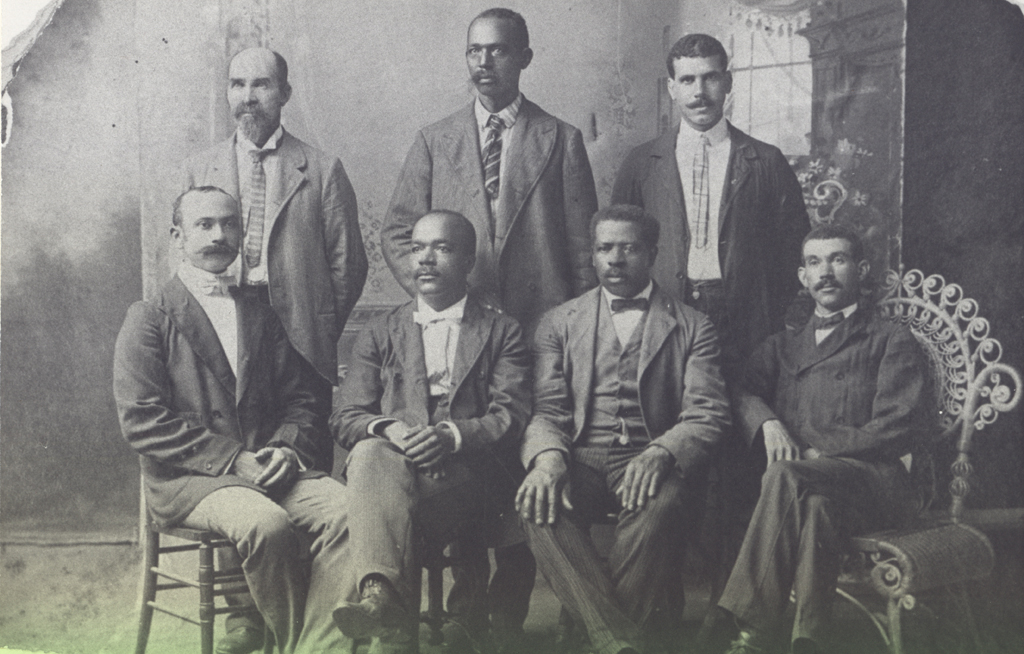
(Founders of Merchants & Farmers Bank in Durham, North Carolina)

All banks are listed by state. In order to be listed in our directory the bank must have at least 51 percent African American ownership. You can click on the bank name to go directly to their website.

OTHER KEY FINDINGS:

  • Key losses were the sale of First State Bank in Danville, Virginia.
  • AAOBs are in 16 states and territories. Key states absent are Florida, Mississippi, New York, Ohio, and Virginia.
  • Alabama, Georgia, and Tennessee, each have two AAOBs.
  • 2017 Median AAOBs Aseets: $133 096 000 ($109 858 000)*
  • 2017 Average AAOBs Assets: $222 831 000 ($218 346 000)*
  • Of the surviving African American bank assets saw a 2.1 percent increase or net gain of approximately $85.2 million in assets in 2017.
  • AAOBs control 0.03 percent of America’s $15.4 trillion Bank Owned Assets.
  • AAOBs control 1.9 percent of FDIC designated Minority-Owned Bank Assets, which is down from 2 percent in 2017.
  • There has not been an AAOB started in 17 years.
  • 11 of 2016’s 19 AAOBs saw increases in assets.
  • For comparison, Asian American Owned Banks have approximately $112.4 billion in assets spread over 76 institutions. An almost 300 percent increase over the past two years.

There are 19 African American owned banks (AAOBs) with assets totaling approximately $4.2 billion in assets or approximately 0.38 percent of African America’s $1.1 trillion in buying power. An unchanged percentage from 2017.

ALABAMA

ALAMERICA BANK

Location: Birmingham, Alabama

Founded: January 28, 2000

FDIC Region: Atlanta

Assets: $35 328 000

Asset Change (2017): Down 2.6%

COMMONWEALTH NATIONAL BANK

Location: Mobile, Alabama

Founded: February 19, 1976

FDIC Region: Atlanta

Assets: $49 485 000

Asset Change (2017): Down 11.4%

CALIFORNIA

BROADWAY FEDERAL BANK FSB

Location: Los Angeles, California

Founded: February 26, 1947

FDIC Region: San Francisco

Assets: $411 638 000

Asset Change (2017): Down 0.4%

DISTRICT OF COLUMBIA

INDUSTRIAL BANK

Location: Washington, DC

Founded: August 18, 1934

FDIC Region: New York

Assets: $423 202 000

Asset Change (2017): Up 8.9%

GEORGIA

CARVER STATE BANK

Location: Savannah, Georgia

Founded: January 1, 1927

FDIC Region: Atlanta

Assets: $42 077 000

Asset Change (2017): Up 5.9%

CITIZENS TRUST BANK

Location: Atlanta, Georgia

Founded: June 18, 1921

FDIC Region: Atlanta

Assets: $428 579 000

Asset Change (2017): Up 5.6%

ILLINOIS

ILLINOIS SERVICE FEDERAL SAVINGS & LOAN

Location: Chicago, Illinois

Founded: January 01, 1934

FDIC Region: Chicago

Assets: $133 096 000

Asset Change (2017): Up 26.3%

LOUISIANA

LIBERTY BANK & TRUST COMPANY

Location: New Orleans, Louisiana

Founded: November 16, 1972

FDIC Region: Dallas

Assets: $605 490 000

Asset Change (2017): Down 1.0%

MARYLAND

HARBOR BANK OF MARYLAND

Location: Baltimore, Maryland

Founded: September 13, 1982

FDIC Region: New York

Assets: $266 208 000

Asset Change (2017): Up 7.2%

MASSACHUSETTS

ONEUNITED BANK

Location: Boston, Massachusetts

Founded: August 02, 1982

FDIC Region: New York

Assets: $658 014 000

Asset Change (2017): Up 1.8%

MICHIGAN

FIRST INDEPENDENCE BANK

Location: Detroit, Michigan

Founded: May 14, 1970

FDIC Region: Chicago

Assets: $286 561 000

Asset Change (2017): Up 21.4%

NEW JERSEY

CITY NB OF NEW JERSEY

Location: Newark, New Jersey

Founded: June 11, 1973

FDIC Region: New York

Assets: $213 858 000

Asset Change (2017): Down 4.1%

NORTH CAROLINA

MECHANICS & FARMERS BANK

Location: Durham, North Carolina

Founded: March 01, 1908

FDIC Region: Atlanta

Assets: $254 776 000

Asset Change (2017): Down 17.6%

PENNSYLVANIA

UNITED BANK OF PHILADELPHIA

Location: Philadelphia, Pennsylvania

Founded: March 23, 1992

FDIC Region: New York

Assets: $59 009 000

Asset Change (2017): Up 5.4%

SOUTH CAROLINA

SOUTH CAROLINA COMMUNITY BANK

Location: Columbia, South Carolina

Founded: March 26, 1999

FDIC Region: Atlanta

Assets: $52 586 000

Asset Change (2017): Up 2.5%

TENNESSEE

CITIZENS SAVINGS B&T COMPANY

Location: Nashville, Tennessee

Founded: January 4, 1904

FDIC Region: Dallas

Assets: $107 165 000

Asset Change (2017): Down 2.5%

TRI-STATE BANK OF MEMPHIS

Location: Memphis, Tennessee

Founded: December 16, 1946

FDIC Region: Dallas

Assets: $86 651 000

Asset Change (2017): Down 15.4%

TEXAS

UNITY NB OF HOUSTON

Location: Houston, Texas

Founded: August 01, 1985

FDIC Region: Dallas

Assets: $96 010 000

Asset Change (2017): Up 14.0%

WISCONSIN

COLUMBIA SAVINGS & LOAN ASSOCIATION 

Location: Milwaukee, Wisconsin

Founded: January 1, 1924

FDIC Region: Chicago

Assets: $23 973 000

Asset Change (2017): Down 1.8%