
“History is not everything, but it is a starting point. History is a clock that people use to tell their political and cultural time of day.” – Dr. John H. Clarke
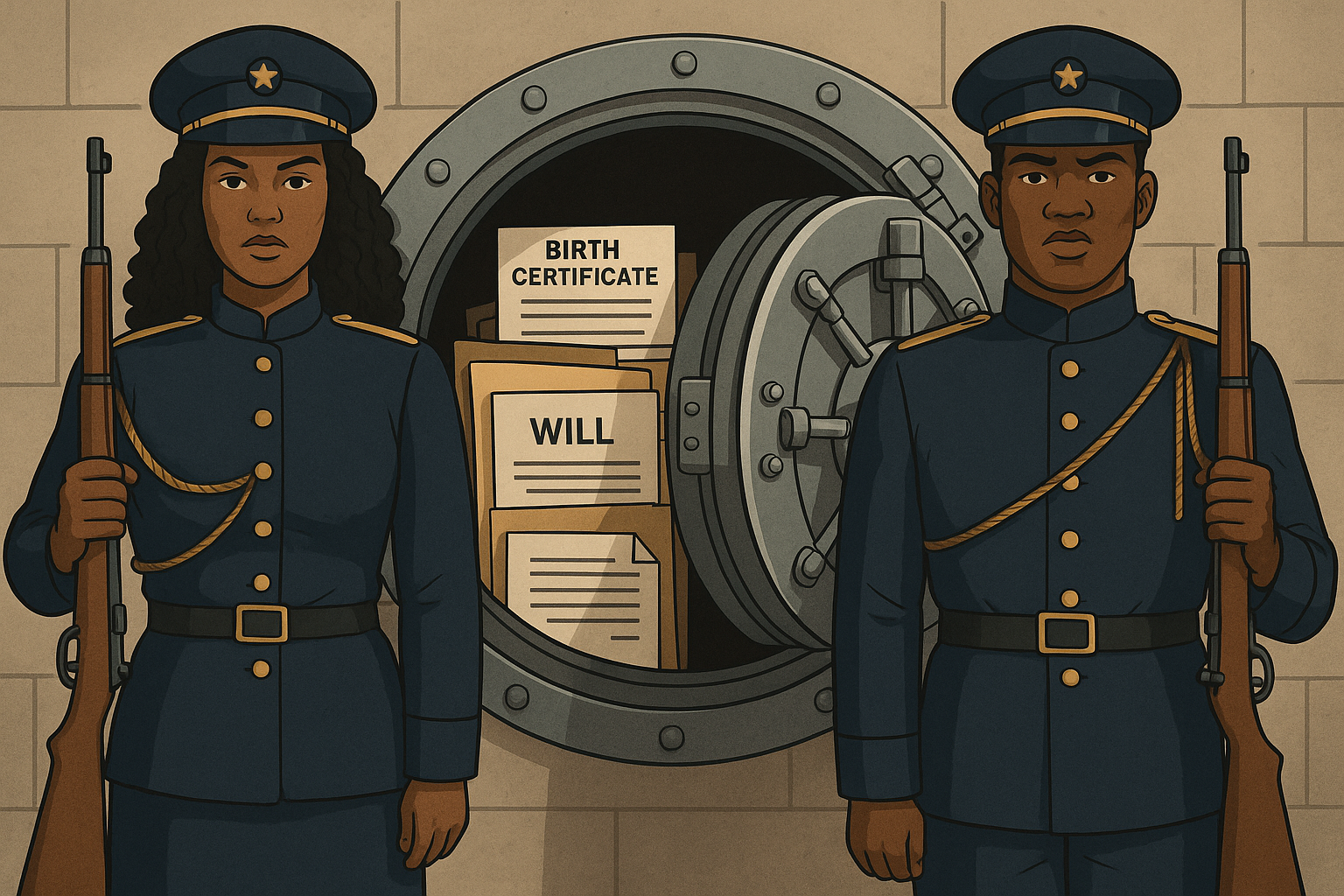
“I am 32 years old. I am married. I just had a baby. I called my parents for my birth certificate… these people gave me a photocopy.” — J.J. McAvoy
Cue the collective Black laughter that says, “Yeah… that tracks.”
For many African Americans—and children of Black immigrants—this scenario isn’t just relatable. It’s practically law. There exists in our households an unwritten yet universally enforced mandate: You do not own your documents. Your parents do. Whether you’re 12, 22, or 42, asking for your birth certificate is like requesting access to national security archives—at best, you’ll get a heavily redacted photocopy; at worst, a reminder that “they’re in a safe place” and no further information will be disclosed.
Yet what begins as a meme-worthy moment veiled in humor reveals something deeper—intergenerational trauma, immigration anxieties, institutional distrust, and the invisible threads of caretaking and control that define Black familial life.
Birth Certificates, Blackness, and Bureaucracy
Black people in America—and Black immigrants especially—understand the stakes of documentation in ways others simply don’t. It’s not just paper. It’s protection. It’s legitimacy. It’s survival. From the days of freedmen who needed freedom papers to prove they weren’t property, to Caribbean and African immigrants who were taught by necessity to file away every school record, immunization report, and ID in a manila envelope the size of a novel manuscript—documents are currency. And parents? They’re the vault.
HBCUs have long understood this dynamic, too. Campus move-in days often feature parents armed with accordion folders bulging with immunization forms, financial aid papers, and—yes—original birth certificates that will never see a dorm room drawer. Even at 18, as a student legally responsible for yourself, the assumption is clear: your documentation stays in the family archives unless and until it’s needed. And only your parents decide what constitutes “needed.”
The (Unspoken) Reasons Why
So why don’t our parents just hand it over?
1. Institutional Distrust:
Historically, Black people have had good reason to distrust American institutions. From stolen land deeds to denied voter registrations to medical exploitation like the Tuskegee Study, paperwork—or the lack thereof—has been used as both sword and shield. Birth certificates especially were once used to deny African Americans social services, employment, and even their very existence in the eyes of the state.
Holding onto that paper is, in some ways, holding onto power.
2. Immigration Mentality:
Immigrant parents—particularly from African, Caribbean, and Latinx backgrounds—often operate under the logic that documentation must be preserved, not just for legal reasons, but because replacement is not guaranteed. Many come from countries where losing a document meant spending days in government offices, or worse, being permanently excluded from education or employment. The habit of over-documenting is one born from necessity, not paranoia.
3. Generational Control:
Let’s be honest—sometimes, it’s a control thing. Documents are a symbol of adulthood, of autonomy. But in many Black families, adulthood is earned, not merely reached by age. Holding onto your birth certificate is just one more way to remind you that your elders are still in charge. Even if you have a spouse, a job, a mortgage, and a child of your own.
4. Sentimentalism & Safeguarding:
There’s also a layer of emotional preservation at play. For some parents, especially mothers, the birth certificate is a living memory. The hospital receipt, the baby bracelet, the inked footprints—these items are sacred. Giving them to you feels like giving away a piece of your infancy they’ve guarded like treasure.
A Cultural Running Joke… But Also a Warning
On Black Twitter, TikTok, and Instagram, stories like jjmcavoy’s are met with likes, laughs, and a flood of similar testimonies:
- “I’m 38 and my mom just mailed me my baby teeth, but not my social security card.”
- “My dad keeps the birth certificates in the Bible. You’ll never find them.”
- “I asked my aunt for my birth certificate once. She said, ‘For what? You tryna run away?’”
These shared experiences are part of the Black collective memory—and they help build community through humor. But embedded in that comedy is a stark lesson: we don’t always feel safe in the system, so we create our own.
In Black America, documentation isn’t just paperwork—it’s protection. And when trust in state infrastructure is low, your parents become your bureaucratic buffer. They don’t trust “the system” to have your back, so they keep it all—just in case.
HBCUs and Documentation Culture
Within the context of HBCUs, this culture plays out in subtle but impactful ways.
Admissions Counselors at HBCUs are often more patient and understanding when a student says, “My mom has that,” in response to requests for transcripts or ID. They’ve heard it before—maybe they’ve lived it.
Financial Aid Officers are used to parents showing up to sign forms, not out of necessity, but tradition.
Registrars know that some students may not know their Social Security numbers off the top of their heads, because those numbers are still in a locked filing cabinet three states away.
This familiarity becomes a quiet advantage in navigating Black student life, especially when compared to predominantly white institutions (PWIs), where rigid adherence to individual responsibility can feel jarring.
When the System Fails, the Family Files
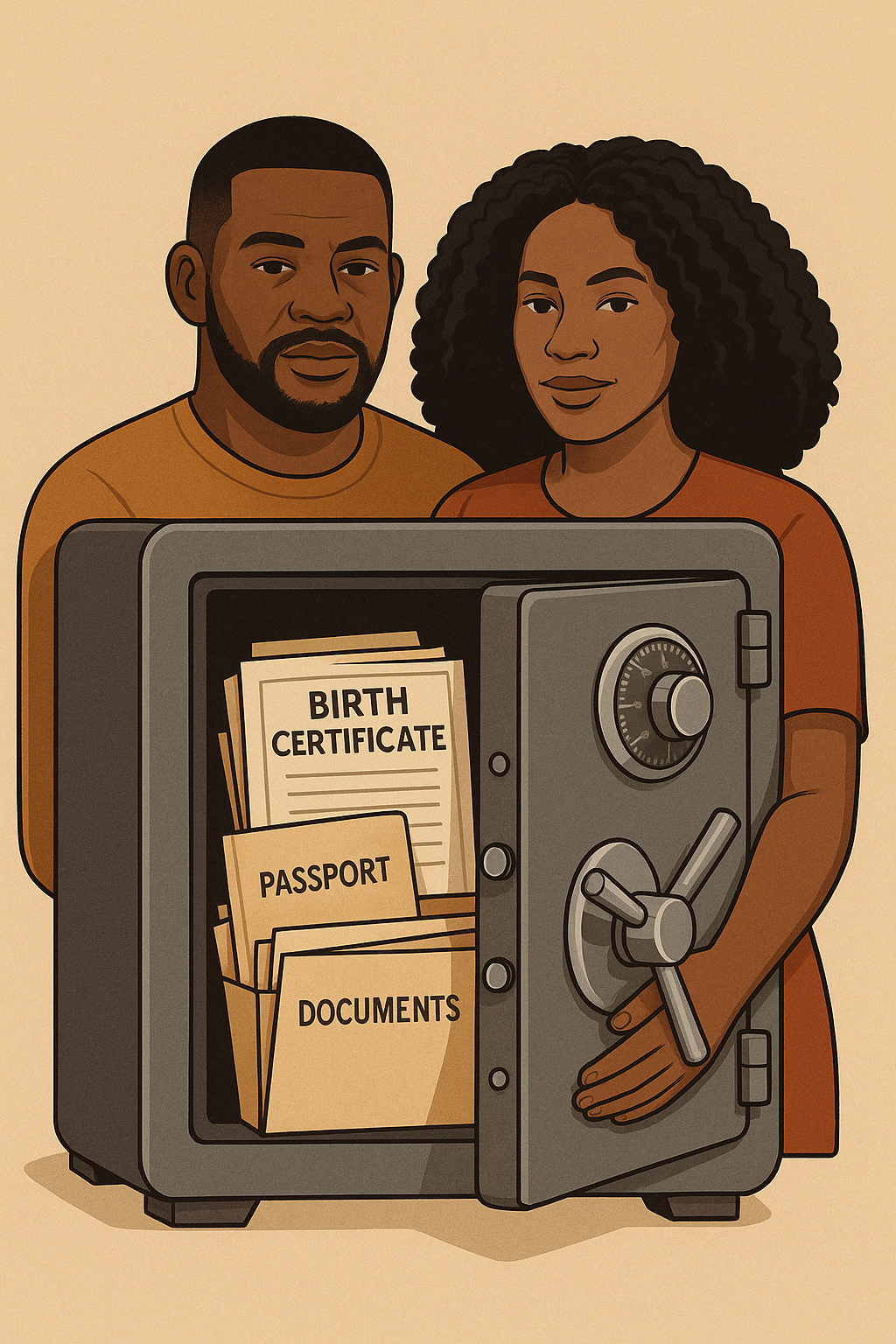
African American communities have long developed workarounds for systems that marginalize them. Oral histories compensate for redlined census data. Church records double as unofficial archives. Grandmothers are genealogists, tracing kinfolk across counties based on memory and letters, not legal filings.
Our parents’ refusal to give up your birth certificate is not just about withholding—it’s about preserving. Preserving your existence, your legacy, your ability to say “I am here, and I can prove it.”
Navigating the Handoff
Eventually, there comes a time when you must take ownership of your documentation. Whether it’s applying for a passport, enrolling your child in school, or—like Ms. McAvoy—giving birth to the next generation, adulthood demands paperwork. But the transition is rarely smooth.
So how do you make the leap from child to custodian?
1. Create a Formal Ask
Instead of casually requesting it, frame the conversation around responsibility. “I’m building my family file. I’d like to keep originals of all my documents for safekeeping and future planning.”
2. Offer a Digital Archive
Scan and share. Offer to digitize the family’s entire document archive as a service. You’ll likely earn enough goodwill to walk away with your originals.
3. Understand Their Fear
Recognize that their reluctance comes from love, not spite. Thank them for safeguarding you all these years—and assure them you’ll carry the baton forward.
4. Seize the Entrepreneurial Opportunity
This entire dilemma opens a major door for innovation. A Black entrepreneur could launch a culturally responsive document safekeeping and digital archiving startup designed specifically for African American families. Think of it as a cross between Dropbox, Notarize, and a legacy planning firm—infused with cultural empathy. This could include secure cloud storage, physical document lockers, and mobile apps with prompts for family milestones, estate planning, or even generational wealth transfers. Black-owned banks and credit unions are especially well-positioned to expand into this space, offering document protection services as part of their wealth-building and financial literacy programs. Imagine opening a savings account and also being offered a secure vault for your family’s vital records. In a world where trust and service matter, this is not just a business—it’s a cultural preservation mission.
Final Thought: A Legacy Worth More Than Paper
No, your Black parents are probably not going to give you your birth certificate—at least not without some emotional negotiation. And maybe, just maybe, that’s okay. Because behind their hoarding of paperwork is a story of resilience. Of protection. Of love in a world that hasn’t always treated our existence as worthy of documentation, let alone preservation.
They’ve held onto the receipts of your life because they knew someone had to.
So yes, laugh about the photocopy. Roll your eyes at the manila envelope. But when you finally get that official, embossed, gold-stamped certificate in your hands—thank them.
Because while you may just see a piece of paper, they saw proof that you mattered.
And they’ve been safeguarding that proof your whole life.
Disclaimer: This article was assisted by ChatGPT.
 HBCU Money