Give Black App: A Digital Gatekeeper For African American Philanthropy & Institutional Capital

“We must invest in ourselves. Without our own institutions, we will always be at the mercy of others.” – Mary McLeod Bethune

In the long arc of African American economic life, a recurring pattern emerges: the institutions most critical to our survival are consistently starved of capital, while the broader society thrives off of our labor, culture, and creativity. From Reconstruction-era mutual aid societies to the undercapitalized HBCUs of today, the struggle has never been whether African Americans are generous, but whether that generosity is systematically directed into institutions that can build durable power.

The Give Black App, founded by David C. Hughes, Alexus Hall, and Fran Harris, positions itself at this inflection point. It is not simply an app but a digital strategy—one attempting to reshape the flow of African American philanthropy and donations by curating, centralizing, and amplifying support for Black-led institutions.

The Context of Underfunding

African American nonprofits receive disproportionately less funding compared to their White counterparts. A 2020 Bridgespan study found that unrestricted net assets of White-led nonprofits were 76% larger than those of Black-led nonprofits, while revenues were 24% higher. These disparities compound over time. For HBCUs, the story is even starker: the endowments of all 100+ HBCUs combined is less than 1/10th of Harvard University’s alone.

Despite African America’s estimated $1.8 trillion in annual buying power, only a fraction is captured by its own institutions. Much of African American giving remains individual-to-individual or church-centered, providing immediate relief but not the kind of long-term institutional scaffolding needed to compete with White or global capital. Platforms like Give Black attempt to redirect that generosity into a framework where dollars reinforce permanence.

Building the Infrastructure of Giving

Give Black’s strength lies in infrastructure, a word often overlooked in philanthropy. The app operates as a digital gatekeeper, cataloguing Black-led nonprofits and enabling donors—whether individuals, alumni associations, or grassroots organizations—to find and fund them with ease.

This may seem simple, but its implications are profound. In an environment where discoverability is one of the greatest barriers for Black-led organizations, Give Black centralizes attention. For the countless nonprofits that lack robust marketing budgets, development officers, or national visibility, the app provides a seat at the table they would otherwise be denied.

The team itself reflects intentional design. Hughes, a Morehouse and Prairie View alumnus, carries the academic gravitas to engage institutions; Hall, with a background in cybersecurity and software sales, grounds the platform’s technical operations; Harris, a lifelong advocate of Black love and economic empowerment, provides the cultural grounding and marketing voice. Alongside them stand directors rooted in community engagement, finance, athletics, and science. Together, they represent a cross-section of African American life that mirrors the very community the app seeks to serve.

Philanthropy Meets Technology

Unlike GoFundMe or Benevity, which serve broad audiences, Give Black narrows its focus: African American-led institutions. This specificity is both its greatest strength and its potential vulnerability. By making African American philanthropy visible and trackable, the app attempts to normalize institutional giving within the community itself.

African American donors, long used to personal giving—funeral funds, tuition help, emergency assistance—are now asked to see their dollars not just as charity but as investment. An app that allows for transparency, accountability, and impact measurement may finally bridge the gap between intent and sustained institutional support.

Technology also democratizes giving. Younger generations, accustomed to digital wallets and mobile donations, are unlikely to write checks or mail contributions. By existing where they already transact, Give Black normalizes philanthropy as part of daily life. With proper marketing, it could serve as a digital equivalent of the collection plate—except one that sends dollars to Black think tanks, schools, health clinics, and endowment foundations rather than solely to Sunday offerings.

The Role of Fran Harris

Much of the initial confusion about Give Black’s leadership arises from Fran Harris’s name. She openly jokes about it—she is not the Fran Harris who was a WNBA champion or Shark Tank winner, though many assume otherwise. Instead, she distinguishes herself as someone whose “entire life has been about Black love and economic empowerment.”

That distinction matters. Whereas celebrity often drives visibility in African American philanthropy, Harris positions herself not as a star but as a steward of a broader vision. Her work focuses on the storytelling and cultural marketing needed to align African American giving with institutional capital. In a sense, her humor in addressing the name confusion underscores the seriousness of her actual role: grounding the app’s message in authenticity rather than celebrity.

The Gaps in the Strategy

Despite its promise, Give Black faces hurdles. First, fundraising expertise at the highest level appears limited within the core team. Major philanthropy is an industry of its own, requiring seasoned development officers capable of cultivating seven- and eight-figure gifts. Without this, Give Black risks becoming a platform for small-dollar giving—important, but insufficient for closing institutional capital gaps.

Second, technological depth must match ambition. While Hall’s cybersecurity background provides operational credibility, scaling a fintech-style platform requires CTO-level leadership. Issues of compliance, data integrity, and user trust are not optional—they are the foundation of sustainability.

Third, policy and compliance matter. Donations intersect with financial regulations, nonprofit law, and IRS oversight. To become the definitive gateway for Black giving, Give Black must not only build a sleek front end but also a back-end architecture that can withstand regulatory scrutiny and instill donor confidence.

Where the Opportunities Lie

The greatest opportunities for Give Black lie in institutional self-reliance.

One clear pathway is through alumni networks. HBCU alumni giving rates remain in the single digits, compared to 20–30% at elite PWIs. If Give Black positioned itself as the official conduit for alumni donations, it could help double or triple those rates over time. That alone would shift millions into endowments and operating budgets across the HBCU ecosystem.

Another opportunity lies in membership-based organizations—from professional networks to civic associations. Instead of dues going solely toward programming, portions could be funneled into long-term institutional giving through Give Black, creating a culture of collective philanthropy.

The Pan-African Diaspora represents yet another opening. African and Caribbean communities abroad are increasingly connected digitally. Give Black could expand to become a Pan-African philanthropic bridge, enabling solidarity between African Americans and global Black communities. Diaspora donors, often seeking trustworthy channels for giving, could find in Give Black a centralized, transparent platform.

Finally, the most transformative opportunity is to integrate endowment-building features directly into the app. Too much African American giving is trapped in the cycle of operating expenses. By redirecting portions of donations into permanent capital funds, Give Black could help institutions create reserves that outlast political climates and economic downturns.

Lessons from History

The urgency of Give Black’s mission must be seen against history. During the early 20th century, White-controlled philanthropy dictated the survival of many HBCUs. Institutions like Hampton and Tuskegee often relied on Northern industrialists whose donations came with ideological strings attached. The absence of African American-controlled philanthropic infrastructure meant dependency—and dependency always meant vulnerability.

Today, African American institutions still operate under the shadow of that dependency. Foundation funding remains racially skewed, and government support is often politically weaponized. Give Black, by offering a decentralized and community-driven alternative, challenges that cycle.

But history also warns: movements that lack discipline or scale are easily absorbed or ignored. Just as the Negro Leagues produced baseball talent but lacked the capital to maintain independence, so too can African American philanthropy generate excitement but fail to sustain institutional life if it is not channeled strategically.

The Verdict

Give Black App is not merely a digital donation tool. It is a test case: can African America leverage technology to redirect its wealth into its own institutions? The team’s composition, heavy in HBCU roots, marketing authenticity, and community engagement, suggests it understands both the stakes and the culture.

Still, the app must avoid the trap of becoming a feel-good project without measurable institutional outcomes. Its long-term success will be determined by whether it can:

  1. Secure partnerships with HBCUs, alumni associations, and membership-based organizations.
  2. Develop deep fundraising and compliance infrastructure.
  3. Normalize institutional giving across African American households.

If it does, Give Black could evolve into a cornerstone of African American institutional development—a kind of digital Freedman’s Bureau, redistributing not charity but power.

For African America, the stakes could not be higher. In an era where White nonprofits sit on multibillion-dollar endowments, while Black nonprofits scrape for survival, the question is not whether we are generous. It is whether our generosity is building the kind of institutions that ensure survival for centuries, not just survival for today.

Give Black, if scaled with vision and discipline, may finally provide the infrastructure to answer that question with a resounding yes.

HBCU B-Schools’ Leadership Still Embarrassingly Lacking In HBCU Alumni

The most difficult thing in life is to know yourself. — Thales

By any reasonable historical standard, Warren Buffett’s rejection by Benjamin Graham is more than a quaint anecdote; it is a powerful parable about institutional loyalty and long-term economic strategy. Graham, the father of value investing, turned away the future Oracle of Omaha not because Buffett was unqualified—far from it—but because he had a principle. Graham hired exclusively European American Jews at a time when Wall Street’s doors were locked tight against them. It was his quiet resistance to systemic exclusion and a way to build a parallel institution that could compete and thrive. Graham wasn’t interested in assimilation; he was focused on insulation, independence, and empowerment. The same cannot be said about the leadership structure of Historically Black Colleges and Universities (HBCUs), particularly their business schools.

A decade has passed since a comprehensive review was last undertaken on the leadership of HBCU business schools. One would hope that the intervening years would have ushered in a renaissance of internal cultivation—an era where HBCU alumni, steeped in the culture, history, and mission of these institutions, took the reins of their business schools. That hope remains, for the most part, unrealized. Instead, many HBCU B-schools continue to be led by individuals who are not products of these institutions, and in many cases, are fundamentally disconnected from the unique economic and cultural needs of the African American community.

The appointment of deans and senior faculty from predominantly white institutions (PWIs) is often lauded as a move toward “excellence” or “best practices.” The coded language of meritocracy is a familiar refrain—best person for the job, regardless of background. But this belief, as commonly practiced within HBCUs, is a convenient myth. It sidesteps the structural disadvantages HBCU graduates face in academia and business, and reinforces a dependency on external validation and leadership.

The consequence? A business education ecosystem within HBCUs that remains divorced from the very communities these schools are intended to serve. There is no pipeline, no incubator of internal talent, no clear strategy to empower HBCU alumni to lead, govern, and shape the next generation of Black business leadership.

Institutional Amnesia

In failing to privilege their own alumni in leadership selection, HBCU B-schools suffer from what might be called institutional amnesia. There is little effort to study and replicate the success of institutions that have prioritized internal development. Jewish, Catholic, and even Mormon institutions have all built robust networks by leveraging internal cultural capital and aligning institutional leadership with community objectives. HBCUs, by contrast, often appear to suffer from an inferiority complex that manifests in a relentless pursuit of PWI credentials as a proxy for excellence.

Even when HBCU alumni are in the pipeline, they are frequently passed over in favor of candidates whose resumes boast affiliations with Ivy League or flagship public institutions. The irony is rich and troubling: HBCUs, which claim to be dedicated to the uplift of African Americans, routinely reject their own in favor of the very systems that have historically excluded them.

The Data Tells the Story

Of the 85 accredited HBCU business schools and departments (based on the latest available data), fewer than 20% are led by HBCU alumni. Of that number, fewer than half have received their undergraduate and graduate education at an HBCU, further diluting the institutional knowledge that could be reinvested back into the system.

By contrast, 75% of business school deans and department chairs at Ivy League universities hold at least one degree from an Ivy League institution. This underscores the importance these institutions place on continuity, network loyalty, and internal cultural capital.

Lack of a Succession Strategy

The dearth of HBCU alumni in leadership roles is not merely a matter of optics—it is a strategic failure. The absence of a deliberate succession plan, where institutions identify, mentor, and elevate their own talent, weakens the intellectual and operational spine of HBCU B-schools. When young Black scholars and students do not see themselves reflected in positions of power within their own institutions, the implicit message is that their ascent must take place elsewhere.

Anecdotes abound of promising scholars who, having been educated and initially employed at HBCUs, eventually decamp to PWIs for better pay, prestige, or professional development. When those same scholars become leaders elsewhere, their institutional loyalty rarely circles back. The brain drain becomes self-perpetuating.

Cultural Incongruence and Strategic Drift

Leadership from outside HBCUs is not inherently problematic. However, leadership that does not understand or prioritize the mission-specific challenges and opportunities of HBCUs can lead to strategic drift. The market-driven nature of business education already pushes HBCUs to chase prestige metrics that are often defined by PWI standards—AACSB accreditation, international rankings, publication quotas. Yet these metrics seldom align with the needs of the African American community.

Who is building a curriculum around cooperative economics? Who is training students to start, fund, and grow businesses in historically Black neighborhoods? Who is leading research on Black entrepreneurship, Black banking, and financial exclusion? These priorities require not just academic competence but cultural commitment—something often missing in leadership that has not been formed within HBCUs.

The Cost of Outsourcing Leadership

The preference for external hires is also an expensive habit. Recruitment searches for deans can cost upwards of $250,000 when executive search firms are engaged. The revolving door of short-term leadership appointments, another consequence of weak institutional loyalty, creates instability in fundraising, student recruitment, and faculty morale.

Moreover, the indirect costs are enormous. When leadership lacks vision rooted in the mission of HBCUs, partnerships are misaligned, fundraising strategies are tone-deaf, and entrepreneurial ecosystems are underdeveloped. Business schools are economic engines, and the failure to connect them authentically to the community they serve is a missed opportunity of staggering proportions.

What Would Graham Do?

The story of Benjamin Graham and Warren Buffett is not merely about individual relationships; it is a case study in institutional integrity. Graham’s commitment to his community was not performative. It was strategic, values-driven, and unapologetically intentional. He understood that talent alone was insufficient. It had to be nurtured, protected, and positioned within the community’s own institutions.

African American leaders in education, particularly those responsible for HBCUs, must ask themselves: what kind of ecosystem are we building? Do we merely seek validation from the same institutions that denied us access for generations? Or are we committed to the difficult, often thankless work of institution-building?

The answer may well determine the fate of HBCUs in the 21st century.

A Call to Action

First, HBCU business schools must create formal succession pipelines for leadership from within their own alumni networks. This includes mentoring programs, leadership fellowships, and internal promotion tracks that incentivize long-term engagement.

Second, boards of trustees and presidential leadership must reexamine hiring criteria. Cultural alignment and mission understanding must be weighted as heavily as academic credentials.

Third, HBCUs should begin benchmarking themselves not against Harvard or Wharton but against institutions that have successfully used internal leadership to drive community outcomes. The benchmarks for success must be redefined to reflect mission, not mimicry.

Finally, alumni must hold their institutions accountable. Donations should come with expectations for institutional integrity. If alumni are good enough to fund these schools, they are certainly good enough to lead them.

HBCU B-schools sit at the intersection of education, economics, and cultural preservation. Their leadership must reflect that complexity. The time for apologetic hiring practices and external validation is over. It is time for HBCUs to know themselves—and to trust themselves enough to lead from within.

African America’s August 2025 Jobs Report – 7.5%

Overall Unemployment: 4.1%

African America: 7.2%

Latino America: 5.3%

European America: 3.7%

Asian America: 3.6%

Analysis: European Americans’ unemployment rate was unchanged from July. Asian Americans decreased 30 basis points and Latino Americans increased 30 basis points from July, respectively. African America’s unemployment rate increased by 30 basis points from July.

AFRICAN AMERICAN EMPLOYMENT REVIEW

AFRICAN AMERICAN MEN: 

Unemployment Rate – 7.1%

Participation Rate – 69.8%

Employed – 9,893,000

Unemployed – 753,000

African American Men (AAM) saw a increase in their unemployment rate by 10 basis points in August. The group had an increase in their participation rate in August by 190 basis points, there highest participation rate in the past five months. African American Men gained 270,000 jobs in August and saw their number of unemployed increase by 30,000.

AFRICAN AMERICAN WOMEN: 

Unemployment Rate – 6.7%

Participation Rate – 61.4%

Employed – 10,260,000

Unemployed – 739,000

African American Women saw a increase in their unemployment rate by 40 basis points in August. The group increased their participation rate in August by 30 basis points. African American Women gained 13,000 jobs in August and saw their number of unemployed increase by 45,000.

AFRICAN AMERICAN TEENAGERS:

Unemployment Rate – 24.8%

Participation Rate – 29.3%

Employed – 590,000

Unemployed – 195,000

African American Teenagers unemployment rate increased by 310 basis points. The group saw their participation rate increased by 10 basis points in August. African American Teenagers lost 24,000 jobs in August and saw their number of unemployed also increase 25,000.

African American Men-Women Job Gap: African American Women currently have 367,000 more jobs than African American Men in August. This is an decrease from 624,000 in July.

CONCLUSION: The overall economy added 22,000 jobs in August while African America added 260,000 jobs. From Reuters,”The warning bell that rang in the labor market a month ago just got louder,” Olu Sonola, head of U.S. economic research at Fitch Ratings in New York, said in reference to the U.S. labor market. “A weaker-than-expected jobs report all but seals a 25-basis-point rate cut later this month.” Fed Chair Jerome Powell had already reinforced rate cut speculation with an unexpectedly dovish speech at last month’s Fed symposium in Jackson Hole.”

Source: Bureau of Labor Statistics

A Legacy Reclaimed: Why SUNO and Dillard University Should Jointly Acquire the Amistad Research Center

When we control the archives, we control the memory. And when we control the memory, we control the meaning.” – Dr. Tera W. Hunter

The Amistad Research Center, one of the most significant archives of African American, ethnic minority, and social justice records in the United States, is facing a financial crisis that threatens its very existence. With nearly 40 percent of its federal funding cut and widespread staff layoffs already in effect, the Center is at a critical juncture. Rather than see it wither under institutional neglect or be absorbed into organizations disconnected from its cultural roots, a powerful and historically grounded solution stands within reach: a joint acquisition by Southern University at New Orleans and Dillard University.

This would not be a rescue it would be a return. Amistad was originally founded in 1966 at Fisk University and moved to Dillard in 1969, where it remained for nearly two decades. The Center thrived during its years at Dillard, deepening its collections and community relationships before relocating to Tulane University in 1987. That move, while promising better resources and facilities, ultimately distanced Amistad from the very community and institutional ecosystem that had nurtured its growth.

Southern University at New Orleans, founded in 1956, has long been an anchor for working-class Black families in New Orleans. Its commitment to public access, social justice, and Black advancement makes it a natural co-steward. Notably, Florence Borders, one of the most influential archivists in the history of Amistad, served as Senior Archivist at the Center from 1970 to 1989 before continuing her career as head archivist at SUNO. Her career trajectory embodies the institutional and intellectual bridge between Amistad, Dillard, and SUNO, a legacy that can now be cemented through a shared act of reclamation.

A joint venture would allow both HBCUs to leverage their complementary strengths. SUNO brings the infrastructure of a public institution and a clear mission focused on access and equity. Dillard offers private fundraising agility and deep roots in the liberal arts and cultural production. Together, they could create a sustainable governance structure that allows the archive to maintain its independence while benefiting from shared resources. Each university could contribute faculty, staff, research infrastructure, and development expertise toward a unified vision that ensures Amistad’s collections remain accessible, curated with cultural sensitivity, and protected against predatory acquisitions or institutional sidelining.

The benefits for students and faculty would be transformative. Internships, research assistantships, and practicums tied to archival collections would offer unparalleled experiential learning. New certificate programs in archival science, public history, and digital preservation could emerge positioning both institutions as national leaders in archival education. Amistad’s holdings over 15 million items, including manuscripts, oral histories, art, and periodicals could drive the creation of entire departments and interdisciplinary research clusters focused on African American, Afro-Caribbean, Latinx, Indigenous, and diasporic studies.

The public-facing impact of such a joint acquisition is equally significant. New Orleans, a city with a long history of being a crucible of Black culture and resistance, would gain a consolidated Black archival institution that serves not only scholars but communities. Cultural tourism centered on rotating exhibitions, lectures, and historical installations could add economic and civic value. A jointly governed Amistad Center could partner with local schools to support history education, oral history collection, and family archive projects embedding itself in the civic life of the region.

There are also compelling financial reasons for this move. A high-profile acquisition effort would attract major philanthropic interest, particularly among donors looking to support racial equity, archival preservation, and HBCU development. Foundations like Mellon, Ford, and IMLS have historically supported Amistad and similar institutions, but their funding often becomes more robust when institutional alignment and long-term sustainability are demonstrated. By crafting a visionary joint ownership model, SUNO and Dillard could access deeper grantmaking relationships while also launching a national endowment campaign to stabilize the archive permanently.

To be successful, the joint venture would need clear governance. A dedicated board composed of SUNO and Dillard faculty, independent scholars, archivists, community leaders, and Amistad staff should be established. This board would be responsible for curatorial direction, budget oversight, and public engagement ensuring the Center’s founding mission remains intact while also adapting to contemporary challenges and technologies.

This acquisition would signal a new paradigm in Black institutional development. It would show that HBCUs are no longer waiting to be invited into the rooms where decisions about cultural memory are made. Instead, they are building and owning those rooms. The quiet transfer of African American cultural assets into majority white institutions especially under financial duress has been a persistent form of cultural dispossession. What SUNO and Dillard can demonstrate is that reclamation is possible. That ownership, not just stewardship, is the future.

This opportunity will not wait. ARC’s financial instability is already endangering collections and community access. Every day that passes without an institutional intervention increases the risk of fragmentation, inaccessibility, or outright closure. The time to act is now—not just for preservation, but for power.

Together, Southern University at New Orleans and Dillard University can redefine what it means to protect and elevate Black history. They can transform the Amistad Research Center from a vulnerable institution into a fortified intellectual fortress. They can move us from crisis to control, from neglect to legacy.

This is more than a proposal. It is a blueprint for Black institutional sovereignty. History is watching. And it is offering a chance to write the next chapter not just about the past we preserve, but the future we intend to build.

A Merger of (Potential) Might: Why Prairie View A&M and Texas Southern Should Combine Their Foundations to Challenge the Endowment Establishment

It is reason, and not passion, which must guide our deliberations, guide our debate, and guide our decision. – Barbara Jordan

In the gilded halls of America’s elite universities, financial firepower is both a symbol and source of dominance. Endowments—the great silent engines of academia—determine not only which students get scholarships but which schools can recruit Nobel-calibre faculty, fund original research, and shape public policy. At the apex of this order stands UTIMCO, the University of Texas and Texas A&M’s investment juggernaut, with more than $70 billion under management. Below, far below, exist the undercapitalised yet ambitious Historically Black Colleges and Universities (HBCUs) of Texas.

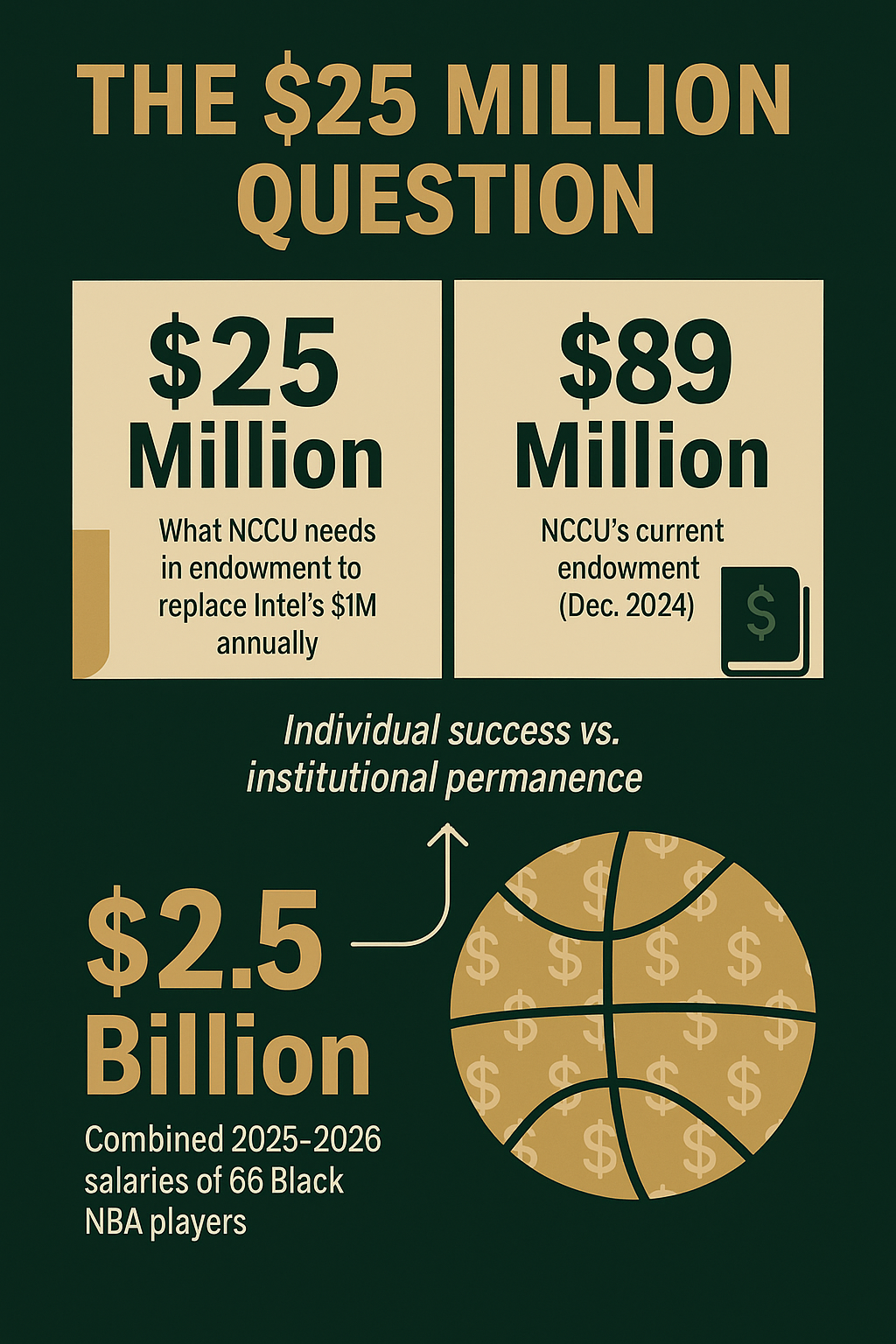
Two of the state’s largest HBCUs—Prairie View A&M University (PVAMU) and Texas Southern University (TSU)—have long histories, loyal alumni, and vital missions. What they do not have is institutional wealth. PVAMU’s foundation reported a modest $1.83 million in net assets in 2022. TSU’s foundation, better capitalised, holds $22.7 million. Combined, that amounts to just $24.5 million. For comparison, Rice University, less than 50 miles from either campus, holds an endowment north of $7.8 billion.

That yawning disparity matters. But it also presents an opportunity: a merger of the two foundations into a single, more potent philanthropic and investment entity. Done properly, it could reorient how Black higher education competes—not by appealing to fairness or guilt, but through scale, strategy, and institutional force.

A Rebalancing Act

To understand the potential of a PVAMU-TSU foundation merger, one must first grasp the dynamics of university endowments. Large endowments benefit from economies of scale, granting them access to exclusive investment opportunities—private equity, venture capital, hedge funds—often unavailable to smaller players. They attract the best fund managers, demand lower fees, and can weather market volatility without compromising their missions. Small foundations, by contrast, tend to be conservatively invested, costly to manage per dollar, and too fragmented to punch above their weight.

A consolidated HBCU foundation in Texas would be small compared to UTIMCO, but large relative to its peers. With a $25 million corpus as a starting point, the new entity could position itself for growth by professionalising its investment strategy, adopting a more ambitious donor engagement plan, and forming partnerships with Black-owned banks, family offices, and community institutions. Call it the Texas Black Excellence Fund, or perhaps, more simply, the TexHBCU Endowment.

To be sure, the legal and logistical barriers to such a merger are real. Foundation boards guard their autonomy jealously. Alumni pride can turn parochial. Governance models would need careful negotiation to ensure representation and avoid turf wars. But the arguments in favour are compelling.

The Power of One

First, a merger would cut overhead. Legal, accounting, auditing, and compliance costs—duplicated today—could be streamlined. A joint fundraising apparatus could create a single point of entry for corporate partners and high-net-worth donors. Branding efforts would gain coherence: instead of competing for attention, the institutions would stand together as a symbol of Black institutional unity and strength.

Second, scale invites leverage. A $25 million foundation cannot change the world overnight, but it can attract co-investments, engage in pooled funds, and perhaps even launch a purpose-driven asset management firm in the model of UTIMCO. If successful, this would be the first Black-led institutional investor of serious size in Texas—capable not only of managing endowment funds but of influencing broader economic flows across Black Texas.

Third, the merger would send a strategic signal to policymakers and philanthropic networks. It would say, in effect: “We are no longer asking for permission to grow. We are building the engine ourselves.” That tone matters. Too often, HBCUs are framed as needing rescue. A merged foundation flips that narrative. It becomes an asset allocator, a market participant, a builder of capital rather than a petitioner of it.

UTIMCO: A Goliath in the Crosshairs?

No one expects a $25 million fund to challenge a $70 billion behemoth. But that is not the point. UTIMCO’s dominance is as much political as it is financial. Its influence flows from its role as gatekeeper to resources, shaping everything from campus architecture to graduate fellowships. The merged HBCU foundation would not dethrone UTIMCO—it would decentralise power by becoming a second pole.

Indeed, the comparison may inspire mimicry. Just as UTIMCO serves multiple institutions, so too could a joint HBCU foundation. Prairie View and Texas Southern are only the beginning. Over time, the model could scale to include other Black-serving institutions across Texas and the South. This would amplify investment impact and accelerate institutional wealth-building.

Moreover, such a foundation could adopt an unapologetically developmental investment strategy. Where UTIMCO optimises for returns, the TexHBCU fund could optimise for both returns and racial equity—by investing in Black entrepreneurs, affordable housing, climate-resilient infrastructure, or educational tech. The dual mandate—profit and purpose—would not be a hindrance but a hallmark.

Regional Stakes

Prairie View sits on a rural hilltop. Texas Southern sprawls in urban Houston. But their communities are deeply connected—culturally, economically, demographically. A combined foundation could create regional development strategies that go beyond scholarship aid.

Imagine a venture fund seeding Black-owned start-ups in Houston’s Third Ward. A real estate initiative turning vacant lots into mixed-income housing for PVAMU students and local residents. A workforce development fund retraining returning citizens for green jobs across both cities. Each dollar invested becomes more than a balance sheet entry; it becomes a force for transformation.

This matters not just to students and faculty, but to the broader Texas economy. Black Texans make up 13% of the state population but own less than 3% of its small businesses. Educational attainment gaps persist. Institutional neglect deepens. The merger would not fix all this—but it would give the community a new tool for shaping its destiny.

Copy, Then Paste

If the model works, it would not stay in Texas. Southern University in Louisiana has multiple campuses and foundations that could benefit from consolidation. So does the University System of Maryland’s HBCUs. Indeed, the entire sector could adopt a federated endowment strategy—unified in purpose but distributed in governance.

HBCUs have long suffered from institutional atomisation. They are asked to compete individually in a system that rewards consolidation. Merging foundations is not just a finance play—it is a strategy for survival and sovereignty.

The Alternative: Stagnation

Critics may say a merger is too ambitious. That it risks alumni backlash or donor confusion. That it could take years to execute. But delay is itself a cost. Each year the foundations remain separate is another year of opportunity lost. Another year where millions in potential returns go unrealised. Another year where larger institutions deepen their lead.

PVAMU and TSU have histories to be proud of. But institutional pride must not become institutional inertia. A merger is not surrender—it is evolution.

In the long arc of higher education, moments of boldness define legacy. This is one of those moments. Two foundations. One future. Let the uniting begin.