
Category Archives: Lists

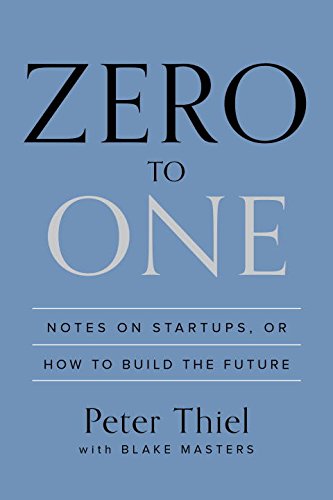
HBCU Money™ Business Book Feature – Zero to One: Notes on Startups, or How to Build the Future

5200c8f1e9_41RhIujiGpL

If you want to build a better future, you must believe in secrets.

The great secret of our time is that there are still uncharted frontiers to explore and new inventions to create. In Zero to One, legendary entrepreneur and investor Peter Thiel shows how we can find singular ways to create those new things.

Thiel begins with the contrarian premise that we live in an age of technological stagnation, even if we’re too distracted by shiny mobile devices to notice. Information technology has improved rapidly, but there is no reason why progress should be limited to computers or Silicon Valley. Progress can be achieved in any industry or area of business. It comes from the most important skill that every leader must master: learning to think for yourself.

Doing what someone else already knows how to do takes the world from 1 to n, adding more of something familiar. But when you do something new, you go from 0 to 1. The next Bill Gates will not build an operating system. The next Larry Page or Sergey Brin won’t make a search engine. Tomorrow’s champions will not win by competing ruthlessly in today’s marketplace. They will escape competition altogether, because their businesses will be unique.

Zero to One presents at once an optimistic view of the future of progress in America and a new way of thinking about innovation: it starts by learning to ask the questions that lead you to find value in unexpected places.
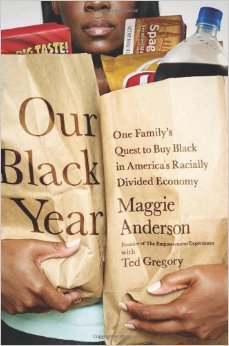
HBCU Money™ Business Book Feature – Our Black Year: One Family’s Quest to Buy Black in America’s Racially Divided Economy

514B-YWWBmL._SY344_BO1,204,203,200_

Maggie and John Anderson were successful African American professionals raising two daughters in a tony suburb of Chicago. But they felt uneasy over their good fortune. Most African Americans live in economically starved neighborhoods. Black wealth is about one tenth of white wealth, and black businesses lag behind businesses of all other racial groups in every measure of success. One problem is that black consumers–unlike consumers of other ethnicities– choose not to support black-owned businesses. At the same time, most of the businesses in their communities are owned by outsiders.

On January 1, 2009 the Andersons embarked on a year-long public pledge to “buy black.” They thought that by taking a stand, the black community would be mobilized to exert its economic might. They thought that by exposing the issues, Americans of all races would see that economically empowering black neighborhoods benefits society as a whole. Instead, blacks refused to support their own, and others condemned their experiment. Drawing on economic research and social history as well as her personal story, Maggie Anderson shows why the black economy continues to suffer and issues a call to action to all of us to do our part to reverse this trend.

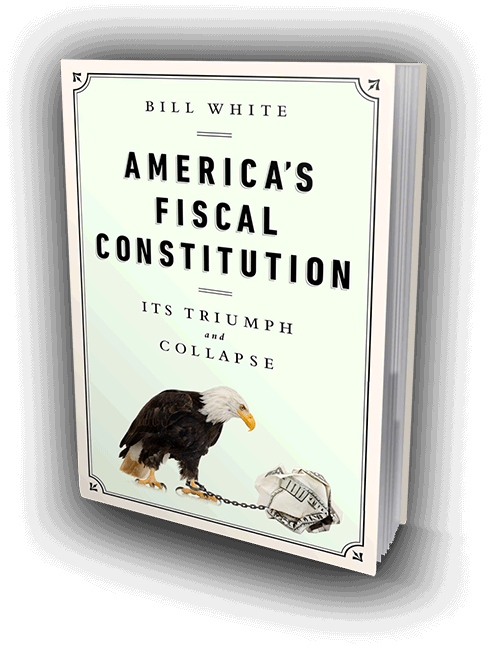
HBCU Money™ Business Book Feature – America’s Fiscal Constitution: Its Triumph and Collapse

book_front_alpha
America’s Fiscal Constitution: Its Triumph and Collapse tells the remarkable story of federal leaders who imposed clear limits on the use of federal debt. For almost two centuries those limits allowed the federal government to borrow for only four purposes. That traditional fiscal constitution collapsed in 2001, when federal elected officials broke the traditional link between federal tax and spending policies. For the first time in history, the federal government cut taxes during war, funded permanent new programs entirely with debt, and became dependent on foreign creditors.

With insights gained from original scholarship and an unusual breadth of experience in finance and government, Bill White distills practical lessons from the nation’s five previous spikes in debt. America’s Fiscal Constitution is an entertaining and objective guide for people trying to make sense of the current and most dangerous debt crisis.

HBCU Money™ Business Book Feature – The Second Machine Age: Work, Progress, and Prosperity

2ma

A revolution is under way.

In recent years, Google’s autonomous cars have logged thousands of miles on American highways and IBM’s Watson trounced the best human Jeopardy! players. Digital technologies—with hardware, software, and networks at their core—will in the near future diagnose diseases more accurately than doctors can, apply enormous data sets to transform retailing, and accomplish many tasks once considered uniquely human.

In The Second Machine Age MIT’s Erik Brynjolfsson and Andrew McAfee—two thinkers at the forefront of their field—reveal the forces driving the reinvention of our lives and our economy. As the full impact of digital technologies is felt, we will realize immense bounty in the form of dazzling personal technology, advanced infrastructure, and near-boundless access to the cultural items that enrich our lives.

Amid this bounty will also be wrenching change. Professions of all kinds—from lawyers to truck drivers—will be forever upended. Companies will be forced to transform or die. Recent economic indicators reflect this shift: fewer people are working, and wages are falling even as productivity and profits soar.

Drawing on years of research and up-to-the-minute trends, Brynjolfsson and McAfee identify the best strategies for survival and offer a new path to prosperity. These include revamping education so that it prepares people for the next economy instead of the last one, designing new collaborations that pair brute processing power with human ingenuity, and embracing policies that make sense in a radically transformed landscape.

A fundamentally optimistic book, The Second Machine Age will alter how we think about issues of technological, societal, and economic progress.

HBCU Money™ Business Book Feature – The New Coffeehouse Investor: How to Build Wealth & Ignore Wall Street

8248749

In 1998, Bill Schultheis wrote a simple investment book for people who felt overwhelmed by the bull market. He had discovered that when you simplify your investment decisions, you end up getting better returns. As a bonus, you gain more time for family, friends, and other pursuits.

A decade later, through good times and bad, this philosophy has been proven to tower above the daily chatter of Wall Street. And the revised and expanded edition of his book is more valuable than ever.

In a conversational style, Schultheis explains why we should stop thinking about cool stocks, hot mutual funds, trends in interest rates, and predictions for the economy. Stop trying to beat the stock market average; just remember three simple principles:

• Don’t put all your eggs in one basket
• There’s no such thing as a free lunch
• Save for a rainy day

The New Coffeehouse Investor will help readers get their finances in shape quickly and painlessly.