
Category Archives: Lists

HBCU Money™ Business Book Feature – The A.G. Gaston Motel in Birmingham, A Civil Rights Landmark

16949065-standard

Traveling throughout the South during the 1950s was hazardous for African Americans. There were precious few hotels and restaurants that opened their doors to minorities, and fewer still had accommodations above the bare minimum, to say nothing of the racism and violence that followed. But in Birmingham, black entrepreneur and eventual millionaire A.G. Gaston created a first-class motel and lounge for African Americans that became a symbol of pride of his community. It served as the headquarters for Birmingham’s civil rights movement and became a revolving door for famous entertainers, activists, politicians and other pillars of the national black community. Author Marie Sutton chronicles the fascinating story of the motel and how it became a refuge during a time when African Americans could find none.
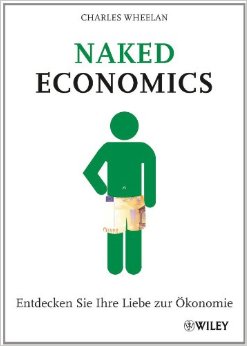
HBCU Money™ Business Book Feature – Naked Economics: Undressing the Dismal Science

naked

“Explains our global economy in a way that is (gasp!) actually entertaining.”—Book Magazine

Finally! A book about economics that won’t put you to sleep. In fact, you won’t be able to put this bestseller down. In our challenging economic climate, this perennial favorite of students and general readers is more than a good read, it’s a necessary investment—with a blessedly sure rate of return. Demystifying buzzwords, laying bare the truths behind oft-quoted numbers, and answering the questions you were always too embarrassed to ask, the breezy Naked Economics gives readers the tools they need to engage with pleasure and confidence in the deeply relevant, not so dismal science.

This revised and updated edition adds commentary on hot topics, including the current economic crisis, globalization, the economics of information, the intersection of economics and politics, and the history—and future—of the Federal Reserve.

HBCU Money™ Business Book Feature – Measuring and Improving Social Impacts: A Guide for Nonprofits & Impact Investors

measuring_and_improving_social_impacts_book_cover.-230x356

The world is beset with enormous problems. And as a nonprofit, NGO, foundation, impact investor, or socially responsible company, your organization is on a mission to solve them.

But what exactly should you do? And how will you know whether it’s working? Too many people assume that good intentions will result in meaningful actions and leave it at that. But thanks to Marc Epstein and Kristi Yuthas, social impact can now be evaluated with the same kind of precision achieved for any other organizational function.

Based on years of research and analysis of field studies from around the globe, Epstein and Yuthas offer a five-step process that will help you gain clarity about the impacts that matter most to you and will provide you with methods to measure and improve them. They outline a systematic approach to deciding what resources you should invest, what problem you should address, and which activities and organizations you should support. Once you’ve made those decisions, you can use their tools, frameworks, and metrics to define exactly what success looks like, even for goals like reducing global warming or poverty that are extremely difficult to measure. Then they show you how to use that data to further develop and increase your social impact.

Epstein and Yuthas personally interviewed leaders at over sixty different organizations for this book and include examples from nearly a hundred more. This is unquestionably the most complete, practical, and thoroughly researched guide to taking a rigorous, data-driven approach to expanding the good you do in the world.

HBCU Money’s 2015 African American Owned Credit Union Directory

short-2015 AA CU Dir Image

All credit unions are listed by state and in alphabetical order. In order to be listed in our directory the credit union must have an African American designation. Click on the state to view the full list available. If the credit union has a website you can click on the name and go directly to their website.

There are 334 African American designated credit unions with assets totaling approximately $5.6 billion in assets or approximately 0.51 percent of African America’s $1.1 trillion in buying power. African American credit unions have a total of 847 752 members.

ADDITIONAL NOTES:

  • African American credit unions comprise 49.9 percent of Minority Serving credit unions and 5.2 percent of all US credit unions
  • The total assets for all US minority credit unions is $37 billion, with AACUs controlling 15.1 percent of those assets. Total combined assets for all US credit unions are $1.1 trillion, with AACUs controlling 0.51 percent of total American credit union assets.
  • AACUs average assets: $16.8 million (2014 – $13.1 million)
  • AACUs average number of members 2 538 (2014 – 2 455)
  • AACUs median assets: $1.4 million (2014 – $1.64 million)
  • AACUs median members: 474 (2014 – 585)
  • For comparison, Asian American credit unions have approximately 360 000 members and $4.5 billion in assets. Average and median assets of $83.1 million and $32.3 million, respectively.
  • Religious affiliated credit union make up 5.6 percent of US credit unions. African American religious affiliated credit unions comprise approximately one-third of all African American credit unions and almost one-fourth of all US religious affiliated credit unions.

ALABAMA

ARKANSAS

CALIFORNIA

CONNECTICUT

DELAWARE

DISTRICT OF COLUMBIA

FLORIDA

GEORGIA

ILLINOIS

INDIANA

KENTUCKY

LOUISIANA

MARYLAND

MASSACHUSETTS

MICHIGAN

MISSOURI

NEW JERSEY

NEW YORK

NORTH CAROLINA

OHIO

OKLAHOMA

PENNSYLVANIA

SOUTH CAROLINA

TENNESSEE

TEXAS

VIRGINIA

VIRGIN ISLANDS

WASHINGTON

WISCONSIN

HBCU Money™ Business Book Feature – Diamonds, Gold, and War: The British, Boers, & Making of South Africa

2864321

Southern Africa was once regarded as a worthless jumble of British colonies, Boer republics, and African chiefdoms, a troublesome region of little interest to the outside world. But then prospectors chanced upon the world’s richest deposits of diamonds and gold, setting off a titanic struggle between the British and the Boers for control of the land. The result was the costliest, bloodiest, and most humiliating war that Britain had waged in nearly a century, and the devastation of the Boer republics. The New Yorker calls this magisterial account of those years “[an] astute history.… Meredith expertly shows how the exigencies of the diamond (and then gold) rush laid the foundation for apartheid.”