Category Archives: Lists

HBCU Money™ Business Book Feature – The Art of Strategy: A Game Theorist’s Guide to Success in Business and Life

414QPLFqw-L._SY344_BO1,204,203,200_

“I am hard pressed to think of another book that can match the combination of practical insights and reading enjoyment.”—Steven Levitt
Game theory means rigorous strategic thinking. It’s the art of anticipating your opponent’s next moves, knowing full well that your rival is trying to do the same thing to you. Though parts of game theory involve simple common sense, much is counterintuitive, and it can only be mastered by developing a new way of seeing the world. Using a diverse array of rich case studies—from pop culture, TV, movies, sports, politics, and history—the authors show how nearly every business and personal interaction has a game-theory component to it. Mastering game theory will make you more successful in business and life, and this lively book is the key to that mastery.

HBCU Money™ Business Book Feature – The World’s Greatest Investors You’ve Never Heard Of

1215_warren-buffetts-next-door-schifrin_280x340

A practical guide for investors who are ready to take financial matters into their own hands

The Warren Buffetts Next Door profiles previously unknown investors, with legendary performance records, who are proving every day that you don’t need to work for a hedge fund or have an Ivy League diploma to consistently beat the best performing Wall Street professionals.

These amazing individuals come from all walks of life, from a globe drifting college dropout and a retired disc jockey to a computer room geek and a truck driver. Their methods vary from technical trading and global macro-economic analysis to deep value investing. The glue that holds them together is their passion for investing and their ability to efficiently harness the Internet for critical investment ideas, research, and trading skills.

  • The author digs deep to find the best of the best, even finding those who are making money during these turbulent times
  • Contains case studies that will explain to you how these great individual investors find and profit from stocks and options.
  • Shows you how to rely on your own instincts and knowledge when making important investment decisions

In an era when the best professional advice has cracked many investor nest eggs and Madoff-style frauds have shattered investor trusts, the self-empowered investors found in The Warren Buffetts Next Door offer an inspiring and educational tale.

HBCU Money™ Business Book Feature – The Most Important Thing: Uncommon Sense for the Thoughtful Investor

TheMostImportantThing1

Howard Marks, the chairman and cofounder of Oaktree Capital Management, is renowned for his insightful assessments of market opportunity and risk. After four decades spent ascending to the top of the investment management profession, he is today sought out by the world’s leading value investors, and his client memos brim with insightful commentary and a time-tested, fundamental philosophy. Now for the first time, all readers can benefit from Marks’s wisdom, concentrated into a single volume that speaks to both the amateur and seasoned investor.

Informed by a lifetime of experience and study, The Most Important Thing explains the keys to successful investment and the pitfalls that can destroy capital or ruin a career. Utilizing passages from his memos to illustrate his ideas, Marks teaches by example, detailing the development of an investment philosophy that fully acknowledges the complexities of investing and the perils of the financial world. Brilliantly applying insight to today’s volatile markets, Marks offers a volume that is part memoir, part creed, with a number of broad takeaways.

Marks expounds on such concepts as “second-level thinking,” the price/value relationship, patient opportunism, and defensive investing. Frankly and honestly assessing his own decisions–and occasional missteps–he provides valuable lessons for critical thinking, risk assessment, and investment strategy. Encouraging investors to be “contrarian,” Marks wisely judges market cycles and achieves returns through aggressive yet measured action. Which element is the most essential? Successful investing requires thoughtful attention to many separate aspects, and each of Marks’s subjects proves to be the most important thing.

“This is that rarity, a useful book.”–Warren Buffett

HBCU Money™ Business Book Feature – More Money Than God: Hedge Funds and the Making of a New Elite

517GLyz80pL._SY344_BO1,204,203,200_

“Splendid…the definitive history of the hedge fund, a compelling narrative full of larger-than-life characters and dramatic tales.” — The Washington Post

Wealthy, powerful, and potentially dangerous, hedge fund moguls have become the It Boys of twenty-first- century capitalism. Beating the market was long thought to be impossible, but hedge funds cracked its mysteries and made fortunes in the process. Drawing on his unprecedented access to the industry, esteemed financial writer Sebastian Mallaby tells the inside story of the hedge funds, from their origins in the 1960s to their role in the financial crisis of 2007 to 2009.

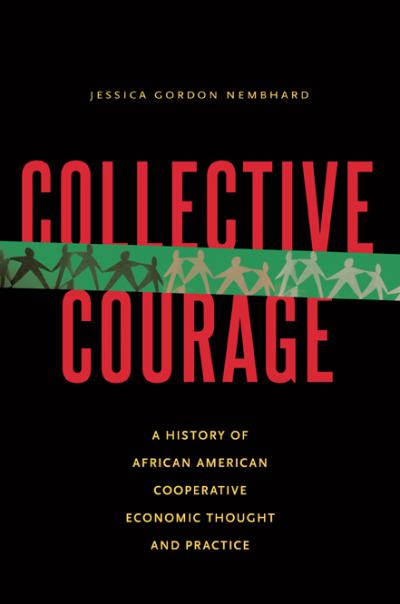
HBCU Money™ Business Book Feature – Collective Courage: A History of African American Cooperative Economic

collective_courage_hi-res_0

In Collective Courage, Jessica Gordon Nembhard chronicles African American cooperative business ownership and its place in the movements for Black civil rights and economic equality. Not since W. E. B. Du Bois’s 1907 Economic Co-operation Among Negro Americans has there been a full-length, nationwide study of African American cooperatives. Collective Courage extends that story into the twenty-first century. Many of the players are well known in the history of the African American experience: Du Bois, A. Philip Randolph and the Ladies’ Auxiliary to the Brotherhood of Sleeping Car Porters, Nannie Helen Burroughs, Fannie Lou Hamer, Ella Jo Baker, George Schuyler and the Young Negroes’ Co-operative League, the Nation of Islam, and the Black Panther Party. Adding the cooperative movement to Black history results in a retelling of the African American experience, with an increased understanding of African American collective economic agency and grassroots economic organizing.

To tell the story, Gordon Nembhard uses a variety of newspapers, period magazines, and journals; co-ops’ articles of incorporation, minutes from annual meetings, newsletters, budgets, and income statements; and scholarly books, memoirs, and biographies. These sources reveal the achievements and challenges of Black co-ops, collective economic action, and social entrepreneurship. Gordon Nembhard finds that African Americans, as well as other people of color and low-income people, have benefitted greatly from cooperative ownership and democratic economic participation throughout the nation’s history.