Category Archives: Books

HBCU Money™ Business Book Feature – More Money Than God: Hedge Funds and the Making of a New Elite

517GLyz80pL._SY344_BO1,204,203,200_

“Splendid…the definitive history of the hedge fund, a compelling narrative full of larger-than-life characters and dramatic tales.” — The Washington Post

Wealthy, powerful, and potentially dangerous, hedge fund moguls have become the It Boys of twenty-first- century capitalism. Beating the market was long thought to be impossible, but hedge funds cracked its mysteries and made fortunes in the process. Drawing on his unprecedented access to the industry, esteemed financial writer Sebastian Mallaby tells the inside story of the hedge funds, from their origins in the 1960s to their role in the financial crisis of 2007 to 2009.

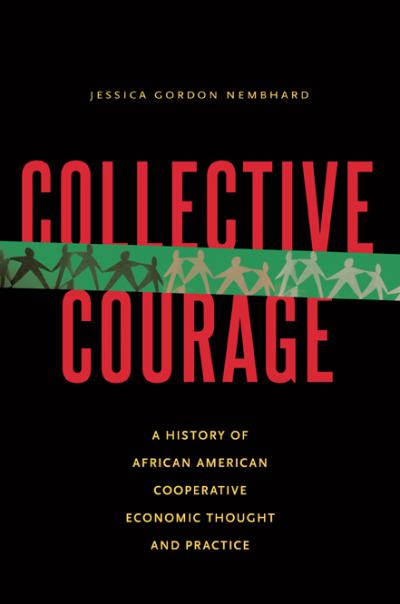
HBCU Money™ Business Book Feature – Collective Courage: A History of African American Cooperative Economic

collective_courage_hi-res_0

In Collective Courage, Jessica Gordon Nembhard chronicles African American cooperative business ownership and its place in the movements for Black civil rights and economic equality. Not since W. E. B. Du Bois’s 1907 Economic Co-operation Among Negro Americans has there been a full-length, nationwide study of African American cooperatives. Collective Courage extends that story into the twenty-first century. Many of the players are well known in the history of the African American experience: Du Bois, A. Philip Randolph and the Ladies’ Auxiliary to the Brotherhood of Sleeping Car Porters, Nannie Helen Burroughs, Fannie Lou Hamer, Ella Jo Baker, George Schuyler and the Young Negroes’ Co-operative League, the Nation of Islam, and the Black Panther Party. Adding the cooperative movement to Black history results in a retelling of the African American experience, with an increased understanding of African American collective economic agency and grassroots economic organizing.

To tell the story, Gordon Nembhard uses a variety of newspapers, period magazines, and journals; co-ops’ articles of incorporation, minutes from annual meetings, newsletters, budgets, and income statements; and scholarly books, memoirs, and biographies. These sources reveal the achievements and challenges of Black co-ops, collective economic action, and social entrepreneurship. Gordon Nembhard finds that African Americans, as well as other people of color and low-income people, have benefitted greatly from cooperative ownership and democratic economic participation throughout the nation’s history.

HBCU Money™ Business Book Feature – The Making of Modern Economics: The Lives and Ideas of Great Thinkers

51DKqsV-RkL._AC_UL320_SR242,320_

Here is a bold history of economics – the dramatic story of how the great economic thinkers built today’s rigorous social science. Noted financial writer and economist Mark Skousen has revised and updated this popular work to provide more material on Adam Smith and Karl Marx, and expanded coverage of Joseph Stiglitz, ‘imperfect’ markets, and behavioral economics.This comprehensive, yet accessible introduction to the major economic philosophers of the past 225 years begins with Adam Smith and continues through the present day. The text examines the contributions made by each individual to our understanding of the role of the economist, the science of economics, and economic theory. To make the work more engaging, boxes in each chapter highlight little-known – and often amusing – facts about the economists’ personal lives that affected their work.

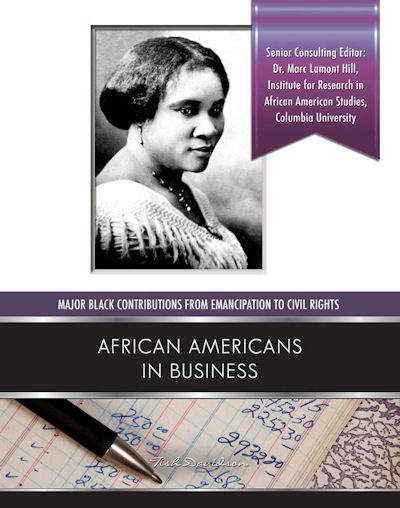
HBCU Money™ Business Book Feature – African Americans in Business (From Emancipation to Civil Rights)

9781422223772lg

Many people dream of owning their own business or making it to the top of the corporate ladder. In the pages of this book, you’ll meet African Americans who overcame obstacles and stereotypes to make their dreams a reality. Madam C. J. Walker was orphaned at age 7, married at 14, became a mother at 18, and was widowed at 20. She went on make a million dollars selling hair care products. Berry Gordy loved music but went broke after opening a record store. He didn’t give up, though. Gordy eventually started Motown Records, which became one of the country’s most successful record labels and introduced a host of talented black artists to mainstream American audiences. Stanley O’Neal grew up on a farm without running water or indoor toilets. Through intelligence and hard work he became the head of a $50 billion investment bank. Read about these and other inspiring figures in this book.

HBCU Money™ Business Book Feature – War! What Is It Good For?: Conflict and the Progress of Civilization

2014.07.13-Book-review-Ian-Morris’s-“War”

A powerful and provocative exploration of how war has changed our society–for the better

“War! . . . . / What is it good for? / Absolutely nothing,” says the famous song–but archaeology, history, and biology show that war in fact has been good for something. Surprising as it sounds, war has made humanity safer and richer.

In War! What Is It Good For?, the renowned historian and archaeologist Ian Morris tells the gruesome, gripping story of fifteen thousand years of war, going beyond the battles and brutality to reveal what war has really done to and for the world. Stone Age people lived in small, feuding societies and stood a one-in-ten or even one-in-five chance of dying violently. In the twentieth century, by contrast–despite two world wars, Hiroshima, and the Holocaust–fewer than one person in a hundred died violently. The explanation: War, and war alone, has created bigger, more complex societies, ruled by governments that have stamped out internal violence. Strangely enough, killing has made the world safer, and the safety it has produced has allowed people to make the world richer too.

War has been history’s greatest paradox, but this searching study of fifteen thousand years of violence suggests that the next half century is going to be the most dangerous of all time. If we can survive it, the age-old dream of ending war may yet come to pass. But, Morris argues, only if we understand what war has been good for can we know where it will take us next.