“Up, you mighty race, accomplish what you will.” – Marcus Garvey
“Frank attended Morehouse College and Fisk University. While in school he learned about homesteading and its requirements. While working as a teacher in Georgia, he married Ella Louise McGruder. Ella was also a well-educated teacher, a graduate from the Haines Institute.
After he was threatened by the Ku Klux Klan, Frank’s father encouraged him to move West. Frank’s father was a Buffalo Soldier during the Mexican-American War. As a child he heard stories about New Mexico from his father. Boyer and two of his students traveled to New Mexico Territory in 1896. He arrived in the Pecos River Valley in 1898 near the community of Roswell, where he worked in the courts. In 1901 Ella and their four children joined him in New Mexico.” – National Park Service
New Mexico jointed the United States as the 47th state in the United States on January 6, 1912. It is currently home to approximately 2.1 million people with almost 40,000 African Americans across the state’s population. In 1999, the state established the Office of African American Affairs that has been tasked with assisting the interests of the state’s African American population. Blackdom’s legacy is still profound among the residents of the state and still signifies the power of building institutions and community that look to empower people of African descent. New Mexico PBS in 2010 produced a documentary detailing the story of a time not so long ago and the impact it still carries today. The story of how an HBCU couple changed the landscape of the Southwest forever and added to the rich history of African Americans place throughout.
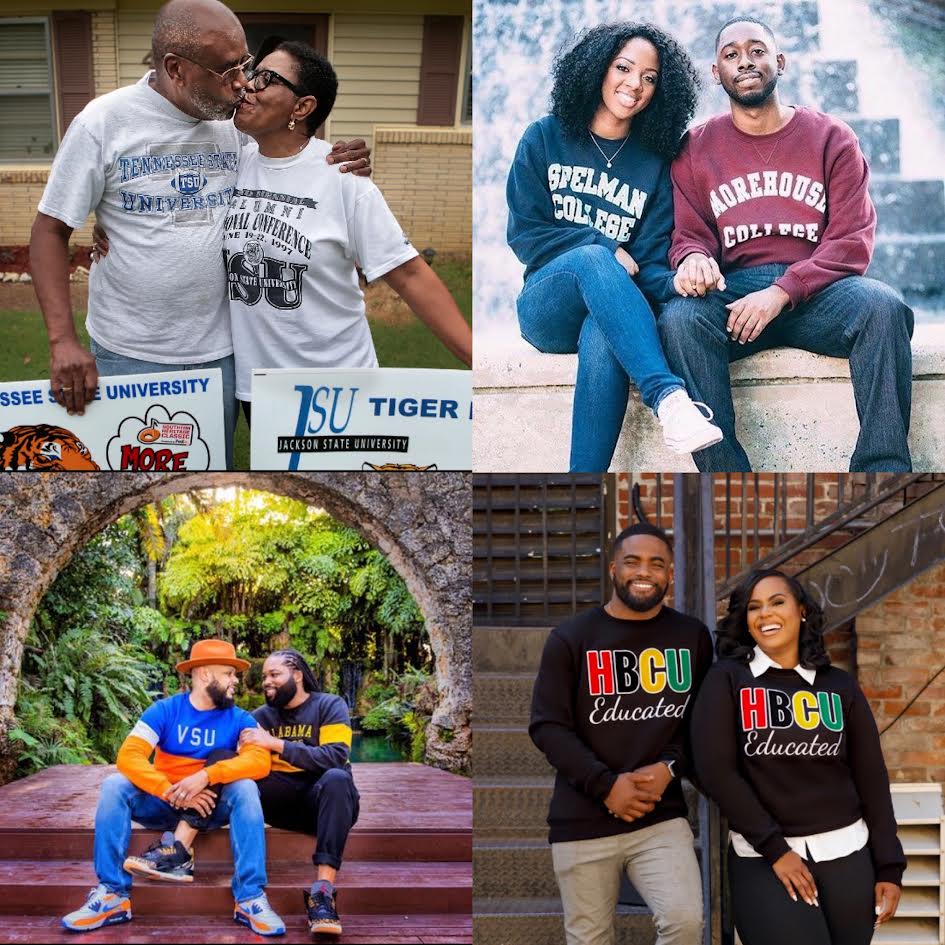
A few years ago, HBCU Money did a report highlighting which HBCU states had the highest African American marriage rates. In the piece, HBCU LOVE: Top Ten HBCU States With Highest African American Marriage Rate, Virginia led with 34 percent African American marriage rate. The national average African American marriage rate is 29.7 percent which seven HBCU states exceeded. It is no small leap to say that HBCUs play a vital role in these high marriage rates given their role in helping African Americans have a space dedicated to themselves and cultural pride that feeds into a desire for an African American partner. Not something as likely for African Americans who attend PWIs where so few options are available that it may make it quite difficult to match with or find an African American partner among so few options. It also is significant that HBCUs provide for the bulk of African American professionals in all fields and leading to cultural pride, economic stability, and alignment of values while learning to appreciate the diversity of African America which ultimately play a major role in leading to African American marriage.
Unfortunately, African American marriage rates are still struggling. Finding marriage or a life partner is culturally challenged where young women are stressed to focus on their books and young men are stressed to focus on the plethora of young women where on many HBCU campuses the women to men ratio is considerably unbalanced. This is a result of a myriad of social factors not least among them high school graduation rates among African American boys continues to struggle and those who do graduate have far too few who are actually college ready even if they are accepted. It also does not help that so many young women and men are coming from single parent households, the Office of Juvenile Justice and Delinquency Prevention reports only “four in ten Black children” live with two parents. This means that the majority of women and men on HBCU campuses know marriage only through a theoretical lens and to say little of what has shaped their views on marriage, partnership, and the institution that is African American (healthy) love. For African America that desperately needs more marriage for a myriad of reasons and HBCUs being one of the most optimal African American spaces (for those HBCUs who still care to be such) the question is how can that seedling be grown into a full blown redwood. Enter “The HBCU Marriage Pact”, a blend of HBCU pride, computer science blended together and you end up with HBCU Computer Love – “To share in my computer world, I no longer need a strategy, thanks to modern technology”. Copy and pasted from Stanford University’s Marriage Pact.
Leanne Italie of the Associated Press writes, “The Marriage Pact, an annual matching ritual that has become popular on nearly 90 college campuses around the U.S., has turned that dusty cliche into fun. And a few couples have found lasting love. Nearly half a million students have participated since the pact first rolled out at Stanford University in 2017. Born of an economics project by two students there, the pact involves an algorithm that rates matches based on such statements as “I prefer politically incorrect humor” and “I pride myself on telling hard truths.” Unlike dating apps and services, each student gets just one name, a percentage on the quality of the match and an email address to reach out.” Liam McGregor, creator of Stanford’s Marriage Pact, explained to Ms. Italie that, “Rather than dwell on physical beauty and personal stats like height and hair color, the Marriage Pact focuses its 50-question survey on core values. Communication styles and conflict resolution.” This is what significantly sets it apart from dating apps that allows for the distraction of aesthetics that often mislead our assessment of actual compatibility.
For this to work at HBCUs though it cannot be an exactly Copy & Paste without nuance. African Americans are caught in a vortex between not being able to afford to get married and not being able to afford not too. A large driver of closing the wealth gap is getting African American marriage rates up in order to scale capital and resources among African American families and into African American institutions. While the development of the HBCU Marriage Pact would go a long way it must also come with addressing some of the unique barriers that many African Americans face in building healthy relationships and this is where HBCUs and HBCU alumni associations can come in. Funding an African American Marriage Development Program. In the program students can learn about the history of African American marriage, healthy communication, receive therapy, learn household financial planning, etiquette, and other tools to increase the probability of a sustainable and productive marriage. For an added bonus, those who get married through the HBCU Marriage Pact would also be eligible to receive a financial grant to assist in funding the newlywed couple’s emergency fund in hopes of also mitigating some of the early financial pressures that African American couples face.
HBCUs themselves could coordinate consortium research around the HMP to conduct a longitudinal study to see the HMP’s potential impact. It has a myriad of interdisciplinary components that could be researched from education, economics, health, and many more. Quite an amazing prospect that we could be both putting into action a solvable problem and being the institutions that conduct the research around its theory.
The foundation of all Black institutions is the foundation of the African American family and it is in peril because African Americas are not pairing with each other for a myriad of reasons. But if we are to ensure there are African Americans tomorrow who want to attend HBCUs, then today and immediately we must engage of the work to incentivize and strategize for more of it to happen. The more African American couples who are also HBCU alumni deepens the empowerment and strength of both institutions continuing to be the institutions of our community and not gentrified or diluted like so many of our institutions have lay burden to or under attack by this very moment.
4 WAYS TO STRENGTHEN AN HBCU MARRIAGE PACT:
If they choose to sign up for the pact, then they must complete wholistic development of therapy, financial literacy, parenting classes, and more that would show they have the proper aptitude to be someone’s partner.
Developing HBCU marriage chapters in cities. This would allow HBCU couples to meet and network with each other to build and develop community.
Offer continuing education workshops in best marriage and family practices so that HBCU couples can continue to learn about best practices for community and family building.
Create an endowment that gives a financial reward marriage capped at the 10 year anniversary mark. $1,000 in year 1, $2,000 in year 2, so on and so forth up to year 10 when the couple receive $10,000. A combined $55,000 over ten years that would go into financially strengthening the burgeoning family.
“The value of one unit changes each year, and in 2022, it is estimated to be $338,887. That’s up a little bit from 2021, when a unit was worth $337,141.” according to Boardroom.
Here’s how it all plays out:
The SWAC/MEAC sent two teams to the NCAA Tournament: Texas Southern University and Howard University.
The two teams have earned one ECF unit for the SWAC/MEAC by making it to the tournament ($338,887 x 2 = $677,774).
Let’s say Texas Southern University wins the 16/16 play in game in the First Four. By then playing the traditional 16/1 (the First Round), Texas Southern gets another unit for the SWAC and gives it the possibility of earning seven units versus Howard University being able to earn a maximum of six units due to not having to play in a play-in game.*
Let’s say Texas Southern and Howard both lose their 16/1 games. Texas Southern University would have earned two units and Howard University would have earned one unit.*
Should both win and then have a Second Round loss. That’s one more unit for both and nothing more.
Now, let’s say both go on a miracle run to the national championship game. They would earn an additional unit for playing in the Second Round, Sweet 16, Elite Eight, and National Semifinal, for a total of thirteen units.
In total, this gives the SWAC/MEAC 13 units from this tournament, to be paid each year for the next six years, resulting in a total of $4.41M annually given to the SWAC/MEAC. That’s $26.43M total, which the conference will pay out to each of its 20 teams. If distributed equally, that’s $220,250 per school, per year, for a total of $1.32M.**
*HBCU Money was not able to confirm that the play-in game is worth an additional unit but serves as one in our example.
**Wins in the semifinals or final don’t count for units.
I believe your reality is what you make it, what you choose to see, and what you choose to allow yourself to do. There are possibilities all around you – magic all around you – no matter what situation you’re in. – Keke Palmer
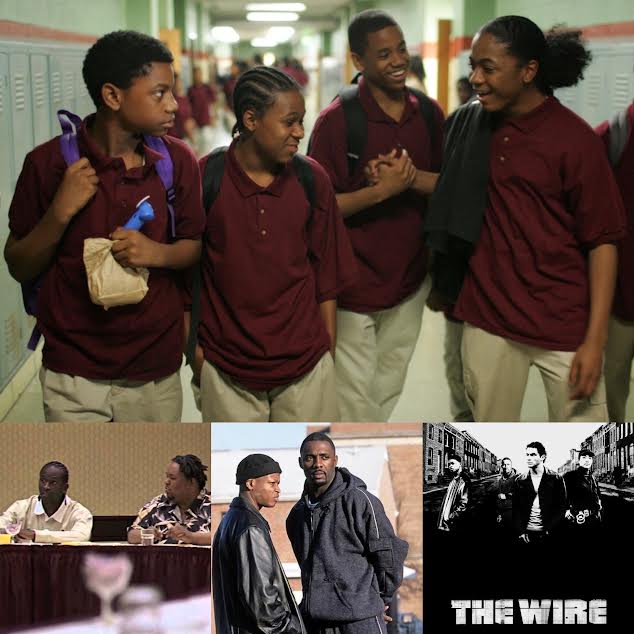
HBCU leadership. Who is protecting African America’s corners and towers? The corners representing the social, economic, and political capital that leads to the empowerment of a people while the towers represent the physical communities African America exist within. In the HBCU world of leadership there are many presidents and administrations that reflect in the behavior of The Wire. From those who want to form the New Day Co-Op so that HBCUs are stronger together with less friction and creating more opportunities to those who want nothing more than to wear the proverbial crown and are willing to destroy the community to do so. There is also the underlying reality that The Wire portrays brilliant minds, strategic thinkers, and ambition in African America that often gets wasted in a game that never creates institutional empowerment for African Americans. But what if those talents were redirected? If they were used to do just that, build the institutional empowerment of HBCUs and thereby strong African American institutional power. Based on their talents and characters what role would each of them play and why.
President: Slim Charles
In The Game: The Pawn who became a King/Queen. Slim Charles was the consummate soldier first serving the Barksdale Organization, then the lieutenant for Proposition Joe. He is the only one who truly sees Marlo as the threat that he is showing a keen sense of foresight. A sense of loyalty and code matched only by Omar Little, best exhibited when he kills Cheese to avenge the death of Proposition Joe.
HBCU Translation: Slim Charles is chosen to be an HBCU president because of his keen strategy abilities, intelligence, foresight, adaptability, and willingness to make tough decisions. His sincere desire to ensure what is best for the organization is at the foundation of his decision making versus his own desires makes him beloved and respected by all who serve under his leadership.
Provost: Omar Little
In The Game: The Robinhood of The Wire whose main occupation is robbing the drug kingpins. There are two moments when Omar’s acute intellect is highlighted. He is set to testify against Bird and there is an officer who is trying to complete a crossword puzzle about the God of War. Omar ultimately solves the puzzle for him recalling his early school days. He also best Levy, the white lawyer who serves seemingly as the lawyer for every drug kingpin in The Wire, who is representing the character Bird on a murder charge. In the exchange, Omar states simply that, “I got the gun, you got the briefcase. It’s all in the game though, right?” Omar squashes Levy’s notion that he (Levy) is absolved of his profiting off of the drug trade in Baltimore just because he is not in the streets. That they are both are profiting off the drug trade, as it just happens that Levy’s white privilege allowed him to attend good schools, live in a safe community, and eventually become a lawyer while Omar having the same mental capacity (if not more) was brought up in a toxic environment that often laid brilliance to waste.
HBCU Translation: As provost, Omar Little would help shape the learning environment and academics of an HBCU in ensuring that those who matriculated through the institution would leave no stone unturned to reach their full potential. He would oversee research, teaching, and service with vigorous passion. Provost Little would also use the institution’s strength to increase the strength of the African American PreK-12 pipeline that feeds into the HBCU.
Associate Provost: Brianna Barksdale
In The Game: She is the sister of Avon Barksdale and mother of D’Angelo Barksdale. While not seemingly playing a direct role in the Barksdale organization, it is always clear that she has the ear of Avon Barksdale and often is seen providing him with valuable advisement. After her son is murdered in jail and made to look like a suicide she continues to probe his death as the circumstances surrounding his death do not seem to quite add up.
HBCU Translation: While Omar is keen on the rigors of academic development for the students, Brianna sees to the nourishment and growth of their personal development. Ensuring that students develop the soft skills and maturation necessary to excel about matriculation.
Chief Financial Officer: Stringer Bell
In The Game: Was there anyone more focused on building the wealth of Barksdale and Bell than Stringer? While everyone was just relying on the economics of the corner, Stringer was taking economics classes at the local community college and engaging in entrepreneurship and real estate development. He ultimately believed that what was in the best financial interest of B&B was to move from retail to wholesale in Baltimore’s drug game. Stringer also understood that they were in a unique situation to be the “bank” of all the heroin that came into the city which would allow them to become impervious to law enforcement and therefore eliminating the risk to their lives or imprisonment. His desire to engage Clay Davis, albeit naively, showed that he understood that there was bigger money to be made. One could argue that had Stringer had his way, Baltimore ultimately would have been redeveloped by his desire for more.
HBCU Translation: With Stringer Bell as the CFO and head of the endowment, an HBCU would be ensured of a healthy financial future both today and for generations to come. Investment decisions would not be stuck in the past, but would constantly be forward looking. It can be argued that one of the major issues for HBCUs is their inability to be financially creative and benefit from new investments or even be financially aggressive with their endowments. If Stringer Bell is at the helm of the purse, rest assured his eyes would be on his HBCU competing with the Harvard endowment and nothing short of that would be acceptable.
General Counsel: Chris Partlow & Snoop
In The Game: The GOATS of drug land assassinations. Marlo Stanfield’s rise to the top simply does not happen without these two protecting his organization and its interest. Chris serving as the number two in the organization was even quite good at calming (as best one could be) Marlo’s hot temper. They were professionals, not just killers. The prophetic, “Get there early” was the mantra by which they operated their craft. You simply did not get the drop on these two and once they set their sites on you the next time anyone would see you would be on a t-shirt.
HBCU Translation: It may seem strange at first that two enforcers would be serving as your legal counsel, but a good legal counsel protects and enforces an organization’s interest. These two will see that there will be no frivalous lawsuits against the school, nor bad contracts entered into by Stringer, and may often go on the legal offensive as Slim Charles sees fit in the best interest of the institution. They will provide the hard power to Government Relations soft power diplomacy.
Government Relations: Clay Davis and Maurice Levy
In The Game: Clay Davis arguably was the government and Levy understood the inner political workings of the governmental offices as well as anyone. It was Clay Davis who bamboozled Stringer Bell out of six figures of money and it was Levy who told him how Davis did it. Levy was also exceptional at getting intelligence and his clients often were always a few steps ahead of the government’s war on drugs efforts. Both were “veterans” of the machine and understood all too well that the true power was not in the streets, but in offices where decisions were being made by those who knew the language of diplomacy, lobby, and influence.
HBCU Translation: When it comes to local, state, and federal funding and policies impacting their institution nobody knows more than these two. They not only know what is happening before it is happening, but are also part of shaping what is going to happen. Part of their strategy involves the shaping of former alumni into future politicians who will be beholden to the school and its interest above all.
Vice-President of Research: LesterFreamon
In The Game: The unsung genius of The Wire. Lester was thought to be wise and intelligent police officer, but his work on helping crack Marlo’s organization code ultimately shows his true brilliance.
HBCU Translation: Building your HBCUs research structure needs the mind of someone who will spend countless hours doing so and that person is Lester Freamon. He integrates research throughout the entire institution from the groundskeepers to science labs. Ultimately, he and Stringer Bell work closely in helping the HBCU commercialize and profit from much of their groundbreaking research bringing in billions of dollars to the HBCU’s coffers for the creation of state-of-the-art labs and research facilities.
Professor of Aquaculture: Wee-Bey Brice
In The Game: Arguably one of the coldest killers in The Wire, Wee-Bey has a soft spot for fish. When he has to go “away” for a bit of time, he entrust D’Angelo Barksdale to look after them. Albeit, D’Angelo thought he was actually about to kill him.
HBCU Translation: On the school’s farm, Professor Brice leads extensive research on aquaculture, which is the breeding, raising, and harvesting fish, shellfish, and aquatic plants. A few of his students go onto form aquaculture startups, which find early investors from the school’s endowment, while others make their way into the USDA’s most prominent positions of leadership over the years.
Professor of War Gaming and Game Theory: Marlo Stanfield
In The Game: Marlo is the head of the Stanfield organization and ultimately the kingpin of Baltimore’s drug trade. He is ruthless and in many ways lacking almost any emotion along the way. He understands the moves necessary to wear the crown as it is called among Baltimore’s drug dealing community. The shrewdness and calculated moves to eventually get a line on Prop Joe’s connect and then eliminate him insuring he controlled the city’s supply would have found respect by even those at the Pentagon.
HBCU Translation: War gaming and game theory are not typically found at HBCUs, but this is a fictional HBCU and we believe that far more African Americans needs to learn the art of corporate and military strategy, both of which these fields cover. Understanding your own position, your opponents’ position, and the moves that will ultimately make you the victor are vital both individually and institutionally as our students graduate and go on to run African American institutions of their own. There is nobody better suited to teach them than Prof. Stanfield.
Dean of the Law School: Bunk Moreland
In The Game: Detective Moreland is a cigar smoking cop who grew up in the very neighborhood he now tries to solves murders in. His relationship, especially to Omar whom he was a few years ahead of seems to offer him a unique place in The Wire’s two worlds.
HBCU Translation: Dean Moreland may seem like an odd choice at first given that he not a lawyer, but as mentioned – he was from the community and that carries a special kind of weight to it. He still believes in the community and the people in it. At one point even chiding Omar on a park bench about how when they were younger the hardheads would not let him hang around so he would avoid trouble and stay focused on school and now the likes of Omar and other gangsters no longer uphold that level of honor. While he may not be your traditional law school dean, he is exactly what an HBCU law school needs. To realize that those African American lawyers are going to be more than just lawyers, they are going to be soldiers for their community on the legal battlefield.
Chair of the History Department: Proposition Joe
In The Game: Prop Joe was the wise elder statesmen gangster. He prided himself on always finding what we believed were win-win situations. But his true joy was knowing the history of the community.
HBCU Translation: Not only does he lead the history department, but he ensures that no student regardless of major leaves the institutions without a reverence for those that came before them. He teachers students, but also staff and faculty as well about the importance of ensuring students know the history of anything they are learning. You may see him leading a conversation on the African American history of math or nursing on any afternoon. He believes the cultural assets of the HBCU are vital to its success.
Director of Development: Malik “Poot” Carr
In The Game: There are few characters in The Wire who lived to see the END. Surviving in this context meaning both being alive and not in jail. Poot starts as a low-level drug dealer working in the Pit. Eventually rising to Bodie’s lieutenant as they formed their own crew. He has seen it all, been part of it all, and seemingly knows everyone.
HBCU Translation: The head of development’s job is to bring in the money from alumni and corporate sponsors and that is done through the building of relationships. Poot’s existence as both an alumni of the streets and then moving into corporate life at Foot Locker give him the relationships and skills to interact with both alumni and corporate to fill those coffers. He can tell the stories that alumni love to hear about the good old days and why their donations will help with the future.
Director of Academic Counseling: Howard “Bunny” Colvin
In The Game: Colvin is a cop for most of the series but eventually goes onto work with youth hoping to help turn their personal and academic careers around. His signature moment is visiting Wee-Bey in jail and asking him to “let go” of his son Namond and give him a chance to be successful at something else other than a gangster. That he has real promise in another world and no chance in his current one.
HBCU Translation: There is no doubt that with the proper resources he would assure that students were getting the academic and personal development necessary to thrive both while matriculating and thereafter.
Director of Alumni Relations: Preston “Bodie” Broadus
In The Game: Bodie is what one would call an independent contractor selling the dope of whomever has the most power. He prefers the Barksdale organization, but eventually falls under the thumb indirectly of Stanfield who begins to control the supply. Arguably one of the show’s favorite characters, everyone sees his potential beyond the street life and fighter attitude – arguably everyone except him. Easily could be so much more, but is committed to the life of the streets.
HBCU Translation: The HBCU alumnus who credits his HBCU for everything in his life that has been good. He was a diamond in the rough that was given the space to grow, mature, and find himself. Forever grateful to the institution, he decides to come back after working for a shipping and logistics company owned by a fellow HBCU graduate to head up the institution’s alumni relations. His ability to generate alumni fever is unmatched because of his deep desire and love for the institution.
Chief of Police: Brother Mouzone
In The Game: A legendary hitman was Brother Mouzone. A hired gun eventually for the Barksdale organization with deep connections to New York. He is able to stem the tide of market share loss for the Barksdale organization as the Stanfield organization and others encroach on their territory. His ability to dissect situations intellectually and keep a level head at all times makes him revered in the streets.
HBCU Translation: What is an HBCU Chief of Police’s job? Is it just to be another police force? No, HBCU police chiefs carry a special role of protecting a Black space and ensuring its safety in a world that constantly has them under attack. Chief Mouzone would most likely have intelligence units operating at all times gathering intel on any potential threat to students or the institution. If necessary, he will even take offensive action with the permission of leadership should it call for it. The institution and the area around it would become a sanctum of safety.
Athletic Director: Avon Barksdale
In The Game: The head of the Barksdale organization. Avon is well respected in the streets (and in jail). It is clear that Avon’s youth was spent in sports and athletics. Cutty eludes to a time when Avon was a golden gloves champion, but Avon explains his career was cut short due to a physical limitation. Avon invests $15,000 into Cutty’s boxing vision and directs him to take care of the little ones.
HBCU Translation: Avon truly understands the power of sports in the community. He possesses a certain charisma that people are drawn to which will make his ability to build corporate relationships and bring in quality coaches. Never losing the bigger picture, he realizes that the athletic department is just a small piece of a wholistic institution. As quick as anyone to not allow the fanaticism to rule. He keeps a heavy hand on graduation rates, discipline, and ensuring that the department serves as true ambassadors for the institution’s image.
Men’s Head Coach: Dennis “Cutty” Wise
In The Game: Once a legendary enforcer, Cutty gets out of prison and for a period of time goes back to the streets only to realize his heart is no longer in it. He wants to work with youth sports and help mold and shape young boys and men before they see death or prison.
HBCU Translation: Coach Wise does not just care about wins and losses, in fact they are acutely secondary. His most proud accomplishment is his athletes graduation rates. He prides himself on his athletes strong discipline, high character, and achievement in the classroom.
Women’s Head Coach: Shakima “Kim” Greggs
In The Game: A detective who is one of the strong voices and characters in the show as the police force tries to bring down the city’s drug and violence problem. Able to hold her own in any situation. While being a secondary character in many respects, in a show with few women leads, Detective Greggs always shines and is a force to be reckoned with when shown.
HBCU Translation: Coach Greggs is a no nonsense coach who demands her players push themselves beyond their limits. They are required to sit in the front of class, volunteer in the community, and be disciplined. She coaches to win and dominate.
Head of Facilities & Groundskeeping: Reginald “Bubbles” Cousins
In The Game: Bubbles is often described as intelligent and caring person within the community and ultimately one of its many victims of the heroin trade. A heroin addict himself, Bubbles has a knack for being on the “scene” at opportune times. This allowed him to be one of the police more reliable sources of information throughout the series.
HBCU Translation: As head of facilities and groundskeeping, he is one of many redemption stories among HBCU staff and one of its unsung heroes. He is the type to make sure a hungry kid gets fed or lets a promising student into a building to work on a project after hours. These stories and many like it are what makeup the foundational fabric of HBCUs, their students, faculty, and staff having an important role in the success of the institution. Bubbles prides himself on taking care of the buildings and the grounds as part of giving and creating the type of environment that students and faculty can find peace and thrive in.
SGA President: Namond Brice
In The Game: A charismatic kid who was never really built for the street life, but is bullied into it by his mother. Eventually saved by Bunny Colvin who sees his potential to be more and allowed to leave the street life by his father’s Wee Bey’s blessing who overrides his mother’s sentiment who believes the only life for her family is the street life.
HBCU Translation: Namond has an oratory gift and is extremely well-liked and respected student at his HBCU. He becomes SGA president during his matriculation and is a student-leader and ambassador for the institution.
Valedictorian / President of the Philosophy Club: MichaelLee
In The Game: The next generation of brilliance in The Wire. There is no one who questioned the game and its rules more than Michael. He is often chastised by his handlers for not just doing what he was told. Michael has serious problems with the way life and death is decided in the community, but is always intelligent enough to be one step ahead of those who would suck him and throw him away just as easily. He is often seen as a reluctant leader until the end where many argue he takes over as the new “Omar” in the community.
HBCU Translation: Michael leads mostly by example and takes his studies seriously. He is seen engaged in late night debates in the dorms with his fellow classmates. A PhD is definitely in his future, but not before he takes a few years after graduation traveling the world and learning the philosophies of Africa’s great scholars.
Ultimately, the purpose of this reimagining is to show and highlight just how much talent there is in the African American community and how much of it goes to waste due to poor institutions. That so many brilliant minds never get the opportunity to be part of building our community and our institutions into something greater. Poor institutions produce poor individuals and create a vicious cycle, but make no mistake about it – the talent and ability is there. Unfortunately, the resources and opportunity usually are not. However, this should not be taken as a message to then “get out” of our communities and into other’s spaces where we have no ownership and just end up being the talent that builds for other’s benefit. Instead it should be a call that we have to do things different and imagine different. Can we imagine a world where we are empowered? Where are most brilliant minds build up our institutions for our community’s benefit. That we can compete on the fields of power the world over. Imagining the New Day Co-Op as an investment firm of pooled resources by the business leaders of the community who then invest in startups, real estate development of the Baltimore harbor, build new African American schools, hospitals, research facilities that would make John Hopkins blush, and other institutions that are ours. After all, as the vice-president of research Lester Freeman once said, “We’re Building Something, Here, Detective, We’re Building It From Scratch. All The Pieces Matter.”
Why is HBCU Money talking about marriage? We thought this was a site about money. Well, there are many economists and community developers that agree that one of the most fundamental ingredients to wealth building is marriage. It allows for scaling of capital towards savings and investment, reduction of expenses, and an ability to provide familial stability. Unfortunately, like our median income and wealth, there is no group less likely to actually get married than African Americans. The hurdles to African American marriage are deep and complicated and the solutions to them potentially even more deep and complicated. All that said, anything that leads to higher marriage rates between African Americans can only add to the community’s ability to actually stabilize and empower itself socially, economically, and politically. We of course acknowledge that marriages come in all forms, but the most important form is a healthy, happy, and loving marriage.
National African American Marriage Rate – 29.7%
Virginia – 34.0%
Maryland – 33.2%
Delaware & Texas – 32.8%
Florida & North Carolina – 31.3%
Georgia – 30.9%
Oklahoma – 30.0%
Arkansas – 29.8%
California – 29.7%
Alabama & South Carolina – 29.4%
Mississippi – 28.9%
The question then becomes how can HBCUs, their alumni, and other support organizations encourage more marriage among African Americans at HBCUs? This becomes vital for HBCU’s future because it could be suggested that a couple who both went to HBCUs would be more likely to send their child to an HBCU. Whereas a couple with only one HBCU parent present or no HBCU parents present is far less likely. To encourage coupling as part of an HBCU’s development strategy would by no means be simple given the ratio of women to men on HBCU campuses these days. Simply put, there are not enough men for women to choose from in the heterosexual relationships. And unless more data is collected on LGBTQ HBCU students, there may not be a viable quantity there for them either. This is why it would be important if this was to be considered that a network of HBCU development offices strategize together and increase the probability of matchmaking.
Tracking the statistics on HBCU marriage and family would also be immensely valuable information. An opportunity that certainly presents itself for further research by Hampton University’s National Center on African American Marriage and Parenting. Very little data is actually known on HBCU marriages and families.
Ultimately, HBCUs and their alumni though who can encourage more marriage among HBCU students/graduates must do so through ensuring those relationships are healthy. This means that there must be more mental and physical health development, financial literacy, and relationship etiquette taught. With seven of the ten HBCU states exceeding the national average for African American marriage the ingredients are certainly there for this seed to grow, but it indeed must be watered if we truly plan to see more marriage and healthier marriage which we know can also be one of the key tenets to community formation and building.





 HBCU Money