Category Archives: Lifestyle

College: Once A Space For Human Exploration Has Been Trampled By Corporate Conditioning

“It is not wrong to go back for that which you have forgotten.” — Akan Proverb (Sankofa)

I have been an adjunct professor at a community college for over three years now. Each semester, I pose a simple but revealing question to my students: “Why are you in college?”

The responses rarely vary. “To get a job.” “To have a career.” “To make money.”
It is always with the best of intentions, but as we know, the road to hell is paved with just that. The deeper concern isn’t just what they say—it’s what they don’t know they are saying. Their words echo the hollowed-out purpose of an institution increasingly seen as a conveyor belt to corporate compliance, not intellectual or spiritual emancipation.

The tragedy is not just that college has become a transactional space—it is that most students no longer see what is missing.

A Dangerous Assumption: The Degree as Destiny

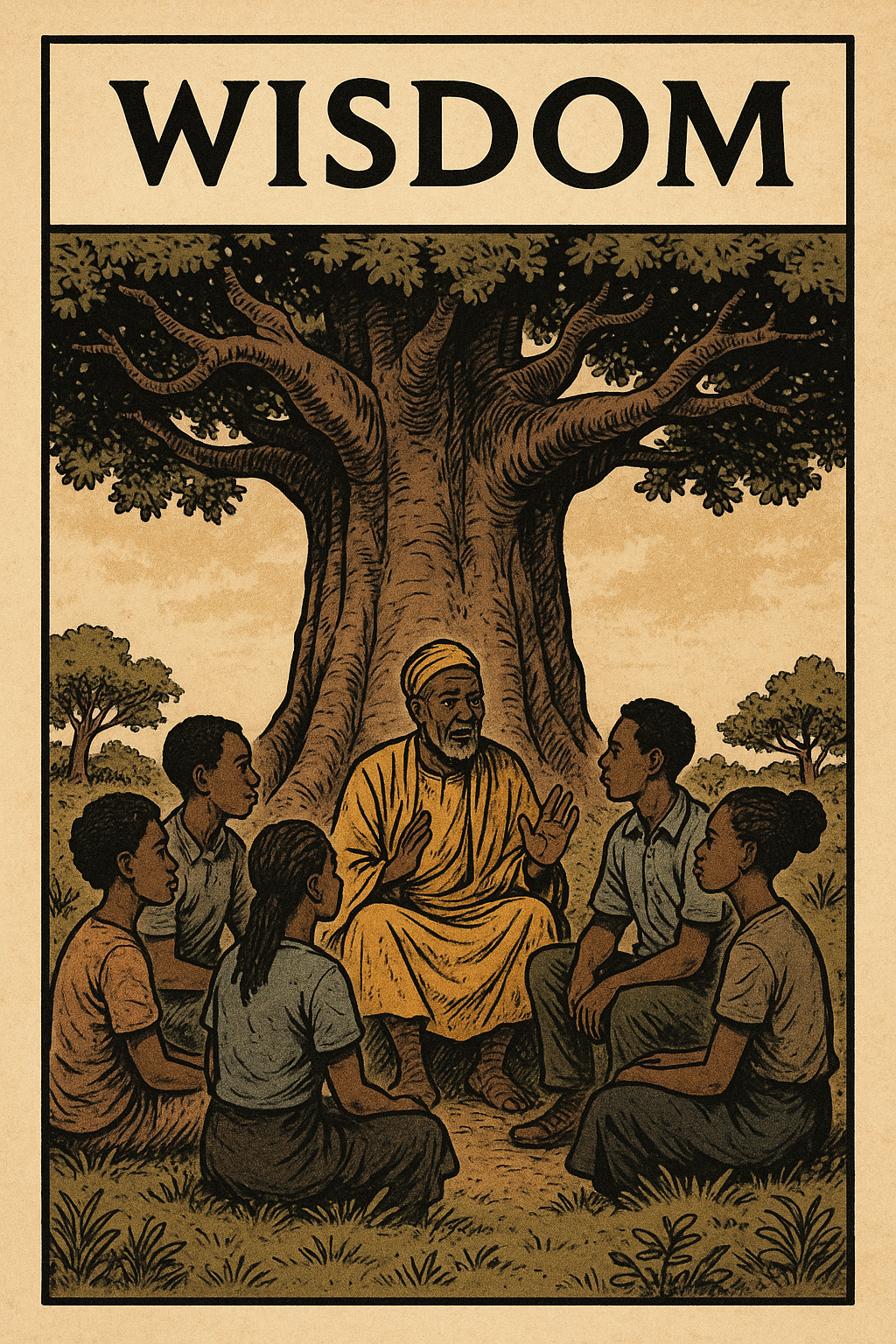
In traditional West African thought, especially among the Yoruba, Ashanti, and Dogon peoples, education was never merely about utility. It was about becoming. It wasn’t just about what one could do in the world, but who one was becoming in the process of doing. Wisdom (or ọgbọn) was holistic, rooted in spirit, culture, lineage, and ethical alignment.

In stark contrast, American colleges today are increasingly sold to students as pipelines into labor markets. The neoliberal restructuring of higher education has succeeded in stripping the classroom of its sacredness. Students arrive not as seekers of truth or participants in community-building, but as clients seeking a credential.

They are not wrong to want a better future. But the belief that a degree alone secures a path to success is dangerously outdated. Labor markets are global and brutally competitive. And yet, most students have no concept of what it means to be in labor competition or how to distinguish themselves in a sea of sameness.

They do not know this is a contest because no one has told them it is.

College as Corporate Farm System

The unspoken arrangement between college and corporation mirrors that of a sports minor league. Students are recruited, trained, disciplined, and filtered for usefulness. It is no longer about a community of learners, but a pool of potential employees.

Students are assessed not on the strength of their ideas or their empathy for others, but on GPA, punctuality, compliance, and increasingly, soft skills—a euphemism for the ability to conform without friction.

In this model, students become “pre-workers,” graded not just academically but for “employability.” The path to the corporation becomes the primary purpose. The majors, the minors, the co-curriculars—all orbits around this gravitational center.

We must ask: when did the university stop being a space of liberation and become an internship waiting room?

The Cultural Theft of the Intellectual Spirit

Among the Igbo, the concept of Uche represents deep thought and the reasoning capacity of the individual, connected to community values. In Mande philosophy, the griots were not just musicians—they were living libraries, guardians of memory and morality. Education in these contexts required introspection, storytelling, ritual, and intergenerational exchange.

Modern academia has no griots. It has PDFs.

Students are flooded with information but left without wisdom. They learn statistics but not social context. They study algorithms but never ask, “Should this be built?” They can diagram a sentence but struggle to speak with conviction about who they are or what they owe the world.

This is the intellectual poverty of college-as-job-training. It leaves students technically prepared but spiritually bankrupt.

The Lost Opportunity of Human Development

College could be—and once tried to be—a sacred place. A place where students read James Baldwin and bell hooks in the same semester. Where they wrestled with Du Bois’ double consciousness or Ngũgĩ wa Thiong’o’s Decolonising the Mind. Where poetry and engineering sat at the same dinner table.

Instead, students now rush through degree plans like a to-do list, burdened by debt and starved for reflection.

The irony? Most students don’t even know what they missed. Because they were never told that college was supposed to be anything more.

This is the perverse genius of capitalism—it doesn’t just steal your labor; it makes you grateful for it. And when it fails you, it says: you must not have tried hard enough.

Sankofa: Reclaiming What Was Left Behind

The West African principle of Sankofa invites us to return to the past to retrieve what we’ve lost. In the context of higher education, this means reviving the idea of college as a rite of passage. As a collective journey toward know thyself.

Students must be re-taught to ask not just, “What job do I want?” but also:

  • Who am I becoming?
  • What is my relationship to the earth, to my people, to time?
  • What problems am I here to solve?
  • What history is encoded in my blood?

These are not abstract questions. They are survival questions.

And the answers cannot be outsourced to ChatGPT or LinkedIn.

The Labor Competition That No One Told Them About

Ask your students, “Are you in labor competition?” Most won’t know what you mean. But they are. Fiercely so.

They are competing against peers not just in their state, but across continents. They are up against rising automation, temporary gigs, and an unforgiving algorithmic HR culture. And yet, no one has taught them how to think strategically about their learning, their networks, or their future.

In West African wisdom, the hunter (ode) does not walk into the forest unaware of his prey. He studies the tracks, the winds, the seasons. He understands his tools, but more importantly, his limitations.

Students today must be taught how to become hunters of opportunity—not scavengers of job listings.

The Role of the Teacher as Elder and Not Just Instructor

In many African traditions, the teacher was not just a transmitter of knowledge but a shaper of souls. In the Yoruba Ita tradition, the elder doesn’t just instruct—he listens, counsels, and corrects with compassion. Teaching was deeply relational.

Yet, American higher education treats adjuncts like gig workers. There is no time or value placed on mentorship, on intergenerational intimacy, on the sacred trust between elder and learner.

If the classroom is to be a village, then the professor must be more than a taskmaster. We must become what the Akan call Nananom Nsamanfo—the wise ancestors-in-training who guide without domination.

The Corporate Mirage of “Success”

Let us not mistake the corner office for true elevation. Many students are being trained for jobs that will not exist in 10 years. They are being groomed to serve an economy that has no loyalty to them.

The African philosophy of Ubuntu teaches that “I am because we are.” What if success was not a solo climb, but a collective lift?

We must replace the myth of individual upward mobility with a more grounded sense of communal striving. A degree should not just lift one person—it should lift a family, a neighborhood, a people.

Otherwise, what is the point?

The Spiritual Toll of False Promises

When the yellow brick road turns into a dead end, students don’t just suffer economically. They suffer spiritually.

They feel betrayed, ashamed, and often, alone.

They were told that college was the answer. And when that answer doesn’t deliver, they think the fault lies with them—not the system.
This is educational gaslighting. And it has consequences. It breeds disillusionment, disengagement, and generational cynicism.

If colleges cannot be honest about what they are and what they are not, then they must not be surprised when students walk away from them.

Toward A New College Vision Rooted in African Thought

Let us dream, then, of a new kind of college. One that takes seriously the principles of:

  • Sankofa – return and remember
  • Ubuntu – relationship and community
  • Ọgbọ́n – wisdom and ethical discernment
  • Uche – deep critical thought
  • Nommo – the power of the word and naming

Let us imagine a college where philosophy is not an elective but a foundation. Where entrepreneurship is taught alongside ethics. Where majors are less about marketability and more about mission.

Where the goal is not just to earn but to become.

The Path Forward Must Be Reclaimed

Beauty may be skin deep, but ugly is to the bone. And the perception of college as a glorified HR prep course is deeply, systemically ugly. It reflects not just a misalignment of values but a degradation of purpose.

College must be reclaimed not as a minor league for corporations but as a site of cultural, intellectual, and spiritual resurrection.

The African proverb says, “Until the lion learns to write, every story will glorify the hunter.”
It is time for students, educators, and communities—especially those of us rooted in African traditions—to begin writing new stories.

Not just for the classroom.

But for the world.

I Woke Up in a New Bugatti: Rap’s Poverty Promotion and the Illusion of Wealth Transfer

If you think you’re tops, you won’t do much climbing.  — Arnold Glasow

Hip-hop was born out of necessity. A sonic rebellion against poverty, violence, and systemic neglect, it emerged from the Bronx as a raw reflection of life in America’s forgotten corridors. But over the past four decades, it has transformed from cultural resistance into commercial royalty. Once recorded with borrowed turntables in community centers, it now echoes across Super Bowl halftime shows, luxury brand campaigns, and billion-dollar corporate balance sheets. Artists who once stood on corners are now seated at boardroom tables. The culture won. But the community did not.

The statistics tell a story of growth at the top and stagnation at the bottom. Hip-hop is now a $16 billion industry. It has created artists turned entrepreneurs who have expanded into liquor, fashion, tech, and sports. The music dominates global charts, sets fashion trends, and influences everything from algorithms to political campaigns. Yet this immense cultural capital has not translated into economic sovereignty for the African American community. Instead, the concentration of wealth in a few hands has often disguised the lack of institutional power. For all the charts conquered and headlines generated, African American banks, endowments, universities, and asset management firms remain modest, if not endangered.

At the heart of this failure lies a devastating contradiction. While rappers flaunt wealth more publicly than any generation before them, the economic conditions in many African American communities remain dire. The median net worth of Black households, as of 2022, stands at $44,100 compared to $284,310 for White households—a gap that has barely moved in decades. Hip-hop has become the most visible face of African American success, but that visibility is not backed by scale. There are no Black equivalents to BlackRock or Vanguard. No hip-hop-funded HBCU research lab. No Goldman Sachs of rap. Even the highest echelon of Black-owned investment firms manage a fraction of their white counterparts. Vista Equity Partners, the most prominent, oversees $103.8 billion, an extraordinary feat, yet still a rounding error next to BlackRock’s $10.5 trillion.

And even this level of institutional success is an outlier. Most Black-owned investment firms manage less than $10 billion. Most HBCUs have endowments below $50 million. The largest Black bank, OneUnited, holds roughly $650 million in assets, while Bank of America manages over $2.5 trillion. What hip-hop has delivered in influence, it has not delivered in capital. Instead of building institutions, it has made individuals rich. But those individuals exist within a system that continuously siphons wealth away from their communities.

This is not to say that artists bear the blame for economic injustice. But hip-hop has become a tool of seduction as much as expression. Its dominance in the global marketplace has aligned it with the poor man’s logic

of capitalism celebrating consumption, rewarding individualism, and elevating spectacle. In this model, buying a Bugatti becomes a symbol of power, while the absence of a Black mutual fund managing $100 billion barely registers. Lyrics obsess over fashion houses like Balenciaga, but rarely name Black-owned real estate firms or venture capital funds. The dream has shifted from ownership of blocks to ownership of Birkin bags.

This performative wealth is not just cultural; it’s systemic. The music industry itself is structured to extract more than it distributes. Record labels, streaming services, and publishing houses are disproportionately owned by entities with no allegiance to Black institutions. A 2023 report by Rolling Stone noted that artists receive less than $0.004 per stream on major platforms. Even when a track is streamed millions of times, the majority of profits flow to tech firms and record conglomerates, not to the creators or their communities. The money flows up and out. It is the same pattern that defines the broader African American economic experience: labor and creativity are extracted, while ownership and equity are denied.

The disparity is especially stark when one examines capital circulation. A dollar in the Black community circulates for less than 6 hours, according to HBCU Money, while in Jewish and Asian communities, it circulates for 17 and 20 days respectively. The consequence is an economy that is constantly depleted, reliant on external institutions for everything from finance to food. Hip-hop, despite its earnings, has not altered this trajectory. The Bugatti may be new, but the bank that financed it is old—and white.

This failure to institutionalize wealth is not accidental. It reflects deeper structural barriers, including a lack of access to financial infrastructure, intergenerational capital, and legal expertise. But it also reflects a shift in priorities within the culture itself. The era of public enemy and X-Clan once channeled music toward collective uplift. The current era often measures success by proximity to luxury, not impact on community. The metrics of power have changed from organization to ostentation.

Still, there are exceptions that point to what is possible. But these efforts remain underfunded and under-celebrated. There is no coordinated movement among hip-hop elites to pool capital, fund cooperative ventures, or launch institutional vehicles capable of rivaling their white counterparts. What could a $1 billion hip-hop endowment fund do for HBCUs? For land ownership? For venture funding of African American startups? These questions are never asked because the Bugatti is louder than the balance sheet.

It’s not just about what rappers buy. It’s about what they build or more accurately, what they have not built. For every luxury watch, there could be a community-owned grocery store. For every $30 million home, there could be a regional loan fund or student scholarship pipeline. The failure to institutionalize success means that when an artist dies, their wealth often dies with them dispersed among heirs or recaptured by the state or private corporations. There is no hip-hop university. No national Black credit union seeded by artists. No sovereign wealth fund of the culture.

Arnold Glasow’s warning—“If you think you’re tops, you won’t do much climbing”—rings like an indictment. The culture believes it has arrived, but the destination is superficial. It has conquered billboards but not balance sheets. The climbing left to do is immense: building a generation of lawyers, financiers, real estate developers, and economists who can institutionalize the gains of cultural dominance. Without this, hip-hop’s economic contribution will remain symbolic, not structural. The world will continue to dance to the music, while Black America stays undercapitalized.

A Bugatti depreciates. Institutions compound. Until hip-hop’s economic power stops ending with the individual and starts building for the collective, the community will remain stuck in a loop of representation without accumulation. The corner coffee shop that became Starbucks is not owned by the block. And the music booming from its speakers will not change that. Not unless the wealth it generates is used to build not just to boast.

Disclaimer: This article was assisted by ChatGPT.

The Real Game: PWI Athletics Win with Wealth, Not Athletes—And HBCUs Can’t Chase That Model

“The wealthiest boosters and donors to a PWI rarely ever played sports, but they did go build companies and a lot of wealth. Boosters spend hundreds of millions a year to compete with their friends and business competition from rival schools. The money spent is a bigger game than what happens on the field.” – William A. Foster, IV

Courtesy of The Rich Eisen Show

The image circulating across sports media this week says everything without trying to explain anything at all. LSU’s new contract offer to Lane Kiffin — seven years at $13 million annually, stacked with multimillion-dollar bonuses, home buyouts, and housing subsidies looks less like a coaching contract and more like a sovereign wealth transaction. It is the kind of deal only an institution backed by generational wealth, mega-boosters, and a national alumni base at the upper end of the economic ladder could produce. Yet every few months a familiar chorus resurfaces insisting that if “only the top African American athletes chose HBCUs,” the financial gap in college athletics would close. The narrative is compelling, emotional, and rooted in cultural longing, but it remains economically false.

The fantasy is seductive: if only more premier African American athletes chose HBCUs, our athletic programs could compete with Predominantly White Institutions (PWIs). If only we could land that five-star recruit, sign that top quarterback, or attract that elite basketball prospect, everything would change. The dream persists in alumni conversations, on social media, and in aspirational fundraising campaigns. But the dream is built on a fundamental misunderstanding of what actually drives college athletic success and it’s costing HBCUs resources they can’t afford to waste. The numbers tell a story that talent alone cannot rewrite.

Lane Kiffin’s new contract with LSU pays him approximately $13 million annually, making him one of the highest-paid coaches in college football. To put this in perspective, Southern University’s entire athletic department operates on total revenues of $18.2 million for fiscal year 2025-2026. One coach at a PWI earns over 70 percent of what an entire HBCU athletic department generates in revenue. This isn’t an aberration it’s the system working exactly as designed.

The disparity becomes even starker when you examine what funds these massive operations. According to an audit report, Southern University Athletics had total revenue of $17.3 million and expenses of $18.9 million in fiscal year 2023, creating a deficit of $1.5 million. Meanwhile, PWI athletic departments operate with budgets in the hundreds of millions. The athletes on the field, no matter how talented, cannot bridge this chasm.

What truly separates PWI athletic programs from HBCU programs isn’t the talent of 18-22 year-olds playing the games. It’s the economic power of the institutions behind them specifically, the size, wealth, and giving capacity of their alumni bases. According to Georgetown University, PWI graduates earn an average of $62,000 annually, compared to HBCU graduates who earn around $51,000. But the income gap is just the beginning of the story. The real disparity lies in generational wealth accumulation and the sheer number of potential donors.

Major PWIs have alumni bases numbering in the hundreds of thousands, often spanning generations of families who have accumulated significant wealth over decades. These institutions benefit from alumni who are CEOs, hedge fund managers, real estate developers, and executives at Fortune 500 companies. Their boosters can write seven-figure checks without blinking. When they want to retain a coach or upgrade facilities, they simply open their checkbooks.

HBCUs represent around 3% of America’s colleges, yet account for less than 1% of total U.S. endowment wealth. The endowment funding gap stands at approximately $100 to $1—for every $100 a PWI receives in endowment money, HBCUs receive $1. This isn’t just about annual giving; it’s about the compound interest of generational investment that HBCUs have never had the opportunity to build.

Corporate sponsors don’t pay for athletic excellence they pay for eyeballs and access to affluent consumer bases. When companies decide where to invest their marketing dollars, they’re calculating the purchasing power and professional networks they can reach through an institution’s alumni base. A company sponsoring a PWI athletic program gains access to hundreds of thousands of alumni with significant disposable income and decision-making power in corporations. The athletes are just the entertainment that delivers this audience. The actual product being sold is access to the alumni network—for recruiting employees, marketing products, and building business relationships.

This is why even if every top African American athlete chose HBCUs, the sponsorship dollars wouldn’t automatically follow. The economic fundamentals would remain unchanged. Companies invest based on return on investment calculations that are tied to alumni wealth and network size, not solely to on-field performance.

The belief that athletic success drives institutional prosperity is perhaps the most dangerous delusion facing HBCU leadership. Even among PWIs, only a tiny fraction of athletic programs actually turn a profit. Most operate at a loss that’s subsidized by the broader university budget, student fees, and institutional transfers. Southern University’s budget shows $2.2 million in “Non-Mandatory Transfer” and $1.4 million in “Athletic Subsidy”—meaning the institution itself must subsidize athletics with nearly $3.6 million in institutional funds. This is money diverted from academic programs, faculty salaries, research, and student services to keep athletic programs afloat.

The PWI athletic model works for PWIs not because athletics are inherently profitable, but because they can afford the losses. They have massive endowments, substantial state funding, and alumni donor bases that can absorb deficits while still funding academic excellence. HBCUs don’t have this luxury. When an HBCU runs a $1.5 million athletic deficit while struggling to pay competitive faculty salaries, upgrade outdated classroom technology, or fund research initiatives, the opportunity cost is devastating. That deficit represents scholarships not awarded, professors not hired, and academic programs not developed.

Some HBCU advocates point to conference television deals and NCAA tournament appearances as potential revenue sources. But here again, the math is unforgiving. Major PWI conferences negotiate billion-dollar television contracts because they deliver large, affluent viewing audiences that advertisers covet. The Big Ten and SEC don’t command massive TV deals because their athletes are more talented they command them because their alumni bases represent valuable consumer demographics. The SWAC and MEAC can’t replicate these deals because they don’t deliver the same audience size and purchasing power, regardless of the talent on the field. Even if HBCUs somehow assembled teams that won national championships, the structural economic advantages would remain with PWIs.

Here’s what proponents of athletic investment don’t want to acknowledge: the marginal difference in talent between a five-star recruit and a three-star recruit is minimal compared to the massive difference in institutional resources. A slightly more talented roster cannot overcome a 10-to-1 or 100-to-1 resource disadvantage.

Consider the logistics: While an HBCU football program might struggle to afford charter flights for the team, PWI programs have dedicated planes, state-of-the-art training facilities, nutritionists, sports psychologists, and medical staffs that rival professional franchises. They have recruiting budgets that allow them to identify and court prospects nationally. They have video coordinators, analysts, and support staff that outnumber many HBCU athletic departments entirely. The game is won with infrastructure, coaching depth, medical support, nutrition, facilities, and recovery technology not just with the athletes on scholarship. And these resources require the kind of sustained, massive funding that only comes from large, wealthy alumni bases and major corporate partnerships.

There is an alternative model that makes sense for HBCUs: the Ivy League approach. Ivy League schools have chosen not to compete in the athletic arms race. They don’t offer athletic scholarships for football. They emphasize academic excellence while maintaining competitive but not dominant athletic programs. Their alumni networks and institutional prestige are built on academic achievement, research output, and professional success not athletic championships.

For HBCUs, this model offers a realistic path forward. Focus resources on academic excellence, research capabilities, and entrepreneurship. Build prestige through intellectual output, not athletic performance. Create value through what HBCUs have always done best: developing future leaders, producing groundbreaking research, and serving their communities.

The Ivy League proves that institutional prestige and alumni loyalty can thrive without major athletic success. No one questions Harvard’s or Yale’s institutional value because their football teams don’t win national championships. Every dollar spent trying to compete in the PWI athletic model is a dollar not invested in what could actually transform HBCU economic outcomes: research infrastructure, entrepreneurship programs, endowment building, and academic excellence.

Research shows that more than half of all students at HBCUs experience some measure of upward mobility, and upward mobility is about 50 percent higher at HBCUs than PWIs. This is the actual competitive advantage HBCUs possess their ability to transform the economic trajectories of students from under-resourced communities. This mission deserves full investment, not the scraps left over after athletic departments consume resources. If HBCUs invested the millions currently subsidizing athletic deficits into research grants, business incubators, technology transfer offices, and endowed professorships, they could create sustainable revenue streams while fulfilling their core mission. They could become engines of wealth creation for African American communities rather than junior varsity versions of PWI athletic programs.

Admitting you can’t win an unwinnable game isn’t defeat it’s strategic wisdom. HBCUs should stop trying to beat PWIs at a game rigged by structural economic advantages they will never possess. Instead, they should redefine success on their own terms.

This means:

Rightsizing athletic budgets to reflect institutional resources and priorities, accepting that competing for national championships in revenue sports isn’t financially viable or strategically wise.

Investing in niche sports and athletic experiences that can be competitive without massive resource requirements and that build campus community without drowning budgets.

Redirecting resources toward academic distinction, particularly in high-demand fields like STEM, healthcare, and technology where HBCU graduates can command premium salaries and build generational wealth.

Building research infrastructure that attracts grants, creates intellectual property, and establishes HBCUs as innovation centers rather than athletic also-rans.

Developing entrepreneurship ecosystems that turn students into business owners and job creators, building the kind of economic power that generates sustained institutional support.

Creating HBCU-specific tournaments and competitions where these institutions can showcase their talents to their communities without subsidizing PWI athletic departments through guarantee games.

The African American community’s love for HBCU athletics is real and deep. The pageantry of HBCU homecomings, the tradition of the bands, the pride of seeing young Black excellence on display these matter. But love sometimes means making hard choices about where to invest limited resources for maximum impact. The question isn’t whether HBCUs should have athletic programs. The question is whether they should bankrupt their academic missions chasing a competitive model they can never win, designed by and for institutions with 100 times their resources.

One coach earning $13 million. One entire athletic department operating on $18 million. The math isn’t subtle. The choice shouldn’t be either.

Until HBCUs build alumni bases with the size, wealth, and giving capacity to compete in the modern college athletic arms race, pursuing the PWI model isn’t ambition it’s financial suicide. The path to HBCU prosperity runs through classrooms and laboratories, not football stadiums and basketball arenas. It’s time to stop chasing someone else’s game and start winning our own.

Disclaimer: This article was assisted by ClaudeAI.

Is the Love of Sports Costing African America the STEM Future It Desperately Needs?

The future will not belong to those who can jump the highest, but to those who can think the deepest.” — Anonymous (Modern African Proverb Reimagined)

For every hour a Black boy or girl spends practicing, playing, or watching sports, it becomes an hour not spent mastering math, science, literature, or history. Over time, those missed hours compound not just in skill gaps, but in confidence gaps. And confidence, in education as in life, is everything. The long-term consequence of this imbalance may be far greater than lost academic opportunities. It may be the loss of African America’s ability to compete in the 21st-century economy and the slow erosion of its intellectual sovereignty.

Sports are a cherished part of African American culture, woven through family traditions, community pride, and generational memory. From Jackie Robinson to Serena Williams, from Doug Williams to Simone Biles, athletic greatness has symbolized resilience and excellence in a world that too often sought to deny both. But beneath the surface of that cultural triumph lies an uncomfortable reality: the love of the game may have become too consuming, crowding out the time, attention, and aspiration needed for mastery in science, technology, engineering, and mathematics — the disciplines defining wealth and power in the modern world.

A study by GradePower Learning found that American students spend about 1,000 hours in school each year — and roughly the same amount watching screens. For African American youth, however, there’s an additional pull: sports participation, practices, and games can consume 10 to 20 hours a week, not counting the time spent watching sports media, highlights, or discussing the latest player stats. By the time a child reaches high school graduation, those hours can exceed 8,000 — the equivalent of four full years of math or science instruction. What might have been time spent learning quadratic equations or Newton’s laws becomes time devoted to perfecting a crossover dribble or memorizing playbooks.

In theory, sports are said to teach discipline, teamwork, and perseverance — invaluable traits for life and leadership. But decades of African American participation in sports have shown that, in practice, these virtues rarely translate into collective advancement or institutional power for the community. Sports teach many to endure, but not necessarily to build. They inspire personal excellence but often without structural returns. Meanwhile, other ethnic groups are compounding their time in STEM preparation. In Asian households, it is not uncommon for students to attend supplemental weekend academies for math and science. The same can be said of many immigrant families who prioritize educational mastery as a direct pathway to generational wealth.

This divergence begins early. By middle school, African American students already lag behind in math and science proficiency, and by high school, many have internalized the belief that they “aren’t math people.” Yet, that belief is not innate; it’s cultivated by the habits of time and attention society rewards.

The youth sports economy in the United States is now valued at over $30 billion, according to USA Today. Parents are spending thousands each year on club fees, travel tournaments, gear, and coaching — often with dreams of athletic scholarships or professional contracts that statistically almost never come. A 2025 USA Today report noted that many parents invest between $5,000 and $10,000 annually per child in competitive sports, hoping to secure a college scholarship. Yet, NCAA data show that less than 2% of high school athletes earn athletic scholarships, and an even smaller fraction go on to professional sports.

When those numbers are mapped against household wealth, the economic irony becomes staggering. The median net worth of African American families remains around $44,900, compared to $285,000 for White families. If the average family spends $10,000 per year on youth sports for a decade, they could instead have invested $100,000 into a 529 education savings plan or a family investment fund. Compounded annually at 7%, that investment would yield roughly $196,000 by the time their child turns 18 — enough to pay for college tuition, or serve as seed capital for a business. But the investment goes into jerseys, tournaments, and sneakers. Sports is not just a pastime anymore; it’s an industry — one that thrives on hope, marketing, and the dream of ascension. For African American families, that dream often overshadows a deeper one: intellectual independence.

From the earliest ages, children internalize the models of success they see. If every hero they admire dribbles, runs, or dunks, it subtly shapes what they believe they must become to matter. The African American community has created icons in every field, but sports icons receive disproportionate visibility, media coverage, and cultural veneration. Young boys can name more NFL quarterbacks than Black engineers, scientists, or inventors. This imbalance creates a quiet but powerful feedback loop. The more the community celebrates athletic success as the highest expression of Black excellence, the fewer young people will be inspired to emulate scientific or entrepreneurial greatness. The idolization of the athlete — rather than the innovator — becomes a generational tax on imagination.

STEM confidence, like athletic skill, is built through repetition and exposure. A child who spends thousands of hours practicing sports builds confidence in their athletic identity. A child who spends thousands of hours exploring robotics or chemistry develops confidence in their intellectual identity. The problem is not talent — it’s time allocation.

If African America’s endowments are to grow, its intellectual capital must first be rebalanced. STEM fields are not just high-paying; they are high-leverage. Engineers design cities, coders build economies, and scientists control the frontiers of technology and medicine. When African American students are absent from these sectors, it isn’t just a diversity gap — it’s a sovereignty gap. Every innovation African America fails to own is an innovation it must rent from others. Every algorithm not written, every patent not filed, every lab not funded contributes to institutional dependency. Historically Black Colleges and Universities sit at a unique crossroads. While they have been strong in liberal arts, education, and social sciences, they must now pivot aggressively toward STEM dominance. Yet even they face a cultural headwind — many incoming students have been nurtured to see physical performance as validation of worth, while intellectual rigor is often seen as a burden rather than a badge.

An HBCU graduate in engineering or computer science may go on to invent, design, and build. An HBCU athlete may entertain millions. But the wealth gap between those two trajectories is not just individual — it’s institutional. Consider the compound effect of lost hours: one hour per day diverted from academic enrichment equals 365 hours per year. Over 13 years of schooling (Pre-K through 12th grade), that’s nearly 4,750 hours — more than two full school years of instruction. That’s just for one hour. Many student-athletes spend much more time — often 10 or more hours weekly — on practice, travel, and games. By high school, this could exceed 10,000 hours — the exact amount Malcolm Gladwell famously cited as the threshold for mastery in any field.

African American students are becoming masters — just not in the fields where mastery translates into institutional control or generational wealth. Imagine if even half of those hours were redirected into robotics clubs, science fairs, financial literacy programs, or coding bootcamps. The shift in intellectual and economic trajectory would be profound. Culture cannot change overnight, but it can evolve intentionally. African American parents, educators, and institutions must begin redefining what excellence looks like — and where the applause should go. Families should celebrate as loudly when a child aces a chemistry exam or builds a mobile app as when they score a touchdown. Public affirmation must follow academic achievement with the same enthusiasm it gives athletic performance.

The money spent on club sports, travel, and equipment could be partially reallocated to STEM programs, tutoring, or even early college credit courses. Financial discipline must mirror the rigor of athletic discipline. Imagine a Saturday morning robotics league with the same energy as youth basketball — complete with team jerseys, community support, and trophies. Institutions like HBCUs could sponsor regional competitions to make intellectual pursuit a spectator event. HBCUs can create mentorship pipelines connecting student-athletes with STEM majors to promote balance. Athletic departments should collaborate with STEM departments on interdisciplinary projects that merge sports analytics, biomechanics, and data engineering. Families can begin small: a weekly science documentary, math challenges at the dinner table, or trips to museums and tech expos. What matters most is that curiosity and analysis become part of the household rhythm.

America’s future wealth and power will flow through those who master technology, not those who merely consume it. The engineers designing renewable energy grids, the programmers writing AI code, and the scientists developing space propulsion systems are the ones shaping the next civilization. African America cannot afford to be absent from that frontier — nor can it afford to lose another generation to the illusion of athletic access as a substitute for academic and economic power. The cultural love of sports, once a symbol of survival and community, must now evolve into a love of systems, science, and strategy. The same passion that drives the athlete can drive the engineer. The same discipline that fuels a 5 a.m. workout can fuel a 5 a.m. study session. But only if the institutions — families, schools, and HBCUs — are intentional in redirecting that energy.

The African American community once used sports as a pathway to dignity in a segregated world. Now, the challenge is to use STEM as a pathway to dominance in a digitized one. The scoreboard has changed, and so must the game. For every hour spent on a basketball court, a track, or a field, there should be an equal hour at a computer, in a lab, or under a microscope. Not because sports don’t matter, but because the future does. To win this century, African America must love the pursuit of knowledge more than the pursuit of applause. Its children must learn to compete not just on the field — but in the lab, the boardroom, and the data center. Otherwise, the highlight reels will continue to roll, but the ownership of the next generation’s wealth and innovation will belong to someone else.

Disclaimer: This article was assisted by ChatGPT.

Why Families Get Less Time Together Now Than They Did 40 Years Ago: Work Has Devoured Community And Family Connection

“If you want to know how people are doing, then look at the institutions that serve them. For better or worse.” – William A. Foster, IV

The commercialization of everything has not simply weakened communities it has restructured the way people relate to each other, to time, and to the idea of a shared life. America once reserved certain days as collective pauses: Thanksgiving as a family gathering, Christmas and New Year’s as moments of reconnection, and Sundays as a weekly restoration ritual. Those pauses were essential to the glue of community. But as corporations learned how to monetize nearly every aspect of human behavior, they also learned how to monetize time. And once time is monetized, community becomes negotiable. The result is a society where the day after Thanksgiving is more about shopping than family, where Sundays revolve around televised commercial events instead of rest, and where companies treat holidays not as protected communal moments but as logistical inconveniences that employees must navigate by sacrificing their own paid-time-off.

Corporations in the U.S. used to close for multiple days around major holidays because leaders understood or at least accepted that there was social value in allowing workers time for extended connection. Today, many companies force employees to choose between working Wednesday or Friday of Thanksgiving week. Some go further, requiring workers to take PTO to cover days when the company simply prefers not to close. A corporation will not close on the Tuesday before Thanksgiving, even though the value of allowing families an uninterrupted Tuesday-through-Friday stretch is obvious. Instead, the corporate calendar eclipses the communal calendar. Workers do not receive time; they must purchase it back from the company by spending their accrued PTO. What should be a gift of time becomes another transaction.

The same pattern repeats in December. Instead of closing for the week between Christmas and New Year’s, a period that, for generations, represented the one guaranteed moment families could reconnect across states and schedules many companies remain open and again force employees to use PTO if they want to reclaim what was once a near-universal cultural pause. The winter holidays have always been about re-centering the family and revisiting community, but U.S. corporations have built a culture in which reconnection is permissible only if the worker pays for it. Christmas Eve and New Year’s Eve often become half-days only in name, with meetings scheduled up until the literal final hours of the year. The commercialization of everything means even time has become a commodity extracted from workers.

This commodification undermines rituals that once anchored communities. Thanksgiving’s meaning has deteriorated because U.S. corporations realized the value of turning the week into a shopping pipeline. Stores began opening earlier and earlier for Black Friday, at one point even opening on Thanksgiving Day itself, pulling millions of workers away from their families and shifting the cultural meaning of the holiday from gratitude to commercial urgency. Though some in-store openings have shifted back toward Friday, the mentality remains: Thanksgiving is now the runway for a sales spectacle. The gravitational pull of Black Friday redefines the whole week.

When a holiday is defined by commerce, its communal value becomes fragile. Families that could have enjoyed Tuesday-through-Friday together now negotiate employer schedules, travel restrictions, and school calendars that increasingly mirror the demands of the market rather than the needs of the community. The commercialization of the holiday season has created a society that knows how to shop together but not how to be together. That shift matters because a community is not sustained by consumption; it is sustained by time.

Time has always been the most essential ingredient of community. But a market-driven society reframes time not as something to invest in people but as something to extract from workers. When time becomes a commodity controlled by corporations, communities lose the ability to structure their own rhythm. Families and neighborhoods cannot coordinate shared rituals when their members’ time is fragmented by different schedules, mandatory workdays, and PTO requirements.

Sundays reveal another layer of this shift. Once the cultural pause of the week, they are now among the most commercially overloaded days in the United States. Football transformed from a pastime into a multi-billion-dollar economic engine that dominates Sundays. The sport is no longer simply a game; it is a national commercial event fueled by advertising, sponsorships, gambling partnerships, data-driven fantasy sports, and a seemingly endless suite of purchasable experiences. The day’s identity shifted from rest to consumption. Even non-fans find themselves orbiting the gravitational pull of the Sunday football economy because it shapes everything: traffic patterns, social gatherings, advertising cycles, and workplace conversations.

Fantasy sports accelerated this shift by financializing fandom. Fans no longer simply cheer for teams; they track player performance as if managing investment portfolios. The language is economic: valuations, projections, buy-low targets, sell-high opportunities. What once required nothing more than showing up and cheering now mirrors the logic of financial markets. Leisure becomes labor, and community becomes competition.

This is the deeper problem: commercialization transforms communal rituals into market events and then convinces people that those market events are the rituals. Communities once relied on shared, non-commercial practices to reinforce identity and belonging. But commercialization dilutes that belonging by replacing shared purpose with shared consumption. A community that once united around a meal now unites around a sales event. A nation that once treated Sunday as a day for collective pause now treats it as a day for collective consumption.

Commercialization does not simply erode existing rituals; it reorganizes values. A society that measures success by economic efficiency will not prioritize communal health. A corporation that sees time as a cost will not voluntarily grant extended holidays. A marketplace that thrives on attention will not tolerate moments of silence. Instead, the market expands into every cultural opening, converting the sacred into the sellable. Tradition becomes branding. Ritual becomes content. Holidays become data points in quarterly reports.

The impact on communities is devastating because community is long-term work. It requires slow, unstructured time. It requires the ability to gather without agenda. It requires rituals that reinforce shared identity rather than shared consumption. When those rituals are continuously squeezed out by commercial demands, communities become thinner, more fragile, and more transactional.

The erosion of extended holiday time is especially damaging for families that live far apart or work demanding schedules. Many households cannot afford to take multiple days of PTO just to recreate the family time corporations once protected by default. The cost of reconnection becomes another barrier to community life. Workers must decide whether to conserve PTO for emergencies or spend it trying to maintain family cohesion. When corporations determine the availability of communal time, families must purchase back their own togetherness.

This problem compounds for low-wage workers, who often lack PTO altogether or work in industries where holiday schedules are inflexible. The people who most need communal time are the least likely to receive it. And when communities lose time, they lose the ability to coordinate culture. Traditions become irregular. Gatherings become sporadic. The predictability that once held communities together dissolves.

Commercialization also changes how people inside communities view one another. When consumption becomes the primary way to participate in culture, individuals begin to see each other not as members of a shared community but as participants in a market. This mindset encourages competition rather than collaboration, individualism rather than collectivism. People learn to evaluate experiences based on personal benefit rather than shared investment. And because commercial experiences are easier to measure you either bought the thing or you didn’t they often overshadow the slower, intangible benefits of community life.

The rise of year-round commercial holidays reveals how deeply this shift has taken root. Major brands now create “shopping seasons” for Valentine’s Day, Mother’s Day, Father’s Day, the Fourth of July, Halloween, and even invented micro-holidays like “Friendsgiving” or “Prime Day.” These manufactured events fill every gap on the calendar, ensuring there is always something to consume. The cultural result is a society that never pauses. A community that never pauses cannot reflect, cannot reconnect, and cannot sustain itself. It becomes a collection of individuals moving in the same direction but never meeting in the same place.

The path forward requires redefining what society values. Communities must reclaim time especially the time around major holidays and weekly communal pauses from corporate capture. That means normalizing the idea that Tuesday-through-Friday closures during Thanksgiving week are not indulgent luxuries but necessary investments in social health. It means recognizing that the week between Christmas and New Year’s should be protected for what it historically represented: the one time families could reconnect without the market intruding. It means acknowledging that time is not merely a work resource but a community resource.

Rebuilding community in an era of commercialization requires treating time as sacred. Communities must defend it from monetization, protect it from corporate schedules, and structure their own rituals around it. When people reclaim time, they reclaim each other. When they reclaim each other, they reclaim the possibility of community.

Commercialization wants everything every hour, every holiday, every Sunday, every tradition. Communities cannot survive if they surrender all of it. They can only survive by choosing what will remain unmonetized, unbothered, and unbought. When communities choose to reclaim time, they choose to reclaim themselves.

Five suggestions on how government, new entrepreneurs, and families can recenter:

1. Government Should Legislate Protected Communal Time, Not Just “Holidays”

The U.S. treats holidays as economic opportunities, not civic responsibilities. Government can reverse the trend by formally protecting stretches of time — not single days — around core holidays.

  • Make the Tuesday–Friday of Thanksgiving week a state or federally protected family recess period.
  • Require companies to close without forcing workers to use PTO for the days before or after a federal holiday.
  • Extend similar protected time around Christmas–New Year’s, where many countries already guarantee weeklong holiday pauses.

This isn’t merely cultural; it’s economic. Countries with structured rest periods have higher productivity, lower burnout, stronger communities, and more resilient small-business ecosystems because people actually have time to engage in them.


2. Entrepreneurs Should Build Businesses Designed Around Community Rhythms, Not Quarter-by-Quarter Profit Cycles

New companies — especially those led by first-generation founders, Black founders, or mission-driven founders — can differentiate themselves by rejecting the “always open, always available” business model.

Innovative entrepreneurs can:

  • Design businesses that voluntarily close on Sundays and holidays, signaling that community time is part of the brand identity.
  • Give employees extended family leave during core cultural seasons, even if competitors do not.
  • Build loyalty by centering humanity over profit, a competitive advantage in a burned-out nation.
  • Create new economic sectors around rest: wellness retreats, community gathering hubs, shared childcare cooperatives, book lounges, family learning centers.

Companies that protect human time will attract workers, customers, and long-term loyalty far more effectively than companies that burn people out.


3. Families Should Reinstate Non-Commercial Rituals and Treat Them as Sacred

Families have more power than they realize. The market can only colonize a holiday if people participate.

To resist:

  • Institute device-free meals, especially on Sundays and during holiday weeks.
  • Declare certain traditions non-negotiable and non-commercial, such as potluck dinners, storytelling nights, board game evenings, cooking days, or family walks.
  • Celebrate holidays at home instead of at malls, theaters, or commercial venues.
  • Mark specific days as “no-buy days” to teach children that value is not tied to consumption.

Families that reclaim ritual reclaim identity — and identity is the strongest defense against commercialization.


4. Communities Should Rebuild Local Institutions That Compete With Commercial Time

When local institutions weaken, corporate culture fills the vacuum. Communities can counter by strengthening their own non-commercial options:

  • Community centers that stay open on Sundays for gatherings and learning.
  • Neighborhood potlucks, block dinners, or seasonal festivals not sponsored by corporations.
  • Skill-sharing circles where neighbors teach each other cooking, budgeting, repairs, gardening, and history.
  • Mini-libraries, micro-museums, and small-town storytelling or history nights.

These spaces create a social gravity that pulls people away from fantasy sports, retail calendars, and weekend consumer rituals.


5. National Culture Makers — Writers, Schools, Platforms, HBCUs — Should Reframe Rest as a Citizenship Value

The U.S. treats rest as laziness, even though rest is the foundation of creativity, productivity, and community.

New institutions can step in and shift the narrative:

  • Schools can teach the social history of holidays, not just their dates.
  • Universities (especially HBCUs) can lead research on rest-economics, community cohesion, and commercial overreach.
  • Media outlets and creators can reframe rest as a civic duty, not a weakness.
  • Public campaigns can promote “Family Hours,” “Community Time,” or “Disconnect Days.”

When rest becomes culturally honorable, exploitation becomes culturally shameful.

Disclaimer: This article was assisted by ChatGPT.