Category Archives: Business

Buy Mediterranean Before Boardwalk: Real Estate Investment Lessons From Monopoly

Real estate investing, even on a very small scale, remains a tried and true means of building an individual’s cash flow and wealth. – Robert Kiyosaki

Screen Shot 2015-01-27 at 8.03.56 PM

For all those who have played Monopoly at anytime in life there is one thing for certain, Boardwalk holds an allure that most players simply can not resist. Me and my former roommate would often play the game and on the first few trips around the board as players are snatching up everything they land on, it became apparent to me that I was getting cash poor quickly and so was she. There was no liquidity strategy for either of us. I decided to change my approach and the key to that approach was to not buy Park Place or Boardwalk unless I needed to defensively prevent her from obtaining a monopoly. Even if she had obtained one of the properties I may not buy the other depending on her cash position. A tip in Monopoly, keep your money under the table.

boardwalk

The great sin of Monopoly and many beginner real estate investors is that they do not actually purview the reality of what they are starting with in relation to what they will potentially be buying during the game. Each Monopoly player starts with $1,500. Just a quick examination of why Boardwalk makes no sense for a period of time is that it cost $400 or almost 27 percent of your starting cash position. On each trip around the monopoly board there is a 2.5 percent chance you land on any one square. It would take your competition eight trips around the board before your property paid you back landing on it every single time just to get that money back. Now, let us say you get lucky and land Park Place as well, that is $750 or half your starting cash position to land the Ritz Carlton and Fifth Avenue equivalent. The problem is to get any true value out of them you need to develop them. To get them up to hotel level you first have to build four houses on each which are $200 a piece and then finally a hotel. You can not just build on one property in Monopoly. So if you put one on Boardwalk, then you have to put one on Park Place next. To get both properties up to hotel level it cost $2,000 or 10 trips around the board. In exchange, both properties now give you a 5 percent chance of landing rental income of $3,500. On the flip side, if you were to buy all five “cheap” properties of Mediterranean, Baltic, Oriental, Vermont, and Connecticut and develop them up to hotel level it would cost you $1,690 and give you a 12.5 percent chance for $2,400 in rental income. Again, think about where you are starting. In comparison, you gave up half your cash position to acquire Park Place and Boardwalk, and then need to circle the board at least seven more times to get to hotel level. Whereas for MBOVC properties, you can acquire and build all of them with your starting cash and one trip around the board. By the PPB owner’s sixth trip, you have had the potential of generating $14,400 in rental income at over twice the opportunity that they have, and in the process they will be potentially cash strapped. You on the other hand, just on passing go six times will have accumulated $1,200 in income, not including potential rental gains.

mediterraneanavenue

So how does this play out in the real world? Many start up real estate investors are just not honest with themselves. They want to buy properties that endanger their cash position and not add to it. There are really two types of investment properties in real estate regardless of whether it is commercial or residential; they are cash flow or appreciation. Cash flow properties tend to be the MBOVC properties. They offer little in the way of appreciation, but kick off enormous amounts of cash. On the flip side, PPB are appreciation properties, meaning the cash flow on them will be tight (maybe negative), but over the long-term the property will rise appreciably in value. The problem with the latter for start up real estate investors is that nothing can go wrong. Razor thin margins (if any) means that maintenance and repairs are all coming out of your pocket instead of the properties revenues. In a cash flow property you are looking to keep it standing and functional as opposed to a Miss Universe competition. As such, even basic repairs and maintenance can be kept up with the revenues of the property because of the acute profit margins.

So what are MBOVC properties? It is all relative to your own starting cash position. Things you should keep in mind are how much is your current income, financing options, down payments, estimated repairs and ongoing maintenance, and taxes. In essence, these are properties that will not strain your cash position and have high profit margins. If you can purchase and repair the property and still have a 100 percent profit margin, then that is the bulls eye. Often these are properties that have Section 8 potential or Class D multifamily properties. The latter are usually in low-income and working class areas where tenants have higher eviction rates, more likely to pay rent in cash/money order, and where maintaining a quality standard of the property will not be costly.

Given the rise of renters in the United States with credit still very tight for potential home buyers’, there is a sweet spot available for investors who can offer affordable housing, especially among millennials saddled with student loan debt. Les Christie of CNN Money reports, “The median rent for all types of rental homes hit $1,350 a month in March (2014), up from a median of $1,285 a month 12 months ago, Trulia reported.” You may have to search smaller towns with growing demographics or areas of the big city that are hidden gems, but still offer an affordable purchase option. Thinking outside of the box of where you purchase your rental properties is key. It may be in a small town in Arkansas, but wherever it is be sure you do your homework and not be afraid to take on a project.

sony

Cash is king, as my entrepreneurship teacher Charles Reed would always say and without it you are out of oxygen in business. In Monopoly, I would often buy the red, yellow, and green properties, but would not build on them unless someone landed on my MBOVC properties. This allowed me to grow and keep my cash position sound in case I had landed on someone else’s property. These lessons are the same I am applying to my rental property portfolio. Maybe one day I will own or build a Boardwalk property like the NYC Sony Building (pictured above) where a triplex in the building is on the market for a record $150 million and probably would fetch easily $800,000 to $1 million per month in rental income. Monopoly, it is just a game, but take heed to its lessons and you may just win in real life.

Two African American Banks Fail To Begin 2015

Screen Shot 2015-02-18 at 2.54.39 PM

The African American banking system suffers major setbacks to begin the year. Highland Community Bank (press release below) which had assets of approximately $73.4 million 2013. The bank was founded November 09, 1970 in Chicago, Illinois. Over the past two years it witnessed double digit asset declines on its books.

Screen Shot 2015-02-18 at 2.53.30 PM

Also seeing its doors close is Capital City Bank & Trust Company in Atlanta, Georgia. Capitol City, was the ninth largest African American owned bank, with $291 million in assets or 5.7 percent of African American bank owned assets. The bank was only 20 years old, meaning it had seen explosive growth in its short time.

These two closures reduce the number of African American owned banks down to 23 ahead of the HBCU Money’s 2015 African American Bank Owned Directory release, and a combined loss of 7.2 percent of African American bank owned assets. For perspective in 1994, there were 54 African American owned banks.

For the FDIC’s Failed Bank List click here.

Four HBCU Cities Among List Of Best Startup Cities In America

“No disrespect to San Francisco or Brooklyn, but we wanted to identify the next wave of cities building an ecosystem to turn innovators into entrepreneurs.” – Poplar Mechanics Editors

It is no secret that if HBCU citizens are going to close the wealth gap for their families and institutions, then it will happen through enterprise. Fifteen of the twenty wealthiest people in the world on Bloomberg’s Billionaires Index have their sources of wealth noted as self-made. A term that many would argue could have a broad interpretation. For instance Jeff Bezos, founder of Amazon with a net worth of $33.1 billion, received a $300 000 loan from his father to launch his company. A reality that is unimaginable by well over 95 percent of HBCU citizens and their families. According to Statista (graph below), of the 9.63 million households in America that are millionaires, excluding their homes, only 8 percent are African American or 770 400. With approximately 15.5 million African American households that means the chance you have of having parents who can write you a $300 000 check is approximately 5 percent at best. 

Screen Shot 2015-02-05 at 9.12.52 AM

However, having familial money is not everything when it comes to startups today. It helps a lot definitely, but there are other variables that are vital as well. What is the ecosystem for business like in your city? Is there a cluster of entrepreneurs? The old adage that iron sharpens iron would be very poignantly applied here. Part of Silicon Valley’s success is because of the number of ideas flying around nonstop. The hardest thing to find in Silicon Valley is someone who is not an entrepreneur, but a recent article in Popular Mechanics suggest that there are a budding number of hot spots across the country for startups. A term that should not just be confused with technology companies, although it has become almost synonymous with them and Silicon Valley.

Screen Shot 2015-02-05 at 11.29.18 AM

The first is St. Louis, Missouri which ranked number one overall in the article, home of Harris-Stowe State University. Recent reports have Harris-Stowe just above 1 700 students. The city has been struggling to revive its population (graph above) over the past 45 years, with an almost 50 percent decline in population this new startup boom could be just what it needs. So how is the city turning itself around? By returning to its entrepreneurial roots and reinventing itself or as Popular Mechanic editors put it, “St. Louis is a place where people come to make things—always has been. It was founded by enterprising fur traders and thrived on the wealth of railroad barons and beer moguls.” After the Great Recession that saw the city’s flagship company Anheuser-Busch sale itself off, the city took a step back and reinvented itself, “From 2011 to 2013 the ecosystem supporting entrepreneurs more than doubled in size with the launch of eight makerspaces (shops with tools like 3D printers and laser cutters), accelerators (early-stage investors and mentors), and coworking spaces (a shared office for startups, with low rent)”. The city and St. Louis Chamber of Commerce is really getting behind the movement, backing such startup hubs as T-Rex, which revitalized an 80 000 square feet 1898 building that gives startups a place to put down their initial roots. One of T-Rex’s tenants that Popular Mechanics highlights is from a local university, “Betaversity, the brainchild of biology student Blake Marggraff, 22, and two of his associates. The company’s main product is the BetaBox Mobile Prototyping Lab, a work space with 3D printers, laser cutters, CNC routers, and more—all cleverly wedged into a shipping container.” It appears that the Gateway Arch is shining itself up for its second act.

Number five on Popular Mechanics list of best startup cities in America was Baltimore, Maryland. It is home to three HBCUs. Coppin State University, Morgan State University, and Sojourner-Douglass College all call Baltimore home. The institutions between them are home to almost 12 000 students. According to Popular Mechanics, “One thing that helps all startups in Baltimore—a low cost of doing business, including reasonable rents.” A low cost of business is vital, especially for African American entrepreneurs who are not likely coming from deep family pockets or may lack access to capital via investor networks or bank loans. Under Armour, which was launched in Baltimore three years after graduation by former college football player Kevin Plank. It has grown to become one of Nike’s thorns in less than twenty years and has made Plank a multi-billionaire. It has also allowed him to become one of his colleges biggest donors and boosters. The city has also produced two notable HBCU owned media companies. One, Carter Media Enterprises founded by Morgan State University alumnus Jarrett Carter, Sr., owns HBCU Digest and has been at the vanguard of a new generation of HBCUpreneurs. The city’s Emerging Technology Centers also has been vital according to Popular Mechanics, “In 15 years the business incubator and accelerator has aided more than 350 companies that have attracted $1.6 billion in investments.” In other words, Baltimore is booming.

HBCUs and the cities they are in must and should take similar steps to creating incubators within their town. Baltimore HBCUs really have an opportunity to make a splash with 12 000 students if they created a joint incubator. Schools like Texas A&M have even gone so far as to start a program called Startup Aggieland, which  per their website, “student startup offices and co-working spaces for student collaboration, as well as free business resources, professional training and networking events.” The university does not take any equity in these businesses or their intellectual property, but by offering them the space they know if any of them are successful there is a strong chance that these students will become high-quality or transformative donors. Something all HBCUs desperately need. It also gives these students work experience before graduations, which is becoming even more of an issue for many graduates entering the work force.

These incubators and ecosystems must also take advantage of geographic and academic strengths. HBCUs in the DMV should be focused on government and defense related entrepreneurship or more specifically in Baltimore, the STEM research being conducted at America’s largest research institutions, John Hopkins. Nosy around and see what research they are developing that may have commercial application. Or if your HBCU is an 1890 school, focus on agricultural businesses. Gulf coast HBCUs should definitely be looking at aquaculture given its recent boom. Again, we have to push this as not only important, but absolutely strategically vital to our long-term survival and success.

From big cities to small towns, HBCUs should be engaged with their civic counterparts to see how they can create opportunities for their students to engage the role of owner, founder, and entrepreneur. It is vital that we create a stronger HBCU private sector that can grow enough companies and actually provide wealth creation, more immediate employment for graduates, and opportunities to start their own companies. It is also crucial that alumni play a role in this as well. Either through creating an endowment that can give the school monetary funds to award to students who engage in on-campus HBCUpreneurship or if they are HBCUpreneurs themselves providing time to mentor budding HBCUpreneurs at their alma mater. Capital is ultimately the KEY component that can unlock a lot of HBCU startup potential. Without it, these are just fancy cars parked in the driveway with no gas. We beat this horse constantly, but this is where the advent of the HBCU Credit Union would be extremely vital in HBCU startups accessing capital.

At this points we have three options: innovate, stay on life support, or die.

The other two HBCU cities on the list: 

Detroit, Michigan, home of Lewis College of Business, ranked number thirteen on the list. An HBCU and city badly in need of a makeover.

Austin, Texas, home of Huston-Tillotson College, ranked number fourteen on the list. An HBCU that sits in the looming shadow of the state’s largest public institution. Dell is based there and Twitter made its public debut at the SXSW Interactive festival that is held annually there.


A New Threat To African American Owned Media Launched By Comcast/NBC

“I do not expect the white media to create positive black male images.” – Huey Newton

nbc_blk_logo_rev-straight-v2_web_7741563203e89c8803b5c80acc45a42b

I have to say when this first came across my feed I thought it was a hoax. NBC, a wholly owned subsidiary of Comcast, would not really be getting into culture specific media. I was wrong, then I was worried. Below is the editorial release from Amber Payne, Editor of NBCBLK: 

NBCBLK covers stories by, for and about the black community. Our product is meant to elevate America’s conversation about black identity, politics, and culture. We share positive, solution-based journalism and report on challenging issues that communities of color face today. NBCBLK taps NBC News journalists around the world to tell these stories, and we curate reports from NBC News platforms — Nightly, Today Show, Dateline, and local affiliates among other NBC outlets.

We welcome your ideas, your feedback, and your perspective.

It goes without saying that it is already difficult to get many African Americans to consider African American news outlets first when they consume media be it newspapers, television, radio, or digital media. Many in African America often feel validated when other communities promote businesses targeted at us as some form of acceptance.  It goes back to the old saying about our perception of white ice being colder than black ice. In media, it is even more complicated given its ability to shape the values and ideals of its consumer. When news breaks on anything relating to our community very rarely do we as African Americans turn first to our news sources. Even covering the Mike Brown, Trayvon Martin, and other police shootings almost none of my Facebook feed posted articles relating to the matter from an African American owned media outlet. According to BlackNews.com, “There are currently about 200 different black newspapers in about 150 different cities across the United States. Many cities, such as Los Angeles and New York, have more than one paper.”  This is not including digital only sites like HBCU Money, HBCU Digest, and many other HBCU owned sites. Granted, we are lacking in television station ownership and have a fleeting ownership of radio stations, but when it comes to digital newspapers and magazines we have a strong presence, but it is under consumed by our communities.

This latest foray by NBC will potentially only make that even more difficult as we consistently turn to European American owned outlets to get our point of view. CNN, MSNBC, NY Times, just to name a few or the ones like NBCBLK who cater to African Americans with European American ownership such as The Root, BET, and even TVOne to some degree given its complex partnership with you guessed it, Comcast. Their views of us often shaped by internal politics and biases be they liberal or conservative.

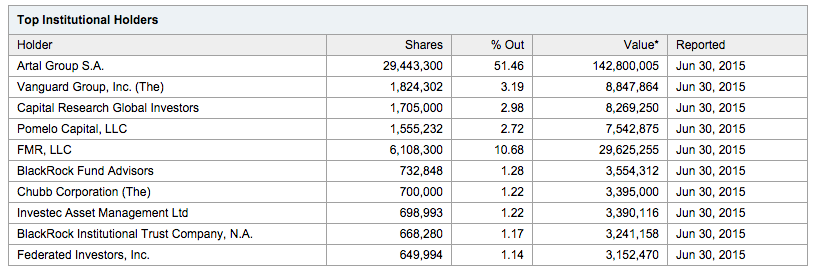
And who is benefiting from this media asset? Well to know that you would have to know who Comcast major shareholders (below) are. The top ten institutions that own Comcast shares are a who’s who among major financial institutions, none of which are African American owned.

Screen Shot 2015-01-23 at 6.05.27 PM

Therefore every click and view that the new site receives is only increasing the financial value of these media and financial institutions outside of our community’s ownership and control. However, African American owned media should not shy away from this challenge or competition. Competition is the business we are in and to reach our audience we must think ahead of the curve and create value that they can not get anywhere else, but it goes without saying they are instantly a game changer. That sound you hear? African American owned media company CEOs and presidents rushing to their war rooms.

The HBCUpreneur Corner™ – Spelman College’s Morgan France-Johnson & Aesthetically Spoken; Lux Creative

AestheticallySpokenLogo2013 LuxLogo

Name: Morgan France-Johnson

Alma Mater: Spelman College C’07

Business Name & Description: Aesthetically Spoken, LLC is a greeting card line that caters to the LGBTQ community; Lux Creative, LLC is a graphic design company that specializes in branding development and marketing materials.

What year did you found your company? Aesthetically Spoken, LLC – January 2012; Lux Creative, LLC – November 2012

What has been the most exciting and/or fearful moment during your HBCUpreneur career? It’s hard for me to list just one moment, as the entrepreneurial journey is one of the most exhilarating roller coasters I have ever been on! However, if I were forced to pick just one exciting moment for Lux Creative, it would be when I secured a business deal with an international brand while living in Dubai, UAE. This accomplishment affirmed that I am as good as I know and believe I am.

Exciting moments for Aesthetically Spoken are centered around the positive feedback I receive from other members of the LGBTQ community whenever they are able to share the perfect heartfelt greeting. As my overarching purpose is to positively impact lives, knowing that people truly appreciate what I do is very exciting for me.

Fear, like excitement, pokes its head up every once in a while. The most fearful moments always occur before my team and I made our most pivotal changes. The common reminder that fear projects lies in the basic concept of Newton’s Law of Relativity: For every action, there is an equal but opposite reaction. At times, we have found that increased vision is met with low visibility, growth with set backs, and opportunity with void. However, the converse is also true— opposition is met with formidability, loss precedes gain and most importantly fear is met with faith!

What made you want to start your own company? Since I could remember I wanted to “start something.” I distinctly remember at the age of 6, watching a news story with my mother about homelessness in Baltimore and afterwards saying, “Mommy, I’m going to ask God to bless me with money so I can build a place for all of the homeless people to live.”

At 6, I knew my purpose. I didn’t know what that was called back then, but I knew I was going to change the world with my ideas. Spelman cultivated my seed and honed the skills that I would need to make my mark on the world.

Who was the most influential person/people for you during your time in college? Honestly, all of my Spelman Sisters. As a native of Baltimore, I had very few experiences with African-Americans with such diverse perspectives and experiences; they gave me glasses to see a world I never knew existed. I’m forever grateful to Spelman and the women I call “Sister.”

How do you handle complex problems? I spend 20% of my effort on the problem. What’s the real issue here? What other areas does this problem affect? And so on. Then I spend 80% of my effort on the solution. I call mentors, read books, search the web, call my attorney. I do what’s necessary to ensure I’ve neutralized the problem and do my best to prevent any recurrences.

What is something you wish you had known prior to starting your company? This journey isn’t for the faint hearted, expect opposition. Stay vigilant and build your personal networks wisely as you’ll need a support system outside of business to ease the disappointments that will occur along the way.

You are the first HBCUpreneur we have had that is operating not one, but two companies at the same time. As an HBCUpreneur operating multiple companies at the same time and those considering it; what can you tell us about the experience, challenges, and advantages of being a multi-CEO? Balancing the complexities of “normal” life while owning and operating one business is difficult. Two businesses requires an intense level of focus, having great teams in place, and having a good support system. I’m reminded of the Shonda Rhimes Stanford graduation speech in which she stated: when you are in charge of multiple entities, home/multiple businesses, you will have to sacrifice. Everything can’t have your attention 100% of the time. You will mess up. You will make mistakes. But it’s all worth it.

What do you believe HBCUs can do to spur more innovation and entrepreneurship while their students are in school either as undergraduate or graduate students? As a freshman at Spelman, I attended a seminar that prompted me to change my major from Child Development to Economics. That one seminar ultimately changed my entire life. I believe that HBCUs can spur innovation and entrepreneurship by hosting meaningful events that spark creativity while simultaneously educating and supporting individuals who are considering entrepreneurship.

Given the LGBTQ community has an estimated $830 billion in buying power; what are some of the blooming opportunities you believe are on the horizon to HBCUpreneurs looking to provide goods or services to the LGBTQ community in particular? I believe that it is the responsibility of those in the LGBTQ community to assess the market for needs and meet them. Aesthetically Spoken, a card line created specifically for the LGBTQ community was born simply out of need. I found myself in need of a Valentine’s Day greeting card fitting for my same sex significant other. Heteronormative pronouns and insinuations were not fitting; and, as a graphic designer, the inspiration to create an LGBTQ greeting card company derived from this disheartening deficit.

How do you deal with rejection? (chuckle) I keep moving. The year I graduated from Spelman, I joined a network marketing company. (Pre-Paid Legal. Now, Legal Shield) Network marketing is FULL of rejection. We were taught to not take it personally. Once you realize you can take a no and keep moving. You can do anything.

When you have down time how do you like to spend it? Down time?!?! What’s that? I really enjoy spending time with my girlfriend, friends, and family. I enjoy the outdoors, traveling, being active, yet I also enjoy staying in and reading a good book. You’re liable to catch me enjoying life in a variety of ways.

as_founder

What was your most memorable HBCU memory? Again, there are so many. Most memorable would have to go to standing on the grass on the Spelman Oval, holding the hands of my other Spelman Sisters and speaking my name to the Universe like so many other Spelman Women before me. It was a spiritual experience. That’s when I knew I had made the right choice.

In leaving is there any advice you have for budding HBCUpreneurs? Don’t quit.