Author Archives: hbcumoney

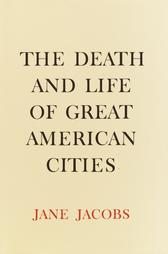
HBCU Money™ Business Book Feature – The Death and Life of Great American Cities

deathandlife

A direct and fundamentally optimistic indictment of the short-sightedness and intellectual arrogance that has characterized much of urban planning in this century, The Death and Life of Great American Cities has, since its first publication in 1961, become the standard against which all endeavors in that field are measured. In prose of outstanding immediacy, Jane Jacobs writes about what makes streets safe or unsafe; about what constitutes a neighborhood, and what function it serves within the larger organism of the city; about why some neighborhoods remain impoverished while others regenerate themselves. She writes about the salutary role of funeral parlors and tenement windows, the dangers of too much development money and too little diversity.

The Finance & Tech Week In Review – 1/7/17

zu3yfgjbqpaifw5vkjxp

Every Saturday the HBCU Money staff picks ten articles they were intrigued by and think you will enjoy for some weekend reading impacting finance and tech.

Mozambique’s poverty reduction was only half as fast as what Sub-Saharan Africa achieved.@WBPubs wrld.bg/fGUH307nxky

Is economics education failing?@wef wef.ch/2hXUMa2

These are the values shared by the most innovative companies@wef wef.ch/2i5cXKr

Climate change and growth risks@nberpubs bit.ly/2iZxJZh

Faster and cheaper than Concorde, meet the next-generation supersonic passenger jet@wef wef.ch/2jbYf0R

Your walk could be a password that connects devices on your body@newscientist ow.ly/6XK2307MkQn

Dell’s new laptop leaves the power cord in the past@nwtls ow.ly/vaj8307MkGZ

This robot can beat you at chess, then serve you coffee@CIOonline ow.ly/Xhph307Mkwc

Scar-free wound healing could be on its way@nwtls ow.ly/iNLh307Mks7

Baltimore Bike Share Arrives With 40% Electric Fleet@cleantechnica  ow.ly/GCKt307Mkjs

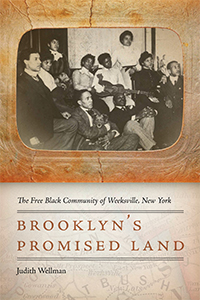
HBCU Money™ Business Book Feature – Brooklyn’s Promised Land: The Free Black Community of Weeksville, New York

9780814724156_full

In 1966 a group of students, Boy Scouts, and local citizens rediscovered all that remained of a then virtually unknown community called Weeksville: four frame houses on Hunterfly Road. The infrastructure and vibrant history of Weeksville, an African American community that had become one of the largest free black communities in nineteenth century United States, were virtually wiped out by Brooklyn’s exploding population and expanding urban grid.

Weeksville was founded by African American entrepreneurs after slavery ended in New York State in 1827. Located in eastern Brooklyn, Weeksville provided a space of physical safety, economic prosperity, education, and even political power for its black population, who organized churches, a school, orphan asylum, home for the aged, newspapers, and the national African Civilization Society. Notable residents of Weeksville, such as journalist and educator Junius P. Morell, participated in every major national effort for African American rights, including the Civil War.

In Brooklyn’s Promised Land, Judith Wellman not only tells the important narrative of Weeksville’s growth, disappearance, and eventual rediscovery, but also highlights the stories of the people who created this community. Drawing on maps, newspapers, census records, photographs, and the material culture of buildings and artifacts, Wellman reconstructs the social history and national significance of this extraordinary place. Through the lens of this local community, Brooklyn’s Promised Land highlights themes still relevant to African Americans across the country.

The Finance & Tech Week In Review – 12/31/16

zu3yfgjbqpaifw5vkjxp

Every Saturday the HBCU Money staff picks ten articles they were intrigued by and think you will enjoy for some weekend reading impacting finance and tech.

Out of this world igloo beckons early settlers on Mars / New Atlas 

What are the current maintenance issues facing today’s U.S. National Park system? Get the facts / Pew Environment 

Proxima b is at least 1.3 times as massive as Earth — but that is just a minimum estimate. / Science News http://ow.ly/JZbi307BrfA

Stop buying organic food if you really want to save the planet / New Scientist 

5 easy ways to fight mobile app fatigue / CIOonline http://ow.ly/ZLxH307BrrG

8 digital skills we must teach our children / WEF 

Negative labor trends that pre-date the Great Recession / St. Louis Fed 

Average fixed-rate mortgage rates rise for ninth straight week, first such streak since 2005 / St. Louis Fed 

Giving money to the poor? Here’s what they really spend it on / WEF

Wives now contribute around 30 percent of household income, up from 2 percent in 1970 / St. Louis Fed  

HBCU Money™ Business Book Feature – The 10% Entrepreneur: Live Your Startup Dream Without Quitting Your Day Job

512yyp-6fhl-_sx332_bo1204203200_

Choosing between the stability of a traditional career and the upside of entrepreneurship?
Why not have both?

Becoming a full-time entrepreneur can look glamorous from the outside. Who doesn’t want to chase their dreams, be their own boss, and do what they love? But the truth is that entrepreneurship is often a slog, with no regular hours, no job security, and very little pay.

What if there was a way to have the stability of a day job with the excitement of a startup? All of the benefits of entrepreneurship with none of the pitfalls? In The 10% Entrepreneur, Patrick McGinnis shows you how, by investing just 10% of your time and resources, you can become an entrepreneur without losing a steady paycheck.

McGinnis details a step-by-step plan that takes you from identifying your first entrepreneurial project to figuring out the smartest way to commit resources to it. He shows you how to select and engage in projects that will provide you with upside outside the office while making your better at your day job. He also profiles real-world 10% Entrepreneurs such as…
•Luke Holden, a cash-strapped recent college graduate, who started his own lobster-roll empire and oversaw much of its first year of operations, all while working full time in corporate America
•Dipali Patwa, a designer and mom whose side project designing and selling infant clothing is now a sensation.
•A group of friends who met at a 6am Bible study class and went on to start a brewery that now generates millions in sales .

A successful 10% Entrepreneur himself, McGinnis explains the multiple paths you can follow to invest your cash, time, and expertise in a start-up—including as a founder, angel, adviser, or aficionado. Most importantly, you don’t have to have millions in disposable income to become a 10% Entrepreneur. When you put McGinnis’s 10% principles into action, you’ll quickly start racking up small wins, then watch as they snowball into your new (and far more entrepreneurial) life.