
Author Archives: hbcumoney

HBCU Money™ Dozen 3/10 – 3/14

12step

Did you miss HBCU Money™ Dozen via Twitter? No worry. We are now putting them on the site for you to visit at your leisure. We have made some changes here at HBCU Money™ Dozen. We are now solely focused on research and central bank articles from the previous week.

Research

How Risky Is It To Invest In Oil Stocks? l Clean Technica http://dlvr.it/57rXCH

If Microsoft gives away Windows Phone 8, will anyone take it? l Networkworld http://ow.ly/uzp6a

Google shrinks Drive cloud storage prices l CIOonline http://trib.al/rQ2KfE9

SiNode raises seed funding to give batteries more juice l Argonne http://tcrn.ch/1ewXUfI

Snowden revelations raise interest in smartphone spyware for business l Computerworld http://ow.ly/uzpsS

Ecosystem-based fisheries could provide a better way of managing the Ches Bay’s living resources l MD Sea Grant http://bit.ly/1fVZRb2

Federal Reserve, Central Banks, & Financial Departments

In extreme poverty, women’s labor force participation is more about survival than choice. l World Bank http://wrld.bg/uwMVf

After two months of decline, retail and food services sales rose 0.3% in February l St. Louis Fed http://bit.ly/1lClOeI

Tools to help with major financial decisions — paying for college, buying a home & retirement l Richmond Fed http://ow.ly/uzr97

Apartment rents rising faster than home prices in 6 major cities l Housing Wire http://hwi.re/57pxPJ

From the Vault 1987: The minimum wage: No minor matter for teens. l Chicago Fed http://ow.ly/uzcqQ

Teachers: Atlanta & St. Louis Feds offer three professional development options. l Econ Lowdown http://bit.ly/1iG22S9

Thank you as always for joining us on Saturday for HBCU Money™ Dozen. The 12 most important research and finance articles of the week.

The HBCU Money™ Weekly Market Watch

Our Money Matters /\ March 14, 2014

A weekly snapshot of African American owned public companies and HBCU Money™ tracked African stock exchanges.

NAME TICKER PRICE (GAIN/LOSS %)

African American Publicly Traded Companies

Citizens Bancshares Georgia (CZBS) $8.10 (0.00% UNCH)

M&F Bancorp (MFBP) $3.90 (0.00% UNCH)

Radio One (ROIA) $4.88 (2.69% UP)

African Stock Exchanges

Bourse Regionale des Valeurs Mobilieres (BRVM)  242.52 (1.84% UP)

Botswana Stock Exchange (BSE)  9 003.87 (0.53% DN)

Ghana Stock Exchange (GSE)  2 396.21 (11.70% UP)*

Nairobi Stock Exchange (NSE)  143.57 (N/A)

Johannesburg Stock Exchange (JSE) 46 412.40 (0.88% DN)

International Stock Exchanges

New York Stock Exchange (NYSE) 10 311.11 (0.13% UP)

London Stock Exchange (LSE)  3 520.25 (0.40% DN)

Tokyo Stock Exchange (TOPIX)  1 164.70 (3.22% DN)

Commodities

Screen shot 2014-03-14 at 12.05.29 PM

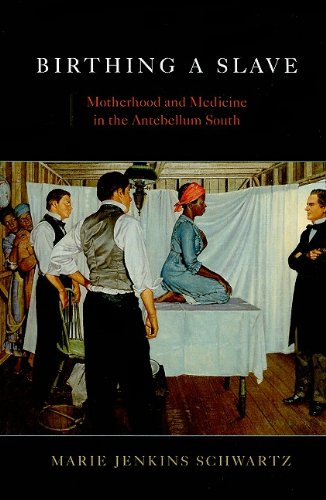
HBCU Money™ Business Book Feature – Birthing a Slave: Motherhood and Medicine in the Antebellum South

5124mNIlqML

The deprivations and cruelty of slavery have overshadowed our understanding of the institution’s most human dimension: birth. We often don’t realize that after the United States stopped importing slaves in 1808, births were more important than ever; slavery and the southern way of life could continue only through babies born in bondage.

In the antebellum South, slaveholders’ interest in slave women was matched by physicians struggling to assert their own professional authority over childbirth, and the two began to work together to increase the number of infants born in the slave quarter. In unprecedented ways, doctors tried to manage the health of enslaved women from puberty through the reproductive years, attempting to foster pregnancy, cure infertility, and resolve gynecological problems, including cancer.

Black women, however, proved an unruly force, distrustful of both the slaveholders and their doctors. With their own healing traditions, emphasizing the power of roots and herbs and the critical roles of family and community, enslaved women struggled to take charge of their own health in a system that did not respect their social circumstances, customs, or values. Birthing a Slave depicts the competing approaches to reproductive health that evolved on plantations, as both black women and white men sought to enhance the health of enslaved mothers–in very different ways and for entirely different reasons.

Birthing a Slave is the first book to focus exclusively on the health care of enslaved women, and it argues convincingly for the critical role of reproductive medicine in the slave system of antebellum America.

HBCU Money™ B-School: Johannesburg Stock Exchange Presents The Stock Market For Beginners

Screen shot 2014-03-07 at 3.49.37 PM

Johannesburg Stock Exchange provides online education for those who want to get a fundamental education needed to engage in the stock market. This presentation gives a basic overview of terms and other explanations that the beginning swimmer should have before jumping in the proverbial ocean of investing. For all of JSE’s online courses please visit http://www.jse.co.za or check back in with HBCU Money as we will continue to post links to them. Click on the picture above to launch the presentation.

Southern University Dominates HBCU Credit Unions; National Opportunity Continues To Be Missed

By William A. Foster, IV

Capacity never lacks opportunity. It cannot remain undiscovered because it is sought by too many anxious to use it. — Bourke Cockran

logo

The recent release of HBCU Money’s inaugural African American Credit Union Directory gave us some very unexpected information. There are nine HBCU-based credit unions that control a combined $82.2 million in assets and 15 885 in members. For comparison, Navy Federal Credit Union, America’s largest has $56 billion in assets and 4 million members. Some time ago, I wrote on what forming a national HBCU credit union would look like and why it should be a reality. As it turns out, much of the infrastructure for this reality is already in place.

  1. Southern Teachers & Parents (LA) – $29.0 million
  2. Florida A&M University (FL) – $20.6 million
  3. Howard University Employees (DC) – $11.4 million
  4. Virginia State University (VA) – $10.6 million
  5. Prairie View (TX) – $5.0 million
  6. Savastate Teachers (GA) – $3.6 million
  7. Tennessee State University  (TN) – $1.4 million
  8. Shaw University (NC) – $0.5 million
  9. Langston (OK) – $0.1 million

If the HBCU Credit Union became a reality and the nine merged, then instantly it becomes the eleventh largest African American credit union in the United States by both assets and membership. This is before Prairie View’s credit union even opens its doors to taking on student accounts, which it is set to do in the next year or two and could potentially push the deposit base close to a combined $90 million. Even more important, the HBCU Credit Union would be the only African American deposit financial institution with a multi-state footprint other than One United Bank. With a solid deposit base underneath it, product expansion could be felt across all nine credit unions and done so at a cheaper cost than going at it alone. The lack of products at HBCU-based credit unions has been a chief complaint of why so little deposits seem to remain in them. Everything from better web-presence, mobile banking, investment products, and small business loans could be rolled out in scale.

The most important part of the formation of this credit union remains the HBCUs themselves. Not one HBCU currently banks with an African American financial institution to the best of my knowledge. If the institutions themselves were to come on board, then the deposit base could easily be in the billions. Especially, if one includes the possibility of bringing in organizational accounts like the Divine 9, UNCF, Thurgood Marshall Fund, and other HBCU-related organizations. For HBCUs, this would have the benefit of actually increasing its ability to maintain a financial connection with their alumni and increase alumni giving. The alumni giving platform could be connected with their account. A move such as this would also create opportunities for graduates, internships, and HBCUs becoming more integrated into the African American institutional ecosystem, and not continuing to act independent of it.

Economies of scale. Economies of scale. Economies of scale. Maybe, if I repeat it three times it will take root. This is something that the African American economy has lacked and continues to lack with any of its businesses or organizations. Scale allows you to drive down repetitive cost while being able to offer more because you are no longer paying for nine CEOs just one. And there in lies the hurdle that must be overcome. Many in African American organizations, because opportunities are so limited outside of our ecosystem hold on tightly anytime they achieve a position of prominence within our ecosystem. We are more than excited to stroke our ego to be a big fish in a little pond, when we could be a part of building something that could put us in the middle of an ocean of opportunities for everyone. Despite its aborting impact on the development of our community’s economic health it seems willingness to take such a bold and courageous step is hard to find. The dream of a national HBCU credit union will march on because the need and opportunities it could create are perpetual. However, like a dream deferred I hope it will not dry up like a raisin in the sun.