
Author Archives: hbcumoney

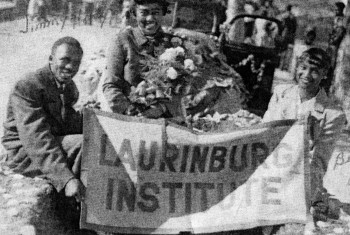
The Final Four: African American Boarding Schools On The Verge Of Extinction

The whole art of teaching is only the art of awakening the natural curiosity of young minds for the purpose of satisfying it afterwards. – Anatole France
291559_137031146388258_7803733_o-350x235

In the past decade, we have seen HBCUs in general attempt to increase their academic standards for admissions for a number of different reasons. Unfortunately, as is often the case it seems with HBCUs and African America in general this move is done in isolation and not in conjunction with the rest of the ecosystem. As a result we are seeing K-12 outcomes for many African Americans in this country getting progressively worse or stagnant in most of the country. If the pipeline that produces your core student demographic is not improving its academic outcomes, then how can HBCUs not expect student shortages that leave them with tuition revenue shortfalls. Of course some of this is being done as accreditation agencies squeeze HBCUs due to high default on student loans by former HBCU students and alumni. There are also those whose answer to “fixing” HBCUs is to gentrify them thereby diluting our institutional and cultural power. Where have we seen that playbook before? The real answer to the quality of student HBCUs are getting lies in HBCUs and their alumni investing back down the educational pipeline from which their core students come and strengthening it so that future HBCU students have strong academic prowess before they even get to our campuses.

Boarding schools in this country have a long, rich history, and their current value today can not be understated. They tend to have an extremely competitive admissions process, tuition and faculty that would make more than a few colleges blush, and endowments that Historically Black Colleges & Universities dream about at night. The Forbes’ list of America’s top 20 boarding schools paints quite an amazing picture of what pipeline behavior is suppose to look like. The median percentage of these twenty elite boarding school graduates going into the Ivy League/MIT/Stanford pipeline is 30 percent. Three times the percentage HBCUs are getting from their core demographic. Their faculty has a median of 76 percent with advanced degrees. At Philips Exeter Academy almost 13 percent of their faculty have PhDs. Yes, a high school with PhDs teaching. Imagine for a moment the first time most African American students who come to HBCUs have encountered a PhD level professor. It is usually not until they have reached college and some may not see one until they have reached their major classes, whereas these students are coming out of high school with four years tutelage under PhDs in the core classes of english, history, math, and science. Lastly, the endowments among the top twenty (with 3 schools not reporting) have a median of $105 million, average of $204 million, and combined value of $3.5 billion. Seventeen prep schools have combined endowments valued at twice the size of 100 HBCUs. A startling revelation if ever there was one.

It has been noted that prior to desegregation, “there were nearly 100 black boarding schools in the U.S. before the 1960s, established by local blacks, religious organizations and philanthropists, when the local governments failed to provide schools for black children” and as it stands today, there are only four remaining. Over 50 years later while the number of black boarding schools have dwindled, African American education outcomes have also plummeted in parallel. Recent reports put the African American male high school graduation rate nationally at an abysmal 52 percent. It is clear that as we gave up control of our own education institutions that our ability to garner positive education outcomes became increasingly harder and harder to achieve.

The four remaining survivors Laurinburg Institute in North Carolina, Pine Forge Academy in Pennsylvania, Piney Woods in Mississippi, and Redemption Christian Academy located in New York. Their geography alone is both a gift and curse. It allows each to have a strong territory of its own, but makes it virtually impossible to engage in joint activities like athletics and the like given the cost of travel for institutions that are largely cash-strapped much like their higher education brethren. It is hard to imagine that if African Americans have not been proactive in the way of funding HBCUs, that AABSs will fare much better in recruiting high-quality or transformative donors. The reality though is not only does that investment need to be made, it needs to be made at a larger rate than we could even possibly make for HBCUs. It does not matter what we do at the collegiate level if we do not at some point fix the early childhood to secondary education institutional pipeline. We will continue to overburden our HBCUs with developmental students and be subject to calls for faux diversity that whitewashes our institutional power as we make our usual overabundance of concessions to make others feel welcomed. HBCU strategy must involve investments in the K-12 system either through pre-K programs on the campus and K-12 charter schools either run by the HBCUs themselves, HBCU alumni, or HBCU support organizations. To that last point, there are rumors that the HBCU Endowment Foundation and Center for HBCU Media Advocacy are in talks to form a partnership that would create a boarding school. This is in addition to the HBCU Endowment Foundation’s long-term plans to be involved in early childhood education in the form of an HBCU version of Head Start. It would not hurt at all if the five HBCU conferences (SWAC, MEAC, SIAC, CIAA, GCAC), Divine 9, UNCF, and Thurgood Marshall Fund joined and created their own schools also either independently or jointly.

For generations and then some, HBCUs have led the way to producing African American teachers and principals. It is time we go ever further and start to create a culturally relevant school system (pipeline) that is tailored to the needs of our children and communities there within. An earlier investment would pay significant dividends to building a rapport in our community’s psychology well before it is even time to choose a college. Currently, most of our kids’ see nothing but HWCU/PWIs throughout their childhood and do not come into contact with an HBCU until almost a last resort. That has to change and the quality of education that our children have not gotten since before desegregation has to change. We need to be on their mind from the moment parents are expecting their child as the place that will ensure the best education for that child from early childhood through college. HBCUs have been sculptors who for the past 50 years who have done the best with the clay they were given, but sometimes the sculptor must step back and create their own clay to make the beauty in their work fulfill its greatest potential.

HBCU Money™ Business Book Feature – Brainwashed: Challenging the Myth of Black Inferiority

7738383

“Black people are not dark-skinned white people,” says advertising visionary Tom Burrell. In fact, they are a lot more. They are survivors of the Middle Passage and centuries of humiliation and deprivation, who have excelled against the odds, constantly making a way out of “no way!” At this point in history, the idea of black inferiority should have had a “Going-Out-of-Business Sale.” After all, Barack Obama has reached the Promised Land.

Yet, as Brainwashed: Erasing the Myth of Black Inferiority testifies, too much of black America is still wandering in the wilderness. In this powerful examination of “the greatest propaganda campaign of all time”—the masterful marketing of black inferiority—Burrell poses 10 provocative questions that will make black people look in the mirror and ask why, nearly 150 years after the Emancipation Proclamation, so many blacks still think like slaves.

Brainwashed is not a reprimand; it is a call to deprogram ourselves of self-defeating attitudes and actions. Racism is not the issue; how we respond to racism is the issue. We must undo negative brainwashing and claim a new state of race-based self-esteem and self-actualization. Provocative and powerful, Brainwashed dares to expose the wounds so that we, at last, can heal.

HBCU Money™ Dozen 9/15 – 9/19

image description

Did you miss HBCU Money™ Dozen via Twitter? No worry. We are now putting them on the site for you to visit at your leisure. We have made some changes here at HBCU Money™ Dozen. We are now solely focused on research and central bank articles from the previous week.

Research

We’re getting closer to a quantum internet. And that’ll be good for security l New Scientist http://ow.ly/BEgdL

Think deep space is cold? It’s practically sweltering compared to this l Brookhaven National Lab http://bit.ly/quantumcold

Major Asia Pacific Markets To Account For 60% Of solar PV Demand l Clean Technica http://dlvr.it/6xgYr1

Once Your Car’s Connected to the Internet, Who Guards Your Privacy? l CIOonline http://trib.al/sxpTniH

What’s the career outlook for battery scientists? l Nature http://ow.ly/BElNC

Applications now being accepted for the Guy Harvey Scholarship Award l FL Sea Grant http://ow.ly/BElXZ

Federal Reserve, Central Banks, & Financial Departments

Economic cost of Ebola could increase 8-fold by 2015 if virus continues to spread l World Bank http://wrld.bg/BEall

How have labor market flows changed since the Great Recession? l St. Louis Fed http://bit.ly/1nG5h9J

What the Alibaba IPO means for Western tech giants l World Economic Forum http://wef.ch/1qNXZXh

Do Spanish and Italian bonds have the same default risk as U.S. Treasuries? l St. Louis Fed http://bit.ly/1kE9ZIX

Financial literacy should start young l Council 4 Econ Ed http://bit.ly/1AD0X0w

When should the Fed raise #rates? l World Economic Forum http://wef.ch/XKk6kS

Thank you as always for joining us on Saturday for HBCU Money™ Dozen. The 12 most important research and finance articles of the week.

The HBCU Money™ Weekly Market Watch

Our Money Matters /\ September 19, 2014

A weekly snapshot of African American owned public companies and HBCU Money™ tracked African stock exchanges.

NAME TICKER PRICE (GAIN/LOSS %)

African American Publicly Traded Companies

Citizens Bancshares Georgia (CZBS) $8.46 (0.47% DN)

M&F Bancorp (MFBP) $5.37 (0.00% UNCH)

Radio One (ROIA) $3.17 (0.31% DN)

African Stock Exchanges

Bourse Regionale des Valeurs Mobilieres (BRVM)  257.68 (1.21% UP)

Botswana Stock Exchange (BSE)  9 424.67 (0.00% UNCH)

Ghana Stock Exchange (GSE)  2 287.94 (6.65% UP)*

Nairobi Stock Exchange (NSE)  162.80 (N/A)

Johannesburg Stock Exchange (JSE) 51 462.42 (0.16% DN)

International Stock Exchanges

New York Stock Exchange (NYSE) 10 998.12 (0.24% DN)

London Stock Exchange (LSE)  3 646.05 (0.37% UP)

Tokyo Stock Exchange (TOPIX)  1 331.91 (1.06% UP)

Commodities

Screen Shot 2014-09-19 at 11.27.23 AM

HBCU Money™ Presents: 2014’s HBCU Alumni NFL Players’ & Salaries

B9A0175

For the 2nd year in a row, Robert Mathis (pictured above), an alum of Alabama A&M University leads the list of highest paid HBCU NFL players.

HBCU Money™ FACTS:

  • NFL teams spent $3.9 billion of 2013’s $4.2 billion available.
  • HBCU NFL players combine for $57.1 million down 3.5 percent when HBCU NFL players earned $59.2 million in salaries. Estimated take home after taxes and agent/lawyer fees is $28.6 million.
  • Hampton University leads the way with 5 NFL players.
  • 15 HBCUs are represented in the NFL. Down from 19 in 2013.
  • MEAC conferences has 6 schools represented. The SWAC dropped to 2 schools represented after having 6 in 2013.
  • HBCU NFL players represent approximately 1.7 percent of roster positions available. Unchanged from 2013.
  • Average salary for HBCU NFL players is $2 million, a decrease from $2.1 million in 2013. In 2011, the average NFL salary was $1.9 million according to Bloomberg Businessweek.
  • Median salary for HBCU NFL players is $1 135 000, a 27 percent increase from 2013. In 2011, the median NFL salary was $777 000 according to Bloomberg Businessweek.
  • 4 players from 2013 are no longer on the list.

1 – Robert Mathis / DE / Indianapolis Colts – $8 750 000

(ALABAMA A&M) 

2 – Kendall Langford / DE / St. Louis Rams – $6 000 000

(HAMPTON) 

3 – Greg Toler  / CB / Indianapolis Colts – $4 833 333

(ST. PAUL’S)

4 – Sammie Hill / DT / Tennessee Titans – $4 066 666

(STILLMAN)                                                                                                           

5 – William Hayes / DE / St. Louis Rams – $3 845 000

(WINSTON-SALEM STATE)                                                                                  

6 – Jason Hatcher / DE / Washington Redskins – $3 750 000

(GRAMBLING STATE)                                                                                           

7 – Antoine Bethea / S / San Francisco 49ers – $3 000 000

(HOWARD)                                                                                                       

8 – Junior Galette / OLB / New Orleans Saints – $2 900 000

(STILLMAN)                                                                                                      

9 – D. Rodgers-Cromartie / CB / Denver Broncos – $2 750 000

(TENNESSEE STATE)                                                                                      

10 – Chris Baker / DL / Washington Redskins – $2 000 000

(HAMPTON)                                                                                                     

11 – Jacoby Jones / WR / Baltimore Ravens – $1 875 000

(LANE)                                                                                                                

12 – Rafael Bush / S / New Orleans Saints – $1 850 000

(SOUTH CAROLINA STATE)                                                                        

13 – Jason Durant / LB / Dallas Cowboys – $1 450 000

(HAMPTON)                                                                                                      

14 – Tarvaris Jackson / QB / Seattle Seahwaks – $1 250 000

(ALABAMA STATE)                                                                                         

15 – Rashean Mathis / CB / Detroit Lions – $1 020 000

(BETHUNE-COOKMAN)                                                                                

16 – Don Carey / S / Detroit Lions – $930 000

(NORFOLK STATE)                                                                                         

17 – Kenrick Ellis / DT / New York Jets – $797 500

(HAMPTON)                                                                                                      

18 – Phillip Adams / CB / New York Jets – $770 000

(SOUTH CAROLINA STATE)                                                                       

19 – Eric Weems / WR / Atlanta Falcons – $730 000

(BETHUNE-COOKMAN)                                                                               

20 – Terron Armstead / T / New Orleans Saints – $679 359

(TENNESSE STATE)                                                                                        

21 – Marquette King / P / Oakland Raiders – $570 334

(FORT VALLEY STATE)                                                                                  

22- Ryan Davis / DE / Jacksonville Jaguars – $495 000

(BETHUNE-COOKMAN)                                                                              

23 – Larry Donnell / TE / New York Giants – $495 000

(GRAMBLING STATE)                                                                                    

24 – Anthony Levine / S / Baltimore Ravens – $495 000

(TENNESSEE STATE)                                                                                      

25 – Bryan Tyms / WR / New England Patriots – $495 000

(FLORIDA A&M)                                                                                            

26 – Kadeem Edwards / T / Tampa Bay Buccaneers – $473 000

(TENNESSEE STATE)                                                                                    

27 – Isaiah Crowell / RB / Cleveland Browns – $423 333

(ALABAMA STATE)                                                                                        

28 – Michael Ola / T / Chicago Bears – $421 666

(HAMPTON)                                                                                                      

29 – Frank Kearse / DE / Washington Redskins – N/A

(ALABAMA A&M)

Sources: NFL.com, The Guardian, Spotrac