Monthly Archives: January 2017

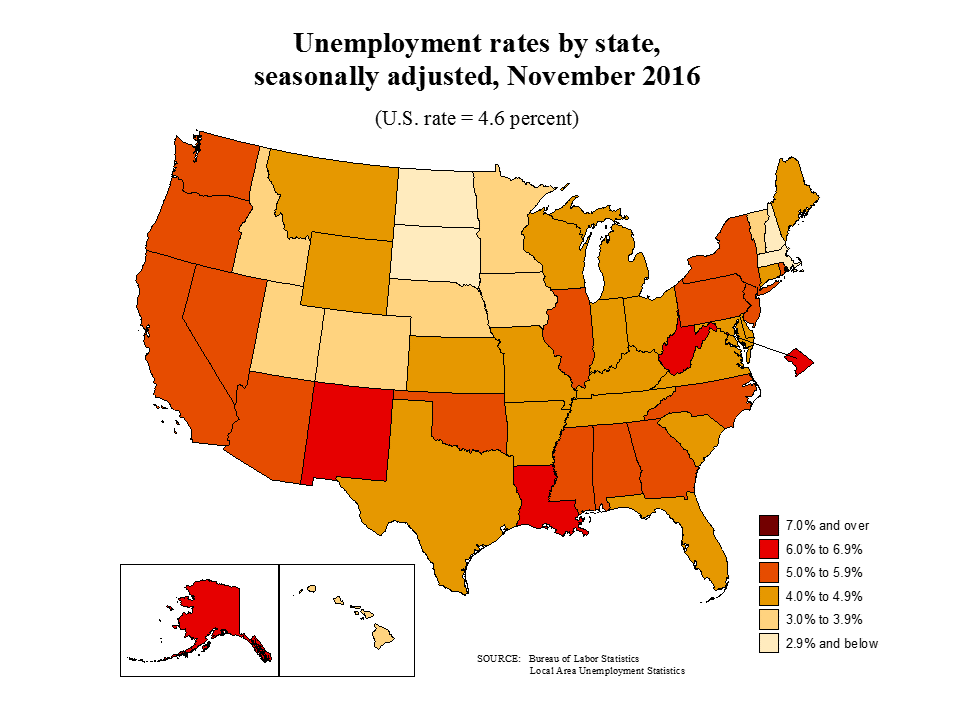
Unemployment Rate By HBCU State – November 2016

mstrtcr1_nov_16

STATES WITH RISING UNEMPLOYMENT: 12

STATES WITH DECLINING UNEMPLOYMENT: 8

STATES WITH UNCHANGED UNEMPLOYMENT: 3

LOWEST: MASSACHUSETTS – 2.9%

HIGHEST – LOUISIANA – 6.2%

STATE – UNEMPLOYMENT RATE (PREVIOUS)*

ALABAMA –  5.9% (5.7%)

ARKANSAS – 4.0% (3.9%)

CALIFORNIA – 5.3% (5.5%)

DELAWARE – 4.3% (4.3%)

DISTRICT OF COLUMBIA – 6.0% (5.9%)

FLORIDA – 4.9% (4.7%)

GEORGIA – 5.3% (5.0%)

ILLINOIS – 5.6% (5.8%)

KENTUCKY – 4.8% (4.9%)

LOUISIANA – 6.2% (6.3%)

MARYLAND – 4.2% (4.3%)

MASSACHUSETTS – 2.9% (4.1%)

MICHIGAN – 4.9% (4.5%)

MISSISSIPPI – 5.7% (6.0%)

MISSOURI –  4.7% (4.7%)

NEW YORK – 5.1% (4.7%)

NORTH CAROLINA – 5.0% (4.7%)

OHIO – 4.9% (4.8%)

OKLAHOMA – 5.1% (5.0%)

PENNSYLVANIA – 5.7% (5.6%)

SOUTH CAROLINA – 4.4% (5.2%)

TENNESSEE – 4.8% (4.3%)

TEXAS – 4.6% (4.6%)

VIRGINIA – 4.2% (3.7%)

*Previous month in parentheses.

African America’s December Jobs Report – 7.8%

jobs

Overall Unemployment: 4.7% (4.6%)

African America Unemployment: 7.8% (8.0%)

Latino America Unemployment: 5.9% (5.7%)

European America Unemployment: 4.3% (4.2%)

Asian America Unemployment: 2.6% (3.0%)

Previous month in parentheses.

Analysis: Overall unemployment rose 10 basis points to its lowest since August 2007. African and Asian America saw a decline in their unemployment rate, 20 and 40 basis points, respectively. European and Latino America saw increases of 10 and 20 basis points, respectively.

African American Male Unemployment: 7.6% (7.7%)

African American Female Unemployment: 6.8% (7.1%)

African American Teenage Unemployment: 25.7% (26.6%)

African American Male Participation: 67.7% (67.5%)

African American Female Participation: 62.3% (62.6%)

African American Teenage Participation: 27.6% (27.9%)

Analysis: African American men saw a 10 basis point decrease in their unemployment and 20 basis point increase in their participation rate. African American women saw a 30 basis point decrease in their unemployment rate and 30 basis point decrease in their participation rate. African American teenagers saw a 90 basis point decrease in their unemployment rate and a 30 basis point decrease in their participation rate.

CONCLUSION: The overall economy added 156 000 jobs in December. A noticeable difference from the 178 000 in November. African America added a marginal 30 000 jobs in December to end the year. The last jobs report of the Obama Administration shows an African America with some of its strongest employment numbers overall. However, African American teenagers continue to be a flash point of crisis and the African American participation rate remains 100 basis points below Asians and European America. A notable problem given the median income for African American being the lowest of all groups. Wages seem to be heating up across the board, which is a much needed sign for African America.

African America currently needs 619 000 jobs to match America’s unemployment rate. An increase of 114 000 jobs from November.

HBCU Money™ Business Book Feature – The Death and Life of Great American Cities

deathandlife

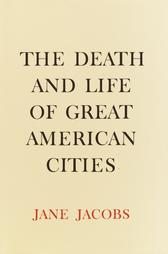
A direct and fundamentally optimistic indictment of the short-sightedness and intellectual arrogance that has characterized much of urban planning in this century, The Death and Life of Great American Cities has, since its first publication in 1961, become the standard against which all endeavors in that field are measured. In prose of outstanding immediacy, Jane Jacobs writes about what makes streets safe or unsafe; about what constitutes a neighborhood, and what function it serves within the larger organism of the city; about why some neighborhoods remain impoverished while others regenerate themselves. She writes about the salutary role of funeral parlors and tenement windows, the dangers of too much development money and too little diversity.

The Finance & Tech Week In Review – 1/7/17

zu3yfgjbqpaifw5vkjxp

Every Saturday the HBCU Money staff picks ten articles they were intrigued by and think you will enjoy for some weekend reading impacting finance and tech.

Mozambique’s poverty reduction was only half as fast as what Sub-Saharan Africa achieved.@WBPubs wrld.bg/fGUH307nxky

Is economics education failing?@wef wef.ch/2hXUMa2

These are the values shared by the most innovative companies@wef wef.ch/2i5cXKr

Climate change and growth risks@nberpubs bit.ly/2iZxJZh

Faster and cheaper than Concorde, meet the next-generation supersonic passenger jet@wef wef.ch/2jbYf0R

Your walk could be a password that connects devices on your body@newscientist ow.ly/6XK2307MkQn

Dell’s new laptop leaves the power cord in the past@nwtls ow.ly/vaj8307MkGZ

This robot can beat you at chess, then serve you coffee@CIOonline ow.ly/Xhph307Mkwc

Scar-free wound healing could be on its way@nwtls ow.ly/iNLh307Mks7

Baltimore Bike Share Arrives With 40% Electric Fleet@cleantechnica  ow.ly/GCKt307Mkjs

HBCU Money™ Business Book Feature – Brooklyn’s Promised Land: The Free Black Community of Weeksville, New York

9780814724156_full

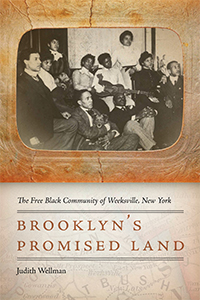
In 1966 a group of students, Boy Scouts, and local citizens rediscovered all that remained of a then virtually unknown community called Weeksville: four frame houses on Hunterfly Road. The infrastructure and vibrant history of Weeksville, an African American community that had become one of the largest free black communities in nineteenth century United States, were virtually wiped out by Brooklyn’s exploding population and expanding urban grid.

Weeksville was founded by African American entrepreneurs after slavery ended in New York State in 1827. Located in eastern Brooklyn, Weeksville provided a space of physical safety, economic prosperity, education, and even political power for its black population, who organized churches, a school, orphan asylum, home for the aged, newspapers, and the national African Civilization Society. Notable residents of Weeksville, such as journalist and educator Junius P. Morell, participated in every major national effort for African American rights, including the Civil War.

In Brooklyn’s Promised Land, Judith Wellman not only tells the important narrative of Weeksville’s growth, disappearance, and eventual rediscovery, but also highlights the stories of the people who created this community. Drawing on maps, newspapers, census records, photographs, and the material culture of buildings and artifacts, Wellman reconstructs the social history and national significance of this extraordinary place. Through the lens of this local community, Brooklyn’s Promised Land highlights themes still relevant to African Americans across the country.