
You can go to school anyplace, but no school will love you, and teach you to love yourself and know yourself like Hillman. – Whitley Gilbert

When Whitley Gilbert-Wayne stepped off the plane in Tokyo alongside her husband Dwayne in the mid-1990s, she had no idea that a chance encounter at a contemporary art exhibition would transform her from a newlywed supporting her engineer husband’s career into one of the most influential voices in Pan-African art acquisition and investment. The former Hillman College art history major known during her undergraduate years for her impeccable style and occasional elitism had matured into a woman with vision that extended far beyond Virginia’s borders. What began as casual gallery visits in Tokyo’s vibrant Roppongi district evolved into a business idea that would eventually connect HBCU endowments, Black corporate America, and emerging artists across the African diaspora.
“I was standing in front of a piece by a Nigerian artist at this small gallery in Harajuku,” Whitley recalls of the moment that changed everything. “The gallery owner mentioned that wealthy Japanese collectors were increasingly investing in African contemporary art, and I realized if they see the value, why aren’t we, as African Americans, building these collections ourselves?” That revelation led Whitley to spend her remaining months in Japan studying the mechanics of art acquisition, investment, and appraisal. She networked with gallery owners, attended auctions, and built relationships with African artists who were making waves in Asia’s art markets. By the time she and Dwayne returned to the United States, she had a business plan, a network of artist contacts spanning three continents, and an unshakeable conviction that Black institutions and families deserved access to culturally relevant art investment opportunities.
Whitley’s first pitch wasn’t to venture capitalists or traditional investors, it was to her Hillman College alumni network. She reached out to former classmates who had established themselves in various industries: Dr. Kimberly Reese and Ron Johnson, the power couple behind the thriving Reese and Johnson Medical Group, Freddie Brooks in entertainment law, and even her college frenemy, Julian Pace, who had made his fortune in tech. “Whitley understood something fundamental,” says Ron Johnson, one of the fund’s founding investors. “She knew that we trusted each other because of our Hillman connection. She wasn’t asking us to just invest in art, she was asking us to invest in our cultural legacy.”
Dr. Kimberly Reese adds, “Ron and I had just completed our first major expansion of the medical group. We were looking for investment opportunities that aligned with our values. When Whitley presented her vision, it was clear this was about more than financial returns, it was about cultural preservation and long-term wealth building for our community.”
The Diaspora Art Investment Fund launched with $500,000 in seed capital from twenty Hillman alumni investors. Whitley’s model was revolutionary in its simplicity: identify emerging and mid-career artists from across the African diaspora from Salvador to Senegal, from Detroit to Durban acquire their works at fair market value, and create investment portfolios that would appreciate while supporting artists directly. Unlike traditional art investment funds that focused solely on returns, Whitley built in a mission-driven component. Ten percent of all profits would be reinvested in arts education programs at HBCUs and Historically Black Boarding Schools, creating a sustainable cycle of cultural wealth building.
Whitley’s most innovative contribution came when she approached her alma mater with an unconventional proposal: What if Hillman College built an art collection as part of its endowment strategy? “Most HBCUs had art on their walls, but it was rarely viewed as an asset class,” explains Dr. Terrence Mathis, Hillman’s Vice President for Advancement. “Whitley showed us that institutions like Yale and Harvard had art holdings worth hundreds of millions. She asked us why Hillman shouldn’t be acquiring works by contemporary Black artists that would appreciate in value while beautifying our campus and inspiring our students.”
Her consulting model for HBCUs was comprehensive. She would assess their existing collections, identify acquisition opportunities aligned with their budgets, negotiate directly with artists and galleries, handle authentication and appraisal, and develop exhibition strategies for campus galleries. Most importantly, she created educational programming that helped students understand art as both cultural expression and financial asset. Within five years, Whitley had consulted with fifteen HBCUs, helping them establish formal art acquisition programs. Texas College, Fisk University, and Savannah State University became early adopters, each building collections that now include works by Kehinde Wiley, Mickalene Thomas, and Wangechi Mutu—pieces that have appreciated significantly in value.
While institutional clients provided prestige, Whitley never forgot that wealth-building needed to extend to individual families. She developed a tiered service model specifically for HBCU alumni families who wanted to begin collecting art but didn’t know where to start. For clients with modest budgets, she offered educational workshops and access to emerging artists whose works started at $2,000-$5,000. For established collectors, she provided comprehensive acquisition services, including attendance at international art fairs, private viewings, and direct studio visits with prominent artists. “Whitley demystified art collecting for people like me,” says Kendra Williams, a North Carolina Central University alumna and corporate attorney. “I thought you needed to be a millionaire to collect meaningful art. She showed me that you could start small, build strategically, and create something beautiful and valuable for your family.” Her family services division has helped over 300 HBCU alumni families build personal collections, with many clients reporting that their acquisitions have tripled in value while providing immeasurable cultural enrichment to their homes.
Among her most enthusiastic clients are Kim and Ron themselves, who have used Whitley’s guidance to build an impressive collection for the Reese and Johnson Medical Group’s multiple locations. “Our patients commented immediately,” Dr. Reese notes. “Seeing artists who look like them, telling stories from our communities it changed the atmosphere of our practice entirely.” Whitley’s highest-profile work came through her corporate art advisory services. As Black-owned businesses expanded and Black executives ascended to C-suite positions across our own corporate African America, many began questioning why their physical spaces didn’t reflect the excellence and cultural richness of the people leading them. “Black CEOs and business owners would call me and say, ‘I just bought this building’ or ‘We’re opening our third location, and I refuse to have my walls look like every other corporate office,'” Whitley explains. “They wanted spaces that celebrated our heritage, that told our stories, that reminded their teams daily of the beauty and brilliance we come from.” Her corporate practice became a who’s who of Black entrepreneurial success from tech startups founded by young Morris College graduates to established manufacturing companies run by second and third-generation business owners. The Reese and Johnson Medical Group became one of her signature projects, transforming their practice locations into galleries that honored African and African American artistic traditions while creating healing, affirming spaces for their patients. As a corporate art broker and adviser, Whitley oversaw complete collection development for these companies, negotiating favorable terms, managing authentication, and ensuring proper insurance and conservation. Her approach combined aesthetic excellence with cultural competency, ensuring that corporate collections reflected the vision and values of Black leadership. “Working with the Reese and Johnson Medical Group was particularly meaningful,” Whitley says. “Here were two of my Hillman classmates who had built this incredible healthcare empire, and they wanted their spaces to reflect the excellence and beauty of Black culture. We curated pieces that spoke to healing, community, and resilience—themes that aligned perfectly with their mission.”
Perhaps Whitley’s most enduring legacy is the Pan-African Art Appraisal joint program she helped establish between Hillman College and the University of Namibia’s Department of Visual and Performing Arts. “Whitley recognized that the art world had a credibility problem when it came to valuing African and diaspora art,” notes Dr. Amara Okafor, program director at UNAM. “Too often, African art was undervalued or misunderstood by appraisers who lacked cultural context. She wanted to train a new generation of appraisers who understood both the technical aspects of valuation and the cultural significance of the works.” The program allows students to split their studies between Hillman’s art history department and UNAM’s Visual and Performing Arts department. Students gain hands-on experience with contemporary African art production, learn from artists addressing social issues through their work, and participate in exhibitions at the National Art Gallery of Namibia. Graduates of the program have gone on to work at major auction houses, establish their own galleries, and serve as in-house appraisers for museums and corporate collections. The program has become a model for other international partnerships, proving that HBCUs can lead in global arts education. The Reese and Johnson Medical Group has become a major supporter of the program, endowing two full scholarships annually for students pursuing careers in art appraisal and healthcare art therapy, a perfect synthesis of the couple’s medical expertise and their passion for the arts.
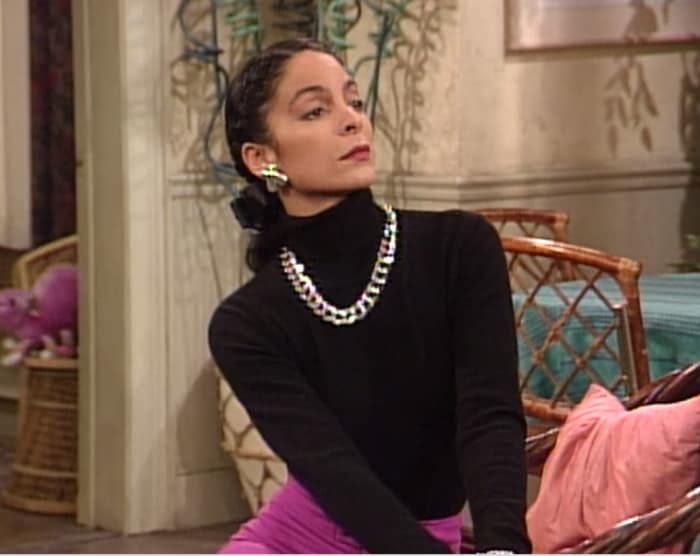
Today, Whitley maintains offices in New York and Johannesburg, traveling regularly between the continents she’s connected through art. The Diaspora Art Investment Fund manages over $50 million in assets, her consulting firm has worked with thirty HBCUs, and the Hillman-UNAM program graduates twenty-five students annually. But perhaps most telling is her personal collection, which she and Dwayne have assembled over the years. It includes works from artists they discovered in Tokyo decades ago, pieces by Hillman alumni artists, and acquisitions from UNAM student exhibitions. The collection represents not just financial investment, but relationships, memories, and a commitment to the vision that first struck her in that Tokyo gallery.
“I tell young people that building cultural wealth isn’t just about money,” Whitley reflects. “It’s about creating infrastructure, establishing standards, and ensuring that our stories, our beauty, and our creativity are valued literally and figuratively. That’s what I learned at Hillman, and that’s what I’m trying to build for the next generation.” From a student who once measured success by designer labels and social status, Whitley Gilbert-Wayne has become an entrepreneur who measures impact by artists supported, institutions strengthened, and communities empowered. It’s a transformation worthy of the art she champions and one that continues to inspire her fellow Hillman alumni, from the Reese and Johnson Medical Group to boardrooms and galleries across the diaspora.

 HBCU Money