
“Black love is a radical act.” – Audre Lorde
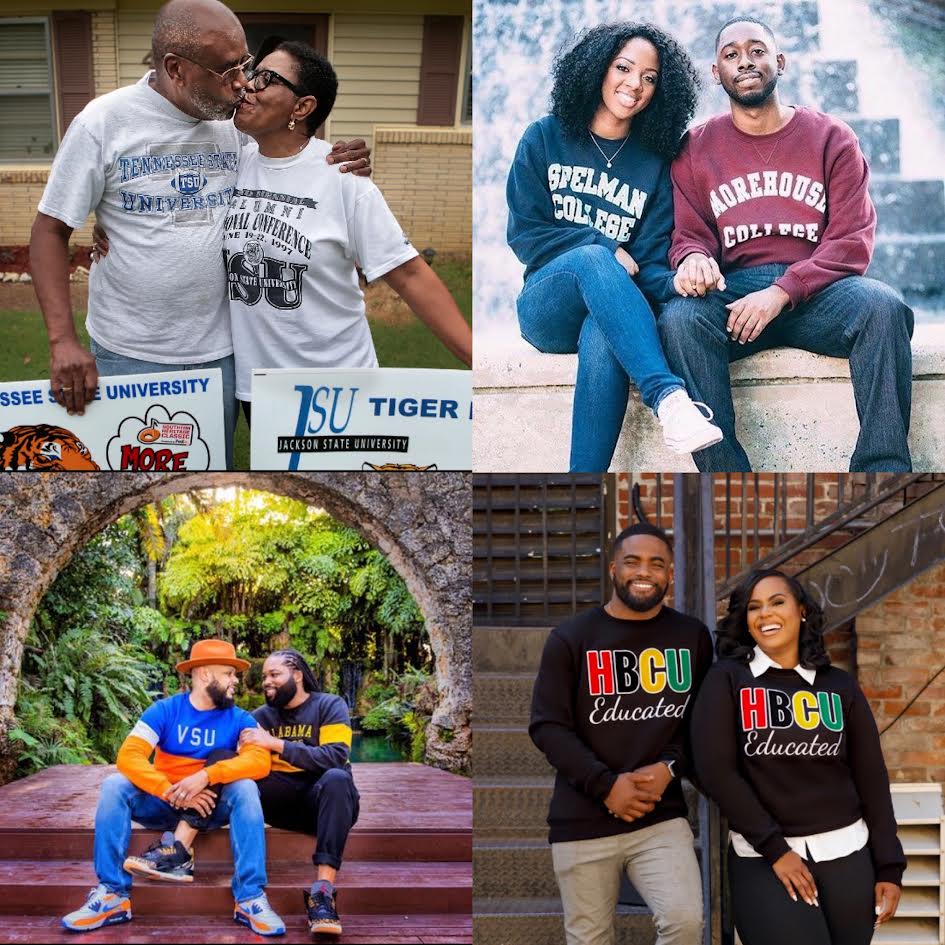
A few years ago, HBCU Money did a report highlighting which HBCU states had the highest African American marriage rates. In the piece, HBCU LOVE: Top Ten HBCU States With Highest African American Marriage Rate, Virginia led with 34 percent African American marriage rate. The national average African American marriage rate is 29.7 percent which seven HBCU states exceeded. It is no small leap to say that HBCUs play a vital role in these high marriage rates given their role in helping African Americans have a space dedicated to themselves and cultural pride that feeds into a desire for an African American partner. Not something as likely for African Americans who attend PWIs where so few options are available that it may make it quite difficult to match with or find an African American partner among so few options. It also is significant that HBCUs provide for the bulk of African American professionals in all fields and leading to cultural pride, economic stability, and alignment of values while learning to appreciate the diversity of African America which ultimately play a major role in leading to African American marriage.
Unfortunately, African American marriage rates are still struggling. Finding marriage or a life partner is culturally challenged where young women are stressed to focus on their books and young men are stressed to focus on the plethora of young women where on many HBCU campuses the women to men ratio is considerably unbalanced. This is a result of a myriad of social factors not least among them high school graduation rates among African American boys continues to struggle and those who do graduate have far too few who are actually college ready even if they are accepted. It also does not help that so many young women and men are coming from single parent households, the Office of Juvenile Justice and Delinquency Prevention reports only “four in ten Black children” live with two parents. This means that the majority of women and men on HBCU campuses know marriage only through a theoretical lens and to say little of what has shaped their views on marriage, partnership, and the institution that is African American (healthy) love. For African America that desperately needs more marriage for a myriad of reasons and HBCUs being one of the most optimal African American spaces (for those HBCUs who still care to be such) the question is how can that seedling be grown into a full blown redwood. Enter “The HBCU Marriage Pact”, a blend of HBCU pride, computer science blended together and you end up with HBCU Computer Love – “To share in my computer world, I no longer need a strategy, thanks to modern technology”. Copy and pasted from Stanford University’s Marriage Pact.

Leanne Italie of the Associated Press writes, “The Marriage Pact, an annual matching ritual that has become popular on nearly 90 college campuses around the U.S., has turned that dusty cliche into fun. And a few couples have found lasting love. Nearly half a million students have participated since the pact first rolled out at Stanford University in 2017. Born of an economics project by two students there, the pact involves an algorithm that rates matches based on such statements as “I prefer politically incorrect humor” and “I pride myself on telling hard truths.” Unlike dating apps and services, each student gets just one name, a percentage on the quality of the match and an email address to reach out.” Liam McGregor, creator of Stanford’s Marriage Pact, explained to Ms. Italie that, “Rather than dwell on physical beauty and personal stats like height and hair color, the Marriage Pact focuses its 50-question survey on core values. Communication styles and conflict resolution.” This is what significantly sets it apart from dating apps that allows for the distraction of aesthetics that often mislead our assessment of actual compatibility.
For this to work at HBCUs though it cannot be an exactly Copy & Paste without nuance. African Americans are caught in a vortex between not being able to afford to get married and not being able to afford not too. A large driver of closing the wealth gap is getting African American marriage rates up in order to scale capital and resources among African American families and into African American institutions. While the development of the HBCU Marriage Pact would go a long way it must also come with addressing some of the unique barriers that many African Americans face in building healthy relationships and this is where HBCUs and HBCU alumni associations can come in. Funding an African American Marriage Development Program. In the program students can learn about the history of African American marriage, healthy communication, receive therapy, learn household financial planning, etiquette, and other tools to increase the probability of a sustainable and productive marriage. For an added bonus, those who get married through the HBCU Marriage Pact would also be eligible to receive a financial grant to assist in funding the newlywed couple’s emergency fund in hopes of also mitigating some of the early financial pressures that African American couples face.
HBCUs themselves could coordinate consortium research around the HMP to conduct a longitudinal study to see the HMP’s potential impact. It has a myriad of interdisciplinary components that could be researched from education, economics, health, and many more. Quite an amazing prospect that we could be both putting into action a solvable problem and being the institutions that conduct the research around its theory.
The foundation of all Black institutions is the foundation of the African American family and it is in peril because African Americas are not pairing with each other for a myriad of reasons. But if we are to ensure there are African Americans tomorrow who want to attend HBCUs, then today and immediately we must engage of the work to incentivize and strategize for more of it to happen. The more African American couples who are also HBCU alumni deepens the empowerment and strength of both institutions continuing to be the institutions of our community and not gentrified or diluted like so many of our institutions have lay burden to or under attack by this very moment.
4 WAYS TO STRENGTHEN AN HBCU MARRIAGE PACT:
- If they choose to sign up for the pact, then they must complete wholistic development of therapy, financial literacy, parenting classes, and more that would show they have the proper aptitude to be someone’s partner.
- Developing HBCU marriage chapters in cities. This would allow HBCU couples to meet and network with each other to build and develop community.
- Offer continuing education workshops in best marriage and family practices so that HBCU couples can continue to learn about best practices for community and family building.
- Create an endowment that gives a financial reward marriage capped at the 10 year anniversary mark. $1,000 in year 1, $2,000 in year 2, so on and so forth up to year 10 when the couple receive $10,000. A combined $55,000 over ten years that would go into financially strengthening the burgeoning family.


 HBCU Money